Chain Link Against Wood for a Siberian Husky Yard
One of the biggest headaches — no, let's be honest, heartaches — for any Siberian Husky owner is the constant worry about escapes. You want your beloved companion to have room to stretch their legs, to enjoy the fresh air in a secure yard, but the question always looms: what kind of fence can actually hold a Husky? This guide is going to walk you through the nitty-gritty of chain link versus wood fencing, dissecting their strengths and weaknesses when it comes to containing these clever, agile, and incredibly determined escape artists.
Understanding the Siberian Husky's Escape Artist Tendencies
Before we even begin talking about fence materials, it's absolutely crucial to understand why Siberian Huskies are so renowned for their Houdini-esque abilities. It's not out of malice or a lack of love for you; it's simply wired into their DNA. These dogs were bred for centuries by the Chukchi people for endurance, intelligence, and an unparalleled ability to roam vast, open spaces. That deep-seated instinct for exploration and chasing down small prey means a standard fence is often just a suggestion in their eyes.
Their intelligence is a double-edged sword. On one hand, it makes them incredibly engaging and trainable for certain tasks, especially those involving problem-solving. On the other hand, that same brainpower means they can quickly assess weaknesses in your containment system. They'll test gates, look for footholds, and meticulously map out escape routes. Combine this mental prowess with their physical capabilities—they are powerful diggers, surprisingly nimble climbers, and fast runners—and you have a formidable opponent for any barrier. You truly cannot trust a Siberian Husky off leash, not unless you're in a truly escape-proof, enclosed space, and even then, supervision is key.
The motivations for escape are varied. Sometimes it's the thrill of the chase, triggered by a squirrel, a rabbit, or even a leaf blowing in the wind. Their strong prey drive means that anything small and fast is an irresistible lure. Other times, it's sheer boredom; a Husky left alone with insufficient physical and mental stimulation will find their own entertainment, and that often involves seeing what's on the other side of the fence. Then there's the wanderlust, a powerful intrinsic drive to just go and explore. Even if they're happy and well-fed, the call of the wild can be incredibly strong for these dogs.
This intrinsic nature is why merely having a fence isn't enough; you need the right kind of fence, properly installed, and backed up by a comprehensive approach to their exercise and enrichment. Ignoring these fundamental behavioral traits is like trying to stop a river with a sieve – it's just not going to work, and you'll end up with a lost or injured dog, which is every owner's worst nightmare.
The Pros and Cons of Chain Link Fencing for Huskies
Chain link fencing is often the go-to for many dog owners because it appears sturdy and offers an immediate barrier. However, when it comes to the highly specialized needs of a Siberian Husky, it presents a unique set of challenges and benefits that are worth thoroughly exploring.
Advantages of Chain Link for Huskies
One of the most obvious advantages of chain link is visibility. You can easily keep an eye on your Husky in the yard, which is a major plus when they're prone to mischief. This also means your Husky can see out, which, depending on what's outside the fence, can be either a blessing or a curse. For some Huskies, being able to see neighbors walking their dogs or kids playing might alleviate some boredom; for others, it might just fuel their desire to join the fun, or the chase.
Chain link is also generally quite durable against chewing, especially compared to wood. A Husky can gnaw on a wooden fence post, potentially weakening it or even creating an opening over time. While a determined Husky could bend or break chain link with incredible force or sustained effort, it's less likely they'll chew through it like they might wood. Its open structure also allows for excellent airflow, which is a small but welcome benefit for a double-coated breed in warmer climates.
From a purely practical standpoint, chain link often has a lower upfront cost than a well-built wooden fence. If budget is a primary concern, you might be able to get a taller, more robust chain link fence for the same price as a shorter, less secure wood fence. This can be important when considering the non-negotiable height requirements; a six-foot Siberian Husky fence costs can quickly add up, and chain link can offer a more economical path to that critical height.
Disadvantages of Chain Link for Huskies
Here's where chain link really shows its weaknesses for a Siberian Husky owner: climbing. The woven pattern of a chain link fence provides a perfect ladder for a nimble and athletic Husky. Those small openings are just the right size for their paws to get a grip, allowing them to scale the fence with surprising ease, often in a matter of seconds. I've heard countless stories of owners turning their backs for a moment only to find their Husky perched triumphantly on top of the fence, ready to make a grand escape. These are not merely anecdotes; Siberian Huskies that scale chain link are a common reality for unsuspecting owners.
Aesthetics are another consideration. While functional, chain link doesn't offer the same visual appeal or privacy as a solid wood fence. If your yard's appearance is important to you, or if you live in a neighborhood with HOA restrictions on fence types, chain link might not be the best choice. It also doesn't provide much in the way of sound dampening, meaning your Husky's expressive howls and "talking" will carry quite easily to your neighbors.
Even with its general durability, chain link can still be compromised. A powerful Husky can jump against the fence repeatedly, potentially bending the top rail or pulling sections loose from the posts over time. If the gauge of the wire is too thin, they might even be able to spread the links apart enough to squeeze through, especially if they are smaller or still growing puppies. It's not uncommon for Huskies to find the weakest point and relentlessly test it.
The Pros and Cons of Wood Fencing for Huskies
Wood fencing brings a different set of characteristics to the table, and for many, it's the preferred choice for its aesthetics and privacy. But how does it hold up against the formidable escape tactics of a Siberian Husky? Let's dive in.
Advantages of Wood Fencing for Huskies
One of the most appealing aspects of wood fencing is the privacy it offers. Unlike chain link, a solid wood fence blocks the view both into and out of your yard. This can be a huge benefit for a Husky owner, as it reduces external triggers like passing dogs, people, or wildlife that might ignite your Husky's prey drive or lead to incessant barking. A visual barrier can sometimes be the key to stopping a Siberian Husky from escaping the yard, simply because they aren't constantly reminded of what lies beyond.
Aesthetics are another strong point. A well-built wood fence can significantly enhance the look of your property, offering a natural and appealing backdrop to your landscaping. There are many styles and finishes available, allowing you to choose something that complements your home and personal taste. Beyond looks, a solid wood fence acts as a more substantial physical and psychological barrier. It doesn't offer the easy footholds that chain link does, making it much harder for a Husky to climb. While a very athletic Husky might try to jump or even vault over a wooden fence, the lack of climbing assistance makes it a far less common escape route than with chain link.
Finally, wood fencing provides a degree of noise reduction. The solid panels can help absorb and block sound waves, potentially lessening the impact of your Husky's vocalizations on your neighbors, and conversely, reducing external noises that might agitate your dog. This can contribute to a calmer environment for both you and your Husky.
Disadvantages of Wood Fencing for Huskies
While wood fences offer a solid visual barrier, they introduce a significant challenge: digging. Siberian Huskies are master excavators, and the solid nature of a wood fence means they can dig right up against the bottom edge, out of sight, and potentially create a tunnel to freedom. Because you can't see them doing it, a Husky might work on an escape tunnel for hours without your knowledge. Stopping a Siberian Husky digging along the fence often requires measures beyond the fence itself.
Maintenance is another factor. Wood fences are susceptible to rot, warping, and insect damage over time, especially if not regularly sealed or stained. A Husky, particularly a bored or anxious one, might also chew on the wooden pickets or posts, creating weak spots or even large holes over time. While you can often mend these, it adds to the ongoing cost and effort of ownership. A chew-through or a weakened board can easily become an escape hatch.
The initial cost of a high-quality, Husky-proof wood fence is generally higher than chain link. This is due to the material cost, labor for installation, and the need for more substantial posts and deeper foundations to prevent digging and ensure stability. Moreover, wood fences can degrade more quickly than chain link, especially in harsh climates, potentially leading to more frequent repairs or replacement. The opacity, while a benefit for reducing triggers, also means you can't easily monitor your Husky's activities in the yard, which can be a concern if they're prone to other destructive behaviors or if you need to quickly intervene.
Crucial Considerations Beyond Fence Material
Choosing between chain link and wood is just the beginning. For a Siberian Husky, the material itself is often less critical than the construction and reinforcement of the fence, as well as the overall management of the dog's needs. A truly Husky-proof yard is a multi-layered defense.
Height and Depth Are Non-Negotiable
No matter if you choose chain link or wood, the height of your fence is paramount. A standard four-foot fence is essentially an open invitation for a Siberian Husky to hop over. You need a minimum of a six-foot fence, and for some particularly athletic or determined climbers, even eight feet might be necessary. Don't underestimate their vertical leap; these dogs can be incredibly agile. Always err on the side of taller, rather than risk an easy jump.
Equally important, and often overlooked, is addressing their digging prowess. Huskies don't just jump; they dig. A six-foot fence is useless if they can tunnel under it in an hour. This is where reinforcing the base of the fence becomes critical. Options include burying fence wire against a digging Siberian Husky by installing an L-footer along the bottom of the fence. This means extending a section of the fence material horizontally underground, or at least a foot deep vertically, preventing them from digging directly down and out. Concrete aprons, large pavers, or heavy-gauge chicken wire laid flat on the ground and secured at the fence line are other effective deterrents. Without these measures, any fence, regardless of material, is merely a suggestion to a digging Husky.
Consider the landscape of your yard as well. Are there any natural "launchpads" like tree stumps, large rocks, or elevated garden beds near the fence line? Huskies are smart enough to use these as stepping stones to gain an advantage in their climb or jump. You might need to move these objects or add further height to the fence in those specific areas.
Gate Security and Reinforcements
Gates are often the weakest link in any fencing system, and a Siberian Husky will exploit that weakness with remarkable precision. These dogs are intelligent problem-solvers who can often figure out how to manipulate standard latches, especially simple thumb latches or gravity latches. I've personally seen Huskies use their noses, paws, and even teeth to pry open gates that seemed secure to a human.
To combat this, you need heavy-duty, multi-stage gate locks that a Siberian Husky cannot open with a simple push or nudge. Consider adding a carabiner clip to supplement the latch, or better yet, install a combination lock or barrel bolt on both the top and bottom of the gate. Self-closing hinges are also a good idea to prevent human error, ensuring the gate always swings shut and latches, even if someone forgets to manually secure it. For ultimate security, some owners even install a double-gate system, where there are two gates set a few feet apart, creating a small antechamber. This adds an extra layer of protection, especially when entering or exiting the yard.
Regularly inspect your gates for signs of wear and tear, loose hinges, or weakened latches. A well-maintained gate is your first line of defense. Remember, a Husky tests boundaries constantly, and a gate that was secure yesterday might have a new weakness they discovered today.
Addressing the Husky's Mental and Physical Needs
No fence, no matter how tall or reinforced, can truly compensate for an under-exercised or under-stimulated Siberian Husky. These dogs have boundless energy and sharp minds that need constant engagement. If their needs aren't met, they will find ways to entertain themselves, and that often involves escaping or destructive behaviors. This is why understanding how much exercise a Siberian Husky really needs is so vital. We're talking about daily, vigorous activity – not just a stroll around the block.
Regular, high-intensity exercise like running, biking (canicross or bikejoring), or long hikes can help drain their physical energy, making them less likely to feel the urge to escape out of boredom. For working-line Huskies, this could mean several hours of structured activity each day. Even for pet Huskies, two good runs a day are often minimal. Beyond physical activity, mental stimulation is key. Puzzle toys, training sessions, chew toys, and even just novel experiences in a secure environment can keep their intelligent minds occupied. Durable chew toys from places like Chewy can be a lifesaver for reducing boredom-induced destruction and escape attempts.
Proper nutrition also plays a role in a well-balanced, contented Husky. Feeding a high-quality, species-appropriate diet, perhaps from a brand like Ollie, can contribute to overall health and well-being, potentially reducing anxiety or restlessness that might fuel escape behaviors. Lastly, consider pet insurance from providers like Healthy Paws. While you hope your Husky never escapes, having coverage for potential vet bills resulting from an injury during an escape attempt or an encounter with wildlife provides invaluable peace of mind. A secure fence is a cornerstone, but it must be supported by a holistic approach to Husky care.
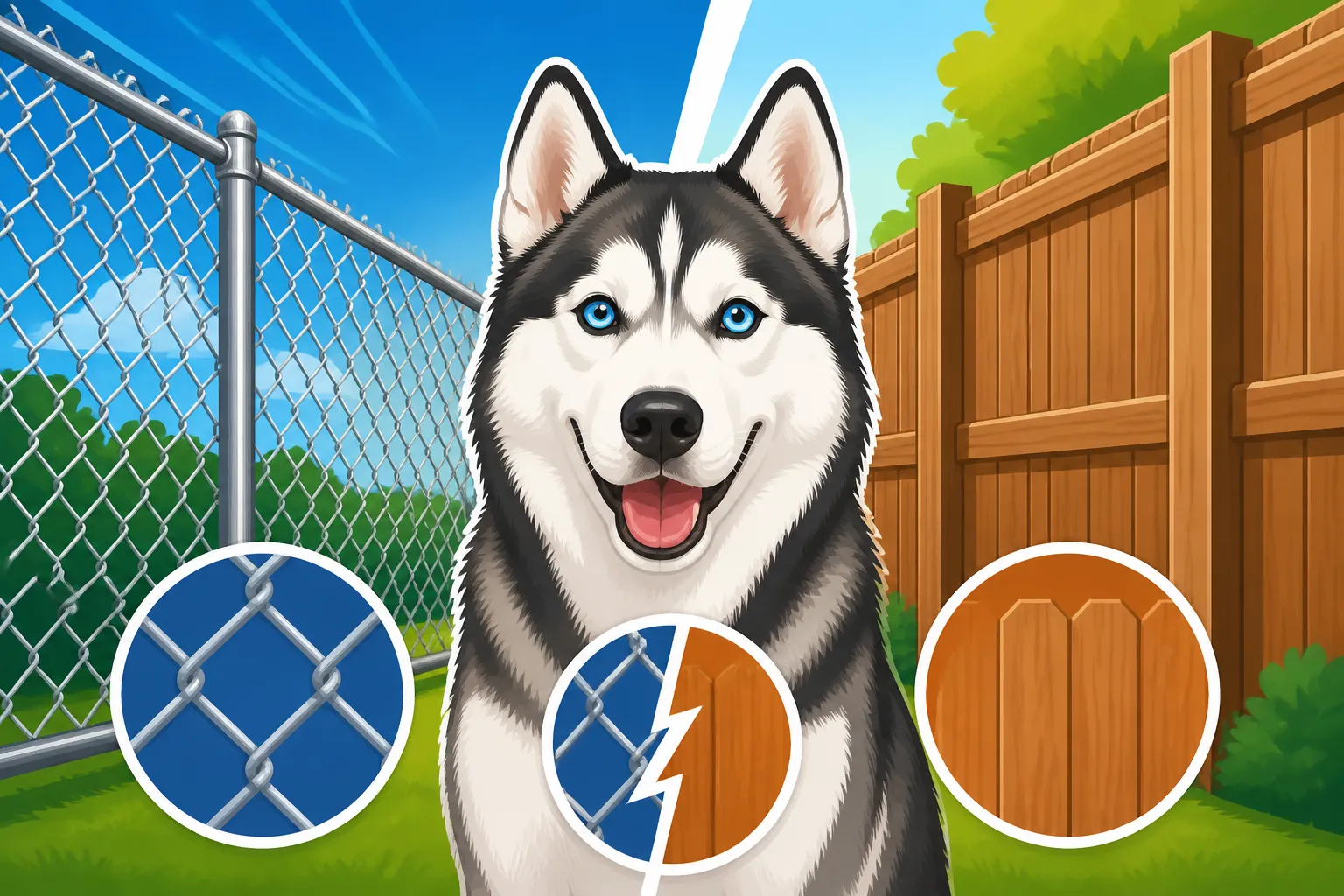
Comparison: Chain Link vs. Wood Fencing for Siberian Huskies
To summarize the key differences and help you decide, here's a direct comparison of chain link and wood fencing regarding Siberian Husky containment.
| Feature | Chain Link Fencing | Wood Fencing |
|---|---|---|
| Visibility | High (can see dog, dog can see out) | Low (dog cannot see out, often preferred for reducing triggers) |
| Climbing Risk | High (easy footholds) | Low (no easy footholds) |
| Digging Risk | Moderate (Huskies can dig under easily if not reinforced) | High (Huskies can dig under and chew through if not reinforced) |
| Aesthetics | Functional, utilitarian | High (can be very appealing, offers privacy) |
| Durability | Resists chewing well, generally weather-resistant | Susceptible to rot, warping, and chewing; needs maintenance |
| Cost (Upfront) | Generally lower than wood | Generally higher than chain link |
| Maintenance | Low (occasional tightening, rust check) | High (sealing, staining, repairing chew damage) |
| Privacy/Noise | Low | High (blocks views, reduces noise) |
| Security | Requires significant anti-climb measures and deep burial | Requires deep burial/L-footers and chew-proofing |
As you can see, both options have distinct profiles. The "best" choice really depends on your specific property, budget, aesthetic preferences, and most importantly, your individual Husky's temperament and escape repertoire. Some Huskies are primarily jumpers and climbers, while others are champion diggers. Knowing your dog's habits can guide your decision. For some, a hybrid approach, using wood where privacy is needed and heavily reinforced chain link elsewhere, might even be considered. Remember, while an invisible fence might seem appealing, why invisible fencing does not hold a Siberian Husky is a lesson many learn the hard way – these dogs will ignore a shock for the thrill of the chase.
Ultimately, a truly effective fence for a Siberian Husky is one that is tall enough, deep enough, and securely gated, regardless of the primary material. It’s an investment in your peace of mind and your Husky's safety.
Disclaimer
This article is for general informational purposes only and does not constitute professional advice. Laws, prices and regulations vary by location and change over time. Consult a qualified professional for guidance on your specific situation.