The Six-Foot Fence a Siberian Husky Needs
If you’ve ever owned a Siberian Husky, you know the heart-stopping panic that sets in when you step outside and see a gate ajar, or worse, an empty yard where your furry friend should be. These incredible dogs are notorious escape artists, and trying to keep them safely contained often feels like an impossible mission. This guide is dedicated to helping you understand why a standard fence just won't cut it for a Husky and how to design, build, and maintain a secure six-foot fortress that truly keeps your adventurous companion at home.
Understanding the Husky's Innate Drive to Roam
Let's be real: Siberian Huskies weren't bred to sit quietly in a suburban backyard. They were born to run, to explore, and to cover vast distances. This isn't just a quirky personality trait; it's deeply ingrained in their DNA, a legacy from their working ancestors among the Chukchi people. Understanding this fundamental aspect of their nature is the first step toward successful containment.
A Breed Built for Endurance and Exploration
Imagine a dog designed to pull a sled across frozen tundras for miles on end, often without much human guidance beyond basic directional commands. That's your Siberian Husky. Their bodies are lean, their minds are keen, and their stamina is legendary. This incredible drive means that a simple 4-foot fence, or even a casual backyard, is less a barrier and more a mild suggestion to them. They're built for constant motion, and if that motion isn't channeled into a productive outlet like the 1925 Serum Run to Nome or modern dog sports, they'll find their own adventures.
This inherent wanderlust often leads to what many owners mistakenly label as "stubbornness." It’s not stubbornness so much as an independent spirit and a powerful urge to fulfill their genetic programming. When they see an opening, their brain doesn't register "escape"; it registers "opportunity for exploration." This is why even the most well-behaved, well-loved Husky can suddenly become Houdini when the chance arises. They aren't trying to leave you; they're simply trying to go. For a deeper dive into this, check out articles like The Roaming Instinct Bred Into Every Siberian Husky.
The Siren Song of the Open Road
Picture this: your Husky is lounging in the sun, seemingly content. A squirrel darts across the yard. Or perhaps a new, intriguing scent drifts over from a neighbor's barbecue. Suddenly, that relaxed dog transforms into a creature possessed by the chase. Their prey drive is incredibly strong, a remnant of their hunting heritage. Small animals, deer, even blowing leaves can trigger that primal urge to pursue. Once that instinct kicks in, all bets are off. The world beyond your fence becomes an irresistible challenge.
This isn't just about a visual trigger either. Huskies have an incredible sense of smell and hearing. They can detect things happening miles away that we humans can't even perceive. That distant siren, another dog barking, or even the subtle scent of a rabbit can be enough to spark their interest and send them searching for the path of least resistance out of your yard. It’s a constant battle against their senses and their powerful desire to follow wherever they lead.
Why Conventional Containment Fails
Most residential fences are designed for dogs that are content to stay within a boundary, or perhaps lack the physical prowess or mental cunning to overcome it. Huskies, however, are a different breed entirely. A standard picket fence, a low chain-link fence, or even a decorative vinyl fence might as well be an open gate to a determined Husky. They can often jump surprising heights, scale chain link with ease, and tunnel under obstacles with remarkable efficiency.
Beyond their physical capabilities, their intelligence plays a huge role. Huskies are problem-solvers. They learn quickly, whether it's how to open a gate latch, how to brace against a fence to shimmy over, or where the softest spot is to dig. They observe, they experiment, and they remember. If they find a weakness in your fence today, they'll exploit it again tomorrow. This makes conventional fencing, built without a Husky's unique talents in mind, utterly inadequate. You're not just fencing a dog; you're fencing a furry, four-legged escape artist.
The Non-Negotiable Six-Foot Barrier
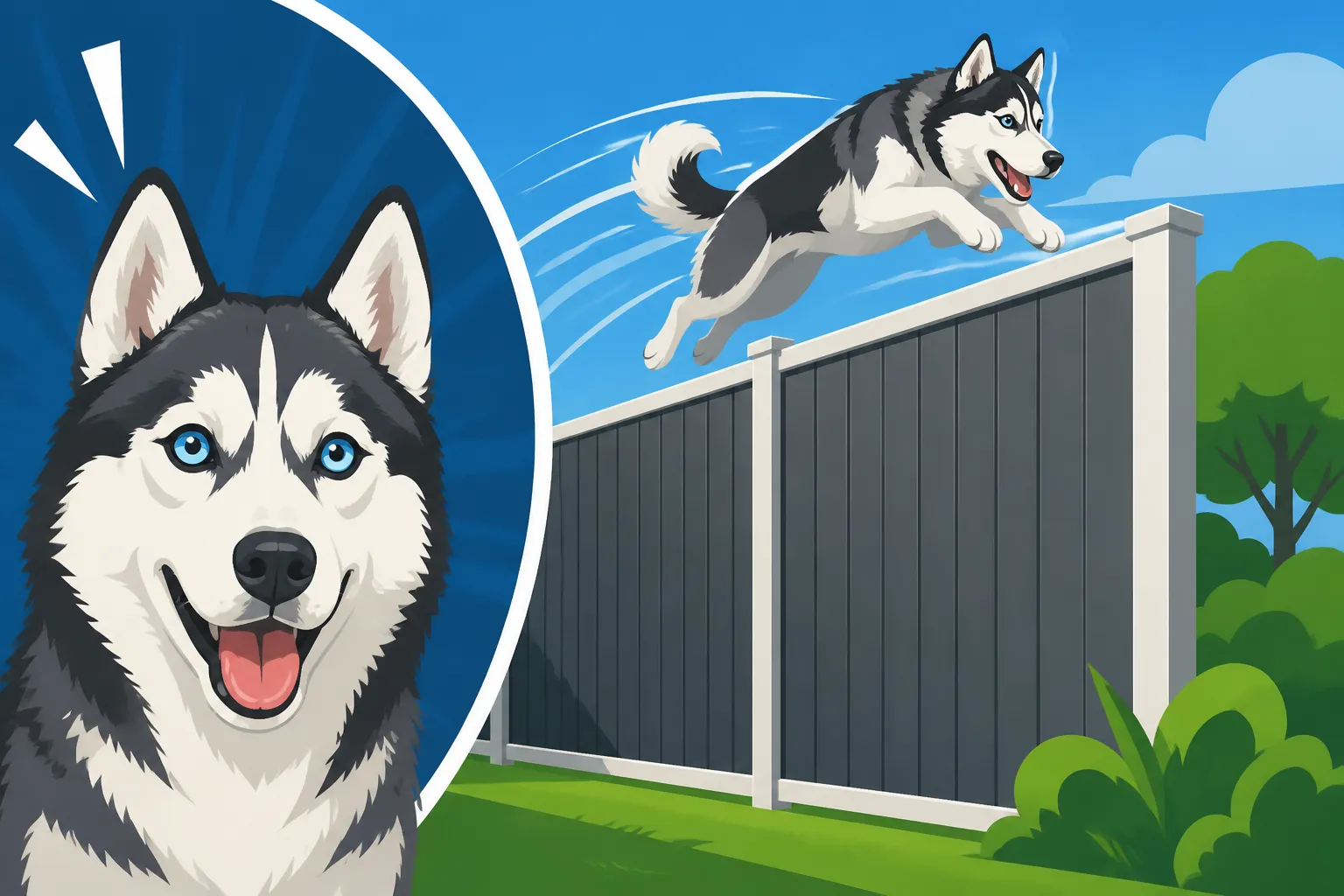
When it comes to Siberian Huskies, the conversation about fences absolutely must begin at six feet. Anything less is, frankly, an invitation for them to demonstrate their impressive athletic abilities and independence. This isn't an arbitrary number; it's the bare minimum proven to deter many, though not all, of these agile escape artists.
Clearing Heights: It's More Than Just Jumping
A four-foot fence might contain a Golden Retriever, but a Siberian Husky can often clear that with a casual hop, or even a deliberate climb if it's chain link. Six feet provides a significant deterrent, requiring a deliberate effort for most Huskies to overcome. However, it's not just about the height they can jump. Huskies are excellent climbers. They can use the cross-supports on a wooden fence like a ladder or wedge their paws into the diamond mesh of a chain-link fence and scale it like a pro. This is why the material and design of your fence, even at six feet, are crucial.
Consider the surface your Husky has to jump from. If there's a snowdrift, a pile of firewood, a garden bed, or even a sturdy bush near the fence line, that six-foot barrier suddenly becomes much shorter. Always think about "launchpads" or climbing aids your Husky might use. Even a slight slope in your yard leading up to the fence can give them an advantage. This vigilance is part of what makes owning a Husky such a commitment, but it’s essential for their safety.
Material Matters: Strength and Durability
The type of material your six-foot fence is made from is just as critical as its height. Here’s a quick breakdown of common options and their Husky-specific considerations:
| Fence Material | Pros | Cons (Husky Specific) | Husky Suitability |
|---|---|---|---|
| Wood Privacy | Aesthetically pleasing, blocks sightlines | Can be chewed, boards can be loosened, cross-supports for climbing | Moderate to Good |
| Chain Link | Economical, durable, easy to install | Easy to climb, can be pushed out at the bottom, can cut paws if rusted | Low to Moderate |
| Vinyl Privacy | Low maintenance, smooth surface | Can be brittle in extreme cold, not as strong as wood/metal | Moderate |
| Metal (Wrought Iron/Aluminum) | Strong, durable, difficult to climb due to thin pickets | Expensive, pickets can be far enough apart for escape, can be jumped over if no anti-climb | Good |
| Welded Wire/No-Climb | Strong, small mesh prevents climbing | Less aesthetic, can be dug under | Excellent |
For a truly Husky-proof fence, a solid, smooth material like smooth wood, vinyl, or metal with closely spaced pickets is preferable to chain link, which offers too many footholds. A well-constructed wood fence without internal cross-beams facing your yard can make climbing much harder. You'll also want to consider the density and strength of the material to prevent chewing or breakage. Investing in robust materials now will save you a lot of headache and potential vet bills from a runaway dog later.
Considering Local Regulations and Aesthetics
Before you start digging, it's absolutely vital to check with your local homeowner's association (HOA) and municipal zoning laws. Many areas have restrictions on fence height, materials, and placement. You don't want to invest thousands in a perfect Husky fence only to be forced to tear it down. Get all the necessary permits in advance.
While safety is paramount, you also want your fence to blend in with your property and neighborhood aesthetics, if possible. There are many ways to make a secure fence look good, from strategic landscaping to decorative toppers. However, your Husky's safety should always come first. Sometimes, a compromise has to be made between a beautiful garden view and a robust containment system. A truly Husky-proof fence might look a bit more industrial than a decorative one, but it's worth it for peace of mind.
Fortifying Against the Master Digger
Just when you think you’ve got the jumping and climbing covered with a tall, sturdy fence, your Siberian Husky will remind you of their other incredible talent: digging. These dogs are natural excavators, capable of creating impressive tunnels with surprising speed. Preventing them from simply digging their way to freedom is a critical component of any Husky-proof yard.
The Essential L-Footer: Construction and Installation
An L-footer is essentially an extension of your fence that runs under the ground and then extends out horizontally from the fence line, forming an "L" shape. This creates a barrier that your Husky will hit if they try to dig down, and then they'll hit the horizontal section if they try to dig out. It’s an incredibly effective, yet often overlooked, defense against determined diggers. For more on this, consider reading Burying Fence Wire Against a Digging Siberian Husky.
There are a few ways to construct an L-footer:
- Buried Wire Mesh: This is a popular and relatively DIY-friendly option. You can use heavy-gauge welded wire or galvanized hardware cloth. Dig a trench about 12-18 inches deep and 12-18 inches wide along the entire fence line. Attach the wire mesh to the bottom of your fence, letting it extend into the trench. Bend the bottom portion of the mesh horizontally to form the "L" shape away from the yard. Then, backfill the trench with dirt and compact it thoroughly. This method provides a physical barrier that is difficult for paws to penetrate. You can find robust wire mesh at hardware stores or online retailers like Chewy.
- Concrete Skirt: For the ultimate in durability, a concrete skirt can be poured. This involves digging a similar trench and then pouring a concrete slab that extends both down and out from the fence base. This is a more permanent and labor-intensive solution, often requiring professional help, but it's virtually impossible for a Husky to dig through.
Whichever method you choose, consistency is key. Every inch of your fence line needs this protection. Don't forget about gate areas either; they're common weak points.
Burying Wire and Other Obstacles
While the L-footer is the gold standard, other methods can supplement it or be used in less extreme situations (though with a Husky, 'less extreme' is a rare scenario!). Simply burying fence wire vertically a foot or so deep might deter some casual diggers, but a motivated Husky can often dig deeper or simply push through the dirt around it. This is why the horizontal "foot" of the L-footer is so important.
Another tactic is to lay large, heavy rocks or paving stones along the inside base of the fence. This makes the initial digging much harder. However, Huskies can sometimes learn to move smaller stones or simply dig around larger ones if they aren't completely flush and extensive. Some owners have even poured gravel in a trench, which can be uncomfortable for paws to dig through, but isn't as foolproof as wire or concrete. The main thing to remember is that a Husky will test every weakness, so multiple layers of defense are often necessary.
Monitoring and Reinforcing Digging Hotspots
Even with the best intentions and the most robust L-footer, Huskies are clever. They will find the weakest link. Pay close attention to areas where your Husky frequently sniffs, scratches, or shows interest in digging. These are often corners, areas where the ground might be softer, or spots where a tempting scent (like a critter's burrow) is present.
Regularly inspect your fence line. Look for signs of digging, even small indentations. If you find a hotspot, reinforce it immediately. This might mean adding more buried wire, laying down an extra layer of pavers, or even placing large, immovable objects temporarily in that spot to deter further attempts. Some owners even use their Husky's own "deposits" (you know what I mean!) in fresh dig spots, as Huskies generally don't like to dig in their own waste. This isn't pretty, but it can be surprisingly effective. The goal is to make digging so consistently unpleasant and unfruitful that they eventually give up or move on to a more acceptable outlet, like a designated digging pit you've provided for them elsewhere in the yard.
Outsmarting the Clever Climber and Gate-Opener
The six-foot barrier and the L-footer address jumping and digging, but what about the Huskies who look at a fence not as a wall, but as a challenge to scale? And those genius pups who figure out how to operate a gate latch better than some humans? These are common Husky traits that demand specific, proactive solutions. For examples of what they might attempt, consider reading Siberian Huskies That Open Gates and Doors.
Anti-Climb Devices: Coyote Rollers and Lean-Ins
If your Husky is a climber, a straight six-foot fence, even a smooth one, might not be enough. This is where anti-climb devices come into play.
- Coyote Rollers: These are tubes, often made of aluminum or PVC, that are mounted along the very top of your fence line. They spin freely, so if a Husky tries to get a paw-hold on the top of the fence to pull themselves over, their paws just slip, and they can't get traction. They're incredibly effective and typically blend in reasonably well. They are designed to prevent coyotes, but they work just as well on climbing Huskies.
- "Lean-In" or Angled Extensions: This involves adding an extension to the top of your fence that angles inwards, back towards your yard, at about a 45-degree angle. This effectively creates an "overhang" that makes it very difficult for a dog to pull themselves over, even if they manage to get to the top. This can be constructed with mesh wire or smooth metal.
Both of these solutions add an extra layer of security, making it physically much harder for your Husky to get enough leverage to climb out. They essentially increase the effective height and difficulty of the climb without necessarily having to build an even taller fence.
Securing Gates: Latches, Locks, and Automation
Gates are the most common weak point in any fence, and Huskies know it. Their clever paws and keen observation skills mean they can often figure out lever handles, thumb latches, and even simple slide bolts.
- Double Latches: Never rely on just one simple latch. Use at least two robust latches, ideally different types, placed at different heights. A top-mounted slide bolt combined with a bottom-mounted spring-loaded latch can be very effective.
- Padlocks: For an extra layer of security, especially if your Husky has truly mastered the art of the latch, a simple padlock can be a lifesaver. You don't need to lock it all the time, but for periods when you're away or at night, it adds significant peace of mind.
- Self-Closing and Self-Latching Gates: These are fantastic inventions. A self-closing gate ensures it always swings shut, and a self-latching mechanism ensures it locks automatically. This eliminates human error, which is often the cause of escapes (i.e., someone forgets to fully close or latch the gate).
- Alarm Systems: For the truly anxious (and let’s face it, many Husky owners are!), you can install simple gate alarms that notify your phone if a gate is opened. This offers immediate alerts and can be a fantastic tool to catch an escape attempt early.
Always make sure your gate opens inward to your yard, not outward. If a Husky manages to push against it, an inward-opening gate is harder to force open against the gatepost.
Addressing Objects Near the Fence Line
This is a subtle but critical point that many owners overlook. Remember how Huskies can clear surprising heights? They do it by finding a boosting point. Any object near your fence line can serve as a launchpad:
- Snow Drifts: A significant accumulation of snow can turn a six-foot fence into a two-foot fence. Be diligent about shoveling snow away from your fence line, especially after heavy snowfall.
- Firewood Piles: Those neatly stacked logs might look innocent, but they're a perfect step stool for a Husky.
- Sheds and Dog Houses: If a shed is too close to the fence, your Husky might hop on top and then over. Position dog houses, especially larger ones, away from fence boundaries.
- Trees and Shrubs: A sturdy tree branch that overhangs or is close to the fence can be climbed or used as a jumping-off point. Keep trees trimmed and ensure no branches offer an easy escape route.
- Outdoor Furniture or Equipment: Even a discarded planter or a child's toy can provide just enough height for an agile Husky to make their getaway. Regularly scan your fence perimeter for anything that could be used as an aid.
The key is constant vigilance. Your Husky is always looking for an advantage, so you need to think like them and remove all potential escape aids.
Why 'Easy' Solutions Fall Short for Huskies
In a world full of quick fixes, it's tempting to look for an effortless way to contain your energetic Siberian Husky. But for a breed so uniquely driven and intelligent, many common containment solutions simply don't cut it. In fact, relying on them can often put your Husky in more danger.
The Ineffectiveness of Invisible Fencing
"Oh, I'll just get an invisible fence," is a phrase often heard from hopeful new Husky owners. And then, a few weeks later, they discover the harsh reality. Invisible fences, which use a buried wire to deliver a static correction when a dog crosses a boundary, are notoriously ineffective for Siberian Huskies. You can learn more about this in articles like Why Invisible Fencing Does Not Hold a Siberian Husky.
Here's why they fail:
- High Pain Tolerance: Huskies have a remarkably high pain tolerance. That static shock that might make a sensitive breed yelp and retreat often just registers as a momentary discomfort to a Husky. The thrill of the chase, the lure of an interesting scent, or the sheer joy of running often far outweighs the unpleasant sensation.
- One-Way Barrier: Even if the shock does deter them, it only works on the way out. Once they've bolted past the boundary, they're often reluctant to come back into the yard because they'll receive another shock. This leaves them stranded outside the safe zone, often miles away, and susceptible to traffic, other animals, and getting lost.
- Inconsistent Reinforcement: The static correction can be unpredictable. Sometimes it works, sometimes it doesn't, especially if the dog runs through it quickly. This inconsistency can make them desensitized to it, or worse, make them think they can "outsmart" the fence.
- Lack of Physical Barrier: Fundamentally, an invisible fence is a psychological barrier, not a physical one. It provides no protection from external threats (stray dogs, wildlife, curious strangers), nor does it prevent your Husky from seeing and being tempted by something outside the boundary.
For a Husky, an invisible fence is not a humane or effective solution. It leads to frustration, potential injury, and a high probability of escape.
The Dangers and Ethics of Tie-Outs
Another seemingly simple solution is to simply tie your Husky out in the yard. While it might seem like a way to keep them contained without a hefty fence investment, tie-outs come with a long list of problems and ethical concerns. We cover this more deeply in Whether a Siberian Husky Should Be Tied Out.
- Safety Hazards: Huskies are incredibly strong and can easily snap tie-out lines, especially if they hit the end of the line at a full run. They can also get tangled, leading to strangulation, broken limbs, or severe rope burns. The risk of injury is very high.
- Psychological Impact: Being tethered for long periods can lead to extreme frustration, anxiety, and even aggression in dogs. Huskies, with their need for movement and social interaction, suffer greatly from prolonged tie-out use. It can make them more prone to destructive behaviors and less trustworthy.
- Exposure to Elements and Threats: A tied-out dog is vulnerable. They can be exposed to extreme weather without adequate shelter, attacked by other animals, or bothered by curious (or malicious) people. They have no way to escape danger.
- Legal Restrictions: Many municipalities have laws against tethering dogs for extended periods, or prohibit it entirely, due to animal welfare concerns. You could face fines or legal action.
Tie-outs are not a responsible or safe way to contain a Siberian Husky. They are a temporary, emergency measure at best, and should never be a long-term solution.
Active Supervision: The Only True Unfenced Solution
If you absolutely cannot have a secure physical fence (e.g., you're renting, or live in an area with strict HOA rules that limit fence options), then the only responsible way to have a Siberian Husky is through constant, active, and diligent supervision any time they are outside.
This means:
- Leash Walking Only: All outdoor time, including potty breaks, must be on a leash. And not just any leash – a secure, non-retractable leash with a well-fitting harness (front-clip harnesses can help with pulling) or a martingale collar.
- Long Line Work: For exercise in large, safe, fenced areas (like a private Sniffspot rental or a friend's yard), a long line can provide some freedom. But even then, your focus must be 100% on your Husky, ready to intervene. This is a great way to practice Building a Siberian Husky Recall Word From Scratch in a controlled environment.
- No Unattended Yard Time: You can't just open the door and let them out. You need to be outside with them, engaged and watchful, at all times. This is incredibly demanding and often unrealistic for most people's lifestyles, which is why a secure fence is generally seen as a non-negotiable requirement for Husky ownership.
- Regular Exercise: Even with strict supervision, a Husky denied sufficient exercise and mental stimulation will be a frustrated, destructive, and even more determined escape artist indoors. Providing enough physical activity, like regular runs or Canicross and Bikejoring With a Siberian Husky, is crucial.
The reality is that without a proper fence, the burden of supervision on a Husky owner is immense. It severely limits their freedom and your own. This is a major reason Why So Many Siberian Huskies End Up in Rescue and shelters: owners underestimate the containment challenge.
Maintaining Your Husky's Fortress and Your Sanity
Building a six-foot, L-footed, coyote-roller-equipped fence is a huge accomplishment, but it's not a "set it and forget it" situation. Huskies are masters of continuous improvement when it comes to escape tactics, which means your containment system needs continuous maintenance and your approach needs consistent reinforcement.
Seasonal Inspections and Immediate Repairs
Think of your fence as a living, breathing part of your home – because your Husky certainly sees it that way, always probing for weaknesses.
- Spring Check-Up: After the winter thaw, inspect the entire fence line. Heavy snow can warp wood, loosen posts, or create soft, muddy spots perfect for digging. Check for any lifted L-footers, loose wire, or damaged fence panels.
- Fall Preparation: Before winter sets in, ensure all posts are sturdy, latches are secure, and there are no small gaps. Reinforce any areas that might become weak points under heavy snow loads.
- Year-Round Vigilance: Make it a habit to do a quick perimeter check whenever you're out in the yard. Look for new dig attempts, signs of chewing, loose gate hinges, or anything leaning against the fence that could serve as a climbing aid. Address any issues immediately. A small gap today can be a full-blown escape route tomorrow. Don't underestimate a Husky's ability to dig under fences or even widen a small hole.
Remember, a diligent Husky will quickly find any new weakness. Prompt repairs are your best defense.
Enrichment and Training: Preventing Boredom-Induced Escapes
A secure fence provides the physical barrier, but mental and physical stimulation provides the internal barrier. A bored Husky is a destructive Husky, and a destructive Husky is far more likely to try and break out.
- Structured Exercise: Your Husky needs a job, even if it's just being your running partner. Daily vigorous exercise is non-negotiable. This could be long walks, runs, bikejoring, or structured play. A tired Husky is less likely to have the energy or inclination to scheme an escape.
- Mental Stimulation: Huskies are intelligent. Puzzle toys, chew toys (like those from Chewy that are designed for power chewers), and regular training sessions can keep their minds engaged. Brands like Ollie can provide high-value training treats to keep them motivated during these sessions. Don't let their independence fool you; they need mental challenges. Read Training an Independent Siberian Husky for more tips.
- Designated Digging Spot: If your Husky loves to dig, give them an approved outlet. Create a sandpit or a designated digging area in your yard, away from the fence, and bury toys or treats for them to find. This can redirect their natural instincts to a safe place.
- Indoor Enrichment: When you can't be outside, ensure their indoor environment is stimulating. Rotate toys, use slow feeders, and practice obedience commands. Even with the best fence, Siberian Husky Destruction When Left Alone can be a major issue if they're not adequately enriched.
A well-exercised and mentally stimulated Husky is a happier Husky, and a happier Husky is less likely to feel the overwhelming urge to bust out of their yard. This is also important if you sometimes need to use Crates a Siberian Husky Cannot Break Out Of for temporary containment.
When to Call in the Professionals for Fence Solutions
While many aspects of fence maintenance can be DIY, there are times when bringing in the pros is the best course of action.
- Initial Installation: If you're building a new fence from scratch, especially one with complex features like L-footers or coyote rollers, a reputable fence company experienced with dog-proof fencing can save you time, money, and frustration. They'll ensure it's built to last and meets all local codes.
- Major Repairs: For significant damage, like a fallen post or a large section of fence compromised, professional repair ensures structural integrity and lasting security.
- Problem-Solving: If your Husky is still finding ways out despite your best efforts, a professional dog trainer or a fence expert might be able to offer fresh eyes and innovative solutions. Sometimes, a subtle flaw in design or execution is all it takes for a determined Husky.
Investing in a proper, secure fence from the start, and maintaining it diligently, is one of the most significant responsibilities of Siberian Husky ownership. It’s an investment in their safety and your peace of mind, ultimately contributing to a long and happy life together. It's an integral part of Costing Out a Siberian Husky From Puppy to Senior.
Disclaimer
This guide offers general information and recommendations for securing a yard for a Siberian Husky. Every dog is an individual, and every property has unique challenges. Always consult with local authorities regarding zoning laws and HOA regulations before constructing or modifying any fencing. For specific advice regarding your dog's behavior or health, consult a certified professional dog trainer or a veterinarian.