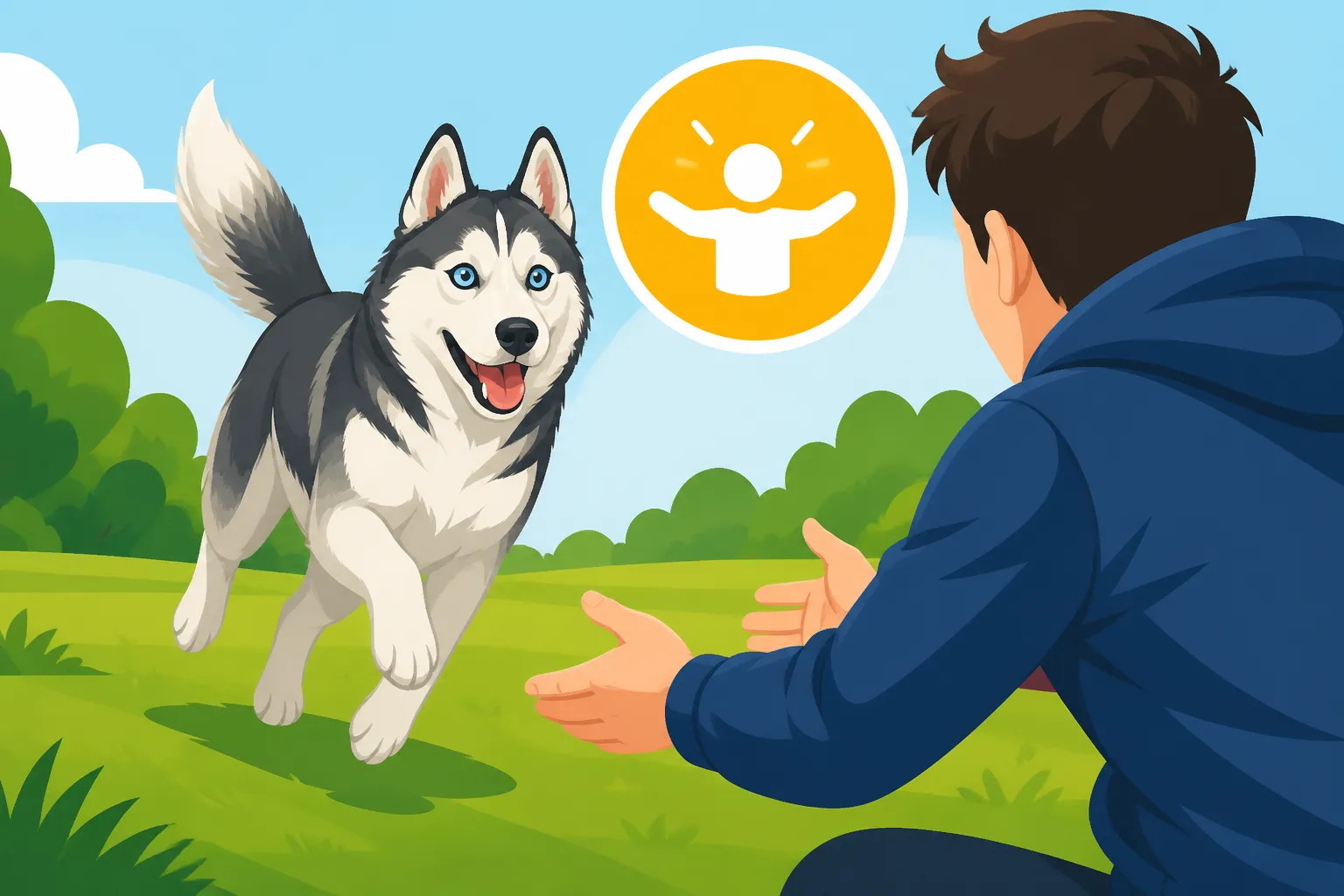
Getting a Loose Siberian Husky to Come to You
That heart-stopping moment when you look up, and your Siberian Husky, usually by your side (or at least on a leash), is suddenly a rapidly disappearing white, black, or red streak in the distance – it's a fear almost every Husky owner knows intimately. The panic sets in, your voice cracks as you yell "Come!", and they just keep going, sometimes even looking back with that cheeky "catch me if you can" glint in their eyes. This guide isn't about shaming you for that moment; it's about understanding why it happens and, more importantly, what real, actionable steps you can take to try and get your loose Husky back to you safely.
Understanding the Siberian Husky's Deep-Seated Roaming Instinct
Let's be real: your Siberian Husky isn't being stubborn or spiteful when they bolt. They're just being… a Husky. It's a fundamental part of their genetic makeup, and understanding this isn't an excuse, but a critical first step in managing their behavior.
The Deep-Seated Drive to Run
Siberian Huskies were bred for endurance and to cover vast distances with minimal effort. Their ancestors were the ultimate working partners for the Chukchi people, pulling sleds over miles of frozen tundra. This history isn't just a fun fact; it's hardwired into their DNA. When a Husky sees an open space, or catches an interesting scent, that ancient instinct to run kicks in. It's an exhilarating, all-consuming drive for them, a freedom they rarely experience when leashed. For us, it's terrifying; for them, it's pure joy, often with a powerful dose of prey drive thrown in for good measure.
This is why, no matter how much training you've put in, or how many treats you've offered, the allure of the open world can often trump everything else. You might feel like you've failed, but it's really the breed's incredible heritage asserting itself. Many owners grapple with the painful reality of Whether Any Siberian Husky Is Reliable Off Leash, and the answer is almost universally, "no," not truly reliably in uncontrolled environments. Their instincts are simply too strong.
Why "Come" Becomes Optional for a Loose Husky
When your Husky is loose, especially if they've already gotten a head start, the word "come" often loses all meaning. Why? Because the rewards of running, exploring, and potentially chasing something exciting far outweigh the reward of coming back to you. Think about it from their perspective: they're on an adventure! They might be tracking a rabbit, following a deer trail, or simply enjoying the wind in their fur and the sheer joy of movement.
Environmental distractions play a huge role here. A novel scent can activate their hunting drive, making them oblivious to your calls. The sight of another dog or a small critter transforms them from your beloved pet into a focused hunter. Your voice, even if it's usually accompanied by praise and treats, just can't compete with the adrenaline rush. It's not that they don't know the command; it's that, in that moment, they choose not to execute it. This is the core challenge of Why Siberian Huskies Run Rather Than Return – the external world offers more compelling 'rewards' than you can often provide from a distance.
Immediate Steps When Your Husky is Loose (and Won't Come)
The first few seconds, or even minutes, after your Husky gets loose are critical. Your reactions can either escalate the chase or increase your chances of a reunion. This is where presence of mind, despite the panic, becomes your best tool.
Resist the Urge to Chase
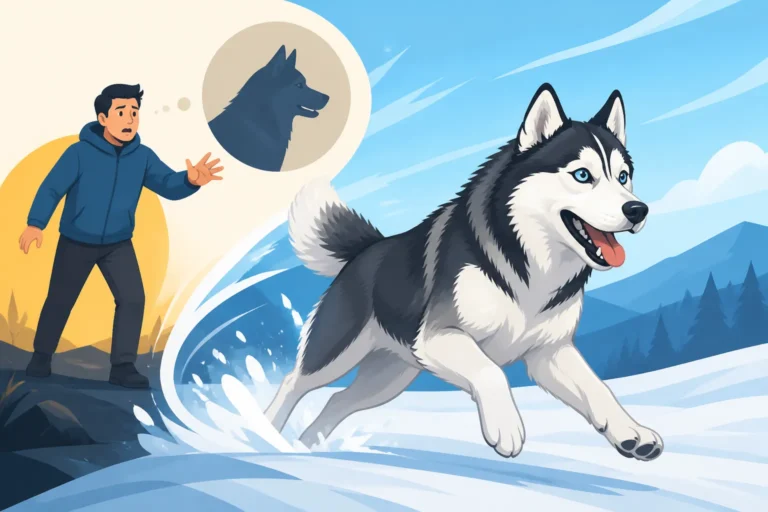
Every fiber of your being will scream at you to run after your dog. Don't. Seriously, do not chase them. Huskies thrive on the chase. For them, it can quickly turn into a thrilling game of "keep away," reinforcing their desire to run further and faster. Why Chasing a Loose Siberian Husky Makes It Worse is a lesson learned the hard way by countless Husky owners. When you pursue, you activate their prey drive. Your frantic calls and increasing speed only serve as encouragement to speed up and put more distance between themselves and you.
Instead, try to stay as calm as you can. Stop running, take a deep breath, and mentally strategize. If you're on a path or sidewalk, try to move to the side to avoid blocking their potential return path, but don't charge after them. Your goal is to make yourself seem less like a predator, and more like an interesting, safe base to return to.
Make Yourself Exciting and Unpredictable
Once you've stopped chasing, it's time to flip the script. Your Husky needs to be lured back, not hunted down. This means becoming the most intriguing thing in their environment.
- Run the Other Way: This often goes against instinct, but running away from your Husky can pique their curiosity and trigger their desire to follow. It turns the tables – now they're chasing you. Call their name in an excited, happy voice as you trot away, looking back occasionally with a big, welcoming smile (even if your heart is pounding).
- Fall Down and "Injure" Yourself: This sounds wild, but it can work. Huskies, despite their independence, are often quite sensitive to their humans. If you dramatically fall to the ground, make a yelping sound, and curl up, it can sometimes snap them out of their running trance. They might come over to investigate or show concern.
- Act Silly: Make weird noises, clap your hands, jump around, or hide behind a tree. The goal is to break their focus on whatever distraction they've found and re-engage them with something unusual and non-threatening.
- High-Value Treats are Your Best Friends: Always, always carry high-value treats. I'm talking about cooked chicken, cheese, hot dogs – something your Husky never gets otherwise. When they're loose, these aren't just treats; they're your emergency recall button. Shake the bag, let them hear the crinkle, and make a big show of holding it out. You can find excellent treat pouches and a wide variety of irresistible training treats on Amazon. This connects back to Rewards That Beat the Siberian Husky Chase Instinct, as the reward needs to be truly exceptional to overcome the thrill of the chase.
Utilize Familiar Objects or Sounds
If your Husky is still within earshot or visual range, try to use things they associate with positive experiences at home.
- Shake the Treat Bag: If you're carrying treats (which you absolutely should be!), loudly shake the bag. The sound itself can sometimes be enough to cut through the distractions and remind them of tasty things back with you.
- Squeak a Favorite Toy: Do they have a toy that drives them absolutely wild? A specific squeak or crinkle that makes them instantly perk up? Try to replicate that sound. It might just be enough to turn their head and bring their focus back to you.
- The Familiar Vehicle: If your car is nearby, open the door and pretend to get in, or even start the engine (if safe to do so). Many Huskies associate the car with fun outings, and the sight or sound of it might draw them closer.
- Calling a Companion: If you have another dog with you that your Husky is bonded to, call that dog. Sometimes, seeing their friend come to you can act as a powerful lure for the loose Husky to follow suit.
Remember, the goal is to make yourself the most interesting and rewarding thing available, overriding the immense pleasure they're currently deriving from their "freedom."
Long-Term Strategies for Improving Recall (Before They Get Loose)
While knowing what to do in the moment is crucial, the real work for a Siberian Husky owner is done before they ever get loose. Proactive, consistent training is the only way to build any semblance of reliability.
Building a Rock-Solid Foundation
Recall isn't a command you teach once and then ignore. Especially with a Husky, it's a lifelong commitment to reinforcing the behavior.
- Start Early, Start Simple: Begin recall training in a completely distraction-free environment, like your quiet living room or a securely fenced yard. Use a short leash at first, then gradually increase distance. Make coming to you the most amazing thing that could ever happen. When you are starting recall from scratch, use a dedicated, unique word that you only use for emergency recall – something like "Here!" or "Front!" – and pair it with immediate, high-value rewards every single time. This is the essence of Building a Siberian Husky Recall Word From Scratch.
- Positive Reinforcement is Key: Huskies are incredibly intelligent but also notoriously independent. Force or punishment will only make them shut down or actively ignore you. Instead, focus on making recall a wildly fun and rewarding game. When they come, it's a party! Lots of praise, enthusiastic pets, and those high-value treats.
- Short, Sweet, and Frequent Sessions: Huskies get bored easily. Keep training sessions brief – 5-10 minutes, a few times a day – and always end on a high note. Don't drill them until they're tired of it.
- Structured Training Programs: For new puppy owners, or those looking to refresh their training, a structured program can be incredibly helpful. Brands like BAXTER & Bella offer comprehensive online puppy schools that cover foundational training, including recall, in a positive reinforcement framework. They can provide the step-by-step guidance you need to tackle that famous Husky independence.
Practicing in Diverse Environments
Once your Husky has a solid recall in a controlled setting, you need to gradually introduce distractions. This is where many owners falter, thinking their dog "gets it" after a few successful backyard recalls.
- The Power of the Long Line: A long line (15-50 feet) is an indispensable tool for Husky owners. It allows you to practice recall in open, mildly distracting environments (like a quiet park or an empty field) while still maintaining a safety tether. You can find a variety of durable long lines suitable for strong pulling dogs on Amazon. Start with shorter lines and work your way up. Never let your Husky drag a long line unsupervised, as it can get snagged. Starting Long Line Work With a Siberian Husky is a game-changer for building confidence in both you and your dog.
- Increase Distractions Gradually: Don't go from your backyard to a bustling dog park. Start with minimal distractions, like a familiar park during off-peak hours. Then, gradually introduce more: a friend's dog in the distance, a few people walking by, new smells. The goal is to always set your Husky up for success.
- Fenced Fields and Sniffspot: Practicing Siberian Husky Recall in a Fenced Field is ideal. Look for private, securely fenced areas, sometimes available through services like Sniffspot, where you can let your Husky off leash without the constant anxiety of escape. These are perfect for proofing your recall in a larger, stimulating environment.
The Emergency Stop and Check-In Game
Beyond the traditional "come" command, teaching an emergency stop or a voluntary check-in can be lifesaving skills for a Husky owner.
- Emergency Stop: This is a command (like "STOP!" or "DOWN!") that means "freeze immediately, no matter what." Practice this with your Husky on a long line, gradually increasing the distance and distractions. When you give the command, they should ideally drop to the ground or at least halt in their tracks. This is an excellent tactic to use if they're bolting towards a road or another potential danger, as discussed in An Emergency Stop Cue for a Siberian Husky. It buys you precious seconds to close the gap.
- The Check-In Game: Teach your Husky to periodically check in with you, even when exploring. Reward them heavily every time they make eye contact or return to your side voluntarily. Start by randomly rewarding them when they look at you, then add a verbal cue like "Check in!" This fosters a habit of looking to you for guidance and rewards, rather than becoming completely absorbed in their environment.
When All Else Fails: What to Do Next
Even with the best training and vigilance, accidents can happen. Gates can be left ajar, leashes can break, or a particularly strong scent can overpower even the most dedicated Husky. Knowing what to do if your Husky truly goes missing is crucial.
Enlist Help and Spread the Word
Don't try to find them alone, and don't give up hope. Time is of the essence.
- Call Your Support Network: Immediately contact friends, family, and neighbors. Give them a clear description of your Husky and the last known direction of travel. Ask them to not chase if they see your dog, but rather to try the "act silly" or "run away" tactics, or to simply note the location and call you.
- Alert Local Animal Control and Shelters: File a lost pet report with every animal shelter and animal control facility in your area, and surrounding areas. Provide a clear photo and description. Check their online "found pet" listings frequently.
- Utilize Social Media: Post clear photos and detailed information (last seen, distinguishing marks, your contact info) on local lost pet Facebook groups, Nextdoor, and community pages. Many communities have dedicated "Lost & Found Pets" groups that are incredibly effective.
- Post Fliers: Create physical flyers with a large, clear photo of your Husky, "LOST DOG" in big letters, and your contact information. Post them in the area where your dog was lost, at local vets, pet stores, and community centers.
Setting Up a "Trap" (Calmly)
If your Husky has gone out of sight and isn't responding to calls, you need to think strategically about creating a safe return point.
- Scent Trail Home: Go back to the point where your Husky was last seen or where they usually exit your property. Leave out a familiar, scented item like their unwashed dog bed, a favorite toy, or even an article of your unwashed clothing. The familiar scent might draw them back.
- Food and Water Station: Set out their regular food bowl with some enticing, smelly food, and a bowl of fresh water. Huskies are scavengers, and hunger might eventually override their desire to run.
- Consider a Humane Trap: If your Husky is shy or becomes skittish when loose, and has been sighted repeatedly in a specific area but won't approach anyone, a humane trap might be necessary. These are usually large wire cages that safely capture an animal without harm. Contact local animal control or a rescue organization; they often have experience with setting and monitoring these.
- The Power of Patience: This is often the hardest part. Many lost Huskies eventually return to the area where they were last seen or to their home if they can find it. Searching for a Siberian Husky That Ran often involves a lot of waiting and observing, combined with active searching. Don't give up too soon. Keep calling, keep posting, and keep checking.
| Action When Husky is Loose | Do This | Don't Do This | Why |
|---|---|---|---|
| Initial Reaction | Stop, take a breath, stay calm | Panic, scream, run after them | Chasing activates prey drive; panic makes you less effective. |
| Calling Them | Use an excited, happy, upbeat voice | Use an angry, frustrated, or demanding tone | They associate happy voices with rewards; negative tones make them flee. |
| Movement | Run away from them; act silly; drop to the ground | Run directly towards them | Running away sparks curiosity; chasing triggers "keep away" game. |
| Lures | Shake high-value treat bag; squeak favorite toy | Offer a boring kibble; wave an empty hand | Lures need to be irresistible to compete with distractions. |
| Physical Contact | Gently leash them when they come near | Grab collar aggressively | Any perceived threat can make them bolt again. |
| When Found | Reward heavily, praise, treat, then leash calmly | Scold, punish, or show anger | You want them to associate returning with positive outcomes, not fear. |
Getting a loose Siberian Husky to come to you is one of the most stressful experiences a Husky owner can face. But by understanding their instincts, reacting strategically in the moment, and investing in consistent, positive recall training, you significantly improve your chances of a happy and safe reunion.
Disclaimer
This article is for general informational purposes only and does not constitute professional advice. Laws, prices and regulations vary by location and change over time. Consult a qualified professional for guidance on your specific situation.