Why Male Siberian Huskies Get PRA More Often
It's heartbreaking to realize your beloved Siberian Husky might be facing a serious health challenge, especially when it affects their precious eyesight. Many Husky owners, myself included, have moments of panic when our dogs are a little clumsy in dim light or seem hesitant on a familiar path. One of the scariest phrases you might hear is "Progressive Retinal Atrophy," or PRA, and if you have a male Husky, there’s an even deeper layer of concern. This guide is here to shed light on why male Siberian Huskies are disproportionately affected by a specific type of PRA and what you, as a loving owner, need to understand about this genetic condition.
Unpacking Progressive Retinal Atrophy in Siberian Huskies
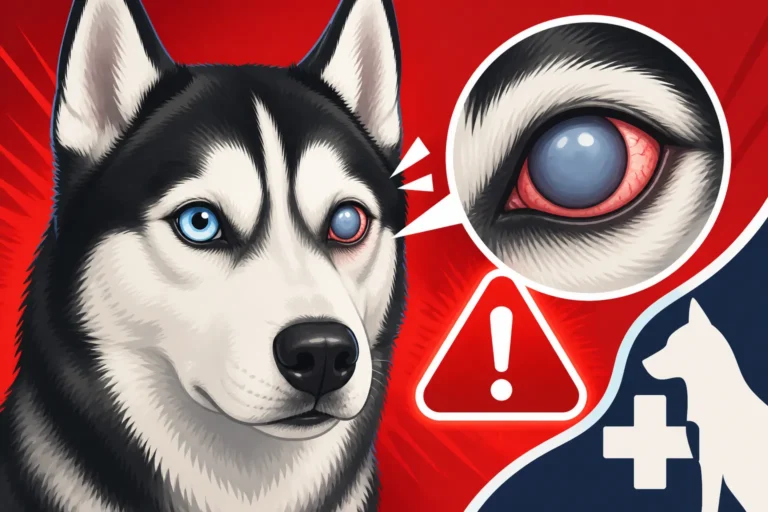
Progressive Retinal Atrophy, often just called PRA, isn't a single disease but a blanket term for a group of inherited disorders that cause the retina to slowly degenerate. Imagine the retina as the film in a camera – it's responsible for capturing light and sending those signals to the brain. When those cells start to break down, vision is impacted, often leading to blindness. In our Siberian Huskies, this condition is particularly significant because of how it's passed down through generations.
What Happens Inside a Husky's Eye
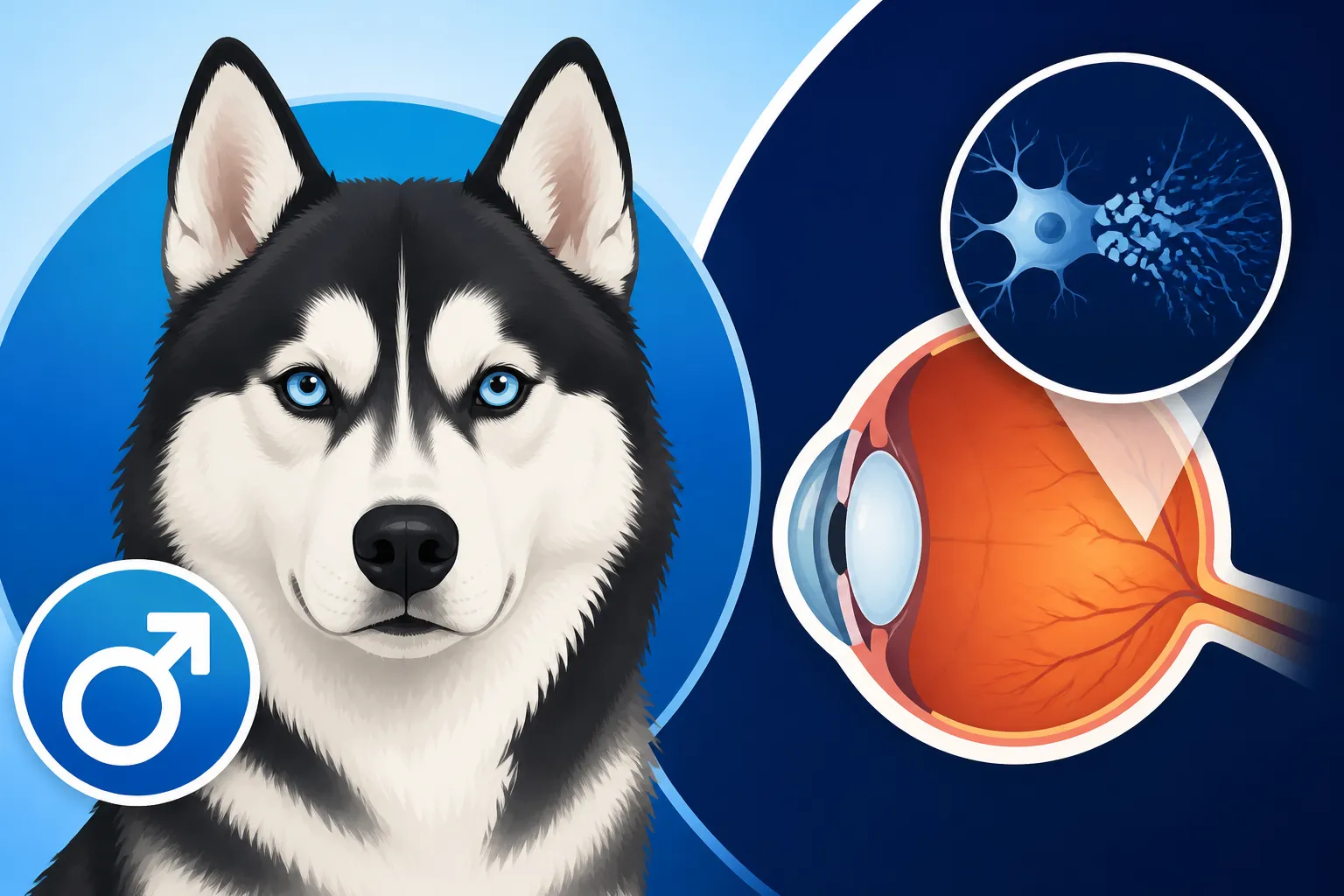
At a microscopic level, the retina contains special cells called photoreceptors: rods and cones. Rods handle vision in low light (think nighttime), and cones are for bright light and color perception. In PRA, these cells either develop abnormally or degenerate over time. For many affected Siberian Huskies, the rods are the first to go, meaning the initial symptom you might notice is "night blindness." Your typically fearless Husky might suddenly be bumping into furniture in the evening or hesitant to go outside after sunset.
As the disease progresses, the cones also begin to degenerate, leading to complete blindness, even in bright light. It’s not an overnight process; it’s a gradual decline that can be incredibly distressing for both dog and owner. The timeframe can vary wildly depending on the specific genetic mutation, sometimes showing up in young adults, and other times not until middle age.
The Stages of PRA and How it Affects Daily Life
The progression of PRA is insidious, often starting subtly. Initially, your Husky might just seem a little clumsy in dim lighting, maybe bumping into things on a night walk, or hesitating before jumping off the couch when it's dark. This is often dismissed as just being a little sleepy or a bit off, but it’s usually the first sign of rod degeneration. As their night vision worsens, you'll likely notice them relying more on their other senses – sniffing around more intently, listening more closely to your voice.
Eventually, their daytime vision will also start to fail. This is when the real challenges begin. Navigating familiar spaces becomes difficult, and your Husky might become more anxious or startle more easily. Imagine waking up one day and your world slowly getting dimmer, then completely dark. That's the reality for dogs with advanced PRA. It means their quality of life, their ability to play, explore, and interact with their environment, relies heavily on your adaptations and understanding. This gradual decline can be tough, and it's why understanding the specific type of PRA that affects Siberians is so crucial. If you're observing subtle changes in your Husky's vision, especially in low light, it's always worth discussing with your vet during their Siberian Husky Eye Disease and the Annual Exam.
The X-Linked Connection: Why Males are More Affected
Now, let's get to the crux of why this particular type of PRA, known as X-linked Progressive Retinal Atrophy (XLPRA), hits male Siberian Huskies harder. It all comes down to basic genetics and how chromosomes work.
Understanding X-Linked Inheritance
In a nutshell, X-linked inheritance means the gene responsible for the condition is located on the X chromosome. You probably remember from biology class that females have two X chromosomes (XX), and males have one X and one Y chromosome (XY). This difference in chromosome pairs is the key to understanding why males are more susceptible.
Here’s the simplified breakdown:
- Females (XX): If a female inherits one X chromosome with the XLPRA gene and one healthy X chromosome, she usually won't develop the disease herself. The healthy X chromosome acts like a backup, compensating for the faulty one. She will, however, be a "carrier" and can pass the gene on to her offspring. Think of it as having a spare tire – even if one tire is flat, you have another to keep going.
- Males (XY): This is where it gets tricky for our boys. If a male inherits an X chromosome with the XLPRA gene, he doesn't have a second X chromosome to compensate. Because of this, he will almost certainly develop the disease. He essentially has no "backup" X chromosome.
So, while females can carry the gene silently, males who inherit it are directly affected. This is why you'll hear about "Why Husky PRA Runs Through the Male Line."
The Inheritance Patterns Explained
Let's look at some scenarios to make this really clear:
- Normal Male + Carrier Female: If a healthy male (XY) mates with a female who is a carrier (XXc – where 'c' denotes the carrier gene), there's a 50% chance that each male puppy will be affected (XcY) and a 50% chance each female puppy will be a carrier (XXc). There's also a 50% chance each male will be normal (XY) and a 50% chance each female will be normal (XX).
- Affected Male + Normal Female: If an affected male (XcY) mates with a completely normal female (XX), all female puppies will be carriers (XXc), and all male puppies will be normal (XY). The father passes his faulty X to all his daughters, making them carriers, but his Y chromosome (which doesn't carry the gene) to all his sons.
- Affected Male + Carrier Female: This is the riskiest combination. All male puppies will be affected (XcY). All female puppies will either be affected (XcXc – though this is very rare for XLPRA type 1, but theoretically possible for other X-linked conditions) or carriers (XXc).
The reality is that carrier females are the silent drivers of this condition in the breed. They appear perfectly healthy themselves, but they unknowingly pass the problematic gene down, leading to affected males. This highlights the critical importance of genetic testing, which we'll discuss next.
Key Genetic Terms in PRA
To help clarify, here's a quick table outlining the genetic roles in X-linked inheritance for PRA in Siberian Huskies:
| Genetic Role | Chromosome Pairing | Description | Impact on Dog (Siberian Husky XLPRA) |
|---|---|---|---|
| Normal Male | XY | Possesses a healthy X chromosome. | No disease. Cannot pass on the faulty X gene. |
| Affected Male | XcY | Possesses one X chromosome with the faulty PRA gene. | Develops the disease. Passes faulty X to all daughters. |
| Normal Female | XX | Possesses two healthy X chromosomes. | No disease. Cannot pass on the faulty X gene. |
| Carrier Female | XXc | Possesses one healthy X and one faulty X chromosome. | No disease, but can pass on the faulty X gene. |
| Affected Female | XcXc (Rare) | Possesses two faulty X chromosomes. | Develops the disease. (Less common in XLPRA type 1) |
Understanding these roles is paramount, especially for breeders, to prevent the spread of this devastating condition.
Identifying and Managing XLPRA in Siberian Huskies
Knowing that XLPRA exists and affects male Huskies more frequently is one thing; actually doing something about it is another. Luckily, scientific advancements have given us tools to identify carriers and affected dogs, which is crucial for responsible breeding and early management.
The Power of DNA Testing
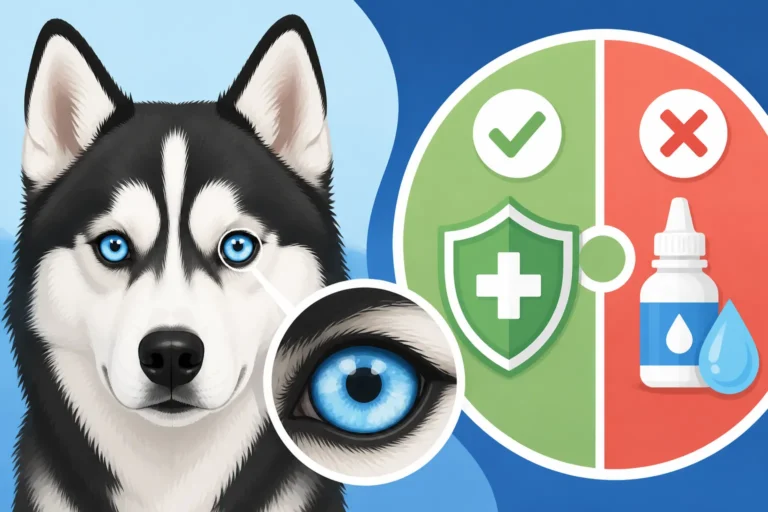
The absolute best way to identify dogs that are affected or carriers of XLPRA is through DNA testing. A simple cheek swab or blood sample can be sent to a specialized lab, like Optigen or a similar reputable genetic testing service, to analyze the dog's DNA for the specific mutation linked to XLPRA in Siberian Huskies. This test can tell you if your Husky is:
- Clear: No copy of the mutation, meaning they won't develop the disease and won't pass it on.
- Carrier: One copy of the mutation. Females will not develop the disease but can pass it on. Males are typically affected if they carry the X-linked gene, as discussed earlier. However, a female carrier can transmit a normal X chromosome or a mutated X chromosome to her offspring. So, for a female carrier, 50% of her sons will be affected and 50% of her daughters will be carriers.
- Affected: Two copies of the mutation (for females, if such a variant existed) or one copy (for males). These dogs will develop the disease.
For male Siberian Huskies, a "carrier" designation on their X chromosome means they are affected. This critical difference is often confusing, but it's vital to grasp. This is why when you get a The DNA Test for Siberian Husky PRA report, you need to understand exactly what the results mean for your dog's sex.
Recognizing Symptoms and Early Intervention
Even with testing, knowing what to look for can help you identify potential issues early. As mentioned, night blindness is usually the first sign. Your Husky might:
- Be reluctant to go out at night or in dimly lit areas.
- Bump into objects they usually navigate with ease.
- Become more dependent on you for guidance in low light.
- Have dilated pupils, especially in normal light, as their eyes try to gather more light.
If you observe these signs, an immediate visit to a veterinary ophthalmologist is recommended. While there's currently no cure for PRA, early diagnosis allows you to prepare and adapt your home environment, making life easier and safer for your dog. For instance, you might notice "A Siberian Husky That Hesitates in Dim Rooms" long before complete blindness sets in.
Living with a Blind Siberian Husky
The prospect of a beloved companion losing their sight is daunting, but Huskies are remarkably adaptable. With your love and support, a blind Husky can still live a full and happy life. Here are some key strategies:
- Maintain Routine: Keep feeding times, walk schedules, and playtimes consistent. Predictability reduces anxiety.
- Safety First: Childproof your home for your dog. Block off stairs, cover sharp corners, and always keep pathways clear. Keep them on a leash when outside and ensure your yard is securely fenced. For more on this, you might check out "Keeping a Blind Siberian Husky Safely Contained."
- Verbal Cues: Use clear verbal commands ("step up," "watch out," "stop") to guide them. Reward them generously for responding.
- Scent Markers: Use different scents (e.g., vanilla extract on furniture legs) to help them identify obstacles or important locations like their water bowl.
- Texture Paths: Place different textured rugs or mats to mark specific areas, like the path to their bed or food bowl.
- Socialization: Continue to socialize your Husky, but always introduce new people and dogs slowly and gently, allowing them to sniff and assess.
- Emotional Support: Your Husky will pick up on your emotions. Stay calm, patient, and reassuring.
While challenging, the bond you share can deepen through this journey. Many owners find their blind Huskies thrive with extra attention and a stable environment.
Implications for Owners and Breeders
The implications of XLPRA extend beyond the individual affected dog; they touch upon the entire breed, impacting ethical breeding practices and the choices prospective owners make.
The Breeder's Responsibility and Health Testing
For breeders, understanding X-linked inheritance and utilizing DNA testing for XLPRA is not just good practice – it's an ethical imperative. Responsible breeders will:
- Test all breeding stock: Every male and female used for breeding should be tested for XLPRA and other known genetic conditions. This helps identify carriers before they produce affected offspring.
- Avoid breeding affected dogs: This goes without saying. Affected dogs should be removed from breeding programs.
- Carefully consider carrier females: While carrier females typically do not show symptoms, breeding them to clear males will still produce carrier daughters. The goal should always be to breed away from the condition. "Breeding Around PRA in Siberian Huskies" is a complex topic that ethical breeders invest significant effort in.
- Be transparent: Share health testing results openly with prospective puppy buyers. This ensures buyers are fully informed about the genetic health of their potential puppy's lineage.
As a prospective puppy owner, always ask to see the health certificates for both parents. A reputable breeder will have documentation for Health Testing Before You Buy a Siberian Husky, including eye certifications from a board-certified veterinary ophthalmologist and specific DNA test results. If a breeder cannot provide these, it's a significant red flag.
The Financial and Emotional Toll
Dealing with a dog diagnosed with XLPRA can take a considerable toll, both emotionally and financially. While initial diagnosis might involve an ophthalmologist consultation and DNA testing, ongoing care usually focuses on managing comfort and adapting the environment. However, any unexpected veterinary visits related to their compromised vision (e.g., bumping into something causing injury) can add up.
This is where considering pet insurance early can make a real difference. Companies like Healthy Paws offer comprehensive plans that can help alleviate the financial burden of unexpected health issues, though it’s important to remember that pre-existing conditions are typically not covered. Enrolling your Husky young, before any signs of issues arise, is key if you want Siberian Husky Pet Insurance and the Eye Clause to be a safety net for future conditions. The emotional impact, however, is often the heaviest. Watching your vibrant, active Husky gradually lose their sight can be heartbreaking, requiring immense patience and a shift in how you interact and care for them.
Support for Owners
You are not alone if you're navigating life with a visually impaired Husky. There are many online communities, forums, and support groups for owners of blind dogs. Connecting with others who understand the unique challenges and joys can be incredibly beneficial. Organizations dedicated to canine vision health often provide resources, tips, and a sense of community. Sharing experiences and advice can empower you to provide the best possible life for your Husky, demonstrating just how resilient and loving these dogs truly are, no matter what challenges they face.
Disclaimer
This article is for general informational purposes only and does not constitute professional advice. Laws, prices and regulations vary by location and change over time. Consult a qualified professional for guidance on your specific situation.