What the X-Linked Husky PRA Test Reports
It's heartbreaking to imagine your lively Siberian Husky, full of boundless energy and curiosity, slowly losing their sight. The thought alone is enough to send a shiver down any owner's spine. Navigating the world of genetic health tests can feel like deciphering a complex code, leaving you wondering what all those fancy terms and acronyms actually mean for your beloved companion. This comprehensive guide will break down exactly what the X-linked Progressive Retinal Atrophy (PRA) test reports for your Siberian Husky, helping you understand the results and what steps you can take to ensure a healthy future.
Understanding X-Linked Progressive Retinal Atrophy (PRA) in Huskies
When we talk about the health of our Huskies, eye conditions often come up, and for good reason. Progressive Retinal Atrophy (PRA) is one of those terms that can sound scary, and for a Siberian Husky, there's a specific type that carries a unique genetic signature: X-linked PRA. Understanding this condition is the first step in appreciating why testing is so vital.
What is X-Linked PRA and How It Affects Vision
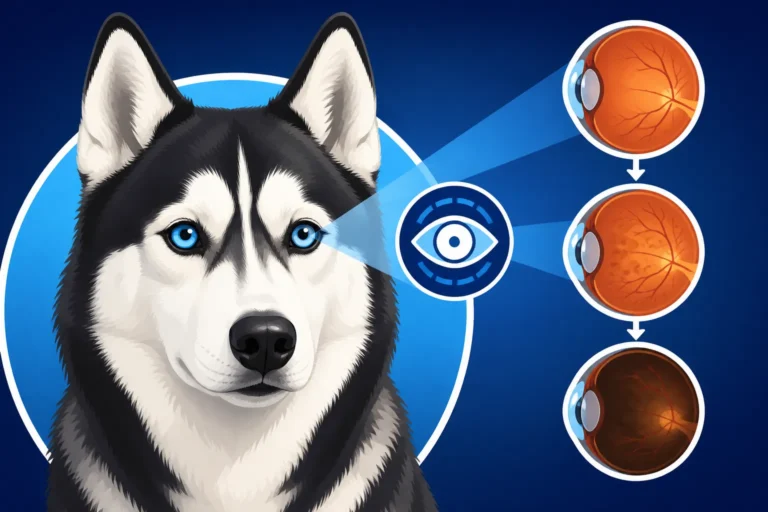
Progressive Retinal Atrophy isn't just one disease; it's a blanket term for a group of genetic disorders that cause the retina, the light-sensitive tissue at the back of the eye, to slowly degenerate. Think of the retina as the film in an old camera – it's what captures the images. In dogs with PRA, the cells in this "film" start to break down.
Specifically, X-linked PRA in Siberian Huskies typically manifests as a gradual loss of vision, often starting with night blindness. You might notice your Husky becoming hesitant to navigate familiar spaces in dim light, bumping into furniture, or seeming disoriented after dusk. As the disease progresses, their daytime vision also deteriorates, eventually leading to complete blindness. This isn't a sudden event, but a slow, irreversible process that can begin in early adulthood, sometimes even before a dog reaches two years of age, though onset can vary. While it's a devastating condition, it's important to remember that it's not painful for the dog itself, though the adjustment to blindness can be challenging for both dog and owner. Early detection, however, through diligent check-ups like the Siberian Husky Eye Disease and the Annual Exam, can help you prepare and support your Husky as their vision changes.
The Unique Genetics Behind X-Linkage in Siberian Huskies
Now, let's dive into the "X-linked" part, because this is where Siberian Huskies have a particular distinction. In genetics, "X-linked" refers to traits or diseases that are carried on the X chromosome. You might remember from biology class that females have two X chromosomes (XX), and males have one X and one Y chromosome (XY).
The gene responsible for X-linked PRA in Huskies is located on this X chromosome. This means the inheritance pattern is different from many other genetic diseases.
- Males (XY): If a male inherits a single affected X chromosome from his mother, he will develop PRA. This is because he only has one X chromosome, so there's no "backup" healthy gene to compensate. This is why you often hear that Why Husky PRA Runs Through the Male Line.
- Females (XX): Females, having two X chromosomes, have a different scenario.
- If a female inherits one affected X chromosome and one healthy X chromosome, she will be a "carrier." She typically won't develop the disease herself because her healthy X chromosome can compensate. However, she can pass the affected gene on to her offspring.
- If a female inherits two affected X chromosomes (one from each parent), she would develop PRA. This is much rarer, as it would require both parents to contribute an affected X.
This X-linked pattern is crucial for understanding the test results and making informed decisions, especially for breeders. It highlights why even a seemingly healthy female dog could unknowingly carry and pass on this devastating condition.
Decoding Your Siberian Husky's PRA Test Results
When you send off your Husky's DNA sample for an X-linked PRA test, you're looking for one of three possible outcomes. Each result carries significant implications, not just for the individual dog's health, but also for any potential breeding plans. Understanding these categories is paramount for responsible ownership and breeding.
"Clear" Status: What It Means for Your Dog
Receiving a "Clear" result is often a huge relief for any Siberian Husky owner. This means your dog does not possess the specific gene mutation known to cause X-linked PRA. In simpler terms, your Husky is genetically free of this particular form of PRA and will not develop it. Moreover, they cannot pass the mutated gene on to any offspring.
For pet owners, a clear result means you can rest easy knowing your Husky is not at risk for X-linked PRA. You'll still want to keep up with regular veterinary check-ups and routine eye exams, of course, because Huskies can be susceptible to other eye conditions like Corneal Dystrophy in the Siberian Husky or Juvenile Cataracts in the Siberian Husky. However, this specific genetic concern is off the table.
For breeders, a "Clear" dog is highly desirable. It means they can be bred to any other dog without fear of producing puppies affected by X-linked PRA, assuming the other parent is also clear or at least a carrier (more on that in a moment). This helps in maintaining the health of the breed and ensures healthy vision for future generations. When you are looking at Reading a Siberian Husky Puppy's Health Paperwork, seeing "Clear" for both parents is ideal.
"Carrier" Status: An Important Distinction for Breeders
A "Carrier" result is where the X-linked nature of this disease becomes particularly important. If your female Siberian Husky is reported as a "Carrier," it means she has one copy of the mutated gene on one of her X chromosomes, but her other X chromosome carries a healthy copy. Because of this, she will likely never develop X-linked PRA herself. Her healthy gene usually compensates, allowing her to have normal vision throughout her life. This is what we mean by A Siberian Husky That Carries PRA Without Showing It.
However, the "Carrier" status is extremely significant for breeding. A female carrier has a 50% chance of passing the affected X chromosome to each of her puppies.
- Male Puppies: If a male puppy (XY) inherits the affected X from a carrier mother, he will develop X-linked PRA because he has no second X to compensate.
- Female Puppies: If a female puppy (XX) inherits the affected X from a carrier mother, she will also be a carrier, just like her mom, but likely won't be affected herself. If she inherits the healthy X, she will be clear.
This is why, for ethical breeders, knowing a female dog's carrier status is crucial. Breeding a carrier female to a clear male significantly reduces the risk, but can still produce affected male puppies and carrier female puppies. The best practice for Breeding Around PRA in Siberian Huskies often involves only breeding carriers to clear dogs, or ideally, removing carriers from the breeding program entirely to slowly reduce the gene's presence.
"Affected" Status: Planning for Your Husky's Future
An "Affected" result means your Siberian Husky has two copies of the mutated gene (for females) or one copy (for males), and therefore, will develop X-linked PRA. As discussed, this typically starts with night blindness and progresses to complete blindness.
For a pet owner with an affected dog, this news can be devastating. However, it's important to remember that an affected dog can still live a full and happy life with proper care and adjustments. You'll want to work closely with your veterinarian and potentially a veterinary ophthalmologist to monitor their vision and create a supportive environment. This might include maintaining a consistent home layout, using scent markers, or even training new verbal cues to help them navigate. Pet insurance providers like Healthy Paws can offer significant financial relief for managing ongoing veterinary care and specialized support for affected dogs, especially if enrolled before diagnosis. Planning for a future where your Husky is blind is crucial, including how to ensure Keeping a Blind Siberian Husky Safely Contained and Whether a Blind Siberian Husky Can Still Run.
For breeders, an "Affected" dog should absolutely be removed from any breeding program immediately. Breeding an affected dog would guarantee passing on the gene to all offspring, dramatically increasing the prevalence of this disease in the breed. The goal of genetic testing is precisely to prevent the birth of affected puppies.
Summary Table of X-Linked PRA Test Results
To make sense of it all, here's a quick reference table outlining the possible test reports and their implications:
| Result Status | Genetic Makeup (Females XX / Males XY) | Health of the Dog | Breeding Implications |
|---|---|---|---|
| Clear | Females: Xc Xc Males: Xc Y |
Will not develop X-linked PRA. Normal vision. | Can be bred to any dog (Clear, Carrier, Affected) without producing affected puppies, but breeding to Affected dogs is highly unethical. All offspring will be Clear or Carriers depending on other parent. |
| Carrier | Females: Xc Xa | Will not develop X-linked PRA. Normal vision. | Should only be bred to Clear males. 50% chance of producing Affected males, 50% chance of producing Carrier females. Not recommended for breeding if Clear dogs are available. |
| Affected | Females: Xa Xa Males: Xa Y |
Will develop X-linked PRA, leading to blindness. | Should never be bred. All offspring would inherit the affected gene. |
Note: Xc = healthy X chromosome, Xa = affected X chromosome
The Critical Importance of X-Linked PRA Testing for Owners and Breeders
Beyond just getting a result, understanding why this test matters is crucial. It’s not just a checkbox; it’s a tool for foresight, care, and the overall health of the Siberian Husky breed.
Protecting Your Dog's Health and Quality of Life
For individual pet owners, this test provides invaluable information. Imagine discovering your new puppy is "Affected" with X-linked PRA. While devastating, knowing this early on allows you to prepare for their future. You can start making adjustments to your home environment long before their vision begins to fail, helping them build spatial memory and confidence. You can also work with your vet to monitor their eye health closely, and explore options for enrichment and engagement that don't rely solely on sight. This proactive approach can significantly enhance their quality of life as they transition to blindness.
Furthermore, if your dog tests as "Clear," it can rule out a potential cause for future vision problems, allowing your veterinarian to focus on other possibilities if eye issues arise. For those considering pet insurance, getting your dog tested and understanding their genetic predispositions early can be wise. Providers like Healthy Paws emphasize early enrollment, as genetic conditions often fall under pre-existing clauses if diagnosed before a policy is active.
Responsible Breeding Practices to Preserve the Breed
For reputable Siberian Husky breeders, genetic testing for X-linked PRA is not just a recommendation; it's an ethical imperative. The goal of responsible breeding is to produce healthy, well-adjusted puppies that improve the breed standard, and this includes eliminating or drastically reducing the incidence of debilitating genetic diseases.
By testing all breeding stock, breeders can make informed decisions about pairings. A "Clear" male can be safely bred to a "Carrier" female, though it's ideal to strive for "Clear-to-Clear" pairings to minimize the carrier gene in the population. The test allows breeders to strategically Breeding Around PRA in Siberian Huskies, ensuring that affected puppies are not born. Without this test, breeders would be operating blind, risking the production of entire litters of affected males and carrier females, thereby perpetuating the disease. This commitment to health testing is a hallmark of breeders who truly care about the future of the breed and the well-being of their puppies. It’s part of a larger commitment to Health Testing Before You Buy a Siberian Husky.
Integrating Test Results into Your Overall Health Plan
An X-linked PRA test result is just one piece of the puzzle in your Husky's overall health picture. It should be integrated with other health screenings and regular veterinary care. For example, even if your dog is clear of X-linked PRA, they still need their annual eye exams with a veterinary ophthalmologist, as discussed in What an Ophthalmologist Checks in a Siberian Husky, to check for other conditions like cataracts or glaucoma that aren't genetic or are inherited differently.
Consider the example of a female Husky who is a PRA carrier. While she won't go blind from this specific condition, a responsible owner will understand the genetic implications if they ever consider breeding her. They might choose to spay her, or if she is bred, ensure her mate is clear and that all puppies are tested. This holistic approach, combining genetic insights with routine medical care, offers the best chance for a long, healthy, and happy life for your Siberian Husky, even into their senior years, when Caring for a Siberian Husky Past Ten becomes a primary focus.
Where and When to Get Your Siberian Husky Tested
Deciding to test your Siberian Husky for X-linked PRA is a proactive step toward their health. Knowing where to go and when to do it can make the process straightforward and effective.
Choosing a Reputable Genetic Testing Lab
The good news is that genetic testing for X-linked PRA in Siberian Huskies is widely available. Several reputable veterinary genetic testing laboratories offer this specific test. When choosing a lab, look for ones that:
- Are well-established and recognized: Labs like OptiGen (a pioneer in canine eye genetics), Embark Veterinary, and Canine Health Check by Paw Print Genetics are commonly used and highly respected within the dog breeding community. You might also see results referenced by the Orthopedic Foundation for Animals (OFA) database, which registers genetic test results, including those for PRA, contributing to a dog's overall What Siberian Husky CHIC Certification Requires.
- Provide clear, easy-to-understand reports: The lab should clearly state the dog's status (Clear, Carrier, Affected) and ideally offer some explanation of what those terms mean.
- Use reliable sample collection methods: Most tests use a simple buccal swab (a cheek swab) that you can collect at home. Some labs may also accept blood samples, often collected by your veterinarian. Ensure the lab provides clear instructions for sample collection to avoid contamination or insufficient DNA.
- Have good customer support: Should you have questions about the process or your results, a responsive customer service team can be very helpful.
You typically order a kit online, which contains the swabs and instructions. After collecting the sample, you mail it back to the lab, and results are usually available within a few weeks, often accessible through an online portal.
Ideal Timing for Genetic Screening
The beauty of DNA testing is that it can be done at any age. Unlike some health screenings that require a dog to reach a certain age (like hip x-rays for Siberian Husky Hips and Why the Rate Is Low), a genetic test for X-linked PRA can be performed on a puppy just weeks old or an adult dog.
- For Puppies: Many reputable breeders will have puppies tested before they even go to their new homes, especially if the dam is a carrier. This provides new owners with immediate, transparent information about their puppy's genetic status.
- For Breeding Stock: If you are considering breeding your Siberian Husky, testing before any breeding takes place is absolutely non-negotiable. Knowing the genetic status of both potential parents allows for responsible pairing decisions that prevent the birth of affected puppies. This should be a part of their comprehensive health panel prior to conception.
- For Adult Pet Dogs: Even if you have no intention of breeding, testing an adult Husky can still be beneficial. If your dog is affected, it allows you to plan for their future vision loss. If they are a carrier, it simply gives you more information about their genetic makeup, which can be interesting and contribute to a fuller understanding of your individual dog.
Ultimately, whether you're a breeder striving to improve the health of the Siberian Husky line, or a dedicated pet owner wanting to ensure the best possible future for your furry family member, understanding what the X-linked PRA test reports is a powerful tool in your Husky care arsenal.
Disclaimer
The information provided in this article is for educational purposes only and should not be considered a substitute for professional veterinary advice. Always consult with a qualified veterinarian or a veterinary ophthalmologist regarding any health concerns or before making any decisions about your dog's medical care, breeding plans, or treatment. Genetic testing interpretations should be discussed with a professional who understands your dog's full medical history.