Why Husky PRA Runs Through the Male Line
It’s a heartbreaking and confusing moment when you notice your beloved male Siberian Husky starting to struggle with his vision, especially in dim light or at night. You might think, "How could this be happening? He's so healthy otherwise!" And then, the perplexing question arises: why does it seem to be mostly boys who get this awful disease, Progressive Retinal Atrophy, while their sisters or mothers seem completely fine? This guide is here to shed light on this specific genetic mystery, explaining exactly why PRA is so often seen through the male line in Siberian Huskies.
Understanding Progressive Retinal Atrophy in Siberian Huskies
Progressive Retinal Atrophy, or PRA, is a blanket term for a group of genetic diseases that cause the degeneration of the retina, leading to blindness. For Siberian Husky owners, it's a particularly relevant concern because our beautiful, energetic dogs are unfortunately predisposed to a specific type of PRA. It's not just a "getting old" problem; it's a genetic hand dealt early in life, even if symptoms don't show up until later.
What PRA Actually Does to Your Husky's Eyesight
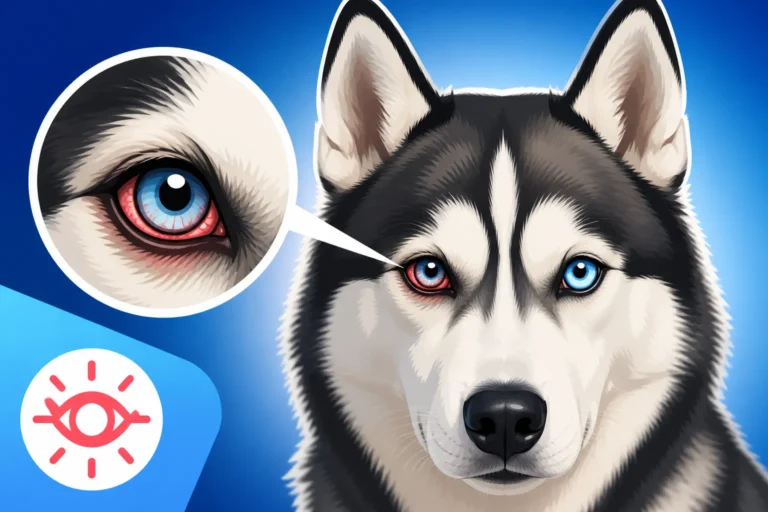
Imagine trying to navigate your home when the lights are suddenly turned off. That initial disorientation, the bumping into familiar objects – that’s a glimpse into what your Husky might experience with PRA. The disease typically starts by affecting the rods in the retina, which are responsible for vision in low light. This means the first noticeable sign for many owners is "night blindness." Your Husky might become hesitant to go out in the yard after dusk, or he might start bumping into furniture when the house is dimly lit.
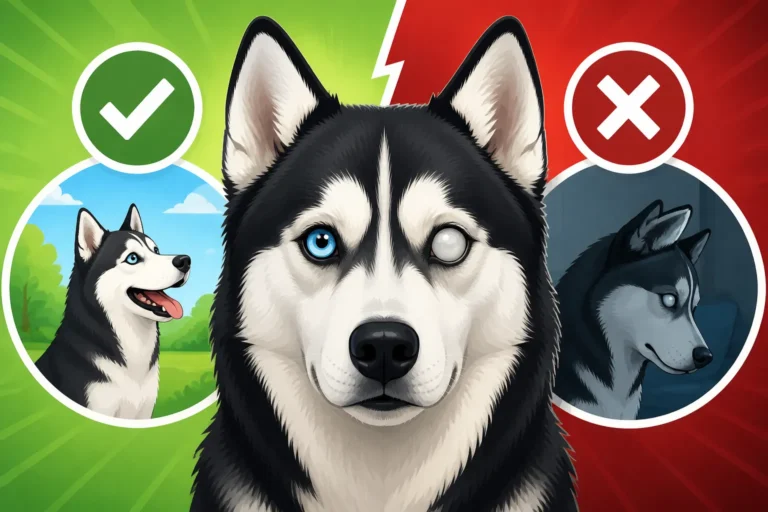
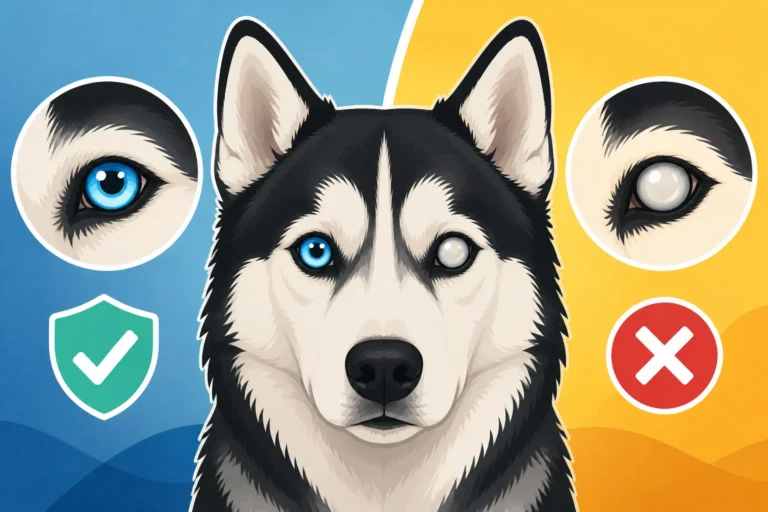
As the disease progresses, the cones, responsible for daylight vision and color perception, also begin to degenerate. This leads to a gradual but relentless decline in overall vision, eventually resulting in complete blindness. It’s a slow, insidious process, often spanning months or even years. Owners might notice their Husky's pupils becoming unusually dilated, even in bright light, as the eyes try to let in more light to compensate for the failing retina. There's also sometimes a reflective "eye shine" that becomes more pronounced, often described as a "green glow" when light hits their eyes in the dark. This is due to the tapetum lucidum reflecting more light as the retinal cells thin. It's a tough journey to watch your vibrant, active companion lose their most crucial sense, especially for a breed that relies so much on their senses for exploring and interacting with the world.
The Specific Type of PRA Affecting Siberian Huskies
Not all PRA is created equal. There are different forms of the disease, each caused by a unique genetic mutation and following different inheritance patterns. In Siberian Huskies, the predominant form of PRA that we worry about is X-linked Progressive Retinal Atrophy, often referred to as XLPRA. Specifically, it's XLPRA1 and XLPRA2, although XLPRA1 is more commonly discussed in the context of male Huskies being primarily affected.
This distinction is crucial because it directly explains why the disease seems to target males. Unlike other forms of PRA that might be autosomal recessive (meaning a dog needs two copies of the affected gene, one from each parent, regardless of sex), X-linked inheritance works differently. The gene responsible for XLPRA is located on the X chromosome, one of the sex chromosomes. This single detail changes everything about how the disease is passed down and expressed in our Huskies. Understanding this is key to grasping "Why Husky PRA Runs Through the Male Line". If you're keen to dive deeper into the specifics, our article on Progressive Retinal Atrophy in Siberian Huskies offers a more expansive look at the disease itself.
The Basics of X-Linked Inheritance
To really understand why male Huskies are primarily affected by PRA, we need to take a quick, easy trip back to biology class and talk about chromosomes. Don't worry, it's not as complicated as it sounds, and it holds the key to this genetic puzzle.
How Sex Chromosomes Determine Gender in Dogs
Just like humans, dogs have chromosomes that carry all their genetic information. Among these, there are specific chromosomes called sex chromosomes that determine whether an individual is male or female. In dogs, this is represented by X and Y chromosomes.
- Females have two X chromosomes (XX). Think of it as having a backup copy.
- Males have one X chromosome and one Y chromosome (XY). They only get one shot with that X chromosome.
This fundamental difference in their sex chromosome makeup is the absolute cornerstone of understanding X-linked inheritance. Every puppy inherits one sex chromosome from their mother (always an X) and one from their father (either an X or a Y). If the father contributes an X, the puppy is a female (XX). If the father contributes a Y, the puppy is a male (XY). It’s this simple pairing that sets the stage for how X-linked diseases like PRA are expressed.
What "X-Linked Recessive" Really Means for Genes
Now, let's layer on the "recessive" part. A recessive gene means that for a trait or disease to show up, an individual usually needs two copies of that gene (one from each parent) if it's on a regular chromosome. However, with X-linked recessive genes, the rules change significantly, especially for males.
When a gene is X-linked recessive, it means:
- The gene is located on the X chromosome. This is the critical part.
- The trait or disease only manifests if there isn't a dominant, healthy gene to override it.
For females (XX), if one X chromosome carries the recessive PRA gene, but the other X chromosome carries a healthy, dominant gene, the female will typically not show symptoms of the disease. She's considered a "carrier" – she carries the gene but isn't affected. This is because the healthy gene on her other X chromosome acts as a "shield."
For males (XY), it's a different story. They only have one X chromosome. If that single X chromosome carries the recessive PRA gene, there's no backup, no dominant healthy gene on another X to override it. Consequently, the male will develop the disease. This is the heart of why male Huskies are disproportionately affected by X-linked PRA.
Carriers, Affected Males, and Unaffected Females
To make this crystal clear, let's look at the different genetic statuses that can arise from X-linked PRA inheritance:
- Affected Male (X^pY): This male has the PRA gene (X^p) on his single X chromosome. Because there's no other X chromosome to provide a healthy copy, he will develop PRA. He inherited this X^p from his mother.
- Carrier Female (X^PX^p): This female has one healthy X chromosome (X^P) and one X chromosome carrying the PRA gene (X^p). She typically does not show symptoms because the healthy X^P gene "masks" the recessive X^p. However, she can pass the X^p gene on to her offspring.
- Unaffected Female (X^PX^P): This female has two healthy X chromosomes. She will not develop PRA and cannot pass the gene on.
- Unaffected Male (X^PY): This male has a healthy X chromosome. He will not develop PRA and cannot pass the gene on.
Understanding these distinctions is vital for breeders who are trying to make responsible choices. Genetic testing, such as The DNA Test for Siberian Husky PRA, has become an invaluable tool for identifying carriers and affected individuals, helping to curb the spread of this devastating disease within the breed. It’s also why, when considering a puppy, asking to see Reading a Siberian Husky Puppy's Health Paperwork from the parents is so important.
Why Male Huskies are Primarily Affected by X-Linked PRA
It really boils down to that fundamental difference in sex chromosomes. When you combine the X-linked nature of the PRA gene with the genetic makeup of male and female dogs, the picture becomes very clear as to why our male Huskies bear the brunt of this condition.
The Single X Chromosome in Males and Its Impact
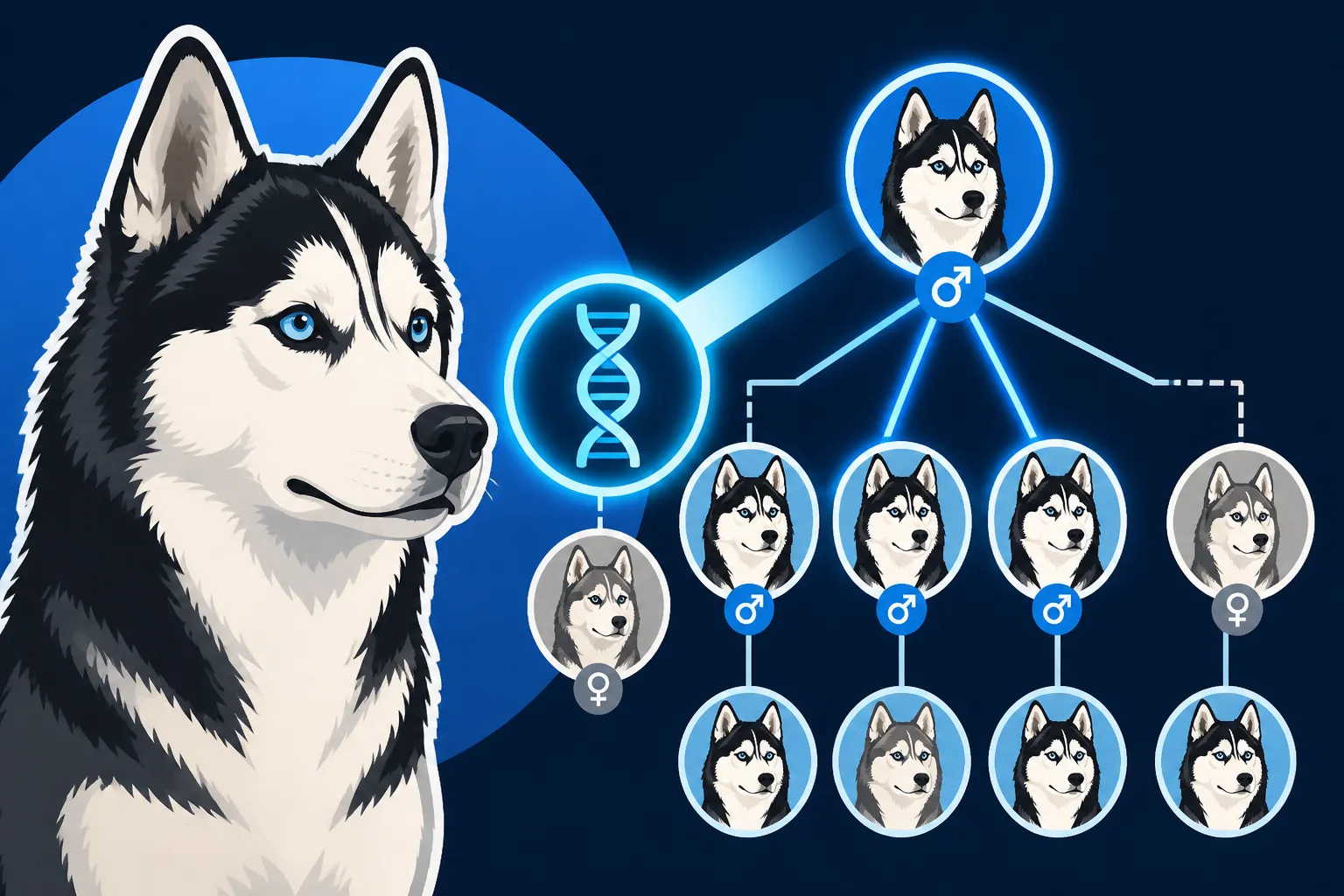
Think of it like this: a male Siberian Husky is born with an X chromosome and a Y chromosome (XY). The X chromosome he receives always comes from his mother. If his mother is a carrier of the X-linked PRA gene – meaning she has one healthy X and one X carrying the PRA mutation – there's a 50% chance that she will pass on the X with the PRA gene to her male offspring.
If a male puppy inherits that single X chromosome with the PRA gene, he's in trouble. He doesn't have a second X chromosome to provide a normal, functional copy of the gene to compensate. There's no "backup." Therefore, that single recessive gene on his X chromosome will be expressed, and he will develop Progressive Retinal Atrophy. This is why you often see brothers from the same litter affected, while their sisters, even if they carry the gene, remain symptom-free. It’s a harsh reality of X-linked inheritance.
Females as Carriers of the PRA Gene
Female Siberian Huskies, with their two X chromosomes (XX), have a distinct advantage. If a female inherits one X chromosome with the PRA gene from her mother or father, and a healthy X chromosome from the other parent, she typically remains clinically unaffected. She becomes a "carrier." The healthy gene on her other X chromosome is usually sufficient to produce enough of the necessary protein for retinal health, preventing the disease from manifesting.
While being a carrier means she won't go blind from XLPRA, it doesn't mean she's irrelevant to the genetic conversation. A carrier female can still pass the PRA gene to her offspring. Each time she has a litter, there's a 50% chance any given puppy will inherit her X chromosome carrying the PRA gene. This means:
- Male puppies who inherit that X will develop PRA.
- Female puppies who inherit that X will become carriers (assuming the father is unaffected).
This hidden aspect of female carriers is precisely why responsible breeding practices, including thorough genetic testing, are so important in preventing the spread of X-linked PRA. This is especially true for health-conscious owners; it's a key reason why Why Siberian Huskies Need Their Eyes Checked Yearly by an ophthalmologist is so vital, not just for detecting existing disease but also for ongoing monitoring.
Rare Cases: When a Female Husky Can Show Symptoms
While it’s uncommon, it's not entirely impossible for a female Siberian Husky to develop X-linked PRA. These cases are rare but can occur under specific circumstances:
- Inheriting Two Affected X Chromosomes: If a female puppy inherits an X chromosome with the PRA gene from both her mother (who would be a carrier or affected herself) and her father (who would have to be affected, as he only has one X), then she would have two copies of the defective gene (X^pX^p). In this scenario, she would develop the disease, just like an affected male. This is extremely rare, however, as it requires a very specific mating combination.
- Skewed X-inactivation: In female mammals, one of the two X chromosomes in each cell is randomly inactivated early in development. This process, called X-inactivation or lyonization, normally ensures that females don't produce double the amount of X-linked proteins compared to males. If, by chance, the X chromosome carrying the healthy gene is predominantly inactivated in the retinal cells, while the X chromosome with the PRA gene remains active, then the female could potentially show symptoms, even if she's technically a carrier. This is a complex biological phenomenon and is considered a rare occurrence, making it even harder to predict.
These rare exceptions highlight the intricate nature of genetics but don't diminish the fact that the vast majority of X-linked PRA cases in Siberian Huskies will be observed in males due to their single X chromosome.
Recognizing the Signs and Getting a Diagnosis
Early detection of any health issue, especially one impacting a crucial sense like sight, is incredibly important. For PRA in Siberian Huskies, recognizing the subtle hints your dog might be dropping can make a world of difference in adapting and ensuring their continued well-being.
Early Indicators of PRA in Your Siberian Husky
The onset of PRA is typically insidious, meaning it develops gradually. The first signs can be easy to miss, often dismissed as "just getting older" or a temporary clumsiness. However, armed with knowledge, you can be more vigilant:
- Night Blindness: This is almost always the first symptom. You might notice your Husky is hesitant to enter dark rooms, bumps into furniture or walls at dusk or in low light, or is less willing to go out into the yard after the sun goes down. They might walk with a higher step, almost as if feeling their way.
- Dilated Pupils: As the retinal cells degenerate and the eyes try to capture more light, the pupils may appear unusually dilated, even in moderately lit environments. Sometimes, this is accompanied by that characteristic "eye shine" or tapetal reflection mentioned earlier, which seems more intense than usual.
- Changes in Behavior: A previously confident dog might become more tentative, anxious, or clingy, especially in unfamiliar or poorly lit surroundings. They might start relying more on their other senses, like scent and hearing, which you may observe if you pay close attention.
- Clumsiness: While initially it might be at night, eventually, even in daylight, your Husky might misjudge steps, bump into objects, or struggle with depth perception.
If you observe any of these signs, don't delay. A prompt visit to your vet is the next crucial step.
The Importance of Regular Eye Exams and Vet Visits
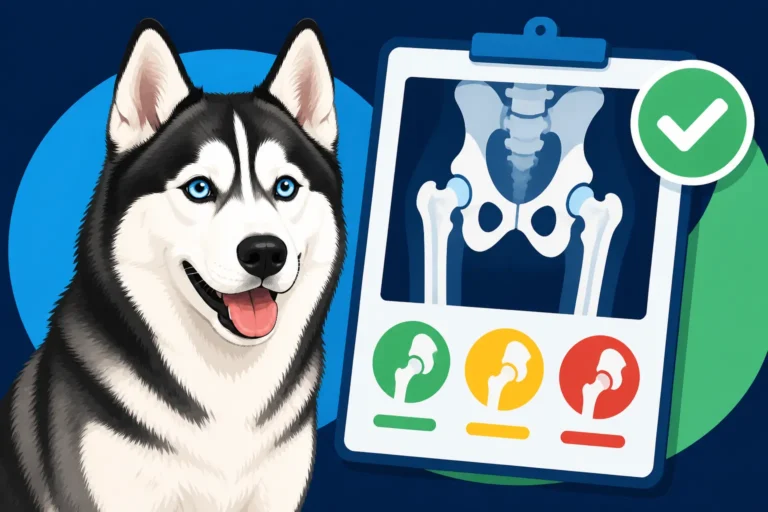
Regular veterinary check-ups are always important, but for a breed prone to specific eye conditions like PRA, annual eye examinations take on extra significance. A general practitioner vet can perform an initial eye check, but ideally, your Siberian Husky should see a veterinary ophthalmologist for a comprehensive evaluation. These specialists have the equipment and expertise to detect the earliest changes in the retina that might be missed during a routine exam.
These specialized exams, sometimes called CERF (Canine Eye Registry Foundation) exams, are not just for diagnosing problems; they're also a critical part of proactive health management and responsible breeding. Even if your Husky seems perfectly fine, an annual visit to a specialist for a thorough eye exam can establish a baseline and catch any developing issues before they become advanced. Our guide on Siberian Husky Eye Disease and the Annual Exam goes into more detail about what these visits entail.
Diagnostic Tools: Genetic Testing and Eye Examinations
When PRA is suspected, a combination of tools is used for definitive diagnosis:
- Ophthalmic Examination: A veterinary ophthalmologist will perform a thorough examination, including looking at the back of the eye with an ophthalmoscope. They can observe changes in the retina and optic nerve that are characteristic of PRA, such as thinning of the retinal layers and changes in blood vessels. An electroretinogram (ERG) might also be performed, which measures the electrical activity of the retinal cells in response to light, providing a clear indication of retinal function.
- Genetic Testing: This is the most definitive way to confirm X-linked PRA and identify carriers. A simple DNA test, usually done with a cheek swab, can identify the specific mutation responsible for the disease in Siberian Huskies. This test can be performed at any age, even on young puppies, and is crucial for breeding animals. The Orthopedic Foundation for Animals (OFA) maintains a public database where health testing results, including genetic test outcomes for PRA, are recorded. Learning to read a Reading a Siberian Husky OFA Eye Certificate will give you a clear picture of what health clearances mean. Knowing the genetic status of your dog, especially if you have a male, can help you prepare for what might come and allow you to make informed decisions about their future care.
Managing Life with a PRA-Affected Siberian Husky
Receiving a PRA diagnosis for your Husky can feel devastating. It’s natural to feel a rush of emotions – sadness, worry, perhaps even guilt. But remember, a PRA diagnosis isn’t an end; it’s a new beginning to how you care for your dog. Huskies are incredibly resilient, and with your help, they can adapt remarkably well to vision loss and continue to live full, happy lives.
Adapting Your Home for a Vision-Impaired Dog
The key to helping a blind Husky thrive is consistency and safety. Their world becomes about familiarity and touch.
- Maintain Consistency: This is perhaps the most important rule. Avoid moving furniture, dog beds, or food and water bowls. Your Husky creates a mental map of your home, and changing it frequently will only disorient and frustrate them. If you absolutely must move something, do it slowly and gently guide your Husky around the new obstacle repeatedly until they've updated their internal map.
- Safety First: Block off stairs with gates, cover sharp edges, and clear pathways of clutter. Consider childproof locks on cabinets or doors if your Husky is prone to exploring with their nose. Outside, ensure your yard is securely fenced. An article on Keeping a Blind Siberian Husky Safely Contained offers excellent practical advice for maintaining their safety.
- Create Scent and Texture Cues: Use different textures of mats (e.g., a rougher mat before a step, a softer one by their food bowl) or consistent scent markers (a drop of essential oil diluted in water on furniture legs) to help them navigate.
- Verbal Cues: Start using consistent verbal cues for everything: "step up," "step down," "wait," "left," "right," "stop." Your voice will become their guiding light.
Maintaining Quality of Life and Mental Stimulation
A blind Husky is still a Husky, which means they still crave mental and physical activity. Their other senses become heightened, and you can leverage these to keep them engaged.
- Scent Work: This is a fantastic way to engage your Husky's powerful nose. Hide treats around the house or yard and encourage them to "find it." Snuffle mats and puzzle toys that dispense treats are also excellent for mental stimulation.
- Consistent Routines: Stick to a predictable schedule for feeding, walks, and playtime. This reduces anxiety and helps your Husky feel secure in their environment.
- Familiar Routes: When walking, stick to familiar, safe routes. Let them sniff and explore. You might find that even without sight, they still love to go to the park or on a trail they know well. Surprisingly, many blind Huskies can still enjoy running and even participate in activities like Canicross, as discussed in Whether a Blind Siberian Husky Can Still Run. Just ensure safety and familiarity are paramount.
- Interactive Toys: Toys that make noise (crinkle, squeak, rattle) or have different textures can be very stimulating. Always supervise playtime to ensure safety.
The Emotional Toll on Owners and Finding Support
It's okay to feel overwhelmed. Watching your dog lose their sight is emotionally challenging. You're not alone in these feelings.
- Acknowledge Your Feelings: Allow yourself to grieve the loss of your dog's sight and the changes it brings. This is a significant life event for both of you.
- Seek Support: Connect with other owners of blind dogs. Online forums, local groups, or even your vet might be able to recommend resources. Sharing experiences and tips can be incredibly validating and helpful.
- Be Patient and Positive: Your Husky will pick up on your emotions. Stay calm, patient, and positive. Your confidence will reassure them. Celebrate every small victory and adaptation.
- Financial Planning: Dealing with chronic health conditions can also bring financial stress. Pet insurance can be a huge help here. Providers like Healthy Paws offer comprehensive coverage that can alleviate the burden of ongoing veterinary care, medications, and specialist visits. They can provide peace of mind, allowing you to focus on your Husky's well-being rather than the vet bills. While an existing condition like PRA might not be covered if diagnosed before enrollment, having a policy like Healthy Paws in place for other potential issues can be invaluable.
Breeding Responsibly to Reduce PRA Incidence
Preventing genetic diseases is a cornerstone of responsible dog ownership and breeding. When it comes to X-linked PRA in Siberian Huskies, ethical breeding practices are the most powerful tool we have to reduce its prevalence in future generations.
Utilizing Genetic Testing in Breeding Programs
Genetic testing has revolutionized how breeders approach inherited diseases. For X-linked PRA, the DNA test is straightforward and highly accurate.
- Identifying Carriers: Breeders can test all potential breeding animals, male and female, to determine their genetic status regarding XLPRA. This means identifying not only affected males but also carrier females who would otherwise show no symptoms.
- Informed Mating Decisions: Once the genetic status is known, breeders can make informed decisions about which dogs to breed. For example, a carrier female should never be bred to an affected male, nor should she be bred to an unaffected male if there's a risk of producing more carriers, especially if the goal is to eliminate the gene from the lineage.
- Gradual Reduction: By carefully selecting breeding pairs, breeders can gradually reduce the incidence of the PRA gene within their lines. This might involve breeding a carrier female to an unaffected male to produce a litter where female puppies have a 50% chance of being carriers, but no male puppies will be affected. The carrier females from such a litter can then be tested, and only those found to be clear would be considered for future breeding. This strategic approach ensures the gene isn't blindly passed on. You can learn more about this vital test in The DNA Test for Siberian Husky PRA.
The Role of the OFA and CHIC in Healthy Breeding
Organizations like the Orthopedic Foundation for Animals (OFA) play a crucial role in promoting health testing and transparency.
- OFA Database: The OFA maintains a public database where health clearances for various genetic conditions, including eye diseases, are recorded. This allows prospective puppy buyers to verify the health testing of a litter's parents. A healthy breeding dog should have an OFA Eye exam (from a board-certified veterinary ophthalmologist) that is current.
- CHIC Program: The Canine Health Information Center (CHIC) program is a collaboration between the OFA and participating parent clubs (like the Siberian Husky Club of America). It identifies a recommended set of health screenings for each breed. For Siberian Huskies, this includes eye examinations. To receive a CHIC number, a dog must complete all recommended health tests. This comprehensive approach helps breeders ensure they're screening for all major genetic concerns relevant to the breed. Understanding What Siberian Husky CHIC Certification Requires can help you understand the commitment of a responsible breeder.
- Transparency: Reputable breeders are always transparent about their dogs' health clearances and are happy to discuss the genetic history of their lines. They understand that health testing is an investment in the future of the breed and in the well-being of the puppies they produce. This transparency is a cornerstone of Health Testing Before You Buy a Siberian Husky.
Making Informed Decisions When Choosing a Puppy
As a prospective puppy owner, you have a vital role in supporting responsible breeding practices. Your choices directly impact the demand for well-bred, healthy dogs.
- Ask for Health Clearances: Always ask to see the health clearances for both parents of any puppy you are considering. Specifically, ask for OFA Eye certifications that are current (they need to be done annually) and documentation of genetic testing for PRA. Don't just take a breeder's word for it; ask to see the actual certificates.
- Understand Pedigree: A reputable breeder will be able to discuss the health history of their dog's lineage, going back several generations. This gives you insight into any potential genetic issues that might be lurking in the background.
- Beware of "Bargain" Puppies: Unfortunately, puppies sold at unusually low prices often come from breeders who cut corners on health testing, veterinary care, and proper nutrition. While the upfront cost might seem appealing, the long-term emotional and financial costs of dealing with preventable genetic diseases can be far greater. Remember, pet insurance like Healthy Paws might not cover pre-existing conditions, so ensuring your puppy comes from health-tested parents is truly the best prevention.
- Visit the Breeder: If possible, visit the breeder's facility. Observe the conditions, the temperament of the adult dogs, and how the puppies are raised. A clean, well-socialized environment is another hallmark of a responsible breeder.
By being informed and making conscious choices, you not only increase your chances of bringing home a healthy Siberian Husky but also support the ethical breeders who are working tirelessly to protect the health and integrity of this magnificent breed.
| Genetic Status of Parents | Chance of Affected Male Offspring | Chance of Carrier Female Offspring |
|---|---|---|
| Normal Male (X^PY) x Carrier Female (X^PX^p) | 50% | 50% |
| Normal Male (X^PY) x Normal Female (X^PX^P) | 0% | 0% |
| Affected Male (X^pY) x Normal Female (X^PX^P) | 0% | 100% |
| Affected Male (X^pY) x Carrier Female (X^PX^p) | 50% | 50% (also 50% chance of affected female) |
| Normal Male (X^PY) x Affected Female (X^pX^p) | 100% | 100% |
Note: X^P represents the normal gene; X^p represents the PRA gene. This table simplifies potential outcomes, and other rare genetic factors or incomplete penetrance are not fully accounted for.
Disclaimer
This article is intended for informational purposes only and does not constitute veterinary advice. Always consult with a qualified veterinary professional for any health concerns or before making any decisions related to your Siberian Husky's health or care.