Cataract Surgery on a Siberian Husky
The moment you notice a subtle cloudiness in your beloved Siberian Husky's eyes, or perhaps they start hesitating on familiar steps, a cold knot of dread can form in your stomach. Watching your energetic, curious companion slowly lose their ability to see the world around them is heartbreaking, and it's natural to feel overwhelmed by the thought of what might come next. This comprehensive guide is here to walk you through everything you need to know about cataract surgery for your Siberian Husky, offering clarity and hope for restoring their precious sight.
Understanding Siberian Husky Cataracts
Cataracts are one of those health concerns that can truly shake a Husky owner. These dogs are so active, so reliant on their keen senses, that the thought of them losing their vision is incredibly distressing. But understanding what's happening can be the first step toward finding a solution.
What are Cataracts and Why Huskies Get Them
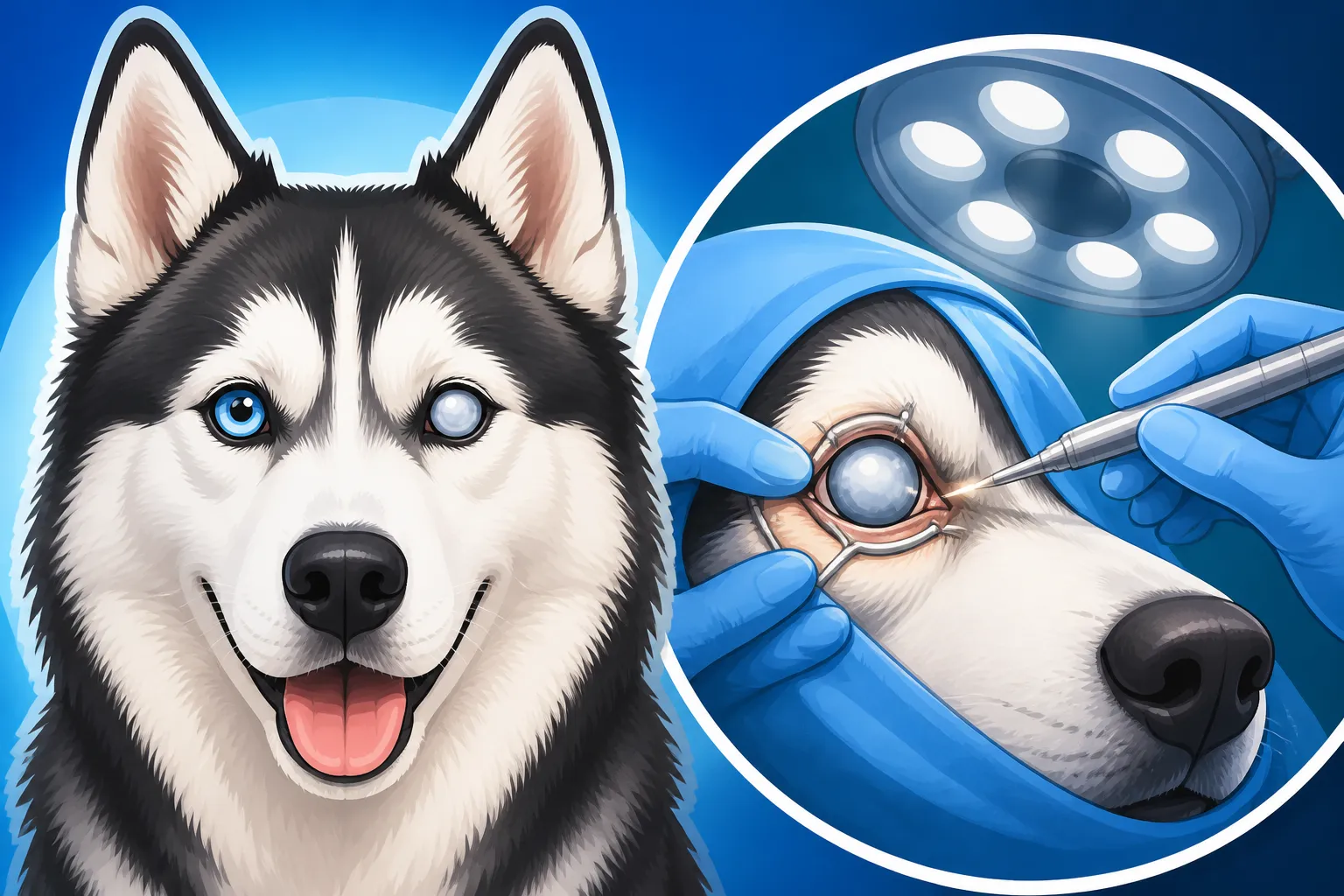
At its simplest, a cataract is an opacity or clouding of the lens inside your dog's eye. Think of the lens as a clear window that helps focus light onto the retina, allowing your Husky to see clearly. When a cataract forms, this window becomes opaque, blocking or distorting the light, which leads to blurry vision or even complete blindness. It’s not just a surface issue; it’s a change within the lens itself.
Siberian Huskies, unfortunately, have a genetic predisposition to cataracts, making them one of the breeds more commonly affected. While any dog can develop cataracts due to age (senile cataracts), diabetes, or trauma, Huskies are particularly susceptible to what are known as "juvenile cataracts." These can appear surprisingly early in life, sometimes even before a dog is two years old, which is particularly devastating for an owner expecting many years of clear-sighted adventures. It's a cruel twist of fate for a breed known for its striking, often crystal-clear eyes. This genetic link is why a conscientious breeder will always have their breeding stock screened, something you can delve deeper into by reading about Juvenile Cataracts in the Siberian Husky.
The heartache of seeing your dog's vision diminish is profound. You might notice them hesitating more, their confident stride replaced by a tentative shuffle, or perhaps they just seem less engaged with their favorite toys. It’s not just about bumping into furniture; it’s about a loss of their independence and joy. Knowing that your Husky is prone to this condition means regular eye check-ups are even more vital, which is why understanding Siberian Husky Eye Disease and the Annual Exam is so crucial.
Recognizing the Signs of Cataracts in Your Husky
Catching cataracts early can make a significant difference in treatment outcomes. Your Husky can't tell you they can't see clearly, so it's up to you to be vigilant. The most obvious visual cue is a cloudy appearance in one or both of your Husky's eyes. It might start as a small, pinpoint opacity and gradually grow to cover the entire lens, making the pupil appear milky white or grayish. Sometimes, you'll notice a distinct change in how light reflects off their eyes, appearing duller or having an odd sheen compared to before.
Beyond visual changes, pay close attention to behavioral shifts. Has your Husky started bumping into furniture or walls, especially in unfamiliar surroundings or when the light isn't perfect? Perhaps they're reluctant to go down stairs, or they seem more hesitant to jump on and off the couch. A common indicator, particularly as vision declines, is a Husky that starts to hesitate in dim rooms. They might become less playful, miss catching treats, or simply seem disoriented. These are all subtle yet telling signs that their world is becoming less clear.
It's also important to understand that not all cloudy eyes signify cataracts. As Huskies age, many will develop a condition called nuclear sclerosis, where the lens naturally hardens and appears grayish or bluish. While it can slightly impair up-close vision, it rarely leads to significant blindness like cataracts do. This is why a proper diagnosis by a veterinary ophthalmologist is critical. Mistaking nuclear sclerosis for a Husky cataract could lead to unnecessary worry, but ignoring actual cataracts could lead to preventable vision loss. Only an expert can truly differentiate between the two and provide an accurate assessment of your dog's eye health.
| Symptom / Condition | Cataracts | Nuclear Sclerosis |
|---|---|---|
| Appearance of Lens | Ranges from small, distinct white/gray spots to a complete opaque, milky white or grayish clouding that obscures the pupil. | A diffuse, bluish-gray haze in the center of the pupil. The lens often retains some transparency, allowing a clear view through the periphery. |
| Impact on Vision | Can cause significant vision impairment, from mild blurriness to complete blindness, depending on size and density. | Typically causes minimal to no functional vision impairment. Dogs adapt well; sometimes a slight difficulty with close-up tasks in low light. |
| Onset Age | Can occur at any age, including juvenile onset in Huskies (1-4 years), or later in life due to age, diabetes, or trauma. | Common in older dogs, usually starting around 6-8 years of age, and progresses slowly. |
| Progression | Can progress rapidly or slowly. Some remain small, others grow to full opacity quickly. | Very slow, gradual progression that rarely leads to significant vision loss. |
| Associated Issues | Can lead to secondary complications like uveitis (inflammation) or glaucoma if left untreated, especially when the cataract becomes hypermature. | Generally does not lead to other eye complications. |
| Treatment | Surgical removal (phacoemulsification) is the only effective treatment to restore vision. | No treatment is needed as it does not significantly impact quality of life or lead to other issues. |
When is Surgery the Right Choice?
Deciding to pursue surgery for your Husky's cataracts is a big step, filled with questions and considerations. It's not a decision to be taken lightly, but often, it's the most effective path to restoring their sight and improving their quality of life dramatically.
Assessing Your Husky's Candidacy for Surgery
Before any talk of surgery, your Husky will undergo a thorough evaluation by a board-certified veterinary ophthalmologist. This isn't just a quick peek into their eyes; it's a comprehensive assessment to determine if they are a good candidate for the procedure. Several factors come into play:
First, their overall health is paramount. The ophthalmologist will want to ensure your Husky is healthy enough to undergo general anesthesia, which means blood tests to check organ function, and sometimes even a cardiac evaluation, especially for older dogs. A Husky with uncontrolled diabetes, for example, might need that condition managed before eye surgery can be considered.
Age and temperament are also important. While age isn't always a deterrent, the general health often declines in very senior dogs, making anesthesia riskier. As for temperament, your Husky will need to tolerate a significant amount of post-operative care, including frequent eye drops and wearing an Elizabethan collar. A dog that is extremely anxious or aggressive might make this care challenging, though veterinary teams are skilled at managing these situations.
Crucially, the ophthalmologist will perform specialized eye diagnostics. This often includes an ocular ultrasound to ensure there are no other underlying issues in the back of the eye, such as retinal detachment, which could compromise the surgical outcome. They'll also perform an electroretinography (ERG), which is a test that measures the electrical activity of the retina. This is a critical step because if the retina isn't functioning properly, removing the cataract won't restore vision. Imagine clearing the window only to find the lightbulb behind it is broken – the eye still wouldn't see. If your Husky has another genetic eye condition like Progressive Retinal Atrophy in Siberian Huskies, for instance, this would be identified, and surgery might not be recommended.
Ultimately, the goal is to determine the potential for a successful outcome. If the cataract is the only significant barrier to vision and the rest of the eye is healthy, then surgery offers an excellent prognosis. The ophthalmologist will discuss all these findings with you, helping you make an informed decision about whether to proceed. This detailed work is part of what an expert ophthalmologist checks in a Siberian Husky during a pre-surgical exam.
Non-Surgical Alternatives and Their Limitations
It's natural to hope for a less invasive solution, especially when facing something as daunting as eye surgery. Many owners ask about eye drops or other medications to clear cataracts. Unfortunately, for true cataracts, there are currently no proven non-surgical methods or eye drops that can dissolve or reverse the clouding of the lens. Once the protein in the lens starts to clump together and become opaque, it’s generally a permanent change.
Some "cataract drops" marketed to pet owners are often unproven or designed for conditions like nuclear sclerosis, not true cataracts, or they aim to manage inflammation rather than clear the lens. While anti-inflammatory eye drops might be used to control secondary inflammation caused by a mature cataract, they will not make the cataract disappear or restore vision. This is why if you're wondering whether a Siberian Husky cataract can be left alone, the answer concerning vision restoration is often no, not if the goal is to see again.
For Huskies whose vision loss isn't significant enough to warrant surgery, or for those who aren't surgical candidates, the focus shifts to environmental management. This means maintaining a consistent home environment, using gates to block off stairs, laying down rugs to provide traction and sensory cues, and using verbal commands more frequently. These adaptations can certainly improve a blind Husky's quality of life, allowing them to navigate their familiar space with more confidence. However, these methods don't restore sight; they merely help your dog cope with its absence.
Therefore, for most Siberian Huskies suffering from moderate to severe vision loss due to cataracts, surgical removal remains the only effective way to clear the lens and return functional vision. The decision to operate is typically made when the cataracts significantly impair the dog's quality of life and when the pre-operative assessments indicate a high probability of restoring sight. This is often the case for younger Huskies with juvenile cataracts, where intervention can give them many more years of sighted living.
The Cataract Surgery Procedure for Huskies
Once you've made the difficult but hopeful decision to proceed with surgery, understanding the actual procedure can help alleviate some anxiety. It's a highly specialized and delicate operation, performed by skilled veterinary ophthalmologists.
What to Expect During the Surgery
Cataract surgery in dogs, including Siberian Huskies, is remarkably similar to the procedure performed on humans. The gold standard technique is called phacoemulsification, often simply referred to as "phaco." This procedure is performed under general anesthesia, meaning your Husky will be completely unconscious and pain-free throughout. The veterinary team will meticulously monitor their vital signs, including heart rate, respiration, blood pressure, and oxygen saturation, ensuring their safety during the entire process.
The surgeon uses a specialized operating microscope to gain a magnified view of the tiny structures within the eye. A very small incision, typically just a few millimeters, is made in the cornea. Through this incision, an ultrasonic probe is carefully inserted. This probe emits high-frequency sound waves that gently break up the cloudy cataractous lens into tiny fragments. These fragments are then suctioned out of the eye. Think of it like a miniature jackhammer and vacuum working in tandem to clear away the debris.
After the natural lens material has been removed, an artificial intraocular lens (IOL) is usually inserted. This IOL replaces the natural lens, restoring your Husky's ability to focus light onto the retina, much like a contact lens or glasses for humans. Without an IOL, a dog would be extremely farsighted, seeing the world as a blurry mess. However, in some cases, if there's significant inflammation or other complications, the surgeon might decide against implanting an IOL, and your dog will still have functional, albeit imperfect, vision.
The entire procedure is often quick, typically lasting less than an hour per eye, though preparation and recovery time add to the overall hospital stay. Many ophthalmologists prefer to operate on both eyes at the same time if both have cataracts and the dog is a good candidate, as it means only one anesthetic event and one recovery period for the owner to manage. Rest assured, these highly trained specialists are dedicated to the best possible outcome for your furry family member.
Potential Risks and Complications
While cataract surgery boasts a high success rate, typically around 85-95% for restoring functional vision, it's a surgical procedure and, like any surgery, carries potential risks and complications. It's important to be aware of these so you can be prepared and understand why strict post-operative care is so crucial.
One of the most common post-surgical concerns is inflammation within the eye (uveitis). The removal of the cataract, even with the most delicate technique, can irritate the eye. This inflammation is why your Husky will be on a rigorous regimen of anti-inflammatory eye drops for weeks or even months after surgery. If left uncontrolled, severe inflammation can lead to other serious issues.
Another potential complication is glaucoma, an increase in intraocular pressure. This can occur either acutely after surgery or develop chronically over time. Glaucoma is a painful condition that, if not managed swiftly, can lead to irreversible blindness. Regular post-operative check-ups are essential to monitor eye pressure and detect any rise early.
Less common but more severe complications include retinal detachment or infection. Retinal detachment can happen if the retina, the light-sensitive tissue at the back of the eye, separates from its underlying support. This is a serious condition that can cause permanent blindness. Infections, while rare due to sterile surgical techniques and prophylactic antibiotics, are also a concern that could jeopardize the eye.
The good news is that veterinary ophthalmologists are well-versed in managing these risks. They use specific surgical techniques, medications, and careful monitoring to minimize their occurrence. Your commitment to following the post-operative medication schedule and attending all follow-up appointments is paramount in preventing or effectively treating any complications that may arise. When you invest in this surgery, you’re also investing in diligent aftercare, which is a major factor in the surgery’s long-term success.
Post-Operative Care and Recovery
The surgery itself is only half the battle; the recovery period, particularly the first few weeks, is absolutely critical to the success of the procedure and your Husky's long-term vision. This phase requires dedication, patience, and strict adherence to your veterinary ophthalmologist's instructions.
Immediate Post-Surgery Care at Home
Get ready for an intensive few weeks, because your Husky's recovery will demand a lot of your time and attention. Your ophthalmologist will send you home with a detailed discharge sheet outlining all the medications and care instructions. Typically, this will include several different types of eye drops, often anti-inflammatory and antibiotic drops, which need to be administered multiple times a day. We're talking sometimes every few hours, even through the night, for the first week or two. This can be a real challenge with a high-energy Husky who might not appreciate having drops put in their eyes! You might also have oral anti-inflammatory medications to give. Strict adherence to this schedule is non-negotiable; missing doses can lead to increased inflammation and potential complications.
Your Husky will also need to wear an Elizabethan collar, affectionately known as the "cone of shame," for several weeks. This is absolutely essential to prevent them from rubbing, scratching, or pawing at their eyes, which could dislodge sutures, introduce infection, or cause severe trauma. While they might bump into things and look utterly miserable, the cone is their best friend for successful healing. Learning to navigate around the house with a cone on can be a bit of an adventure for them, and for you, so be patient and clear pathways.
Activity restriction is another key component. For the first few weeks, your Husky should avoid any strenuous activity – no running, jumping, rough play, or going up and down stairs unsupervised. Leashed walks for potty breaks are usually fine, but keep them calm and controlled. The goal is to prevent any sudden head movements or increased pressure that could harm the healing eye. Many owners find it helpful to crate their Husky during this time or confine them to a small, safe area to limit their movements.
You'll also have a series of follow-up appointments scheduled with the ophthalmologist, typically within days of the surgery, then weekly or bi-weekly for a while. These visits are crucial for monitoring healing, checking eye pressure, adjusting medications, and ensuring no complications are developing. These appointments are part of the critical pathway to ensuring successful restoration of sight, and it’s important to budget for them, as they are part of the overall cost of Cataract Surgery on a Siberian Husky.
Long-Term Management and Vision Restoration
As the weeks progress and the immediate post-surgical period passes, you'll start to see your Husky's vision gradually improve. The initial haziness will clear, and their confidence will slowly return. It’s truly a joyous moment to see them tracking a tossed toy again or navigating the backyard with their old swagger.
However, long-term management is often necessary. Many Huskies who undergo cataract surgery will need some form of ongoing eye drops for the rest of their lives, particularly anti-inflammatory drops, to keep inflammation in check and prevent complications like secondary glaucoma. This becomes a part of your daily routine, like feeding or walks, and your ophthalmologist will help you establish a sustainable schedule.
Lifelong monitoring is also highly recommended. Even years after surgery, complications like retinal detachment or glaucoma can sometimes occur, though they are less frequent. Regular check-ups, often yearly, with your veterinary ophthalmologist are vital to catch any issues early. These regular appointments are just as important as the pre-op exams and are something to factor into your long-term budget.
The most rewarding part, of course, is witnessing your Husky's renewed zest for life. The world opens up for them again, allowing them to engage with their environment and with you in ways they couldn't before. It truly can feel like a miracle. This is an investment not just in their sight, but in their overall well-being and happiness for years to come.
This long-term care also highlights the value of pet insurance. Having a comprehensive policy, especially from a provider like Healthy Paws, can make a huge difference in managing these costs. If your Husky developed cataracts after you enrolled them and completed any waiting periods, your policy could potentially cover a significant portion of the surgery, follow-up visits, and ongoing medication costs. This can greatly ease the financial burden and allow you to focus purely on your Husky's recovery without added stress.
Cost and Insurance Considerations
Let's be real: cataract surgery is not cheap. It's a highly specialized procedure requiring expert veterinary ophthalmologists, state-of-the-art equipment, and extensive post-operative care. Understanding the financial commitment upfront is crucial for any Siberian Husky owner considering this path.
The Financial Investment of Cataract Surgery
When you're told your beloved Husky needs cataract surgery, the first thought after concern for their vision often turns to the cost. It's a significant financial investment, and it's important to understand what goes into that final bill. Typically, cataract surgery for dogs can range from $2,000 to $4,000 per eye, and sometimes even more in metropolitan areas or for complex cases. If both eyes are done, the cost can easily be $4,000 to $8,000 or higher.
This isn't just the surgeon's fee; it encompasses a whole range of services:
- Pre-operative diagnostics: This includes all the tests we discussed – blood work, ocular ultrasound, electroretinography (ERG), and sometimes additional cardiac workups. These are essential to ensure your Husky is a good candidate and ready for anesthesia.
- Anesthesia and monitoring: A skilled veterinary anesthesiologist or technician will monitor your Husky throughout the procedure, which is a critical part of their safety.
- The surgical procedure itself: This covers the use of specialized equipment like the phacoemulsification unit, the surgical suite, and the expertise of the board-certified ophthalmologist.
- Intraocular lenses (IOLs): The cost of the artificial lenses implanted in your Husky's eyes is factored in.
- Post-operative medications: You'll be sent home with a significant supply of various eye drops and oral medications, which are included in the overall cost or billed separately.
- Follow-up visits: The initial flurry of post-op appointments (often several over the first few weeks to months) are generally included in the surgical package, but long-term annual checks may be separate.
It's truly an investment in your dog's quality of life. For many, the ability to see their Husky navigate the world with confidence again is priceless. However, it's a financial decision that often requires careful planning and, for some, even fundraising or seeking financial aid. Don't be afraid to ask your veterinary ophthalmologist for a detailed estimate outlining all potential costs involved. Knowing the full scope of the financial commitment is the first step in preparing for it.
Navigating Pet Insurance for Cataracts
This is where pet insurance can truly shine, acting as a financial safety net for unexpected and costly treatments like cataract surgery. If you have pet insurance, it's absolutely crucial to understand how it applies to cataracts. The biggest factor is whether the cataracts are considered a pre-existing condition.
What's a pre-existing condition? Most pet insurance policies, including those from providers like Healthy Paws, will not cover conditions that were present or showed symptoms before your policy started or during a specific waiting period. For example, if your Husky started showing signs of cataracts before you enrolled them in Healthy Paws, or during their initial waiting period, the surgery would likely be excluded. This is why enrolling your Siberian Husky in pet insurance when they are a puppy, before any conditions manifest, is always the best strategy. You can read more about this in Siberian Husky Pet Insurance and the Eye Clause.
However, if your Husky was enrolled in a comprehensive pet insurance plan before any signs of cataracts appeared, and you've passed the waiting period, then the policy could cover a significant portion of the costs. This would typically include the diagnostics, the surgery itself, anesthesia, and the necessary post-operative medications and follow-up visits.
Pet insurance policies usually work on a reimbursement basis: you pay the veterinary bill upfront, and then submit a claim to your insurer, who will reimburse you a percentage (e.g., 70-90%) after your deductible is met. For a multi-thousand-dollar surgery, even covering 80% can mean saving thousands of dollars out of pocket. Imagine a $6,000 bill, an annual deductible of $500, and an 80% reimbursement rate – you'd pay $500 (deductible) + $1100 (20% of the remaining $5500) = $1600, saving you $4400. That's a huge relief!
Always review your specific policy documents carefully or call your insurance provider directly. Ask about waiting periods for illnesses, coverage for hereditary or congenital conditions (which juvenile cataracts in Huskies often are), and what percentage they reimburse. Understanding these details before the surgery can prevent unwelcome surprises during an already stressful time.
Living with a Recovered or Partially Sighted Husky
The journey doesn't end with a successful surgery or even with full visual recovery. Whether your Husky regains perfect 20/20 vision or still has some visual impairment, adjusting to their "new normal" is part of the process.
Adapting Your Home Environment
Even after successful cataract surgery, it's wise to continue some environmental considerations, especially during the initial recovery or if your Husky's vision isn't fully restored. Huskies are smart and adaptable, but they thrive on consistency.
- Maintain a consistent layout: Avoid frequently rearranging furniture, especially during the recovery period. Familiar pathways will help them navigate confidently, reducing the risk of bumping into things. If you must move something, guide them around it several times until they've mapped the new layout.
- Traction and clear pathways: Use rugs on slippery floors like hardwood or tile, particularly where your Husky eats, drinks, or exits/enters the house. This provides better grip and a tactile cue. Keep pathways clear of clutter – shoes, bags, or toys left lying around can become tripping hazards for a dog with healing eyes or reduced vision.
- Stair and hazard management: For a time, it might be beneficial to block off stairs with baby gates, especially if your Husky is prone to zooming around. This prevents accidental falls during recovery. If your Husky has residual vision deficits, consider adding bright, contrasting tape to the edges of stairs to make them more visible.
- Verbal cues and routine: Huskies respond well to routine. Use clear verbal cues for approaching obstacles ("step up," "watch out") or directions ("left," "right"). Always talk to your Husky as you approach them, especially if they're napping, so you don't startle them. A predictable schedule for feeding, potty breaks, and playtime will also help them feel secure. For a Husky learning to navigate again, having a consistent routine is paramount. Even a blind Siberian Husky can be safely contained and live a full life with proper management.
Continued Enrichment and Quality of Life
A Husky who has undergone cataract surgery, or one who remains partially sighted, can absolutely continue to live a full and happy life. It's about shifting focus to their other incredibly strong senses and finding new ways to engage them.
- Engage other senses: Huskies have an exceptional sense of smell. Scent work, puzzle toys filled with treats, and "find it" games can provide immense mental stimulation and joy. Use strongly scented toys or treats to encourage play. Auditory cues, like squeaky toys or your voice, become even more important.
- Safe outdoor activities: Leashed walks in familiar, safe environments are still vital for their physical and mental well-being. Explore new smells and sounds together. If they enjoy water, a shallow kiddie pool in the backyard can be a fun and safe way to cool off. Avoid off-leash areas unless they are securely fenced and completely familiar to your Husky, as their recall might be compromised without perfect vision.
- Consistent companionship: Your presence and affection are more important than ever. Spend quality time cuddling, grooming, and simply being together. Your Husky relies on you for reassurance and guidance. They might become more attuned to your mood and body language, forming an even deeper bond.
- Praise and patience: Celebrate every small victory – a toy found, a successful navigation around a new object. Be patient with setbacks. It's a journey, and there will be good days and challenging ones. Your unwavering support will make all the difference.
Ultimately, cataract surgery offers a incredible opportunity to give your Siberian Husky back the gift of sight and, with it, a renewed lease on life. Even if the vision isn't perfect, the improvement in their ability to interact with the world around them is often transformative. With your love, dedication, and the expertise of veterinary professionals, your Husky can thrive.
Disclaimer
The information provided in this article is for general informational purposes only and does not constitute veterinary medical advice. Always consult with a qualified veterinary professional for any health concerns or before making any decisions related to your Siberian Husky's health and treatment. Individual results and outcomes may vary.