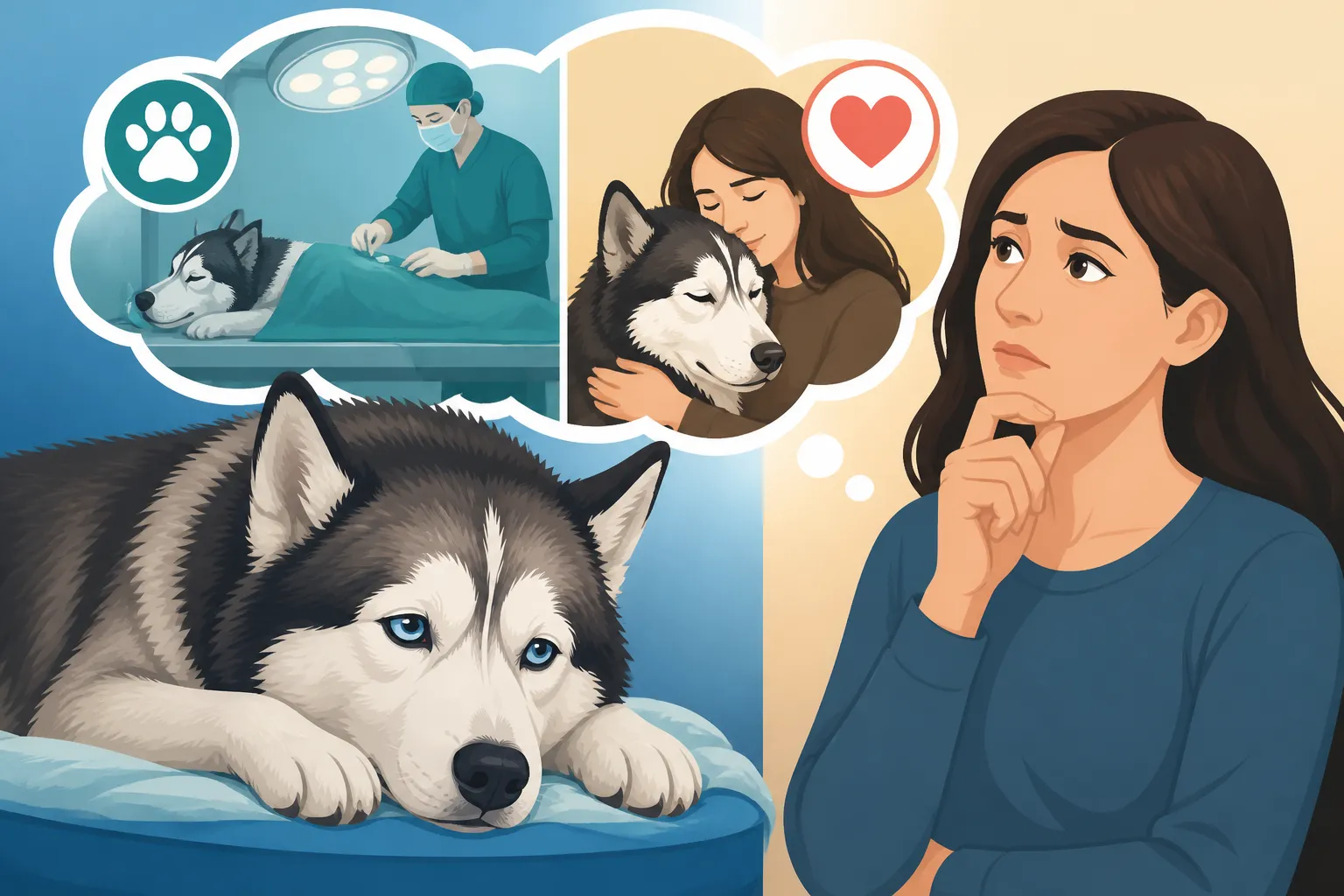
Deciding About Surgery on an Old Siberian Husky
It's an agonizing moment when your beloved senior Siberian Husky faces a health crisis, and your veterinarian mentions surgery. The thought of putting an older dog through such a procedure, with all the associated risks and recovery, can feel overwhelming. This guide aims to walk you through the complex considerations involved in making these tough decisions, offering a realistic perspective on the factors you need to weigh to ensure your senior companion's comfort and well-being.
Understanding the Unique Challenges of Senior Husky Surgery
Making the decision about surgery for an older Siberian Husky isn't just about the procedure itself; it's about understanding how age impacts their entire system. These magnificent dogs are known for their resilience, but time eventually catches up, and their bodies simply don't bounce back like a young pup's. This means every aspect of a surgical journey, from preparation to recovery, needs careful consideration and a compassionate approach.
Age-Related Physiological Changes in Huskies
As your Siberian Husky enters their golden years – typically past the age of nine or ten – their internal systems undergo significant changes. Think of it like an older car; even with excellent maintenance, parts start to wear. Their hearts might not be as strong, meaning they might struggle with blood pressure fluctuations or handling the stress of surgery. Kidney and liver functions, which are vital for processing anesthesia and medications, can also be compromised, making drug dosages and choices critically important. Their overall stamina decreases, which directly impacts their ability to cope with pain, stress, and the demands of a prolonged recovery. What might be a straightforward procedure for a younger dog becomes a much more delicate balance for a senior. Understanding these changes is the first step in providing the best care, and you can learn more about how their bodies adapt in our article on What Changes in a Siberian Husky After Nine.
For instance, a seemingly minor dental procedure that requires general anesthesia could become risky if your Husky has underlying kidney disease that hasn't been fully assessed. These older dogs might also have less muscle mass and slower metabolism, meaning drugs linger in their system longer, potentially causing more pronounced side effects or a slower wake-up process. It’s not about avoiding necessary treatment, but about ensuring that every decision is informed by a complete picture of their current health status, not just the problem at hand.
Anesthesia Risks for Older Siberian Huskies
The biggest worry for many owners considering surgery for an older dog is anesthesia. And frankly, it’s a valid concern. While modern veterinary anesthesia is incredibly safe, especially for younger, healthy animals, the risks do increase with age. Older Huskies might have a harder time maintaining stable body temperature during surgery, making them prone to hypothermia, which can delay recovery. Their cardiovascular system might struggle to handle the changes in blood pressure that can occur under anesthesia.
Veterinarians take this very seriously, implementing specific protocols to minimize these risks. This often involves more extensive pre-anesthetic blood work and diagnostics, individualized anesthetic drug choices, and intensive monitoring during the procedure. Your vet will likely use advanced monitoring equipment to track heart rate, blood pressure, oxygen saturation, and carbon dioxide levels continuously. They might also administer intravenous fluids to support blood pressure and organ function. You should definitely discuss Anesthesia Risk in a Senior Siberian Husky with your vet in detail before any procedure. The goal isn't just to keep them alive, but to ensure they have the smoothest, safest journey through the anesthetic process as possible.
Post-Operative Recovery for the Aging Husky
Once the surgery is over, the real work for you and your senior Husky begins: recovery. For an older dog, this phase can be significantly more challenging and protracted compared to a younger one. Pain management becomes paramount; older dogs often have pre-existing conditions like arthritis that can be exacerbated by surgery, making comfort a top priority. They might need a combination of oral pain medications, anti-inflammatories, and even additional therapies like laser treatment or acupuncture to help them through.
Mobility can also be a major issue. A younger Husky might be up and about quickly, but an older one might struggle to stand, walk, or even find a comfortable position. This means you might need to assist them with slings, provide extra soft bedding, and patiently encourage movement. Their healing process can be slower due to diminished immune function and slower cell regeneration, increasing the risk of infections or wound breakdown. Expecting a longer, more hands-on recovery period is essential for preparing yourself and your home to support your beloved companion through this time.
Common Surgical Procedures Considered for Older Huskies
It's natural to hope that a senior dog can avoid surgery altogether, but sometimes, a surgical intervention is the kindest and most effective path to improving their quality of life. Understanding what these common procedures entail for an older Siberian Husky can help you mentally prepare and discuss options knowledgeably with your vet.
Orthopedic Surgeries
Orthopedic issues are unfortunately common as Huskies age, just like in humans. Arthritis can become debilitating, and while often managed with medication, sometimes a severe injury like a torn cruciate ligament might require surgery. Imagine your Husky, who once ran tirelessly through snow, now limping constantly, unable to enjoy even short walks. In such cases, surgical repair might be considered to restore comfort and some degree of mobility. Cruciate tears, for instance, are notoriously painful and can significantly impact a dog's ability to bear weight on a leg. While surgical options like TPLO (Tibial Plateau Leveling Osteotomy) or TTA (Tibial Tuberosity Advancement) are often performed on younger dogs, they can be viable for older Huskies if their overall health permits and the pain is severe enough to warrant the intervention.
The decision for orthopedic surgery in an older Husky often boils down to quality of life. Will the surgery significantly reduce pain and allow them to enjoy their remaining years more fully? It's a complex balance. Even conditions like severe hip dysplasia, though less common in Siberians than some other breeds (as we explore in Siberian Husky Hips and Why the Rate Is Low), can sometimes warrant surgical consideration for comfort if conservative measures fail. Post-operative care for these procedures is intensive, often involving physical therapy and strict rest protocols, which can be challenging for a dog with Early Arthritis Signs in a Siberian Husky.
Tumor Removal and Biopsies
Finding a lump or bump on your senior Husky is always a frightening discovery. Many of these turn out to be benign fatty tumors (lipomas), which are usually harmless and don't require removal unless they impede movement or grow excessively large. However, some masses can be cancerous, and early detection and removal can be life-saving. In older Huskies, the decision to remove a tumor often involves a biopsy first to determine if it's benign or malignant. If it's cancerous, surgery might be recommended to remove it with wide margins to prevent recurrence or spread.
The location and size of the tumor are major factors. A tumor on the skin is generally less invasive to remove than one located internally, say, in the spleen or on an organ. For internal tumors, the risks increase significantly. Your vet will discuss the prognosis with and without surgery, considering the type of cancer, its aggressiveness, and your Husky's overall health. It's a deeply personal decision, often grappling with the desire to fight for more time versus ensuring comfort and avoiding unnecessary suffering. Learning about Cancer Types Seen in Siberian Huskies can help you understand potential risks.
Dental Extractions and Oral Surgery
Dental disease is incredibly common in older dogs, and Siberian Huskies are no exception. By the time they reach age five, many Huskies already show signs of significant dental issues, as detailed in Siberian Husky Dental Disease by Age Five. This isn't just about bad breath; severe dental disease can lead to chronic pain, infections that spread to other organs (like the heart or kidneys), and difficulty eating. Periodontal disease, loose teeth, fractured teeth, and painful abscesses can all necessitate dental extractions or more complex oral surgery.
While often viewed as a "minor" surgery, dental procedures still require general anesthesia. The benefits, however, can be immense. Removing painful, infected teeth can drastically improve a senior Husky's comfort, appetite, and overall health. They often seem like a new dog after a successful dental procedure, more energetic and willing to eat. Pre-anesthetic blood work and thorough examinations are especially crucial for older Huskies undergoing dental work, given the potential for bacteria from infected teeth to impact vital organs. It's a procedure that, while carrying anesthetic risk, often brings a significant improvement in daily quality of life.
The Crucial Conversation with Your Veterinary Team
When facing a surgical decision for your senior Siberian Husky, your veterinary team becomes your most invaluable resource. This isn't a conversation to rush; it's a deep dive into diagnostics, realistic expectations, and practical considerations that will shape your Husky's immediate future.
Pre-Surgical Diagnostics and Screening
Before any surgery is even scheduled, your vet will insist on a thorough pre-surgical workup. This isn't just routine; it's a critical safety measure, especially for older dogs. Expect comprehensive blood work, including a complete blood count (CBC) to check for infection or anemia, and a chemistry panel to assess organ function, particularly the kidneys and liver. For instance, abnormal Kidney Values in an Aging Siberian Husky could indicate that certain anesthetic drugs need to be avoided or adjusted.
Beyond blood tests, your vet might recommend additional diagnostics like X-rays of the chest to check heart and lung health, an electrocardiogram (ECG) to screen for cardiac arrhythmias, or even an ultrasound if there are concerns about internal organs. In some cases, a consultation with a veterinary specialist, such as a cardiologist or an internal medicine specialist, might be suggested to get a clearer picture of any underlying conditions. These screenings help your vet tailor the anesthetic protocol and identify any potential complications before they arise, allowing for proactive management and the safest possible outcome. Think of it as building a detailed map of your Husky's internal landscape to navigate the surgical journey with the fewest surprises.
Discussing Prognosis and Quality of Life
This is often the hardest part of the conversation: realistically assessing what surgery can achieve and what your Husky's life will look like afterward. It's easy to get caught up in the hope of a "cure," but your vet will help you understand the true prognosis. For instance, will the surgery lead to a full recovery, or is it more about managing pain and improving comfort for a limited time? What are the chances of recurrence if it's a tumor?
Beyond the medical outcome, it's vital to talk about your Husky's quality of life. Will they still be able to enjoy their favorite activities, even if it's just a gentle stroll or cuddling on the couch? Will the recovery be so painful or prolonged that it outweighs the benefits? Your vet can provide insights into typical recovery timelines and potential challenges for an older dog. It's important to be honest with yourself and your vet about what you can realistically manage in terms of post-operative care and how much discomfort you are willing to see your beloved companion endure. This is where you consider if the potential improvements are truly worth the stress and recovery involved for your unique Husky.
Financial Considerations and Pet Insurance
Let's face it, veterinary care can be expensive, and emergency or specialty surgeries can carry a hefty price tag. For many families, financial considerations play a very real role in these decisions. Surgical procedures for older Huskies, especially with extensive pre-op diagnostics, specialized monitoring, and potentially longer recovery care, can quickly add up. This includes the cost of the surgery itself, anesthesia, hospitalization, medications, and any follow-up appointments or therapies like physical rehabilitation.
This is where having pet insurance can be a huge relief. Providers like Healthy Paws can significantly mitigate the financial burden, allowing you to focus on what's best for your Husky rather than the bill. However, it's crucial to understand your policy's specifics, including deductibles, reimbursement percentages, and what constitutes a pre-existing condition. Some older Huskies might already have conditions that could be excluded from coverage. Even if you don't have insurance, discuss payment plans or alternative, less costly options with your vet. They understand these constraints and can often work with you. For a deeper dive into how insurance can help, check out our guide on Siberian Husky Pet Insurance and the Eye Clause. Being prepared financially, or at least understanding the costs involved, removes one layer of stress from an already difficult situation.
Weighing the Pros and Cons: Is Surgery the Right Choice?
Deciding on surgery for an older Siberian Husky is rarely a clear-cut "yes" or "no." It's a deeply personal decision that balances the potential for improved health against inherent risks and the emotional toll on both you and your dog. It requires a thoughtful, honest assessment of what you hope to achieve and what you're willing to endure.
Benefits of Surgical Intervention
When surgery is successful, the benefits for an older Husky can be profound. First and foremost, it can provide significant pain relief. Imagine a Husky who has been suffering from a painful joint, a chronic infection, or a debilitating tumor finally finding comfort. This improved comfort often translates to a better quality of life, allowing them to move more freely, eat without discomfort, and simply enjoy their days more. For some conditions, particularly certain types of tumors, surgery can lead to an extended lifespan, giving you more precious time with your companion.
Furthermore, surgery can sometimes restore lost function. An older Husky struggling with a torn cruciate ligament, for example, might regain a significant amount of their mobility after a successful repair, allowing them to once again enjoy short walks or play gently. The transformation can be remarkable, turning a dog who was withdrawn and uncomfortable into one with renewed spark and engagement. The primary driver here is always enhancing their well-being, not just prolonging life at any cost.
Risks and Potential Downsides
On the flip side, surgery for an older Husky comes with undeniable risks and potential downsides. As discussed, anesthesia itself carries increased risks for older animals due to their physiology. Beyond that, there's always the possibility of complications during or after the surgery, such as infections, poor wound healing, or adverse reactions to medications. These complications can lead to longer hospitalization, additional procedures, and increased discomfort.
The stress of surgery, hospitalization, and the subsequent recovery can also take a significant toll on an older dog. They might become disoriented, anxious, or depressed, especially if their routine is severely disrupted or they are in an unfamiliar environment. For a breed like the Siberian Husky, known for its independent spirit, confinement during recovery can be particularly challenging. There's also the consideration of recovery time: will your Husky truly bounce back, or will the extensive recovery period diminish their overall comfort and joy during their remaining time? It's a heavy thought, but one that must be faced head-on to ensure you're making the most compassionate choice.
Exploring Alternatives to Surgery
Before jumping into surgery, it's always worth exploring all available alternatives, especially for older Huskies where invasiveness is a major concern. For many orthopedic issues, a comprehensive pain management plan might be sufficient. This could involve a combination of anti-inflammatory drugs, joint supplements, weight management (maintaining The Weight a Siberian Husky Should Hold is crucial), and physical therapy. Many older Huskies thrive on these conservative approaches, maintaining a good quality of life without the risks of surgery. We have a detailed guide on Pain Management for an Arthritic Siberian Husky that might offer further insights.
For certain tumors, if they are slow-growing and not causing immediate problems, a "wait and see" approach with regular monitoring might be appropriate. Palliative care focuses entirely on comfort and managing symptoms, allowing your Husky to live out their days with as little pain and as much joy as possible. This could include hospice care, dietary changes, alternative therapies like acupuncture, or simply ensuring their environment is as comfortable and stress-free as possible. It's about recognizing that sometimes, the kindest intervention isn't surgical, but rather one focused purely on peace and comfort.
| Factor | Conservative Management (Non-Surgical) | Surgical Intervention |
|---|---|---|
| Pain Relief | Gradual, managed with medication; may not eliminate severe pain | Often rapid and significant for specific issues |
| Mobility Improvement | Gradual; focuses on comfort and reducing inflammation | Can restore function for specific orthopedic issues |
| Anesthetic Risk | None | Present; higher for older Huskies |
| Recovery Time | Ongoing management; no acute recovery period | Defined acute recovery period, potentially prolonged |
| Cost | Generally lower long-term, but ongoing medication costs | High initial cost, plus potential follow-up care |
| Quality of Life Impact | Focus on maintaining comfort and function as is | Potential for significant improvement but with stress |
| Invasiveness | None | High |
| Effectiveness for Tumors | Limited to palliative care for malignant tumors | Can be curative or life-extending for certain tumors |
Preparing Your Senior Husky for Surgery and Recovery at Home
If, after careful consideration and extensive discussions with your vet, you decide that surgery is the best path for your senior Siberian Husky, then preparing both them and your home for the journey is absolutely essential. A smooth preparation and recovery can make all the difference in their comfort and healing.
Home Modifications for Post-Op Comfort
Your home, which your Husky knows so well, needs to transform into a recovery haven. Think about areas where they might struggle. If stairs are usually part of their routine, can you set up a comfortable, safe space on one level? Ramps can be incredibly helpful for getting onto beds, couches, or even into the car without putting strain on surgical sites. Non-slip rugs or runners on hard floors can prevent dangerous slips and falls, which are especially risky for a post-operative dog with impaired balance or weakness.
Consider their sleeping arrangements. A firm, orthopedic bed that's easy to get into and out of will be much appreciated. Keep food and water bowls easily accessible, perhaps elevated slightly if bending causes discomfort. Minimizing obstacles and creating clear, safe pathways will reduce the risk of re-injury and make moving around less stressful for them. This might even mean temporarily gating off certain areas of the house or bringing their crate into your bedroom so you can monitor them more closely, especially overnight.
Managing Pain and Medications
Effective pain management is paramount for your Husky's comfort and successful recovery. Your vet will prescribe a specific regimen of pain medications, which might include NSAIDs (non-steroidal anti-inflammatory drugs), gabapentin, or other analgesics. It is absolutely crucial to adhere to the prescribed dosages and timings. Never assume "more is better" or skip a dose because your Husky seems okay; consistent pain control prevents breakthrough pain and aids healing.
Keep a detailed log of medication administration, especially if multiple people are involved in their care. Watch for any adverse reactions to medications, such as digestive upset, lethargy, or changes in behavior, and report them immediately to your vet. Beyond oral medications, your vet might recommend additional therapies like cold packs, warm compresses (once approved), or even therapeutic laser sessions, which can significantly aid healing and reduce discomfort. Remember that your senior Husky might not always overtly show pain, so consistent observation for subtle changes in appetite, activity, or attitude is key to ensuring their comfort.
Emotional Support and Monitoring
Recovery isn't just physical; it's deeply emotional for an older dog. They might be disoriented, confused, or anxious after surgery, especially if they've been hospitalized. Your presence, gentle reassurance, and maintaining as much of their routine as possible will be incredibly comforting. Spend quiet time with them, offering soft petting and calming words. Their independent nature as a Siberian Husky might mean they don't always want to be doted on, but your steady, reassuring presence makes a world of difference.
Close monitoring for any signs of complications is also vital. This includes checking the surgical incision daily for redness, swelling, discharge, or signs of opening. Watch for changes in appetite, thirst, urination, or defecation. Report any persistent vomiting, diarrhea, lethargy, or difficulty breathing to your vet immediately. Be especially vigilant if your Husky seems to be in increasing pain despite medication. Your keen observation skills will be your senior Husky's best advocate during this critical recovery period. For more general advice on managing an older Husky, our guide on Caring for a Siberian Husky Past Ten offers many helpful tips.
Disclaimer
The information provided in this article is for general educational purposes only and should not be considered as professional veterinary advice. Always consult with a qualified veterinarian for any health concerns or before making any decisions regarding your Siberian Husky's care, especially concerning surgical procedures or medical treatments.