Progressive Retinal Atrophy in Siberian Huskies
It’s truly heartbreaking to watch your vibrant, energetic Siberian Husky, a breed renowned for its keen senses and boundless curiosity, slowly lose their ability to navigate the world. The confusion, the hesitation in dimly lit rooms, the bumps into familiar furniture – these are the subtle, agonizing signs that something is wrong with their vision. This guide is here to walk you through Progressive Retinal Atrophy (PRA) in Siberian Huskies, a genetic condition that sadly robs many of these incredible dogs of their sight, and how we, as dedicated owners, can understand, cope with, and even prevent its heartbreaking progression.
Understanding Progressive Retinal Atrophy (PRA) in Siberian Huskies
Progressive Retinal Atrophy, often simply called PRA, is a blanket term for a group of inherited degenerative diseases that affect the retina, the light-sensitive tissue at the back of the eye. For a Siberian Husky, this diagnosis can feel like a punch to the gut, especially when you consider how much they rely on their vision for their active lifestyle. This isn't just a simple age-related decline; it's a specific genetic defect that causes the photoreceptor cells in the eye – the rods and cones responsible for detecting light and color – to deteriorate over time.
What is PRA and How It Affects Vision
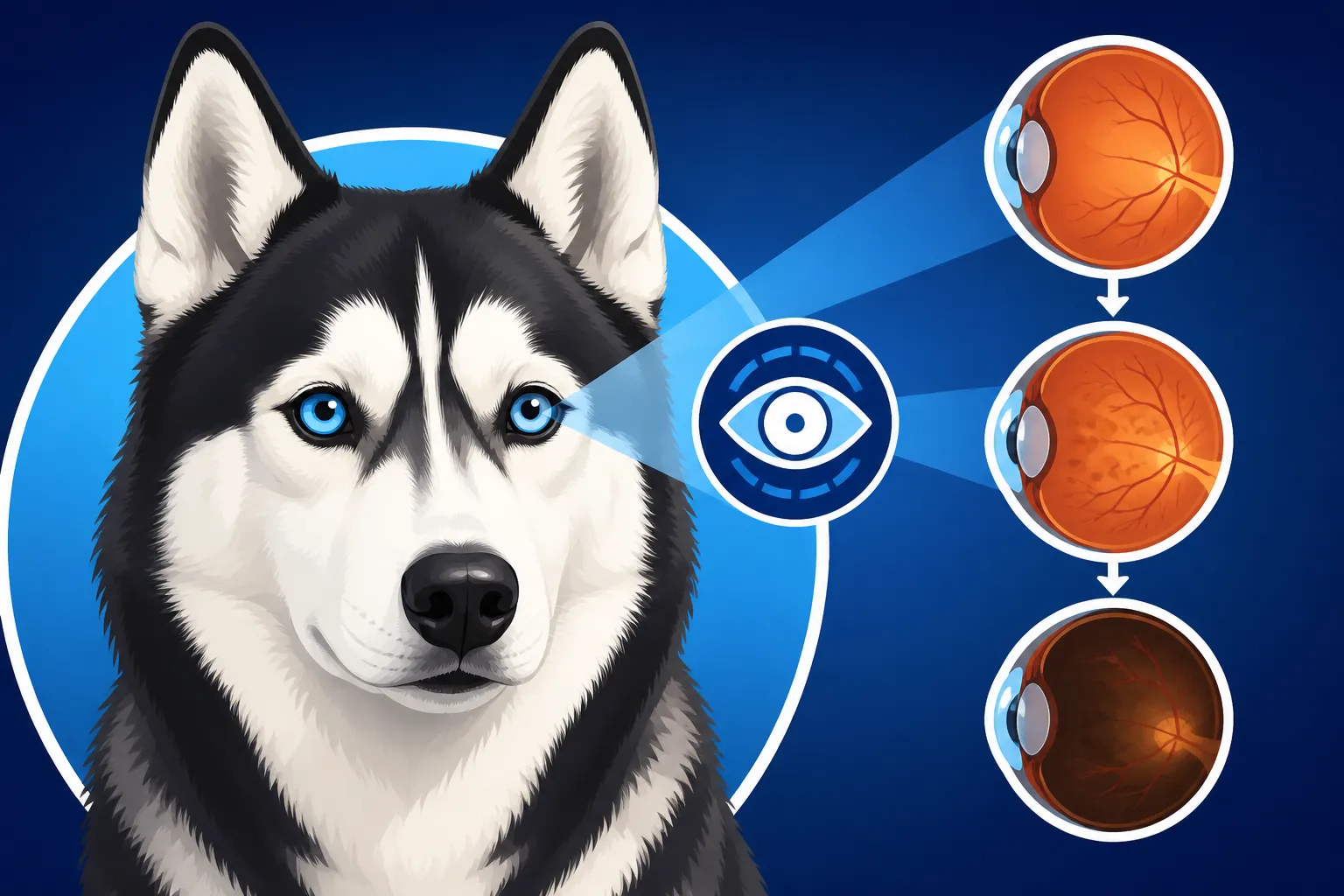
Imagine your Husky's eyes like tiny, intricate cameras. The retina is essentially the film or digital sensor. In a healthy eye, the photoreceptor cells capture light and send signals to the brain, creating the images your dog "sees." With PRA, these cells, for reasons rooted in their genetic code, begin to malfunction and then die off. Initially, it's often the rod cells, responsible for vision in low light, that are affected first. This leads to what we commonly call "night blindness." Your Husky might start bumping into things at dusk or refusing to go outside when it's dark.
As the disease progresses, the cone cells, which handle daytime vision and color perception, also start to degenerate. This means that the vision loss becomes more comprehensive, impacting their ability to see clearly even in bright light. The world gradually becomes blurrier, then darker, until eventually, complete blindness occurs. It’s a slow, cruel thief of sight, and because it's progressive, many owners don't notice the early signs until a significant amount of vision has already been lost.
The Genetic Component
The cruel twist with PRA in Siberian Huskies is that it is a genetic disease, meaning it's passed down from parent to puppy. Specifically, Siberian Huskies are known to be affected by an X-linked form of PRA. This is a crucial distinction because it explains why the disease manifests differently in males versus females. An X-linked condition means the faulty gene resides on the X chromosome. Males have one X and one Y chromosome (XY), while females have two X chromosomes (XX).
For males, inheriting just one copy of the faulty gene on their single X chromosome is enough for them to develop PRA. This is why male Siberian Huskies are typically the ones who show symptoms and progress to blindness. Females, however, are a bit more complex. If a female inherits one faulty X chromosome and one healthy X chromosome, she usually becomes a "carrier." She doesn't typically show signs of vision loss herself because her healthy X chromosome compensates. However, she can pass the faulty gene on to her offspring, potentially producing affected male puppies or carrier female puppies.
Understanding this genetic blueprint is incredibly important, not just for knowing what your dog is going through, but for preventing future generations from suffering. It highlights why The DNA Test for Siberian Husky PRA is so vital for responsible breeders.
Early Signs and Progression
The insidious nature of PRA lies in its gradual progression. It's rarely a sudden event. For many Siberian Husky owners, the first hint that something is amiss is often subtle, almost imperceptible. Your dog might start to seem a bit more hesitant to go down stairs in the evening, or they might become a little more clingy in unfamiliar, dimly lit environments. This is often the manifestation of night blindness, as the rod photoreceptors, which are critical for low-light vision, begin to fail.
As the disease continues its slow march, you might notice your Husky relying more on their other senses. They might start sniffing the ground more intently during walks, or their ears might swivel constantly, trying to gather auditory cues. You might also observe subtle changes in the appearance of their eyes. The pupils may become more dilated, even in bright light, as the eye tries to let in as much light as possible to compensate for the failing retina. Some owners might also notice a reflective "eye shine" or tapetal reflection when light hits their eyes in the dark, which can become more pronounced as the retina thins. Over weeks, months, or even years, this initial night blindness will inevitably progress to affect their daytime vision, eventually leading to complete blindness. It's a journey no owner wants to embark on, but knowing what to look for can help you prepare and support your beloved companion.
The Unique Form of PRA in Siberian Huskies
When we talk about Progressive Retinal Atrophy in Siberian Huskies, we're not just talking about any old type of PRA. This breed has a specific, well-documented form of the disease that is inherited in an X-linked recessive manner. This genetic quirk makes it distinct from other forms of PRA seen in different breeds and has significant implications for how it manifests and how we approach screening and breeding.
X-Linked PRA
The X-linked nature of PRA in Siberian Huskies is what sets it apart. As mentioned earlier, the defective gene responsible for the retinal degeneration is located on the X chromosome. This means that male Huskies, possessing only one X chromosome (XY), are much more likely to be affected and to develop clinical signs of the disease. If a male puppy inherits the X chromosome carrying the defective gene from his mother, he will develop PRA. There's no "backup" X chromosome to compensate, as there is in females.
Typically, affected males will begin to show signs of night blindness in their early adulthood, often between 2 to 5 years of age, though it can sometimes be seen younger or later. The progression to full blindness can vary, but it's generally a slow and steady decline. This distinct pattern of inheritance is crucial for breeders to understand, as it directly influences which dogs need testing and how breeding decisions should be made to avoid perpetuating the condition.
Carrier Females
This is where the X-linked inheritance gets really interesting, and frankly, a bit tricky for owners and breeders. Female Siberian Huskies have two X chromosomes (XX). If a female inherits one X chromosome with the PRA gene and one normal X chromosome, she will typically be a "carrier" of the disease. In most cases, these carrier females will not develop clinical signs of PRA themselves. Their healthy X chromosome usually produces enough functional proteins to maintain normal retinal function, or at least sufficient vision to go unnoticed.
However, a carrier female is still a crucial link in the chain of inheritance. While she might live her entire life with perfect vision, every time she has puppies, there's a 50% chance she'll pass on the defective X chromosome to each of her offspring, regardless of their sex. This means that half of her male puppies could develop PRA, and half of her female puppies could become carriers themselves. This explains why the disease can seem to "skip" generations or suddenly appear in a litter even when the parents seem healthy. Identifying these silent carriers is paramount for reducing the incidence of PRA in the breed.
Why Early Diagnosis Matters
Catching PRA early, or even before clinical signs appear, is incredibly important for several reasons. For affected dogs, an early diagnosis allows owners to prepare and adapt their homes and routines to support their Husky as their vision declines. This might involve setting up consistent pathways, avoiding moving furniture, and starting to introduce other sensory cues to help them navigate. Knowing what's coming can ease the transition for both dog and owner. For instance, creating a consistent environment, as discussed in Keeping a Blind Siberian Husky Safely Contained, can make a world of difference.
More importantly, for the breed as a whole, early diagnosis through genetic testing is the only way to stop the spread of this inherited condition. By identifying carrier females and affected males before they are bred, responsible breeders can make informed decisions to avoid producing more affected puppies. This kind of proactive Health Testing Before You Buy a Siberian Husky is vital for improving the overall health of the breed and reducing the emotional and financial burden on future owners. Without diligent screening, the disease will continue to silently pass through generations, only to manifest tragically in unsuspecting puppies.
Recognizing the Subtle Signs of PRA
One of the most frustrating aspects of Progressive Retinal Atrophy is how quietly it begins. Huskies are incredibly resilient and adaptable, often masking their deteriorating vision for as long as possible. Their intelligence and reliance on other senses can make it difficult for owners to pinpoint the exact moment something is wrong. However, knowing what to look for can empower you to catch the subtle cues before the disease progresses too far.
Night Blindness as the First Symptom
For most Siberian Huskies with PRA, night blindness, or nyctalopia, is the very first symptom to emerge. This happens because the rod photoreceptor cells, which are responsible for vision in dim light, are usually the first to degenerate. You might notice your Husky, who once confidently bounded through the backyard in the evening, now hesitates at the threshold of a dimly lit room or seems clumsier when the sun starts to set.
Think about walking your dog at dusk. Where they used to trot along confidently, they might now walk slower, head down, sniffing the ground more intently. They might bump into furniture they usually navigate with ease, or become startled by objects that seem to appear out of nowhere in low light conditions. If your Husky starts hesitating to chase a ball in the fading light, or seems disoriented in a poorly lit hallway, these are critical early warning signs. This can be particularly noticeable for a breed that thrives on outdoor activity, where varying light conditions are common. If you notice A Siberian Husky That Hesitates in Dim Rooms, it's time to pay close attention.
Behavioral Changes to Watch For
Beyond just night blindness, your Husky might exhibit a range of behavioral changes as their vision deteriorates. These changes often reflect their attempts to cope and adapt to a world that's becoming increasingly blurry or dark. They might become more hesitant in new environments, sticking closer to you or familiar objects. You might notice a reluctance to explore, or a preference for staying in well-lit, familiar areas of the home.
Some Huskies might become more clingy, constantly checking in with you for reassurance, especially if they feel uncertain about their surroundings. Others might become more easily startled, reacting strongly to unexpected noises or movements because they can't see the source. Their sense of hearing and smell may become hyper-alert, making them more sensitive to their environment. For a breed known for its independent spirit, a sudden shift towards dependency or anxiety can be a red flag. Pay attention to how they interact with their usual toys – do they miss them more often? Do they struggle to find treats you've tossed? These subtle shifts in behavior are your Husky’s way of communicating that their world is changing.
Progressive Vision Loss in Different Environments
As PRA progresses, the vision loss won't be confined to just low-light conditions. Eventually, the cone photoreceptors, responsible for daytime and detailed vision, will also start to fail. This means that your Husky will begin to struggle even in bright light. Obstacles they once saw clearly during the day might now become hazards. They might stumble over thresholds, misjudge distances, or become less accurate when trying to catch a treat.
You might notice their pupils appear larger, or more dilated, even in well-lit rooms. This is their body's natural attempt to let in more light to compensate for the failing retina. Their eyes might also develop a cloudy or reflective sheen when light hits them directly, due to changes in the tapetum lucidum at the back of the eye. This progressive decline can be particularly challenging for owners, as it impacts nearly every aspect of their Husky's daily life, from navigating the house to enjoying their favorite walks. Regular check-ups, including specialized eye exams, are crucial because early intervention won't reverse PRA, but it can help manage secondary issues and prepare for the future. This is why Siberian Husky Eye Disease and the Annual Exam is so important.
Diagnosing PRA: The Road to Confirmation
Discovering that your beloved Siberian Husky might have a serious eye condition like PRA can be incredibly distressing. The journey to a definitive diagnosis typically involves a combination of specialized examinations and genetic testing. It's not a process for a general vet alone; it requires the expertise of a board-certified veterinary ophthalmologist.
Ophthalmological Examination
If you suspect your Husky is experiencing vision problems, the first and most crucial step is to schedule an appointment with a veterinary ophthalmologist. These specialists have the advanced training and equipment necessary to thoroughly evaluate your dog's eyes. During an ophthalmological examination, the specialist will perform a comprehensive assessment, often including:
- Ocular history: They'll ask you detailed questions about when you first noticed symptoms, how they've progressed, and any other health concerns.
- Visual acuity tests: While dogs can't read an eye chart, the ophthalmologist will assess your Husky's ability to navigate an obstacle course in varying light conditions.
- Pupillary light reflex (PLR): They'll check how your dog's pupils respond to light. In early PRA, this reflex might still be normal, but as the disease progresses, the pupil may appear more dilated even in bright light.
- Slit-lamp biomicroscopy: This allows the ophthalmologist to examine the front structures of the eye (cornea, iris, lens) in detail. They'll look for other conditions that might mimic PRA, such as cataracts, though Juvenile Cataracts in the Siberian Husky are a separate concern.
- Ophthalmoscopy: Using an ophthalmoscope, they will examine the back of the eye, specifically the retina and optic nerve. In dogs with PRA, characteristic changes can be seen, such as a thinning of the retinal blood vessels and a hyper-reflectivity of the tapetum lucidum (the reflective layer behind the retina), which becomes more prominent as the retina degenerates.
These detailed examinations help the specialist differentiate PRA from other eye conditions and provide a clinical suspicion, leading to further confirmatory tests.
Electroretinography (ERG)
While an ophthalmological exam can raise strong suspicions, the definitive diagnostic tool for PRA is often an Electroretinogram (ERG). This test is similar to an EKG for the heart but measures the electrical activity of the retina in response to light stimuli. It's a non-invasive procedure, though typically performed under light sedation to ensure the dog remains still and comfortable.
During an ERG, small electrodes are placed on the surface of your Husky's eyes and around their head. Different flashes of light (varying in intensity and color) are then used to stimulate the retina, and the electrodes record the electrical responses from the rod and cone cells. A healthy retina will produce a normal waveform. In a dog with PRA, the ERG will show a diminished or absent electrical response, indicating that the photoreceptor cells are not functioning correctly or have degenerated. This test can detect retinal degeneration even before clinical signs of vision loss are apparent, making it invaluable for early diagnosis and for confirming the disease.
Genetic Testing
Given the X-linked genetic nature of PRA in Siberian Huskies, genetic testing is a powerful tool, not just for confirming a diagnosis in an affected dog, but crucially for identifying carriers and preventing the disease's spread. A simple DNA test, usually performed with a cheek swab or blood sample, can determine if a dog carries the specific mutation associated with Siberian Husky PRA.
The results of a DNA test will typically classify a dog as:
- Clear: The dog does not carry the gene and cannot pass it on.
- Carrier: The dog carries one copy of the gene but is usually unaffected (typically females in X-linked PRA). They can pass the gene to offspring.
- Affected: The dog has two copies of the gene (in typical recessive forms) or one copy (in X-linked males) and will develop the disease.
For male Siberian Huskies, a positive genetic test for the X-linked PRA mutation confirms they are affected and will develop the condition. For females, a positive test indicates they are carriers. Genetic testing is a cornerstone of responsible breeding practices, allowing breeders to make informed decisions about pairings to avoid producing affected puppies. This is why The DNA Test for Siberian Husky PRA is so critical for the breed's future. It provides certainty that ophthalmological exams alone cannot always offer, especially for carrier females.
Living with a Siberian Husky Affected by PRA
Receiving a diagnosis of PRA for your Siberian Husky can feel overwhelming. The thought of your active, adventurous companion losing their sight is heartbreaking. However, it's important to remember that blindness is not a death sentence for a Husky. With thoughtful adaptations, patience, and love, blind Huskies can still lead full, happy, and surprisingly independent lives. They adapt incredibly well, often relying heavily on their other heightened senses.
Adapting Your Home Environment
The key to helping a vision-impaired Husky thrive is to create a safe, consistent, and predictable home environment. Their world shrinks to what they can safely navigate, and any changes can cause significant anxiety.
- Keep furniture in place: Once your Husky has mapped out their home, try not to rearrange furniture. Their mental map is their guiding light. If you must move something, guide them around it several times until they re-learn the new layout.
- Clear pathways: Ensure all pathways are free of clutter, tripping hazards, or small objects. Make sure dog beds, water bowls, and food dishes are always in the same spot.
- Use textures and scents: Place different textured mats or rugs near doorways, stairs, or important areas (like their food bowl or bed) to give them tactile cues. You can also use distinct scents (like a drop of essential oil diluted in water on a specific mat, away from where they might lick it) as markers for certain areas.
- Block off dangers: Use baby gates or internal fences to block off stairs, swimming pools, or areas that could pose a fall risk.
- Protect sharp edges: Pad sharp corners of furniture with foam protectors to prevent injuries from accidental bumps.
- Consider bells: Attach a small bell to other pets in the house so your blind Husky can hear them approaching and avoid collisions.
- Outdoor safety: Ensure your yard is securely fenced and free of hazards. Always supervise them outside, and perhaps consider a specific, consistent potty area. For more on keeping them safe, check out Keeping a Blind Siberian Husky Safely Contained.
Maintaining a Routine and Predictability
Siberian Huskies thrive on routine, and for a blind dog, routine becomes their anchor in a confusing world. Predictability reduces anxiety and allows them to navigate their day with confidence.
- Consistent feeding times and locations: Always feed them at the same time and in the same spot.
- Regular potty breaks: Take them out at predictable intervals, to the same designated area each time. Use a consistent verbal cue like "potty" to associate with the action.
- Consistent walking routes: When on a leash, stick to familiar routes. Allow them to sniff and explore, using their nose to gather information about their surroundings. Narrate your walks – "Step up," "Watch out, curb," "Dog approaching" – to help them understand what's happening.
- Verbal cues: Teach clear verbal cues for common actions: "Stop," "Wait," "Step up," "Step down," "Left," "Right," "Watch out." These become invaluable for guiding them.
- Gentle touch and voice: Always approach your blind Husky with a gentle voice and touch to avoid startling them. Let them know you're there before you pet them. Avoid picking them up abruptly.
- Playtime consistency: Keep toys in a designated spot and introduce them with a consistent sound cue. Squeaky or crinkly toys are excellent.
Enrichment and Mental Stimulation
Just because a Husky can't see doesn't mean they can't enjoy life. Siberian Huskies are intelligent, energetic dogs, and they still need plenty of mental and physical exercise. Enrichment activities become even more important to keep them happy and prevent boredom-related anxieties or destructive behaviors.
- Scent work and nose games: These are fantastic for blind dogs. Hide treats around the house and encourage them to sniff them out. Use snuffle mats or puzzle toys that dispense treats. Their sense of smell is incredibly powerful and becomes their primary way of exploring.
- Auditory toys: Toys that squeak, crinkle, or have bells inside are excellent. You can roll them and let your Husky track them by sound.
- Tug-of-war and fetch (with sound): Tug is a great interactive game. For fetch, use a sturdy, noisy ball that makes sounds as it rolls.
- "Find It" games: Hide yourself or another family member and call your Husky to "find" you. Reward them enthusiastically when they do.
- Walks and structured exercise: Continue regular walks, adapting to their comfort level and your ability to guide them. Even a slow, deliberate walk where they can sniff to their heart's content provides immense mental stimulation.
- Interactive play with you: Spend dedicated time playing and cuddling. Your presence and touch become even more important for their sense of security and belonging.
- Introducing new experiences carefully: While routine is key, new smells and sounds can still be enriching. Introduce new safe spaces (like a friend's yard, after you've checked it for hazards) slowly, always guiding them and reassuring them with your voice.
Remember, patience and empathy are your greatest tools. Your Husky will rely on you more than ever, and with your support, they can continue to live a fulfilling life. As your Husky ages, these adaptive measures become even more crucial, echoing many of the principles found in Caring for a Siberian Husky Past Ten.
The Impact of PRA on Breeding Decisions
For breeders, the diagnosis of PRA in a Siberian Husky is not just a personal tragedy but a profound ethical responsibility. Given its X-linked genetic nature, thoughtful breeding practices are the only way to safeguard the future health of the breed. This isn't about shaming, but about educating and promoting responsible choices that prioritize the welfare of future generations.
Screening Breeding Stock
The cornerstone of preventing inherited diseases like PRA is comprehensive health testing of all breeding stock before any mating occurs. For Siberian Huskies, this means mandatory eye examinations by a board-certified veterinary ophthalmologist and, crucially, genetic testing for the X-linked PRA mutation.
- Annual Eye Exams: All breeding dogs should undergo yearly eye examinations by a boarded veterinary ophthalmologist. These exams are vital for detecting clinical signs of eye diseases, including early changes associated with PRA, even before genetic testing was widely available. Organizations like the Orthopedic Foundation for Animals (OFA) maintain a public database of these results, allowing potential puppy buyers to verify health clearances. This is why Why Siberian Huskies Need Their Eyes Checked Yearly is critical for health testing.
- Genetic Testing for PRA: This is arguably the most powerful tool for PRA prevention. As discussed, a simple DNA test can identify clear dogs, carrier females, and affected males. For an X-linked condition, it's particularly important to test both males and females. A female identified as a carrier, while likely unaffected herself, can pass the gene to half of her offspring. A male identified as affected should never be bred, as he will pass the gene to all of his daughters, making them carriers.
By diligently screening all breeding animals, breeders can make informed decisions to minimize the risk of producing puppies affected by or carrying the PRA gene.
Responsible Breeding Practices
Armed with the results from thorough screening, responsible breeders implement strategies to reduce or eliminate PRA from their lines. This involves careful selection of breeding pairs.
- Avoiding affected individuals: Any Siberian Husky diagnosed with clinical PRA or testing as "affected" by the DNA test should be immediately removed from breeding programs. This is a non-negotiable step.
- Strategic use of carriers: This is where it gets more nuanced for X-linked diseases. While an affected male should never be bred, carrier females present a different challenge. In some cases, a carrier female might be an otherwise excellent example of the breed, possessing many desirable traits. Responsible breeders might choose to breed a carrier female only to a genetically clear male. This pairing will not produce affected male puppies, but it will still produce carrier females. The breeder then has a responsibility to rigorously test all female offspring and ensure that any carrier females among them are either spayed and placed in pet homes, or, if bred, only bred to clear males and with a commitment to test their offspring. This practice, known as Breeding Around PRA in Siberian Huskies, is used to retain valuable genetic diversity while slowly working the gene out of the population.
- Transparency and Disclosure: Ethical breeders are always transparent about the health testing results of their breeding stock and are willing to discuss the genetic implications with potential puppy buyers. They provide clear documentation of all health clearances, including PRA status, and ensure buyers understand the risks and responsibilities. This contributes to the overall health and integrity of the breed.
Understanding Pedigrees and Genetic Results
For prospective puppy owners, understanding a puppy's pedigree and the health paperwork provided by a breeder is paramount. It’s not enough for a breeder to say their dogs are tested; you need to see the proof.
- OFA Database: The Orthopedic Foundation for Animals (OFA) maintains a public, searchable database where you can verify the health clearances of individual dogs. Look for OFA Eye Certification (often marked as "EYE") and specific DNA test results for PRA.
- Interpreting DNA test results: Learn to interpret the genetic test results (Clear, Carrier, Affected). If you're considering a female puppy from a carrier dam, understand that she might be a carrier herself. If you are not planning to breed, this might not be a concern for her health, but it’s still important to be aware of.
- Asking questions: Don't be afraid to ask breeders specific questions about their health testing protocols, how they handle carriers, and what steps they take to prevent genetic diseases. A reputable breeder will welcome your questions and provide detailed answers.
- Long-term commitment: Choosing a puppy from health-tested parents significantly increases the likelihood of a healthy companion. This aligns with the broader principles of Reading a Siberian Husky Puppy's Health Paperwork and making informed decisions for a lifetime.
By supporting breeders who are committed to extensive health testing and responsible breeding practices, prospective owners can play a crucial role in reducing the prevalence of PRA and ensuring the long-term health and well-being of the Siberian Husky breed.
Support and Resources for Owners
Learning that your Siberian Husky has Progressive Retinal Atrophy can feel isolating, but you are absolutely not alone. There's a robust community of owners, breeders, and veterinary professionals dedicated to supporting dogs with vision impairment and their families. Accessing these resources can make a significant difference in how you and your Husky navigate this journey.
Connecting with Support Groups
One of the most valuable resources you can tap into is a community of people who truly understand what you're going through. Online forums, social media groups, and local meet-ups for owners of blind or visually impaired dogs are incredibly supportive.
- Shared Experiences: These groups offer a safe space to share your frustrations, fears, and triumphs. You'll find countless stories of successful adaptations, ingenious solutions to common challenges, and invaluable emotional support.
- Practical Advice: Members often share practical tips and tricks they've discovered, from the best non-slip floor runners to specific toys that engage blind dogs, or even advice on navigating unfamiliar places. Want to know if your Husky is adapting well to new environments? Chances are, someone in these groups has been there.
- Product Recommendations: Looking for a specific harness, a "halo" device to prevent bumps, or the best-squeaking toy? Other owners can offer recommendations based on their real-world experience.
- Advocacy and Awareness: Some groups also work to raise awareness about genetic conditions like PRA, contributing to the larger effort to promote responsible breeding and health testing.
Don't hesitate to reach out. A quick search for "blind dog support group" or "visually impaired Siberian Husky owners" on platforms like Facebook can connect you with a global network of compassionate individuals.
Veterinary Specialists and Ongoing Care
While your regular veterinarian is an invaluable partner in your Husky's overall health, ongoing management of PRA requires specialized expertise. A veterinary ophthalmologist will be your primary specialist, but other professionals might also contribute to your Husky's well-being.
- Veterinary Ophthalmologist: Regular follow-ups with the ophthalmologist are crucial. They can monitor the progression of the PRA, identify any secondary issues (like glaucoma or cataracts that might develop, though less common as a direct PRA complication), and ensure your Husky's eyes remain comfortable. While PRA itself isn't treatable, managing any concurrent conditions is vital.
- Rehabilitation Veterinarians: For some dogs, especially those struggling with balance or mobility changes due to vision loss, a rehabilitation specialist might be helpful. They can suggest exercises, massage, or even hydrotherapy to maintain muscle strength and proprioception.
- Behaviorists/Trainers: If your Husky develops anxiety or behavioral issues as a result of their vision loss, a certified professional dog trainer or veterinary behaviorist experienced with blind dogs can provide strategies and training tailored to their needs.
- Regular Vet Visits: Continue with your routine general veterinary care for vaccinations, parasite prevention, and overall health monitoring. Your primary vet will work in conjunction with your specialists to provide comprehensive care.
Maintaining a strong relationship with your veterinary team is essential. They are your best resource for medical advice and support.
Considering Pet Insurance for Future Needs
The thought of managing a chronic condition like PRA can bring financial concerns, especially as specialized vet visits and potential supportive care add up. This is where pet insurance can offer a significant safety net, provided you enroll your Husky before symptoms appear.
- Early Enrollment is Key: Most pet insurance policies consider genetic conditions like PRA to be "pre-existing conditions" if symptoms were noted or diagnosed before enrollment or during the waiting period. This means it's crucial to enroll your Siberian Husky when they are young and healthy.
- Coverage for Diagnostics and Treatments: A good pet insurance plan, like those offered by Healthy Paws, can help cover a significant portion of the costs associated with diagnosing and managing PRA. This includes specialist consultations, ERG testing, and any medications or treatments for secondary eye conditions that may arise.
- Chronic Condition Coverage: Many comprehensive plans, including Healthy Paws, offer coverage for chronic conditions throughout your pet's life, as long as the condition wasn't pre-existing. This can provide immense relief as you manage the long-term needs of a visually impaired Husky.
- Peace of Mind: Knowing you have financial support can allow you to make treatment decisions based on what's best for your Husky, rather than being constrained by cost.
It’s important to research different policies carefully, understanding deductibles, reimbursement percentages, and what is specifically covered or excluded. While What a Siberian Husky Insurance Policy Excludes might highlight some common limitations, finding a policy that proactively covers potential genetic conditions can be a smart move for any Husky owner. Investing in pet insurance early, for a breed with known genetic predispositions like PRA, is a decision that often pays dividends in peace of mind and access to the best possible care for your beloved companion.
The journey with a Husky affected by PRA is undeniably challenging, but it is also filled with profound moments of connection, adaptation, and love. Your dedication to understanding and supporting your Siberian Husky will empower them to live a full and joyful life, no matter how their vision changes.
Disclaimer
The information provided in this guide is for general informational purposes only and does not constitute veterinary medical advice. Always consult with a qualified veterinarian or a board-certified veterinary ophthalmologist for any health concerns or before making any decisions about your Siberian Husky's care.