Whether a Siberian Husky Needs Hip X-Rays
Figuring out necessary health tests for your Siberian Husky can be incredibly confusing. While other breeds are often plagued by hip issues, you’ve probably heard Huskies are somewhat different. So, when does your beloved companion genuinely need a hip X-ray, and when might it be an unnecessary worry? This guide will cut through the noise, clarifying the specific situations where hip X-rays are truly beneficial for your Siberian Husky, whether for breeding, diagnosis, or simply your peace of mind.
Understanding Hip Health in Siberian Huskies
It's a common frustration among Husky owners to hear conflicting advice about hip health. On one hand, you're constantly bombarded with information about hip dysplasia and the critical need for X-rays in large breeds. On the other, you might hear that Siberian Huskies are actually one of the breeds least affected by it. Both statements hold some truth, and understanding this nuance is key to deciding whether those X-rays are right for your furry friend.
Why Siberian Huskies Are Different
Unlike many popular large dog breeds, Siberian Huskies historically boast a remarkably low incidence of hip dysplasia. This isn't just anecdotal; organizations like the Orthopedic Foundation for Animals (OFA) consistently show Huskies ranking among the healthier breeds when it comes to hips. This low rate is often attributed to their origin as working dogs bred by the Chukchi people, where soundness and endurance were paramount. Dogs with weak hips simply wouldn't have survived or thrived in the harsh Arctic environment, meaning only the fittest were typically bred. This natural selection process has given them a genetic advantage.
However, "low incidence" doesn't mean "no incidence." While rare, hip dysplasia can still occur in Siberian Huskies. It might not present as severely as in a German Shepherd or a Labrador Retriever, but it's still a possibility to be aware of. This is why the question of X-rays can be so perplexing – do you test for a problem that's unlikely but not impossible? This breed-specific characteristic is why you might feel like you're getting mixed messages; people are often genuinely surprised to learn about Siberian Husky Hips and Why the Rate Is Low.
The Role of OFA and PennHIP
When we talk about canine hip evaluations, two main methods come up: the Orthopedic Foundation for Animals (OFA) and PennHIP. Both aim to assess hip joint quality, but they do so differently and are often used for different purposes.
-
OFA (Orthopedic Foundation for Animals): This method involves taking a single X-ray view of the hips, with the dog positioned on its back, legs extended and rotated inward. The X-rays are then evaluated by three independent radiologists who grade the hips as excellent, good, fair, borderline, mild, moderate, or severe. This grading is common for breeding dogs, and many breeders will proudly share their dogs' OFA certificates. The minimum age for OFA certification is 24 months, as hip joint development is considered complete by then. For breeders, understanding Reading a Siberian Husky's OFA Hip Result is crucial.
-
PennHIP: This method takes a more quantitative approach, using three separate X-ray views to measure hip laxity (looseness) – a key indicator of susceptibility to hip dysplasia. One view is similar to OFA, another applies pressure to compress the joint, and a third gently distracts (pulls apart) the joint. The distraction view is unique to PennHIP and helps predict future hip health with greater accuracy, even in younger dogs (as early as 16 weeks). PennHIP results provide a Distraction Index (DI) which is then compared to other dogs of the same breed. While PennHIP is considered more sensitive, you'll often find that Why Husky Breeders Rarely Bother With PennHIP is a relevant consideration, largely due to the breed's already strong hip health and the OFA's prevalence.
When Hip X-Rays Are Truly Recommended
Despite the Siberian Husky's excellent hip track record, there are specific situations where a hip X-ray isn't just a good idea, but genuinely recommended. These usually fall into two main categories: proactive health screening for breeding dogs and diagnostic investigation for a dog showing symptoms.
For Breeding Dogs: Ensuring Healthy Offspring
If you are a responsible breeder, or if your Siberian Husky is part of a breeding program, hip X-rays are absolutely essential. This isn't just about your dog's health; it's about the health of future generations. Even with a breed that has a low incidence, screening breeding stock helps maintain that standard and prevent the passing on of any underlying genetic predispositions.
Most reputable breeders will obtain an OFA certification for their breeding dogs once they reach The Age a Siberian Husky Can Be OFA Certified, which is 24 months. Some might opt for PennHIP as well, especially if they want an earlier assessment or a more detailed analysis of joint laxity. The goal here is to ensure that only dogs with sound hips contribute to the gene pool. This commitment to health testing is a cornerstone of ethical breeding practices and something you should always look for when considering Health Testing Before You Buy a Siberian Husky. It's an investment in the breed's future.
For Diagnosing Lameness or Pain
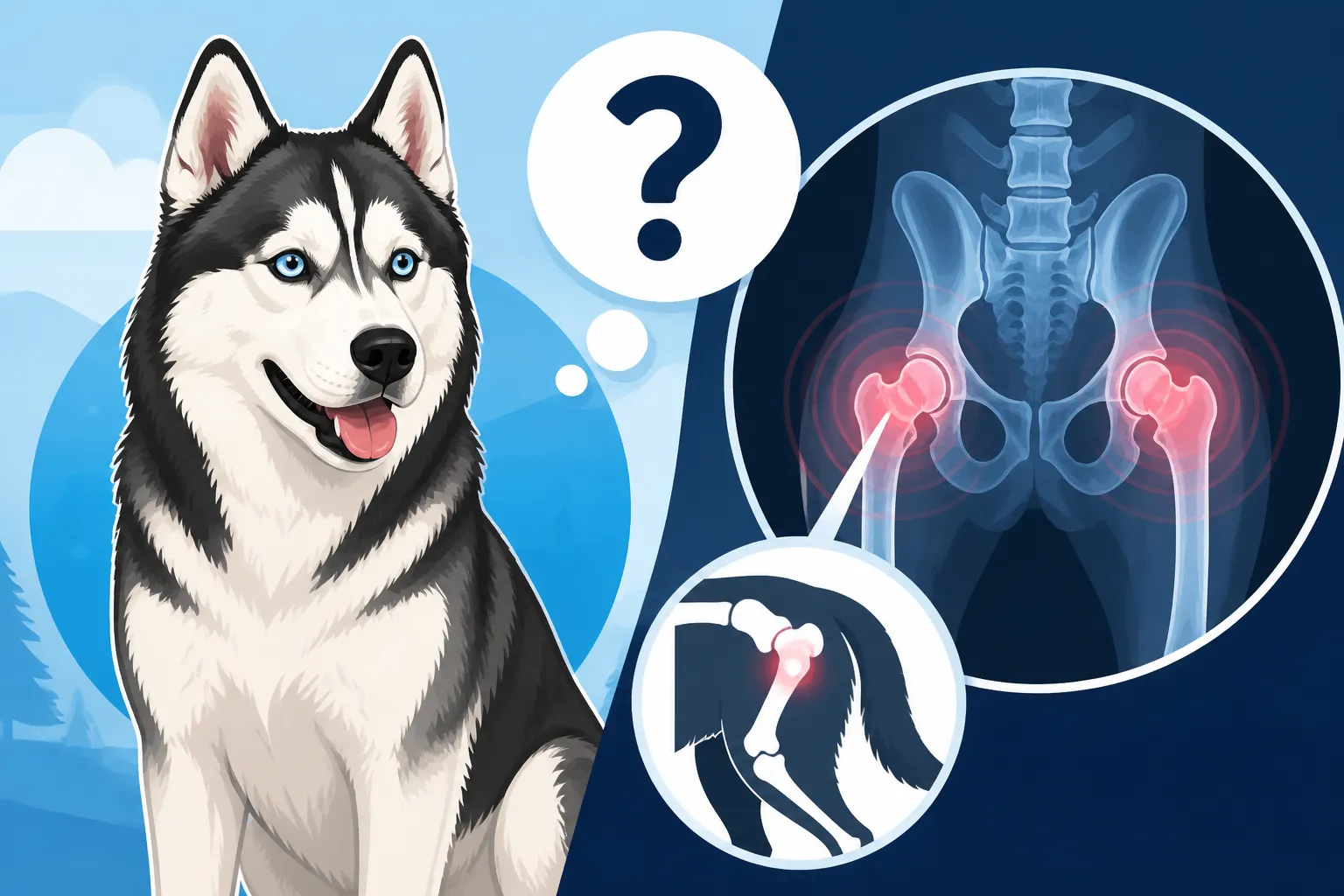
This is where hip X-rays become crucial for any Siberian Husky, regardless of its breeding status. If your Husky is showing signs of lameness, limping, difficulty getting up, reluctance to jump or play, or any obvious signs of pain or discomfort, a hip X-ray is a vital diagnostic tool. Even if hip dysplasia is rare, other conditions can affect the hips and surrounding structures.
These symptoms could indicate:
- Osteoarthritis: This degenerative joint disease can occur for various reasons, including age, previous injury, or even a very subtle underlying hip conformation issue. Catching Early Arthritis Signs in a Siberian Husky is important for early intervention.
- Injury: Huskies are active dogs. A fall, a sudden twist, or an impact during play or exercise can lead to muscle strains, ligament tears, or even fractures around the hip joint. X-rays can rule out bone damage.
- Other orthopedic issues: There are various less common conditions that can manifest as hind-end lameness. X-rays provide a visual roadmap for your vet to understand what's happening internally.
- Hip Dysplasia: While uncommon, if your Husky is showing classic signs, an X-ray is the definitive way to confirm or rule out hip dysplasia.
In these cases, the X-ray isn't a preventative measure but a necessary step to diagnose a problem and formulate a treatment plan. Ignoring persistent lameness or pain can lead to worsening conditions and a reduced quality of life for your dog. If your vet recommends diagnostic X-rays, it's because they're looking for answers to alleviate your Husky's discomfort. Pet insurance providers like Healthy Paws often cover diagnostic imaging when it's medically necessary.
The X-Ray Procedure and What to Expect
If your Siberian Husky does need hip X-rays, whether for breeding purposes or due to a health concern, it's natural to have questions about the process. Understanding what happens can help ease any anxiety you might have for your dog.
Sedation or Anesthesia
For high-quality hip X-rays, particularly for OFA or PennHIP evaluations, sedation or light anesthesia is almost always required. This isn't just to keep your dog still; it's to ensure proper positioning. Even the most cooperative Husky won't be able to hold the precise positions needed for clear, diagnostic images without some chemical assistance.
For an OFA X-ray, your dog needs to be perfectly straight, with legs extended symmetrically and rotated inward. For PennHIP, the distraction views require specific manipulation of the hips. Without sedation, the muscle tension in a dog can mask underlying laxity, leading to inaccurate results. Your vet will discuss the risks and benefits of sedation based on your dog's age, health, and any pre-existing conditions. Most healthy Huskies tolerate sedation very well. They'll typically go home a few hours after the procedure, still a bit groggy, but recovering quickly.
Interpreting the Results
Once the X-rays are taken, your veterinarian will initially review them. If it's for a diagnostic purpose (e.g., lameness), they'll look for immediate signs of injury, arthritis, or structural changes. For OFA or PennHIP, the X-rays are sent to specialists for official evaluation.
For OFA, as mentioned, three independent radiologists will grade the hips. For PennHIP, the images are analyzed by a certified PennHIP veterinarian. The results will then be sent back to your vet, who will discuss them with you. This can take a few weeks for official certification. It’s important to remember that these evaluations are not just about a "pass" or "fail" but provide valuable information about your dog’s joint health. Knowing What a Siberian Husky CHIC Certification Requires also explains why hip evaluations are a standard part of comprehensive health screening for purebred dogs.
Here's a quick comparison of the common reasons for hip X-rays:
| Reason for X-Ray | Primary Goal | Typical Age | Sedation Required? | Key Outcome |
|---|---|---|---|---|
| Breeding Screening | Assess genetic hip quality for reproduction | 24 months (OFA) | Yes | Official OFA/PennHIP grade, informs breeding decisions |
| Diagnostic (Pain) | Identify cause of lameness, pain, or discomfort | Any age | Often | Diagnosis of arthritis, injury, dysplasia, etc. |
| Pre-purchase (Puppy) | Early screening for hip laxity potential | 16 weeks (PennHIP) | Yes | PennHIP DI score, provides early risk assessment |
Deciding if Hip X-Rays are Right for Your Pet Husky
For the average pet Siberian Husky owner, deciding on hip X-rays can feel like a big decision. Given the breed's lower risk, it’s fair to question if it’s truly necessary.
When Routine X-Rays Might Not Be Necessary
If your Siberian Husky is purely a beloved family pet, shows absolutely no signs of lameness or discomfort, maintains a healthy weight, and has excellent mobility, routine hip X-rays solely for "screening" purposes might not be explicitly necessary. The cost, the need for sedation, and the already low breed incidence can make it seem like an over-the-top precaution. Many vets, aware of the breed's profile, may not push for routine hip X-rays in asymptomatic pet Huskies. If your puppy came from a reputable breeder who already screened the parents, that adds another layer of reassurance.
Keeping your Husky at a Siberian Husky Weight and Joint Health is one of the best preventative measures you can take, as excess weight significantly stresses joints, regardless of their genetic predisposition. Focus on a balanced diet and consistent, appropriate exercise to support overall joint health.
Factors That Might Lean Towards X-Rays
Even for a pet Husky, there are nuanced situations where X-rays could still be beneficial for peace of mind or future planning:
- Uncertainty of Parentage: If you adopted your Husky from a rescue or shelter, and their genetic history is unknown, you might not have the assurance of parent hips being screened. In such cases, if you're particularly worried, or if there's any ambiguous gait, a PennHIP evaluation at a younger age might be considered to assess laxity and future risk.
- Early, Subtle Symptoms: Sometimes a dog's lameness is incredibly subtle. Maybe they're just a little slower to get up after a nap, or they hesitate slightly before jumping into the car. These mild Siberian Husky Limping After Long Runs could be early indicators of a problem. In these situations, diagnostic X-rays are definitely recommended to get a baseline and rule out anything serious before it progresses.
- High-Impact Lifestyle: If your Husky is involved in intense activities like agility, canicross, or bikejoring, where significant stress is placed on their joints, you might consider X-rays earlier than others. While Huskies are built for endurance, high-impact activities can exacerbate any underlying, even mild, joint issues. Proactive knowledge of their joint status can help you tailor their exercise regimen appropriately. Healthy Paws pet insurance might be a good consideration for active dogs like these, helping cover potential injury costs.
- Peace of Mind: Ultimately, if the worry of hip issues is keeping you up at night, and your vet agrees it’s a reasonable step, the peace of mind gained from an X-ray might be worth the cost and sedation. Having objective information can help you make informed decisions about your Husky's long-term care and activity levels.
In conclusion, for most pet Siberian Huskies without symptoms, routine hip X-rays are not usually a top priority due to the breed's favorable genetics. However, for breeding animals, or any Husky showing signs of discomfort or lameness, X-rays are an invaluable tool for diagnosis and responsible pet ownership. Always discuss your concerns and your dog's specific situation with your trusted veterinarian, as they can provide the best guidance tailored to your Husky's individual needs.
Disclaimer
This article is intended for informational purposes only and does not constitute veterinary advice. Always consult with a qualified veterinarian for any health concerns or before making any decisions about your pet's care.