Reading a Siberian Husky’s OFA Hip Result
When you're bringing a magnificent Siberian Husky into your life, or even just researching the breed, the sheer amount of health information can feel like trying to navigate a blizzard in the dark. One area that often leaves potential owners scratching their heads is understanding health clearances, particularly the Orthopedic Foundation for Animals (OFA) hip results. It’s not just a simple "pass" or "fail"; there's a detailed grading system that offers crucial insights into your husky's genetic predisposition to hip dysplasia and overall joint health. This comprehensive guide is designed to shed light on those mysterious acronyms and numbers, showing you exactly what OFA hip scores mean, how to read an OFA certificate, and why understanding them is absolutely vital for ensuring your beloved companion enjoys a long, active, and comfortable life.
What is OFA and Why is it Important for Huskies?
The journey to understanding your Siberian Husky's hip health often starts with a single organization: the Orthopedic Foundation for Animals. They are the gold standard when it comes to evaluating canine orthopedic health, and for good reason. For a breed as active and athletic as the Siberian Husky, robust joints aren't just a luxury – they're a necessity.
The Role of the Orthopedic Foundation for Animals
The OFA is a non-profit organization dedicated to improving the health and well-being of companion animals through orthopedic disease information, research, and health certifications. Think of them as the quality control experts for canine joints. Their primary mission is to provide an objective, standardized evaluation of a dog's hips and elbows (among other things) to identify conditions like hip and elbow dysplasia. This standardization means that a hip evaluation performed by one OFA-certified vet and read by their board of radiologists will be consistent with one done across the country.
This consistency is incredibly powerful because it allows breeders, potential owners, and veterinarians to make informed decisions based on reliable data. Without a standardized system like OFA's, assessing a dog's genetic predisposition to joint issues would be far more subjective and less effective, hindering efforts to improve breed health over generations.
Why Hip Dysplasia Matters for Active Huskies
Hip dysplasia is a malformation of the hip joint, where the ball (femoral head) and socket (acetabulum) don't fit together snugly. This looseness can lead to grinding, pain, arthritis, and lameness over time. For a Siberian Husky, a breed renowned for its endurance, speed, and love for running and pulling, healthy hips are paramount. A husky with hip dysplasia might struggle with activities that define its very nature – think about a dog that loves to run struggling to even walk without pain.
While the Siberian Husky Hip Dysplasia Rate is thankfully lower than many other medium to large breeds, it's not non-existent. Any husky, regardless of its lineage, can be affected. Even a mild case can significantly impact a dog's quality of life, leading to chronic discomfort, expensive veterinary bills, and a diminished ability to engage in their favorite activities. This is precisely why early identification and careful breeding practices are so crucial.
How OFA Contributes to Responsible Breeding
Responsible breeders understand the critical role genetics play in health, and they use OFA certifications as a cornerstone of their breeding programs. By only breeding dogs with passing OFA hip (and elbow) scores, they aim to reduce the incidence of hip dysplasia in future generations. When you see a breeder proudly displaying OFA certificates for their breeding stock, they're not just showing off; they're demonstrating a commitment to the long-term health of the breed and providing transparency to prospective puppy buyers.
For anyone looking to bring a Siberian Husky puppy home, insisting on seeing OFA certifications for both parents is one of the most important steps you can take. It’s part of the broader concept of Health Testing Before You Buy a Siberian Husky. This practice helps ensure you're getting a puppy from a lineage where hip health has been carefully considered, significantly decreasing the likelihood that your puppy will develop this painful, debilitating condition later in life. It's about making an informed decision that protects your future furry family member.
Understanding the OFA Hip Grading Scale
When you receive an OFA hip certificate, you'll notice a specific grade listed. This isn't just a single word; it's the result of a rigorous evaluation process where board-certified veterinary radiologists meticulously examine X-rays of your dog's hips. Understanding these grades is key to interpreting the certificate correctly.
The Seven Grades Explained: Excellent to Dysplastic
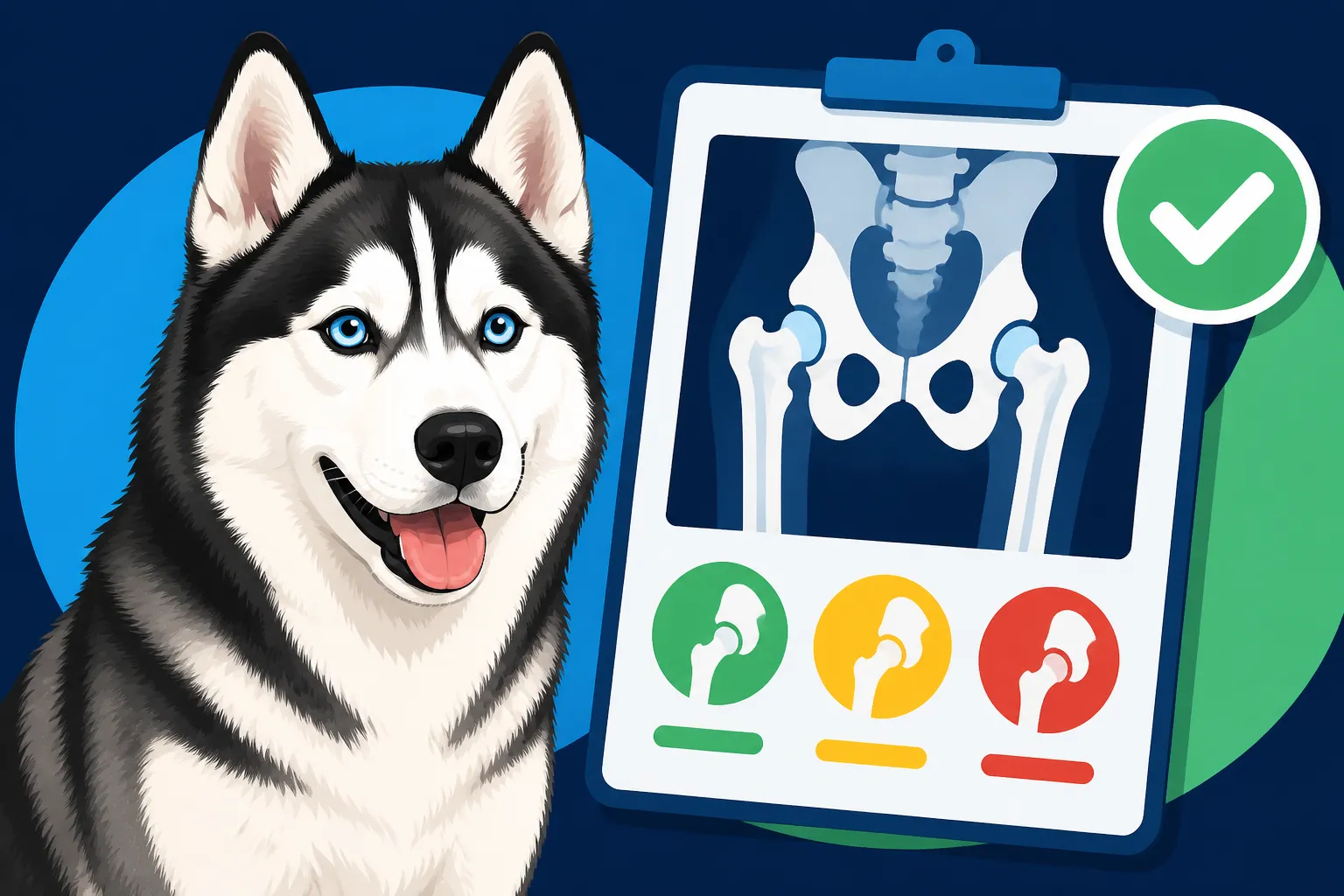
The OFA uses a seven-point grading scale to classify hip conformation, ranging from the best possible to severe dysplasia. Here’s a breakdown of what each grade signifies:
- Excellent: This is the best possible score. It indicates a nearly perfect hip joint with superior conformation, deep sockets, and a very tight fit between the ball and socket. There are no signs of laxity (looseness).
- Good: These hips are well-formed and congruent, meaning the ball and socket fit together well. There might be a very slight degree of incongruity compared to "Excellent," but the joint remains healthy and functional.
- Fair: While still considered a passing grade, "Fair" hips show minor irregularities. The hip joint is still considered congruent, but the socket might be slightly shallow, or the joint space a little wider than in "Good" or "Excellent" hips. This might suggest a slightly greater predisposition to developing arthritis later in life, but the dog is not dysplastic.
- Borderline: This is where things get tricky. Borderline hips have some features that are suggestive of hip dysplasia but aren't conclusive enough for a definitive diagnosis. There might be minor irregularities in the joint or a slight looseness. Often, the OFA will recommend re-X-raying the dog in 6-12 months to see if the condition progresses or stabilizes. A Borderline score is not considered a "pass" for breeding purposes by most responsible breeders.
- Mild Dysplasia: At this point, the dog is officially diagnosed with hip dysplasia. "Mild" cases show definite evidence of subluxation (partial dislocation of the joint), with the femoral head partially out of the socket. There might be some shallowing of the acetabulum (socket) or early degenerative changes.
- Moderate Dysplasia: This grade indicates significant radiographic evidence of hip dysplasia. There's a poor fit between the ball and socket, with considerable subluxation. Significant secondary degenerative changes, such as bone spurs (osteophytes) or remodeling of the joint, are typically present.
- Severe Dysplasia: The worst possible grade, "Severe" dysplasia means there is marked evidence of hip dysplasia. The hip joint is severely malformed, with extensive subluxation or even full dislocation. Profound degenerative joint disease and pain are common at this stage.
Understanding these distinctions is crucial, as they directly impact a dog's health outlook and breeding suitability.
What "Pass" vs. "Fail" Really Means
For breeding purposes, the OFA generally considers "Excellent," "Good," and "Fair" to be passing grades, meaning the dog's hips are within acceptable limits for breeding. Dogs with these scores are often listed in the public OFA database as "OFA Cert. (Excellent/Good/Fair)." However, many responsible breeders aim for "Good" or "Excellent" to continuously improve their lines, especially since the Why Siberian Husky Hip Scores Beat Most Breeds trend should be maintained.
Any grade of "Borderline" or worse ("Mild," "Moderate," "Severe") is generally considered a "fail" for breeding. While a dog with "Borderline" hips might never show clinical signs of lameness, breeding them carries a higher risk of passing on the genetic predisposition to their offspring. A "Borderline" result usually warrants a re-evaluation later, but it strongly discourages breeding. It's a clear signal that the hips aren't optimally conformed.
Comparing Husky Scores to Other Breeds
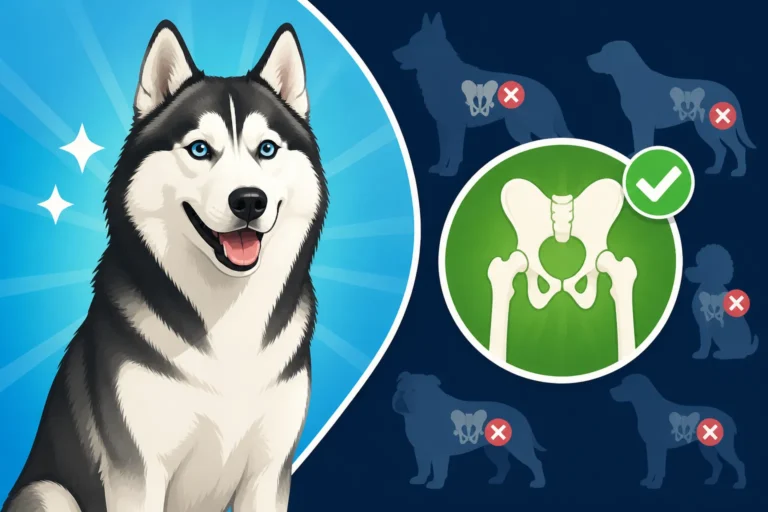
It's important to put Siberian Husky hip scores into perspective. As mentioned, Huskies generally have a lower incidence of hip dysplasia compared to many other popular breeds like German Shepherds, Labrador Retrievers, or Golden Retrievers. This is a testament to the breed's historical development and the efforts of responsible breeders over the years.
When you're looking at a Husky's OFA score, a "Fair" or "Good" score is genuinely considered a strong, healthy result for the breed. While an "Excellent" is always a fantastic achievement, it's not the only indicator of healthy hips in a Husky. The breed standard calls for an agile, enduring dog, and even dogs with "Fair" hips can easily meet those demands without issue. This knowledge can provide comfort and context when Reading a Siberian Husky's OFA Hip Result, allowing you to appreciate a healthy "Fair" score rather than being solely fixated on "Excellent."
Here's a quick summary of the OFA Hip Grades:
| OFA Grade | Description | Breeding Recommendation | Implications for Dog's Life |
|---|---|---|---|
| Excellent | Superior hip conformation, very tight joint. | Recommended | Very low risk of hip issues. |
| Good | Well-formed, congruent hips. | Recommended | Low risk of hip issues. |
| Fair | Passable conformation, minor irregularities, wider joint. | Recommended (with discretion) | Healthy and functional; slightly higher long-term risk of arthritis. |
| Borderline | Marginally dysplastic; equivocal. | Re-evaluation advised; breed with extreme caution. | Monitor closely; potential for progression to dysplasia. |
| Mild | Definite signs of hip dysplasia. | Not Recommended | May develop arthritis, lameness; likely requires management. |
| Moderate | Significant signs of hip dysplasia, poor fit. | Not Recommended | Significant pain, arthritis; requires ongoing treatment. |
| Severe | Marked evidence of hip dysplasia, severe malformation. | Not Recommended | Chronic pain, severe lameness; extensive medical/surgical intervention. |
Decoding Your Siberian Husky's OFA Certificate
Once the X-rays are taken and evaluated, your veterinarian (or the breeder) will receive an official OFA certificate. This document is packed with important information, and knowing how to read it will confirm the health status of your Siberian Husky. It's not just about seeing the grade; it's about understanding the context.
Key Information on the Certificate
An OFA certificate will list several pieces of crucial information, all of which contribute to the dog's unique health profile. At the top, you'll find the dog's registered name, breed, and often their AKC registration number. This ensures you're looking at the correct dog's records. You'll also see the dog's microchip or tattoo number, which serves as a permanent identification.
Critically, the certificate will show the date of evaluation and the age of the dog at the time the X-rays were taken. This age is important because OFA hip certifications are only considered final and valid when the dog is 24 months (2 years) or older. Preliminary evaluations can be done younger, but they are not final certifications. You’ll also find the name of the veterinarian who submitted the X-rays and their clinic information. Finally, and most importantly, the certificate will clearly state the hip grade (e.g., "OFA Cert. (Good)") and, if elbow X-rays were submitted, the elbow grade. This is the official pronouncement of their joint health.
Understanding the Radiographic View Requirements
The OFA's evaluation process relies on a very specific X-ray view: the ventrodorsal extended hip view. This means the dog is positioned on its back, with its hind legs extended straight back and parallel to each other, and the stifles (knees) rotated internally. This precise positioning is absolutely essential for an accurate evaluation of the hip joints. Any deviation can lead to an incorrect assessment, either making healthy hips appear dysplastic or masking actual dysplasia.
The reason for such strict requirements is standardization. When all X-rays are taken in the exact same manner, the radiologists can objectively compare the joint conformation across different dogs, ensuring consistency and fairness in grading. Without this standardized view, the evaluation would be far less reliable, undermining the entire purpose of the OFA certification process. This is why when getting The Age a Siberian Husky Can Be OFA Certified, it also goes hand in hand with getting it done properly.
The Importance of Proper Positioning
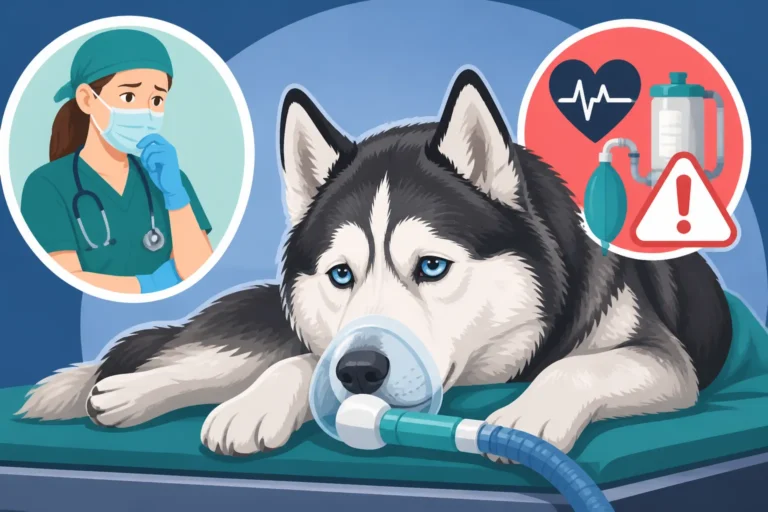
Getting those perfect X-rays for OFA certification is no easy feat and often requires sedation or even general anesthesia. A dog cannot simply lie still in the required position without assistance, and any movement or incorrect rotation can significantly compromise the image quality and lead to an inconclusive or even erroneous result. This is why it’s vital to choose a veterinarian experienced in taking OFA-compliant radiographs.
An improperly positioned X-ray might be rejected by OFA, meaning you'd have to pay for another set of X-rays and potentially re-sedate your dog. Even worse, a poor X-ray could lead to a misdiagnosis – either a false negative where a dysplastic dog passes, or a false positive where a healthy dog is deemed dysplastic. Both outcomes are detrimental to the dog's well-being and responsible breeding practices. Investing in a quality X-ray from a skilled vet is just as important as the actual evaluation itself.
Common Misconceptions and What to Watch For
The world of health clearances can be confusing, and OFA hip results are no exception. There are several myths and misunderstandings that often arise, which can lead to unnecessary worry or, conversely, a false sense of security. Let's clear some of these up.
"My Husky is too Young for OFA" – Debunking Age Myths
This is a frequently heard comment, and while it holds a kernel of truth, it's often misunderstood. The official, final OFA hip certification cannot be issued until a dog is 24 months (two years) old. This is because hip joints continue to develop and mature until this age, and evaluating them before this point doesn't give a complete picture of their adult conformation. For the most accurate and definitive assessment, patience is key.
However, that doesn't mean no hip evaluations can happen earlier. Veterinarians can perform "preliminary" OFA evaluations on puppies as young as four months old. These prelims are often used by breeders to get an early indication of a puppy's potential hip health. While not final certifications, a strong preliminary score (e.g., "Excellent" or "Good") is a positive indicator. A breeder might even offer a guarantee based on these early results, but remember, the definitive certification always requires the dog to be at least two years old. This is important when Reading a Siberian Husky Puppy's Health Paperwork and understanding what guarantees are being offered.
The Myth of the "Perfect Score"
Many prospective owners mistakenly believe that only an "Excellent" OFA hip score is acceptable, viewing anything less as problematic. This is a significant misconception. While "Excellent" is indeed the top grade, "Good" and "Fair" are also considered healthy, passing scores by the OFA. A dog with "Good" or "Fair" hips is fully capable of living a long, active life without hip-related issues.
The focus should be on healthy, functional hips rather than chasing an elusive "perfect" score. The OFA uses multiple board-certified radiologists to evaluate each X-ray independently, and their consensus determines the final grade. This multi-reader approach minimizes subjectivity and ensures a robust evaluation. For a Siberian Husky, a "Good" or "Fair" score means the hips are structurally sound and unlikely to cause problems related to hip dysplasia, especially when combined with proper care.
When a "Fair" Score is Actually Good News
Building on the previous point, a "Fair" OFA hip score for a Siberian Husky is genuinely good news. It signifies that the dog's hips meet the OFA's criteria for healthy conformation and are eligible for breeding. In a breed known for its robust hip health, a "Fair" score still places a husky well within the healthy range. It’s certainly not something to be concerned about in a pet.
While a "Fair" score might indicate a slightly wider joint space or minor structural variations compared to an "Excellent" or "Good" score, it does not mean the dog has hip dysplasia. With appropriate care, including maintaining a healthy weight – a critical factor often overlooked, tying directly into Siberian Husky Weight and Joint Health – and providing a balanced diet and proper exercise, a Husky with "Fair" hips can lead a life free from hip pain. It's a passing grade for a reason, indicating that the dog's joint integrity is maintained.
The Importance of Hip Health Beyond OFA
While an OFA certification is an invaluable tool for assessing genetic predisposition to hip dysplasia, it's just one piece of the puzzle. A dog's hip health throughout its life is also significantly influenced by lifestyle factors, proper care, and vigilant monitoring. Even a husky with excellent OFA scores can develop hip issues if not cared for correctly.
Lifestyle Factors Affecting Hip Health
Many aspects of a Siberian Husky's daily life can impact the long-term health of their hips, regardless of their genetic predisposition. Weight management is paramount; excess weight puts undue stress on joints, accelerating wear and tear and potentially exacerbating any underlying conformational issues. Feeding a high-quality diet appropriate for their activity level is also essential, ensuring they receive the necessary nutrients for bone and joint health.
Appropriate exercise is another critical factor. While huskies are energetic dogs, over-exercising young puppies can be detrimental to their developing growth plates and joints. High-impact activities like jumping off tall objects or prolonged, strenuous running should be limited until growth plates have closed, typically around 12-18 months. Similarly, being mindful of activities like Whether Harness Work Damages a Young Husky's Joints is key; proper conditioning and starting at the right age are vital. Even as adults, ensuring warm-ups and cool-downs for working huskies can help maintain joint flexibility.
Early Warning Signs of Hip Issues
Even with the best genetics and care, hip issues can sometimes develop. Being observant and recognizing early warning signs is crucial for prompt veterinary intervention. Look for changes in your husky's gait, such as a subtle limp, stiffness, or difficulty rising after rest. They might show reluctance to jump into the car or onto furniture, hesitate before going up or down stairs, or exhibit a characteristic "bunny hopping" when running (using both back legs simultaneously).
Other signs can include decreased activity levels, a noticeable decrease in muscle mass in the hind legs, or unusual sensitivity or pain when their hip area is touched. If you notice any of these symptoms, it’s imperative to consult your veterinarian promptly. Early diagnosis can lead to more effective management and a better prognosis. These symptoms can be similar to Early Arthritis Signs in a Siberian Husky, highlighting the importance of professional diagnosis. Should your Siberian Husky develop any of these signs, prompt veterinary attention is crucial. Diagnostics and potential treatments can be costly, making a robust pet insurance plan like Healthy Paws a wise investment.
Proactive Measures and Support
For Huskies with any level of hip predisposition or as they age, several proactive measures can help support joint health. Joint supplements containing ingredients like glucosamine, chondroitin, and MSM can aid in cartilage health and reduce inflammation. Omega-3 fatty acids, often found in fish oil, are also beneficial for their anti-inflammatory properties. Always discuss supplements with your vet to ensure appropriate dosing and necessity.
Physical therapy, including hydrotherapy (underwater treadmill), can be incredibly beneficial for strengthening muscles surrounding the hip joint, improving range of motion, and reducing pain. Maintaining a healthy weight, as mentioned earlier, cannot be stressed enough. Regular, moderate exercise keeps muscles strong and joints flexible without over-stressing them. As your husky enters its senior years, vigilance becomes even more important, touching on topics like Caring for a Siberian Husky Past Ten. Regular vet check-ups will allow your veterinarian to monitor joint health and address any concerns as they arise. Investing in pet insurance, such as Healthy Paws, is a practical step many owners take to prepare for unexpected veterinary expenses, including those related to joint health, or even decisions like Deciding About Surgery on an Old Siberian Husky. For ongoing proactive care, or if your vet recommends therapies or medications, knowing you have coverage from a provider like Healthy Paws can help ensure your dog gets the best possible support without undue financial stress. Beyond the initial OFA certification, ongoing monitoring of your Husky's joint health is vital. If issues do arise, exploring options like pet insurance from Healthy Paws can help manage the financial strain of long-term care or potential surgeries.
Disclaimer
The information provided in this guide is for general informational purposes only and does not constitute veterinary advice. Always consult with a qualified veterinarian for any health concerns or before making any decisions related to your Siberian Husky's health or treatment.