Corneal Dystrophy in the Siberian Husky
It's incredibly frustrating when you notice something isn't quite right with your beloved Siberian Husky's eyes, especially when it's a subtle cloudiness that leaves you wondering if it's serious or just a trick of the light. Many Husky owners worry about their dog's vision and overall eye health. This guide is here to walk you through everything you need to know about corneal dystrophy in Siberian Huskies, helping you understand what it is, how to spot it, and what you can do to manage it.
Understanding Corneal Dystrophy in Siberian Huskies
When we talk about corneal dystrophy, it can sound really technical and intimidating, but it essentially refers to a group of inherited eye conditions that affect the cornea – the clear outer layer at the front of your dog's eye. Unlike some other eye issues that are caused by injury or infection, corneal dystrophy is typically genetic, meaning it's something your Husky was born with the potential to develop.
What is Corneal Dystrophy?
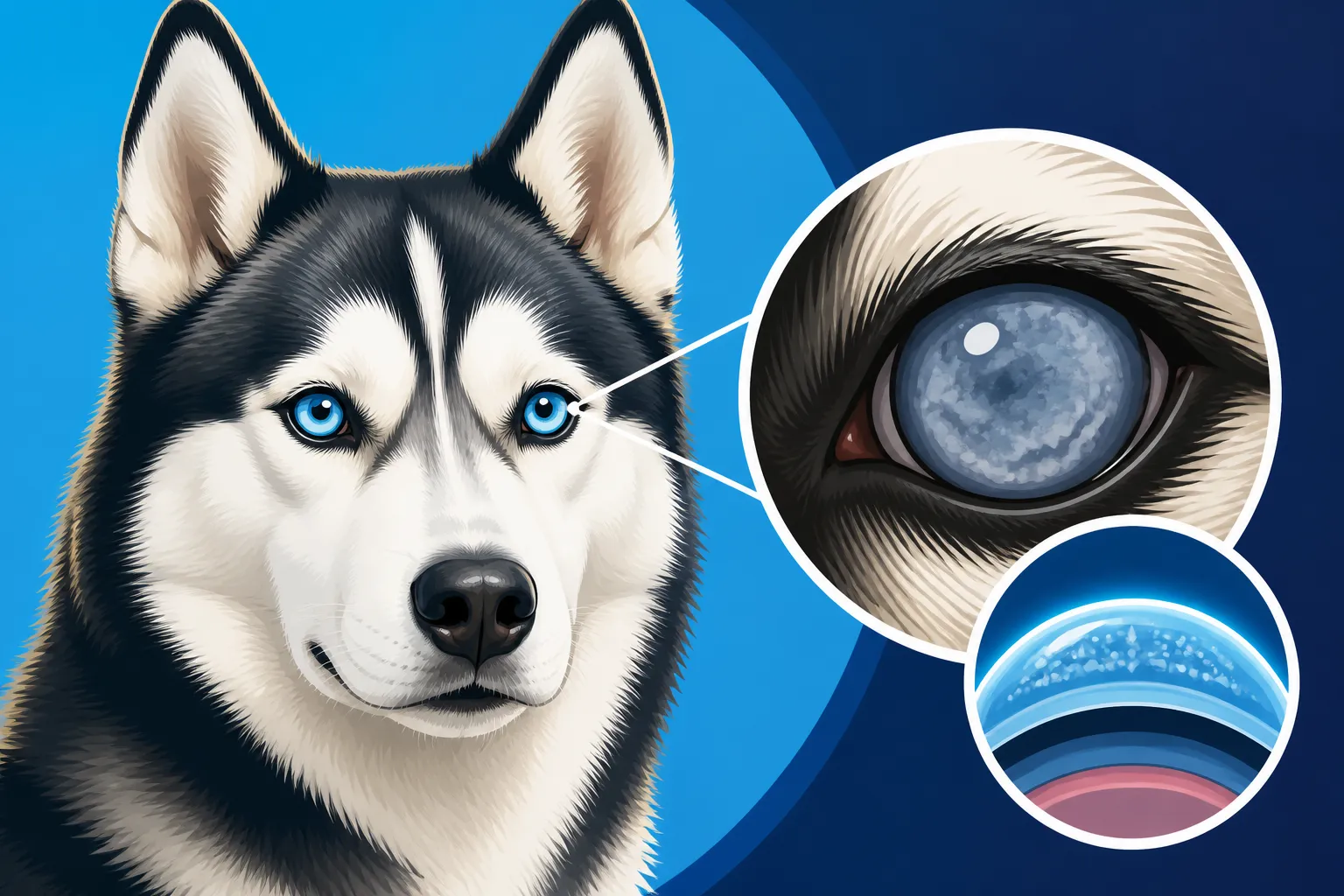
Imagine the cornea as the crystal-clear windshield of your Husky's eye. In a healthy eye, it's perfectly transparent, allowing light to pass through without obstruction, ensuring sharp vision. Corneal dystrophy, however, causes abnormal deposits of material – often lipids (fats) or calcium – to accumulate within different layers of this "windshield." These deposits aren't painful or inflammatory in most cases, but they do cause varying degrees of opacity, making the cornea appear cloudy, hazy, or even sparkling with tiny crystals. It's not usually something that suddenly appears overnight; it tends to develop gradually, often starting as a faint haze that becomes more noticeable over time.
There are several types of corneal dystrophy, classified by which layer of the cornea is affected: epithelial (the outermost layer), stromal (the middle, thickest layer), or endothelial (the innermost layer). For Siberian Huskies, the most commonly seen type is stromal corneal dystrophy, specifically a form known as crystalline corneal dystrophy or lipid dystrophy. This is why you might see those distinctive whitish, grayish, or even iridescent flecks in your Husky's eyes, often forming a circular or oval shape. It’s important to remember that these deposits are internal and can't just be wiped away, which is often a source of confusion and concern for owners.
Why Huskies Are Prone to This Condition
It's a common lament among Siberian Husky enthusiasts: "Why do Huskies seem to get all these unique health quirks?" When it comes to corneal dystrophy, the answer largely lies in their genetics. Siberian Huskies, along with a few other breeds like Beagles, Boxers, and Airedale Terriers, have a known genetic predisposition to develop certain forms of corneal dystrophy. This isn't a random occurrence; it's a trait that has been identified through decades of breed observation and, increasingly, through genetic research. This genetic link is why responsible breeders often screen their breeding stock for various eye conditions, though specific genetic tests for all forms of corneal dystrophy aren't always available or widely adopted for all breeds yet.
The prevalence in Huskies means that if you own one, it’s not a question of if you might encounter information about this condition, but when. It’s simply part of their genetic makeup. This predisposition doesn’t mean every Husky will develop it, but it significantly increases their risk compared to other breeds. Understanding this genetic component helps manage expectations and emphasizes the importance of regular veterinary eye check-ups for your Husky, allowing for early detection and monitoring. You might be surprised to learn about the different eye issues that can affect this breed; you can delve deeper into The Three Eye Diseases a Siberian Husky Faces.
Differentiating Types of Corneal Dystrophy
As we touched upon, corneal dystrophy isn't a single condition, but rather a blanket term for several types, each affecting a different layer of the cornea. For your Siberian Husky, while other types exist, we're primarily concerned with stromal corneal dystrophy.
- Epithelial Corneal Dystrophy: This type affects the outermost layer of the cornea. It's less common in Huskies and can sometimes lead to recurrent corneal erosions, which are painful ulcers that heal and then reoccur. If your Husky seems to be constantly squinting or rubbing their eye, this might be a possibility, though it's less typical for a Husky's inherent dystrophy.
- Stromal Corneal Dystrophy: This is the big one for Huskies. It involves the middle, thickest layer of the cornea. The deposits here are usually composed of lipids (cholesterol or triglycerides) and appear as white, grey, or crystalline opacities. They can range from a small, insignificant spot to a more widespread, circular pattern. Crucially, these stromal deposits are typically non-inflammatory and non-painful. This is a key differentiator from other eye conditions. While they can sometimes affect vision, especially if they are large and central, many Huskies live long, happy lives with mild to moderate stromal corneal dystrophy without significant visual impairment. This is often what people mean when they refer to "Corneal Dystrophy rings in a Siberian Husky eye."
- Endothelial Corneal Dystrophy: This affects the innermost layer, responsible for keeping the cornea clear by pumping fluid out. When this layer malfunctions, the cornea swells and becomes cloudy (edema). This type is more commonly associated with breeds like Boston Terriers and Chihuahuas and can lead to painful corneal blisters. It's not typically the form of dystrophy seen in Siberian Huskies.
Knowing which type is most prevalent in Huskies helps you and your vet focus on the most likely culprits and treatment approaches. It's important not to self-diagnose, but having this background knowledge can make conversations with your veterinarian much more productive.
Recognizing the Signs and Symptoms
One of the challenging aspects of corneal dystrophy is that its signs can be incredibly subtle at first. You might just catch a glimpse of something unusual in your Husky's eye, leading you to question if you even saw it correctly. This gradual onset means you need to be observant, especially since our Huskies are so stoic and might not show obvious discomfort.
Subtle Changes to Look For
The first signs of corneal dystrophy in a Siberian Husky are often incredibly mild and might only be noticeable in specific lighting conditions or when you're looking closely at your dog's eyes. You might see:
- A faint, whitish or grayish haze within the cornea, often starting at the periphery and gradually moving inward. It's not usually a "cloudy lens" like you'd see with cataracts, but rather a haze on or within the clear surface itself. If you're wondering about the difference, you can read more about Spotting a Cloudy Lens in a Siberian Husky.
- Small, sparkling, crystalline flecks that shimmer subtly when light hits them. These are the lipid or calcium deposits and are a hallmark of stromal corneal dystrophy.
- A circular or oval pattern of opacity, sometimes resembling a ring. This pattern is fairly characteristic.
- No signs of pain or inflammation. This is crucial. Your Husky generally won't be squinting, rubbing their eye, or experiencing redness or discharge. If they are, it's likely a different eye condition, or an entirely separate issue that needs immediate attention.
These subtle changes might not bother your Husky at all, and their vision might remain perfectly normal for a long time. However, regular, close-up inspections of their eyes, especially during grooming or cuddle time, can help you catch these changes early.
Progressive Nature of the Condition
While generally slow, corneal dystrophy can be progressive, meaning the deposits can grow larger or become denser over time. What starts as a tiny, almost invisible speck might eventually become a more pronounced opacity. The impact on vision, however, varies greatly from dog to dog. Many Huskies never experience significant vision loss from corneal dystrophy. The vision reduction only tends to occur if the opacity becomes very dense and covers a large, central portion of the cornea, directly blocking the light path to the retina.
Even in cases where vision is somewhat affected, dogs are incredibly adaptable. They rely heavily on their sense of smell and hearing, often compensating for diminishing eyesight more effectively than humans do. A Husky might start to hesitate in dimly lit rooms, or bump into furniture more often if the condition severely progresses. You can learn more about how to identify these subtle cues in A Siberian Husky That Hesitates in Dim Rooms. The non-painful nature of this condition means that even with progression, your Husky's quality of life usually remains high, provided they aren't suffering from other concurrent eye issues.
When to Seek Veterinary Attention
Even though corneal dystrophy is often not an emergency, it's always best to have any eye changes evaluated by a veterinarian. Think of it as proactive health management.
- Initial Observation: As soon as you notice any cloudiness, haze, or deposits in your Husky's eye, schedule a routine vet visit. Your general practitioner can perform an initial examination to confirm if it looks like corneal dystrophy or something else.
- Sudden Changes or Pain: If the cloudiness appears suddenly, or if your Husky shows any signs of discomfort such as squinting, pawing at the eye, redness, discharge, or increased tearing, this is an immediate concern. These symptoms are not typical of uncomplicated corneal dystrophy and could indicate a more serious condition like an ulcer, infection, or even glaucoma. Glaucoma as a Siberian Husky Emergency is a good resource if you suspect these signs.
- Referral to an Ophthalmologist: If your regular vet suspects corneal dystrophy, they will likely recommend a consultation with a veterinary ophthalmologist. These specialists have advanced equipment and expertise to accurately diagnose the specific type and severity of corneal dystrophy and rule out other potential problems. They can also advise on the long-term prognosis and monitoring schedule. It’s always a good idea to consider pet insurance, like a plan from Healthy Paws, which can help with the costs of specialist visits and diagnostics for conditions like these.
Regular eye exams, even for seemingly minor changes, are a critical part of ensuring your Husky's ongoing eye health.
Diagnosing Corneal Dystrophy
Getting a definitive diagnosis for corneal dystrophy often involves more than just a quick glance. Because the changes can be subtle and mimic other conditions, a thorough ophthalmic examination by a skilled veterinarian, preferably a specialist, is key. This isn't just about identifying the problem but also ruling out other, potentially more serious, issues.
The Importance of a Full Ophthalmic Exam
When you take your Siberian Husky in for an eye concern, the veterinarian will perform a comprehensive ophthalmic exam. This isn't just about looking at the surface; it involves a series of tests to assess all parts of the eye. Here's what you can expect:
- Visual Inspection: The vet will start with a general observation of your Husky’s eyes, noting any visible cloudiness, redness, discharge, or structural abnormalities.
- Schirmer Tear Test: This measures tear production and helps rule out "dry eye" (keratoconjunctivitis sicca), which can also cause corneal changes.
- Fluorescein Stain: A special orange dye is applied to the eye. If there's any corneal ulceration or abrasion, the dye will stick to the damaged area and glow green under a blue light. This test is crucial to differentiate painless dystrophy from painful ulcers.
- Tonometry: This measures the intraocular pressure (IOP) within the eye. High pressure can indicate glaucoma, a painful and sight-threatening condition that needs immediate treatment.
- Slit-Lamp Biomicroscopy: This is where a veterinary ophthalmologist truly shines. A slit lamp is a specialized microscope that provides a magnified, three-dimensional view of the cornea and internal structures of the eye. It allows the vet to precisely identify the location, depth, and nature of the corneal deposits, which is essential for diagnosing the specific type of corneal dystrophy. This detailed examination helps differentiate the characteristic lipid or crystalline deposits of stromal corneal dystrophy in Huskies from other types of opacities.
- Indirect Ophthalmoscopy: This allows the vet to examine the retina and optic nerve at the back of the eye, ensuring there are no other underlying issues affecting overall vision.
This thorough examination helps build a complete picture of your Husky's eye health and ensures that what you're seeing is indeed corneal dystrophy and not something else entirely.
Ruling Out Other Eye Conditions
One of the biggest anxieties for Husky owners noticing a cloudy eye is the fear of more severe conditions. It's easy to jump to conclusions, but an accurate diagnosis requires careful differentiation.
- Cataracts: While both cataracts and corneal dystrophy can cause a cloudy appearance, they affect different parts of the eye. Corneal dystrophy is on or within the cornea (the front surface), while a cataract affects the lens inside the eye, behind the pupil. A vet can easily distinguish between the two during an eye exam. If you're concerned about other potential causes of cloudiness, it's worth reading about Juvenile Cataracts in the Siberian Husky to understand the differences.
- Glaucoma: This is a serious condition characterized by increased pressure within the eye, leading to pain and potentially rapid vision loss. Unlike corneal dystrophy, glaucoma causes redness, squinting, and often a hazy, bluish appearance to the entire cornea due to swelling (edema). Tonometry will reveal elevated pressure.
- Keratitis/Corneal Ulcers: These are inflammatory conditions or open sores on the cornea, usually caused by injury, infection, or other underlying issues. They are typically painful, causing squinting, redness, and discharge. The fluorescein stain test will confirm an ulcer.
- Uveodermatologic Syndrome (UDS): Less common, but UDS can affect Huskies and lead to inflammation within the eye (uveitis), which can cause corneal edema or scarring, along with pigment loss elsewhere on the body. This is a severe autoimmune condition. You can find out more about Uveodermatologic Syndrome and the Siberian Husky.
Because many eye conditions can have similar initial appearances, a professional veterinary diagnosis is indispensable to determine the correct problem and appropriate course of action.
Genetic Testing and Breed Specifics
For some genetic conditions, specific DNA tests are available, allowing breeders and owners to identify carriers or affected individuals. While some forms of corneal dystrophy are linked to specific genes (e.g., in Beagles, where a gene called SLC4A3 is implicated), a universally available or widely adopted genetic test for the stromal corneal dystrophy seen in Siberian Huskies is not yet standard practice. This means diagnosis still primarily relies on clinical examination by a veterinary ophthalmologist.
Breed-specific health testing recommendations, such as those for OFA (Orthopedic Foundation for Animals) Eye Certification, often involve annual examinations by a board-certified veterinary ophthalmologist. This yearly check-up aims to identify not just corneal dystrophy, but also other inherited eye conditions like cataracts or progressive retinal atrophy. While these exams don't involve genetic testing for dystrophy itself, they do provide critical observational data that helps breeders make informed decisions and track the prevalence of conditions within their lines. Knowing What Siberian Husky CHIC Certification Requires can provide more context on comprehensive health screening. These proactive measures are crucial for the long-term health of the breed and for your individual Husky's well-being.
Managing and Treating Corneal Dystrophy
When you receive a diagnosis of corneal dystrophy for your Siberian Husky, the first question on your mind is naturally, "What can we do about it?" The answer, happily, is often "not much, and that's usually okay!" Because stromal corneal dystrophy in Huskies is typically non-painful and often has minimal impact on vision, aggressive treatment is rarely necessary.
When Treatment Is (and Isn't) Necessary
This is the most important takeaway for Husky owners dealing with corneal dystrophy: most cases do not require active medical or surgical treatment.
- No Treatment Needed: For the vast majority of Siberian Huskies with stromal corneal dystrophy, the condition is benign. The lipid or calcium deposits do not cause pain, inflammation, or significant visual impairment. In these instances, the "treatment" is simply monitoring. Your veterinary ophthalmologist will likely recommend follow-up exams every 6-12 months to monitor the progression of the deposits and ensure no other eye issues are developing. This approach is often a relief for owners who envision complex, expensive treatments. When considering pet insurance, it's worth checking if policies like those from Healthy Paws cover routine check-ups and monitoring if the condition is diagnosed after enrollment.
- Treatment Might Be Considered (Rarely): In very rare cases, if the corneal opacities become so dense and extensive that they severely impair your Husky's vision and genuinely impact their quality of life, then treatment might be discussed. This is an uncommon scenario, as most Huskies adapt incredibly well, but it's important to know the options. However, it's widely accepted that Whether Husky Corneal Dystrophy Needs Treating is usually answered with "no" in most cases.
The key is always to weigh the potential benefits of any intervention against the risks and stress to the dog, especially when the condition isn't causing discomfort.
Medical Management Options
Since stromal corneal dystrophy in Huskies is non-inflammatory and non-painful, medical treatments aimed at reducing inflammation or pain are typically not indicated. There isn't a magic eye drop or ointment that will dissolve the lipid or calcium deposits causing the opacity.
- Dietary Modifications: In some cases, particularly if the corneal deposits are predominantly lipid-based (cholesterol or triglycerides), your vet might discuss dietary changes. This could involve switching to a lower-fat diet or supplementing with certain omega-3 fatty acids. However, the effectiveness of dietary changes in reversing or significantly slowing the progression of existing corneal dystrophy in dogs is generally limited and inconsistent. It's more of a "can't hurt to try" approach in some instances, but it's not a guaranteed fix. Always consult with your vet before making significant changes to your Husky's diet.
- Topical Medications: While not a cure for dystrophy itself, topical lubricants or artificial tears might be prescribed if your Husky also has a tendency toward dry eyes, which could indirectly exacerbate any corneal irritation. However, these don't treat the dystrophy.
- Addressing Secondary Issues: If, by chance, your Husky with corneal dystrophy develops a secondary issue, like a mild irritation or an unrelated infection, then specific medications for those problems would be prescribed, but not for the dystrophy itself.
It's crucial not to fall for internet remedies or unproven treatments. Stick to your veterinary ophthalmologist's advice.
Surgical Interventions
Surgical intervention for corneal dystrophy in Siberian Huskies is extremely rare and generally reserved for those very unusual cases where the visual impairment is profound and genuinely affecting the dog's well-being.
- Superficial Keratectomy: This procedure involves surgically removing the affected superficial layers of the cornea that contain the deposits. It can improve vision by removing the opacity. However, there are significant considerations:
- Recurrence: The deposits can, and often do, recur after surgery, sometimes even more extensively than before.
- Scarring: Any corneal surgery carries a risk of scarring, which itself can cause opacity and vision problems.
- Anesthesia: As with any surgery, there are risks associated with general anesthesia, especially in older dogs. You might consider learning more about Anesthesia Risk in a Senior Siberian Husky if your Husky is getting on in years.
- Cost: Ophthalmic surgery is specialized and can be very expensive. This is where comprehensive pet insurance policies, such as those offered by Healthy Paws, can be a lifesaver, helping to cover a significant portion of the costs if such a rare intervention is deemed necessary and is covered under your plan.
Given these factors, most veterinary ophthalmologists will only consider surgery as a last resort in severe, vision-impairing cases where the dog's quality of life is genuinely compromised. For the typical Husky with non-painful, slowly progressing stromal corneal dystrophy, "watch and wait" is the most common and often the best advice.
Living with a Husky with Corneal Dystrophy
Discovering your Siberian Husky has corneal dystrophy doesn't have to be a source of constant worry. In most cases, it's a manageable condition that requires observation more than intervention. Your Husky can continue to live a full and vibrant life with a few mindful considerations.
Adapting the Home Environment
Even if your Husky's vision is minimally affected by corneal dystrophy, creating a stable and safe home environment is always a good practice, especially if the condition progresses or if they are just generally getting older.
- Maintain Consistency: Dogs thrive on routine and familiarity. Try to keep furniture in the same place. If you do rearrange, guide your Husky around the new layout several times.
- Clear Pathways: Ensure pathways are clear of clutter to prevent bumps and stumbles, particularly if you notice any hesitation in their movement.
- Lighting: While not always necessary, if you observe your Husky struggling in dim light, consider adding nightlights or ensuring well-lit areas. Remember, your Husky might be fine during the day but struggle as daylight fades.
- Verbal Cues: Reinforce verbal cues for navigating, such as "step up," "watch out," or "this way." Huskies are incredibly intelligent, even if sometimes stubborn, and can learn these cues well.
These adaptations are often more about proactive care and general good pet ownership, rather than a direct response to severe visual impairment from dystrophy. They simply help your Husky feel more secure and confident in their surroundings.
Long-Term Prognosis and Monitoring
The long-term prognosis for Siberian Huskies with corneal dystrophy is generally excellent, especially for the stromal type that is most common in the breed. As previously mentioned, it is usually a benign, non-painful condition that rarely leads to significant vision loss requiring drastic measures.
- Regular Ophthalmic Exams: The most important aspect of long-term care is consistent monitoring by a veterinary ophthalmologist. These annual or bi-annual check-ups allow the specialist to track the size and density of the corneal deposits, assess any impact on vision, and ensure no other eye conditions are developing. This regular oversight is crucial, as some eye conditions can develop with age, like those covered in Caring for a Siberian Husky Past Ten.
- Documenting Progression: Your ophthalmologist will likely take detailed notes or even photographs of your Husky's eyes over time to accurately document any progression. This objective data helps in making informed decisions about future care.
- Communication with Your Vet: Don't hesitate to ask questions during these appointments. Understanding the rate of progression (or lack thereof) can help ease your mind and ensure you're both on the same page regarding your Husky's eye health. It’s comforting to know that for many Huskies, corneal dystrophy remains a visual curiosity rather than a medical crisis.
Supporting Your Husky's Overall Well-being
While corneal dystrophy primarily affects the eyes, your Husky's overall health and happiness are interconnected. Maintaining general well-being can help them adapt to any subtle changes and keep them in top condition.
- Consistent Exercise: Huskies need a lot of physical activity. Continue with their regular routine of walks, runs, or harness work, adjusting only if vision significantly impairs their ability to safely navigate. Exercise is vital for their mental and physical health.
- Mental Stimulation: Don't forget their intelligent minds! Puzzle toys, training sessions, and interactive games keep them engaged and can help offset any minor visual deficits by reinforcing other senses.
- Nutritious Diet: A balanced, high-quality diet is fundamental for overall health, including eye health. Discuss any specific dietary concerns, such as fat content, with your veterinarian, especially if the corneal deposits are predominantly lipid-based. Sometimes, minor adjustments can be supportive, even if not curative.
- Emotional Support: Your Husky relies on you for comfort and security. Offer plenty of affection, reassurance, and maintain a positive attitude. Your calm demeanor will help them feel safe, regardless of what's happening with their eyes. Remember that a long and healthy Siberian Husky Lifespan and What Shortens It depends on holistic care.
By staying informed, working closely with your vet, and providing a loving, supportive environment, your Siberian Husky can absolutely thrive even with a diagnosis of corneal dystrophy.
Corneal Dystrophy vs. Other Corneal Opacities
To further clarify, here's a quick comparison of common reasons a Siberian Husky's cornea might appear cloudy. This table can help you understand why a thorough veterinary exam is crucial for accurate diagnosis.
| Feature / Condition | Corneal Dystrophy (Stromal, Husky Type) | Cataract | Glaucoma | Corneal Ulcer / Keratitis |
|---|---|---|---|---|
| Location | Within cornea (front surface) | Within lens (inside eye, behind pupil) | Entire cornea swells | Surface of cornea (epithelium/stroma) |
| Appearance | White, grey, crystalline, often circular | Diffuse cloudy, white, or icy lens | Generalized blue/hazy, enlarged globe | Localized cloudy spot, divot, or redness |
| Pain Level | Usually NONE | Usually NONE (unless secondary issue) | SEVERE pain, squinting, rubbing | MODERATE to SEVERE pain, squinting |
| Redness/Discharge | Usually NONE | Usually NONE | Common (conjunctival injection) | Common (tearing, pus-like discharge) |
| Progression | Slow, variable, often stable | Slow to rapid | Rapid (can cause blindness in hours/days) | Varies (can worsen quickly without care) |
| Primary Cause | Genetic, inherited (lipid/calcium deps) | Genetic, age, diabetes, trauma | Increased intraocular pressure | Trauma, infection, dry eye, eyelid issues |
| Treatment | Usually none, monitoring | Surgery (phacoemulsification) | Emergency meds, often surgery | Topical meds, sometimes surgery |
| Vision Impact | Mild to none (unless severe/central) | Mild to severe loss | Rapid, severe vision loss | Varies, can lead to scarring/blindness |
Disclaimer
The information provided in this guide is intended for educational purposes only and should not be considered a substitute for professional veterinary advice. Always consult with a qualified veterinarian or veterinary ophthalmologist for any concerns regarding your Siberian Husky's eye health or for diagnosis and treatment recommendations.