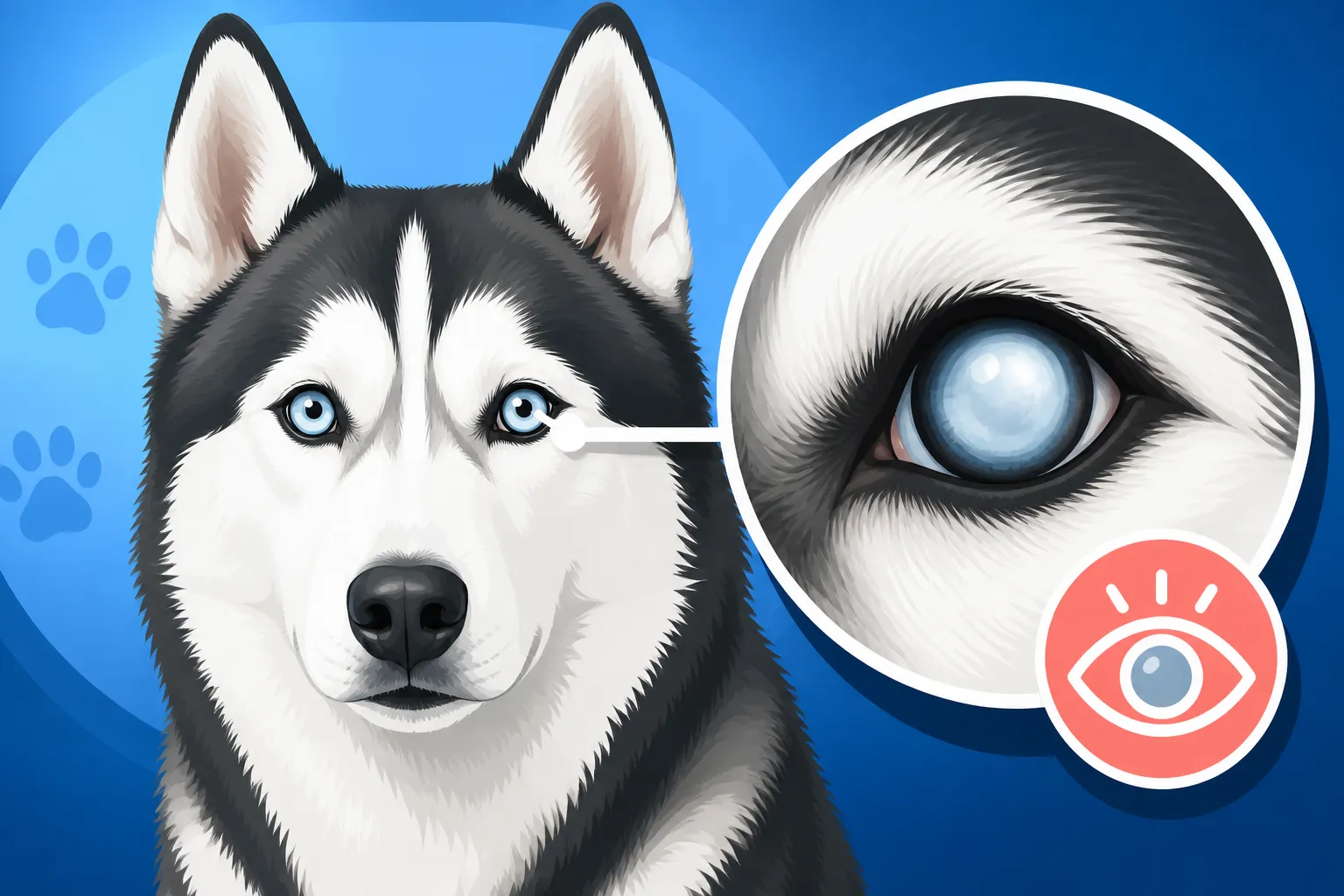
Spotting a Cloudy Lens in a Siberian Husky
It's a moment many Siberian Husky owners dread: that fleeting glance at your beloved dog's eye, and you spot it – a subtle, milky cloudiness that wasn't there before. Your heart sinks a little, questions race through your mind, and suddenly, you're filled with worry about their vision and overall health. This comprehensive guide is here to walk you through exactly how to spot a cloudy lens, understand the common culprits in Siberian Huskies, and prepare you for a confident, informed conversation with your veterinarian about your furry friend's eye health.
Understanding What a Cloudy Lens Looks Like in Your Siberian Husky
When you notice something amiss with your Siberian Husky's eyes, it's natural to jump to conclusions. However, understanding what a truly cloudy lens looks like, and distinguishing it from other issues, is the first crucial step. Siberians are known for their striking eyes, often blue, brown, or even bi-colored, and any change can be particularly noticeable against their bright, alert expression.
The Subtle Nuances of Early Cloudiness
A normal Siberian Husky's eye should have a clear, reflective quality, allowing you to see deep into the pupil without obstruction. When cloudiness begins, it often starts subtly. Imagine looking through a window that has a fine mist on it – it's not completely opaque, but there's a definite haziness that diffuses the light. This initial cloudiness might appear as a slight gray or white tint within the center of the pupil, sometimes only visible from certain angles or in specific lighting conditions.
For instance, you might first notice it when your husky is looking out the window in bright sunlight, or when you're shining a gentle flashlight on their face while they're relaxing. In a dimly lit room, the pupil naturally dilates, making it easier to see any opacities in the lens. It's often not a stark white at first, but more of a soft, smoky veil. Owners sometimes describe it as their dog's eyes looking "less sparkly" or "dull." Don't confuse this with simple reflections off the cornea (the clear outer layer) or a trick of the light; true lens cloudiness is an internal change. If you suspect something, try observing your husky in several different lighting situations and from various angles, looking for that consistent, internal haziness.
Differentiating Cloudiness from Other Eye Conditions
It's easy to mistake lens cloudiness for other eye issues, especially because many conditions can present with similar visual cues. One very common condition in Siberian Huskies is Corneal Dystrophy in the Siberian Husky. This often appears as white, crystalline, or gray opacities on the cornea itself, not within the lens behind the pupil. It typically looks like a "smudge" or "swirl" on the surface of the eye. While it can cause some vision impairment in severe cases, it's usually benign and doesn't progress like a cataract. You might also notice eye discharge, redness, or excessive tearing, which are generally signs of external irritation, allergies, or infection affecting the conjunctiva or eyelids, not the lens.
Another important distinction to make, especially in older Siberian Huskies, is between a true cataract and nuclear sclerosis. Nuclear sclerosis is a very common, age-related change where the lens hardens and becomes denser, leading to a bluish-gray haze in the pupil. It's often quite uniform across the lens and typically doesn't significantly impair vision in its early stages. Many owners mistake this for cataracts, but they are fundamentally different. A good comparison is looking at an old photograph that's slightly faded and yellowed versus one that's been splashed with milk. Nuclear sclerosis is more like the faded photo, whereas a cataract is more like the milky splash. This distinction is vital because nuclear sclerosis generally doesn't require treatment, while cataracts might. Understanding these differences can prevent unnecessary panic and help you describe what you're seeing more accurately to your vet.
Common Causes Behind a Cloudy Lens in Huskies
While a cloudy lens can be a general symptom, Siberian Huskies are predisposed to certain conditions that often lead to this presentation. Knowing these common causes can help you be more proactive in your husky's care.
Juvenile Cataracts: A Husky-Specific Concern
One of the most concerning causes of a cloudy lens in Siberian Huskies is juvenile cataracts. Unlike age-related cataracts that appear later in life, juvenile cataracts can develop when a husky is quite young, sometimes even before their first birthday. These cataracts are often inherited, meaning they are passed down through genetic lines. This is why reputable breeders place such a strong emphasis on health testing, including regular eye examinations for breeding dogs, to try and reduce the incidence of such conditions.
A cataract forms when the proteins within the lens clump together, creating an opaque area that blocks light from reaching the retina. In juvenile cataracts, this process can begin early and may progress rapidly, potentially leading to significant vision impairment or even blindness if left untreated. Many owners first notice a small, pinpoint white dot in the center of the pupil, which then gradually expands to cover more of the lens. The presence of Juvenile Cataracts in the Siberian Husky is a well-documented breed-specific issue. The Age Siberian Husky Cataracts Show Up can vary, but typically manifests in dogs under six years old. If you've ever had a puppy, you know how fast they grow and develop, and these cataracts can sometimes develop just as quickly. Regular veterinary eye exams are crucial for early detection, giving you the best chance to manage the condition effectively.
Nuclear Sclerosis: The Normal Aging Process
As mentioned earlier, nuclear sclerosis is a very common, non-pathological (meaning it's not a disease) change that occurs in the eyes of older dogs, including Siberian Huskies. It typically starts to become noticeable around 6-8 years of age, though some dogs might show signs earlier or later. Essentially, as a dog ages, new lens fibers are continually produced and packed into the center of the lens. This compresses the older fibers, making the central part of the lens denser and causing it to appear hazy or bluish-gray.
The key difference from a cataract is that with nuclear sclerosis, light can still pass through the hardened lens relatively unimpeded. While it might cause a slight reduction in visual acuity, especially in dim light, it usually doesn't lead to blindness or significant vision problems that impact a husky's daily life. It's truly just a normal part of aging, much like how human hair greys. Many owners are naturally concerned when they see this, but once a vet confirms it's nuclear sclerosis and not a cataract, it can be a huge relief. Understanding Nuclear Sclerosis Mistaken for a Husky Cataract is important for any husky owner with a senior dog, as it can save you a lot of anxiety.
Other Potential Causes for Lens Cloudiness
While juvenile cataracts and nuclear sclerosis are the most common culprits for lens cloudiness in Siberian Huskies, other conditions can also cause this symptom. Trauma to the eye, such as a poke, scratch, or blunt force, can sometimes damage the lens and lead to cataract formation. Even a seemingly minor injury can have delayed effects.
Systemic diseases can also play a role. For instance, diabetes mellitus, while not as prevalent in Siberians as some other breeds, can cause rapidly developing cataracts due to changes in glucose metabolism within the eye. If your husky has unexplained weight loss, increased thirst, and frequent urination alongside a cloudy lens, diabetes should be considered. Furthermore, inflammation within the eye, known as uveitis, can lead to lens opacities or cataracts as a secondary complication. Conditions like Uveodermatologic Syndrome and the Siberian Husky are rare but can cause severe uveitis, impacting both the eyes and skin, and absolutely necessitate prompt veterinary intervention. These are serious conditions that underscore why any unexplained cloudiness warrants a thorough veterinary check-up. The annual eye exam for your Siberian Husky is not just a formality; it’s a critical health check, as discussed in Siberian Husky Eye Disease and the Annual Exam.
When to Seek Veterinary Attention and What to Expect
Spotting a cloudy lens is often the first step, but knowing when to act and what to expect from your vet is equally important. Your proactive observation is key to your husky's continued well-being.
Signs That Warrant Immediate Veterinary Consultation
While any new cloudiness in your Siberian Husky's eye should prompt a veterinary visit, certain signs indicate a more urgent situation. If you notice a sudden onset or rapid progression of the cloudiness, don't wait. For example, if the eye was clear yesterday and today it looks significantly cloudy, that's a red flag. Similarly, signs of pain are critical: if your husky is squinting, rubbing at their eye with a paw, experiencing excessive tearing, or showing any redness or swelling around the eye, it could indicate an inflammatory process, glaucoma, or another painful condition that needs immediate attention. You can read more about what to look for regarding Siberian Husky Eye Pain and Sudden Squinting.
Behavioral changes can also be a strong indicator that vision is being affected. Your normally confident husky might start bumping into furniture, hesitating before jumping on or off things, or becoming more anxious in unfamiliar environments or in dim lighting. If you notice A Siberian Husky That Hesitates in Dim Rooms, it could be a sign of reduced night vision, which can be an early symptom of certain eye conditions like Progressive Retinal Atrophy (though PRA affects the retina, not the lens, it underscores the importance of behavioral changes as indicators). These behavioral cues, coupled with a cloudy lens, should prompt you to call your vet without delay.
The Veterinary Examination Process
When you take your Siberian Husky in for a cloudy lens, your general veterinarian will start with a thorough physical exam, paying close attention to the eyes. They'll likely use an ophthalmoscope, a specialized light source, to look into the eye and assess the lens, retina, and other internal structures. They might also check your husky's menace response (flinching when something rapidly approaches the eye) and pupillary light reflexes to gauge vision and nerve function.
If your general vet suspects a cataract or a more complex eye issue, they will often recommend a referral to a board-certified veterinary ophthalmologist. This specialist has advanced equipment and expertise to provide a definitive diagnosis. An ophthalmologist will perform a more detailed examination, which often includes a slit lamp biomicroscopy (to examine the different layers of the eye in detail), tonometry (to measure intraocular pressure and rule out glaucoma), and possibly an electroretinogram (ERG) if retinal function needs to be assessed before cataract surgery. Remember, Why a Siberian Husky Needs an Eye Exam Every Year is not just about catching severe issues, but also about monitoring subtle changes over time, especially since many eye conditions have a genetic component in this breed. Knowing What an Ophthalmologist Checks in a Siberian Husky can help you prepare for the visit. It's also worth noting that some insurance providers, like Healthy Paws, offer pet insurance plans that can help manage the costs of specialized veterinary care, including those for eye conditions, though pre-existing conditions are typically excluded.
Discussion of Prognosis and Treatment Options
Once a diagnosis is made, your vet or ophthalmologist will discuss the prognosis and available treatment options. If it's confirmed to be nuclear sclerosis, the prognosis is excellent, as it rarely affects quality of life, and no treatment is typically needed. You'll just know your husky is showing its age gracefully!
For cataracts, the treatment options depend on the severity, rate of progression, and whether the cataract is causing significant vision impairment. For some mild, non-progressive cataracts, the recommendation might be simply to monitor the eye regularly. However, if the cataract is causing significant vision loss, surgery is often the most effective treatment. Cataract Surgery on a Siberian Husky involves removing the cloudy lens and, in many cases, replacing it with an artificial intraocular lens. This is a specialized procedure with a good success rate, but it requires careful pre-operative assessment and dedicated post-operative care. It's a big decision, and your vet will help you weigh the pros and cons for your individual husky. Sometimes, owners wonder Whether a Siberian Husky Cataract Can Be Left Alone, and the answer often depends on the impact on the dog's quality of life and the risk of secondary complications like glaucoma.
It’s important to remember that early detection truly makes a difference. Catching a condition like juvenile cataracts early can mean better outcomes and potentially less invasive treatment in the long run. When considering the financial aspects of these treatments, especially for specialized procedures like cataract surgery, pet insurance can be a real lifeline. Companies such as Healthy Paws offer comprehensive coverage that can alleviate some of the financial burden, allowing you to focus on your husky's recovery. Always review policy details, as waiting periods and exclusions for pre-existing conditions can apply, so it's best to enroll a puppy or young adult husky before any health issues arise. Regular Reading a Siberian Husky OFA Eye Certificate from a reputable breeder can provide insight into the genetic health background of your dog's lineage, helping you understand predispositions.
Here’s a quick overview of how cataracts and nuclear sclerosis typically compare:
| Feature | Cataract | Nuclear Sclerosis |
|---|---|---|
| Appearance | Discrete, dense white or gray opacity, often appears "cracked" or "frosted" | Diffuse, bluish-gray haze, uniform throughout the lens |
| Location | Within the lens, can be anywhere from central to peripheral | Primarily in the center of the lens |
| Onset Age | Can be juvenile (under 6 years), mature (6+ years), or secondary to disease/trauma | Typically 6-8 years and older |
| Progression | Can progress rapidly, becoming denser and larger | Slowly progresses, becomes slightly denser over years |
| Vision Impact | Can significantly impair vision or cause blindness if mature | Mild to no significant vision impairment |
| Pain | No direct pain from the cataract itself, but can lead to secondary complications (e.g., glaucoma) that cause pain | No pain associated with the condition |
| Treatment | Surgery (phacoemulsification) to remove the lens is primary treatment option | No treatment typically needed, managed with observation |
| Causes | Genetic, diabetes, trauma, uveitis, toxicity | Normal aging process |
Disclaimer
The information provided in this article is for general informational purposes only and is not intended as a substitute for professional veterinary advice. Always consult with a qualified veterinarian regarding any medical concerns or before making any decisions about your Siberian Husky's health or treatment.