Why Underground Fencing Fails on a Siberian Husky
It's incredibly frustrating when you invest time and money into a solution you think will keep your adventurous Siberian Husky safe, only to find it utterly fails. Many husky owners turn to underground, or "invisible," fencing systems with the best intentions, hoping to give their dogs freedom within their property, but these systems are almost universally unsuccessful with this particular breed. This guide will walk you through exactly why these seemingly convenient fences are a dangerous gamble for a Siberian Husky and what truly secure containment looks like.
The Husky's Instinct to Roam and Explore
Let's be honest, Siberian Huskies are not your average suburban house dog when it comes to their urge to explore. They come from a lineage of dogs bred for endurance, independence, and covering vast distances across challenging terrain. This isn't just a quirky personality trait; it's a deep-seated genetic imperative that makes them incredibly ill-suited for the concept of an invisible fence.
Why a Husky's Drive Overrides Discomfort
Imagine you have an innate desire to run, to chase, to see what's beyond the horizon. For a Siberian Husky, this isn't just a passing thought; it's a fundamental part of their being. When faced with the static correction from an invisible fence collar, many Huskies will evaluate the discomfort against the overwhelming call of their instincts. For some, a quick zap might be surprising the first time, but if there's a squirrel darting across the lawn or an interesting smell just outside the boundary, that momentary pain often becomes a minor inconvenience. They learn to "take the hit" for the thrill of the chase or the satisfaction of exploration.
This isn't a sign of stubbornness in the way we often perceive it; it's a clear indication that their drive for freedom and stimulation is simply more powerful than the deterrent. Owners often express immense frustration when their Husky seems to ignore the correction, but it's less about defiance and more about their breed's inherent wiring. It's like asking a marathon runner not to run because of a small pebble in their shoe – the goal is just too compelling.
The Allure of the Outside World
The world outside your yard is a sensory smorgasbord for a Siberian Husky. There are new smells, exciting sights, and the tantalizing possibility of a chase. Their formidable prey drive, deeply ingrained from generations of working dogs, means that a rabbit, a deer, or even a leaf blowing just right can trigger an unstoppable impulse. You might spend hours working on a solid recall, but that instinct for the hunt is a primal force. This is precisely why a Siberian Husky cannot be trusted off leash, especially in an unfenced area.
An underground fence relies on the dog being deterred by an unpleasant sensation. However, if the reward on the other side of that invisible line is a perceived "prey item" or an enticing new scent trail, the static correction becomes secondary. Your Husky's intelligence, often a source of joy and amusement, here works against the effectiveness of the fence. They quickly learn the parameters of the correction and, more importantly, that the reward for pushing through it often outweighs the temporary sting. They might even calculate the quickest way to get through the "shock zone" to reach their prize, rendering the fence entirely useless. You see this play out time and again, leading to heartache for owners.
Understanding the Physical and Mental Limitations of Invisible Fences
Beyond the sheer force of the Husky's instinct, invisible fences have fundamental design flaws that make them particularly unsuitable for this breed. They rely on principles that simply do not align with a Siberian Husky's physical capabilities or cognitive processes.
The "Bolt-Through" Phenomenon
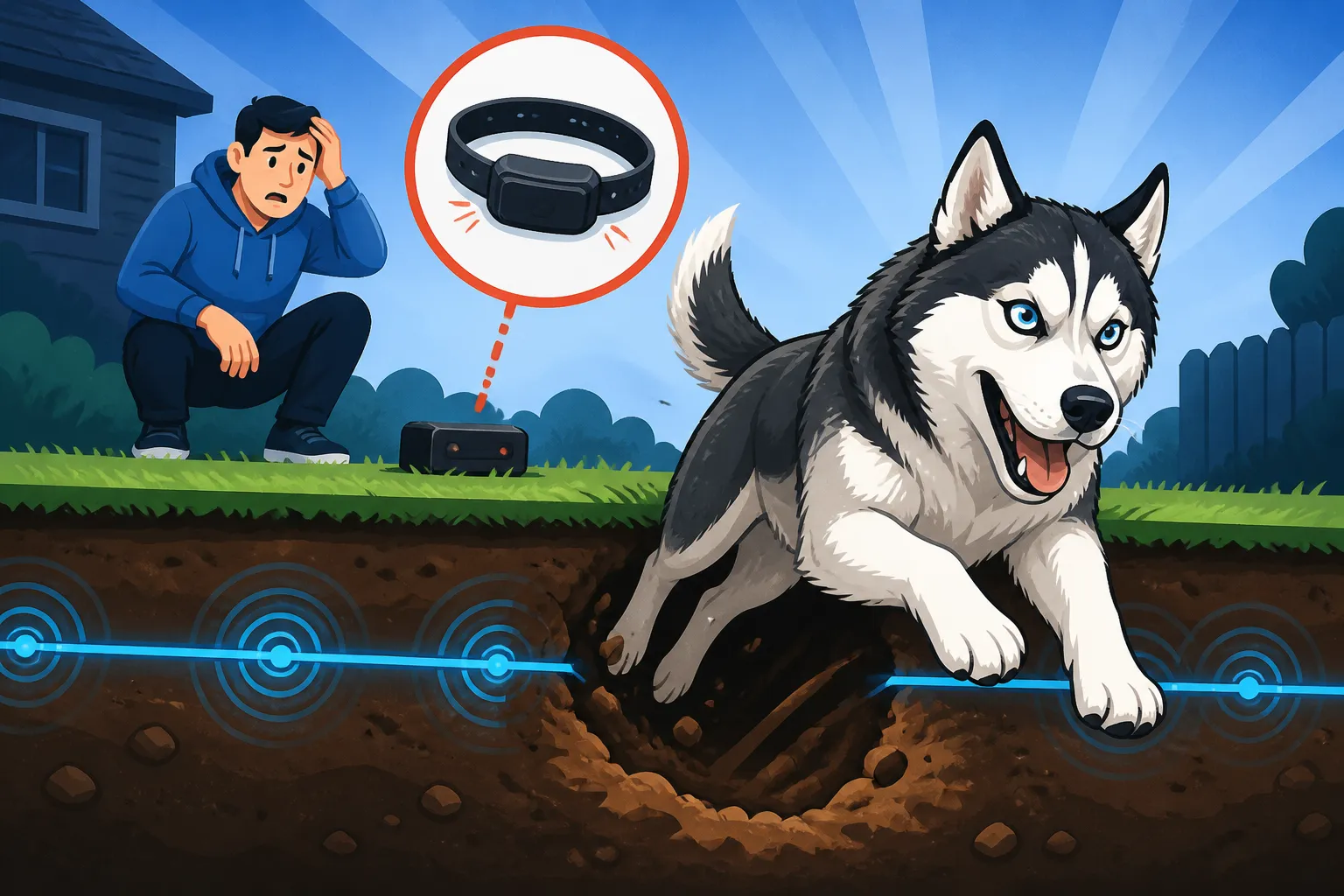
One of the most dangerous limitations of underground fencing for a Siberian Husky is what's often referred to as the "bolt-through" phenomenon. A Husky, especially a young or highly motivated one, won't necessarily retreat when they feel the static correction. Instead, their natural instinct can be to push forward through the discomfort, especially if they are already moving at speed or fixated on something.
They experience the shock, but rather than stopping and turning back, they often accelerate, clearing the invisible boundary entirely. The problem then compounds: once they are outside the invisible barrier, they are usually free from correction. When it comes time to re-enter the yard, they often remember the unpleasant sensation they experienced coming out and are reluctant to cross the boundary again. This means they are now truly lost outside the perimeter, unwilling to return through the "pain" zone, leaving you with a frantic search for your missing dog. This directly contributes to the serious issue of Siberian Husky deaths From Trauma and Escape.
Lack of Physical Barrier and Visual Cues
A physical fence provides a clear, undeniable visual and tactile boundary. A dog sees it, touches it, and understands its limits. An invisible fence offers none of this. For a Siberian Husky, who learns through repetition, association, and clear boundaries, the concept of an unseen force field is confusing at best, and irrelevant at worst.
While some systems use flags as temporary visual cues during initial training, these are eventually removed, leaving no tangible barrier. Huskies are incredibly intelligent problem-solvers. If they don't see a wall, they don't truly grasp the concept of containment in the same way. They might respect it for a short while, but without a clear, physical reminder, the boundary becomes theoretical. They might walk right up to it, pause, feel the correction, and then look around as if to say, "What was that?" only to try again with a little more resolve moments later. This lack of a solid visual marker makes it incredibly difficult for a breed like the Husky to consistently understand and respect the boundary, leading to inconsistent behavior and frequent escapes.
Desensitization and "Zone Hopping"
Another common issue is that many Siberian Huskies become desensitized to the static correction over time. The initial surprise and discomfort wear off, and they learn to tolerate the sensation, especially if their motivation to leave the yard is high. They might discover that if they run fast enough, or at a certain angle, they can "zone hop" through the correction area with minimal unpleasantness.
Some particularly clever Huskies might even learn to monitor the state of their collar, realizing when the battery is low or dead, giving them a free pass. This desensitization means the system, which relies entirely on aversive conditioning, loses all effectiveness. It's not a foolproof barrier, and a Husky will quickly exploit any loophole. While pet insurance providers like Healthy Paws are fantastic for covering unexpected medical bills, they certainly won't cover the cost of a lost dog due to an ineffective invisible fence or the damage a frustrated, escaped Husky might cause. For that reason alone, understanding the limitations is crucial.
The Danger and Stress for Both Dog and Owner
The failure of underground fencing systems for Siberian Huskies isn't just about inconvenience; it carries significant risks and causes immense stress for both the dog and its human family.
Increased Risk of Injury and Loss
When a Siberian Husky escapes, the world beyond the yard is full of hazards. They are susceptible to being hit by cars, getting into fights with other animals, or encountering dangerous wildlife. Their strong prey drive, which contributes to their escape, can also lead them into perilous situations, like chasing an animal into traffic or through a busy neighborhood. The emotional toll of a lost Siberian Husky is devastating, and the reality is that many lost Huskies are never recovered or are found injured or deceased. This risk is very real, and it contributes heavily to What Losing a Siberian Husky Costs.
Beyond the immediate dangers, a lost Husky can also incur significant costs, from reward posters to potential vet bills if they are found injured, or even animal control fees if they are picked up. It's a preventable heartbreak that no Husky owner should have to experience.
Neighborly Relations and Legal Liabilities
An escaped Siberian Husky can quickly sour relations with neighbors. Whether they're digging through flower beds, investigating garbage cans, or chasing a neighbor's cat or small dog, the complaints will roll in. This can lead to tension, animosity, and even legal action. Local animal control authorities are often called, resulting in fines for a loose Siberian Husky, and repeat offenses can escalate to more serious consequences, including the forced surrender of your dog.
Furthermore, if your escaped Husky causes an accident – for example, if a driver swerves to avoid it – you could face significant legal liabilities. Homeowner's insurance policies often have clauses regarding dog breeds and liability, and an incident involving an escaped Husky could be a serious financial and legal headache. It's a grim reality, but understanding these potential repercussions highlights why relying on a system that is known to fail for this breed is so problematic. If your Siberian Husky gets out and causes damage, it becomes a question of whether an escaped Siberian Husky Is a Claim on your homeowner's insurance.
The Psychological Toll on Your Husky
Constant exposure to static corrections can have a detrimental effect on your Siberian Husky's mental well-being. Instead of learning boundaries, some dogs develop anxiety, fear, and stress. They might associate the unpleasant sensation not with the invisible line, but with something entirely innocent within the yard, such as a child playing, another pet, or even the act of going outside itself.
This can lead to fear-based aggression, avoidance behavior, or a general distrust of their environment and even their owners. The goal of an invisible fence is to deter, but for a sensitive and intelligent dog like a Husky, it can inadvertently create deep-seated psychological issues that are far more challenging to resolve than building a proper fence. You want your Husky to feel safe and happy in their yard, not stressed by an unseen, unpredictable punishment.
What Actually Works: Secure Containment Strategies
Given the inherent limitations and dangers of underground fencing for Siberian Huskies, it's clear that alternative, more reliable containment methods are absolutely necessary. The good news is that tried-and-true solutions exist, focusing on physical barriers and smart management.
Physical Fencing is Paramount
For a Siberian Husky, a robust, physical fence is not optional; it's absolutely paramount for their safety and your peace of mind. Forget anything less than six feet high – ideally, you're looking at eight feet for a determined climber. This isn't just about height; the fence material matters too. Chain link can be scaled by resourceful Huskies, so a solid wood or privacy fence is often a better choice, as it removes visual temptations from the other side.
However, a Husky's talents aren't limited to climbing. They are also expert diggers. To prevent escapes, you must implement anti-dig measures. An "L-footer" or "coyote roller" extending into the ground, or burying heavy gauge wire along the fence line, is crucial. This means digging a trench and securing the bottom of the fence so they can't simply dig their way out. The fence should be regularly inspected for weaknesses, and gates must have secure, Husky-proof latches that they can't easily figure out or manipulate. When you're budgeting for a Husky, factor in The Six-Foot Fence a Siberian Husky Needs and Adding an L-Footer Against Siberian Husky Digging.
Combining Physical Barriers with Training
Even with the most fortress-like fence, supervision and ongoing training are key to maintaining a secure environment. No fence is 100% foolproof, and a truly determined Husky might still find a weakness. Consistent training, especially a reliable recall, even if you never plan to let your Husky off-leash in an unfenced area, is a powerful tool in emergencies. This means dedicated practice in a safe, enclosed space.
Enrichment also plays a huge role. A bored Husky is a destructive and escape-prone Husky. Provide plenty of mental stimulation with puzzle feeders, chew toys, and interactive games. Brands like Chewy offer a wide array of durable toys and puzzle feeders designed to challenge smart dogs. Some owners also opt for high-quality, stimulating food options from brands like Ollie, which can be incorporated into training exercises to keep their Husky engaged. Remember, a mentally tired Husky is less likely to be looking for trouble. Integrating these elements helps in Stopping a Siberian Husky From Escaping the Yard by addressing the root causes of their escape attempts.
Long-Line Training and Supervised Exercise
Since off-leash freedom is generally not a safe option for a Siberian Husky, particularly in open or unfenced areas, long-line training provides a fantastic compromise. A long line (typically 30-50 feet) allows your Husky to run, explore, and "feel" off-leash while you maintain a crucial tether. This can be done in large, open fields, secure dog parks, or even during walks in less populated areas. It satisfies their innate desire to run and explore without the significant risk of escape.
This method requires your active participation and attentiveness, but it builds a stronger bond and allows your Husky to burn off energy safely. It’s also an excellent way to practice recall in a controlled environment, preparing them for those rare emergencies. Starting Long Line Work With a Siberian Husky can be a game-changer for their overall well-being and your peace of mind. Regularly engaging them in structured exercise and training also tires them out, making them less likely to try to escape out of sheer boredom or excess energy.
Comparison of Fencing Options for Siberian Huskies
Here's a quick look at how underground fencing stacks up against physical fencing for a breed like the Siberian Husky:
| Feature | Underground (Invisible) Fence | Physical Fence (e.g., 6-8 ft solid panel/chain link) |
|---|---|---|
| Effectiveness | Very low, easily circumvented or ignored by Huskies. | High, creates a clear, tangible barrier. |
| Cost | Initial lower cost, but high potential for loss/liability. | Higher initial cost for installation. |
| Safety | High risk of escape, injury, or being lost; potential for psychological stress from corrections. | Low risk of escape with proper installation and maintenance. |
| Visual Barrier | None, confusing for dogs. | Clear visual deterrent. |
| Deterrent Type | Aversive static correction. | Physical barrier, prevents access. |
| Training Required | Intensive, ongoing training for effectiveness, which often fails for Huskies. | Training focuses on respecting the barrier and good manners within. |
| Prey Drive Impact | Minimal deterrence against strong prey drive. | Effectively contains a Husky despite prey drive. |
| Maintenance | Battery replacement, wire breaks, signal interference. | Regular inspection for damage, gate integrity. |
Disclaimer
This article is for general informational purposes only and does not constitute professional advice. Laws, prices and regulations vary by location and change over time. Consult a qualified professional for guidance on your specific situation.