Whether a Siberian Husky Clears an Invisible Fence
One of the most disheartening struggles for a Siberian Husky owner is the constant battle against escape. You dream of a beautiful, open yard where your husky can romp freely, but the reality of their incredible Houdini skills quickly sets in. Many turn to invisible fences as a seemingly elegant solution, only to find themselves utterly heartbroken and their beloved husky still on the loose. This guide will peel back the layers of why invisible fences often fail with this unique breed and explore more reliable ways to keep your adventurous companion safely contained.
Understanding the Siberian Husky's Drive to Roam
Before we even talk about fences, it's crucial to grasp the very essence of a Siberian Husky. These dogs aren't just pets; they are living, breathing embodiments of centuries of selective breeding for a very specific purpose: to travel vast distances efficiently, often with minimal human direction. Their desire to explore isn't a flaw; it's their identity.
The Instinct to Travel and Explore
Imagine a husky's ancestors, pulling sleds across endless snowy plains in Siberia. Their lives depended on covering ground, navigating, and pushing forward, often for days on end. This isn't just about speed; it's about endurance and an innate drive to move from point A to point B, and then perhaps to point C. When your husky eyes that distant tree line or catches a scent on the wind, it's not simply being disobedient; it's responding to a deeply ingrained, ancestral call. For them, "the other side" of any boundary represents an irresistible world of new smells, new sights, and new adventures. This profound need to roam is precisely The Roaming Instinct Bred Into Every Siberian Husky, and it's a powerful force to contend with. It means their curiosity and drive for exploration often outweigh any discomfort an invisible fence might provide.
High Prey Drive and the Chase Instinct
Beyond the wanderlust, Siberian Huskies possess a pronounced prey drive. That twitching squirrel at the edge of the yard, the rabbit darting under the bushes, or even a flock of birds taking flight – these aren't just casual observations for a husky. They are invitations to a thrilling chase. The burst of adrenaline, the primal satisfaction of pursuit, can easily eclipse any fleeting unpleasantness from a static correction. A sudden movement can trigger an automatic response, and in that moment, the husky is not thinking about boundaries or consequences; it's operating purely on instinct. This isn't just about small animals; it can extend to anything that moves, from a child on a bicycle to a neighbor's cat. Understanding Siberian Husky Prey Drive Around Small Animals is key to recognizing why a momentary shock might not deter them.
Intelligence, Adaptability, and Problem-Solving
Siberian Huskies are incredibly intelligent dogs, but their intelligence often manifests as independent thinking and problem-solving rather than eager obedience. They aren't trying to outsmart you maliciously; they are simply figuring out the rules of their world. When it comes to invisible fences, this means they will test boundaries. They’ll learn exactly where the warning beep starts, where the static correction zone begins, and how quickly they need to move to get through it. They are masters of cost-benefit analysis: is the brief discomfort of the static correction worth the freedom of exploring that exciting scent trail or chasing that squirrel? For many huskies, the answer is a resounding "yes." This adaptability makes them incredibly difficult to contain with systems that rely on mild deterrents.
How Invisible Fences Work and Why They Fail Huskies
Invisible fences, also known as electronic or containment fences, promise a solution that keeps your dog safe within a designated area without the visual impact of a physical barrier. While they can work for some breeds, they are notoriously unreliable for Siberian Huskies.
The Mechanics of Invisible Fencing
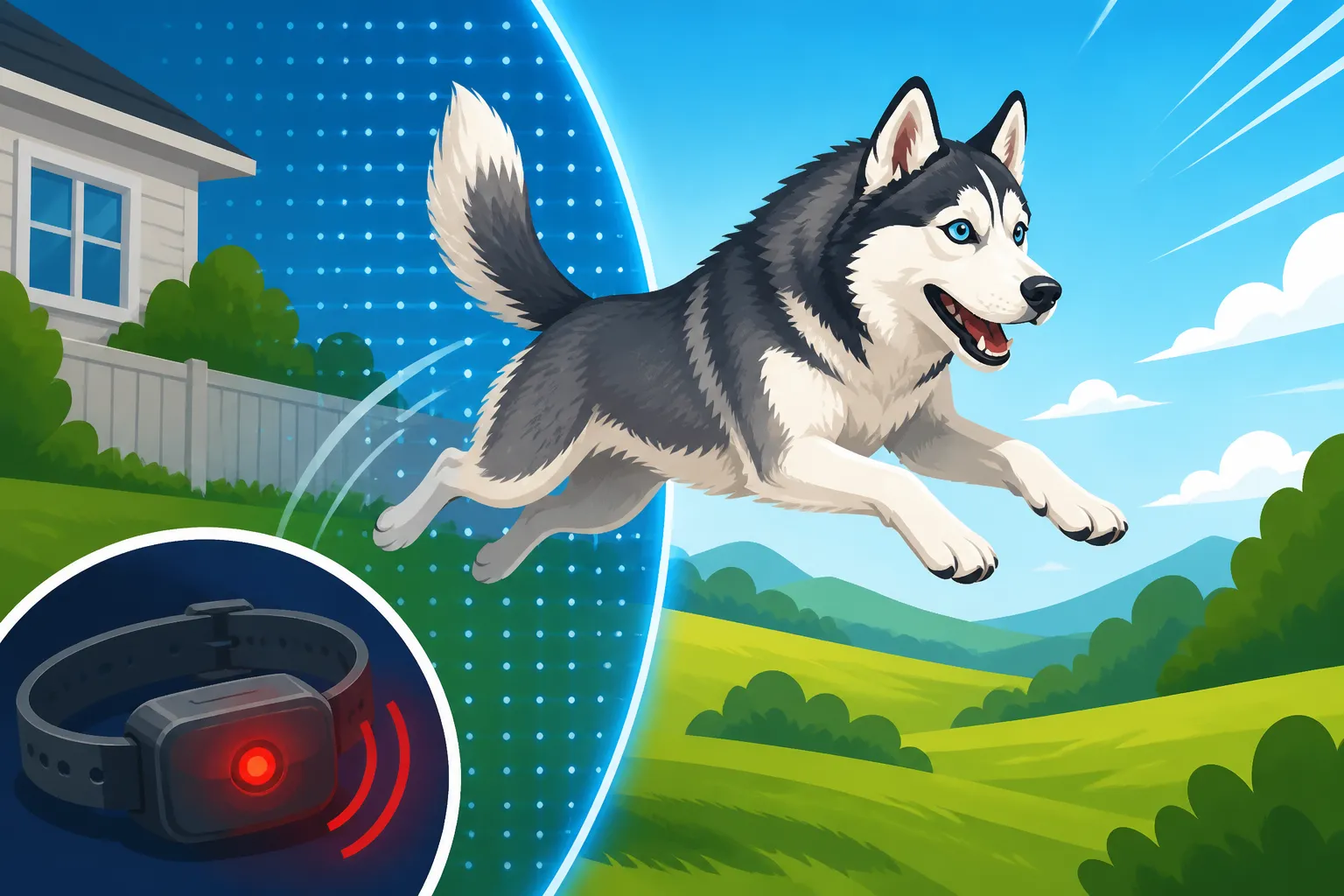
Typically, an invisible fence system involves a buried wire creating a perimeter, a transmitter that sends a signal through the wire, and a receiver collar worn by your dog. As the dog approaches the boundary, the collar first emits an audible warning beep. If the dog continues, it receives a static correction, often described as similar to a carpet shock. The idea is to "train" the dog to associate the warning beep and static correction with the boundary, leading them to retreat before receiving the correction. Training usually involves walking the dog on a leash around the perimeter, using flags to mark the boundary, and reinforcing positive behavior when they stay within the safe zone. However, this entire system relies on a dog's willingness to avoid the unpleasant sensation, and that's where the husky comes undone.
The "Bolt Through" Phenomenon
The most common and devastating failure of invisible fences with Siberian Huskies is what owners call the "bolt through." Because of their strong drive to roam or their intense prey drive, many huskies will decide that the momentary static correction is simply a temporary price to pay for freedom. They will take the shock, run straight through the boundary, and be off on their adventure.
The real problem then emerges: once they are outside the invisible boundary, they have no incentive to return. In fact, trying to re-enter the yard means another static correction. This creates a terrible psychological trap. The dog is now stuck outside, potentially miles from home, and may be reluctant to come back into the yard even if they want to, simply because they associate the entire perimeter with pain. This can lead to a desperate situation where How Far a Loose Siberian Husky Travels becomes a terrifying reality, and the dog is at risk of traffic accidents, encounters with other animals, or getting lost permanently. The slight discomfort of a static pulse simply doesn't compare to the thrill of the open road or the joy of the chase for these dogs.
Desensitization and System Cheating
Another challenge is that intelligent Huskies can quickly become desensitized to the static correction or learn how to "game" the system. They might learn that if they run fast enough, the shock is brief and ignorable. Some might even discover specific spots along the perimeter where the signal is weaker, allowing for an easier escape. Others will learn to stop just at the warning beep, but their continued presence at the boundary, watching for opportunities, still creates a stressed and frustrated dog.
Furthermore, these systems are vulnerable to failure. A dead battery in the receiver collar, a broken wire in the ground, or even a collar that's not fitted properly can render the entire system useless, often without the owner realizing it until it's too late. When you combine these mechanical vulnerabilities with a breed as cunning and driven as a Siberian Husky, relying on an invisible fence for containment becomes a gamble with extremely high stakes. This is why Why Underground Fencing Fails on a Siberian Husky is a critical point that potential owners must understand.
Here’s a quick comparison of how invisible fences stack up for different types of dogs:
| Feature/Aspect | General Dog (e.g., Golden Retriever) | Siberian Husky |
|---|---|---|
| Instinct to Roam | Often moderate; happy to stay near family. | High; strong drive to explore and cover ground. |
| Prey Drive | Varies; can be trained to ignore distractions. | High; strong instinct to chase, can override deterrents. |
| Intelligence | Intelligent; often eager to please, respond well to training. | Highly intelligent; independent thinkers, will test boundaries. |
| Response to Shock | Generally deterred; associates shock with boundary, retreats. | May "bolt through" for brief discomfort, prioritizing freedom/chase. |
| Re-entry | Usually willing to re-enter, associating boundary with safety within. | Unwilling to re-enter due to second shock; gets lost outside. |
| Desensitization | Less likely to become completely desensitized. | Prone to desensitization; may learn to exploit system. |
| Reliability | Can be a viable solution for many, especially with consistent training. | Highly unreliable; significant escape risk, potentially dangerous. |
Real-World Experiences and Alternatives for Husky Containment
My years of working with huskies and hearing countless stories from their owners have drilled one truth home: when it comes to containing a Siberian Husky, hope is not a strategy. You need a robust, physical solution.
Stories from Husky Owners
I've heard countless heartbreaking stories. There was Sarah, who thought her invisible fence would finally give her husky, Koda, the freedom of their two-acre property. One afternoon, a deer bounded through their yard, and Koda, ignoring the static correction entirely, bolted right after it. He was gone for three days, eventually found miles away, dehydrated and scraped up. The fear and panic Sarah experienced are etched in her memory forever.
Then there was Mark, whose husky, Luna, learned to "coast" through the invisible fence. She'd walk slowly until the beep started, then sprint, taking the quick shock, and be out. She learned that if she ran back in reverse, the shock wouldn't be as bad. This level of cunning is not uncommon. These scenarios highlight the profound danger of relying on something so easily defeated. What Happens When a Siberian Husky Slips a Collar or defeats a fence is often a story of terror and extensive searching.
Safer, More Effective Containment Solutions
If you own a Siberian Husky, a physical, secure fence is not just recommended; it's practically mandatory.
-
Height and Depth: A minimum six-foot fence is essential. Huskies are incredible climbers and jumpers. For particularly athletic individuals, even a six-foot fence might not be enough, leading some owners to install Coyote Rollers on a Siberian Husky Fence along the top to prevent them from getting a grip and scaling it. But height is only half the battle. Huskies are also phenomenal diggers. You must install an "L-footer" or bury hardware cloth at least 18-24 inches deep along the entire perimeter to prevent them from digging out. This prevents escapes like those highlighted in Adding an L-Footer Against Siberian Husky Digging. Without these measures, your fence is just a suggestion to a determined husky.
-
Secure Gates: Your gates need to be just as robust as the fence itself. Huskies are clever and can learn to open latches. Consider double-latching systems or even padlocks. Never leave a gate propped open, even for a moment.
-
Kennel Runs: For times when you cannot supervise your husky directly, a secure, covered kennel run can be a lifesaver. Ensure it’s built with sturdy gauge wire and has a top to prevent climbing out.
-
Supervision: Even with the most secure fence, no husky should be left unsupervised in a yard for extended periods. Boredom and curiosity are powerful motivators. Regular checks are vital.
-
Leash Work: For walks outside your secure area, a sturdy leash and a reliable harness (many owners find front-clip harnesses helpful for control) are non-negotiable. For exercise in open spaces, a long line (30-50 feet) in a contained area like a sniffspot or a rented dog park can offer some freedom, but only if you maintain control.
Combining Containment with Training and Exercise
A secure physical barrier is the foundation, but it's not the whole picture. A well-exercised, mentally stimulated husky is generally a happier husky and less prone to destructive behaviors or obsessive escape attempts.
-
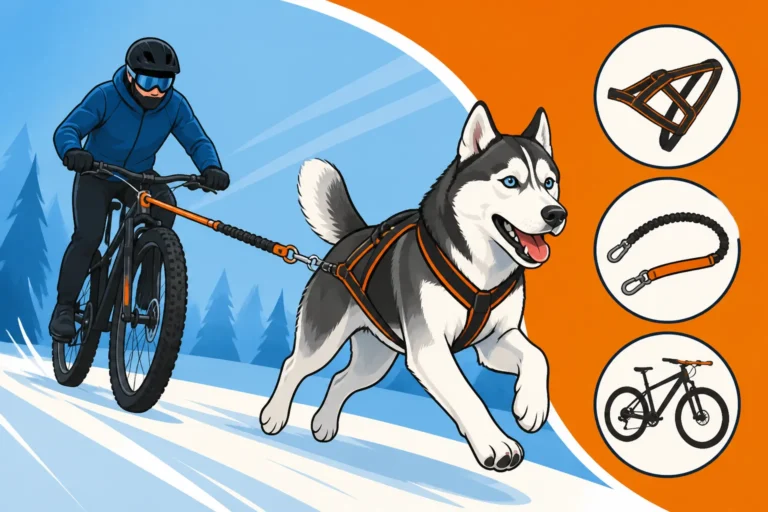
Exercise, Exercise, Exercise: These dogs need a lot of physical activity. Two vigorous runs or long walks a day are often a minimum, not a maximum. Engaging in activities like canicross, bikejoring, or even long hikes can help burn off that boundless energy that would otherwise be channeled into escape attempts. A tired husky is a good husky!
-
Mental Stimulation: Don't forget their brains! Puzzle toys, obedience training sessions, and even just interactive games in the yard can keep their minds engaged. Huskies thrive on having a "job," even if that job is just figuring out how to get a treat out of a Kong. If you're looking for high-quality, engaging treats for training, brands like Chewy offer a wide variety, and for super-high-value rewards, fresh food options from companies like Ollie can be incredibly motivating.
-
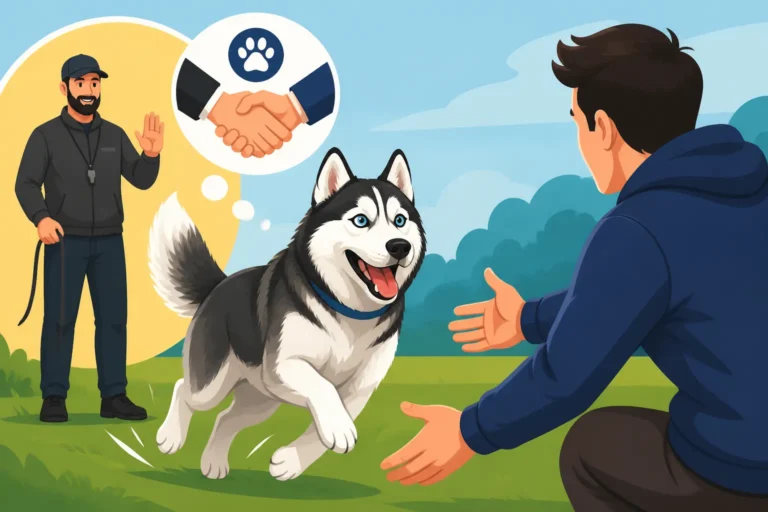
Recall Training: While a truly reliable off-leash recall is exceptionally rare for a husky, an emergency recall is still crucial. Practice Building a Siberian Husky Recall Word From Scratch religiously, using the highest value treats you can find. It might just be the one thing that saves your dog's life if they ever do get out. Remember, the goal isn't perfect obedience, but an ingrained response in a critical moment.
-
House Rules: Implement strict Door Manners That Keep a Siberian Husky Inside. Train them to sit and wait before being allowed through any doorway. This simple routine can prevent a quick bolt if a door is accidentally left ajar.
Keeping a Siberian Husky safely contained is an ongoing commitment. It requires understanding their instincts, providing appropriate physical boundaries, and dedicating time to their physical and mental well-being. Investing in quality pet insurance from providers like Healthy Paws can also offer peace of mind, covering potential vet bills should your adventurous husky manage to get out and injure themselves or become ill while exploring the world beyond your property.
Disclaimer
This article is for general informational purposes only and does not constitute professional advice. Laws, prices and regulations vary by location and change over time. Consult a qualified professional for guidance on your specific situation.