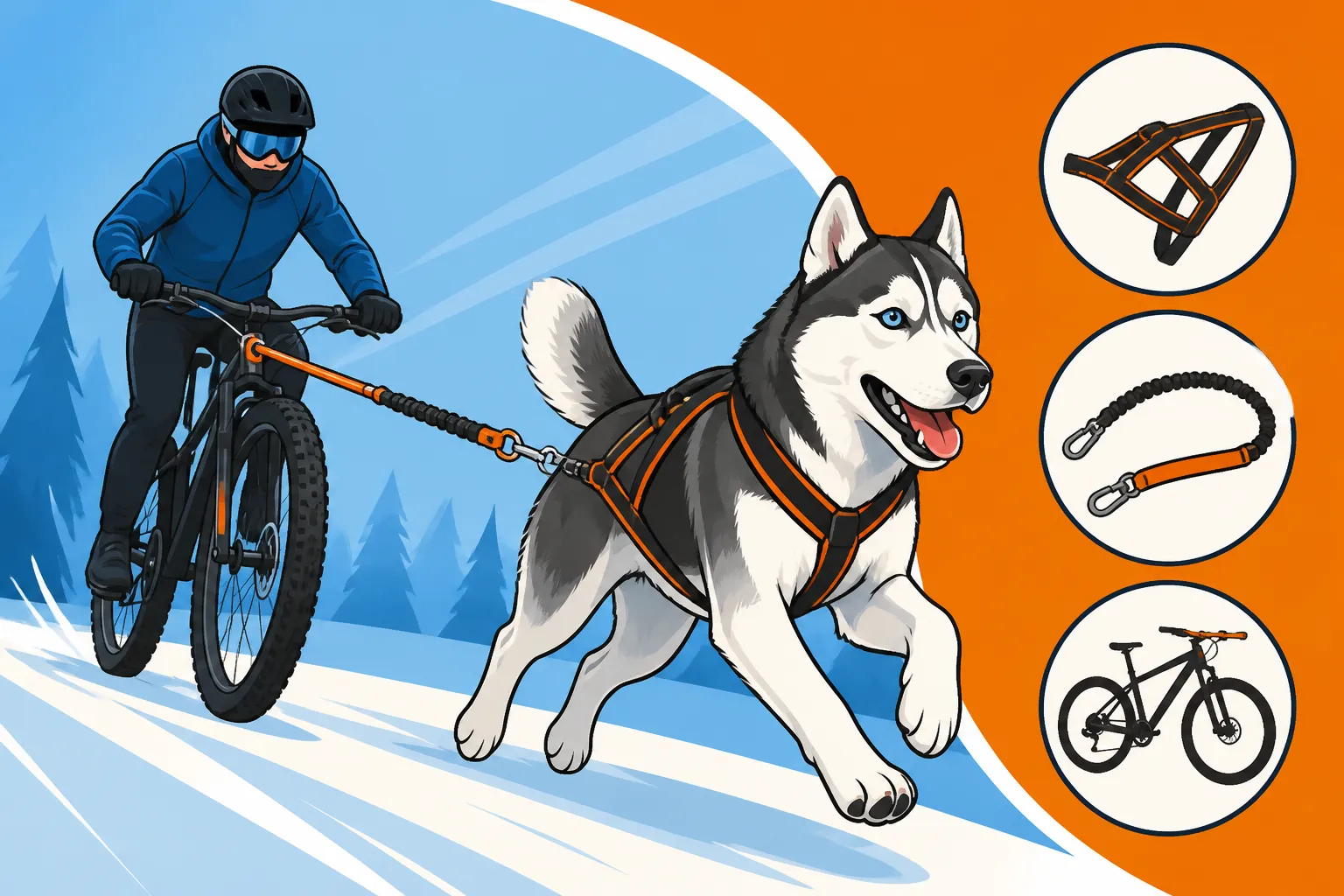
Bikejoring Setups for One Siberian Husky
Thinking about adding bikejoring to your Siberian Husky's exercise routine is exciting, but for many, the idea of getting all the right gear for one dog can feel like deciphering a secret code. You want to make sure your energetic companion is safe and comfortable, and that you're in control, without buying a bunch of unnecessary stuff. This guide is here to break down exactly what you need for a single-dog bikejoring setup, focusing on safety, efficiency, and how to get started on the right paw.
The Essentials of Bikejoring Gear for One Husky
Bikejoring is a fantastic way to tap into your Siberian Husky's natural pulling instinct and incredible energy, offering them a job that they often absolutely adore. However, it's not simply a matter of attaching a leash to your bike and going. A proper setup is paramount for the safety and enjoyment of both you and your dog. Without the right specialized equipment, you risk injury, frustration, and a truly unenjoyable experience. Let's dive into the core components you'll need to get started with your single Husky.
The Right Bike for the Job
When it comes to bikejoring, your everyday cruiser probably isn't going to cut it. You need a bicycle that can handle varying terrain, absorb shocks, and provide stable control, especially when you have a powerful Siberian Husky pulling ahead. A mountain bike is often the gold standard for bikejoring, and for good reason. Its robust frame, suspension (front suspension at minimum, full suspension if you're hitting rougher trails), and knobby tires are designed for off-road conditions, giving you the stability and shock absorption needed when your Husky suddenly veers or hits a bump.
Consider the trails you'll be on. If you're mostly sticking to paved paths or very smooth gravel, a sturdy hybrid bike might work, but it's less ideal. For anything more adventurous—dirt trails, roots, rocks, or loose gravel—a mountain bike becomes indispensable. The wider handlebars on mountain bikes also offer better leverage and control, which is crucial when a strong Husky decides to put its shoulder into it. Ultimately, you need a bike that feels stable and responsive under pressure, allowing you to react quickly to your dog's movements and changes in terrain.
Another option to consider, especially if you live somewhere with soft sand or snow for part of the year, is a fat bike. These bikes, with their oversized tires, offer incredible traction and stability, making them excellent for challenging surfaces. While not everyone needs a fat bike, for those who want to bikejor year-round in diverse conditions, it's a worthwhile consideration. Regardless of the type, ensure your bike is in excellent working order, especially the brakes, which we'll discuss further down.
Choosing the Perfect Harness
This is arguably the most critical piece of equipment for your Siberian Husky. Forget the everyday walking harness or collar; they are not designed for pulling power and can cause injury. For bikejoring, you absolutely need a specialized pulling harness that distributes pressure evenly across your dog's chest and shoulders, allowing for unrestricted movement and breathing. The goal is to let your Husky pull efficiently and comfortably, without any strain on their throat or joints.
The two main types of pulling harnesses are the X-back and the H-back (also known as a distance or freight harness). An X-back harness is designed for direct, straight-line pulling, with straps that cross over the dog's back to distribute weight. It's excellent for dogs that maintain a consistent pull directly ahead of you. An H-back harness, or distance harness, has a slightly different configuration, often with more padding and a design that might be more comfortable for longer distances or dogs with a more varied gait. The important thing is that the harness allows your Husky full range of motion in their legs and shoulders and doesn't rub or chafe.
Fit is everything. A poorly fitting harness can cause discomfort, skin irritation, and even long-term injury. It should be snug but not restrictive, allowing two fingers to slip comfortably under the straps around the neck and chest. The rear of the harness should end around the base of the tail when the dog is pulling, ensuring the pulling force is distributed over the strongest part of their back. Don't guess on size; measure your Husky carefully and consult sizing guides from reputable manufacturers. You can often find great deals on durable gear through online retailers like Chewy, which typically offer a range of specialized pulling harnesses. For more on this, you might find our guide on Harness Against Collar for a Siberian Husky useful.
The Vital Bikejor Line and Antenna
Connecting your Husky to your bike requires specific equipment to ensure safety and prevent the line from getting tangled in your front wheel. This is where the bikejor line and antenna come into play. A bikejor line is a specialized bungee leash, usually between 6 and 10 feet long when extended. The bungee section is crucial as it absorbs shocks, preventing jarring pulls on both your dog and the bike. Imagine your Husky hitting a sudden stop or a squirrel darting out – the bungee acts as a shock absorber, cushioning the impact rather than delivering a sharp jerk.
This line typically attaches to the bike via a quick-release mechanism (which we'll discuss in detail next) and clips to your Husky's pulling harness. Never use a standard rigid leash; it transmits every jolt directly and significantly increases the risk of injury to your dog's spine or your own fall. The length is also important; it needs to be long enough to keep your Husky a safe distance ahead of your front wheel, but not so long that it becomes unmanageable or poses a tripping hazard.
The antenna, also sometimes called a bikejor arm or springer, is a metal or rigid plastic arm that extends out from the front of your bike. Its primary purpose is to keep the bikejor line away from your front wheel, preventing it from tangling in the spokes or between the wheel and the frame. A tangled line is a recipe for disaster, potentially causing a dangerous fall for you and serious injury to your dog. The antenna ensures the line stays clear, allowing for smooth, unobstructed pulling. Most antennas attach securely to the head tube or handlebars of your bike. It's a small investment that offers a huge return in terms of safety and peace of mind.
Safety First: Securing Your Husky and Yourself
Bikejoring is exhilarating, but it's also a high-speed activity where things can go wrong quickly. Prioritizing safety for both you and your Siberian Husky is not just a recommendation; it's a non-negotiable requirement. Before you even think about hitting the trail, you need to ensure you have the right safety mechanisms in place and understand how to use them.
Quick Release Mechanisms and Leash Attachments
In bikejoring, having the ability to instantly disconnect your dog from your bike in an emergency is absolutely vital. This is achieved through a quick-release mechanism on your bikejor line. This isn't just a fancy carabiner; it's a specialized release that you can activate with one hand, even under tension, to free your dog if, for example, they get into a dangerous situation, you need to stop suddenly, or the line somehow becomes entangled. Imagine a scenario where your Husky spots a deer and takes off, pulling you towards a busy road – a quick release could prevent a catastrophe.
Most reputable bikejor lines come with a quick-release snap or a panic snap designed for exactly this purpose. Practice using it before you're in an emergency. Get familiar with how it works, as fumbling with it in a high-stress situation could be dangerous. Some systems integrate the quick release into a belt worn by the rider, allowing you to disconnect from the bikejor line itself, which then remains attached to the dog's harness but no longer to you. Whichever system you choose, make sure it's robust, reliable, and easily accessible.
The leash attachment point on your bike is also important. It should be a sturdy, fixed point, typically on the frame or the dedicated antenna. Never attach the bikejor line directly to your handlebars or seat post, as this can severely compromise your steering and balance. The entire setup, from the harness to the line to the bike attachment, should be designed to handle the powerful, sustained pull of a Siberian Husky.
Helmet, Gloves, and Visibility Gear
While your Husky is doing the pulling, you're responsible for steering and braking, and protecting yourself is just as important as protecting them. A helmet is non-negotiable. Falls happen, even to experienced riders, and a good helmet can prevent serious head injuries. Don't skimp here; invest in a high-quality cycling helmet that fits well and is certified for safety.
Gloves are also a smart choice. They provide a better grip on the handlebars, absorb some vibrations, and protect your hands if you take a tumble. Beyond personal protection, consider visibility, especially if you'll be riding near roads or during dawn/dusk hours. Brightly colored clothing, reflective strips on your jacket or vest, and bike lights (front and rear) are essential. Remember, your Husky is often low to the ground and can be hard to spot in dim light, so consider a reflective harness or collar for them too. A well-lit setup ensures you and your furry co-pilot are seen by others. You can explore a variety of gear for your Husky through brands that prioritize outdoor safety.
Paw Protection and Hydration
Your Siberian Husky's paws are their primary contact with the ground, and bikejoring can be tough on them, especially on abrasive surfaces like asphalt, gravel, or icy terrain. While Huskies have naturally tough paws, extended runs on rough ground can lead to abrasions, cuts, or cracking. Consider investing in protective dog booties, especially for longer runs or when the ground conditions are harsh (hot pavement in summer, sharp ice or road salt in winter). This ties into general Siberian Husky Paw Care Through Snow and Salt.
Beyond paw care, proper hydration is absolutely vital. Siberian Huskies are built for endurance, but they can still overheat, particularly in warmer weather. Always carry plenty of water for both yourself and your dog. Collapsible water bowls are excellent for on-the-go hydration. Plan your routes to include water stops if possible, or carry a hydration pack. Signs of overheating in a Husky include excessive panting, lethargy, bright red gums, or stumbling. If you notice any of these, stop immediately, get your dog into the shade, and offer water. For more information on preventing this, check out Running a Siberian Husky in Summer Heat. Remember, a happy, healthy Husky is a hydrated Husky. Even with the best gear and training, accidents happen, and a good pet insurance policy, perhaps from Healthy Paws, can provide financial peace of mind for unexpected veterinary visits.
Setting Up Your Bike for Optimal Performance and Comfort
Once you have the core gear, it's time to fine-tune your bicycle itself. A well-adjusted bike not only enhances your performance but, more importantly, improves your control and comfort, making the whole bikejoring experience safer and more enjoyable. These adjustments are about creating synergy between you, your bike, and your pulling Husky.
Brake Systems and Tire Choice
Your brakes are your primary safety device. Given that you'll have a powerful Siberian Husky propelling you forward, you need reliable, responsive brakes that can bring you to a controlled stop quickly and safely. Disc brakes (hydraulic or mechanical) are highly recommended for bikejoring. They offer superior stopping power and perform much better in wet or muddy conditions compared to traditional rim brakes. Ensure your brake pads are in good condition and that your brake levers are easily accessible and adjusted for your grip. Regularly check your brake lines and fluid (for hydraulic systems) to ensure optimal function.
Tire choice also plays a significant role in your control and comfort. For off-road bikejoring, knobby mountain bike tires provide the best grip and traction, especially on loose surfaces, dirt, and gravel. Wider tires (2.2 inches or more) offer more stability and a larger contact patch, which can be invaluable when your Husky makes a sudden turn or you encounter uneven terrain. Consider running your tires at a slightly lower pressure than you would for road cycling; this increases the contact patch, enhances grip, and provides a bit more cushioning, making the ride smoother for you. However, avoid going too low, as this can increase the risk of pinch flats. The ideal pressure will vary based on your weight, the trail conditions, and your tire type.
Handlebar and Seat Adjustments
Ergonomics are key for comfort and control during bikejoring. Your handlebar height and angle should allow you to maintain an upright enough posture to see your dog and the trail ahead clearly, without putting undue strain on your back or neck. A common setup involves handlebars that are slightly higher than you might have for aggressive trail riding, giving you better leverage for steering against your dog's pull and a more relaxed riding position for longer excursions.
Similarly, your seat height and position are crucial. The seat should be high enough to allow for efficient pedaling (if you choose to pedal, as some prefer to only be pulled) but low enough that you can quickly put your feet on the ground for stability if your Husky stops abruptly or you lose balance. You should be able to comfortably touch the ground with the balls of your feet when seated. Adjust the seat forward or backward to ensure your knees are properly aligned over the pedals. A comfortable saddle can also make a huge difference on longer rides. Remember, you'll be spending a fair amount of time on this bike, so take the time to dial in your fit.
Dealing with Distractions and Troubleshooting
Even with the perfect setup, distractions can happen, and equipment can occasionally fail. One of the biggest challenges in bikejoring with a Siberian Husky is their powerful prey drive and their independent nature. A squirrel, a rabbit, or another dog can easily capture their attention, leading to sudden swerves or sprints. This is where training and experience come in, but also where your setup needs to be forgiving. Ensure your quick-release mechanism is always accessible. Why a Siberian Husky Cannot Be Trusted Off Leash is a core understanding for every owner, and it certainly applies when your dog is attached to a bike.
It's wise to carry a small repair kit, including a spare tube, tire levers, and a multi-tool, especially on longer rides. Flat tires or minor mechanical issues can turn a fun outing into a frustrating ordeal. Knowing how to make basic repairs can save you a long walk home. Also, consider carrying a small first-aid kit for both yourself and your dog. Things happen on the trail – scrapes, cuts, or thorns in paws. Being prepared can prevent minor incidents from becoming major problems. Finally, always let someone know your planned route and estimated return time, especially if you're venturing into more remote areas.
Training Your Siberian Husky for Bikejoring Success
Having all the right gear is only half the battle. Your Siberian Husky needs to understand what's expected of them and how to work with you as a team. Proper training isn't just about obedience; it's about building communication and confidence, ensuring both of you enjoy the experience safely.
Starting Slow and Building Stamina
Never just hook your Husky up and go. The first step is to introduce the harness and the concept of pulling without the bike. Let your dog get comfortable wearing the specialized harness. Then, start with very short, gentle walks or runs with you holding the line, using the harness. This helps them associate the harness with working. Once they're comfortable pulling you (even just a little bit) on foot, introduce the bike without the dog attached. Walk the bike, get used to its feel, and practice using your brakes.
Next, combine the two. Start with very short, flat, non-technical trails. Have a helper hold your Husky initially if needed, while you get on the bike. Begin with slow, controlled movements. You might even start with someone jogging beside your Husky to encourage them forward. The goal is to build positive associations and gradually increase the duration and intensity. Siberian Huskies have incredible stamina, but they need to build up their fitness for bikejoring just like humans do. Overdoing it too soon can lead to injuries or sour your dog on the activity. Gradually increase your distances and speeds, paying close attention to your Husky's energy levels and paw condition. How Much Exercise a Siberian Husky Really Needs can help guide your planning.
Essential Commands for the Trail
Communication is paramount in bikejoring. Your Husky needs to understand specific commands that tell them where to go, when to turn, and when to stop. These aren't your typical obedience commands; they're specific to working in harness.
Here are some essential commands you'll want to teach:
- "Hike!" or "Go!": Your cue to start moving forward.
- "Gee!": Turn right.
- "Haw!": Turn left.
- "Whoa!": Stop. This is incredibly important for safety. Practice this command diligently in various situations.
- "On By!" or "Leave It!": To ignore distractions like squirrels, other dogs, or people.
Start teaching these commands on foot, in a low-distraction environment, and reward heavily when your Husky responds correctly. Use high-value treats and enthusiastic praise. Once they reliably respond on foot, introduce them with the bike. Consistency is key. Every time you give a command, follow through and reinforce it. Over time, your Husky will learn to anticipate your directions and work with you seamlessly. For a deeper dive into these commands, check out The Cues a Siberian Husky Needs in Harness and Teaching a Siberian Husky to Pull in Harness. This systematic approach, combining the right equipment with patient training, is the foundation for a lifetime of exhilarating and safe bikejoring adventures with your single Siberian Husky. When considering the best food for their energy needs, remember that while Huskies have efficient metabolisms, providing them with quality nutrition is important. You might consider options like Ollie for fresh, balanced meals, or look for high-performance dog foods available on platforms like Chewy.
| Component | Purpose | Key Considerations |
|---|---|---|
| Bike | Provides propulsion, steering, and braking. | Mountain bike (suspension, knobby tires) or Fat bike (snow/sand); good disc brakes. |
| Pulling Harness | Distributes pulling force evenly across the dog's body. | X-back or H-back style; proper fit is crucial; no pressure on throat. |
| Bikejor Line | Connects dog to bike; absorbs shock. | 6-10 ft bungee line; never use a rigid leash. |
| Antenna | Keeps the line clear of the front wheel. | Attaches to bike frame/handlebars; prevents tangling in spokes. |
| Quick Release | Allows instant disconnection of dog from bike in emergencies. | Easy, one-handed operation, even under tension; integrated into line or rider's belt. |
| Helmet | Protects rider's head. | Certified for safety; snug, comfortable fit. |
| Gloves | Improves grip, protects hands. | Padded cycling gloves for comfort and protection. |
| Visibility Gear | Increases visibility for rider and dog. | Bright clothing, reflective strips, bike lights, reflective dog harness/collar. |
| Paw Protection | Prevents injury to dog's paw pads. | Dog booties for rough terrain, hot pavement, or icy conditions. |
| Water Bottle | Hydrates dog and rider. | Sufficient volume for duration of ride; collapsible bowl for dog. |
Disclaimer
This article is for general informational purposes only and does not constitute professional advice. Laws, prices and regulations vary by location and change over time. Consult a qualified professional for guidance on your specific situation.