Why a Siberian Husky Cannot Be Trusted Off Leash
That dream. We've all seen it in the movies or at the park: a dog galloping freely, perfectly attuned to its owner, coming back the instant it's called. For many dog breeds, that's an achievable reality with consistent training. But if you're a Siberian Husky owner, or dreaming of becoming one, you've likely heard the whispered warnings: "Never trust a Husky off-leash." This isn't fear-mongering; it's a hard-won truth from generations of owners who've learned the unique, sometimes heartbreaking, challenges that come with this magnificent breed's deep-seated instincts. This guide will delve into why a Siberian Husky simply cannot be trusted off-leash, exploring their ancient heritage, powerful drives, and what this means for safe, happy ownership.
The Deep-Seated Roaming Instinct
To truly understand why your Siberian Husky views an open gate as an invitation to adventure rather than a boundary, we have to look back at their origins. These aren't dogs bred to guard a property or stay close by a shepherd's side. Their very essence is about covering vast distances with incredible endurance.
Bred to Run and Explore
Siberian Huskies hail from the Chukchi people of northeastern Asia, where they were developed to pull light loads over long distances in brutal conditions. Imagine miles of desolate, snow-covered tundra. A dog in this environment couldn't afford to wait for constant human direction; it needed to make independent decisions, navigate challenging terrain, and follow its nose. This genetic blueprint for self-sufficiency and extensive travel is still deeply embedded in every Siberian Husky, regardless of whether their ancestors ever saw a sled.
When you take your Husky to a seemingly secure park or trail, that ancient instinct kicks in. Their brain isn't thinking, "Oh, I should stay near my person." It's thinking, "What's over that hill? What smells are out there? How far can I go?" This isn't defiance; it's simply who they are, a powerful urge that can easily override even the most dedicated training. It's a fundamental part of their charm and what makes them such incredible athletes, but it's also their greatest liability when it comes to off-leash freedom.
For many Husky owners, the initial thought might be, "But my dog loves me! Surely they'll come back." And while they absolutely adore you, their love doesn't always trump their wanderlust. It's a challenge unique to breeds with such a strong historical purpose, where independence and exploration were not just tolerated but actively encouraged and selected for. Understanding this deep-seated drive is the first step in managing your Husky's safety and your own expectations.
The Call of the Wild
Even the most pampered, well-fed, and adored Siberian Husky can hear the call of the wild. It’s an almost primal urge to explore, to follow a scent trail, or simply to run, unencumbered by human rules or boundaries. This instinct doesn't disappear just because your Husky lives in a comfortable home; it's part of their genetic makeup. They are designed for efficient, long-distance travel, and an open space often triggers that hardwired programming.
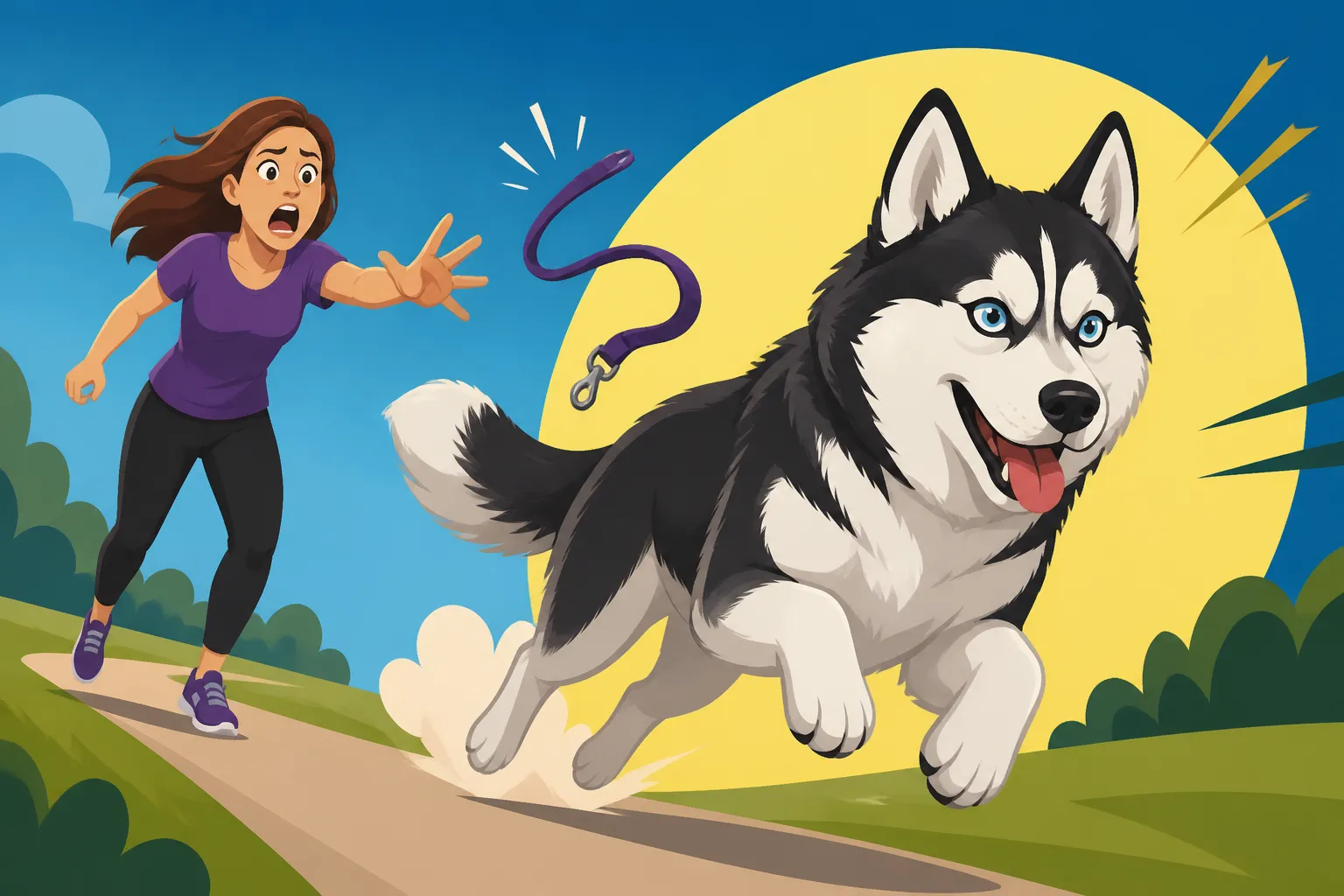
This means that even a momentarily open door, a gap in the fence, or a slipped collar can transform your beloved companion into a blur disappearing over the horizon. Many owners recount stories of their Husky vanishing for hours, only to return tired but generally unharmed, after a grand adventure. However, these excursions are incredibly risky, and not every story has a happy ending. It's a significant reason why articles like The Roaming Instinct Bred Into Every Siberian Husky are so crucial for understanding the breed.
The frustration this causes owners is immense. You might have the most beautiful, sweet, and obedient Husky in every other aspect of life, but the moment the leash comes off, or a boundary is breached, a different dog takes over. This isn't a reflection of your training skills or your bond; it's a testament to the sheer strength of an instinct that has been honed over thousands of years for survival and purpose. Recognizing this fundamental truth is key to responsible Husky ownership.
Prey Drive: The Unseen Force
Beyond the desire to roam, Siberian Huskies possess another powerful instinct that makes off-leash reliability a dangerous gamble: their intense prey drive. This isn't just about playing chase; it's a deeply ingrained hunting instinct that, once triggered, can become an all-consuming focus.
Small Animals are Fair Game
If it's small and moves quickly, your Siberian Husky is likely to see it as a target. This includes squirrels, rabbits, chipmunks, birds, and even neighborhood cats, unless they've been specifically raised with feline companions from a very young age. This isn't malice; it's simply a natural response to movement. In the wild, their ancestors would have hunted small game to supplement their diet or simply to survive. This means that a rustle in the bushes or a flash of fur can instantaneously switch your Husky from a friendly family pet to a focused, driven hunter.
The challenge here is twofold. First, the speed and agility of a Husky mean they can close distances rapidly, often before you even realize what's happening. Second, once they've locked onto a target, their hearing for your recall command practically vanishes. That enticing scent or the thrill of the chase becomes the only thing that matters. This is why attempting off-leash walks in areas with abundant wildlife is not only dangerous for your Husky but also for the local ecosystem and potentially other people's pets.
Many owners face the heartbreaking reality of having their Husky injure or kill a small animal, leading to guilt, potential legal issues, and upset neighbors. It’s a harsh reminder that while we've domesticated these animals, we haven't erased thousands of years of evolutionary programming. For more on this, you might find Siberian Husky Prey Drive Around Small Animals particularly enlightening.
The Tunnel Vision of the Chase
Imagine a tunnel. Now imagine your Siberian Husky at one end, and a squirrel at the other, darting across a field. Everything outside that tunnel, including your voice, your commands, and your frantic waving, ceases to exist. This is the "tunnel vision of the chase," and it's a formidable opponent to any recall training. Once a Husky's prey drive is engaged, their brain seems to filter out all other stimuli, focusing solely on the pursuit.
This means that even if your Husky has a perfectly solid recall in a distraction-free environment, the moment a rabbit bursts from the undergrowth, all that training can instantly evaporate. The surge of adrenaline and the primal satisfaction of the chase are incredibly powerful motivators, far more compelling than a piece of kibble or your enthusiastic praise. Owners often describe it as their dog "turning off" its ears, and it's an accurate description of the neurological shift that occurs.
This isn't about stubbornness, though it can certainly feel that way in the moment. It's about instinct taking over. You're not just competing with a dog's desire to play; you're competing with a deeply ingrained survival mechanism. This makes trusting a Husky off-leash not just risky, but arguably irresponsible, as the consequences can be dire for both your dog and any small creatures in their path. The speed at which they can disappear, coupled with this intense focus, means that prevention is always the only truly effective strategy.
The "Selective Hearing" Phenomenon
Ah, the infamous "selective hearing" of the Siberian Husky! It's a common lament among owners, often leading to affectionate frustration. It's not that Huskies are unintelligent; quite the opposite. They are highly intelligent, but their smarts manifest in a way that prioritizes their own interests and independence over constant human instruction.
Independence Over Obedience
Unlike many breeds bred for close collaboration with humans, such as retrievers or herding dogs, Siberian Huskies were expected to think for themselves. When pulling a sled team, a lead dog might need to make critical decisions about a path or avoid thin ice, all without direct input from the musher. This fostered a profound sense of independence and self-reliance, which is a fantastic trait for a working dog in the wilderness but less so for a pet expected to follow every command without question.
This inherent independence often translates into what looks like stubbornness in a domestic setting. They understand commands perfectly well, but they might just decide, in that moment, that following a scent trail or exploring a new area is more rewarding than returning to you. It's not that they don't know what "come" means; it's that they've weighed the options and chosen the more appealing one. This is why Why a Siberian Husky Looks Stubborn Rather Than Slow is such a relevant discussion – it's often a matter of motivation and perceived reward, not a lack of comprehension.
For owners, this means that recall has to be practically bulletproof and constantly reinforced with exceptionally high-value rewards. You're not dealing with a dog that inherently wants to please you above all else; you're dealing with a partner who needs a very compelling reason to interrupt their self-appointed mission. This requires a level of patience and understanding that is unique to Husky ownership, and it forms the bedrock of why off-leash freedom is such a rare and risky proposition.
The "What's In It For Me?" Attitude
When it comes to training a Siberian Husky, you quickly learn that the question isn't "Can they learn it?" but rather, "What's in it for them?" Their independent nature means they're constantly evaluating whether obeying a command is worth their while. If the reward isn't compelling enough, or the distraction is too great, you might as well be talking to a brick wall. This isn't laziness; it's a pragmatic approach to life that has served their ancestors well.
This "what's in it for me?" attitude makes building a truly reliable off-leash recall incredibly challenging. In a low-distraction environment, with a tasty treat, your Husky might come soaring back. But introduce a new smell, a distant squirrel, or another dog, and suddenly your chicken jerky isn't quite as appealing as the adventure calling. You're always in competition with the environment, and the environment often has more exciting things to offer.
For this reason, positive reinforcement and finding truly high-value rewards are absolutely paramount. Simple praise or a pat on the head often won't cut it when the open road beckons. Many successful Husky trainers employ everything from freeze-dried liver to favorite toys, or even just the thrill of a short game of tug, as their ultimate motivators. It's an ongoing negotiation, and one where the stakes for off-leash behavior are simply too high to leave to chance. BAXTER & Bella, for example, offers online programs that often emphasize consistent positive reinforcement strategies to work with these independent minds.
Siberian Huskies and Safety Risks
The consequences of a Siberian Husky not being trustworthy off-leash extend far beyond simple inconvenience. Their unique blend of speed, endurance, and independent thought creates serious safety hazards for themselves and for others.
Traffic and Dangerous Situations
A loose Siberian Husky is, sadly, a prime candidate for a traffic accident. Their powerful urge to run and explore means they won't stop at a curb or understand the danger of oncoming vehicles. They can cover ground at an astonishing speed, often outrunning an owner's frantic attempts to catch them, and once they hit top gear, they are nearly impossible to redirect. This inherent danger makes busy roads and even quiet suburban streets death traps for an unleashed Husky.
Beyond traffic, there are countless other dangers: encounters with aggressive wildlife (which can lead to injury for both the Husky and the animal), exposure to poisons or harmful substances on the ground, falling into ditches or bodies of water, or simply getting so far from home that finding their way back becomes impossible. It's a terrifying scenario for any pet owner, but especially for those with a breed predisposed to long-distance wandering. For more insight into these tragic possibilities, consider reading Siberian Husky Deaths From Trauma and Escape.
The thought of your cherished companion disappearing into such dangers is enough to make any responsible owner commit to leash-only policies. It's not about stifling their freedom; it's about protecting them from a world that isn't designed for their ancient instincts. The moments of exhilaration they might experience running free are simply not worth the immense risk to their lives and well-being.
Encounters with Other Dogs and People
A loose Siberian Husky can also create stressful, and potentially dangerous, situations with other dogs and people. While many Huskies are friendly, their boisterous play style and tendency to charge at full speed can be intimidating to smaller, more timid dogs, or even other large breeds. An innocent attempt to play can quickly escalate into a confrontation if the other dog feels threatened or if its owner is concerned.
Furthermore, not everyone is comfortable with a large, fast-moving dog running up to them off-leash, no matter how friendly that dog might be. Children can be knocked over, adults can be frightened, and people with legitimate dog phobias can be sent into a panic. This creates a negative perception of the breed and can lead to formal complaints or even legal issues, especially if someone is injured or property is damaged.
It's a huge responsibility to ensure your dog is not only safe but also respectful of the public space. An off-leash Husky, even one with the best intentions, often fails on both counts due to their strong drives and independent nature. Keeping them leashed is not just about their safety from traffic; it's about being a good neighbor and ensuring positive interactions within the community.
Managing the Off-Leash Dream: Realistic Expectations
For many Husky owners, the idea of their dog gracefully trotting beside them, leash-free, feels like the ultimate achievement. However, with Siberian Huskies, it's crucial to temper that dream with a heavy dose of realism. Accepting that true, reliable off-leash freedom might not be in the cards can actually open up safer, more fulfilling ways to exercise your independent companion.
The Myth of the "One Exception"
Every Husky owner, at some point, has probably heard or seen a story about "that one Husky" who is perfectly reliable off-leash. While it's tempting to hold onto this hope, it's critical to understand that these cases are exceptionally rare, often come with an asterisk (e.g., "only in our fenced yard"), and usually involve an immense amount of dedicated, ongoing training and vigilance from an experienced owner. For the vast majority of Siberian Huskies, and their owners, the "one exception" remains a myth that can lead to dangerous complacency.
Believing your Husky will be the exception can set you both up for failure and put your dog at extreme risk. It downplays the power of their instincts and overestimates the reliability of training against thousands of years of genetics. It's far more responsible and realistic to assume your Husky will act like a typical Husky: given the opportunity, they will run, they will chase, and they will follow their nose. This isn't about being pessimistic; it's about making informed, safety-conscious decisions.
Instead of chasing a potentially unattainable ideal, focus your energy on creating a safe and stimulating life with the understanding of your Husky's unique nature. Celebrate their athleticism and independence in controlled environments, rather than trying to force them into a mold that goes against their very being.
Safely Simulating Freedom
While true off-leash freedom might be out of reach, you can absolutely provide your Siberian Husky with exhilarating experiences that simulate that freedom, but within safe parameters. The key is control and containment.
One of the best tools for this is a long line. These can range from 15 to 50 feet, allowing your Husky to explore and run a significant distance from you, while still being physically connected. It provides a crucial safety net if they bolt or become fixated on a scent. You can find excellent quality long lines on platforms like Amazon, often specifically designed for larger, more powerful breeds. Using a durable long line in a safe, open field allows them to stretch their legs and satisfy some of that roaming instinct without the danger of true escape.
Another fantastic option is renting privately owned, securely fenced areas, often through services like Sniffspot. These spaces provide guaranteed containment, allowing your Husky to run, sniff, and play truly off-leash without any risk of escape or encountering unexpected dangers. It’s an investment in their mental and physical well-being, offering a genuine sense of freedom within a controlled environment. Think of it as a dedicated "adventure zone" where they can fully embrace their Husky-ness. Checking out Practicing Siberian Husky Recall in a Fenced Field can give you more ideas on utilizing such spaces effectively.
| Type of "Off-Leash" Situation | Suitability for Siberian Husky | Associated Risks | Benefits |
|---|---|---|---|
| Open, Unfenced Field | Extremely Low | High escape risk, traffic, wildlife encounters, legal issues, lost dog. | Perceived freedom, but very dangerous. |
| Dog Park (Fenced) | Low to Moderate | Potential for fence scaling/digging, prey drive towards small dogs, negative interactions with other dogs/owners, disease risk. | Socialization (if managed), some exercise. |
| Long Line in Open Space | High | Entanglement risk, owner must remain vigilant. | Safe freedom, recall practice, scent work. |
| Private, Secure Rental | Very High | None for escape, minor for hidden hazards (check property). | True freedom, safe exploration, controlled environment. |
| Backyard (Unsecured) | Very Low | Digging under, climbing over, gate opening, boredom-driven escape. | Some outdoor time, but not true exercise. |
Training Challenges Unique to the Husky
Training a Siberian Husky is often described as a dance between patience and persistence, requiring a different approach than with many other breeds. Their independence and cleverness mean that traditional methods might fall flat, especially when it comes to recall.
Building a Bulletproof Recall
Achieving a "bulletproof" recall in a Siberian Husky is the holy grail for many owners, and for good reason. It's the command that could literally save their life. However, due to their profound prey drive and roaming instinct, building such a recall requires an extraordinary commitment, and even then, it's rarely 100% reliable in every scenario. It’s not about teaching them the word, but teaching them that you are always more rewarding than whatever distraction they've found.
Starting early, even as a puppy, is crucial. Use a long line in a safely enclosed area. Begin by making yourself incredibly exciting – running away from them, hiding, making silly noises, and always having the highest-value treats possible. Your recall word needs to be associated with absolute joy and an irresistible reward. Check out Building a Siberian Husky Recall Word From Scratch for foundational tips. You'll need to practice in increasingly distracting environments, but always with the safety net of that long line or secure fencing.
Understand that for a Husky, "come" isn't a command they obey simply because you're the boss. It's a negotiation. You have to convince them, repeatedly, that returning to you is the best decision they can make at that moment. This means constant reinforcement, never taking their recall for granted, and understanding that one failure could lead to serious consequences.
Consistency and High-Value Rewards
If there's one thing a Siberian Husky will teach you, it's the importance of consistency. These intelligent dogs are quick to pick up on patterns and even quicker to exploit any loopholes in your training. If you only enforce a command sometimes, they'll learn that it's optional. This is particularly true for recall; if they learn that sometimes they can ignore you without consequence, they will.
Furthermore, high-value rewards are not optional for Huskies, especially when competing with their powerful drives. A dry biscuit or a generic "good boy" might work for some breeds, but a Husky, deep in the thralls of a scent trail, needs something truly spectacular to break their focus. Think boiled chicken, cheese, hot dogs, or their absolute favorite squeaky toy. The reward needs to be worth interrupting their adventure for.
Training isn't a one-time event; it's a lifelong commitment with a Siberian Husky. You'll need to regularly refresh their recall, practice in new environments, and keep those rewards exciting. Even professional trainers who specialize in primitive breeds will often advise against relying on off-leash recall in anything but a fully secured environment. Websites like BAXTER & Bella can offer structured courses and support for owners dealing with these unique training challenges, providing fresh ideas for keeping training engaging and consistent.
Legal and Ethical Considerations
Beyond the practical dangers, allowing a Siberian Husky off-leash in an unregulated area carries significant legal and ethical implications that every owner must consider. Responsible pet ownership extends beyond your own backyard.
Leash Laws and Fines
Almost every city, county, and state has leash laws in place, requiring dogs to be on a leash when outside of a securely fenced property. These laws are not arbitrary; they are designed to protect public safety, prevent dog-on-dog incidents, and safeguard wildlife. Ignoring these laws can lead to significant fines, impoundment of your dog, and even more severe legal consequences if your unleashed Husky causes an accident or injury.
The fines for a loose dog can quickly add up, and repeat offenses can lead to escalating penalties. Imagine your Husky, enjoying their freedom, gets picked up by animal control. Not only will you face a fine, but you'll also incur impoundment fees, and potentially require proof of current vaccinations and licensing before they're released. If they're involved in an incident, you could be facing civil lawsuits, criminal charges, or even the tragic outcome of your dog being deemed dangerous. It's a sobering reality, highlighted in articles like Animal Control Fines for a Loose Siberian Husky.
For a breed with such a powerful wanderlust, adhering to leash laws isn't just a suggestion; it's a critical component of responsible ownership. It protects your Husky, your community, and your wallet from potentially devastating consequences. Always err on the side of caution and keep that leash securely attached.
Responsibility to the Community
As a Siberian Husky owner, you have a responsibility not only to your dog but also to your community. An unleashed Husky, no matter how friendly, can be perceived as a threat by other dog owners, especially those with smaller or fearful dogs. It can disrupt peaceful walks, cause anxiety, and even lead to confrontations between owners.
Furthermore, a loose Husky can decimate local wildlife populations. Their strong prey drive means that rabbits, squirrels, birds, and even deer are at risk. This disrupts the natural ecosystem and can be deeply upsetting to neighbors who value local wildlife. There's also the potential for your Husky to encounter and harm livestock if you live in a rural area, leading to significant financial and legal repercussions.
By keeping your Husky securely leashed, you are demonstrating respect for others, for local wildlife, and for the laws designed to keep everyone safe. It contributes to a positive perception of dog owners and helps maintain harmony in shared public spaces. It's a small concession for the privilege of owning such a magnificent, albeit independent, breed.
Alternatives to Off-Leash Freedom
Accepting that true off-leash freedom isn't safe for most Siberian Huskies doesn't mean resigning yourself to a life of boring walks. Quite the opposite! It means getting creative and exploring activities that cater to their unique drives and energy levels, all while keeping them safely contained.
Engaging Activities on Leash
Siberian Huskies are athletes, built for endurance and speed. While they might not be able to gallop freely through an open field, there are many fantastic activities you can do together that fulfill their need for speed and mental stimulation, all while on a leash or harness.
- Canicross: This is trail running with your dog, where you wear a special belt that attaches to your Husky's harness via a bungee line. Your Husky pulls you, providing an amazing workout for both of you. It taps directly into their pulling instinct in a controlled, forward-moving way.
- Bikejoring: Similar to canicross, but you're on a bike! This allows your Husky to reach higher speeds and cover more ground, perfect for those with boundless energy. Special bike attachments ensure safety and control.
- Skijoring: If you live in a snowy climate, skijoring is the winter equivalent, with your Husky pulling you on skis. It's an incredible way to bond and embrace their heritage.
- Long Walks and Hikes: Simply covering more distance on a leash can be incredibly satisfying for a Husky. Explore new trails, vary your routes, and allow plenty of time for sniffing and investigating. The mental stimulation of new scents is just as important as the physical exercise. You can find gear for these activities on Amazon, from specialized harnesses to towing lines. Articles like Canicross and Bikejoring With a Siberian Husky delve deeper into how to get started safely.
These activities not only provide incredible physical outlets but also strengthen your bond and challenge your Husky mentally. They learn to work with you as a team, channeling their powerful instincts into a productive, safe endeavor.
Secure Environments
The most critical aspect of managing a Siberian Husky is providing truly secure containment. This means thinking like a Husky – a breed known for its escape artistry!
- High, Secure Fencing: A standard four-foot fence is often little more than a suggestion to a determined Husky. Six feet is generally considered the minimum, and many owners opt for higher. The fence also needs to be dug deep into the ground, or have an L-footer installed, to prevent digging out. Huskies are notorious diggers, and they can excavate a surprising amount of earth in a short time. Six-Foot Fences and the Siberian Husky That Climbs offers practical advice on fortifying your yard.
- Gate Security: Standard latches are no match for a clever Husky. Many learn to open simple gate latches with their noses or paws. Invest in heavy-duty, multi-point locking systems, or even padlock your gates. Double-gating systems, where there's an outer gate and an inner gate creating a small "airlock," are also excellent for preventing bolt-throughs.
- Indoor Containment: Even inside the house, an unattended Husky can find trouble. Secure crates, built for strength, are often necessary, especially when you can't directly supervise them. Never underestimate their ability to chew through leashes, scratch at doors, or jump over baby gates.
- Supervision: Even with the most secure setup, direct supervision in the yard is always the safest bet. A Husky can be incredibly fast and cunning when it comes to finding weaknesses in a fence or gate.
By investing in robust containment and embracing engaging, leashed activities, you can provide a rich, fulfilling life for your Siberian Husky, honoring their instincts while ensuring their safety and your peace of mind.
Disclaimer
This article is for general informational purposes only and does not constitute professional advice. Laws, prices and regulations vary by location and change over time. Consult a qualified professional for guidance on your specific situation.