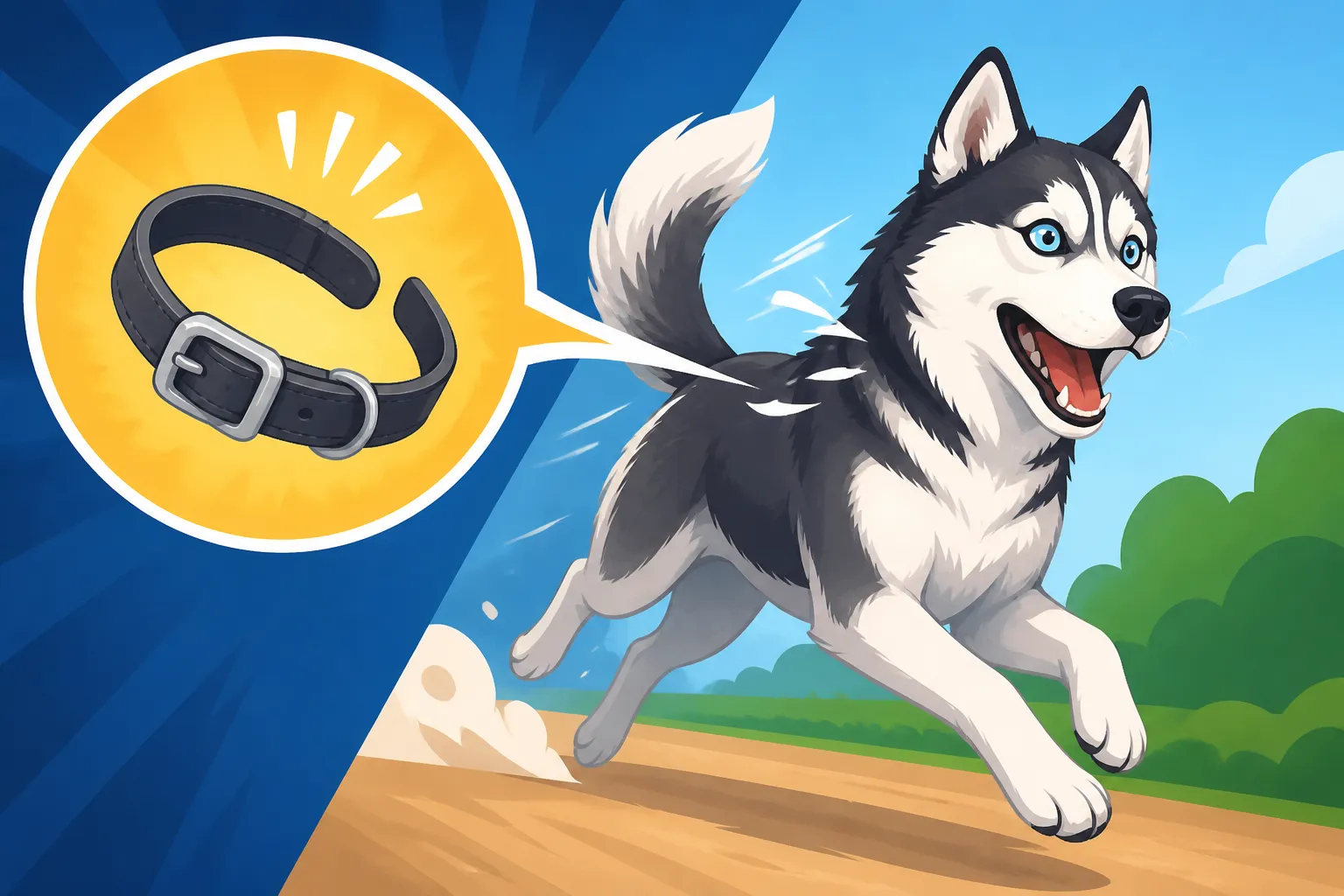
What Happens When a Siberian Husky Slips a Collar
It’s a heart-stopping moment many Siberian Husky owners dread: that split second where the leash goes taut, you feel a sudden give, and your Husky is no longer attached to their collar. The world seems to tilt, and a wave of pure panic washes over you as you watch them disappear into the distance, driven by an ancient call to run. This guide is all about understanding why this happens, how to prevent it, and most importantly, what to do in those terrifying moments to safely recover your adventurous companion.
The Immediate Danger of a Slipped Collar
The instant your Siberian Husky slips free from their collar, a clock starts ticking. Unlike many breeds that might hesitate or look back, a Husky's immediate instinct often tells them one thing: run. This isn't defiance; it's deeply ingrained, a part of their very heritage that makes them so unique and, sometimes, so challenging.
Why Huskies Bolt and How Far They Go
Siberian Huskies were literally bred to cover vast distances with tireless energy. Their ancestors were the ultimate endurance athletes, pulling sleds over miles of unforgiving terrain. That powerful drive to run, to explore, to follow a scent wherever it leads, is still very much alive in your family pet. When that connection to you is suddenly broken—when the leash is no longer a physical tether—it's like flipping a switch. The world becomes an open road, and their legs, designed for relentless motion, take over.
This innate desire to roam means they won't necessarily look back or even realize they're "lost" in the way a domestic dog might. To them, it's an opportunity. They might catch a scent of a rabbit, see another dog in the distance, or simply feel the exhilarating freedom of movement, and they'll be off. It’s not uncommon for a determined Siberian Husky to cover several miles in a very short amount of time, putting a significant distance between themselves and their worried human in what feels like mere minutes. This speed and endurance, while magnificent in harness, becomes a terrifying liability when they've slipped their collar, especially near busy roads or unfamiliar territory. They are driven by a singular focus, and that focus rarely includes returning to where they started without active intervention. Why a Siberian Husky Cannot Be Trusted Off Leash is a reality many owners learn the hard way.
Risks to Your Husky and Others
When a Siberian Husky slips their collar and takes off, the dangers are immediate and severe. The primary concern for any owner is always traffic. A Husky, engrossed in their newfound freedom or hot on a scent trail, has very little road sense. They will dart across streets without looking, oblivious to cars, trucks, or motorcycles. The statistics for dogs hit by vehicles after escaping are heartbreakingly high, and a fast-moving, independent Husky is particularly vulnerable.
Beyond traffic, there's the risk of injury from other sources. They might encounter aggressive stray animals or dogs whose owners aren't prepared for an unleashed, high-energy dog. They could fall into ditches, get tangled in barbed wire, or run through hazardous construction sites. Furthermore, a Husky's strong prey drive can lead them into trouble. They might chase smaller domestic animals, like cats or chickens, belonging to neighbors, which can lead to conflict, injuries, and potential legal ramifications for you, the owner. In some areas, an unsupervised dog can even be deemed a public nuisance or a danger, leading to fines or impoundment. For more on their chasing tendencies, consider reading Siberian Husky Prey Drive Around Small Animals.
Even beyond physical harm, the stress and disorientation of being truly lost can take a severe toll on a Husky. While they have an amazing homing instinct in known territory, unfamiliar surroundings can lead to panic once the initial excitement wears off. This can make them harder to catch and more susceptible to further dangers.
Preventing Collar Slips Before They Happen
The best defense against a collar slip is a strong offense—meticulous preparation and the right equipment. Many owners learn this lesson the hard way, but with a few proactive steps, you can drastically reduce the risk of your Husky ever making a sudden, unwelcome bid for freedom.
The Importance of Proper Collar Fit and Type
The number one reason collars slip is improper fit. A collar should be snug enough that you can only fit two fingers comfortably underneath it. Any looser, and a determined Husky can easily back out of it, especially if they pull against the leash. However, a traditional flat buckle collar, even when fitted correctly, still presents a risk with a Husky's flexible neck and tendency to pull.
This is where a martingale collar becomes an absolute game-changer. Unlike a regular collar, a martingale has a secondary loop that tightens gently when your dog pulls, preventing them from backing out. It's designed to provide control without choking and releases the pressure when the dog stops pulling. Many owners swear by them for their Houdini Huskies, and you can find a wide variety of these on platforms like Amazon, from different materials to widths suitable for your dog's size. For a deep dive, check out Martingale Collars for a Siberian Husky. It’s a simple piece of equipment that makes a world of difference. Always measure your Husky's neck carefully to get the right size, ensuring it's not too loose when relaxed but tightens just enough to prevent escape when they try to back out.
Double Leashing and Redundant Security Measures
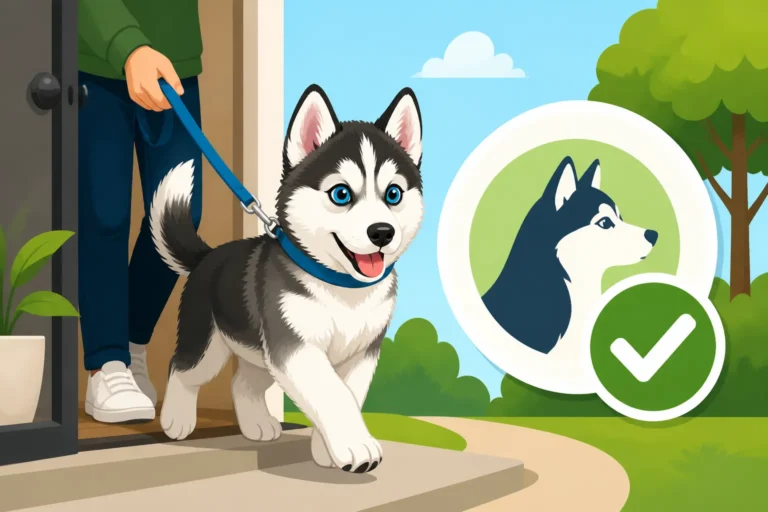
Even with a perfectly fitted martingale, a second layer of security is always a smart move for a breed as opportunistic as a Siberian Husky. This is where double leashing comes in. This involves attaching one leash to their collar (preferably a martingale) and a second leash to a well-fitting, secure harness. If one piece of equipment fails, you still have the other to maintain control.
There are a few ways to achieve this. You can simply use two separate leashes, one for the collar and one for the harness, holding both in your hand. Alternatively, some owners use a coupler that allows one leash to attach to both points, or specific safety straps designed to connect a collar to a harness. Whichever method you choose, make it a habit to check all buckles, clips, and leash attachments before you even step foot out the door. Give a gentle tug on each connection point to ensure it's secure. Think of it like a pilot's pre-flight check – a quick scan can prevent disaster. This redundancy provides invaluable peace of mind, especially if you're walking in an unfamiliar or busy area. Ensuring your Husky is always securely contained is paramount, as discussed in Stopping a Siberian Husky From Escaping the Yard.
| Collar Type | Description | Husky Suitability | Pros | Cons |
|---|---|---|---|---|
| Flat Buckle Collar | Standard everyday collar with a buckle closure. | Low | Simple, common, good for ID tags. | Easy for Huskies to back out of if not very snug; can slip. |
| Martingale Collar | Designed with a secondary loop that tightens gently to prevent backing out. | High | Escape-proof, prevents choking, humane. | Requires proper fitting; not suitable for tie-outs. |
| Front-Clip Harness | Leash attaches at the chest, redirects pulling force to the side. | High | Reduces pulling, good control, distributes pressure. | Can restrict shoulder movement if poorly designed; still allows slips if collar isn't also worn. |
| Back-Clip Harness | Leash attaches on the back. | Medium | Comfortable, doesn't put pressure on neck. | Doesn't deter pulling; easy for Huskies to back out of. |
What to Do in the Moment Your Husky Slips Free
Despite all precautions, the unthinkable can still happen. A sudden lunge, an unexpected twist, and your Husky is free. In this heart-pounding moment, your reaction is critical. Panicking is natural, but acting on that panic can make retrieving your Husky much harder, sometimes impossible.
The Crucial "Don't Chase" Rule and Its Rationale
Every fiber of your being will scream at you to chase after your Siberian Husky, to grab them, to bring them back. But in almost every single instance, chasing is the absolute worst thing you can do. For a Husky, being chased often triggers their deep-seated prey drive and turns the situation into a thrilling game. You become the "prey" to be outrun, and they, with their incredible speed and endurance, will almost always win that race. They see your frantic pursuit as an invitation to run faster, further, and deeper into trouble.
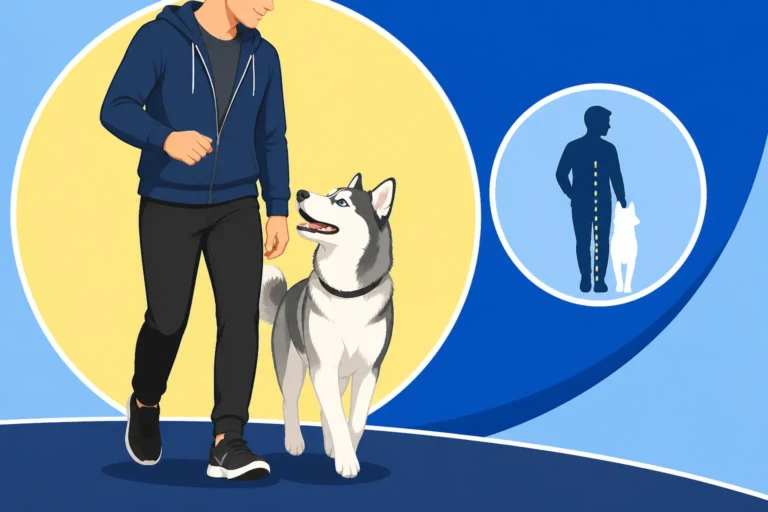
Instead of chasing, stop. Take a deep breath. Plant your feet. Turn your body sideways or even away from your Husky. This non-threatening posture can de-escalate their flight instinct. Call their name, but not in a frantic, scolding tone. Use a cheerful, exciting voice, as if you've just found the most amazing thing. Your goal is to make yourself more interesting and less like a predator pursuing them. For more on what not to do, consider Why Chasing a Loose Siberian Husky Makes It Worse.
Luring Your Husky Back Safely
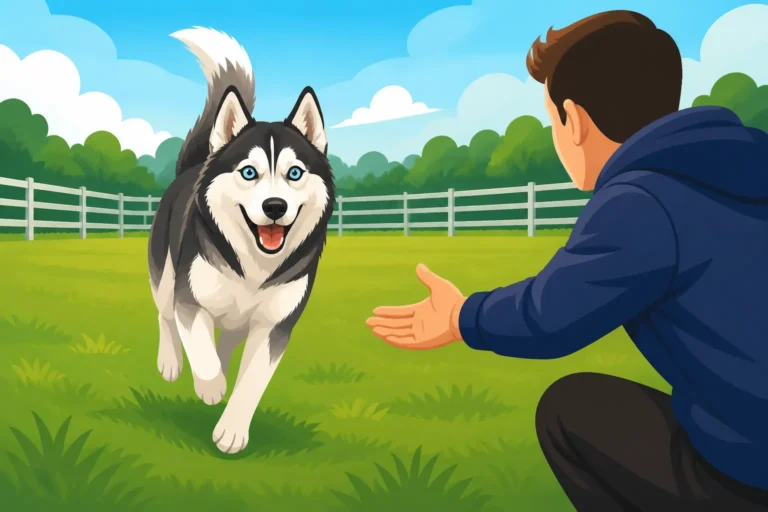
Once you've resisted the urge to chase, your next step is to make yourself irresistible. Remember those high-value treats you (hopefully) carry? Now is their moment to shine. Drop to the ground if you can, making yourself smaller and less intimidating. Open up a bag of their favorite stinky treats – bits of hot dog, cheese, or cooked chicken – and let the aroma waft. Call their name in that excited, happy voice, perhaps saying "Puppy party!" or whatever phrase usually gets them thrilled. Scatter a few treats on the ground near you, but don't hold them out directly. The idea is to entice them to approach out of curiosity and desire for reward, not to corner them.
Another tactic that sometimes works with independent breeds like Huskies is to run away from them. This can sometimes flip their internal switch from "I'm being chased" to "Oh, something exciting is happening over there, and my human is involved!" If they start to follow, keep the excited chatter going, and once they're close enough, you can slowly crouch down and reach for their collar without making sudden, grabbing movements. This requires immense self-control and often feels counter-intuitive, but it leverages their natural curiosity and tendency to engage rather than flee. If you've been working on a strong recall, even under duress, this is where it pays off. Learning Getting a Loose Siberian Husky to Come to You is a vital skill. For tips on how to build this foundation, programs like BAXTER & Bella offer online resources for training, which can be invaluable for husky owners facing these challenges.
Long-Term Training and Management Strategies
The initial crisis of a slipped collar is stressful enough, but prevention and consistent training are your true allies in responsible Siberian Husky ownership. These dogs are intelligent, but their independence and breed-specific drives mean that "good enough" training rarely cuts it.
Building a Rock-Solid Recall, Even Under Distraction
This is the holy grail for any Husky owner: a reliable recall. It’s a challenge because their natural instincts often tell them to ignore you when something more interesting (like a squirrel or an open field) presents itself. Building a strong recall means consistent, positive reinforcement training, starting in low-distraction environments and gradually increasing the difficulty. Use the highest value treats imaginable – those tiny, stinky bits of meat that make their eyes light up. Practice frequently, even indoors. Make coming to you the most rewarding thing they can possibly do.
Every single time your Husky comes when called, whether it's from across the room or across the park (in a secure area, of course), reward them like they've just won the lottery. Never call them to you to scold them or do something they dislike, as this poisons the recall cue. Remember, Teaching a Siberian Husky to Come Back isn't a one-time event; it's a lifelong commitment. For advanced recall, consider working on an "emergency stop cue" – a unique word or whistle that means "drop everything and come NOW" and is reserved only for critical situations and rewarded with something truly epic. Even with consistent training, understand that Why a Siberian Husky Never Comes Off the Line for most owners is because their drive to explore often outweighs their desire to please. The reality is that for a Siberian Husky, The Recall a Siberian Husky Will Actually Give You might never be 100% in all situations, which is why physical containment is always paramount.
Understanding and Managing Prey Drive
A Siberian Husky's prey drive is an inherent, powerful force. It's not something you can "train out" of them completely, nor should you expect to. It's part of what makes them who they are. Instead, the focus should be on managing it responsibly. This means understanding that any small, fast-moving creature – a squirrel, a rabbit, a neighbor's cat – can trigger that instinct, and once it's triggered, recall often goes out the window.
Effective management includes ensuring your yard is completely secure with a fence that's high enough to prevent jumping and buried deep enough to prevent digging. Stopping a Siberian Husky From Escaping the Yard is paramount. When out on walks, always use a leash and appropriate collar/harness setup. Avoid off-leash areas unless they are double-fenced and you have absolute confidence in your Husky's recall (which, again, is rare for this breed outside of professional working environments). If you have other small pets at home, introduce them carefully and always supervise interactions; often, complete separation is the safest approach. Redirecting their prey drive into appropriate outlets, like flirt poles, controlled fetch, or even sanctioned lure coursing, can also be beneficial. It helps them fulfill that instinct in a safe, controlled way, rather than channeling it into chasing something dangerous. Providing Rewards That Beat the Siberian Husky Chase Instinct is part of this redirection.
Disclaimer
This article is for general informational purposes only and does not constitute professional advice. Laws, prices and regulations vary by location and change over time. Consult a qualified professional for guidance on your specific situation.