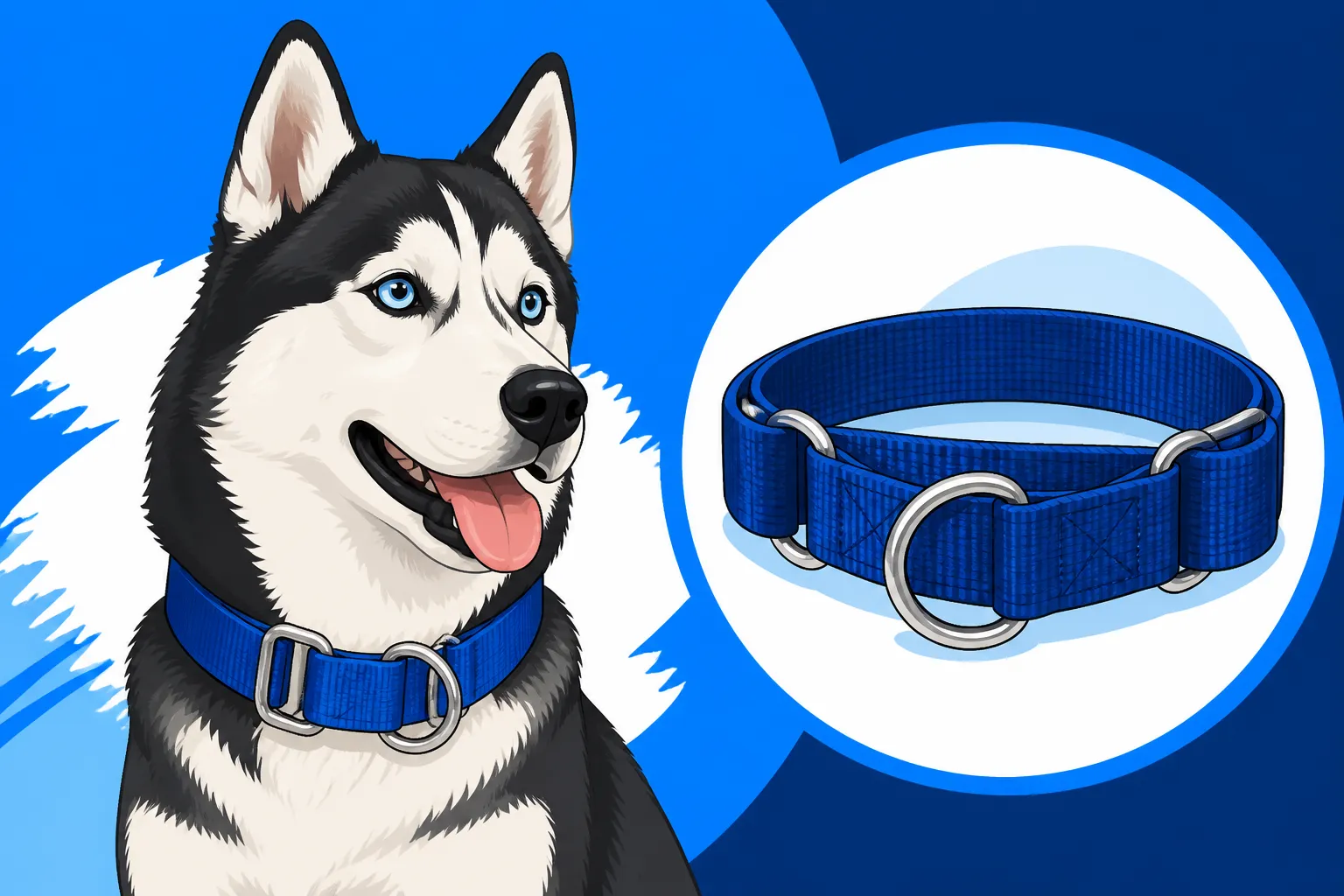
Martingale Collars for a Siberian Husky
One of the most hair-raising moments for any Siberian Husky owner is watching their beloved dog suddenly slip out of their collar, especially when you're out for a walk or near an open gate. Huskies are notorious escape artists, and their unique physical build can make standard collars shockingly ineffective, leading to frantic chases and heart-stopping fear. This guide is all about understanding why that happens and how Martingale collars offer a much-needed layer of security to keep your adventurous Husky safely by your side.
The Challenge of Keeping a Siberian Husky Contained
It's a tale as old as time for Husky owners: you've got your beautiful, energetic dog on a leash, enjoying a peaceful stroll, when suddenly they pull, twist their head just right, and poof – they're free. The panic that sets in is immense, and it’s a shared experience among those who love this intelligent, independent breed. This isn't just a quirky trait; it's deeply ingrained in their nature and anatomy.
Why Standard Collars Fail Huskies
Standard flat buckle collars, the kind most dogs wear, often aren't a match for the Siberian Husky's cleverness and physical design. Think about it: a Husky’s head is often only slightly larger than its neck, creating a wedge shape that allows them to back out of a collar with surprising ease. They don't need to be afraid or in a full panic; sometimes, just a sudden lunge after a squirrel or a quick twist when they spot another dog is all it takes.
The frustration is real because you try to do everything right. You buy a good quality collar, you ensure it’s snug, but the moment your Husky decides it wants to investigate something on its own terms, or perhaps just make a break for it out of sheer joy, that collar becomes a mere accessory. They seem to intuitively know exactly how to manipulate their body to slither free, leaving you holding an empty leash and shouting their name down the street. It’s not a reflection of your training or care; it’s just how Siberian Huskies are wired. They are masters of evasion when they have a mind to be.
The Dangers of a Loose Siberian Husky
A loose Siberian Husky isn't just a minor inconvenience; it's a significant safety concern for the dog itself, other animals, and even people. Their innate desire to run, explore, and hunt means that once they're free, they often travel incredible distances in a short amount of time. You might think they'll just hang around the park, but before you know it, they could be miles away, completely unaware of the dangers.
The biggest risks involve traffic, where a bolting Husky can cause accidents or become a victim themselves. Beyond that, their strong prey drive, a natural instinct for the breed, means small animals like cats, rabbits, or even livestock can be at risk if your Husky gives chase. Imagine the horror of realizing your dog, now liberated, is pursuing a neighbor's beloved pet or wandering into a busy road. The potential for harm, fines, or even tragic outcomes is very real. This is why discussions about Siberian Husky Deaths From Trauma and Escape are so vital, as well as understanding Why an Escaped Siberian Husky Is a Health Risk. When your Husky runs, they are not just having fun; they are entering a world full of unpredictable dangers that they are not equipped to navigate safely without you. The sheer speed and endurance they possess means that catching them once they've decided to bolt can be nearly impossible, turning a casual walk into a full-blown emergency. You need every tool in your arsenal to prevent that moment from ever happening.
Understanding the Martingale Collar
For many Siberian Husky owners, the Martingale collar becomes an indispensable piece of equipment. It’s not just another collar; it's a specifically designed tool to prevent escapes without causing harm. It offers a peace of mind that standard collars simply can't, acknowledging the unique challenges of the breed.
How a Martingale Collar Works
A Martingale collar, sometimes called a "limited-slip" or "no-slip" collar, has a distinct two-loop design. The main loop fits around your dog's neck, much like a regular collar. But here's the clever part: there's a smaller, secondary loop, often made of nylon or chain, that connects the two ends of the main loop. Your leash clips to a D-ring on this smaller control loop.
When your Husky pulls on the leash or tries to back out of the collar, tension is applied to the control loop. This causes the main loop to tighten evenly around the neck, distributing the pressure and preventing the collar from slipping over their head. Crucially, it only tightens to a certain point, determined by the size of the smaller loop. It's designed to become snug enough to prevent escape, but not so tight that it chokes your dog. Unlike a traditional choke chain or prong collar, which can apply intense, localized pressure and cause discomfort or injury, a Martingale collar's tightening action is uniform and gentle, acting as a warning rather than a punishment. It's a safety net, not a disciplinary device. This mechanism is especially helpful because it works with the Husky's physical shape, rather than against it, ensuring that their clever head-twisting tactics are no longer effective.
Key Features and Benefits for Huskies
The Martingale collar's design offers several key benefits that make it particularly well-suited for Siberian Huskies:
- Escape Prevention: This is, without a doubt, the primary benefit. Because the collar tightens gently and evenly, a Husky cannot simply back out of it. It provides that crucial extra layer of security that traditional flat collars lack, giving you confidence during walks and training sessions. This is a game-changer for a breed known for its "Houdini" acts.
- Controlled Pressure: The limited tightening ensures that while it prevents escape, it doesn't constrict your dog's airway or cause discomfort. The pressure is distributed around the entire neck, making it a humane alternative to harsher training collars while still providing effective control.
- Comfort and Fit: When properly fitted, a Martingale collar should be comfortable for your Husky to wear. It sits loosely when there’s no tension on the leash, allowing for freedom of movement and breathing. They come in various materials, from soft nylon webbing to those with a chain section for the control loop, allowing you to choose what feels best for your dog. For many, the nylon or fabric versions are preferred for daily use due to their lightweight and non-abrasive nature.
- Training Aid: While not a dedicated "anti-pull" device in the same way a front-clip harness might be, a Martingale can certainly help with Siberian Husky Leash Work Against a Pulling Instinct. The gentle tightening provides a clear signal when your Husky pulls, which, combined with positive reinforcement, can encourage them to walk more politely. It gives you more control to redirect their attention before they build up too much momentum.
It’s about striking a balance: maintaining safety without resorting to methods that could cause pain or fear. The Martingale collar achieves this beautifully for our spirited Huskies.
| Collar Type | Primary Function | Husky Suitability (Escape) | Husky Suitability (Pulling) | Common Materials |
|---|---|---|---|---|
| Flat Buckle | ID & Basic Leash Work | Poor – Easy to slip | Minimal control | Nylon, Leather |
| Martingale | Escape Prevention | Excellent – Limited slip | Good – Provides feedback | Nylon, Chain/Nylon |
| Front-Clip Harness | Anti-Pull Training | Good – Difficult to slip | Excellent – Redirects forward motion | Nylon, Webbing |
| Head Halter | Head Control & Training | Good | Excellent – Gentle control | Nylon |
| Choke/Prong | Correction (controversial) | Good | Strong correction | Chain, Metal prongs |
Choosing and Using a Martingale Collar Safely
Getting a Martingale collar is only half the battle; knowing how to select the right one and use it correctly is what truly makes it an effective and safe tool for your Siberian Husky. An improperly fitted Martingale can be just as ineffective or uncomfortable as any other collar.
Sizing and Fitting Your Siberian Husky's Martingale
Proper sizing and fitting are absolutely critical for a Martingale collar to work as intended and to be comfortable for your Husky. You don't want it so loose that it can still slip, nor so tight that it's uncomfortable when not under tension.
Here's how to measure and fit your Husky:
- Measure the Widest Part: Use a soft tape measure to find the circumference of your Husky's neck directly behind their ears, where the collar naturally sits. Then, measure the circumference of the widest part of their head. The collar needs to be able to slip over the widest part of their head but be snug around the neck.
- Choose the Right Size: Martingale collars are typically sold in sizes based on neck circumference. Look for a size range that includes your Husky's neck measurement. If your Husky's head is significantly wider than their neck, you might need a slightly larger size to get it on, then adjust it down.
- Adjusting for the Perfect Fit: Once you have the collar on your Husky, adjust the main loop so that when the control loop (the smaller loop where the leash attaches) is fully tightened, the two metal rings on the main loop just touch or are no more than two fingers' width apart. This ensures that the collar is snug enough to prevent escape without choking. When there's no tension on the leash, the collar should fit loosely and comfortably around your Husky's neck, allowing you to easily slip two fingers under it.
Think of it like fitting a good pair of shoes: it needs to be comfortable for daily wear, but secure when it needs to perform. Many owners find brands available on platforms like Amazon offer a good range of sizes and materials for Huskies, but always prioritize the fit over anything else.
When and How to Use a Martingale Collar
A Martingale collar is primarily a tool for supervised walks, training sessions, and any time your Husky might be on a leash in an unsecured area. It’s not meant for 24/7 wear, especially when unsupervised, as the extra loop can potentially get snagged on something.
Here’s a breakdown of its best uses:
- Daily Walks: This is where the Martingale truly shines. If your Husky tends to pull, lunge, or gets easily distracted and tries to back out of their collar, the Martingale provides the security you need. It gives you better control to guide them away from potential hazards and prevents those heart-stopping escapes.
- Training Sessions: For any leash training, especially teaching a reliable "heel" or simply walking politely, the Martingale can be very effective when combined with positive reinforcement. The gentle tightening acts as a clear signal when your Husky goes beyond the acceptable range, allowing you to mark the unwanted behavior and redirect. For more advanced recall work, it pairs well with a long line in a secure area, giving you peace of mind while practicing Starting Long Line Work With a Siberian Husky. Companies like BAXTER & Bella often promote positive reinforcement methods, and a Martingale can be a useful piece of equipment within such a framework.
- High-Distraction Environments: Taking your Husky to a busy park, a vet visit, or anywhere there might be many sights, sounds, or smells that could trigger their prey drive or desire to explore independently? A Martingale provides that extra layer of confidence that they won't suddenly bolt, allowing you to focus on managing their behavior rather than constantly worrying about an escape.
Remember, the Martingale is an aid, not a solution in itself. It’s part of a larger picture of responsible Husky ownership that includes consistent training and management.
Important Considerations and Potential Downsides
While Martingale collars are fantastic tools for Siberian Huskies, it's important to understand their limitations and potential downsides to use them most effectively and responsibly.
First and foremost, a Martingale collar is not a substitute for training. It's a safety device to prevent escape, but it doesn't teach your Husky not to pull or to have perfect recall. If your Husky is constantly pulling with all their might, you'll still need to work on loose-leash walking. For significant pulling issues, a front-clip harness might even be a more effective training tool initially, as it redirects their forward motion more directly. You might want to read more about Front-Clip Harnesses on a Siberian Husky for comparison. The Martingale simply prevents escape while you're working on those behaviors.
Secondly, while typically comfortable, if left on unsupervised for extended periods, especially with a long-coated breed like a Husky, the chain or even the fabric loop could potentially rub or cause minor matting behind the ears, though this is less common with Huskies than breeds with very fine or curly coats. It's generally recommended to remove any collar when your dog is unsupervised at home, but especially a Martingale.
Finally, relying solely on any collar, even a Martingale, for containment is risky. Huskies are incredibly intelligent and persistent. If they decide they want to escape, they will try every trick in the book. The Martingale significantly reduces their chances on leash, but it doesn't replace the need for secure fencing at home or diligent supervision. It’s one piece of the puzzle in managing a breed with a powerful roaming instinct, as discussed in Why a Siberian Husky Cannot Be Trusted Off Leash.
Beyond the Martingale: Comprehensive Containment and Training
While a Martingale collar is a fantastic safety device for your Siberian Husky, it's crucial to remember that it's just one part of a holistic approach to keeping your independent and adventurous dog safe and well-behaved. True security comes from a combination of appropriate gear, robust training, and responsible ownership practices.
Combining Martingales with Other Safety Measures
Think of containment as having multiple layers of protection, like an onion. The Martingale collar is an excellent outer layer for when you're out and about, but what about if the unexpected happens?
- Permanent Identification: Every Siberian Husky should have current ID tags on their collar at all times, even a Martingale collar when in use. These tags should include your phone number and potentially your address. Beyond visible tags, microchipping is non-negotiable. A microchip is a permanent form of identification that can be scanned by any vet or shelter, dramatically increasing the chances of being reunited if your Husky ever gets lost. Make sure your contact information associated with the microchip is always up to date. For more on this, check out Microchip Registration for a Siberian Husky.
- GPS Trackers: For a breed known for its ability to cover vast distances quickly, a GPS collar can be a lifesaver. These devices, often small and attached to a collar, allow you to track your Husky's location in real-time via an app on your phone. This is an incredible backup for the rare but terrifying instance where your Husky slips away despite your best efforts. Explore options discussed in GPS Collars Worth Buying for a Siberian Husky.
- Secure Home Environment: A Martingale collar is for on-leash safety. At home, your yard needs to be a fortress. Huskies are champion diggers and climbers. A six-foot fence with an L-footer (buried wire or mesh extending horizontally inward) is often recommended to deter digging under. Some Huskies can even scale fences, so consider coyote rollers or other fence toppers if yours is particularly athletic. A truly secure yard prevents them from getting into a situation where a Martingale is even necessary. For more details, see The Six-Foot Fence a Siberian Husky Needs.
These layers of protection work together to ensure that even the most determined escape artist has a hard time disappearing for good.
The Role of Consistent Training
No gadget, no matter how well-designed, can replace good training. A Martingale collar gives you physical control, but consistent, positive reinforcement training builds the mental control and bond that makes your Husky want to stay with you.
- Positive Reinforcement: Siberian Huskies are independent thinkers, and they respond best to positive reinforcement. Reward-based training, using high-value treats and praise, will motivate them far more than harsh corrections. Focus on teaching a strong recall in various environments, even if you never plan to trust them off-leash. A reliable "come" can be a lifesaver even if they just slip out the front door for a second. The independence of the breed is something to manage, not crush.
- Early Socialization and Foundation: Start training and socialization early with a Siberian Husky puppy. Exposing them to different sights, sounds, people, and other dogs in a controlled, positive way helps them develop into a well-adjusted adult. Puppy classes and basic obedience are invaluable. Dive into Raising a Siberian Husky Puppy Through the First Year for comprehensive guidance.
- Professional Guidance: If you're struggling with leash manners, pulling, or any escape-related behaviors, don't hesitate to seek help from a professional dog trainer who has experience with northern breeds. They can offer tailored strategies and help you understand your Husky's motivations. Finding a trainer who truly understands the Husky temperament, as detailed in Finding a Trainer Who Has Worked With Huskies, can make all the difference. Remember, a Martingale collar provides physical safety, but a strong, positive training foundation provides mental safety and a deeper bond with your incredible companion.
Disclaimer
This article is for general informational purposes only and does not constitute professional advice. Laws, prices and regulations vary by location and change over time. Consult a qualified professional for guidance on your specific situation.