Siberian Husky Leash Work Against a Pulling Instinct
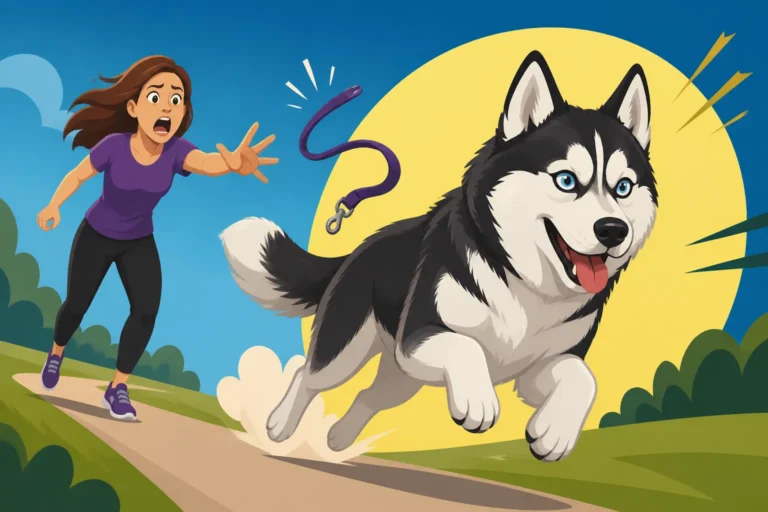
One of the most common frustrations I hear from new Siberian Husky owners, and even experienced ones, is the seemingly endless battle of leash walking. You dream of serene strolls, but instead, you get dragged down the street by a furry freight train, making every outing a test of strength and patience. This guide is here to help you understand why your Husky pulls and, more importantly, how to teach them to walk politely on a leash, transforming those tug-of-war sessions into enjoyable adventures for both of you.
Understanding the Siberian Husky's Pulling Instinct
Let's be honest, trying to teach a Siberian Husky not to pull can feel like trying to teach a fish not to swim. It's in their very DNA, a deep-seated instinct passed down through generations. When you find yourself bracing against the leash, remember that your Husky isn't being stubborn or malicious; they're just being a Husky. Understanding this fundamental truth is the first step toward effective and empathetic training.
The History Behind Their Desire to Pull
To truly grasp why your Husky wants to pull you into next week, you need to look back at their origins. Siberian Huskies were bred by the Chukchi people in northeastern Asia, not as pets to cuddle on the couch, but as working dogs. Their entire purpose was to pull light loads over vast distances at a moderate pace in extremely harsh conditions. These were the ultimate endurance athletes of the canine world, capable of covering incredible ground day after day. Their ancestors were literally rewarded for pulling, for pushing forward, for eating up the miles.
This isn't a behavior they learned in puppy class; it's a genetic blueprint. When your Husky leans into their harness, they're channeling generations of working instinct. They're telling you, "Let's go, there's a world to explore, and I'm built to lead the way!" Recognizing this inherent drive helps shift your perspective from "my dog is misbehaving" to "my dog is expressing a natural, powerful instinct." The Chukchi Origins of the Siberian Husky delves deeper into this fascinating history.
How Their Body is Built for Pulling
Beyond their historical purpose, a Siberian Husky's physical conformation is perfectly designed for pulling. They have a lean, muscular build, powerful hindquarters, and a deep chest that allows for maximum lung capacity – all essential for sustained exertion. Their gait is smooth and effortless, covering ground with minimal energy expenditure. This efficient physiology means that pulling is not just a mental desire; it's physically comfortable and natural for them.
When they hit that stride, their body is simply doing what it was made to do. Think of a marathon runner: their body is optimized for long-distance running. Similarly, a Husky's body is optimized for pulling. Expecting them to trot daintily beside you without any inclination to pull is like asking a racehorse to be a docile pony. It's fighting against their very design, which is why traditional leash training methods often feel like such an uphill battle with this breed.
The Mental Drive to Move Forward
It's not just physical; there's a strong mental component to the Siberian Husky's pulling. They are dogs with immense curiosity and a desire to explore. Their intelligence is often described as independent, which means they're quite capable of making their own decisions – and often, that decision is "let's go see what's over there!" They have a formidable prey drive and an innate roaming instinct, always scanning the horizon for something new, something interesting, or something to chase. The Roaming Instinct Bred Into Every Siberian Husky explores this trait in more detail.
This forward momentum is a deeply rewarding experience for them. The sights, the smells, the opportunity to stretch their legs and satisfy that primal urge to move are incredibly powerful motivators. For many Huskies, the world is a giant playground, and they want to experience as much of it as possible, as fast as possible. This mental drive, combined with their physical prowess, creates a formidable pulling machine that needs careful, consistent, and creative handling.
The Challenges of Walking a Pulling Siberian Husky
So, you've got a dog designed by nature to pull, and you're trying to enjoy a leisurely walk. It's no wonder that many Husky owners find themselves completely exhausted and frustrated. The challenges aren't just minor annoyances; they can impact your physical well-being, your dog's safety, and your relationship with your beloved companion. Let's talk about the real struggles.
Physical Strain on the Owner
Let's not sugarcoat it: walking a pulling Husky is a workout, and not always the good kind. The constant jerking and tugging can put immense strain on your shoulders, back, and arms. I've heard countless stories of owners developing sore muscles, joint pain, and even minor injuries from being yanked unexpectedly. It's like being connected to a miniature locomotive with a mind of its own.
This physical demand can severely limit who can walk your dog. Elderly family members, children, or anyone with physical limitations might find it impossible to safely manage a strong, determined Husky. This isn't just about discomfort; it's a safety issue. If you can't physically hold your dog, you lose control, which brings us to the next point. Holding a Siberian Husky That Outweighs Your Grip is a post that many owners find useful.
Safety Concerns for Dog and Handler
A pulling Husky isn't just hard on your body; it's a significant safety hazard. For the dog, constant pulling on a traditional collar can put pressure on their trachea, leading to coughing, gagging, and potentially long-term damage. It can also cause neck strain. For the handler, being pulled unexpectedly can lead to falls, especially on uneven terrain, ice, or busy streets. I’ve known people who have slipped and fallen, dropped their leash, or even lost their balance entirely when their Husky suddenly lunged after a squirrel.
Beyond the immediate physical risks, there's the danger of an escaped dog. A strong pull can cause a leash to slip from an owner's hand, or a poorly fitted collar to come off. And as we know, once a Husky is off-leash and on the run, their prey drive and roaming instinct often kick in, making recall incredibly difficult, if not impossible. Why Siberian Huskies Run Rather Than Return is a tough but necessary read on this topic. This can lead to them darting into traffic, chasing other animals, or simply getting lost, creating terrifying situations for everyone involved.
The Frustration of Constant Struggle
Beyond the physical and safety aspects, there's the emotional toll. Every walk becoming a battle saps the joy out of what should be a bonding experience. You might start dreading walks, cutting them short, or even avoiding them altogether, which is unfair to a breed that absolutely thrives on exercise and mental stimulation. The constant correction, the feeling of not being heard by your dog, and the embarrassment of having a dog that drags you can lead to immense frustration.
This frustration can also damage the relationship you have with your Husky. If every interaction on the leash is negative, it can erode trust and create an adversarial dynamic. Instead of a partnership, it becomes a power struggle. Our goal is to move past this, to understand their nature, and to work with them, not against them, to achieve a more harmonious walking experience.
Essential Gear for Effective Leash Training
Before we dive into training techniques, let's talk about the tools of the trade. The right equipment won't solve a pulling problem on its own, but it can make your training efforts more effective, safer, and less physically demanding for you. Choosing the correct harness and leash is paramount, especially with a strong, determined breed like the Siberian Husky.
Harnesses Designed for No-Pull
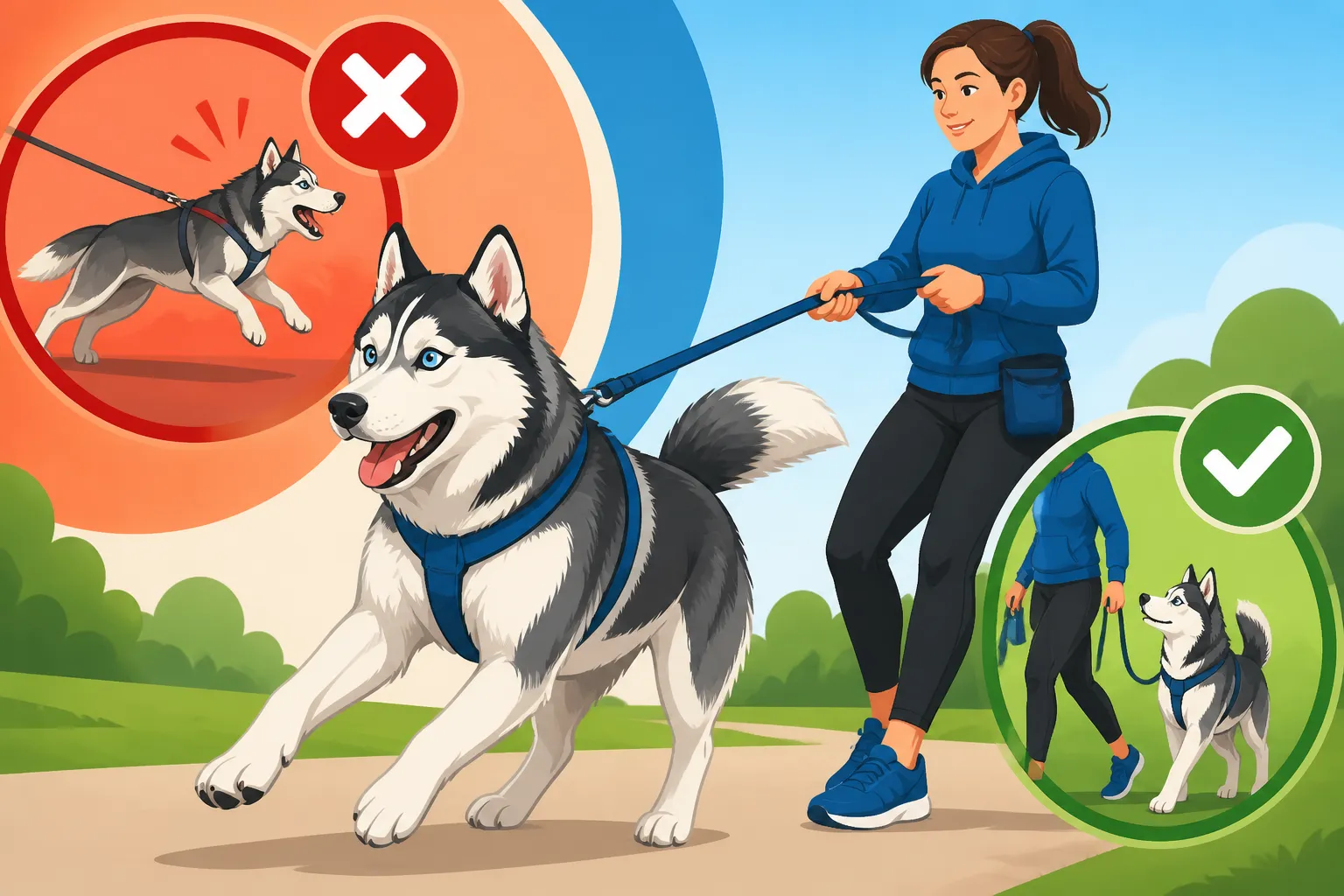
For a Siberian Husky, a traditional neck collar is almost never the best choice for leash walking. Not only can it cause damage to their trachea from constant pressure, but it also triggers their opposition reflex, meaning the more you pull back, the harder they pull forward. This is why a harness, specifically a front-clip or "no-pull" harness, is often recommended. These harnesses have a leash attachment point at the dog's chest, rather than on their back. When your Husky pulls, the leash pulls them to the side, redirecting their momentum and making it physically awkward for them to continue forging ahead.
Brands like Easy Walk and Freedom No-Pull Harnesses are popular choices and are readily available on platforms like Amazon. When selecting one, ensure it fits snugly but comfortably, without restricting shoulder movement or chafing under the armpits. The goal is to make pulling less rewarding and more cumbersome, without causing pain. This redirection is a gentle way to communicate that pulling doesn't get them where they want to go faster, setting the stage for teaching them loose-leash walking. For a deeper dive, check out Harness Against Collar for a Siberian Husky.
Proper Leash Selection
The leash itself is often overlooked but plays a crucial role. For a Siberian Husky, I highly recommend a sturdy, non-retractable leash, ideally 4 to 6 feet in length. Retractable leashes, while seemingly offering freedom, teach a dog that pulling extends their range, reinforcing the very behavior you want to discourage. They also offer less control and can be dangerous if the dog bolts. A fixed-length leash gives you consistent feedback and control.
Material matters too. Nylon leashes are durable and easy to clean, while leather leashes can offer a more comfortable grip and greater longevity. Avoid anything flimsy that might snap under a sudden lunge. A leash with a strong, reliable clasp is non-negotiable for a Husky, who can quickly exploit any weak points. The leash is your primary communication line; it needs to be robust and comfortable in your hand, allowing you to give clear, consistent signals without fear of equipment failure.
Collars and Their Role
While a harness is generally superior for leash walking, a flat buckle collar still has its place. It's essential for holding ID tags, which should always be on your dog even if they're also microchipped. For very short, controlled trips from the house to the car, or within a securely fenced area, a flat collar might suffice if your Husky is already excellent at loose-leash walking. However, for everyday walks, especially in public or high-distraction environments, I strongly advise against using only a flat collar for a pulling Husky.
If you absolutely must use a collar for walking, consider a martingale collar. These collars tighten slightly when pulled, preventing your Husky from slipping out of it, but they loosen when the pressure is released, unlike a choke chain or prong collar. Even with a martingale, the primary risk to the trachea remains if your dog is a consistent puller. The safest approach is to use a flat collar for ID and a well-fitted no-pull harness for actual walks, ensuring both safety and effective training.
Foundation Training: Teaching Loose-Leash Walking
Now that we understand the Husky's instinct and have the right gear, it's time to talk training. Teaching a Siberian Husky to walk politely on a leash requires patience, consistency, and a deep understanding of positive reinforcement. It's about making walking nicely more rewarding than pulling, and building a habit of attention and cooperation.
Starting in a Low-Distraction Environment
Rome wasn't built in a day, and loose-leash walking won't be mastered on a bustling city street on day one. Begin your training in an environment where distractions are minimal. This could be your backyard, a quiet hallway in your home, or a deserted park during off-peak hours. The idea is to set your Husky up for success, allowing them to focus on you and the task at hand without the overwhelming allure of squirrels, other dogs, or fascinating new smells.
In this controlled setting, your Husky is more likely to pay attention to your cues and respond to rewards. Keep sessions short, fun, and frequent – 5 to 10 minutes, several times a day, is far more effective than one long, frustrating session. Remember, Huskies are smart but can be easily bored, so variety and enthusiasm from you will go a long way. This foundational work lays the groundwork for gradually introducing more challenging environments, once the basics are solid.
The "Stop and Go" Method
One of the most effective techniques for teaching loose-leash walking is the "Stop and Go" method, sometimes called "Be a Tree." The premise is simple: the moment your Husky pulls, you stop walking. Absolutely halt all forward motion. Become a statue. Wait. The instant the leash slackens – even for a second, even if they just turn their head to look at you – you immediately praise them warmly ("Yes! Good job!") and start walking again. If they pull again, you stop again.
The key is consistency. Your Husky needs to learn that pulling literally gets them nowhere. Walking politely, with a loose leash, is what earns them the privilege of moving forward. Don't yank or scold; simply remove the forward reward. It might feel like you're not getting anywhere at first, but with persistence, your Husky will start connecting the dots: loose leash equals movement, tight leash equals stopping. This method capitalizes on their desire to move, using it as leverage for good behavior.
Rewarding the Right Behavior Consistently
Positive reinforcement is your best friend when training a Siberian Husky. They are highly motivated by rewards, especially high-value ones. This means treats they absolutely adore – think small pieces of cooked chicken, cheese, or specialized training treats. Every single time your Husky walks with a loose leash for a few steps, mark that behavior with a verbal cue like "Yes!" or a clicker, and then immediately follow with a treat. The timing is crucial; the reward must happen within 1-2 seconds of the desired behavior so they understand what they're being rewarded for. Rewards That Beat the Siberian Husky Chase Instinct offers great ideas.
Beyond treats, praise and even a quick game can serve as rewards. The goal is to make walking by your side a fantastic experience, full of good things. Huskies can be particular, so experiment to find what truly motivates your individual dog. Some might be more excited by a squeaky toy or a quick dash than by food. Make yourself the most interesting thing on the walk, and your Husky will be much more inclined to pay attention to you rather than drag you toward every exciting sniff.
Addressing Advanced Pulling Behaviors
Even with a solid foundation, there will be moments when your Siberian Husky's natural instincts kick in, and they revert to pulling. This is where advanced strategies come into play, helping you navigate those higher-distraction scenarios and manage more complex situations, like walking multiple Huskies.
Dealing with Distraction-Induced Pulling
You've mastered loose-leash walking in your quiet backyard, but the moment you step out into the real world, a squirrel dashes across the path or another dog appears, and your Husky transforms back into a sled dog. Distraction-induced pulling is tough because it's driven by powerful instincts. The key here is proactive management and gradual exposure. Before your Husky can react to a distraction, get their attention. Use your high-value treats and praise to reward them before they even notice the squirrel, or as soon as they see it but haven't yet pulled.
If they do pull towards a distraction, revert to your "Stop and Go" method. However, sometimes with a high-prey-drive Husky, simply stopping isn't enough; you might need to increase the distance from the distraction or even turn and walk in the opposite direction. The goal is to remove them from the overwhelming stimulus until they can regain focus on you. Over time, you can slowly decrease the distance to distractions as your Husky learns that ignoring them (or at least not pulling towards them) leads to rewards and continued forward movement. Practice makes progress, not perfection, especially with a breed so easily captivated by movement.
Managing Pulling with Multiple Huskies
Walking a single pulling Husky is challenging enough; walking two or more can feel like a full-contact sport. If you have multiple Siberian Huskies, it's often best to train them individually on loose-leash walking first. Once each dog understands the concept, you can begin to walk them together. However, even well-trained Huskies can feed off each other's excitement, amplifying the pulling instinct. For multiple Huskies, a coupler or a double-leash system can be helpful, but ensure each dog still has their own no-pull harness.
Consider a hands-free leash that attaches around your waist, like those used for canicross, if you're comfortable with the idea and your dogs are already quite well-behaved. This distributes the pull more evenly across your core, but should only be used with dogs who are already proficient at loose-leash walking, as a sudden strong pull from multiple dogs could throw you off balance. For safety and sanity, some owners choose to walk their Huskies one at a time, or only walk multiple dogs when another capable handler is present. It’s a delicate dance, but with patience and consistent boundaries, it’s achievable.
The Role of Impulse Control Exercises
A lot of pulling comes down to a lack of impulse control. Your Husky sees something, they want it, and they go for it. Training impulse control can significantly improve leash manners. Exercises like "leave it" and "wait" are invaluable. Practice "leave it" with tempting items on the floor, gradually increasing the difficulty. "Wait" can be practiced before going through doors, getting out of the car, or even before eating their meals. The idea is to teach them that patience and looking to you for direction lead to good things.
These exercises translate directly to leash walking. When your Husky learns to "wait" before bursting out the door, they're less likely to drag you immediately. When they understand "leave it" for a dropped french fry on the sidewalk, they're less likely to lunge. Incorporating these simple, fun games into your daily routine builds a stronger foundation of communication and respect, making your Husky more inclined to defer to your judgment on a walk, rather than following every impulse. Training an Independent Siberian Husky outlines how these smart dogs can still learn to listen.
Embracing Their Nature: Harness Sports
Sometimes, the best way to curb unwanted pulling in casual walks is to provide an outlet where pulling is not only allowed but encouraged. Siberian Huskies were bred to pull, and denying them this fundamental expression of their being can lead to frustration and destructive behaviors. Harness sports offer a fantastic way to channel their immense energy and natural instinct in a productive, enjoyable, and safe manner.
Introducing Canicross and Bikejoring
If your Siberian Husky loves to pull, why not let them? Canicross, where you run with your dog attached to you via a specialized belt and bungee leash, and bikejoring, where your dog pulls you on a bicycle, are fantastic ways to embrace their natural abilities. These activities allow your Husky to engage their powerful pulling muscles, satisfy their desire for speed and forward motion, and get a fantastic workout, both physically and mentally.
When properly introduced, these sports teach your Husky the difference between "pulling for work" and "walking nicely." They learn specific cues, like "Gee" (right) and "Haw" (left), and understand that a different harness means a different job. This differentiation is key: the no-pull harness means loose-leash walking, while the padded pulling harness means GO FOR IT! Many find that once their Husky has an appropriate outlet for their pulling instinct, they become much more manageable on regular walks. Starting Canicross With a Siberian Husky is a great place to learn more.
Teaching Specific Harness Cues
Success in harness sports, and even in differentiating pulling from walking, relies on clear communication. You'll need to teach your Husky specific directional and motivational cues. Basic commands like "hike!" or "let's go!" for forward motion, "whoa" for stop, and the aforementioned "gee" and "haw" for turns are fundamental. These cues are taught using positive reinforcement, often in a low-distraction environment first, and then reinforced on actual runs or rides.
The key is consistency in using these cues only when your Husky is in their working harness and engaged in a pulling activity. This helps them understand the context. When they hear "hike!" in their pulling harness, it means "pull with all your might!" When they hear "heel" or "let's go" in their walking harness, it means "walk nicely by my side." This clear distinction is invaluable in preventing confusion and ensuring they understand which behavior is appropriate for which situation. The Cues a Siberian Husky Needs in Harness provides more details on this.
The Difference Between Pet Walking and Working
It's crucial that your Siberian Husky understands the difference between a casual "pet walk" and a "working session" where pulling is expected. This distinction is primarily conveyed through the type of harness and the cues you use. For everyday walks, use a front-clip no-pull harness and focus on loose-leash manners using your "Stop and Go" and reward system. The goal is a relaxed, controlled pace.
For working sessions, switch to a comfortable, well-fitting pulling harness (often an X-back or H-back style) that allows for full range of motion and distributes pressure evenly across their body. In this gear, you actively encourage them to pull, using your specific working commands. By clearly delineating these two modes, you provide an outlet for their natural instinct without sacrificing your ability to enjoy a calm, controlled walk when you need one. It's about respecting their heritage while also integrating them safely and politely into human society. Teaching a Siberian Husky to Pull in Harness covers the methods.
Common Mistakes and How to Avoid Them
Even with the best intentions, it's easy to fall into common traps when training a Siberian Husky to walk on a leash. These mistakes can unintentionally reinforce the very behaviors you're trying to stop, leading to frustration and slow progress. Let's look at some pitfalls and how to steer clear of them.
Relying Solely on Equipment
One of the biggest mistakes owners make is believing that a specific piece of equipment – whether it's a no-pull harness, a head halter, or a different collar – will magically solve the pulling problem on its own. While the right gear can be an incredibly valuable tool in your training arsenal, it's not a substitute for actual training. A front-clip harness, for example, redirects your Husky's pull, making it less effective for them to lunge forward. But if you never teach them why they should walk nicely, they'll simply learn to pull at a different angle or find ways to make the harness less effective.
Equipment is a aid, not a solution. It helps you manage the behavior while you're teaching the underlying skills of loose-leash walking and impulse control. Think of it as training wheels on a bicycle: they help you learn, but you eventually need to ride without them (or at least, without relying solely on them). Always pair your chosen equipment with consistent, positive reinforcement-based training methods.
Inconsistency in Training
Siberian Huskies are intelligent, but they thrive on clear, consistent communication. Inconsistency is the enemy of effective training. If you sometimes let them pull because you're in a hurry, or if different family members have different rules about leash manners, your Husky will quickly become confused. They'll learn that sometimes pulling works, and that's enough to keep them trying.
Every member of the household who walks the dog must be on the same page with the training methods and expectations. Even small inconsistencies, like sometimes rewarding a loose leash and sometimes forgetting, can slow down progress. Be patient, be firm, and be absolutely consistent. This applies not just to loose-leash walking, but to all aspects of your Husky's training. If you find yourself slipping, it's okay – just recommit to being consistent from that moment forward.
Expecting Too Much Too Soon
Remember that inherent pulling instinct? It's powerful, and it won't disappear overnight. Expecting your Siberian Husky to transform into a perfect loose-leash walker after just a few sessions is unrealistic and will only lead to your own frustration. This is a journey, not a sprint. Celebrate small victories – a few steps of loose-leash walking, a moment of attention amidst distractions.
Start in low-distraction environments and gradually increase the difficulty. Don't go from your quiet backyard to a busy dog park in one leap. Break down the training into manageable steps, and build upon success. If you find your Husky struggling, take a step back to an easier environment or simplify the exercise. Patience is paramount, especially with a breed as independent and instinct-driven as the Siberian Husky. Respect their nature, understand their learning pace, and enjoy the process of teaching them.
Long-Term Strategies for a Harmonious Walk
Loose-leash walking with a Siberian Husky isn't a "one and done" training exercise. It's an ongoing process that requires commitment, adaptation, and a willingness to continue engaging with your dog. Building a truly harmonious walk is about more than just not pulling; it's about a strong bond, mutual understanding, and shared enjoyment of the outdoors.
Continuing Education and Reinforcement
Even after your Siberian Husky has mastered loose-leash walking, it's vital to continue reinforcing that behavior. Regular, short training sessions, even on walks where they're performing well, help keep the skill sharp. Unexpected treats for walking nicely, even after months of good behavior, serve as a reminder that you still appreciate their efforts. Think of it like maintaining a skill you learned – if you don't practice, you get rusty.
Additionally, consider exploring advanced obedience classes or even canine good citizen programs. These provide new challenges, reinforce existing behaviors, and strengthen your communication. A well-trained Husky is a joy to walk, and continuous learning benefits both of you, preventing complacency and ensuring that your walks remain a positive experience for years to come.
Adapting to Your Husky's Energy Levels
Siberian Huskies are high-energy dogs, and their need for exercise directly impacts their leash manners. A Husky who hasn't had sufficient physical and mental stimulation before a walk is much more likely to pull, simply because they have an excess of pent-up energy they need to release. On the flip side, a tired Husky is often a much more compliant walker. Consider incorporating vigorous play sessions, a run in a secure area, or a game of fetch before you head out for a structured leash walk.
Understand that their energy levels can fluctuate. On some days, they might need a longer, more intense pre-walk activity; on others, they might be more mellow. Being attuned to your individual Husky's needs and adjusting your routine accordingly is crucial. Sometimes, a long hike where they can pull in their working harness first can make a subsequent loose-leash walk a breeze. How Much Exercise a Siberian Husky Really Needs is an excellent resource for managing their energy.
Finding Joy in the Journey, Pulls and All
Ultimately, owning a Siberian Husky is about embracing their unique personality and instincts, not trying to change them into a different breed. While teaching loose-leash walking is essential for safety and enjoyment, there will inevitably be moments when their inner sled dog bursts forth. On those days, take a deep breath, remind yourself of their amazing heritage, and try not to let a temporary lapse in manners ruin your outing.
Focus on the progress you've made, the bond you're building, and the sheer joy they find in exploring the world with you. Whether it's a perfectly executed heel or a moment where you gracefully manage a lunge after a rabbit, every walk is an opportunity to connect. By combining empathetic understanding, consistent training, and appropriate outlets for their natural drive, you can transform the challenge of leash walking into one of the most rewarding aspects of life with your incredible Siberian Husky.
| Training Method | Description | Best Use Case | Pros | Cons |
|---|---|---|---|---|
| Stop and Go | Halt all forward motion the instant the leash tightens; resume when the leash slackens. | Initial loose-leash training in low-distraction areas. | Simple, clear consequence (no movement for pulling); no harsh corrections. | Can be slow and frustrating initially; requires consistency. |
| Lure & Reward | Use a high-value treat to lure the dog into position beside you; reward continuously for staying there. | Building initial association with walking nicely; proofing in new environments. | Positive, builds motivation; clear communication for the dog. | Can become dependent on treats if not faded; requires constant treat delivery initially. |
| Redirection (with Front-Clip Harness) | When the dog pulls, the harness gently turns them to the side, making it awkward to pull forward. | Managing strong pulling while actively training; for safety and control. | Reduces pulling force immediately; less strain on owner. | Does not teach why not to pull, only makes it harder; must be combined with training. |
| Pattern Games | Incorporating structured movements like U-turns, pivots, and circles to keep the dog engaged and focused on the handler. | Maintaining engagement, especially in distracting environments; building handler focus. | Fun for dog and handler; keeps dog's attention on you; builds responsiveness. | Requires active participation from handler; might be too complex for initial stages. |
| Canicross/Bikejoring | Engaging in structured sports where the dog is encouraged to pull in a special harness. | Providing a healthy outlet for their natural pulling instinct; differentiating "work" from "walk." | Fulfills natural drive; excellent exercise; can improve pet walking by differentiation. | Requires specific gear; needs separate training; not suitable for casual walks. |
Disclaimer
This article is for general informational purposes only and does not constitute professional advice. Laws, prices and regulations vary by location and change over time. Consult a qualified professional for guidance on your specific situation.