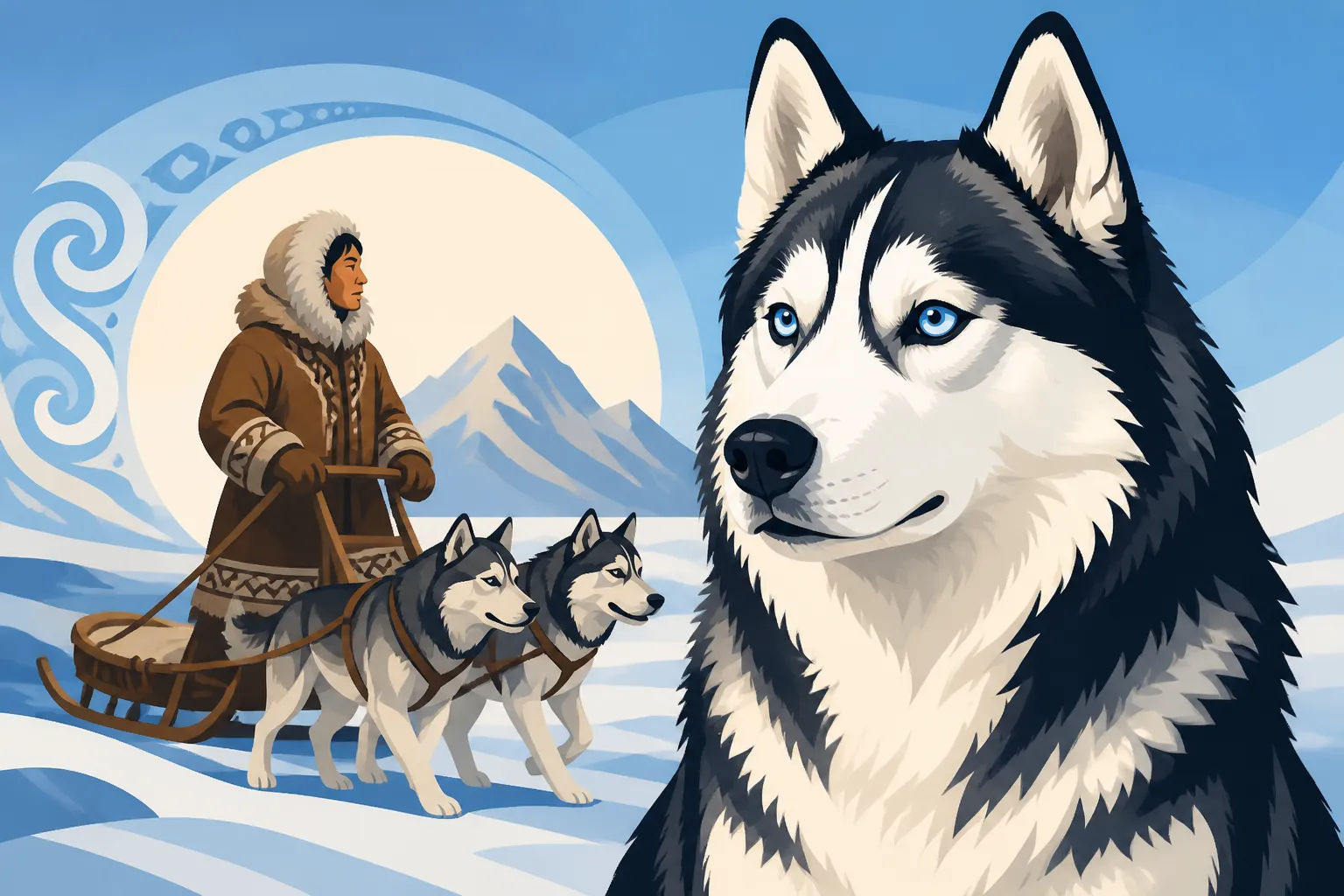
The Chukchi Origins of the Siberian Husky
It's easy to look at a majestic Siberian Husky today, with its piercing eyes and powerful gait, and just see a beautiful dog. But beneath that stunning exterior lies thousands of years of history, etched into their very DNA by the incredibly resilient Chukchi people of northeastern Siberia. These dogs weren't just pets; they were integral to survival in one of the planet's harshest environments, and understanding their ancient origins is key to truly appreciating the breed we cherish today. This guide will take you on a journey back in time, revealing the profound partnership that forged the Siberian Husky.
The Ancient Roots: Who Were the Chukchi?
To truly grasp the essence of the Siberian Husky, we must first understand the people who shaped them: the Chukchi. This indigenous group, residing in the extreme northeastern reaches of Siberia, faced conditions that would be unimaginable to most of us. Their world was defined by endless tundra, long, dark winters, and temperatures that routinely plunged far below freezing. Survival was a daily challenge, and every aspect of their culture, their technology, and their lives was geared towards enduring and thriving in this brutal environment.
Their relationship with their dogs was not one of luxury but of absolute necessity, a symbiotic bond refined over millennia. The Chukchi didn't just own dogs; they lived with them, their fates intertwined. These dogs were not ornamental, nor were they relegated to the fringes of camp life. They were partners, indispensable members of the family unit and the tribe's very existence. This profound interdependency shaped every genetic and behavioral trait we see in the modern Siberian Husky, creating a dog uniquely suited for extreme conditions and demanding work. It’s a heritage that demands respect and a deep appreciation for their ancestral purpose.
Living in the Harsh Siberian Landscape
Imagine a landscape that stretches almost infinitely, covered in snow and ice for much of the year, where trees are scarce and life is a constant battle against the elements. This was, and still is, the homeland of the Chukchi. Their traditional territories encompassed the Chukotka Peninsula, bordered by the Arctic Ocean to the north and the Bering Sea to the east. Such an environment presented incredible challenges for food, shelter, and travel. Resources were scattered and unpredictable, necessitating a highly mobile lifestyle to follow game and exploit seasonal opportunities. The sheer scale of the territory meant that effective transportation wasn't merely convenient; it was critical for survival and communication between widely dispersed communities.
In this context, a strong, resilient, and efficient mode of travel was paramount. Without the wheel and with horses unsuited to the deep snow and scarcity of forage, the dog sled became the undisputed king of transportation. This wasn't just about moving people; it was about moving entire camps, bringing in game, transporting trade goods, and even retrieving vital supplies from distant outposts. The dogs had to be capable of covering vast distances, often over treacherous terrain, enduring blizzards and extreme cold, all while subsisting on a minimal diet. This continuous, demanding work, generation after generation, forged a dog breed unlike any other. For more about their history, read The Chukchi People Who Bred the Siberian Husky.
The Semi-Nomadic Lifestyle and Dog's Role
The Chukchi people traditionally led a semi-nomadic existence, moving their camps seasonally to follow reindeer herds or to access fishing grounds and hunting territories. This mobile lifestyle meant that everything they owned had to be transportable. Their homes were often lightweight, portable structures, and their possessions were kept to a minimum. In this scenario, efficiency was key, and strong, reliable sled dogs were the engines that made their movements possible. They weren't just pulling empty sleds; they were hauling all of the family's worldly goods, food, shelter, and even young children.
These movements weren't always planned months in advance. Sometimes, quick shifts were necessary due to changing weather patterns, sudden game migrations, or resource depletion. The dogs had to be ready to work at a moment's notice, dependable and hardy. This constant requirement for travel and transport meant that the dogs were always engaged, always working, always contributing to the family's survival. Their energy, their endurance, and their specialized physiology were not accidental; they were carefully cultivated traits essential for maintaining the Chukchi's way of life. The dog was truly the backbone of their mobility, enabling a culture to thrive where others might have perished.
A Partnership Born of Necessity: The Husky's Original Purpose
The relationship between the Chukchi and their dogs was a partnership of absolute necessity. These dogs weren't just companions; they were tools, protectors, and vital components of every family's survival strategy. Their roles extended far beyond simple companionship, encompassing the most fundamental aspects of daily life in a challenging Arctic environment. They provided locomotion, aided in sustenance, and even offered warmth and security. Without these dogs, the Chukchi culture as we understand it simply could not have existed.
Every trait, from their energy levels to their unique metabolism, was honed by generations of performing these crucial functions. This wasn't a leisure breed; it was a working breed, designed by nature and human selection for peak performance in specific, life-or-death roles. Understanding this core purpose helps us grasp why the modern Siberian Husky behaves the way it does, even when living a comfortable suburban life. Their instincts are ancient, deeply ingrained echoes of a time when their very existence depended on their ability to perform their duties flawlessly.
Sledding: More Than Just Transport
When we think of Siberian Huskies, sledding is often the first image that comes to mind. For the Chukchi, it was the primary function of their dogs, but it was far more than just "getting from point A to point B." Sledding was the circulatory system of their society. It allowed hunters to cover vast distances to find migrating caribou and reindeer, bringing back essential meat and hides. It enabled families to move their entire household to new seasonal camps, ensuring access to fresh resources. It was the means by which traps were checked, trade routes maintained, and communication occurred between isolated communities. The distances were immense, often hundreds of miles, over frozen tundra and ice.
The dogs bred for this task needed a unique combination of speed, endurance, and efficiency. They weren't necessarily the strongest, but they were tireless, capable of maintaining a steady pace over incredibly long hauls on minimal food. This efficient metabolism, allowing them to burn fat stores effectively without quickly exhausting glycogen reserves, was a crucial adaptation. The sledding they performed was the engine of Chukchi survival, a testament to the incredible design and functionality of these magnificent animals. For more detail on their original roles, see What the Chukchi Bred the Siberian Husky For.
Hunting and Herding Support
While sledding was paramount, the Chukchi dogs also played vital supporting roles in other aspects of tribal life, notably hunting and, to a lesser extent, reindeer herding. Though not bred as dedicated hunting dogs in the same vein as pointers or retrievers, their keen senses, endurance, and ability to cover ground quickly made them invaluable assets. They could help track game, flush out smaller animals, and even assist in cornering larger prey like wild reindeer, allowing hunters to close in for the kill. Their robust nature meant they could keep pace with hunters through deep snow and icy winds, enduring conditions that would quickly incapacitate less hardy breeds.
In communities that specialized in semi-domesticated reindeer herding, these dogs also served a protective function, helping to guard the herds against predators such as wolves and bears. While they weren't herding dogs in the traditional sense of gathering and moving livestock with precision, their presence, alertness, and intimidating appearance could deter potential threats. They acted as an early warning system, barking to alert their human companions to danger. This multifaceted utility underscored their indispensable value, solidifying their place not just as workers, but as active contributors to the daily sustenance and safety of the Chukchi people.
Breeding for Survival: The Traits the Chukchi Valued
The Chukchi people were, inadvertently, master breeders. Without formal registries or scientific understanding of genetics, they practiced intense selective breeding over hundreds, if not thousands, of years, based purely on function and survival. Only the dogs that possessed the traits necessary for enduring the Arctic, performing their demanding work, and living harmoniously with humans were allowed to reproduce. This natural selection, guided by human need, resulted in a dog perfectly engineered for its environment and purpose.
Every characteristic we admire in the Siberian Husky today – their incredible endurance, their unique temperament, their dense coat – can be traced directly back to the Chukchi's relentless pursuit of a working dog that could keep their people alive. This was not about aesthetics or fleeting trends; it was about robust health, unwavering capability, and sheer tenacity. They sought dogs that could withstand the cold, cover distance efficiently, and be trustworthy members of the family unit, resulting in a lineage of unparalleled resilience.
The Metabolism of Endurance
One of the most remarkable adaptations of the Siberian Husky, inherited directly from its Chukchi ancestors, is its incredibly efficient metabolism. Unlike many dog breeds that rely heavily on carbohydrates for energy during sustained exercise, Siberian Huskies are metabolic marvels. Their bodies are uniquely capable of switching to a fat-burning mode very quickly and efficiently, conserving their glycogen (carbohydrate) stores. This allows them to maintain a high level of exertion for extended periods without experiencing the "bonking" or "hitting the wall" phenomenon seen in other athletes, where glycogen depletion leads to sudden fatigue. This is a crucial adaptation for a dog expected to pull a sled for hours, day after day, in sub-zero temperatures.
This metabolic efficiency also means they require surprisingly less food relative to their size and activity level compared to many other breeds. A common pitfall for new owners is overfeeding, which can lead to obesity and associated health issues. The Chukchi dogs ate what was available, often scraps from hunting and fishing, and their bodies learned to make every calorie count. This frugal energy consumption was a matter of life and death in a resource-scarce environment. If you're wondering how much to feed your modern Husky, you might find Feeding a Siberian Husky on 60 Percent of the Label helpful, as it touches on this efficient metabolism.
Temperament: A Family Member and a Worker
The temperament of the Siberian Husky is a direct reflection of its origins with the Chukchi. These dogs lived in close proximity to their human families, often sleeping inside communal shelters for warmth. This necessitated a docile, friendly, and non-aggressive nature towards people, especially children. Aggression or instability in a dog would have been a liability, not an asset, in such a close-knit, interdependent community. The Chukchi never bred huskies to guard their property; their nature was one of cooperation and companionship within the human family. For more on this, consider Why the Chukchi Never Bred Huskies to Guard.
However, this friendliness did not extend to other animals, particularly small prey. Their strong prey drive, another hallmark of the breed, was also a survival trait. While they were not primary hunters, they were opportunistic, and catching a small rodent or bird could supplement a sparse diet. This dual nature—friendly to humans, but with a strong instinct to chase and hunt smaller creatures—is a direct legacy of their Chukchi past. Today, this translates into a loving family pet that often requires careful management around cats, chickens, or even squirrels, showcasing the persistence of their ancient instincts. For a deeper dive into their character, explore Siberian Husky Temperament and What the Standard Says.
The Double Coat: Nature's Perfect Insulation
The Siberian Husky's iconic double coat is not merely beautiful; it is a masterpiece of natural engineering, honed by the Arctic environment. This coat consists of two distinct layers: a soft, dense undercoat and a longer, coarser outer coat of guard hairs. The undercoat acts as a thick, insulating barrier, trapping warm air close to the dog's body, much like a down jacket. This allows them to withstand astonishingly low temperatures without succumbing to hypothermia. During the warmer months (though still cool by many standards in Chukotka), they shed this dense undercoat in what's known as a "coat blow," adapting to milder conditions.
The guard hairs of the outer coat are stiffer and water-resistant. They lie flat, protecting the undercoat from snow, ice, and moisture, preventing it from becoming saturated and losing its insulating properties. They also provide a barrier against wind and sunlight. This remarkable coat enables the Siberian Husky to sleep comfortably in snowdrifts and withstand blizzards. Attempting to shave this coat, even in summer, is detrimental, as it compromises their natural insulation and exposes them to sunburn. It's truly a marvel of adaptation that reflects the extreme conditions the Chukchi dogs faced daily. To understand its function more, read What the Siberian Husky Double Coat Actually Does.
Beyond Work: The Husky's Place in Chukchi Culture
While the practical applications of the Chukchi dogs were undeniable, their role extended far beyond mere utility. They were woven into the very fabric of Chukchi society, influencing daily life, social structures, and even spiritual beliefs. This holistic integration meant the dogs were not just possessions but respected members of the community, treated with a level of care and consideration that reflected their profound importance. Their presence was a constant, comforting, and essential part of the human experience in the unforgiving Arctic.
This deep cultural embedding meant that the qualities valued in the dogs—their endurance, loyalty, and gentle nature towards humans—became intrinsically linked with the Chukchi identity itself. The bond was one of mutual survival and companionship, fostering a unique dynamic that is still subtly reflected in the modern Siberian Husky's independent yet affectionate personality. It's a reminder that these animals are not just products of their environment, but also of the deep cultural connection shared with their human partners.
Sleeping Indoors: Warmth and Companionship
One of the most telling indicators of the close relationship between the Chukchi and their dogs was the practice of allowing dogs, particularly puppies and the most valued workers, to sleep inside the family's yarangas (traditional tents). In an environment where temperatures could plummet to -50°F (-45°C) or even colder, body heat was a precious commodity. A dog, especially a large one, radiates significant warmth, making them literal heat sources in the cramped living quarters. This wasn't just about the dogs getting warm; it was about the mutual benefit of shared warmth, helping the entire family survive the night.
Beyond the practical aspect of warmth, sleeping indoors fostered an incredibly strong bond between humans and dogs. It meant constant interaction, mutual reliance, and a deep sense of companionship that transcended a simple owner-pet dynamic. This closeness ingrained a certain level of social comfort and acceptance of human proximity in the dogs, contributing to their generally friendly and non-aggressive disposition towards people. This practice underscores the profound integration of the dogs into Chukchi family life. For more on this, check out Why Husky Ancestors Slept Inside Chukchi Homes.
Spiritual Beliefs and the Dog's Role
The Chukchi, like many indigenous cultures, held deep spiritual beliefs that infused their relationship with the natural world, including their dogs. Dogs were often seen as possessing spiritual significance, sometimes believed to be guides in the afterlife or protectors against evil spirits. There was a strong belief in the interconnectedness of all living things, and dogs were certainly no exception. This reverence often manifested in how they treated their dogs, ensuring they were well-cared for, especially the best lead dogs, who were held in high esteem.
While specific rituals varied, the general respect for their dogs was palpable. They weren't just animals; they were beings with spirit and purpose, integral to the spiritual as well as the physical landscape. This deep respect contributed to the careful selection and breeding practices, ensuring that only the healthiest, most capable, and temperamentally sound dogs were passed down through generations, effectively honoring the spiritual pact between human and animal. This spiritual dimension solidified the dog's irreplaceable role in Chukchi culture, elevating them beyond mere beasts of burden.
Isolation and Purity: How the Breed Stayed Consistent
The remote and geographically isolated nature of the Chukotka Peninsula played a crucial role in maintaining the genetic purity and consistency of the Siberian Husky breed for thousands of years. This wasn't a breed that mixed freely with others, largely because there were very few "others" to mix with. The extreme environment acted as a natural barrier, preventing the influx of other dog types and allowing the Chukchi to meticulously, if unconsciously, refine their working dogs without external genetic contamination.
This isolation, combined with the stringent demands of survival, meant that any deviation from the optimal working dog traits was quickly weeded out by nature and human selection. There was no room for traits that didn't contribute to efficiency, endurance, or harmonious living. The result was a remarkably consistent type of dog, specialized for its tasks and environment, a testament to the power of isolation in maintaining breed purity and purpose-driven evolution. This consistent type eventually became the foundation for the Siberian Husky we know today.
Limited External Influence
Imagine a land so remote and inhospitable that few outsiders dared to venture there, and even fewer managed to stay. This was the reality of the Chukchi's homeland for centuries. The vast distances, formidable climate, and challenging terrain acted as an effective natural quarantine. While there may have been some limited contact with neighboring indigenous groups and, much later, Russian traders, the impact on their dog lines was minimal. These interactions were often fleeting, and the introduction of different dog types was rare and generally did not persist within the highly adapted Chukchi population.
This limited external influence meant that the breeding pool remained relatively closed. The genetic characteristics that defined the Chukchi sled dog were preserved and reinforced over countless generations. There was no pressure to introduce new traits for different purposes, nor was there a significant influx of less-adapted genes that might dilute the specialized qualities of their working dogs. This natural isolation, more than any human-imposed breeding program, ensured the remarkable consistency and purity of the ancestral Siberian Husky.
Selective Breeding for Function
The Chukchi's "breeding program" was driven entirely by function and survival. There were no show rings, no breed standards written on paper; the standard was simply the ability to perform the work required to keep the family alive. Dogs that couldn't pull their weight, literally or figuratively, simply didn't survive or weren't allowed to reproduce. Those that were slow, had poor endurance, lacked a proper coat, or displayed aggression towards humans were naturally culled from the breeding pool. Only the most efficient, durable, and temperamentally sound individuals passed on their genes.
This constant, intense pressure selected for a specific set of traits: exceptional endurance, a highly efficient metabolism, a dense double coat, compact paws, and a friendly, tractable disposition towards humans. The strongest, healthiest puppies from the best working mothers and fathers were nurtured and trained, ensuring the continuation of superior bloodlines. This millennia-long process of "survival of the fittest" in the harshest conditions, guided by the very real needs of the Chukchi people, is what forged the incredible capabilities and distinctive character of the Siberian Husky.
The World Discovers the Chukchi Dog: Transition to the West
For millennia, the Chukchi dogs remained largely unknown to the outside world, a perfectly adapted secret of the Arctic. However, as the turn of the 20th century approached, increasing exploration and trade began to breach the formidable natural barriers of Siberia. This period marked the beginning of their journey from isolated working dogs to a globally recognized breed, a transition spurred by a fascination with the Arctic and the incredible feats of endurance these dogs demonstrated.
This introduction to the Western world, particularly North America, was a pivotal moment in the breed's history. It quickly moved them from a functional, anonymous working animal to a named, admired, and eventually, a highly sought-after breed. The qualities that ensured Chukchi survival—their speed, endurance, and striking appearance—suddenly found a new audience and a new purpose, albeit one still rooted in their original calling.
Early Encounters with Russian Traders
While the Chukchi primarily lived in isolation, they did have periodic contact with Russian traders and explorers, particularly along coastal areas and major rivers. These encounters were generally limited, but they represented the first instances of the "Chukchi dog" being seen by non-indigenous people. The Russians, always pushing eastward, observed these incredible sled dogs and quickly recognized their superior qualities compared to other native dog breeds they encountered. Their speed and efficiency were unmatched.
These early observations, however, didn't immediately lead to widespread export or recognition. It was more of a gradual awareness among those few who ventured into these remote territories. The dogs remained largely within their traditional role, serving their Chukchi masters, until a new opportunity arose across the Bering Strait in Alaska, where the world of dog sled racing was beginning to flourish and demand for faster, lighter teams was growing.
Introduction to Alaska and the "Siberian Rats"
The true introduction of the Chukchi dog to the Western world came with the Alaskan gold rush and the rise of competitive long-distance dog sled racing in the early 20th century. In 1908, a Russian fur trader named Charles Fox Maule Ramsay imported a team of these relatively small, fast dogs from Siberia to compete in the All-Alaska Sweepstakes, a grueling 408-mile race from Nome to Candle and back. The established Alaskan mushers, accustomed to larger, heavier Malamute-type dogs, looked at Ramsay's team of slender, fluffy dogs and famously derided them as "Siberian Rats."
However, these "rats" quickly proved their mettle. Though Ramsay's team didn't win that first race, they impressed many with their speed and endurance. The following year, under musher John Johnson, a team of these Siberian dogs took third place. Then, in 1910, a team led by Norwegian musher John "Iron Man" Johnson, running a team of purebred Siberian dogs, sensationally won the All-Alaska Sweepstakes, cementing their reputation. This victory shattered preconceptions and demonstrated the unparalleled abilities of these smaller, faster sled dogs. This pivotal moment is detailed in How Siberian Huskies Reached Alaska in 1908 and the infamous initial reception in The 1909 Sweepstakes Team Called Siberian Rats.
Legacy of the Chukchi: Understanding Today's Siberian Husky
The transition from Chukchi working dog to beloved family pet and show dog in the modern world is a testament to the Siberian Husky's enduring qualities. However, it's crucial for owners today to understand that the instincts, intelligence, and physical needs of these dogs are still deeply rooted in their Arctic origins. We haven't "bred out" thousands of years of evolutionary and selective pressure. Instead, we've brought these ancient instincts into our homes, and sometimes, the clash between their heritage and our modern lifestyles can be challenging.
Recognizing this legacy isn't about romanticizing the past; it's about responsible ownership. It means understanding why your Husky acts a certain way, why they need so much exercise, and why they might possess specific quirks that seem puzzling in a domestic setting. Embracing their heritage allows us to better meet their needs, fostering a happier, healthier life for both dog and owner, and honoring the incredible people who first shaped this magnificent breed.
Instincts That Persist in Modern Huskies
Despite generations of living in suburban homes or competing in show rings, the core instincts of the Chukchi sled dog persist powerfully in the modern Siberian Husky. Their desire to run, to cover vast distances, and to investigate their surroundings is not just a preference; it's an ingrained drive. This is why their recall can be notoriously unreliable, especially if they catch sight of something interesting to chase or explore. The "roaming instinct," as it's often called, is a direct inheritance from their ancestors who needed to travel long distances for survival. For a deeper understanding of this, see The Roaming Instinct Bred Into Every Siberian Husky.
Their strong prey drive, mentioned earlier, is another deeply embedded instinct. The neighborhood squirrel, rabbit, or even a small housecat can trigger this ancient hunting urge. This isn't naughtiness; it's thousands of years of survival instinct kicking in. Similarly, their independence and intelligence, while admirable, can sometimes be perceived as "stubbornness" by owners used to more biddable breeds. They are problem-solvers, accustomed to making decisions in complex Arctic environments, and they often apply this same ingenuity to opening gates or breaking out of crates. This means that a loose Siberian Husky is a significant risk, which is why Why a Siberian Husky Cannot Be Trusted Off Leash is an essential read for any owner.
Respecting the Breed's Heritage
Respecting the Siberian Husky's heritage means more than just acknowledging their history; it means actively incorporating that understanding into their care and training. It means providing outlets for their incredible energy and innate drives. This isn't a dog that thrives on casual walks around the block alone. They need consistent, vigorous exercise – running, hiking, biking, or even engaging in modern dog sports like canicross or bikejoring, which directly tap into their ancestral pulling instincts. You can find equipment for these activities at places like Chewy, ensuring your Husky has the proper gear for safe and effective exercise.
It also means recognizing and working with their independent nature rather than against it. Positive reinforcement, consistency, and making training feel like a game are far more effective than heavy-handed methods. Understanding their need for companionship, their potential for escape artistry, and their vocal communication style (the famous Husky howl!) are all part of responsible ownership. By providing a home that respects and caters to these deeply ingrained traits, we honor the Chukchi people who painstakingly developed this extraordinary breed and ensure our Huskies lead fulfilling lives, even without the vast, frozen tundra of their ancestors. Chewy also offers a variety of puzzle toys and durable chews that can help mental stimulation for an intelligent Husky, channeling their problem-solving nature constructively.
| Trait | Chukchi Purpose | Modern Implication |
|---|---|---|
| Endurance & Speed | Covering vast distances pulling sleds in Arctic conditions for survival (hunting, moving camp, transport). | Requires extensive daily exercise (running, hiking, biking). Not satisfied with short walks. Prone to escaping if under-exercised. |
| Efficient Metabolism | Sustaining long work on minimal and often unpredictable food sources. | Prone to obesity if overfed on typical dog food amounts. Needs carefully portioned, nutrient-dense diet. |
| Double Coat | Insulation against extreme cold, protection from wind/snow, and heat reflection in milder conditions. | Excellent cold tolerance. Prone to overheating in warm climates. Never shave the coat. Requires regular de-shedding, especially during "coat blows." You can find effective undercoat rakes on Chewy. |
| Prey Drive | Opportunistic hunting for small game to supplement diet; guarding against predators. | Strong instinct to chase small animals (squirrels, cats, birds). Unreliable off-leash. Requires secure fencing and careful management around other pets. |
| Friendly to Humans | Lived and slept closely with Chukchi families; non-aggressive nature essential for community harmony. | Generally good with people and children. Not a natural guard dog. Craves companionship. |
| Independent & Clever | Making decisions on the trail; navigating complex environments. | Can be "stubborn" or challenging to train for those expecting extreme biddability. Excellent problem-solvers (e.g., opening gates, escaping enclosures). Requires consistent, positive training. |
Disclaimer
This article is for general informational purposes only and does not constitute professional advice. Laws, prices and regulations vary by location and change over time. Consult a qualified professional for guidance on your specific situation.