Why Husky Ancestors Slept Inside Chukchi Homes
Many modern Siberian Husky owners often scratch their heads, wondering why their furry escape artist, bred for the vast, open spaces of the Arctic, seems to desperately want to be glued to their side on the couch. It feels like a contradiction, doesn't it? This guide will dive deep into the fascinating historical reasons why the ancestors of our beloved Siberian Huskies didn't just work for the Chukchi people in their frigid homeland, but actually shared their cramped, smoky homes, offering insights into the profound bond that shaped this unique breed.
The Harsh Realities of the Chukchi Homeland
Imagine a world where survival isn't just a challenge, but a constant, brutal battle against nature's most extreme forces. That was the daily reality for the Chukchi people and their dogs in Northeast Asia, the true birthplace of the Siberian Husky.
Surviving the Arctic Extremes
The Chukchi Peninsula is one of the most unforgiving environments on Earth. We're talking about temperatures that plunge far below freezing for months on end, relentless blizzards that can whiteout the landscape for days, and a scarcity of resources that would make most modern humans despair. In such a landscape, every living thing must contribute to survival, or it simply won't last. The Chukchi didn't have heated homes or grocery stores; they lived entirely off the land and sea, in a constant dance with the elements. Their homes, called yarangas, were designed for warmth and protection, but they were far from spacious or luxurious. They were essential shelters, and every bit of warmth, every extra set of eyes, counted.
A Life of Mutual Dependence
In this harsh world, the relationship between the Chukchi and their dogs was not one of master and pet in the way we understand it today. It was a partnership, a profound symbiosis where both species relied on the other for their very existence. The dogs were indispensable for hunting, especially for tracking and bringing down large game like seals and reindeer. They hauled sleds over vast, frozen expanses, acting as the primary mode of transportation and ensuring food and supplies could be moved. They were also used in herding reindeer, keeping the valuable herds together and protected from predators. Without their dogs, the Chukchi would not have been able to hunt efficiently, travel safely, or protect their livelihoods. This deep reliance meant the dogs weren't just tools; they were family, woven into the fabric of daily life and survival. The Chukchi Origins of the Siberian Husky delves deeper into how this partnership began.
More Than Just Working Dogs: The Role of Siberian Husky Ancestors in Chukchi Society
When you live in a place where a single mistake can mean death by exposure, you learn to maximize every resource. The Chukchi understood that their dogs offered far more than just muscle and hunting prowess.
Warmth and Protection from the Elements
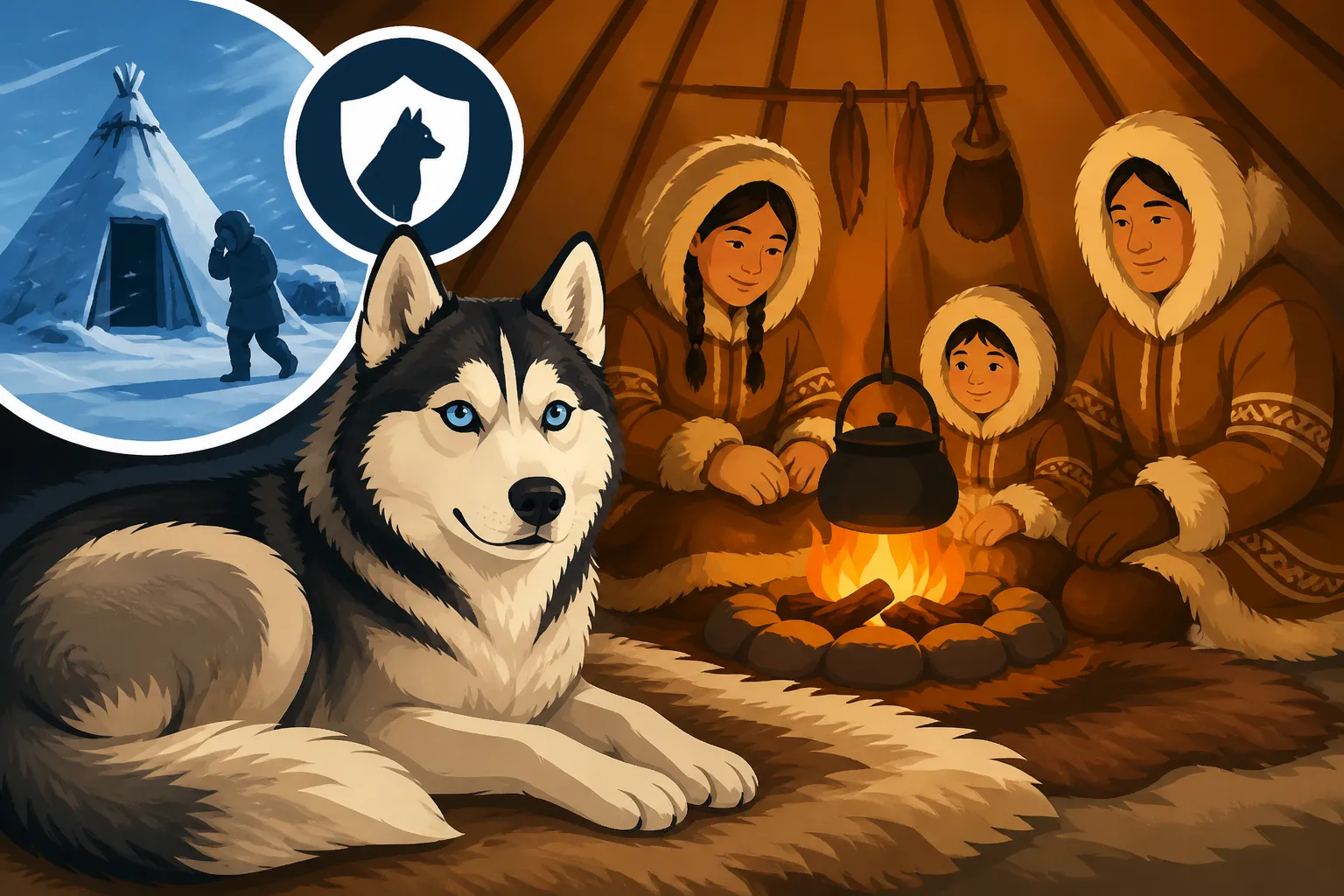
One of the most immediate and practical reasons these dogs shared the yaranga was for warmth. Think about it: a small, circular dwelling, perhaps made of hides and insulated with moss, housing several people. Adding a few large, double-coated dogs to that mix dramatically increased the ambient temperature. Their body heat, especially in close quarters, was a living, breathing heater. When temperatures outside might be -40 degrees Fahrenheit or lower, every degree inside made a difference. Children, in particular, would often sleep nestled amongst the dogs, benefiting directly from their warmth. This wasn't a luxury; it was a survival strategy. You can imagine that if you're concerned about Cold Tolerance Limits for a Siberian Husky for your modern pup, these ancient dogs were pushing those limits constantly, and human contact was a key to their comfort.
Safety from Predators and Spirits
Beyond just warmth, the dogs provided an essential layer of security. The Arctic was (and still is) home to formidable predators: polar bears, wolves, and foxes. A pack of dogs, even when sleeping, would be far more attuned to unusual sounds or smells than humans. Their barks and growls served as an early warning system, giving the Chukchi precious time to prepare for an incoming threat. This vigilance was crucial, especially in the dark, long Arctic nights.
But their role wasn't just physical. The Chukchi, like many indigenous cultures, had a rich spiritual belief system. Dogs were often seen as guardians against malevolent spirits and forces. Their keen senses were believed to detect not just physical dangers but also unseen threats, making them spiritual protectors within the home. This dual role—physical guardian and spiritual sentinel—elevated their status far beyond mere livestock.
Companionship and Social Bonds
In remote, isolated communities, social bonds are incredibly strong, and this extended to their dogs. Imagine enduring long periods of darkness, cold, and hardship with only a few other people. The dogs became integral emotional companions. For the Chukchi, who spent much of their lives in close proximity, the dogs were not just colleagues but family members who shared their hardships and triumphs.
Children grew up with these dogs, forming deep, unbreakable bonds. The dogs provided comfort, a sense of security, and playful interaction in an otherwise demanding environment. These early, constant interactions fostered a unique temperament in the breed: one that is famously independent and intelligent, yet also deeply loyal and affectionate with its chosen "pack" of humans. This ancient social integration is a direct lineage to why our Huskies today thrive on being part of the family, often struggling with isolation when left alone.
The Practicalities of Coexistence: How it Worked
It’s easy to romanticize this arrangement, but the reality was a blend of necessity and pragmatism. Living cheek-by-jowl with working animals in a small space required certain adaptations from both species.
Small Yaranga Living
Chukchi yarangas were designed for functionality, not spaciousness. They often consisted of an outer tent for storage and a smaller, inner sleeping tent that was kept warm. In these tight quarters, there simply wasn't a separate "dog house" or kennel. The dogs were often brought inside, especially the females and puppies, or the lead dogs, who commanded the most respect. This close proximity meant dogs learned early to be tolerant of humans, and humans learned to coexist with dogs in a way that modern Westerners might find unusual. The dogs knew their place, and the humans respected their presence. There was an unspoken understanding born of generations of shared survival.
Feeding and Resource Management
Feeding a large pack of working dogs in the Arctic was no small feat. Resources were scarce. However, the ancestors of the Siberian Husky were renowned for their incredibly efficient metabolisms. Unlike many breeds that require vast amounts of food, these dogs were bred to thrive on relatively lean rations, extracting maximum energy from minimal intake. This made them sustainable partners. When inside, they would undoubtedly share in the scraps from human meals, and perhaps receive specific portions of meat and fat that were essential for their work.
This efficient metabolism is still a hallmark of the breed today, often surprising new owners who find their Husky eats significantly less than other dogs of similar size. If you've ever wondered why Siberian Huskies eat less than a Labrador, their Chukchi heritage provides a strong answer. This inherent efficiency meant that having them indoors, sharing warmth and space, wasn't an unbearable drain on limited food resources; it was part of an integrated survival system.
Breeding for Temperament and Tolerance
It wasn't just happenstance that these dogs were good indoor companions. Over countless generations, the Chukchi inadvertently, and perhaps consciously, selected for specific traits. Dogs that were aggressive, overly boisterous, or destructive inside the yaranga would not have been tolerated. Those that were calm, respectful of the confined space, and gentle with children would have been favored for breeding. This natural selection process instilled a deeply ingrained temperament in the breed: intelligent, independent, yet surprisingly adaptable and tolerant in domestic settings.
This selective breeding meant that the Husky temperament, even with its famed independence and drive, also includes a capacity for quiet companionship. When you see a Husky curl up peacefully in your living room, you're witnessing the continuation of a millennia-old tradition of dogs and humans sharing sacred, warm spaces. The Chukchi People Who Bred the Siberian Husky provides even more context on this fascinating aspect of their history.
Lessons for Modern Siberian Husky Ownership
Understanding the historical context of the Siberian Husky isn't just a fascinating anecdote; it offers profound insights into how best to care for and live with these incredible dogs today.
Understanding Their Deep-Seated Needs
The legacy of the Chukchi is etched into every Siberian Husky. Their desire for companionship, their need to feel like an integral part of the "pack," and their inherent drive to have a "job" or purpose are all direct links to their ancient past. When your Husky shadows you from room to room or insists on sleeping near you, they aren't just seeking attention; they are fulfilling a deep, evolutionary need for proximity and belonging that ensured their ancestors' survival.
This understanding should guide modern owners. A Husky isn't typically content being an outdoor-only dog, left to their own devices in a yard. While they adore being outside and need plenty of exercise, they also crave the social interaction and integration that was so vital in the yaranga. This means daily engagement, training, and making them a true member of your household.
The Importance of Social Integration
For a Siberian Husky, being part of the family isn't just a preference; it's a fundamental requirement for their well-being. Keeping them engaged, included in activities, and providing consistent interaction helps prevent many common Husky behavioral issues, such as destructive chewing or excessive howling born of loneliness. They want to be where you are, to observe, to participate, and to contribute in their own unique way.
This doesn't mean they don't need their own space—a comfortable bed, a crate they see as a den—but it means that space should be within the household, not isolated from it. Siberian Husky Destruction When Left Alone can often be mitigated by ensuring they feel deeply integrated into your life and have proper mental and physical outlets when you are present.
Respecting Their Ancient Heritage
From their incredible endurance and efficient metabolism to their striking double coat and vocal communication, every trait of the Siberian Husky tells a story of survival and partnership with the Chukchi. Respecting this heritage means providing them with opportunities to express their natural instincts in a safe and appropriate manner. This includes long walks, runs, or harness sports, which tap into their innate desire to move and pull. It also means understanding their independent nature, which can sometimes be mistaken for stubbornness. They are thinkers, problem-solvers, and collaborators, not simply obedience robots.
Modern products, like high-quality kibble from brands like Chewy, can help support their efficient metabolism while providing the nutrients they need for their active lifestyles. Understanding their history helps us appreciate their uniqueness and allows us to provide them with a home that honors their past while supporting their future.
Comparative Look: Ancient Chukchi-Husky vs. Modern Pet-Husky Dynamics
To truly grasp the significance of their indoor past, let's look at some key differences and similarities between their historical and modern roles.
| Feature | Ancient Chukchi-Husky Relationship | Modern Pet-Husky Relationship |
|---|---|---|
| Primary Purpose | Survival partner, worker (hunting, transport, herding) | Companion, family member, sport partner |
| Indoor Living | Shared limited space for warmth, protection, companionship | Part of the family, often given dedicated indoor space |
| Food Source | Shared hunt spoils, lean rations, scraps | Commercial dog food (e.g., from Chewy), carefully portioned |
| Social Structure | Integrated into human family/pack dynamic for survival | Integrated into human family, but may struggle if left alone |
| Temperament | Selected for tolerance, calmness, working drive indoors | Retains intelligence, independence, loyalty, needs engagement |
| Grooming | Minimal human intervention, self-cleaning | Regular brushing, occasional baths, professional de-shedding |
| Exercise | Constant, demanding work as part of daily life | Structured exercise (runs, walks, sports) |
This table highlights how many of the Husky's inherent traits—their need for inclusion, their efficient eating habits, and their general good nature indoors—stem directly from this ancient partnership.
Disclaimer
This article is for general informational purposes only and does not constitute professional advice. Laws, prices and regulations vary by location and change over time. Consult a qualified professional for guidance on your specific situation.