The Tail Carriage a Siberian Husky Should Have
It’s easy to get caught up in the striking blue eyes or the captivating wolf-like appearance of a Siberian Husky, but did you know that even their tail tells a story about their breed? Many people wonder if their Husky’s tail is "normal" – some curl tightly, some hang low, and it can be confusing. This guide will walk you through exactly what the breed standard defines as the correct tail carriage for a Siberian Husky, why it matters, and what you should look for in your own beloved companion.
Understanding the Siberian Husky Breed Standard for Tail Carriage
When we talk about a breed standard, we're talking about the blueprint that defines what a dog of a particular breed should look and act like, as established by a governing body like the American Kennel Club (AKC). For Siberian Huskies, every single part of their anatomy, from their eye shape to their paw pads, is described, and the tail is no exception. This isn’t just for show dogs; it describes the characteristics that make a Siberian Husky a Siberian Husky.
The "Sickle" Tail Ideal
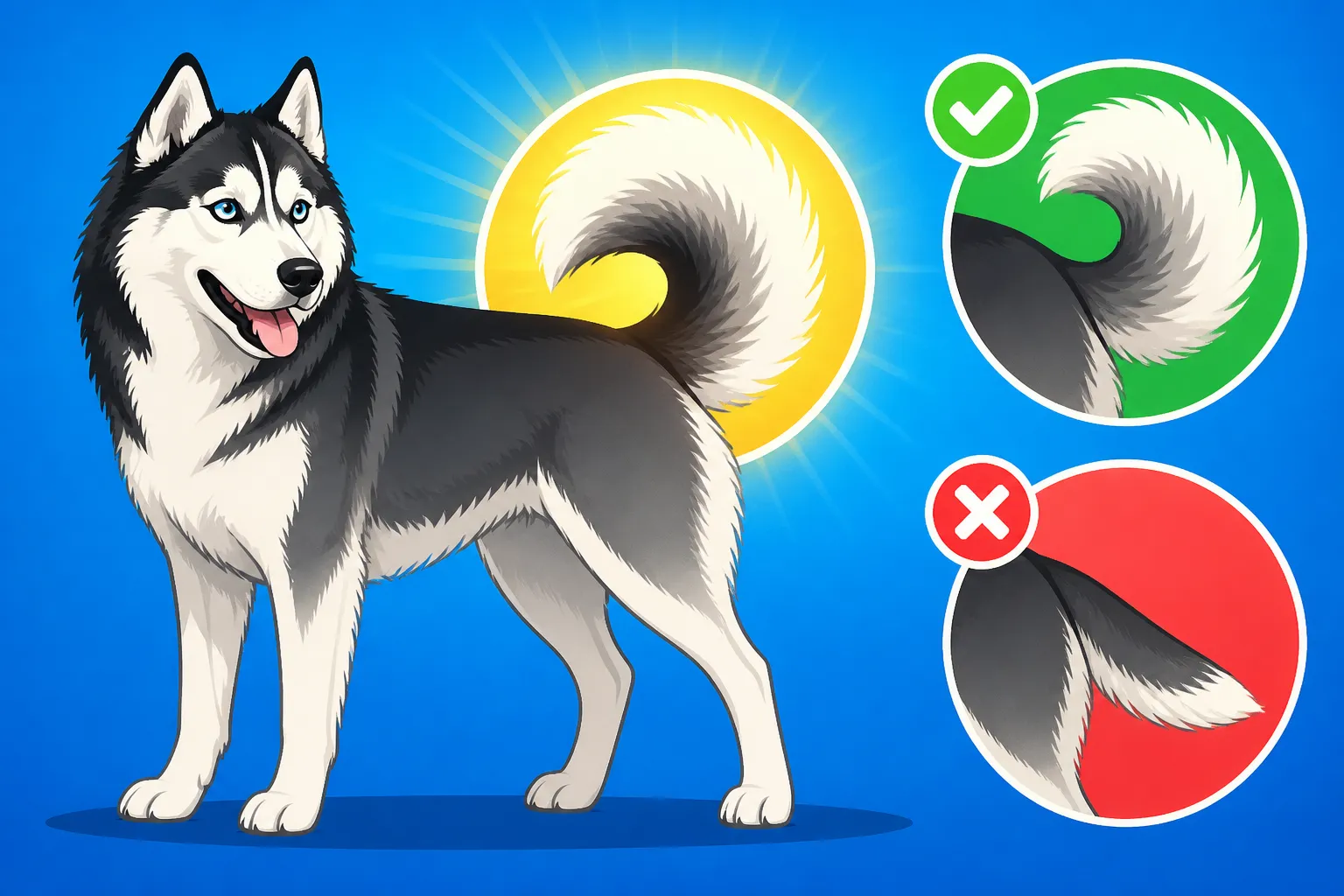
The definitive description for a Siberian Husky's tail is that it should be carried in a "graceful sickle curve" over the back when the dog is alert, excited, or working. What does "sickle curve" actually mean? Imagine the blade of a scythe or a crescent moon. It's a flowing, upward curve that doesn't actually touch the back or curl too tightly into a full circle. The tail should look like a brush, moderately set, and follow the line of the croup without being excessively bushy or sparse.
When your Husky is trotting along, head up, taking in the world, that tail should rise in a beautiful arc, just like that sickle. It's not stiff; it's got a lovely, natural flow to it. This carriage is functional, allowing the tail to serve its purpose as a counterbalance while running and turning. It’s a hallmark of their athleticism and their heritage as efficient sled dogs. You can find more details about their overall physical requirements in What the AKC Standard Asks of a Siberian Husky.
When the Tail is Carried Low or "Flagged"
While the sickle curve is the ideal active carriage, a Siberian Husky's tail won't always be held high. In fact, a tail that is constantly held high and tightly curled, even when relaxed, would actually be considered a fault. When a Husky is at rest, calm, or feeling a bit shy, their tail will often drop down, sometimes even hanging straight down or with a slight curve at the tip. This is perfectly normal and shows a relaxed state.
What’s generally considered incorrect is a "flagged" tail, which means it’s held stiffly straight up, like a flag pole. This isn't the graceful curve we're looking for. Similarly, a tail that is consistently tucked tightly between the legs, indicating fear or extreme submission, isn't the typical Husky demeanor, especially when they are confident and happy. Observing their tail, along with other body language cues, can tell you a lot about Siberian Husky Temperament and What the Standard Says.
Why Tail Carriage Matters for Siberian Huskies
The tail isn't just a fluffy appendage; it’s an integral part of the Siberian Husky’s anatomy, reflecting their history and serving practical functions. Its structure and how it’s carried are deeply tied to their working past and how they move through the world.
Function and Balance in a Working Dog
Think about the original purpose of the Siberian Husky: pulling sleds over vast, often uneven, snowy terrain. Every part of their body was finely tuned for efficiency, endurance, and agility. The tail plays a crucial role in maintaining balance, especially when they are running at speed, making sharp turns, or navigating deep snowdrifts. Imagine a tightrope walker using their pole for stability – a Husky’s tail acts in a similar fashion.
A tail that can move freely, arcing over the back but not impeding movement, allows for maximum control. A tightly curled tail, for instance, could restrict the natural sway and counter-motion needed for efficient locomotion, or even accumulate snow and ice, adding unnecessary weight. The standard’s emphasis on the sickle curve isn't arbitrary; it’s a reflection of thousands of years of selective breeding for performance. This functional design is a key aspect of What a Siberian Husky Was Bred to Do.
Breed Recognition and Conformation
For those involved in conformation showing, tail carriage is a critical point of evaluation. Judges are looking for dogs that adhere as closely as possible to the breed standard, which dictates the ideal form and function. A tail that deviates significantly from the described sickle curve—whether it’s too tightly curled, too low, or flagged—can result in points being deducted or even classify it as a fault.
This adherence to the standard ensures that the breed maintains its distinctive characteristics and preserves the traits that make a Siberian Husky unique. It’s not merely about aesthetics; it’s about preserving the physical integrity that defines the breed. Understanding these nuances is crucial, particularly if you're ever looking at a puppy's lineage or Reading a Siberian Husky Puppy's Health Paperwork. The tail, alongside the ears, head, and overall body structure, paints a complete picture of the dog's breed type. The Siberian Husky Head, Ears and Tail provides further insight into these specific characteristics.
Common Misconceptions and What to Look For
It's really common for people to misunderstand what a "correct" Husky tail looks like. A lot of dogs are marketed as Huskies, or people see images online, and they develop ideas that don't quite align with the official breed standard. Let's clear up some of those popular misconceptions.
The "Tight Curl" Versus the "Sickle"
One of the most widespread misconceptions is that a Siberian Husky’s tail should be curled in a tight circle, resting directly on their back, often described as a "pig tail" or "cinnamon roll" tail. While some Nordic breeds, like the Akita or even some Malamutes, do have a tightly curled tail, it is actually considered a fault in the Siberian Husky standard.
The standard specifically calls for a "sickle curve," which means it curves over the back but doesn't actually touch it in a tight coil. A tightly curled tail can sometimes indicate a mix with another breed, or simply be a structural deviation that isn't ideal for the Husky's active, efficient gait. It can also trap more snow and ice, which might sound like a minor point, but for a working dog in sub-zero temperatures, efficiency is everything. When you compare Siberian Husky Against the Alaskan Malamute, you'll often see distinct differences in tail carriage.
Tail Position in Different States of Mind
It’s vital to remember that a dog’s tail carriage isn’t static. It’s a dynamic indicator of their mood, alertness, and environment. A truly well-bred Siberian Husky will exhibit the correct sickle carriage when they are alert, happy, and active, but their tail will relax and hang down when they are calm, resting, or feeling a bit shy.
Here’s a quick breakdown:
- Relaxed/Calm: Tail hangs down, often with a slight curve, sometimes even touching the hocks.
- Alert/Excited/Working: The classic sickle curve, carried gracefully over the back. This is the "ideal."
- Fearful/Submissive: Tail tucked tightly between the legs.
- Curious/Investigating: Tail might be held slightly lower than the full sickle, perhaps wagging gently.
So, don't worry if your Husky's tail isn't always in that perfect sickle shape. It's how they carry it when they are active and engaged that aligns with the breed standard.
Tail Length and Bushiness
Beyond the curve, the breed standard also describes the appearance of the tail. It should be "well furred" and "round brush-like" – essentially, a bushy "fox brush" tail. This lush fur helps protect the tail from the cold and provides warmth when the dog curls up to sleep, tucking their nose under it. The length should ideally reach the hocks (the joint above the paw on the back leg) when hanging down. A tail that is too short, too long, or sparsely furred would also be considered a deviation from the ideal. The richness of their tail fur is just one aspect of their incredible double coat, which also dictates Siberian Husky Coat Colors and Markings.
Practical Observations for Pet Owners
As a pet owner, you might not be planning on showing your Siberian Husky in conformation, but understanding their breed standard can still be really enriching. It helps you appreciate the history and functional design of your dog, and even notice subtle cues about their well-being.
Observing Your Husky's Natural Tail
Take some time to simply observe your Husky throughout their day. Watch them when they greet you enthusiastically, when they are playing fetch in the yard, when they’re just lounging on the rug, or when they’re investigating a new smell on a walk. You’ll notice their tail carriage changes based on their mood and activity level.
During moments of high alertness or excitement, look for that graceful sickle curve. Does it sweep over their back in a flowing arc? Does it ever touch their back or coil too tightly? When they’re relaxed, does it drop down naturally without being tucked? Paying attention to these natural expressions of their tail can become a fascinating part of understanding your dog's daily communications.
When to Be Concerned About Tail Carriage
While variations exist, there are a few instances where specific tail carriage might warrant a closer look.
- Consistently Tucked Tail: If your Husky's tail is always tucked between their legs, even when they should be happy and confident (e.g., during playtime, mealtime, or greeting familiar people), it could indicate chronic fear, anxiety, or even pain. A visit to the vet might be in order to rule out any underlying medical issues.
- Stiff or Immobile Tail: A tail that seems rigid, unable to move freely, or constantly held in an unusual position could point to an injury or a spinal issue. Huskies are active dogs, and tail injuries, though rare, can happen.
- Permanently Tightly Curled Tail: If your Husky's tail is always in a tight, pig-tail like curl, even when they're totally relaxed, and it never drops down, it might suggest a genetic predisposition for a tail fault or indicate a mix with another breed known for that trait. While it typically doesn't impact the dog's quality of life as a pet, it's not consistent with the purebred Siberian Husky standard.
It's important to differentiate between a temporary mood-driven tail position and a constant, structural carriage that doesn't fit the breed type. Most pet Huskies, even with slight deviations from the ideal, will live full, happy lives. However, being aware helps you understand them better.
Here’s a quick overview of Siberian Husky tail characteristics:
| Characteristic | Ideal (Breed Standard) | Common Variation/Fault | What to Observe |
|---|---|---|---|
| Active Carriage | Graceful sickle curve over the back | Tightly curled (touches back), flagged (straight up), tucked (fear) | Watch during excitement, play, or brisk walks |
| Resting Carriage | Hangs down naturally, slight curve at tip | Consistently tightly curled, always tucked | Observe when calm, sleeping, or relaxed at home |
| Bushiness | Well-furred, "fox brush" appearance | Sparse, thin, or excessively bushy | Visually inspect the amount and texture of fur |
| Length | Reaches hocks when hanging down | Too short (above hocks), too long (drags ground) | When tail is relaxed and hanging down |
| Movement | Moves freely as a counterbalance | Stiff, rigid, restricted movement | Observe during running, turning, or sudden stops |
When you're looking for high-quality grooming tools to keep that beautiful 'fox brush' tail in top condition, browsing retailers like Chewy can offer a wide selection of brushes and combs specifically designed for double coats. Keeping that tail brushed out, especially during Siberian Husky Coat Blow and the Six Weeks It Lasts, helps prevent mats and keeps it looking its best.
Ultimately, whether your Siberian Husky has the perfect sickle tail or a slightly more relaxed curl, their tail is a beautiful, expressive part of who they are. Understanding the breed standard simply adds another layer of appreciation for these magnificent dogs and their rich heritage.
Disclaimer
This article is for general informational purposes only and does not constitute professional advice. Laws, prices and regulations vary by location and change over time. Consult a qualified professional for guidance on your specific situation.