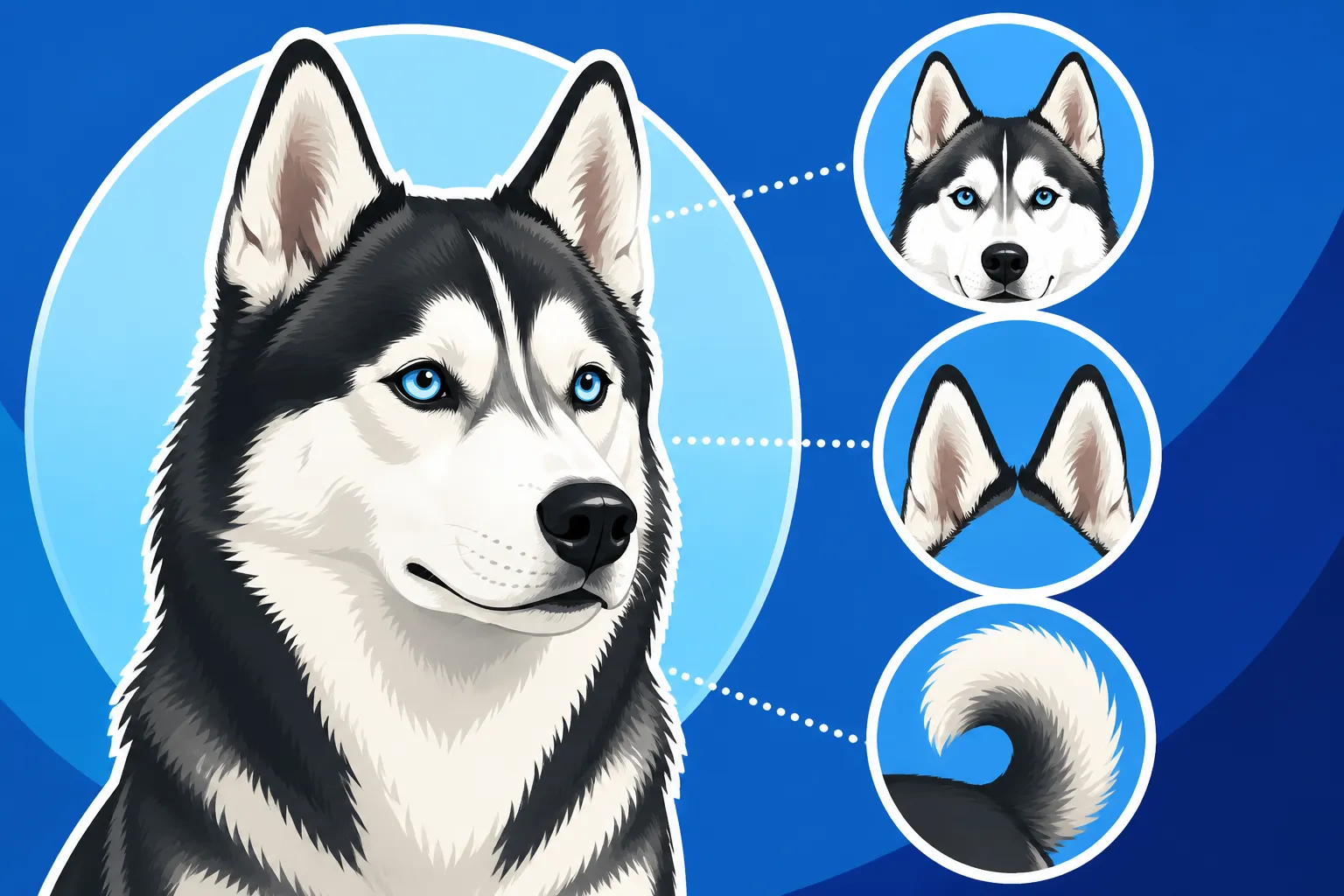
The Siberian Husky Head, Ears and Tail
If you've ever found yourself captivated by the striking presence of a Siberian Husky, you're not alone. There's something undeniably magnetic about their appearance, but sometimes, what we see as simple beauty has deep roots in their history and purpose. It's easy to admire those piercing eyes or that fluffy tail without understanding how each feature contributes to their incredible function and what the breed standard truly represents. This guide will dive deep into the distinctive characteristics of the Siberian Husky's head, ears, and tail, exploring how each element contributes to their unique appearance, purposeful design, and overall breed standard.
The Distinctive Siberian Husky Head
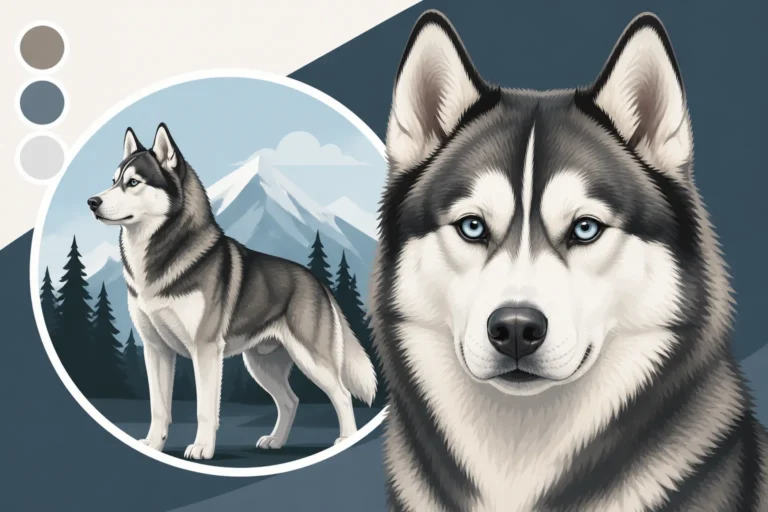
The head of a Siberian Husky is more than just a pretty face; it's a carefully balanced structure designed for efficiency and endurance in harsh Arctic conditions. It speaks volumes about their intelligence, their ancestral working role, and even their general demeanor. When you look at a Husky, their head should immediately convey an impression of alertness, keenness, and a certain mischievous spirit.
Skull Shape and Stop
A Siberian Husky's skull should be of medium size, perfectly proportionate to their body. When you view it from the top, it should be slightly rounded, gradually tapering towards the eyes. This isn't just about aesthetics; it contributes to their aerodynamic profile when running, allowing them to cut through wind and snow with less resistance. The planes of the skull and muzzle should diverge slightly, creating that characteristic intelligent and sometimes questioning look.
The "stop" is the indentation between the eyes, where the muzzle meets the skull. For a Husky, this should be moderate and clearly defined, but never abrupt or too shallow. Think of it as a gentle slope rather than a sharp cliff. A well-defined but not exaggerated stop is crucial for proper bite alignment and the placement of their expressive eyes. If the stop is too steep, it can give the dog a "pushed-in" appearance, and if it's too shallow, their face might look too flat or elongated, deviating from the balanced profile that defines the breed. Understanding this subtle but important feature helps you appreciate the fine details that make a Husky's head so distinctive. What the AKC Standard Asks of a Siberian Husky provides more insight into these breed specifics.
Muzzle and Jaw Strength
The muzzle of a Siberian Husky should be of medium length and width, tapering gradually to a black nose in gray, tan, or black dogs, and liver in copper or red dogs. Sometimes, a "snow nose" or "winter nose" appears, where pigment fades in colder months, but this is a temporary change. A white Husky might have a black, liver, or flesh-colored nose. The lips should be well-pigmented and fit snugly, never hanging loose or droopy. This tight lip line helps prevent snow and ice from building up around the mouth during long hauls in freezing temperatures.
Beneath that well-proportioned muzzle lies a formidable set of jaws. The Husky's bite should be a scissor bite, meaning the outer side of the lower incisors touches the inner side of the upper incisors. This powerful jaw structure is essential for their original role: holding onto game (though not bred as a hunting dog, they were certainly capable) and, more importantly, for consuming food efficiently. Their teeth are strong and evenly spaced, designed to handle varied diets common in working dogs. You'll often see them carrying sticks or toys with an impressive grip, a testament to the strength bred into their lineage. Providing tough chew toys from a reputable retailer like Chewy can help keep those powerful jaws and teeth healthy.
Facial Expression and Alertness
One of the most captivating aspects of a Siberian Husky's head is their facial expression. With their almond-shaped eyes, set moderately apart and obliquely, Huskies often convey an intelligent, friendly, and sometimes mischievous look. The Almond Eye Shape in a Siberian Husky elaborates on this specific trait. Their eyes can be brown, blue, or even one of each (heterochromia), adding to their unique charm. Siberian Husky Eye Colors and Heterochromia dives deeper into the stunning variety of their eye colors. Regardless of color, the expression should always be alert and keen, reflecting their innate curiosity and readiness for action.
This alertness is a direct reflection of their heritage as sled dogs. They needed to be constantly aware of their surroundings, the commands of their mushers, and any changes in the trail or weather. This isn't a dog that drifts off into a daze; they're engaged with the world around them. While they are known for their independent nature, their facial expression often betrays their thoughts, from playful invitations to the focused intensity of a dog ready to run. It’s this combination of intelligence and a touch of impishness that makes communicating with a Husky so engaging, even if their "listening" can sometimes be selective! Siberian Husky Temperament and What the Standard Says offers more on their unique personality.
Ears: The Husky's Pricked Sentinels
The ears of a Siberian Husky are absolutely iconic. Those perfectly triangular, erect ears standing proudly atop their head are a hallmark of the breed. They're not just for show; like every other feature of the Husky, they serve a vital purpose, deeply rooted in their Arctic origins and working life.
Ideal Ear Placement and Size
According to the breed standard, Siberian Husky ears should be medium in size, triangular in shape, and set high on the head, relatively close together. The ears should also be thick, well-furred, and have slightly rounded tips. When a Husky is alert, these ears stand stiffly erect, almost like two perfectly placed sentinels. This high and close placement helps to channel sound directly into their ear canals, making them incredibly effective listening devices. Imagine trying to hear faint sounds across a vast, windy, snowy landscape; floppy, low-set ears simply wouldn't cut it.
The thickness and furring of the ears also play a crucial role. Their thick leather and dense fur act as insulation, protecting them from the extreme cold temperatures they were bred to endure. This makes them less susceptible to frostbite on the tips of their ears, a real concern for any animal exposed to sub-zero conditions. If you've ever seen a Husky's ears perk up at the slightest rustle, you'll understand just how effective these natural sound funnels are. This ear structure also contributes to their striking appearance, completing the wolf-like profile that many find so appealing.
Ear Set and Expression
The way a Siberian Husky carries their ears is a strong indicator of their mood and focus. When relaxed or greeting you, their ears might be slightly laid back or swivel independently, catching different sounds. But when something catches their attention – a squirrel in the yard, a distant siren, or the crinkle of a treat bag – those ears will snap to attention, pointing forward with an intense focus that's hard to miss. This "pricked" ear set is not merely decorative; it's a dynamic communication tool.
A Husky's ears can tell you a lot about what's going on in their mind. Ears that are flattened against the head can indicate fear or submission, while ears that are slightly pulled back but not flat can show friendliness or playful anticipation. It's a subtle dance of muscles that gives depth to their expressions. Siberian Husky Ears and Why They Sit Close expands on the functional aspects of their ear placement. Observing these subtle shifts in ear carriage is key to understanding your Husky's unspoken language and building a deeper connection with them.
Why Husky Ears Stand Upright
The erect, triangular ears of the Siberian Husky are a defining characteristic, differentiating them from other breeds with dropped or semi-pricked ears. This trait is directly tied to their evolutionary history and their role as working dogs. Dogs with pricked ears, like wolves, generally have superior hearing acuity, which was essential for survival and communication in their ancestral environment. The rigid structure allows for precise directional hearing, enabling them to pinpoint sounds over long distances or in noisy conditions, like a howling blizzard.
Beyond hearing, the upright ears are also a thermoregulatory adaptation. While they are well-furred, the ears can still act as a minor radiator, helping to dissipate excess heat when the dog is working hard. Conversely, their thick fur and strong cartilage provide significant protection against frostbite in extremely cold weather. This functional design is a testament to the careful breeding by the Chukchi people, who developed the Husky to thrive in one of the harshest environments on Earth. It's truly amazing how every physical detail, right down to the shape of their ears, is finely tuned for their survival and performance. What the Chukchi Bred the Siberian Husky For provides great context on their historical development.
The Signature "Brush" Tail of the Siberian Husky
If a Husky's eyes are their windows to the soul, their tail is certainly their expressive barometer. That magnificent, well-furred "fox brush" tail is one of the most beloved and recognizable features of the breed. It’s a dynamic part of their anatomy, used for balance, communication, and even warmth.
Tail Carriage and Motion
The Siberian Husky tail should be of medium length, reaching approximately to the hocks when lowered. When the dog is at rest, excited, or working, it's typically carried in a graceful sickle curve over the back. This isn't a tight, rigid curl, but a flowing arc that doesn't typically touch the back. If you've ever watched a Husky run, you'll see this tail acting as a counterbalance, shifting and swaying to maintain equilibrium, especially during sharp turns or when navigating uneven terrain.
The motion of the tail is also a key indicator of their mood. A gently wagging sickle tail usually means a friendly greeting, while a more vigorous, high-held wag indicates excitement or playful anticipation. When they are nervous or feeling submissive, their tail will often drop low, sometimes tucked between their legs. Observing these nuanced movements is essential for any Husky owner to understand their dog's state of mind. It’s part of that non-verbal conversation we have with our dogs, and for a Husky, their tail has a lot to say. The Tail Carriage a Siberian Husky Should Have offers more detail on what to look for.
The Importance of a Non-Curling Tail
The breed standard is very specific about the Husky tail: it should not curl tightly over the back or lie flat against it. A tail that is too tightly curled, forming a complete circle or pressing against the back, is considered a fault. This isn't just an aesthetic preference; it has functional implications. A tightly curled tail, while cute to some, can actually interfere with the dog's balance and gait, especially when running or maneuvering quickly. It also prevents the tail from properly fulfilling its role in regulating body temperature.
In their Arctic homeland, the Husky's tail served a critical purpose: wrapping around their face and nose while they slept to provide warmth and protection from the biting cold and blowing snow. The dense fur of the "fox brush" acts as a natural scarf. A tail that curls too tightly loses this functionality. This might seem like a small detail, but it speaks volumes about the meticulous nature of breed standards – every feature is there for a reason, rooted in the dog's historical function and well-being. Faults and Disqualifications in a Siberian Husky provides a broader overview of deviations from the standard.
Tail as a Communication Tool
Beyond balance and warmth, the Siberian Husky's tail is one of their primary tools for communication, both with humans and other dogs. The height, speed, and direction of the tail's wag can convey a wealth of information. A high, stiffly carried tail might signal alertness or even mild dominance, while a low, slow wag can suggest uncertainty or caution. A frantic, full-body wag is usually reserved for moments of extreme joy and greeting!
When interacting with other dogs, Huskies use their tails to signal intentions and gauge reactions. A playful "wiggle butt" and a high, fast-wagging tail are an invitation to play, whereas a tail tucked low might diffuse tension or signal deference. It’s a complex language, and by paying attention to your Husky's tail, you can gain a much deeper understanding of their inner world and how they perceive their environment. Learning to "read" your Husky's tail, alongside their ear set and body posture, will unlock a whole new level of communication between you.
How Head, Ears, and Tail Reflect the Husky Standard
The breed standard for the Siberian Husky isn't just an arbitrary list of physical traits; it's a blueprint designed to preserve the functional integrity and distinct identity of the breed. Every aspect of their head, ears, and tail is described with their historical purpose as a sled dog in mind, ensuring they remain capable and healthy.
Why the Standard Matters for Health and Function
The breed standard serves as a guideline for breeders aiming to produce healthy, functional, and type-specific Siberian Huskies. When we talk about the moderate stop, the strong muzzle, the high-set ears, and the fox brush tail, these aren't just details for show ring judges. These characteristics directly contribute to a dog's ability to perform the tasks they were bred for. A correctly proportioned head allows for efficient breathing and a strong bite. Well-set, thick ears protect against the elements and provide excellent hearing. A properly carried tail offers balance and warmth.
Deviations from the standard can sometimes indicate potential health or structural issues. For instance, an overly narrow muzzle might compromise dental health, or ears that are too thin could be prone to frostbite. Therefore, responsible breeders pay close attention to these details, not just for conformation, but for the overall well-being and capability of their dogs. It’s a commitment to the breed's heritage and its future. Thinking about how to support their health, you might find a great selection of high-quality dental care products and even specialized cold-weather gear for extreme conditions on Chewy, all designed to complement their natural attributes.
Common Deviations and Their Implications
While the Siberian Husky standard is quite specific, variations do occur, and some are considered "faults" or "disqualifications." For example, ears that are too large, too small, or too widely set are considered faults, as they deviate from the ideal functional design for hearing and protection. Tails that are tightly curled "snap tails" or tails that hang constantly between the legs are also considered faults because they impair balance and lose their insulating function. Why an Oversized Siberian Husky Is Faulted discusses how even size deviations can impact their breed purpose.
Understanding these deviations helps prospective owners appreciate why ethical breeders prioritize adherence to the standard. While a pet Husky with a minor fault can still be a wonderful companion, significant deviations might impact their ability to perform certain activities comfortably or, in rare cases, indicate underlying structural issues. It's not about perfection, but about preserving the traits that define the breed's health, temperament, and historical capacity. Comparing a Siberian Husky to an Alaskan Malamute, you'll see how even subtle differences in head or tail carriage distinguish these two distinct northern breeds. Siberian Husky Against the Alaskan Malamute offers a detailed comparison.
The Beauty of Form Following Function
Ultimately, the beauty of the Siberian Husky's head, ears, and tail lies in their perfect harmony of form and function. Every curve, every angle, and every tuft of fur serves a purpose, honed over centuries of selective breeding in the brutal Arctic environment. There's an elegance in their strength, a striking appearance born from necessity rather than mere aesthetics. When you observe a Husky, you're not just seeing a beautiful dog; you're witnessing a living testament to remarkable resilience and adaptability.
From the intelligent spark in their almond eyes to the alert prick of their triangular ears and the graceful sweep of their fox brush tail, these features tell the story of a dog bred to run, to survive, and to thrive. This deep connection between their physical attributes and their historical role is what makes the Siberian Husky so truly special. Appreciating these details enriches your understanding of the breed and helps you see past the surface to the magnificent, purposeful animal beneath. And remember, providing proper nutrition is crucial for maintaining that dense coat and strong musculature, and you can explore a wide array of quality dog foods, often with detailed ingredient lists, at retailers like Chewy.
| Feature | Ideal Standard | Common Fault/Misconception | Functional Significance |
|---|---|---|---|
| Skull | Medium, proportionate, slightly rounded, tapering | Too broad/narrow, flat, disproportionate | Aerodynamic, protects brain, balanced bite |
| Stop | Moderate, clearly defined, not abrupt | Absent, too steep ("dish-face") | Proper eye/muzzle placement, bite alignment |
| Muzzle | Medium length/width, tapering, strong jaws | Too long/short, snipey, weak jaw | Efficient breathing, powerful bite, snow resistance |
| Ears | Medium, triangular, high-set, thick, well-furred | Large/small, low-set, floppy/round tips, thinly furred | Superior hearing, protection from cold/frostbite |
| Tail | "Fox brush," graceful sickle curve over back | Tightly curled, flat against back, constantly tucked | Balance, warmth (face cover), clear communication |
| Eyes | Almond-shaped, moderately spaced, oblique | Round, too close/wide set, bulging | Protection from glare/wind, keen vision, expression |
Disclaimer
This article is for general informational purposes only and does not constitute professional advice. Laws, prices and regulations vary by location and change over time. Consult a qualified professional for guidance on your specific situation.