Faults and Disqualifications in a Siberian Husky
You've probably seen a gorgeous Siberian Husky and wondered what makes one "perfect" versus one that might not quite fit the bill. It can be a little confusing when you hear terms like "faults" and "disqualifications" thrown around, especially if you're just looking for a beloved family member. This guide is here to demystify the official breed standard for the Siberian Husky, explaining what those terms truly mean and why they matter, not just in the show ring, but sometimes for the dog's well-being and function too.
Understanding the Siberian Husky Breed Standard
When we talk about a breed standard, it's not some arbitrary list cooked up by a bunch of stuffy judges. For a working breed like the Siberian Husky, the standard is essentially a blueprint. It describes the ideal characteristics that enable the dog to perform the job it was originally bred for, and it outlines the appearance and temperament that make a Husky, well, a Husky.
Why a Standard Exists for the Siberian Husky
Imagine a dog bred to pull light loads over vast, frozen distances with minimal food. Every aspect of that dog's physical structure and mental makeup needed to be geared towards endurance, efficiency, and a resilient spirit. That's exactly what the Chukchi people, the original breeders of the Siberian Husky, refined over centuries. The Chukchi Origins of the Siberian Husky explains this history beautifully. The breed standard, as written by organizations like the American Kennel Club (AKC), attempts to capture and preserve these crucial traits. It's about maintaining the integrity of the breed so that future generations of Siberians still embody that unique blend of power, grace, and independence, whether they're pulling a sled or just tearing around your backyard. Without a standard, breeders might prioritize looks over function, or temperament over type, and the breed could slowly lose its distinctive qualities. It gives a common goal for ethical breeders to strive for, ensuring a certain consistency and predictability in the puppies they produce.
The Difference Between a Fault and a Disqualification
This is where it can get a little tricky for new owners. In the world of dog shows, there's a clear distinction between a "fault" and a "disqualification" (DQ). Think of it this way:
- Faults are undesirable deviations from the breed standard. They detract from the dog's overall quality and might cause a judge to place it lower in a competition, or perhaps not at all. A fault might be something like ears that are slightly too wide apart, a tail that curls a bit too tightly, or a coat that is a little too soft. These dogs can still be bred and shown, but their chances of winning are diminished because they don't perfectly embody the ideal. Many beautiful, healthy, and wonderfully tempered Siberian Huskies have minor faults that never impact their lives as companions.
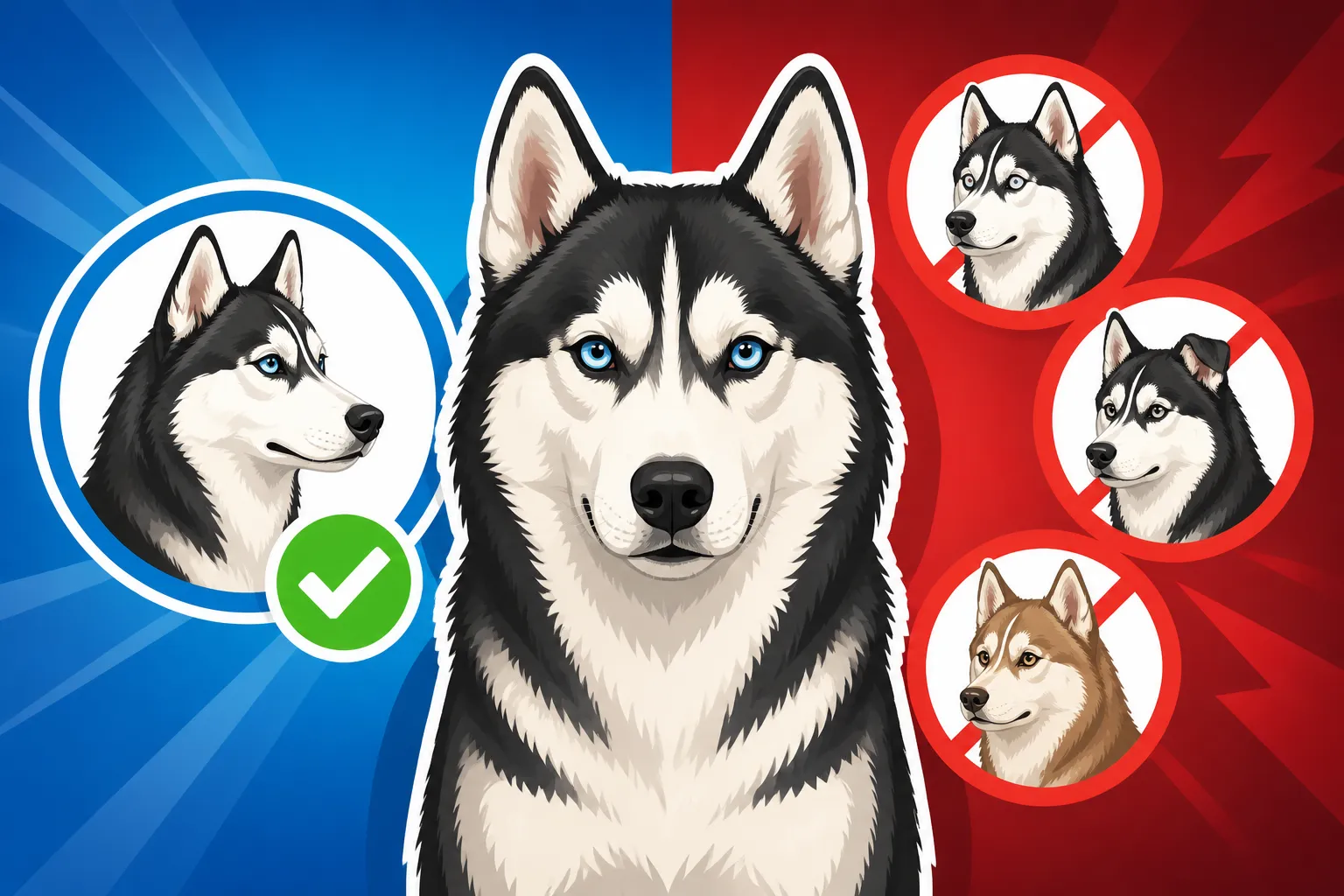
- Disqualifications (DQs) are much more serious. A dog with a disqualifying trait cannot be awarded points in a conformation show, nor can it receive championship titles. It means the dog is considered "unfit" for the breed standard. These traits are often seen as fundamentally altering the breed's type, function, or temperament, or they might indicate a significant health issue. Examples include a dog that is too large or too small, an aggressive or overly shy temperament, or certain structural abnormalities that are explicitly listed as DQs. A disqualified dog cannot participate in AKC-sanctioned conformation events. It's not about being "bad," it's about not meeting the strict criteria for showing and breeding under that specific standard.
Common Structural Faults in Siberian Huskies
The Siberian Husky is a marvel of engineering, built for efficient movement. So, it stands to reason that deviations from this ideal structure are considered faults. These aren't just cosmetic; they can impact how well a dog moves and, over time, its comfort and health.
Deviations in Head and Expression
The head of a Siberian Husky is meant to convey an alert, intelligent, and friendly expression, without being coarse or heavy. A lot of subtle features contribute to this. For example, the standard calls for almond-shaped eyes, moderately spaced. If a Husky has eyes that are too round or set too wide apart, it can change that classic "Husky look" entirely. This is considered a fault because it deviates from the breed's iconic appearance. Similarly, the ears should be medium in size, triangular, and set fairly close together and high on the head. If they're too large, too wide apart, or floppy, it's a fault. The muzzle should taper gradually and be of medium length. A muzzle that's too short, too long, or appears blocky would be faulted. These nuances, detailed in The Siberian Husky Head, Ears and Tail, are all about maintaining the breed's characteristic aesthetic and ensuring the dog's senses (like hearing) are unimpeded for its original working environment.
Body and Proportions That Miss the Mark
A Siberian Husky's body is built for speed and endurance. The length of its back, the depth of its chest, and the angulation of its legs all play a role in its powerful, effortless stride. If a Husky has an overly long back, it can lose efficiency in its gait and potentially put more strain on its spine. A chest that's too shallow won't provide enough lung capacity for sustained work, while one that's too wide might impede the fluid movement of the front legs. Similarly, legs that are too short or too long in proportion to the body will throw off the dog's balance and stride. These structural imperfections are faults because they would make the dog less efficient and more prone to fatigue or injury during a long day of pulling a sled. A good breeder pays close attention to these proportions, aiming for that perfect balance that defines the breed's athletic prowess.
Incorrect Tail Carriage and Set
The Siberian Husky's tail is often described as a "sickle" tail—carried in a graceful curve over the back when the dog is excited, but never curled so tightly as to touch the back, nor should it fall to either side. When the dog is relaxed, the tail should drop down. A tail set too high on the back, or one that consistently curls in a tight circle or hangs limply between the legs, is a fault. A common fault is a tail that forms a tight "snap" curl or an overly plumed, fox-like tail. Why does this matter? Beyond aesthetics, a tail that's constantly tucked or excessively curled can sometimes indicate temperament issues (though not always), or simply deviates from the balanced appearance desired in the working dog. The ideal tail helps with balance and can act as a counterbalance during quick turns, making its correct carriage important to the overall functional design.
Movement and Gait Faults in the Siberian Husky
For a breed whose entire purpose revolves around covering ground efficiently, movement is arguably one of the most critical aspects of the standard. A Siberian Husky is a marathon runner, not a sprinter, and its gait should reflect that.
The Importance of Efficient Gait
The very heart of the Siberian Husky's existence is its ability to move with incredible efficiency and stamina. When you look at What a Siberian Husky Was Bred to Do, you understand that every part of its physical design contributes to its capacity to pull a sled for miles. The standard emphasizes a "smooth and effortless" gait, meaning the dog should move with fluid grace, covering ground with minimal wasted energy. Each step should be purposeful, powerful, and balanced. Judges are looking for a dog that moves as if it could go all day, with power coming from the rear and reaching stride from the front. If a dog's movement is choppy, stiff, or shows any signs of discomfort, it immediately detracts from its quality as a working animal and is considered a significant fault.
Specific Gait Deviations
There are several specific deviations from the ideal gait that are considered faults:
- Paddling: This occurs when the front legs swing wide like a paddle, rather than moving in a straight line forward. It’s inefficient and wastes energy.
- Crabbing (or Sidewinding): The dog moves with its body slightly angled, often with its hindquarters offset to one side. While some dogs naturally crab, excessive crabbing is a fault because it’s not the most efficient way to cover ground.
- Hackney Action: Resembles the high-stepping gait of a Hackney pony, where the legs are lifted high with an exaggerated bend at the knee. This is highly inefficient for an endurance sled dog and uses far too much energy.
- Narrow or Wide Movement: Legs should move in relatively straight lines, converging towards the centerline of the body as speed increases. If a dog moves with its legs too wide (out at the elbows or hocks) or too close together (knocking its hocks or paws), it creates instability and inefficiency.
- Any Sign of Lameness or Stiffness: This is always a serious fault. It not only indicates pain or discomfort but also suggests an underlying structural issue that could prevent the dog from performing its work. A Husky should move freely and without hesitation.
These gait faults might not prevent a Husky from being a fantastic pet, but they certainly would reduce its effectiveness in the working harness or its success in the show ring.
Coat, Color, and Eye Faults
The Siberian Husky's coat and eyes are iconic features, but even here, the standard has specific ideals that, if deviated from, can be considered faults or even disqualifications.
The Wooly Coat: A Serious Fault
Perhaps one of the most significant coat faults, and one that many new owners might even mistakenly find appealing, is the "wooly" coat. A wooly coat is essentially an excessively long, soft, and fluffy coat with little to no coarse guard hair. While it might look luxurious, it's a very serious fault because it completely compromises the Husky's ability to regulate its temperature and protect itself from the elements. Wooly Coated Siberian Huskies explains in detail why this is such a problem. The standard Siberian Husky double coat, as described in What the AKC Standard Asks of a Siberian Husky, is designed with a soft, dense undercoat for insulation and a relatively short, smooth outer coat of guard hairs that sheds snow and ice, and provides protection from sun and wind. A wooly coat traps moisture, easily mats, and offers poor insulation in wet conditions, making the dog prone to overheating in summer and becoming chilled in winter. It's a functional nightmare for a sled dog.
Eye Color and Pigmentation Issues
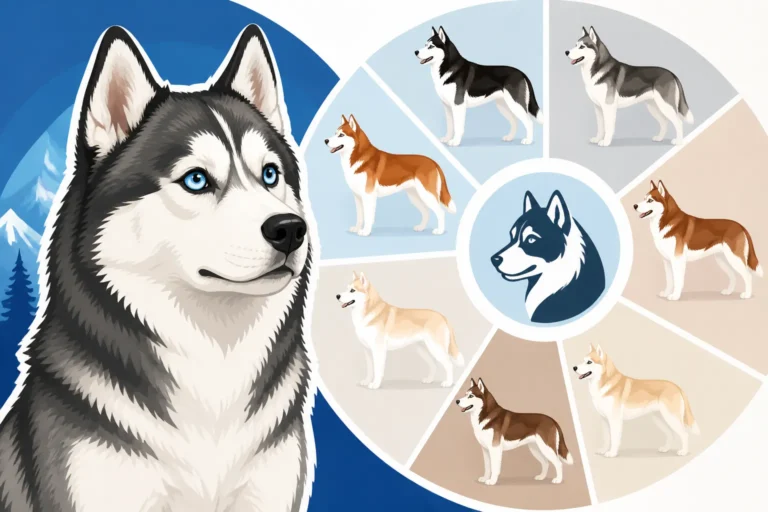
The Siberian Husky is famous for its striking eye colors, including brown, blue, bi-colored (one brown, one blue), or parti-colored (flecks of blue in a brown eye, or vice versa). Siberian Husky Eye Colors and Heterochromia delves into this. The standard is very accepting of these variations, stating that all eye colors are acceptable. Therefore, having blue eyes, or two different colored eyes, is absolutely not a fault. However, eye shape is important; round eyes are a fault.
Pigmentation, on the other hand, can be a fault. The lips should be black, and the nose should be black in gray, tan, or black dogs, and liver in copper dogs. In lighter-colored dogs, a "snow nose" (pinkish streaking or complete lack of pigment) is acceptable during colder months. However, a complete lack of pigment on the nose or lips when not related to seasonal change, or missing pigment around the eye rims, can be considered a fault. These subtle details contribute to the overall picture of health and breed type.
Other Coat-Related Faults
Beyond the wooly coat, other issues with the coat can also be faulted. A coat that is too coarse or too short, lacking sufficient undercoat, would be problematic for a dog meant to withstand harsh weather. A sparse undercoat means the dog lacks the insulation necessary for its historical job. While the standard does allow for a range of colors and markings—from pure white to black, with a rainbow of grays, reds, and sables in between—and these variations are not faults (as explored in Siberian Husky Coat Colors and Markings), the texture and density are crucial. Any deviation from the ideal protective double coat, whether too soft, too thin, or too long, would be considered a fault because it impedes the dog's ability to function as intended.
Disqualifications: When a Siberian Husky Cannot Be Shown
Disqualifications are a big deal in the show ring. They essentially mean a dog cannot compete for championship points and, often, should not be bred if the DQ is genetic or impacts the breed's integrity. These are not minor flaws but fundamental departures from the breed's established type, health, or temperament.
Size and Proportion Disqualifications
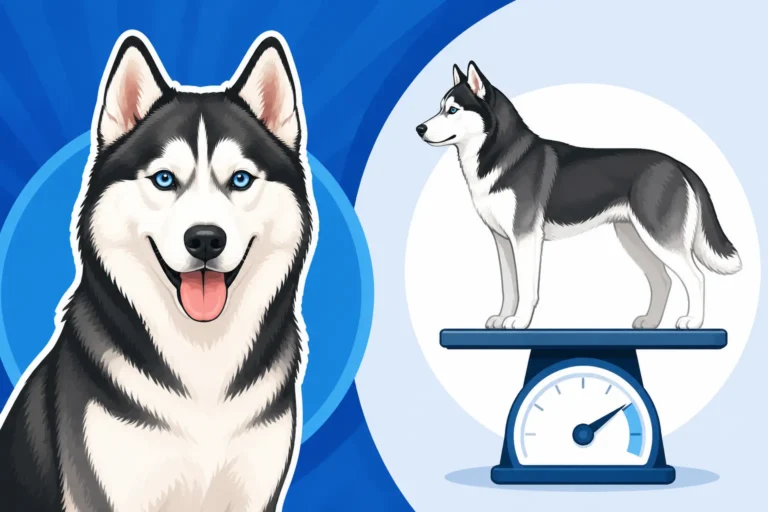
The Siberian Husky standard specifies a distinct height and weight range. For males, the ideal height is 21 to 23.5 inches at the shoulder, and for females, it's 20 to 22 inches. Anything outside these ranges is a disqualification. Siberian Husky Height and Weight in the Standard gives a good overview of this. An overly large or small dog deviates significantly from the breed's intended function—large dogs might be too heavy and slow for efficient pulling, while small dogs might lack the necessary power and stamina. These size limits exist to maintain the breed's optimal working physique. While your oversized Husky might still be a wonderful companion, it simply won't meet the physical requirements for showing.
Temperament Disqualifications
This is perhaps the most important disqualification from a practical, everyday ownership perspective. The breed standard describes the Siberian Husky temperament as "friendly and gentle… alert, but not aggressive or overly suspicious." They are not guard dogs, as we discuss in Why the Siberian Husky Is Not a Guard Dog. Therefore, any dog exhibiting undue aggression or extreme shyness and fearfulness is immediately disqualified. This isn't just about the show ring; it's about the safety and well-being of the dog and those around it. A truly aggressive or dangerously fearful dog is a liability and goes against the very core of the breed's characteristic good nature and friendliness toward people. Ethical breeders prioritize temperament above almost all else, working to ensure their puppies are confident, stable, and well-adjusted. This also impacts the ability of a dog to be a reliable and safe pet.
Other Disqualifying Traits
There are a few other specific traits that result in disqualification:
- Cryptorchidism: This refers to a male dog having one or both testicles undescended. It's a genetic condition, and a cryptorchid male is disqualified from showing and should not be used for breeding. This is crucial for maintaining reproductive health in the breed. When you're looking at Reading a Siberian Husky Puppy's Health Paperwork, this is one of the things a responsible breeder will discuss.
- Ears Not Erect: While floppy ears are common in puppies, an adult Siberian Husky whose ears do not stand erect is disqualified. The erect ear is characteristic of the breed and is important for their keen hearing in a working environment.
- Overshot or Undershot Bites: Significant deviations where the upper or lower jaw protrudes excessively are considered disqualifying. A correct bite is essential for a dog's overall health and ability to eat properly.
- Dewclaws (rear): The standard generally prefers the absence of dewclaws on the hind legs. While some variation might be acceptable in certain regions, an explicit disqualification exists for double dewclaws or rear dewclaws that are considered detrimental to the dog's movement or overall health.
These disqualifications are in place to preserve the health, integrity, and functional characteristics of the Siberian Husky as a breed.
Beyond the Show Ring: Practical Implications
While the breed standard, faults, and disqualifications are primarily aimed at the world of dog shows and responsible breeding, they also have some very real implications for everyday Siberian Husky owners.
Health vs. Aesthetics
It's vital to distinguish between a purely aesthetic fault and one that has health implications. A tail that curls a bit too tightly or eyes that are slightly rounder than ideal are aesthetic faults. They won't impact your dog's ability to run, play, or live a long, happy life. However, some structural faults, if severe enough, can lead to health problems over time. For example, poor angulation in the legs could potentially predispose a dog to joint issues later in life, though Siberians are generally known for their good hips, as discussed in Where Siberian Huskies Rank on Hip Dysplasia. A "wooly" coat, while aesthetically different, poses a real functional and health risk by impairing temperature regulation. When considering Health Testing Before You Buy a Siberian Husky, you're often looking for a breeder who not only strives for the standard but also actively screens for genetic conditions that could impact health, regardless of minor show faults.
Finding a Healthy Pet vs. a Show Dog
The vast majority of Siberian Huskies are, and should be, cherished family pets. For these dogs, minor faults that would cost them points in the show ring are utterly irrelevant. What truly matters for a companion dog is health, temperament, and a good fit for your lifestyle.
If you're adopting from a rescue, an adult Siberian Husky might have some minor structural faults or even a wooly coat, but if it has a sound temperament and a clean bill of health, it can make an absolutely incredible pet. Many wonderful dogs with "faults" live full, active lives. Similarly, if you're looking for a puppy, finding a responsible breeder who prioritizes health testing, socialization, and sound temperament is far more important than worrying if your future furry friend has a perfectly straight tail or ideal eye shape. Sometimes, a "cheap" Siberian Husky puppy might come from a breeder who completely disregards the standard, potentially leading to health or temperament issues down the line, as warned in Why a Cheap Siberian Husky Puppy Is a Warning. A reputable breeder, even if their puppies aren't destined for the show ring, will still adhere as closely as possible to the standard as a blueprint for a healthy, functional dog.
Remember, the standard is a guide for preserving the breed. For you and your Siberian Husky, the most important "standard" is a healthy, happy, and well-adjusted companion who brings joy to your life. Whether they would win a blue ribbon at Westminster or not doesn't change their value as a member of your family. You can still find everything you need to care for a beloved pet, regardless of minor faults, through reliable retailers like Chewy, ensuring they have good food, comfortable beds, and all the toys their heart desires.
| Feature | Fault (Reduces Points) | Disqualification (Cannot Be Shown) | Practical Impact for Pet Owners |
|---|---|---|---|
| Size/Proportion | Slightly outside ideal weight range | Significantly over or under height/weight standards | May be harder to find standardized gear; potential joint strain if oversized. |
| Head/Ears | Round eyes, ears set too wide/low, coarse head | Ears not erect in adult dog | Primarily aesthetic; no major health impact. |
| Coat | Too coarse, too short, sparse undercoat, too soft | Wooly coat (excessively long, soft, fluffy) | Wooly coat affects temperature regulation; more grooming needed. |
| Tail | Too tightly curled, set too high, carried between legs | N/A (severe tail faults can heavily penalize) | Primarily aesthetic. |
| Gait/Movement | Paddling, crabbing, hackney action, stiffness, lameness | Severe lameness that impedes function | Can affect endurance, comfort, and increase risk of injury over time. |
| Temperament | Overly shy, reserved (can be penalized) | Undue aggression, extreme shyness/fearfulness | Major impact on safety, trainability, and suitability as a family pet. |
| Dentition | Minor misalignment | Severely overshot/undershot bite, missing teeth (specifics apply) | Can affect ability to chew food; may require veterinary dental care. |
| Males | N/A | Cryptorchidism (undescended testicles) | Not suitable for breeding; potential increased health risks. |
Disclaimer:
This article is for general informational purposes only and does not constitute professional advice. Laws, prices and regulations vary by location and change over time. Consult a qualified professional for guidance on your specific situation.