Pomsky and Other Siberian Husky Crosses
It’s completely understandable to be captivated by the striking looks and perceived unique traits of Siberian Husky crosses, sometimes lovingly referred to as "designer dogs." Many people fall in love with the Husky's piercing eyes and wolf-like appearance, but then wonder if mixing it with another breed might soften some of its more challenging characteristics, or even amplify the best ones. This guide dives into the world of Siberian Husky mixes, focusing on the popular Pomsky and other common crosses, to help you understand what you're truly getting into before bringing one home.
The Lure of the Hybrid: Why Siberian Husky Crosses Are So Popular
The fascination with hybrid dogs, often called "designer breeds," has been steadily growing. It's easy to see why, especially when you consider a breed as inherently beautiful and charismatic as the Siberian Husky. People are often hoping to combine the majestic looks of a Husky with the more amenable temperament, smaller size, or specific traits of another beloved breed.
Understanding the Appeal of 'Designer Dogs'
When you see a picture of a Pomsky, for instance, with its fluffy coat, captivating eyes, and compact size, it’s hard not to be smitten. The appeal often lies in the promise of a "best of both worlds" scenario. Owners dream of a dog that has the intelligence and unique vocalizations of a Husky, but perhaps with the cuddliness of a Pomeranian or the trainability of a Labrador. They might be looking for a dog that sheds less, or one that is less prone to certain health issues associated with purebreds. There's a marketing angle here, too, where these specific crosses are given catchy names, making them feel exclusive and desirable. This trend taps into a desire for individuality, a pet that stands out from the crowd.
The Unpredictability Factor in Mixed Breeds
Here’s where we need to be realistic: genetics are a beautiful, complicated roll of the dice. Unlike purebred dogs, where generations of selective breeding have established relatively predictable traits in appearance, size, and temperament (though individual variation always exists!), a mixed breed can inherit any combination of traits from either parent. You might hope for a Husky's looks and a Golden Retriever's easygoing nature, but you could just as easily end up with a Golden Retriever's shedding and a Husky's stubborn independence and extreme prey drive.
This unpredictability extends to health as well. While some argue that mixed breeds are inherently healthier due to a wider gene pool, this isn't a guarantee. They can still inherit any genetic predispositions from both parent breeds. For example, if both parent breeds are prone to hip issues, a crossbreed might still inherit that tendency. It’s crucial to understand that you cannot cherry-pick traits. You're getting a package deal, and what's inside that package isn't always what you expect from a picture or a hopeful description. This is why understanding Siberian Husky Temperament and What the Standard Says is so important, even for mixes, because those core Husky traits can still shine through.
Deep Dive into the Pomsky Phenomenon
The Pomsky is undoubtedly the superstar of the Husky cross world, generating significant buzz and demand. Its popularity stems from its adorable, compact size combined with the classic Husky aesthetic.
What Exactly is a Pomsky?
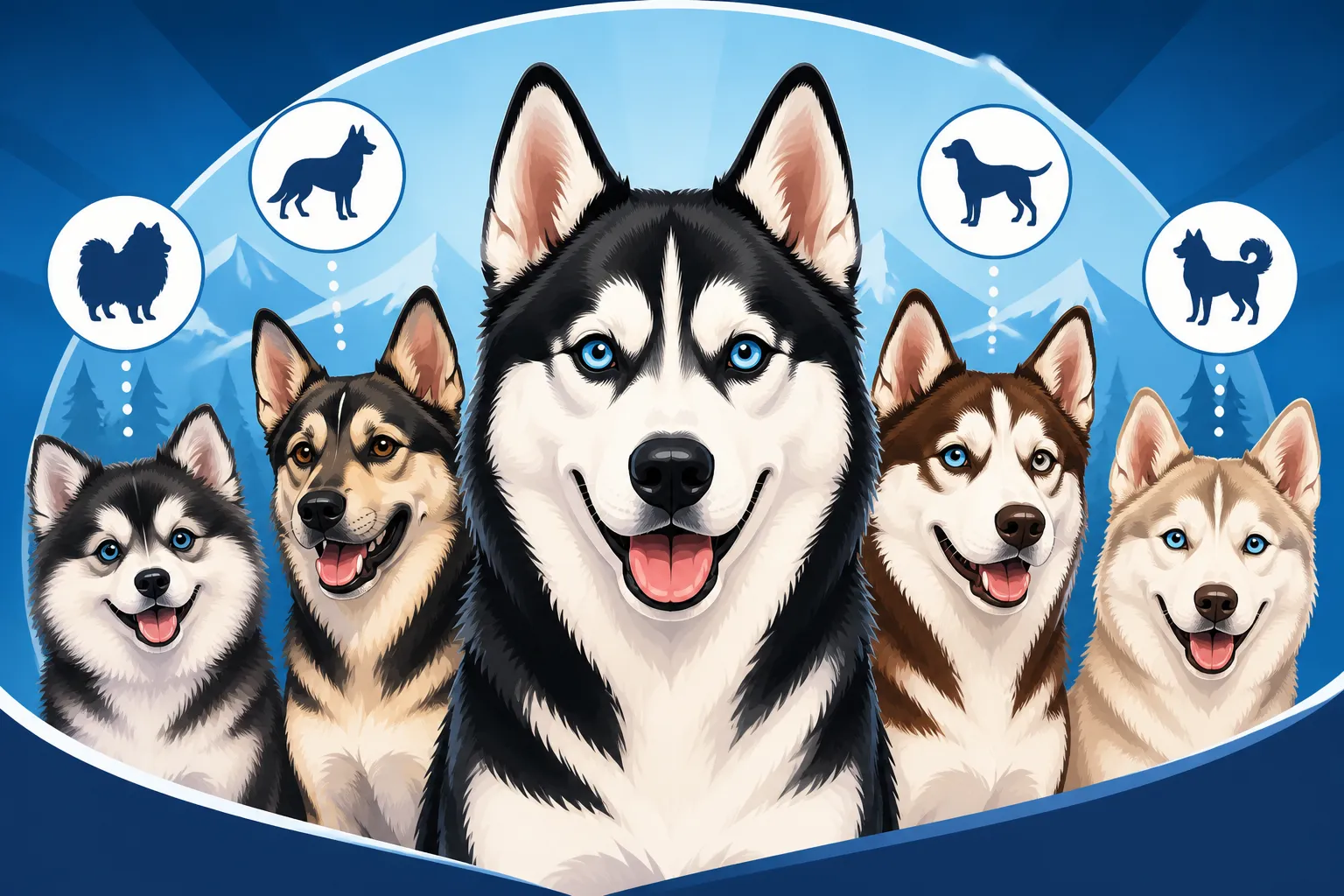
At its core, a Pomsky is a cross between a Siberian Husky and a Pomeranian. The goal is usually to produce a dog that looks like a miniature Husky. This is typically achieved by breeding a female Siberian Husky with a male Pomeranian, primarily due to the significant size difference that would make the reverse pairing difficult and potentially dangerous for the smaller female.
You’ll hear terms like "F1," "F1b," and "F2" when discussing Pomskies. These refer to the generation of the cross:
- F1 (First Generation): A direct cross of a purebred Siberian Husky and a purebred Pomeranian. These dogs have 50% Husky and 50% Pomeranian genetics. Their appearance and size can be the most varied.
- F1b (First Generation Backcross): An F1 Pomsky bred back to one of the original parent breeds (e.g., an F1 Pomsky bred with a purebred Siberian Husky). This is often done to achieve more of a Husky look or size, or sometimes to reduce the Husky percentage.
- F2 (Second Generation): Two F1 Pomskies bred together. This can result in even more varied litters, as the genetic lottery becomes even more complex.
Size-wise, Pomskies are generally smaller than a Siberian Husky but larger than a Pomeranian. They can range quite a bit, from around 10 to 40 pounds, depending on the genetics of the parents and which traits they inherit more strongly. Their coats are typically thick and fluffy, often showcasing the classic Husky markings, and those striking blue or heterochromatic eyes are highly sought after. Finding appropriate food for them can involve looking at both small and medium breed options, sometimes found easily on platforms like Chewy, ensuring the kibble size is right for their mouth.
Temperament and Training Challenges of the Pomsky
Just like with appearance, a Pomsky's temperament can be a mix of both parent breeds. You might get a dog with the high energy, independence, and vocal nature of a Siberian Husky, combined with the sassiness and occasional "big dog in a small body" attitude of a Pomeranian. This combination can be a handful!
- Energy Levels: Expect a high-energy dog. Both Huskies and Pomeranians are active breeds, so a Pomsky will need significant daily exercise and mental stimulation to prevent destructive behaviors.
- Vocalization: Huskies are known for their "talking," howling, and chuffing. Pomeranians can be quite yappy. A Pomsky might inherit either or both of these traits, leading to a very vocal companion. Why Your Siberian Husky Howls and Talks will give you a good idea of what could be in store, even in miniature form.
- Independence and Trainability: Huskies are intelligent but notoriously independent, often described as "stubborn." Pomeranians can also have a strong will. This means training a Pomsky often requires immense patience, consistency, and positive reinforcement. They might pick up commands quickly but choose whether or not to obey them based on what's in it for them.
- Prey Drive: The Siberian Husky has a strong Siberian Husky Prey Drive Around Small Animals, and this can absolutely be present in a Pomsky. Caution is needed around small pets, and a secure yard is non-negotiable.
- Escape Artists: Huskies are famous for their Houdini-like abilities, and a Pomsky, even with its smaller size, can inherit this trait. They might be skilled climbers or diggers. This means secure fencing is still paramount, and they should never be trusted off-leash. This closely ties into Why a Siberian Husky Cannot Be Trusted Off Leash, a trait that often carries over.
Health Considerations Specific to Pomskies
When breeding two different purebreds, the offspring can inherit the genetic health issues common to both parent breeds. It's not a guarantee of improved health, and sometimes, the combination can introduce new complexities.
Common Husky-related health concerns that could appear in a Pomsky:
- Eye Diseases: Huskies are prone to certain eye conditions like juvenile cataracts and progressive retinal atrophy (PRA). It's crucial that Husky parents have up-to-date eye certifications. You can read more about Siberian Husky Eye Disease and the Annual Exam.
- Hip Dysplasia: While Siberian Huskies have a relatively low rate of hip dysplasia compared to some larger breeds, it's still a concern. You can learn about Siberian Husky Hips and Why the Rate Is Low and what to look for in parental health clearances.
- Thyroid Issues: Hypothyroidism is sometimes seen in Huskies.
Common Pomeranian-related health concerns that could appear in a Pomsky:
- Patellar Luxation: This is common in small breeds, where the kneecap slips out of place.
- Tracheal Collapse: Also a concern in small breeds, affecting their breathing.
- Dental Disease: Small dogs are often more prone to crowded teeth and early dental issues.
A responsible breeder should be transparent about the health testing performed on both parent breeds, including OFA (Orthopedic Foundation for Animals) clearances for hips and patellas, and CERF (Canine Eye Registration Foundation) or OFA eye certifications. Without this, you're taking a significant gamble, and a cute puppy could quickly become a very expensive vet bill.
Beyond the Pomsky: Other Common Siberian Husky Mixes
While the Pomsky gets all the press, many other Husky crosses exist, each with its own unique blend of traits. These mixes often arise from accidental breedings or a specific desire to combine certain qualities.
Husky-German Shepherd Mixes: The "Gerberian Shepsky"
This is a popular and striking cross, combining two intelligent, high-energy working breeds. The "Gerberian Shepsky" often inherits the piercing eyes and thick coat of a Husky with the noble, alert posture and protective instincts of a German Shepherd.
- Size and Appearance: These mixes are typically medium to large, often resembling a larger, more robust Husky or a less angular German Shepherd. They can have any combination of coat colors and eye colors from both parents.
- Temperament: This cross can be a fantastic companion for experienced owners who understand the needs of high-drive dogs. German Shepherds are known for their loyalty, trainability, and protective nature, while Huskies bring their independence, vocalizations, and incredible endurance. You'll likely get a very intelligent, energetic dog that thrives on having a job. They will need extensive socialization from a young age and consistent training.
- Training Considerations: Both breeds are intelligent, but the Husky's independence can clash with the German Shepherd's desire to please. Expect a dog that can learn quickly but might test boundaries. Early and consistent training is crucial. These dogs excel in activities like agility, obedience, and even protection work, but need an owner committed to that level of engagement.
- Health: Be aware of potential for hip and elbow dysplasia from both sides, as German Shepherds are particularly prone. Eye conditions from the Husky side are also a possibility.
Husky-Labrador Mixes: The "Labsky" or "Huskador"
Another common mix, combining the friendly, outgoing nature of a Labrador Retriever with the distinctive looks of a Siberian Husky. This cross can produce a wonderfully active and affectionate family dog, but again, with a blend of traits.
- Size and Appearance: Usually medium to large, these dogs can vary greatly. Some might look like a stockier Husky, others like a Lab with blue eyes. Their coats will typically be dense and waterproof, and shedding will be a significant factor.
- Temperament: You're likely to get a very active, friendly, and social dog. Labradors are famously eager to please, which can balance out some of the Husky's independence, potentially making them more amenable to training and recall. However, the Husky's vocalizations and wanderlust can still be strong. They often retain the Labrador's love for water and fetching.
- Training Considerations: Generally, these dogs are highly trainable, especially if they lean more towards the Labrador's desire to work with their human. However, the Husky's high energy and potential for distraction mean consistent positive reinforcement and engaging training sessions are key. They'll need plenty of exercise to prevent boredom and destructive behaviors.
- Health: Both Labs and Huskies can be prone to hip and elbow dysplasia. Labs can also have issues with certain cancers, while Huskies have eye conditions to watch for. It’s important to research both parent lines.
Other Less Common but Fascinating Husky Crosses
The world of dog mixes is vast! Beyond the most popular ones, you might encounter other Husky crosses, each with its own unique blend.
- Husky-Poodle Mix ("Huskypoo" or "Huskydoodle"): This cross is often attempted to create a lower-shedding Husky look-alike, leveraging the Poodle's non-shedding coat. However, "hypoallergenic" is never guaranteed in a mix, and the coat can be incredibly diverse, ranging from wavy to curly. Temperament-wise, you'd get the Poodle's intelligence and desire to please mixed with the Husky's independence and energy. These dogs would need significant grooming.
- Husky-Golden Retriever Mix ("Goberian"): Combining two incredibly friendly, family-oriented breeds, this mix often results in a striking, affectionate dog. Expect high energy, significant shedding (a given with both parents!), and a strong desire for companionship. Their training would likely be more straightforward than a pure Husky due to the Golden's biddability, but they'll still need ample exercise.
- Husky-Pitbull Mix ("Pitsky"): This can result in a powerful, athletic dog with a strong presence. Pitbulls are often misunderstood but are typically very loyal and affectionate with their families. Combined with a Husky's energy and independence, a Pitsky would require an owner committed to extensive training, socialization, and physical activity. Given potential breed restrictions in housing, this mix might face similar challenges as a purebred Pitbull.
It's clear that with any of these mixes, you're not just getting a cute face. You're getting a complex personality and physical traits that require a deep understanding of both parent breeds. Always prepare for the most challenging traits from each side.
Making an Informed Choice: Finding a Responsible Breeder or Rescue
Deciding to bring a Siberian Husky mix into your life is a big step, and it requires careful consideration. Unlike purebred dogs with established breed clubs and well-documented standards, the world of designer mixes can be a bit of a Wild West.
Navigating the World of Hybrid Breeders
When seeking a Husky cross from a breeder, your due diligence needs to be even more rigorous than for a purebred. Many "designer dog" breeders are simply capitalizing on trends, without truly understanding genetics, health, or ethical breeding practices. Here’s what to look for, and what red flags to avoid:
- Transparency and Health Testing: A responsible breeder will be completely open about the health of both parent dogs, providing proof of appropriate health clearances for both breeds. For example, for a Pomsky, they should have OFA clearances for hips and patellas, and eye certifications (like those from OFA or CERF) for both the Husky and Pomeranian parents. If they dismiss health testing as unnecessary for "mixes," walk away. This information is vital for understanding Health Testing Before You Buy a Siberian Husky, and it applies to the mixed breed parents too.
- Meeting the Parents: Always ask to meet both parent dogs. This gives you a chance to assess their temperaments and overall health. Are they friendly? Well-socialized? Do they seem comfortable and happy?
- Living Conditions: Observe the environment where the puppies and parents are raised. It should be clean, safe, and stimulating, not overcrowded or unsanitary.
- Knowledge and Questions: A good breeder will ask you many questions to ensure their puppies go to suitable homes. They should also be very knowledgeable about both parent breeds and the potential outcomes of the cross, including potential challenges.
- Contract and Guarantee: Expect a written contract that outlines health guarantees, return policies, and spay/neuter agreements.
- Red Flags: Avoid breeders who sell multiple breeds, have puppies available constantly, won't let you meet the parents or see the facilities, or pressure you into a sale. Be wary of anyone who makes guarantees about temperament or size, as these are highly variable in mixes. Never buy from a pet store or online marketplace without seeing the breeding operation firsthand.
Remember, a responsible breeder isn't just breeding two dogs together; they are carefully selecting parents based on health, temperament, and genetic suitability, even for a cross.
The Ethical Choice: Rescuing a Husky Mix
It’s a sad reality that many Siberian Huskies and their mixes end up in shelters and rescues. Often, people are unprepared for the high energy, independence, vocal nature, and unique training challenges that even a mixed Husky can present. This is why Why So Many Siberian Huskies End Up in Rescue is such an important topic.
- Breed-Specific Rescues: There are many wonderful Siberian Husky rescues across the country. They often take in Husky mixes too. These organizations are experts in the breed (and its common crosses), can offer invaluable advice, and often have a thorough foster system that helps them assess a dog's true personality in a home environment.
- General Shelters: Don't forget your local animal shelter! Many beautiful Husky mixes find themselves there through no fault of their own. The staff can often give you insights into a dog's known history and behavior.
- What Rescue Offers: Adopting from a rescue or shelter means the dog will likely be spayed/neutered, vaccinated, and microchipped. Rescues also often have a better understanding of a dog's personality because they've spent time with it, often in foster homes. You'll be saving a life and giving a deserving dog a second chance.
- The Unknown Past: While rescue dogs are wonderful, sometimes their history is unknown. This can mean you're signing up for some behavioral challenges you might not anticipate, which will require patience and professional guidance. However, many Husky mixes thrive with a patient and committed owner. Don't forget to stock up on essentials like quality food, toys, and grooming supplies from places like Chewy when you bring your new family member home.
When considering a Husky mix, whether from a breeder or a rescue, be honest with yourself about your lifestyle, experience, and commitment. These are often highly active, intelligent, and strong-willed dogs, even in a smaller package. They need consistent training, plenty of exercise, and a secure environment to thrive.
| Mix Name (Common) | Parent Breeds | Potential Size (Approx.) | Common Traits Inherited | Potential Challenges |
|---|---|---|---|---|
| Pomsky | Siberian Husky x Pomeranian | 10-40 lbs | Husky looks in smaller size, vocal, active, intelligent | High energy, stubbornness, vocal, grooming, escape artist |
| Gerberian Shepsky | Siberian Husky x German Shepherd | 50-90 lbs | Loyalty, intelligence, protective instincts, high drive | High exercise needs, strong will, potential protectiveness |
| Labsky / Huskador | Siberian Husky x Labrador Retriever | 40-80 lbs | Friendly, active, social, love for water, good-natured | High energy, shedding, wanderlust, can be destructive if bored |
| Huskydoodle / Huskypoo | Siberian Husky x Poodle | Varies (20-60 lbs) | Intelligence, potential for lower shedding (not guaranteed) | High grooming needs, Poodle energy + Husky energy, independence |
| Goberian | Siberian Husky x Golden Retriever | 50-80 lbs | Friendly, affectionate, intelligent, good with families | Extreme shedding, high energy, can be prone to separation anxiety |
| Pitsky | Siberian Husky x American Pit Bull Ter | 40-75 lbs | Athletic, loyal, affectionate, strong-willed, high energy | Strong prey drive, can be dog-selective, requires confident owner |
Disclaimer
This article is for general informational purposes only and does not constitute professional advice. Laws, prices and regulations vary by location and change over time. Consult a qualified professional for guidance on your specific situation.