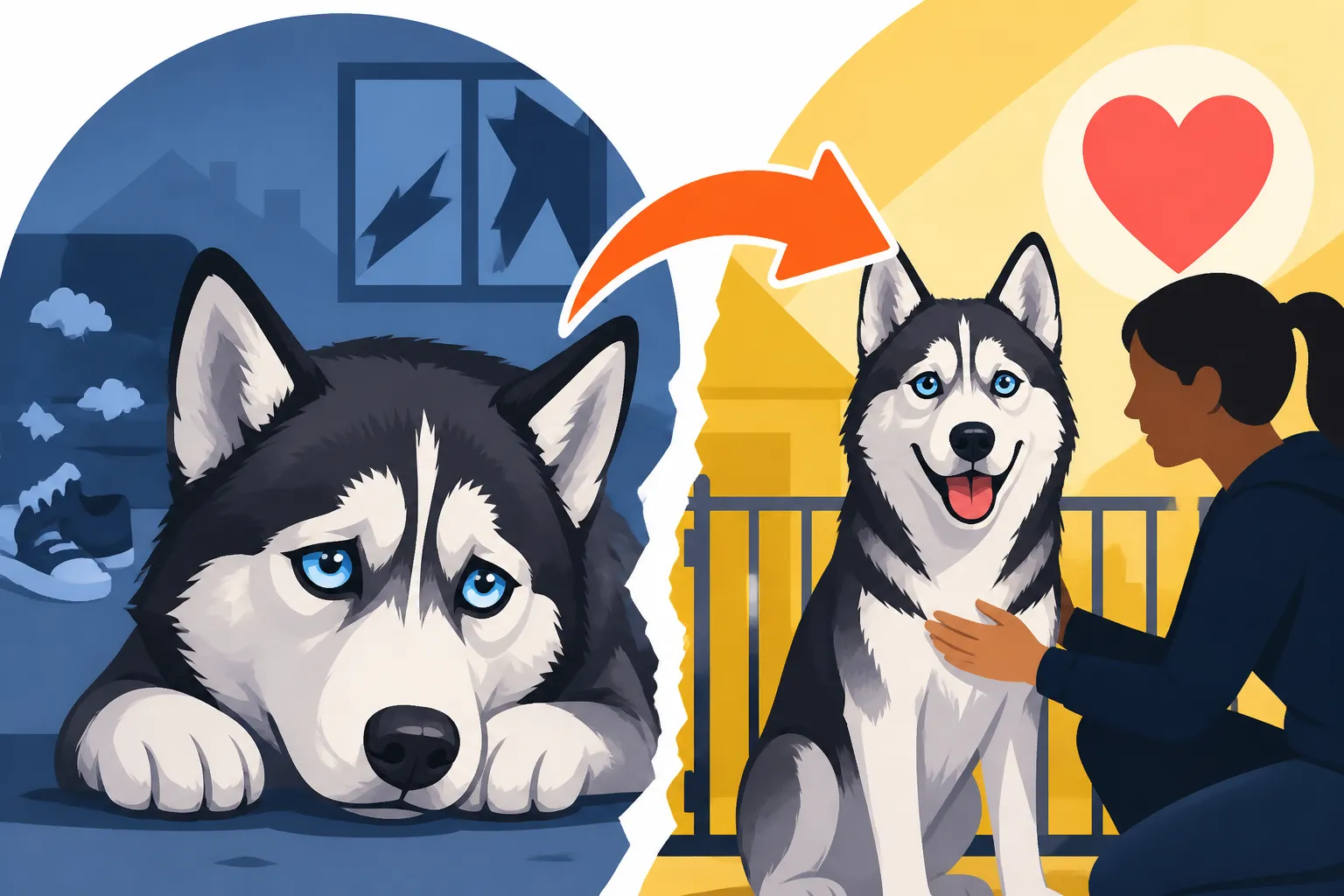
Why So Many Siberian Huskies End Up in Rescue
It's heartbreaking to see, isn't it? The sheer number of Siberian Huskies filling up shelters and breed-specific rescues can feel overwhelming. Many prospective owners fall in love with their striking looks, those piercing blue eyes, and that majestic wolf-like appearance, only to find themselves completely unprepared for the reality of living with such a unique and demanding breed. This comprehensive guide aims to shed light on the core reasons why so many Siberian Huskies ultimately end up surrendered, helping you understand the common pitfalls and avoid them if you're considering bringing one of these magnificent dogs into your life.
The Lure of the Look: Instagram vs. Reality
Let's be honest: Siberian Huskies are breathtakingly beautiful. Their thick coats, often vibrant eye colors, and noble posture make them incredibly photogenic. It's easy to scroll through social media, see a stunning Husky, and think, "I want one!" But this instant attraction often blinds people to the deep-seated instincts and needs that come with the breed, leading to a massive disconnect between expectation and daily life.
The "Wolf-Like" Allure and Media Portrayals
The romanticized image of a wolf, or a dog that looks strikingly similar, holds a powerful appeal. For many, the Siberian Husky represents this wild beauty, an untamed spirit brought into the home. This image has been amplified by popular culture, particularly by shows where wolf-like dogs play significant roles. Remember the huge surge in popularity for Huskies after certain fantasy series hit the screens? We've seen a noticeable trend dubbed The Game of Thrones Wave of Siberian Huskies, where people brought home puppies based on aesthetics alone, completely unaware of the breed's true nature. They imagined a loyal, calm companion, a silent protector. What they got was a dog bred for endurance, independence, and an insatiable desire to run.
These media portrayals rarely show the hours of training, the demolished furniture, the carefully secured yard, or the constant mental and physical stimulation required. They don't show the reality of what it's like to live with a dog that is, at its core, a primitive breed with strong instincts. It creates an idealized fantasy that quickly shatters against the demands of a real-life Husky.
Underestimating the Breed Standard
The official breed standard for the Siberian Husky isn't just about appearance; it describes the very essence of the dog. It talks about their desire to run, their friendly but independent nature, and their high intelligence combined with a certain "mischievous" streak. Many people simply don't take the time to truly understand Siberian Husky Temperament and What the Standard Says. They see the size and assume it aligns with other medium-to-large breeds, not realizing that a Husky's energy levels and needs far outstrip many of them.
This underestimation extends to their physical capabilities too. A Husky isn't just a dog; it's an athlete. They're built for pulling light loads over vast distances in harsh conditions. That inherent drive doesn't simply disappear because they're now living in a suburban backyard. Ignoring this fundamental aspect of their being sets both dog and owner up for failure. It's like buying a high-performance sports car and expecting it to act like a minivan; the engineering simply isn't designed for it.
Impulse Adoptions and Lack of Research
The beautiful facade often leads to impulse decisions. Someone sees a cute Husky puppy, perhaps at a pet store (a huge red flag in itself, by the way), or advertised online, and they fall in love instantly. The emotional appeal overrides logical consideration. They might do a quick Google search, but a surface-level understanding is no match for the depth of knowledge required to truly manage a Husky.
Real research involves talking to experienced Husky owners, breeders, and rescue volunteers. It means spending time with adult Huskies to understand their quirks, their vocalizations, and their boundless energy. Skipping this crucial step is a common reason why dogs end up in rescue. When the reality of the breed's demands hits, owners often feel overwhelmed, frustrated, and regretful, leading them to surrender their beloved, but misunderstood, pet. It’s a sad cycle that repeats far too often.
Unmatched Energy and Exercise Requirements
One of the absolute biggest reasons Siberian Huskies find themselves homeless is a profound misunderstanding of their energy levels. These aren't dogs content with a quick walk around the block or a romp in a tiny backyard. They were literally bred to run for hours on end, covering vast distances. That drive is hardwired into their DNA.
More Than a Daily Walk: The Need for a "Job"
When I say a Siberian Husky needs exercise, I don't mean a leisurely stroll. I mean a serious, focused outlet for their incredible stamina. We're talking about dogs that can easily run 10-15 miles a day, every day, without batting an eye. Most people are simply not equipped to provide that kind of physical engagement. A thirty-minute walk, or even an hour, is often barely a warm-up for a Husky. They thrive when they have a "job" – whether that's pulling a sled, a cart, or even just a person on skis or a bike. How Much Exercise a Siberian Husky Really Needs is far beyond what most casual dog owners can realistically provide.
Imagine being an Olympic marathoner trapped in a small office cubicle for eight hours a day, then given a 10-minute walk. That's how a Husky often feels with inadequate exercise. Their bodies are built for movement, their minds for problem-solving in motion. Without that outlet, all that pent-up energy has to go somewhere, and it rarely goes anywhere good for your home or your sanity.
Boredom-Induced Destruction and Behavioral Issues
When a Husky is under-exercised and bored, they become incredibly creative in finding ways to entertain themselves. And believe me, their ideas of fun usually involve destruction. This isn't out of malice; it's simply an outlet for their boundless energy and intelligent minds. Chewing through furniture legs, digging craters in the yard, shredding pillows, or even tearing up carpets are all common manifestations of a bored Husky. I’ve heard countless stories of people coming home to find their living room redecorated by a frustrated Husky, and it’s always heartbreaking because it’s so preventable.
This destructive behavior often escalates, creating a spiral of frustration for the owner, who then attributes it to "bad" behavior rather than a lack of fulfillment for the dog's intrinsic needs. A Husky needs mental stimulation just as much as physical. Puzzle toys, training sessions, and interactive games can help, but they are never a substitute for true physical exertion. Investing in a truly robust crate, perhaps from a brand like Chewy that offers heavy-duty options, can be a temporary solution for containment when you can't supervise, but it doesn't solve the underlying issue. As we've discussed, Choosing a Crate a Siberian Husky Cannot Bend is often a necessary skill for Husky owners!
The Impact of Insufficient Exercise on Temperament
An under-exercised Husky isn't just destructive; they can also develop other problematic behaviors. They might become overly vocal, constantly whining or howling (we'll get to that later!). They can become hyperactive, jumping on guests, nipping, or constantly seeking attention in annoying ways. Some might even become withdrawn or anxious, though this is less common with Huskies whose natural temperament leans towards resilience.
The underlying problem is that their fundamental needs aren't being met. This leads to a stressed, frustrated dog, and a stressed, frustrated owner. When owners become exasperated by these behaviors, they often conclude that the dog is "untrainable" or "too much to handle," when in reality, the dog is simply acting out due to unmet instinctual drives. It's a tragedy when such a magnificent dog is labeled "difficult" for simply being what it was bred to be.
The Independent Spirit: Training Challenges
Siberian Huskies are intelligent, no doubt. But their intelligence isn't always about eager-to-please obedience. It's an independent, problem-solving kind of intelligence, honed over generations of making decisions on their own while pulling a sled team. This means training a Husky is a marathon, not a sprint, and requires a different approach than with many other breeds.
The Myth of Stubbornness vs. Instinctive Independence
Many owners describe their Huskies as stubborn, but it's more accurate to call them independent. A Husky isn't trying to defy you; they're often weighing whether what you're asking is worth their while. They might understand a command perfectly, but if there's something more interesting happening – a squirrel, a leaf blowing, or just the call of the open air – your command suddenly loses its appeal. This isn't malice; it's a deeply ingrained trait from their working history. Sled dogs needed to think for themselves, sometimes overriding a musher's command if it meant avoiding danger.
This independence means that rote obedience training often feels like a battle of wills. It requires immense patience, consistency, and a deep understanding of what truly motivates your particular Husky. What works for a Golden Retriever or a Border Collie, breeds eager to please and highly biddable, often falls flat with a Husky. Owners who expect immediate, perfect compliance are quickly disillusioned.
Recall Reliability: A Constant Battle
This independent streak, combined with their incredible prey drive and desire to run, makes recall one of the biggest challenges for Husky owners. A phrase often heard in Husky circles is, "A Husky off-leash is a gone Husky." It's not an exaggeration. For many, Why a Siberian Husky Cannot Be Trusted Off Leash is a hard lesson learned. They might come when called 99 times, but that one time they spot a rabbit, a deer, or simply decide to explore, they'll be off, ignoring all commands, ears tuned out to your frantic calls. Their prey drive can literally override everything else.
The consequences of a poor recall are severe. Escaped Huskies are frequently hit by cars, get into fights with other animals, or become lost. Owners are often forced to choose between keeping their Husky on a leash 100% of the time, which feels restrictive for such an athletic dog, or risking their safety. This can lead to immense stress and frustration, with some owners giving up on providing adequate outdoor exercise rather than facing the constant worry of an escape.
The Need for Consistent, Positive Reinforcement
Training a Siberian Husky demands a highly motivating, positive reinforcement approach. Force, harsh corrections, or punishment will quickly shut a Husky down or make them even more resistant. They respond best to rewards they truly value – high-value treats (think pieces of cooked chicken or cheese), favorite toys, or engaging games. Consistency is also key; every family member needs to be on the same page with commands and expectations, every single time.
Short, fun training sessions are far more effective than long, repetitive ones that bore a Husky. They thrive on variety and challenge. Owners who get frustrated by the perceived "stubbornness" and resort to punitive methods often find their relationship with their Husky breaking down, further exacerbating behavioral problems. It's about building a partnership based on trust and mutual respect, understanding that your Husky might need a little more convincing than other breeds that doing what you ask is the best option for them.
Master Escapologists: Fencing and Containment
If there's one thing almost every Siberian Husky owner can tell you, it's that their dogs are escape artists par excellence. It's not just a cute quirk; it's a serious behavioral trait that puts their lives at risk and causes immense stress for owners. Their instinct to roam is incredibly strong, and they've evolved ingenious ways to fulfill it.
Jumping, Digging, and Gate-Opening Prowess
Siberian Huskies view fences as suggestions, not barriers. A standard four-foot fence is often little more than a launching pad for a determined Husky, who can easily clear six feet with a running start, or even climb chain link like a ladder. If they can't go over, they'll go under. Their digging prowess is legendary; they can excavate impressive tunnels in a surprisingly short amount of time, especially if they catch a scent or hear something on the other side. Stopping a Siberian Husky From Escaping the Yard often requires substantial investment and creativity.
And then there are the brains. Many Huskies can figure out how to open latches, gates, and even doors. I’ve known Huskies who could turn doorknobs and slide deadbolts. This combination of physical ability, strong motivation, and intelligence means that traditional containment methods often fail spectacularly, leaving owners constantly worried about their dog's safety.
The Roaming Instinct and Its Dangers
This isn't just about escaping for a quick romp; it's about a deep-seated roaming instinct. Huskies were bred to travel vast distances, to explore, and to follow scents. When they escape, they don't necessarily want to come back home. They want to run. This makes them incredibly vulnerable to traffic accidents, encounters with aggressive wildlife or other dogs, or getting lost permanently.
Owners often report that their escaped Huskies travel miles from home before being found, often by animal control or kind strangers. The stress, fear, and financial implications (fines, vet bills from injuries) of a lost Husky are immense. This constant vigilance required for containment can be exhausting and is a significant factor in owners deciding they simply can't handle the breed anymore.
Why Invisible Fences Don't Work for Huskies
A common misconception is that an "invisible" or electronic fence will solve the Husky's escape problem. This could not be further from the truth. For a breed with such a powerful drive to run and such a high pain tolerance, the momentary zap from an invisible fence is often just a minor inconvenience. They will often blow right through it if motivated enough by prey, another dog, or the sheer desire for adventure.
Not only are they ineffective, but invisible fences can also be dangerous for Huskies. A Husky might be deterred from leaving, but if a loose dog or a wild animal enters the property, the Husky is then trapped inside the "fence" with no way to escape, potentially leading to serious injury. Furthermore, the constant corrections can cause anxiety and fear in some dogs, leading to other behavioral problems. Understanding that these tools are generally unsuitable for the breed is crucial for prospective owners.
High Prey Drive and Multi-Pet Households
Another major source of conflict and subsequent surrender for Siberian Huskies comes from their inherent, strong prey drive. This isn't something that can be "trained out" entirely; it's an instinctual part of who they are, bred into them over thousands of years as working dogs in harsh environments.
The Instinct to Chase: Small Animals at Risk
Siberian Huskies were historically relied upon to hunt small game for sustenance in addition to pulling sleds. That means they have an incredibly keen eye for movement, a lightning-fast response, and a powerful drive to chase, capture, and, unfortunately, kill small, furry creatures. Squirrels, rabbits, cats, chickens, and even small dogs can all trigger this instinct. Many owners have been horrified to witness their beloved Husky catch and kill a neighbor's cat or a backyard critter. Siberian Husky Prey Drive Around Small Animals is a stark reality that must be managed.
This is not a sign of a "bad" dog, but simply a dog acting on centuries of genetic programming. However, in a modern suburban or rural setting, it can lead to tragic outcomes, damaged relationships with neighbors, and immense guilt for the owner. It means a Husky can never be left unsupervised with smaller pets, and walks require constant vigilance.
Introducing Huskies to Existing Pets
Bringing a Siberian Husky into a home with existing cats, rabbits, or even very small dog breeds requires extreme caution, meticulous management, and realistic expectations. While some Huskies can live peacefully with cats if introduced properly as puppies and raised with them, it is never a guarantee. Even then, an unsupervised moment or a sudden movement can trigger the instinct. It's often safer to assume that a Husky's prey drive will eventually manifest.
For this reason, many rescue organizations have strict policies about placing Huskies in homes with cats or other small animals. They understand the heartbreak and danger involved. Owners who ignore this warning, hoping their Husky will be "different," often find themselves in an impossible situation where they must choose between their new Husky and their established small pets.
Managing Prey Drive in a Varied Environment
Managing a Husky's prey drive isn't about eliminating it; it's about channeling and controlling it. This means:
- Constant supervision: Never leave a Husky unsupervised with smaller animals.
- Secure containment: Ensure your yard is impenetrable to prevent your Husky from escaping and hunting local wildlife or pets.
- Leash vigilance: On walks, always use a secure harness and leash, and be prepared for sudden lunges towards perceived prey.
- Training: While you can't erase prey drive, you can work on rock-solid "leave it" and "come" commands, though they will be severely tested.
- Appropriate outlets: Engage your Husky in activities that mimic hunting, like fetch, flirt poles, or scent work, under controlled conditions.
Understanding and respecting this fundamental aspect of Husky behavior is critical to preventing heartbreaking situations and ensuring the safety of all animals in the household and neighborhood. Failure to do so is a frequent cause of surrender.
The Great Fur Tsunami: Grooming Realities
Anyone who has lived with a Siberian Husky will tell you: they shed. A lot. It's not just regular shedding; it's a phenomenon known as "blowing coat," and it can be a shock to the unprepared owner. Their magnificent double coat, designed for extreme cold, requires significant care, and the sheer volume of fur can be overwhelming.
The Double Coat and Seasonal "Blows"
Siberian Huskies have a dense double coat consisting of a soft, downy undercoat for insulation and longer, coarser guard hairs that protect against elements. Twice a year, typically in spring and fall, they "blow" their undercoat. This isn't just increased shedding; it's a massive expulsion of fur that can last for several weeks. During a coat blow, it can feel like you're living in a snow globe, but instead of snowflakes, it's dog hair. Siberian Husky Coat Blow and the Six Weeks It Lasts is a rite of passage for every Husky owner, and it's far more intense than many realize.
People who are particular about cleanliness or have allergies are often completely unprepared for this reality. The hair gets everywhere: on furniture, clothes, food, and even somehow finds its way into sealed containers. It's an ongoing battle against fur tumbleweeds, and for some, it's simply too much to handle.
Daily Maintenance and Shedding Expectations
Even outside of a full coat blow, Huskies are not low-shedding dogs. They shed year-round, though less dramatically. Regular grooming is essential to keep their coat healthy, prevent matting (especially behind the ears and under the legs), and manage the shedding. This means brushing several times a week, and daily during a coat blow, using specialized tools like undercoat rakes and de-shedding brushes.
The idea that a Husky is a "wash-and-wear" dog is a myth. Their coat is high-maintenance, requiring consistent effort. If the coat isn't properly maintained, it can lead to skin issues, overheating (especially if matted), and an even greater volume of loose hair in the home. Many owners become overwhelmed by the constant cleaning and grooming demands, adding another layer of frustration to their ownership experience.
The Cost and Effort of Professional Grooming
For those who can't keep up with the shedding themselves, professional grooming becomes an option, but it comes with its own considerations. A full de-shedding service for a Siberian Husky is not cheap. Groomers often charge based on breed, size, and coat condition, and a Husky's thick double coat takes time and specialized equipment (like high-velocity dryers) to properly de-shed. While many pet supply retailers like Chewy offer a wide range of grooming tools for at-home care, the sheer amount of fur can still be a deterrent for DIY.
Getting these services done twice a year during coat blows, plus regular maintenance grooms, can add up significantly. Some owners balk at the cost, or simply don't make the time for it, leading to a poorly maintained coat and an even bigger mess at home. The financial and time commitment to grooming is another overlooked aspect of Husky ownership that contributes to surrenders.
The Husky Howl: Vocalization and Noise
Siberian Huskies are not big barkers, at least not in the traditional sense. But what they lack in barking, they more than make up for in their incredible range of other vocalizations. They are talkers, singers, and howlers, and their unique communication style can be a delightful quirk for some, and an absolute nightmare for others, especially those living in close quarters.
Talking, Yelping, and the Iconic Howl
The Husky howl is famous. It's a deep, mournful, or sometimes joyous sound that connects them to their ancestral past. But they don't just howl; they "talk." This involves a complex repertoire of yips, grumbles, groans, "woo-woos," and expressive noises that sound uncannily like they're trying to have a conversation with you. They're incredibly vocal, expressing their opinions, desires, and excitement through sound. Why Your Siberian Husky Howls and Talks is a fascinating subject, but living with it is a different matter.
While this can be endearing, it's also loud. Their vocalizations carry, and an excited or frustrated Husky can create a significant amount of noise. This is rarely mentioned in those glamorous social media posts, but it's a daily reality for owners.
Neighbors and Noise Complaints
This high level of vocalization, particularly howling, can quickly become a major problem for owners, especially those in apartments, townhouses, or close-knit suburban neighborhoods. What might be charming to a Husky owner can be infuriating to a neighbor trying to enjoy a quiet evening or get some sleep. Constant noise complaints from neighbors, and even threats from landlords or HOAs, are a common stressor for Husky owners.
Many owners find themselves constantly apologizing, trying to silence their dog, and feeling immense pressure to mitigate the noise. This often leads to feelings of guilt and inadequacy, eventually resulting in the difficult decision to surrender the dog rather than face ongoing conflict with neighbors or housing authorities.
Managing Vocalization in Various Living Situations
Managing a Husky's vocalization isn't about silencing them entirely; it's about understanding why they're vocalizing and addressing the underlying cause. Common reasons include:
- Boredom and lack of exercise: An understimulated Husky will often howl or "talk" out of frustration.
- Separation anxiety: Huskies are pack animals and can become very distressed when left alone, leading to prolonged howling.
- Attention-seeking: If a Husky learns that vocalizing gets them what they want, they will continue to do it.
- Responding to external stimuli: Sirens, other dogs barking, or even certain sounds can trigger a Husky's desire to "sing."
For owners in apartments or homes with thin walls, managing this can be incredibly challenging. It often requires a combination of increased exercise, mental stimulation, desensitization training, and sometimes even professional guidance. Without a dedicated effort to understand and manage their vocal habits, the noise factor alone can be a deal-breaker for many unprepared owners.
The Long-Term Commitment: Time and Financial Investment
Beyond the immediate challenges of energy, training, escape, prey drive, and grooming, owning a Siberian Husky is a significant long-term commitment of both time and money. Many people underestimate the true financial burden and the sheer amount of daily dedication required for the average lifespan of The Average Siberian Husky Lifespan.
Unexpected Vet Bills and Specialized Care
While generally a healthy breed, Huskies are not immune to health issues. They are prone to certain eye conditions like Siberian Husky Eye Disease and the Annual Exam, cataracts, and progressive retinal atrophy, which can require expensive specialist veterinary care. They can also suffer from zinc-responsive dermatosis, which requires lifelong supplementation, and hip dysplasia, though Siberian Husky Hips and Why the Rate Is Low compared to many large breeds. Zinc Doses Used in Siberian Huskies and the ongoing cost of medication can add up.
Then there are unexpected emergencies. A Husky that escapes and gets hit by a car, or gets into a fight, can rack up thousands of dollars in vet bills in a single incident. Pet insurance is often recommended, but many owners don't consider it or aren't prepared for the monthly premiums and deductibles. The financial strain of unforeseen medical expenses can quickly overwhelm an owner who hasn't budgeted for them, sometimes leading to the agonizing decision to surrender a sick or injured dog they cannot afford to treat. The Yearly Cost of Owning a Siberian Husky is far more than just food and a few toys.
Training and Enrichment Costs
As we've discussed, Huskies need consistent, specialized training and ample enrichment. This isn't free. Professional trainers who understand independent, primitive breeds can be costly, especially for ongoing sessions or behavioral consultations. Good quality harnesses, long lines for recall practice, and durable toys that can withstand a Husky's chewing prowess also add up. Brands like Chewy offer a huge selection of enrichment toys, but continually replacing them or finding new ones to keep a Husky engaged can be a recurring expense.
Beyond physical items, there's the cost of time. Enrolling in dog sports like canicross, bikejoring, or even sledding (if you're lucky enough to live in an appropriate climate) often involves gear, entry fees, and travel. These activities are vital for a Husky's well-being but require significant investment. Owners who aren't prepared for these ongoing commitments often find their Husky becoming destructive or difficult, leading back to the rescue pipeline.
The True Lifetime Cost of Ownership
When you add up the initial purchase or adoption fee, food, routine vet care, preventatives, grooming tools or services, training classes, quality gear, emergency funds, and potential specialized medical care, the lifetime cost of owning a Siberian Husky can be staggering. This isn't a "cheap" dog to own by any stretch of the imagination. Costing Out a Siberian Husky From Puppy to Senior reveals that it's a multi-thousand-dollar commitment spanning over a decade.
Many new owners focus only on the initial puppy price, completely neglecting the financial obligations that will continue month after month, year after year. When unforeseen circumstances arise – a job loss, a move, a new baby – these costs can become unmanageable. It’s important for prospective owners to honestly assess their financial stability and ability to commit to these expenses for the dog’s entire life. Unfortunately, for too many, this realization comes too late, and the Husky pays the price. That's why understanding What New Siberian Husky Owners Underestimate is so crucial. These dogs deserve a forever home, and that home needs to be prepared for everything that comes with them, even Caring for a Siberian Husky Past Ten.
Conclusion: Understanding Before Committing
The heartbreaking truth is that Siberian Huskies end up in rescue shelters for a multitude of reasons, almost all of which stem from a fundamental mismatch between owner expectations and the reality of the breed's needs. They are not like many other popular breeds; their genetics, honed over centuries in extreme conditions, have created a dog that is beautiful, intelligent, resilient, and utterly unique.
They require immense physical exercise, patient and consistent training, foolproof containment, careful management of their prey drive, and a commitment to their significant grooming and financial needs. When these requirements are not met, the result is often a frustrated, destructive, and misunderstood dog, and an overwhelmed, regretful owner.
If you're considering a Siberian Husky, please, do your homework. Talk to experienced owners, volunteer at a Husky rescue, and truly understand the demands. Don't let their stunning looks cloud your judgment. A Siberian Husky is a wonderful companion for the right person – someone active, patient, consistent, and willing to embrace their magnificent quirks. But they are not a dog for everyone, and recognizing that upfront is the kindest thing you can do for yourself and for these incredible animals.
Disclaimer
This article is for general informational purposes only and does not constitute professional advice. Laws, prices and regulations vary by location and change over time. Consult a qualified professional for guidance on your specific situation.