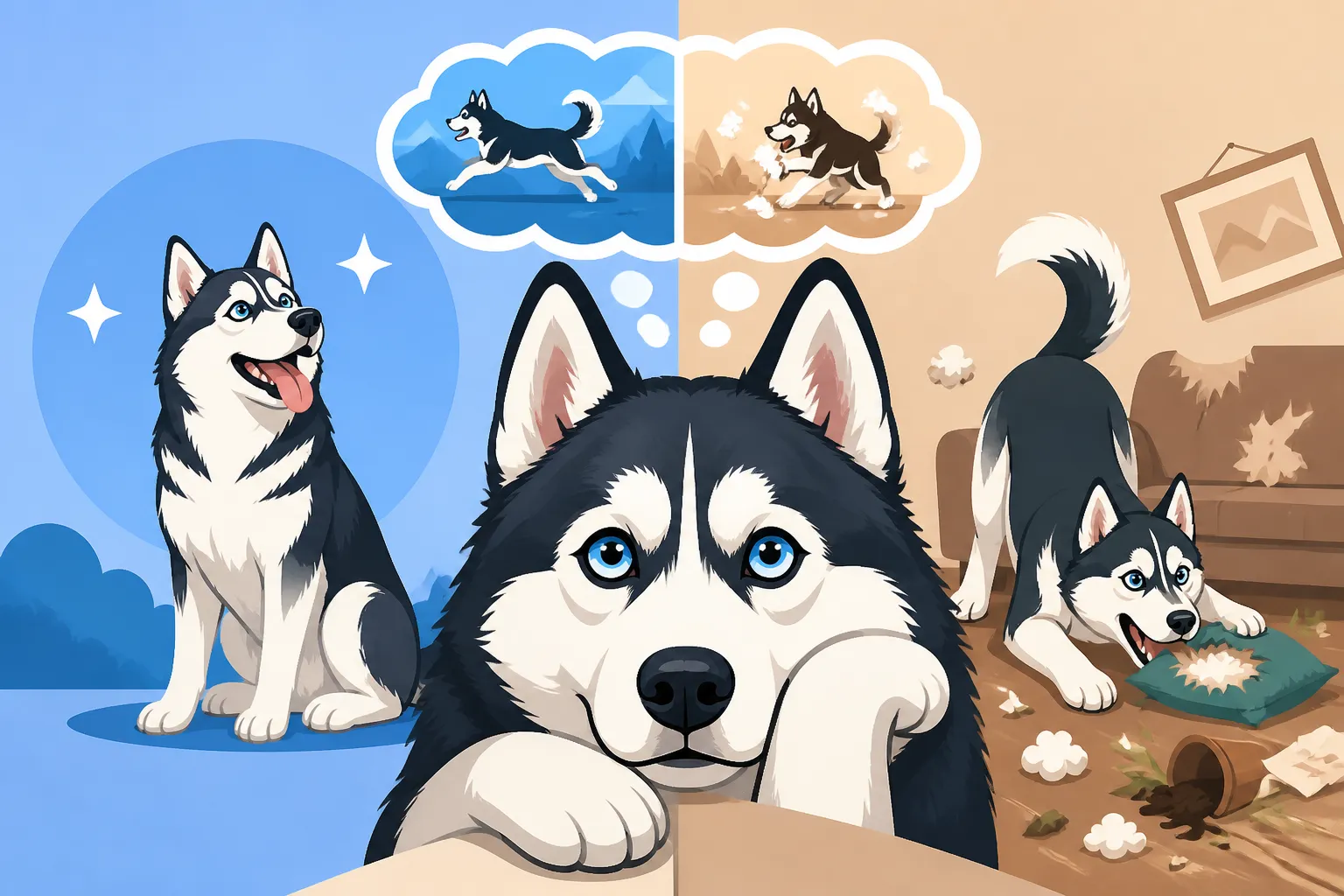
What New Siberian Husky Owners Underestimate
A Siberian Husky can look like an ideal adventure partner, until the digging, shedding, escape attempts, and stubbornly selective listening become daily realities. New owners often prepare for an energetic dog but underestimate how much structure and supervision that energy requires. This guide covers the less obvious demands of Husky ownership, so you can plan for the dog you’ll actually live with.
The daily commitment is more than a long walk
Exercise needs change with the dog
Huskies were bred to travel, and a quick walk around the block may not satisfy a healthy adult’s need for activity. But exercise isn’t simply a matter of going farther every day. Age, health, weather, fitness, and the individual dog all affect what’s appropriate. A young puppy, for example, shouldn’t be pushed into sustained, high-impact running while its body is still developing.
Many new owners picture a morning walk and an evening walk, then find that their Husky is still restless at home. The dog may need a mix of physical activity, sniffing opportunities, training, and safe play—not just more distance. A brisk walk with time to explore and a few short training games can be more engaging than marching the same route at the same pace.
Plan for flexibility, too. On a cool day, your dog may be ready for a longer outing. In warm or humid conditions, strenuous activity can become risky, particularly for a thick-coated dog. Learn your dog’s limits, check for signs of overheating, and choose cooler times of day when the weather calls for it. For a more detailed look at balancing activity, see How Much Exercise a Siberian Husky Really Needs.
Mental work is part of the routine
A Husky who has walked a lot can still be bored. These dogs are curious and capable problem-solvers, and they may put that ability to work on things you’d rather they leave alone: a latch, a food container, a garden bed, or the corner of a couch.
Simple mental activities can make ordinary routines more satisfying. Let your dog sniff during walks, practise a few familiar cues, scatter part of a meal for them to find, or use a food puzzle that is safe and suited to their skill level. Rotate activities when one becomes too easy. Supervise new puzzle toys, especially if your dog likes to chew or dismantle things.
You don’t need to invent elaborate games every day. A short training session before dinner, a sniffing game while you put groceries away, and a calm settle exercise after a walk can add useful structure. The goal is to give your Husky appropriate ways to explore and think—not to keep them constantly entertained.
Freedom and safety require careful planning
A strong bond does not guarantee off-leash recall
Huskies can be affectionate and connected to their people while still choosing to follow a smell, chase, or interesting movement instead of returning when called. New owners sometimes interpret a reliable response in a quiet living room as proof that recall will hold beside a trail, park, or open field. Those settings are much harder.
Practise recall gradually in secure places, reward generously, and use a long line where it’s safe and appropriate. A long line gives your dog room to explore while helping prevent a sudden dash from turning into a dangerous situation. Avoid testing recall near roads, wildlife, or other tempting distractions before your dog has demonstrated consistent responses in easier settings.
Even with training, many Husky owners choose to keep their dogs leashed outside secure areas. That isn’t a failure or a lack of trust; it’s a practical response to a dog who may have a strong urge to run. For more on the limits of recall and the risks of relying on it, read Why a Siberian Husky Cannot Be Trusted Off Leash.
A yard is not automatically a safe place
A fenced yard is useful, but it shouldn’t be treated as a substitute for supervision. Some Huskies dig, climb, squeeze through gaps, or take advantage of an open gate. A dog who has been quiet in the yard for months may still notice a new opportunity to escape.
Walk the fence line regularly and check for loose boards, holes, gaps near gates, and objects your dog could use as a step. Make sure gates close securely, and establish a household rule that people confirm the gate is latched before letting the dog outside. Keep identification up to date, and ask your veterinarian about microchipping if your dog isn’t already chipped.
For many owners, the most important adjustment is changing the assumption that “the yard is fine for a while” means “the yard is safe without checking.” Supervision matters, particularly when you’re still learning your dog’s habits. If you’re planning a secure setup, Stopping a Siberian Husky From Escaping the Yard covers common escape risks in more detail.
| What new owners may assume | What is safer to plan for |
|---|---|
| A long walk will tire the dog out | Combine physical activity with sniffing, training, and rest |
| A trained recall means off-leash freedom is safe | Use secure areas and a leash or long line where needed |
| A fenced yard can be left unsupervised | Check the fence and supervise outdoor time |
| A quiet dog is always comfortable alone | Build alone time gradually and watch for signs of distress |
| A thick coat means the dog can handle any cold or heat | Adjust activity and outdoor time to conditions and the individual dog |
The coat and household take more work than expected
Shedding becomes a household routine
A Husky’s coat can leave hair on clothes, furniture, rugs, car seats, and places you didn’t realize a dog could reach. Shedding often becomes especially noticeable during seasonal coat changes, when loose undercoat comes away in large amounts. A quick brush now and then may not feel like enough during those periods.
Set up a grooming routine before the coat blow arrives. Brush in manageable sessions, use tools designed for the coat, and check areas that can tangle, such as behind the ears. Keep a lint roller or pet-safe cleaning tools where you’ll actually use them. If brushing becomes a wrestling match, work on making it a calm, rewarding habit rather than trying to finish the whole coat in one go.
Expect to clean more often than you did before your Husky moved in. That doesn’t mean your home needs to be spotless; it means being realistic about the hair. A washable blanket on a favorite resting spot and a regular vacuuming routine can make the mess easier to manage. For what seasonal shedding can involve, see Spring and Fall Sheds in a Siberian Husky.
The double coat needs thoughtful care
The dense coat is part of how a Husky manages its environment, and shaving it down is not a quick fix for summer heat or shedding. Shaving can interfere with the coat’s normal function and may expose skin to sun and irritation. If you’re worried about your dog’s temperature or coat condition, ask a veterinarian or an experienced groomer familiar with double-coated breeds before making a major change.
Regular brushing helps remove loose hair and gives you a chance to notice skin changes, mats, or debris. Baths are usually occasional rather than frequent, but a wet coat needs to be dried thoroughly, including down to the undercoat. Dampness trapped near the skin can contribute to discomfort and skin problems.
It’s also easy to confuse trimming with shaving. Some limited tidying, such as around the feet, may be appropriate for practical reasons, but removing the coat across the body is a different matter. If a groomer suggests shaving your Husky because the dog is hot or shedding, ask about alternatives and discuss the concern with your veterinarian. Why You Must Never Shave a Siberian Husky explains why the coat deserves careful handling.
Household fit, training, and costs deserve honest thought
Prey drive can complicate life with small animals
A Husky may live peacefully with another pet, but that outcome should never be assumed from breed friendliness or a few calm introductions. Some Huskies have a strong chase response toward cats, rabbits, poultry, or wildlife. A dog can also behave differently indoors, in the yard, or when a small animal suddenly runs.
Plan introductions carefully and use physical separation when you can’t supervise. Baby gates, closed doors, secure enclosures, and leashes can help manage space, but they don’t replace close attention. Give existing pets safe areas the dog cannot access, and don’t leave a new dog alone with a small animal while you’re still learning how they respond to each other.
Training can improve safety and impulse control, but it cannot guarantee that prey drive will disappear. A household with a cat may need to manage doors and rooms for the long term. For practical considerations around introductions and daily management, see Siberian Huskies With Cats Under One Roof.
Training takes consistency, not a battle of wills
A Husky who seems to ignore a cue may understand it perfectly well and still find the environment more rewarding. Repeating a command louder and louder can turn training into background noise. Short, clear sessions with a useful reward and fewer distractions tend to be more productive than long drills that leave both of you frustrated.
Start with basics that matter in daily life: responding to their name, waiting at doors, settling on a mat, accepting handling, and walking on leash without constant pulling. Practise in easy settings first, then build difficulty gradually. Reward the behavior you want to see, and make it easy for your dog to succeed before asking for the same response around bigger distractions.
Consistency across the household matters. If one person allows jumping at the door and another asks the dog to sit, the dog gets mixed information. Agree on the cue words and routines you’ll all use. For more context on why independent behavior can be mistaken for simple stubbornness, read Siberian Husky Intelligence and Independence.
Time, supplies, and everyday expenses add up
The purchase or adoption process is only the beginning of the commitment. Food, routine veterinary care, grooming tools, training, secure containment, replacement leashes, and unexpected needs all take planning. A Husky may also require practical household changes, such as stronger gate habits, more secure storage for food, or extra time for cleaning and coat care.
Before bringing a dog home, make a simple list of recurring and one-time needs. Consider where the dog will sleep, how you’ll manage alone time, who will exercise them when you’re busy, and what you’ll do if work or weather disrupts the routine. For everyday supplies, a retailer such as Chewy may be one place to compare basics like brushes, food-storage containers, and enrichment toys; check that any item is appropriate for your dog and use it as directed.
It helps to keep a few useful items together: a well-fitted harness, leash, identification, grooming tools, cleanup supplies, and safe enrichment options. Chewy can also be a convenient place to look for routine supplies when you’re building that kit, but choosing the right item matters more than buying a large collection. Ask a veterinarian about food or health products if your dog has a medical need, and consult a qualified trainer when behavior or safety concerns are beyond what you can manage comfortably.
A Husky may be a wonderful fit for an active, prepared household, but the decision should account for more than exercise. Consider the time needed for training, supervision, grooming, and safe management around other animals. If you’re still weighing whether this breed fits your routines, Who Should and Should Not Own a Siberian Husky offers another useful perspective. And if children are part of your household, plan for attentive adult supervision and clear boundaries; Siberian Huskies in Homes With Young Children explores that question more closely.
Disclaimer
This article is for general informational purposes only and does not constitute professional advice. Laws, prices and regulations vary by location and change over time. Consult a qualified professional for guidance on your specific situation.