Siberian Huskies in Homes With Young Children
Bringing a spirited Siberian Husky into a home with young children can feel like juggling two wild, wonderful forces of nature. Parents often worry about how to ensure safety, manage energy levels, and foster a loving relationship between their fluffy family member and their little ones, fearing chaos or worse. This guide will walk you through understanding your Husky's unique traits and implementing strategies to create a harmonious household where both dog and child thrive, turning potential challenges into a joyful shared experience.
Understanding Siberian Husky Temperament Around Children
Siberian Huskies are truly unique dogs, and their personality traits, while endearing, require a different approach than many other breeds, especially when young children are in the picture. They aren't typically known for being aggressive, but their high energy, independent spirit, and strong prey drive are factors every family needs to consider seriously. It’s never about whether the dog likes the child; it's about whether the dog understands the child and vice-versa, and whether the environment supports safe interaction.
Their "Pack" Mentality and Family Integration
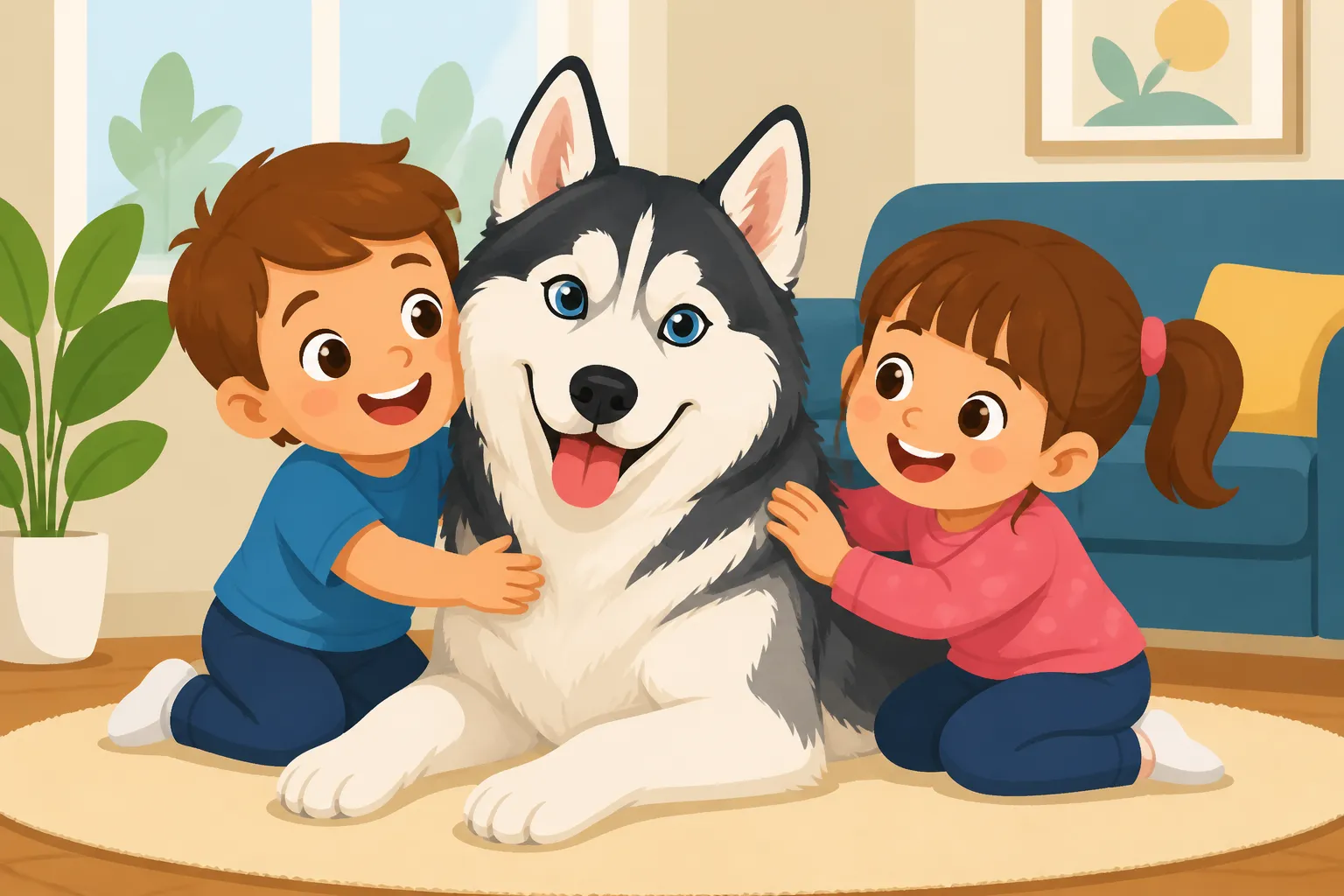
Huskies are dogs bred for teamwork and living in groups, which often translates into a strong family bond. They usually see their human family as their pack, which can be wonderful for integration. However, this doesn't automatically mean they’ll intuitively understand the delicate nature of a small human. They tend to be highly social, enjoying the bustle of a household. This sociability can be a huge asset in a family with children, as a well-socialized Husky will generally want to be involved in family activities.
But keep in mind that "pack" also means a certain hierarchy, and a Husky might test boundaries, not out of malice, but out of their natural inclination to understand where everyone stands. Children, with their unpredictable movements and often higher-pitched voices, can sometimes be perceived differently than adult family members. It's up to us as the adult leaders of the pack to clearly define expectations for everyone, canine and human alike. They truly thrive when they understand their role and feel secure within the family unit.
Siberian Husky Playfulness and Energy Levels
Oh, the energy! This is perhaps the biggest point of concern and misunderstanding when it comes to Huskies and small children. Huskies are bundles of boundless energy, bred to run for miles. Their play style is often exuberant, involving a lot of body slamming, chasing, and sometimes playful nipping. What might be perfectly acceptable rough-and-tumble play with an adult or another large dog can easily be overwhelming, frightening, or even accidentally harmful to a small child.
Imagine a toddler stumbling around, and suddenly a 50-pound Husky decides to "play bow" or zoomie right into their path. It’s rarely intentional aggression, but the sheer force and enthusiasm can knock a child down, leading to scrapes, bumps, or tears. This isn't a fault in the dog's character, but a fundamental mismatch in physical capabilities and understanding of boundaries. It highlights the absolute necessity of structured, supervised interaction and ample outlets for their energy, perhaps with durable toys from a trusted retailer like Chewy. Managing this energy is key to peace in a multi-species household.
The Independent Streak and What It Means for Families
Siberian Huskies are famously independent. They aren't like some other breeds that live to please their owners and hang on every command. This independence, while a charming trait in many ways, can pose a challenge when you need immediate obedience, especially in a situation involving a child. A Husky might be more inclined to follow its nose, chase a fluttering leaf, or investigate an interesting sound than to respond instantly to a "leave it" or "come" command, particularly if they haven't been rigorously trained. This is why Training an Independent Siberian Husky is so vital for their safety and for the peace of mind of their family.
This independent streak also means that they aren't naturally inclined to be overly protective or vigilant in the way a traditional "guard dog" might be. They are often friendly with strangers and would likely greet an intruder with a wagging tail rather than a bark. For families with young children, this means you can't rely on your Husky to be a built-in babysitter or protector. Your own vigilance and careful management of their environment and interactions are always the primary safety measures.
Supervision and Safety Protocols
When you have both Siberian Huskies and young children under one roof, supervision isn't just a good idea – it's an absolute necessity. Think of it less as hovering and more as being the diligent air traffic controller for your bustling home. Both species, in their own ways, are learning creatures with different instincts and communication styles, and it's our job to bridge that gap safely.
Constant Vigilance: The Golden Rule
There's a well-known adage in the dog world: "never leave a dog and a child unsupervised, even for a second." This isn't meant to imply that your Husky is inherently dangerous, but rather to acknowledge the unpredictable nature of both dogs and children. A child might accidentally pull an ear or tail, startling the dog, or drop a high-value toy that the Husky then guards. A Husky, in its excitement, might jump or mouth playfully, which can escalate quickly.
Constant vigilance means always having an adult actively watching and ready to intervene. This isn't the time to be engrossed in your phone or cooking dinner in another room. It means being physically present in the same space, observing body language from both your Husky and your child, and anticipating potential issues before they arise. This proactive approach saves everyone from stress and potential injury. You are the interpreter and peacekeeper, ensuring both parties respect each other's space and boundaries.
Creating Safe Spaces for Both Dog and Child
Just as children need their own quiet corners or playpens, your Siberian Husky needs a designated safe space where they can retreat and be undisturbed. This might be a comfortable crate in a low-traffic area, a dog bed behind a baby gate, or even a separate room they can go to. This space should be sacrosanct – a place where no child is allowed to bother the dog. It gives your Husky an essential "off switch" from the constant stimulation of a busy home, which is especially important for a breed that values its independence. Many owners find a high-quality crate, perhaps one sourced from Chewy, indispensable for this purpose. Crates a Siberian Husky Cannot Break Out Of can be a lifesaver in managing a busy household.
Similarly, children need areas where they can play safely without the dog. This could be a playpen, a gated-off room, or even just teaching the child designated "dog-free" zones in the house. This separation allows you to manage interactions intentionally rather than reactively. It also teaches both your dog and your child that not every moment needs to be shared, fostering respect for personal boundaries that will serve them both well in the long run.
Managing Energy and Attention Needs
A happy Siberian Husky is a well-exercised Siberian Husky. This isn't just about physical health; it's about mental well-being and, consequently, good behavior, especially when sharing a home with young children. An under-exercised Husky is a bored Husky, and a bored Husky is often a destructive Husky. Their energy isn't just a suggestion; it's a fundamental part of their being, and managing it effectively is your best defense against many common behavioral problems.
Ample Exercise Outlets Beyond the Backyard
Let's be real, a quick stroll around the block isn't going to cut it for a Siberian Husky, and even a large backyard, if left unsupervised, will quickly become an escape route or a digging pit. Huskies need serious, structured exercise. This can involve daily long runs, bikejoring, canicross, or even just brisk, extended walks. These aren't just for fun; they are crucial for burning off the immense energy that would otherwise manifest as destructive behaviors, excessive howling, or overly boisterous play that could inadvertently harm a child.
Consider dog parks only if you know your Husky is reliably good with other dogs and if the fencing is secure enough, as Why a Siberian Husky Cannot Be Trusted Off Leash is a real concern. But even then, it's not a substitute for engaging exercise with you. The goal is to truly tire them out, both physically and mentally. This often means carving out dedicated time each day, sometimes even twice a day, to meet their needs. An exhausted Husky is far more likely to relax calmly indoors than one bursting with unspent energy.
Mental Stimulation and Enrichment Toys
Beyond physical exercise, mental stimulation is incredibly important for intelligent breeds like Siberian Huskies, especially considering their independent nature. A Husky that is bored mentally can be just as problematic as one that hasn't run enough. Puzzle toys, interactive feeders, and training sessions can engage their minds and tire them out in a different way.
Imagine giving your Husky a Kong filled with frozen peanut butter or a snuffle mat for their kibble. These activities require focus and problem-solving, providing a constructive outlet for their intelligence. Regular short training sessions, even just 10-15 minutes a day, teaching new tricks or refining existing commands, also serve this purpose. This mental engagement helps prevent them from devising their own "games" – which often involve chewing through furniture or finding new escape routes. You can find a vast array of engaging enrichment toys and puzzles at pet supply stores like Chewy, helping to keep their clever minds occupied.
Teaching Children How to Interact
It’s easy to focus solely on the dog’s behavior, but teaching children how to appropriately and respectfully interact with a Siberian Husky is equally, if not more, important. Children often don't understand canine body language or the consequences of their actions, and it's our responsibility as parents to educate them in a way they can grasp. This isn't about scaring them, but empowering them with knowledge and respect.
Respecting Boundaries and Body Language
One of the most crucial lessons for children is to understand and respect a dog’s boundaries. This means teaching them that a dog is not a toy. They shouldn't be allowed to climb on, pull ears or tails, poke eyes, or disturb a dog when it's sleeping or eating. Instead, teach them gentle petting on appropriate areas like the shoulders or chest, avoiding the head or tail, especially initially.
Educate children about basic canine body language. Explain what a growl, a stiff body, or pinned-back ears might mean – these are signals that the dog is uncomfortable and needs space. Teach them to "be a tree" (stand still and quiet) if a dog seems too boisterous or excited, rather than running or screaming, which can further excite a Husky's chase instinct. Simple rules, consistently enforced, go a long way in fostering mutual respect. Children need to understand that their actions have consequences, and a Husky might react in a way they don't expect if its boundaries are violated.
Gentle Interactions and Supervised Play
All interactions between children and your Husky should be calm, controlled, and always supervised. Encourage gentle play rather than roughhousing. This might involve throwing a soft ball for the Husky, rather than wrestling. Use positive reinforcement for both dog and child: praise the Husky for gentle behavior and praise the child for calm, respectful interaction.
It’s often beneficial to have a "dog safety lesson" with your children, perhaps using stuffed animals to demonstrate proper petting and what not to do. Explain that the Husky has feelings too and needs quiet time. Teach them to ask for permission ("May I pet the dog?") before approaching, even their own dog. This instills a sense of respect and mindfulness. Remember, what a child perceives as fun, a dog might perceive as threatening or annoying. We're aiming for harmony, not just tolerance. For more insights on this, you might find information on Siberian Huskies With Strangers and Children helpful.
Preventing Common Issues in a Family Setting
Living with a Siberian Husky and young children requires proactive problem-solving. It's not about waiting for issues to arise, but anticipating them and setting up your environment and routines to mitigate risks. Many common Husky behaviors that can cause friction in a family with kids can be managed or prevented with careful planning and consistent effort.
Training for Reliability and Impulse Control
A well-trained Husky is a safer Husky, especially in a household with children. Focus on commands that build impulse control: "leave it," "stay," "wait," and a rock-solid "come." These commands are not just tricks; they are vital safety cues. "Leave it" can prevent a Husky from snatching a dropped toy or food from a child. "Stay" can keep them out of the way when a child is running through a doorway. Consistency is key, and every family member (who is old enough) should use the same cues and expectations.
Remember, Huskies are intelligent but independent. They may understand a command perfectly but choose not to obey if they're distracted or if there's no immediate, high-value reward. This is where high-value treats and consistent practice come in. Work on training in various environments, gradually increasing distractions, so your Husky learns to listen even when a child is excitedly playing nearby. Early and ongoing positive reinforcement training, potentially with treats found on Chewy, is paramount.
Managing Prey Drive Around Small Beings
Siberian Huskies have a strong, innate prey drive. This isn't aggression; it's a deeply ingrained instinct to chase, catch, and, unfortunately, kill small, fast-moving creatures. While we typically think of this in terms of squirrels or rabbits, a running, squealing child can, in rare instances, inadvertently trigger this instinct in an inadequately socialized or poorly managed Husky. It's a terrifying thought for any parent, but understanding it allows you to prevent it. You can learn more about this by reading Siberian Husky Prey Drive Around Small Animals.
Never allow a Husky to chase a child, even in play. This reinforces the wrong behavior and blurs the lines between acceptable play and predatory chase. Supervised interactions, teaching the child to avoid running or screaming around the dog, and ensuring the Husky gets plenty of appropriate outlets for its chase drive (like flirt poles or fetching games with toys, never children) are critical. If you have concerns about your Husky's prey drive, especially in a home with children, consulting a professional force-free dog trainer or behaviorist is always recommended. They can help you implement specific strategies to manage this powerful instinct safely.
The Importance of Early Socialization
Bringing a puppy or even an adult Husky into a home with children requires thoughtful socialization. For a puppy, this means carefully controlled, positive exposures to children of all ages, under strict supervision. Ensure these experiences are always pleasant and never overwhelming for the puppy. This builds positive associations with children from a young age.
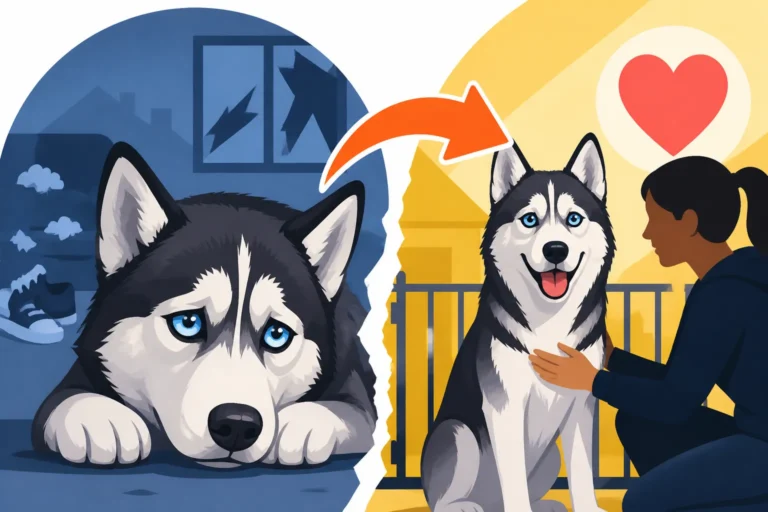
For an adult Husky, especially one from a rescue where their history might be unknown, careful, slow introductions are paramount. Introduce them on neutral ground if possible, or through a baby gate, allowing them to sniff and observe each other calmly. Reward calm behavior. Never force interactions. The goal is for the Husky to view children as a normal, non-threatening, and ideally, a pleasant part of their environment. A well-socialized Husky is far more likely to be relaxed and tolerant in a bustling family home. This gradual integration helps foster a sense of security and trust for everyone.
Here's a table summarizing safe interaction guidelines:
| Child Age Group | Child's Role | Husky Interaction | Parent Supervision Level | Key Considerations |
|---|---|---|---|---|
| Infants/Crawlers | Observer, gentle sounds | Husky sees/sniffs from a distance | Constant, direct physical presence | Husky should be behind a barrier or on a leash. No direct contact. Teach "leave it" to Husky. |
| Toddlers (1-3) | Learning gentle touches (supervised) | Gentle petting on shoulder/chest only, short bursts | Hand-on supervision (within arm's reach) | Teach "be a tree." Prevent pulling. Husky has a safe retreat space (crate). |
| Preschoolers (3-5) | Understanding boundaries, "ask first" | Calm petting, throwing soft toys (supervised) | Active, engaged supervision (in same room) | Teach body language signals (growl, yawn). Reinforce "ask first." Never let chase. |
| School Age (6-12) | Involved in training, responsibilities | Supervised play, grooming, feeding (simple tasks) | Regular checks, general oversight | Teach about Husky's need for exercise and mental stimulation. Respect quiet time. |
| Teens (13+) | Can exercise/train Husky (with guidance) | Independent activities, supervised walks | Trust with adult guidance, open communication | Understand Husky's independence and prey drive. Help manage their needs. |
Ultimately, living harmoniously with a Siberian Husky and young children is a marathon, not a sprint. It requires commitment, patience, and a deep understanding of both your canine companion and your human offspring. By implementing these strategies, you're not just preventing problems; you're building a foundation for a loving, respectful, and joyful relationship that benefits every member of your unique family pack.
Disclaimer
This article is for general informational purposes only and does not constitute professional advice. Laws, prices and regulations vary by location and change over time. Consult a qualified professional for guidance on your specific situation.