Whether a Siberian Husky Is Part Wolf
It's a common sight: someone spots a magnificent Siberian Husky, perhaps with piercing blue eyes or a striking wolf-gray coat, and the first question out of their mouth is, "Is that a wolf-dog?" This pervasive myth that Siberian Huskies are somehow part wolf or direct descendants of recent wolf crossings causes so much confusion and misunderstanding about the breed. This guide aims to clear up that misconception once and for all, explaining the true genetic background of Siberian Huskies, how they differ from wolves, and why this distinction is so incredibly important for responsible ownership.
The Genetic Reality: Distinguishing Huskies from Wolves
Let's get right to the heart of the matter: Siberian Huskies are dogs. They are a recognized domestic dog breed, Canis lupus familiaris, and are no more "part wolf" than a Golden Retriever or a Poodle. While all domestic dogs share a common ancestor with wolves, this divergence happened tens of thousands of years ago.
Shared Ancestry, Different Paths
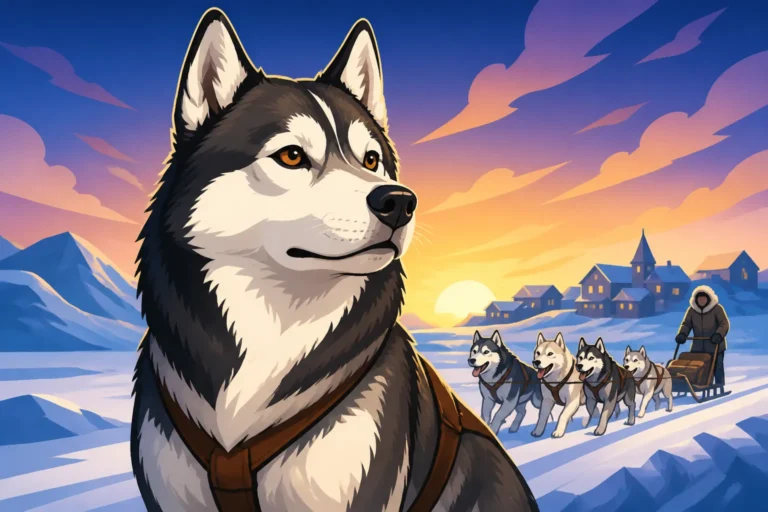
Every single domestic dog breed, from the tiniest Chihuahua to the largest Great Dane, traces its lineage back to ancient wolves. This isn't unique to the Siberian Husky; it's a fundamental truth for all dogs. However, the path taken by the ancestors of the Siberian Husky, cultivated by the Chukchi people in Siberia, was one of intensive domestication. For thousands of years, these dogs were selectively bred for specific traits crucial to human survival in extreme environments: endurance, a friendly disposition towards people, and the ability to work cooperatively in teams. The Chukchi Origins of the Siberian Husky delves deeper into this fascinating history. This process of selection by humans, over countless generations, fundamentally shaped the Siberian Husky into the companion and working dog we know today.
It's tempting to look at their wolf-like appearance – the dense coat, the upright ears, the sometimes intense gaze – and assume a closer relationship. But physical similarities are often superficial. Many primitive breeds retain some physical characteristics reminiscent of their wild ancestors, but that doesn't make them "part wolf" in the contemporary sense. They are fully domesticated animals, adapted to live alongside humans.
Genetic Divergence and Domestication
Modern genetic studies have provided incredible insights into the relationship between dogs and wolves. While the genetic code of a Siberian Husky and a wolf will share many similarities – just as humans share a significant percentage of DNA with chimpanzees – the differences are profound and critical. Scientists can pinpoint the genetic markers that differentiate domestic dogs from wolves, including genes related to digestion (allowing dogs to thrive on a more varied diet than wolves), behavior (reducing aggression and increasing sociability towards humans), and even physical traits like coat color and ear carriage.
The domestication process involved significant changes at a genetic level. Dogs developed a unique set of behaviors, social structures, and physiological adaptations that distinguish them from their wild cousins. Wolves, by contrast, retain their wild instincts and genetic makeup, honed for survival in the wilderness without human intervention. To suggest a Siberian Husky is "part wolf" implies a recent, direct cross-breeding, which is simply not the case for the purebred Siberian Husky.
What Scientific Studies Actually Show
Genetic research has consistently shown that Siberian Huskies, like all other purebred dogs, are genetically distinct from wolves. While some studies have explored the genetic diversity within dog breeds and their relationships to ancient wolf populations, none suggest that Siberian Huskies maintain a significant, recent wolf admixture in their standard breed lines. How Closely Siberian Huskies Are Related to Wolves provides more scientific detail on this topic. The "wolf-like" appearance is a testament to convergent evolution or the retention of ancestral traits, not a sign of recent hybridization.
For example, when researchers map the genomes of various dog breeds, Siberian Huskies fall squarely within the domestic dog clade, alongside all other breeds. There are specific genetic markers that define the Siberian Husky breed, and these are different from the markers found in wild wolf populations. Any claims of a Siberian Husky being "part wolf" are usually based on appearance alone, rather than scientific fact.
Physical Traits and Behavioral Differences
Beyond genetics, the distinctions between a Siberian Husky and a wolf are evident in their physical traits and, perhaps even more importantly, their behavior.
Appearances Can Be Deceiving
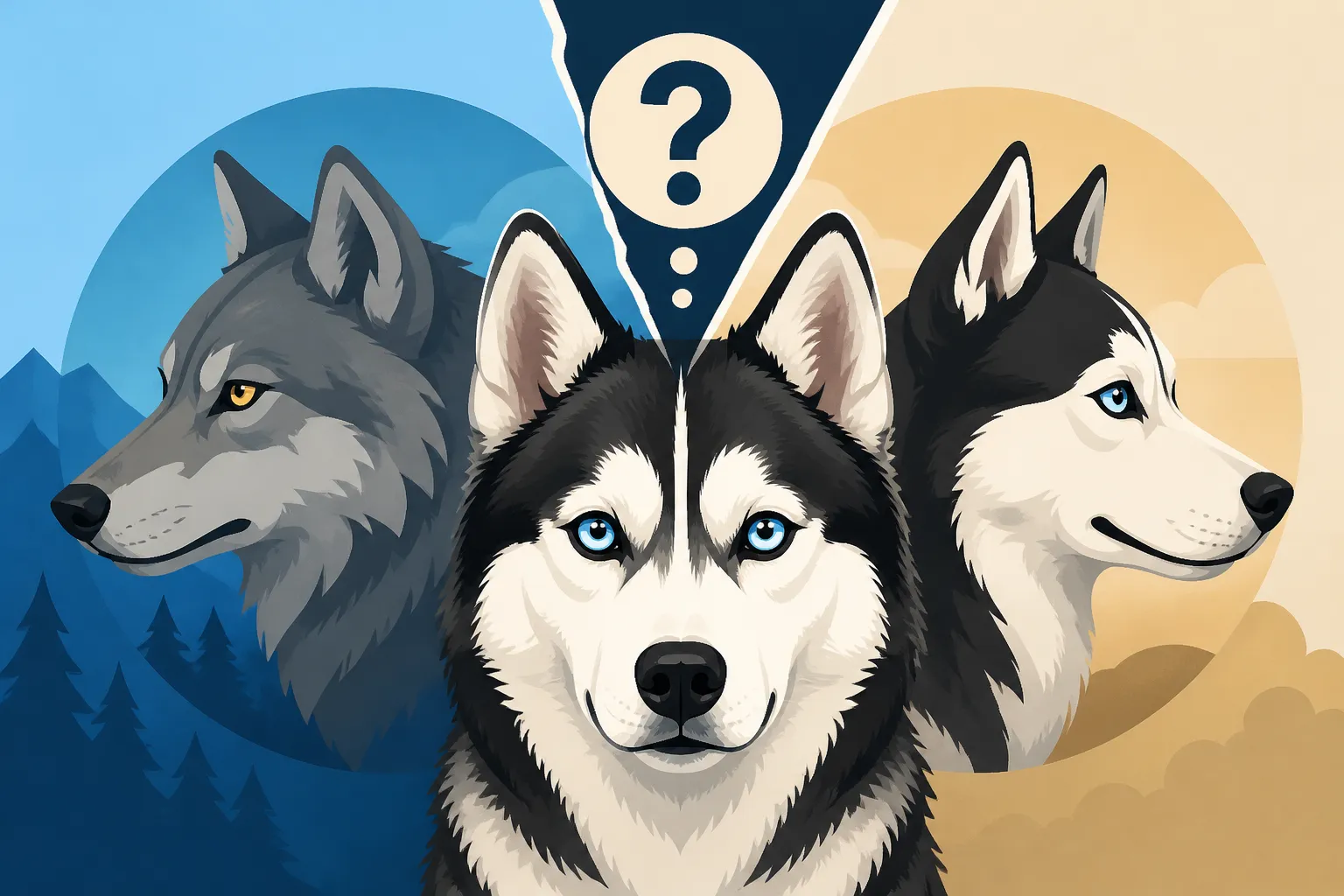
Yes, a Siberian Husky can look strikingly similar to a wolf, especially certain coat colors like agouti or wolf-gray. They share the same upright, prick ears, the bushy tail (though a husky's tail often curls over its back, especially when excited, which a wolf's typically does not), and powerful build. However, there are key differences in conformation that distinguish them.
| Feature | Siberian Husky | Wolf |
|---|---|---|
| Size & Build | Medium-sized, athletic, compact body; lighter bone | Larger, heavier boned, longer legs, more slender body profile |
| Head Shape | Proportionate to body, less massive jawline | Larger, broader head, powerful jaw, often more elongated muzzle |
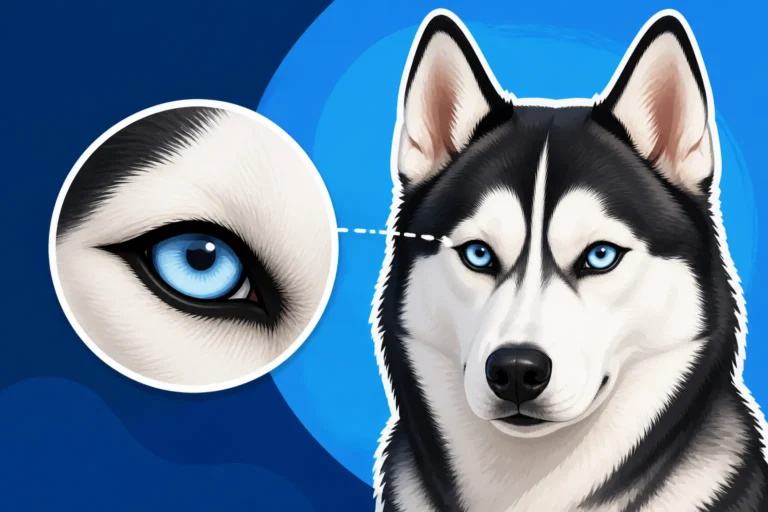
| Eyes | Almond-shaped, can be blue, brown, bi-colored, parti-colored | Typically amber or brown, often more slanted and piercing |
| Ears | Medium-sized, triangular, set high, close together | Larger, more rounded at the tips, often set wider apart |
| Tail | "Brush" tail, often carried up and curved over the back | Tends to hang straight down, rarely curls or wags high |
| Coat Texture | Double coat, soft dense undercoat, coarser guard hairs | Dense, coarse outer coat with thick undercoat, often shaggier |
| Paws | Oval, compact, well-furred between pads | Larger, broader, splayed for traction in varied terrain |
These aren't just minor points; they represent thousands of years of selective breeding for specific functions versus natural selection for wild survival. A Siberian Husky is built for endurance pulling and speed, while a wolf is built for hunting large prey and surviving autonomously in the wild.
Instincts vs. Temperament
This is where the true divergence shines. While a Siberian Husky might exhibit certain "primitive" instincts like a strong prey drive or a desire to roam, these are channeled and managed through centuries of domestication. Their temperament, as described in the AKC standard, is friendly, gentle, and outgoing. They are known for their love of people, including strangers and children. Siberian Husky Temperament and What the Standard Says articulates this perfectly.
Wolves, on the other hand, are inherently wild animals. They possess an intense wariness of humans, a deeply ingrained flight instinct, and are driven by survival needs that make them unsuitable as pets. They are not naturally inclined to seek human companionship or follow commands. Their social structures are complex, but they are geared towards pack survival in the wild, not integration into a human household. Training a wolf, or even a high-content wolfdog, is a vastly different and often dangerous undertaking compared to training a Siberian Husky.
The Independent Spirit, Not a Wild One
Siberian Huskies are famous for their independent nature and sometimes stubborn streak. Why Siberian Huskies Are Called Stubborn often surprises new owners. This independence, however, is a characteristic developed for a specific purpose: sled dogs needed to make decisions on the trail, sometimes without direct command, to ensure the safety of the team and musher. It’s an intelligent independence, not an untamable wildness. They bond deeply with their human families, crave interaction, and thrive on being part of a household, even if they occasionally give you the "husky side-eye" when asked to do something they don't fancy.
Wolves, conversely, exhibit behaviors rooted in self-preservation and the intricate dynamics of a wild pack. They may tolerate human presence in specific, controlled environments, but they do not possess the domesticated traits of loyalty and desire to please that define the canine-human bond. Attempts to "tame" a wolf often lead to unpredictable and potentially dangerous outcomes because their core instincts are always geared towards survival in the wild, not domestic harmony.
The Danger of Misconceptions and "Wolfdog" Hybrids
The confusion between Siberian Huskies and wolves isn't just a harmless mistake; it has serious implications, especially when it leads people to seek out actual wolfdogs.
Why People Confuse Huskies with Wolves
Several factors contribute to this persistent misconception:
- Appearance: As discussed, the superficial resemblance is strong. Their wilder look, especially compared to more "cuddly" breeds, makes people jump to conclusions.
- Media Portrayals: Hollywood and literature sometimes perpetuate the myth, using Huskies to stand in for wolves or depicting them as having special "wild" attributes.
- Irresponsible Breeding/Marketing: Some unscrupulous breeders may even market Huskies (or Husky mixes) as "wolf-like" to attract buyers looking for something exotic, further blurring the lines. You might even see ads on sites like Chewy for toys or food that use images of very wolf-like huskies to appeal to owners of these breeds.
- Lack of Education: Many people simply aren't aware of the long history of dog domestication or the clear genetic distinctions between breeds and wild species.
- The "Primitive Breed" Label: While Huskies are often grouped with "primitive" or "natural" breeds due to their ancient lineage and appearance, this doesn't equate to being partially wild.
This misunderstanding can lead to people acquiring a Siberian Husky with unrealistic expectations, anticipating a "wilder" pet, only to be overwhelmed by their actual needs for exercise, training, and social interaction. What New Siberian Husky Owners Underestimate touches on the challenges of managing their strong will and energy.
The Risky Business of Wolfdog Ownership
True wolfdogs (hybrids of wolves and domestic dogs) exist, and they are incredibly challenging and often dangerous to own for the average person. They are not simply "half-dog" and "half-wolf" in terms of temperament; their behavior can be an unpredictable mosaic of both, often leaning heavily towards wild instincts. This includes extreme shyness, fear-based aggression, strong prey drive, difficulty with house-training, and an intense desire to escape. They require specialized containment, diet, and handling that most pet owners cannot provide.
Many localities have strict laws or outright bans on owning wolfdogs, due to safety concerns. When these animals inevitably prove too much for their owners, they often end up in shelters or specialized rescues, where placement is extremely difficult, and euthanasia rates are high. This is why it's so critical to understand that a Siberian Husky is not a wolfdog and does not present the same inherent risks, although they certainly have their own unique breed-specific challenges. Wolfdogs Sold as Siberian Huskies highlights the serious issues associated with this trade.
Identifying a True Wolfdog vs. a Husky
Distinguishing a true wolfdog from a Siberian Husky can be tricky for the untrained eye, as wolfdogs vary wildly in appearance based on their wolf-content percentage and the domestic breeds involved. However, experts look for a combination of physical and behavioral traits:
- Physical Markers: Wolves and high-content wolfdogs often have flatter skulls, smaller, more rounded ears, longer muzzles, different dentition, and specific tail sets (always carried low, never curled). Eye color is typically amber, not blue. Paw size is generally larger and more splayed.
- Behavioral Markers: Extreme shyness, intense fear of new situations or people, difficulty with leash training, avoidance of eye contact, hyper-vigilance, and a powerful prey drive are all common in wolfdogs. They often do not respond to classical dog training methods.
- Pedigree: A reputable Siberian Husky breeder will provide extensive pedigree information and health clearances for their dogs, demonstrating a purebred lineage. Health Testing Before You Buy a Siberian Husky is a good resource for understanding what to look for. Any breeder claiming their "Huskies" have "wolf blood" or are "closer to nature" should be avoided at all costs. A quality Siberian Husky, whether for show or sport, will meet the criteria of What the AKC Standard Asks of a Siberian Husky.
Why This Distinction Matters for Owners
Understanding that your Siberian Husky is a domestic dog, not a wolf-hybrid, is paramount for their well-being and the safety of your community.
Understanding Your Husky's Needs
Recognizing your Siberian Husky as a domestic dog means you approach their care and training from the correct perspective. They require consistent, positive reinforcement training, ample exercise, mental stimulation, and a strong bond with their human family. They thrive on companionship and need to be integrated into daily life, not left to fend for themselves like a wild animal. Their unique needs, such as their notorious escape artist tendencies, are breed-specific traits developed within domestication, not remnants of wildness. For example, their digging habit or proclivity for chewing can be addressed with appropriate enrichment, such as durable toys from Chewy, rather than being mistaken for a primal urge.
A well-socialized and properly exercised Siberian Husky is a wonderful companion, full of joy and loyalty. Misunderstanding their nature can lead to frustration, inadequate care, and ultimately, the sad reality of these dogs ending up in shelters. Why So Many Siberian Huskies End Up in Rescue often stems from owners not truly understanding the breed.
Legal and Community Implications
The clear distinction between a Siberian Husky and a wolf or wolfdog is also crucial for legal reasons. As mentioned, many cities and counties have laws regarding wolfdog ownership. If a Siberian Husky is incorrectly identified as a wolfdog, it could lead to unnecessary legal complications for the owner. Breed-specific legislation, while controversial, sometimes targets breeds perceived as "dangerous," and the wolf-like appearance of a Husky can unfortunately draw unwanted attention if misconceptions persist.
For the sake of community harmony and your dog's safety, it's always best to be able to confidently explain that your Siberian Husky is a purebred dog. When buying pet supplies or even just browsing new toys on Chewy, remember that you're shopping for a dog, not a wild animal.
The Importance of Reputable Breeding
When acquiring a Siberian Husky, always choose a reputable breeder who prioritizes health, temperament, and adherence to the breed standard. Such breeders will be transparent about their dogs' lineage, provide health clearances, and never make claims of "wolf blood" or other exotic mixes. They understand the specific traits of the Siberian Husky and aim to produce sound, healthy representatives of the breed. Meeting a Siberian Husky Litter's Parents is a critical step in verifying a breeder's integrity.
Responsible breeders educate prospective owners on the true nature of the Siberian Husky, emphasizing their unique needs as a domesticated animal. They understand that while a Husky may look similar to a wolf, their hearts and minds are firmly rooted in the world of human companionship, making them incredible, albeit demanding, pets.
Disclaimer
This article is for general informational purposes only and does not constitute professional advice. Laws, prices and regulations vary by location and change over time. Consult a qualified professional for guidance on your specific situation.