How Closely Siberian Huskies Are Related to Wolves
It's incredibly common for people to look at a majestic Siberian Husky with their piercing eyes, thick coats, and independent spirit, and immediately wonder if they're basically just a domesticated wolf. This thought often sparks a mix of awe and a little bit of apprehension, especially when you're considering bringing one into your family. We're going to dive deep into the fascinating genetic history of these incredible dogs, separate the myths from the facts, and help you understand just how connected—or disconnected—your Siberian Husky is from their wild ancestors.
The Shared Ancestry All Dogs Hold with Wolves
Let's start with the basics that apply to all dogs, not just our beloved Huskies. Every single domestic dog breed on the planet, from the tiny Chihuahua to the giant Great Dane, shares a common ancestor with the gray wolf. This isn't just a theory; it's a scientific fact supported by extensive genetic research. Domestication wasn't a single event but a long, gradual process that began thousands of years ago, likely over 15,000 years ago, and possibly even much earlier, in various parts of the world.
During this incredible period, a population of wolves began to associate with humans, perhaps scavenging around ancient settlements or being intentionally brought into camps. Over countless generations, through both natural selection and early human intervention, these wolves slowly evolved into the first dogs. Their physical appearance changed, their dietary needs adapted, and, most importantly, their behavior became much more amenable to living alongside people. This shared ancestry means that yes, your Siberian Husky, like every other dog, carries the genetic echoes of its wolf ancestors. But "ancestor" is the key word here, not "sibling" or "direct descendant" of modern wolves.
Think of it like us and our primate ancestors. We share a common lineage, but you wouldn't confuse a human with a chimpanzee, right? Similarly, while the genetic blueprint has similarities, millennia of divergence and selective breeding have created distinct species. Understanding this foundational relationship helps us appreciate the journey our dogs have taken from the wild to our living rooms, without mistaking them for their wild cousins.
Why Siberian Huskies Just Look Wild But Aren't
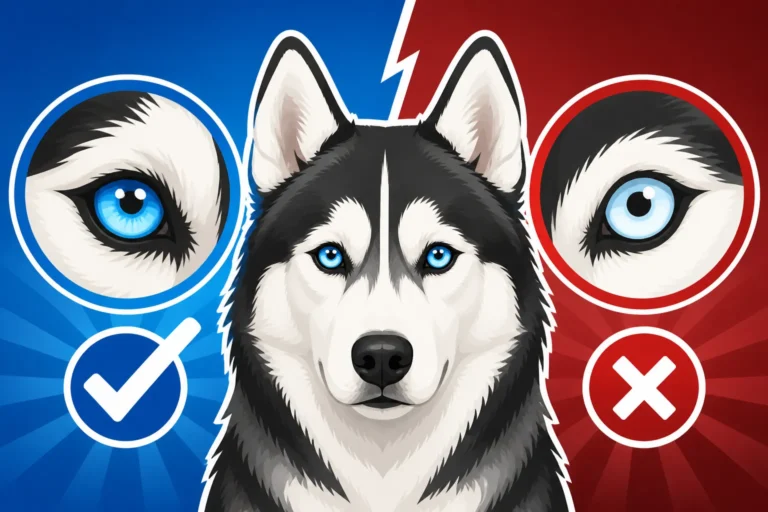
Now, let's talk specifically about Siberian Huskies. It's undeniable that they possess many characteristics that scream "wolf" to the casual observer. Their dense double coat, their erect ears, those striking almond-shaped eyes (sometimes blue, sometimes bi-colored, which really adds to the mystique!), and their general athletic build all contribute to this wild aesthetic. It's probably the main reason people often get confused about their lineage.
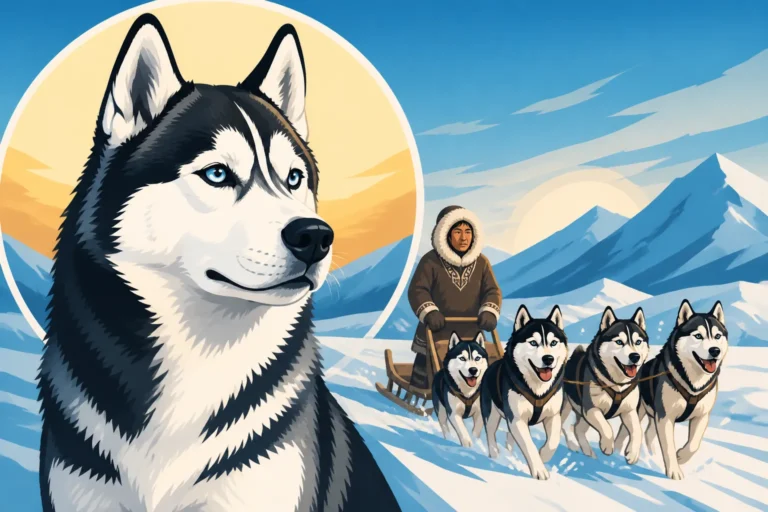
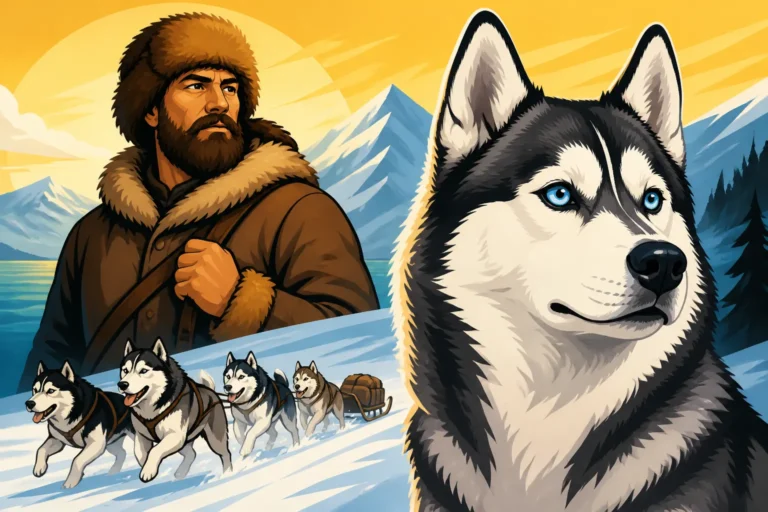
However, this "wolf-like" appearance is largely superficial when it comes to their actual genetic proximity to modern wolves. While they are an ancient breed, their development was heavily influenced by specific breeding goals set by the Chukchi people in Siberia thousands of years ago. The Chukchi needed resilient, tireless dogs that could pull light loads over vast distances in freezing temperatures, survive on minimal food, and thrive in close proximity to humans as family members. They were companions as much as working animals, which meant a certain level of biddability and tolerance for people was essential. This is a very different trajectory than that of a wild wolf. If you're curious about their fascinating history, read The Chukchi Origins of the Siberian Husky.
Siberian Huskies are technically considered a "basal breed," meaning their genetic lineage diverged early from the wolf, and they are genetically closer to the common ancestor than many more recently developed breeds. This isn't the same as saying they are wolves, or even more wolf-like than other basal breeds. It simply means their DNA has retained more of the ancient canine signature because they haven't undergone the extensive mixing and targeted breeding for wildly diverse traits that many European breeds experienced over the last few centuries. They were bred for a specific, demanding job in a remote location, which helped maintain a certain genetic integrity.
Breeding for a Purpose, Not for Wildness
The Chukchi people weren't trying to create a wolf-hybrid; they were creating a highly specialized working dog. They needed dogs that were intelligent enough to understand complex commands in a team setting, but also independent enough to make critical decisions on the trail when mushers couldn't. They needed dogs that were durable and efficient, able to maintain peak performance on a diet that might seem meager by modern standards. Their dogs had to be good-natured enough to coexist peacefully within family structures, often sharing living spaces with children. This is a far cry from the solitary or highly suspicious nature of a wild wolf.
Their breeding practices favored traits like endurance, a cooperative spirit within the team, and a relatively low aggression threshold towards humans. These dogs were not bred for guarding, nor were they bred for hunting in the same way a wolf hunts. Their prey drive, while certainly present and strong in many individuals, was managed and directed by their human companions. This selective breeding over thousands of years solidified the Siberian Husky as a distinct domestic canine, perfectly adapted to its role, but thoroughly domesticated. You can find gear and specialized food for these working dogs on sites like Chewy, acknowledging their unique needs even today.
The Appearance Factor: Why Do They Look So Similar?
It’s easy to get caught up in the visual similarities. The wolf-like appearance of a Siberian Husky is actually a testament to how successful the Chukchi were in preserving certain primitive canine traits that were beneficial for survival and work in harsh environments. A dense, weather-resistant double coat, for instance, is a feature shared by wolves because it's essential for insulation in cold climates. Erect ears provide excellent hearing and are less prone to frostbite or injury than floppy ears.
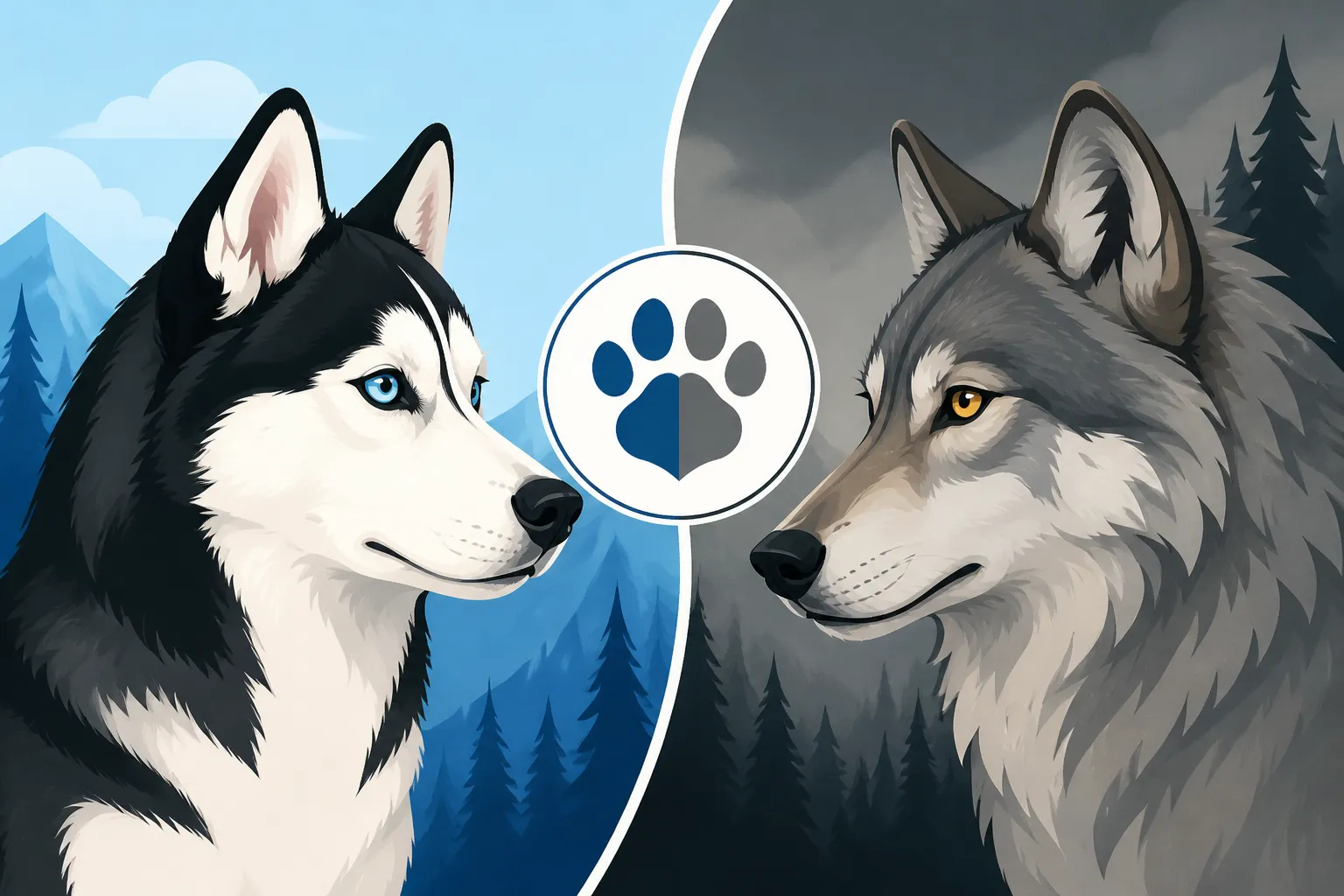
However, the differences are crucial. A wolf's build is often leaner, with longer legs and bigger paws designed for hunting and traversing wild terrain. Their eyes typically have an amber hue, rarely the blue that is common and adored in Huskies. Even their fur, while thick, might have subtle differences in texture and length compared to a Husky's, which is bred for maximum insulation while pulling a sled. These are nuances that an expert can spot, but to the average person, the similarities stand out more than the differences. It's a testament to the Husky's beauty that they retain this ancient, wild look while being perfectly domesticated companions.
The Real Deal: What's a Wolfdog, Anyway?
This is where we need to draw a very clear line, because the term "wolf-like" in reference to a Husky is often confused with "wolfdog." A wolfdog, sometimes called a wolf hybrid, is exactly what it sounds like: an animal that is the direct result of breeding a domestic dog with a wild wolf. This is a very different creature from a purebred Siberian Husky.
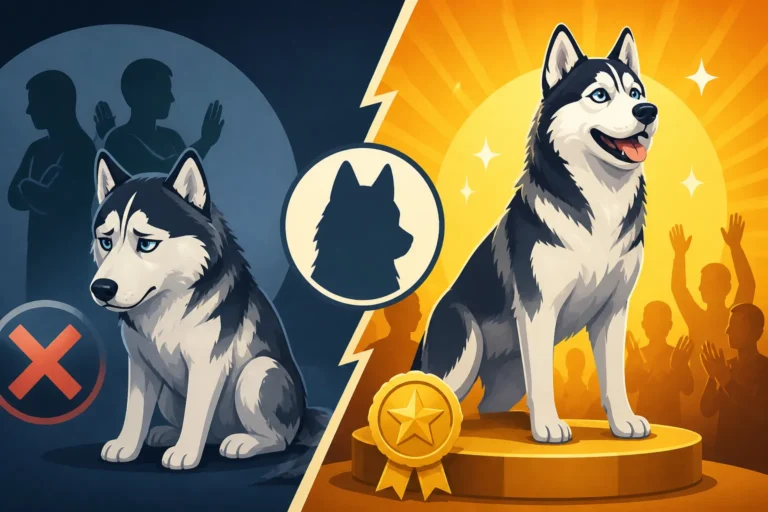
Wolfdogs vary widely in their percentage of wolf content, from low-content animals that might look more like a dog but retain some wolf behaviors, to high-content animals that are predominantly wolf in their genetics, appearance, and temperament. And this is where the trouble often begins. People, captivated by the idea of owning something "wild," sometimes seek out wolfdogs without fully understanding the profound challenges involved. Unfortunately, some unscrupulous breeders might even market high-content wolfdogs as "purebred Huskies" or "rare wolf-line Huskies" to increase sales, leading to heartbreaking situations for unprepared owners. This is why it's so important to scrutinize breeder claims and understand Wolfdogs Sold as Siberian Huskies.
Behavior: Wild Instincts vs. Domesticated Traits
The behavioral differences between a true wolfdog and even the most independent Siberian Husky are vast. Wild wolves are incredibly shy, secretive, and instinctively fearful of humans. While they can bond with people, it's typically a much more intense and exclusive bond than a domestic dog's, and often involves a strong flight instinct when faced with novelty or perceived threat. They possess an extremely high prey drive, often seeing small animals (including pets) as food, not playthings. Their social structure is complex and often misunderstood, and they communicate in ways that are far more nuanced than domestic dogs.
A wolfdog inherits a complex mix of these instincts. Even low-content wolfdogs can exhibit behaviors like extreme shyness, destructive chewing stemming from boredom or anxiety, a tendency to escape even the most secure enclosures, and an unpredictable prey drive that can make them dangerous around other pets or livestock. House-training can be nearly impossible, and traditional dog training methods often fail because their motivations and responses are so different. They are not dogs that are eager to please or easily motivated by typical dog treats or praise. Finding appropriate enrichment and durable toys for a wolfdog would be a monumental task, far exceeding what you'd find for a Husky on Chewy.
Legality and Responsibility
Owning a wolfdog also comes with significant legal and ethical considerations. Many states, counties, and cities have strict regulations or outright bans on wolfdog ownership due to public safety concerns. Housing them requires specialized, extremely secure enclosures that most residential properties simply cannot provide. They are not suitable for leash walks in public, often cannot be boarded, and finding veterinary care can be a challenge as many vets are not equipped or comfortable treating them.
Contrast this with a Siberian Husky. While Huskies are notorious escape artists and have a strong prey drive, these are domestic dog traits that can be managed through appropriate training, secure fencing, and responsible ownership. A Husky is a domestic animal, legally classified as such, and generally accepted in society (though breed restrictions can sometimes be an issue, unfortunately). The difference is night and day, and it's crucial for anyone considering a "wolf-like" dog to understand this fundamental distinction.
Behavioral Differences: Husky Traits vs. Wolf Instincts
Let's delve deeper into the specific behaviors that often lead people to compare Huskies to wolves, and then clarify why these are still very much dog behaviors, albeit unique ones.
Independence and "Stubbornness"
Siberian Huskies are famous for their independent nature and what many owners affectionately (or exasperatedly) call "stubbornness." They aren't always looking to please, and they'll often weigh whether your command is worth their effort, especially if something more interesting, like a squirrel, is in sight. This independence, coupled with their incredible intelligence, can make training a fascinating challenge. They were bred to make decisions on the trail without constant human direction, and that spirit lives on. This is why Training an Independent Siberian Husky is so important.
A wild wolf, however, operates on a completely different level of independence and survival instinct. Their decisions are driven by primal needs: hunt, survive, avoid danger. They don't have the concept of "pleasing" a human in the way a dog does. Their pack hierarchy is complex and based on natural social dynamics, not human-imposed rules. A wolf's independence is about self-preservation in the wild, whereas a Husky's independence is about intelligent self-reliance within a human-dog partnership.
Prey Drive: A Misunderstood Trait
Huskies definitely have a high prey drive. If you've ever seen one spot a squirrel, rabbit, or even a leaf blowing in the wind, you know the intensity. This drive stems from their ancient hunting instincts, but it was also a functional trait for the Chukchi dogs, who might have occasionally supplemented their diet by scavenging or catching small game if allowed. This is why it's vital to be aware of Siberian Husky Prey Drive Around Small Animals. This drive, while strong, is still part of their domesticated programming.
A wild wolf's prey drive is an absolute necessity for survival. It is an all-consuming instinct honed for taking down prey to feed the pack. There's no "playing" with a small animal; it's a kill-to-eat scenario. This makes a wolf fundamentally incompatible with living alongside cats, small dogs, or livestock in an unsupervised environment. While a Husky needs careful management around smaller animals, a wolf's drive is on a different, more dangerous scale for a domestic setting.
Vocalizations: Howls and "Talking"
Siberian Huskies are known for their incredibly expressive vocalizations. They howl, they yodel, they "talk," making a range of sounds that are often described as wolf-like. And yes, a howl is a very primal sound, shared with wolves. It's their way of communicating across distances, establishing presence, or expressing emotion. This distinctive trait is part of their charm, but also something The Siberian Husky Noise Nobody Warns You About can attest to!
However, the context and frequency differ. A wolf howls for very specific reasons: to gather the pack, to mark territory, to warn off rivals. Their communication is intricate and often silent, relying on body language and scent. A Husky, on the other hand, might howl at a siren, at another dog, or simply because they're excited to see you. It's a joyful, often theatrical, expression that is thoroughly domesticated. They "talk" with us, responding to our voices with their own unique blend of sounds, something a wild wolf would never do. You can even find interactive toys on Chewy that encourage positive vocal engagement without causing nuisance.
Pack Mentality: With Humans
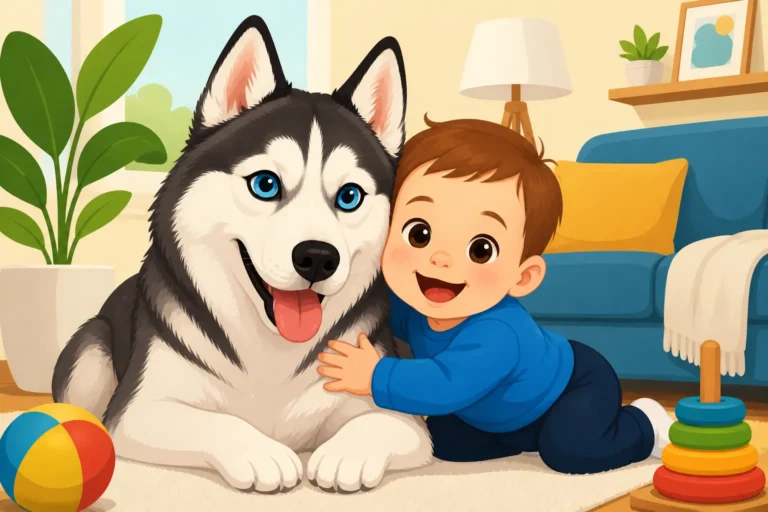
Siberian Huskies are generally very social animals, thriving in a "pack" environment, whether that's with other dogs or, more commonly and importantly, with their human family. They tend to be good with children and strangers (though proper socialization is always key), often being more interested in making new friends than guarding the homestead. This friendliness is a key part of Siberian Husky Temperament and What the Standard Says. This strong bond with humans is a defining characteristic of their domestication, distinguishing them from truly wild animals.
Wild wolves also have a strong pack mentality, but their pack is their family, and that bond is primarily for survival and hunting. They are typically very wary of outsiders, especially humans, and would never seek out human affection or integrate into a human family in the way a domestic dog does. The trust and camaraderie a Husky shows towards its human family is a hallmark of thousands of years of shared history and partnership. The traits What a Siberian Husky Was Bred to Do highlight this partnership beautifully.
Ultimately, while Siberian Huskies carry an undeniably ancient and beautiful aesthetic, their heart and soul are unequivocally those of a domestic dog. They are products of thoughtful, purposeful breeding by humans, for humans, and that's a legacy to be cherished. If you’ve heard stories or seen images that make you wonder Whether a Siberian Husky Is Part Wolf, hopefully, this helps clear up the picture.
| Feature | Wild Gray Wolf | Wolfdog (High Content) | Siberian Husky |
|---|---|---|---|
| Species | Canis lupus | Canis lupus x familiaris | Canis familiaris |
| Domestication | Wild animal, no domestication | Hybrid, unpredictable mix of wild/domestic | Fully domesticated dog |
| Fear of Humans | Extreme; instinctively avoids humans | Highly variable, often fearful/wary | Generally friendly; bred for human companionship |
| Appearance | Specific proportions for survival, amber eyes, varied coat colors | Can strongly resemble wolves | "Wolf-like" aesthetic, blue/bi-eyes common, specific breed standard |
| Temperament | Highly shy, secretive, survival-driven, complex social structure, extremely high prey drive | Unpredictable, challenging, not suitable for typical pet homes | Intelligent, independent, friendly, social, high prey drive (manageable), vocal |
| Trainability | Extremely difficult, no desire to please humans | Very challenging; traditional methods often fail, high instinctual drive | Intelligent but independent; requires consistent, positive training; strong bond possible |
| Containment | Requires vast wild territory | Needs extremely secure, specialized enclosures to prevent escape | Requires secure, tall fencing and vigilant supervision due to escape artistry |
| Legality | Generally illegal to own | Often restricted or illegal to own, varying by location | Legal to own, though some breed-specific restrictions apply |
| Care | Lives in the wild | Specialized care, often difficult to find vets/boarders | Standard domestic dog care, but with high exercise/mental stimulation needs |
Disclaimer
This article is for general informational purposes only and does not constitute professional advice. Laws, prices and regulations vary by location and change over time. Consult a qualified professional for guidance on your specific situation.