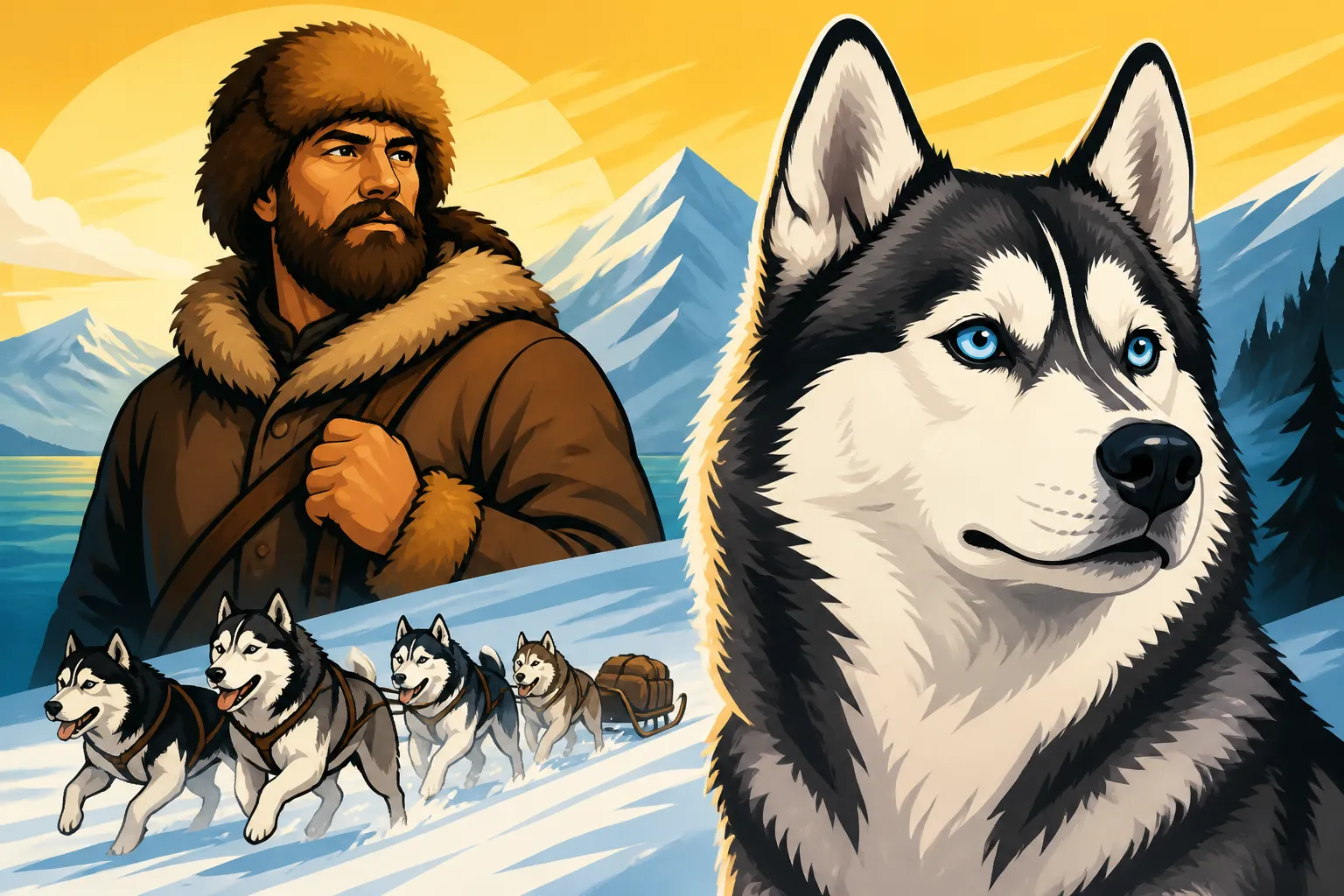
The Fur Trader Who Brought Siberians to Alaska
For anyone fascinated by the spirited Siberian Husky, it's easy to imagine these magnificent dogs have always been an integral part of Alaska's rugged landscape, a natural fit for the snow and ice. However, their journey to prominence in the Last Frontier, and indeed the world, began with a surprising, calculated risk taken by one individual. This guide will delve into the pivotal role of the fur trader who first recognized the untapped potential of these exceptional dogs and brought them from Siberia to the Alaskan racing circuits, forever changing the trajectory of the breed.
The Entrepreneurial Spirit of William Goosak and His Siberian Imports
The story of the Siberian Husky in Alaska isn't one of ancient, uninterrupted presence, but rather a tale of daring importation and fierce competition. It all began not with legendary mushers, but with a shrewd businessman named William Goosak, a Russian fur trader with an eye for opportunity and a keen understanding of the burgeoning sled dog racing scene.
A Journey from Siberia to Nome's Docks
William Goosak was an independent merchant, often trading between Siberia and the Alaskan shores of Nome. During his travels, he encountered the native Chukchi people and their remarkable dogs. These weren't the massive, powerful freighting dogs that were common in Alaska at the time, like the Alaskan Malamute. Instead, the Chukchi dogs were smaller, lighter, and incredibly fast, possessing a unique endurance perfectly suited for covering vast distances efficiently in extreme cold with minimal food. Goosak, perhaps seeing the writing on the wall regarding the increasing popularity of long-distance sled dog races, made a bold decision. He believed these dogs, despite their unassuming appearance, could revolutionize the sport.
In 1908, Goosak orchestrated the first known importation of these Siberian dogs into Alaska. He brought a team of nine of them across the Bering Strait to Nome. When these compact, wolf-like dogs first stepped onto Alaskan soil, they were met with a mixture of skepticism and outright derision. Local mushers, accustomed to their larger, heavier teams, scoffed at what they dismissively called "Siberian rats." They couldn't fathom how these seemingly delicate creatures could possibly compete against the brawny dogs of their own lines. This initial reception highlighted a significant cultural and practical difference in dog breeding and use, setting the stage for a dramatic showdown.
The All-Alaska Sweepstakes and a Gamble on Speed
The proving ground for Goosak's imported "Siberian rats" was the legendary All-Alaska Sweepstakes. Established in 1908, this grueling 408-mile race from Nome to Candle and back was the ultimate test of speed, endurance, and mushing skill. It attracted the toughest mushers and the most formidable dog teams in the territory, predominantly composed of the larger, more powerful dogs bred for freighting and brute strength. The idea was that raw power would conquer the vast, icy terrain.
Goosak's decision to enter a team of his Siberian imports into the 1909 Sweepstakes was nothing short of a gamble. It was an audacious move that defied convention and invited ridicule from the seasoned Alaskan mushing community. No one believed these smaller dogs had a chance. The prevailing wisdom dictated that a champion team needed sheer size and muscle to endure such a punishing distance. Yet, Goosak, with an intuitive understanding of the dogs' efficiency and tireless spirit, was convinced they possessed a different kind of strength—one that prioritized speed and an uncanny ability to sustain pace. He was essentially betting on finesse over brute force, a concept that would soon shake the very foundations of Alaskan sled dog racing. The stakes were high, and the world was about to watch a quiet revolution begin on the snowy trails of Alaska. For more on this pivotal event, you might enjoy reading The 1909 Sweepstakes Team Called Siberian Rats.
The Shocking Performance That Changed Minds and Racing Forever
What began as a curiosity, and then a source of amusement, quickly turned into awe and respect as William Goosak's Siberian imports took to the trails of the All-Alaska Sweepstakes. Their performance was a watershed moment, proving that traditional notions of sled dog racing strength were due for a serious re-evaluation.
The 1909 Race: A Glimpse of Potential
In the 1909 All-Alaska Sweepstakes, Goosak himself drove one team, while another musher, Louis Thayer, handled a second team of the Siberians. They didn't win that first year, but their performance was nothing short of spectacular, especially considering the initial skepticism. The teams finished third and fourth, a remarkable feat for dogs that were half the size of their competitors and largely unknown to the Alaskan mushing world. They ran with an incredible efficiency and speed that truly shocked onlookers and fellow competitors alike.
This wasn't just about placing well; it was about how they placed. The Siberians demonstrated an unyielding drive, covering the vast distances with an almost effortless grace. They maintained a consistent, swift pace that many of the larger teams couldn't match, especially over the long haul. This performance served as a powerful testament to their endurance and metabolic efficiency, qualities that would soon become synonymous with the breed. The "Siberian rats" had not just run the race; they had redefined what a winning sled dog could be, sparking a keen interest that would quickly snowball into widespread demand. This initial showing was crucial in laying the groundwork for their future dominance in the sport. You can learn more about this foundational race in The All-Alaska Sweepstakes and the Siberian Husky.
John Johnson and the Rise of the Siberian Husky
The true turning point, however, came in the 1910 All-Alaska Sweepstakes. By this time, Goosak had sold some of his imported Siberians, and more were brought over, catching the attention of a highly respected Norwegian musher named John Johnson. Johnson took the reins of a team primarily composed of these swift Siberians, and his performance that year etched the breed into the annals of sled dog racing history.
John Johnson and his Siberian team didn't just win; they absolutely dominated the 1910 race. They shattered the previous course record by an astounding four days, leaving the larger, more traditional teams struggling in their wake. This wasn't a fluke; it was a decisive, undeniable victory that proved beyond a shadow of a doubt the superior capabilities of these dogs for long-distance, fast-paced hauling. Suddenly, the "Siberian rats" were no longer a joke but the hottest commodity in Alaska.
The impact of Johnson's victory was immediate and profound. Every serious musher wanted a team of these incredible dogs. The focus in sled dog breeding shifted dramatically, moving away from sheer brute strength towards the elegant combination of speed, endurance, and stamina that the Siberians offered. This pivotal race cemented the Siberian Husky's reputation as the ultimate long-distance racing dog and kicked off a lineage of champions that would include names like Leonhard Seppala and his legendary teams. It's a testament to their innate abilities and the vision of William Goosak that these dogs, once dismissed, became the gold standard. For a deeper dive into their racing triumphs, check out How Siberian Huskies Won the All-Alaska Sweepstakes.
The Legacy: From "Siberian Rats" to Racing Legends
The legacy of William Goosak's initial daring imports is one that continues to define the Siberian Husky breed to this day. What started as an experiment quickly evolved into a racing phenomenon, forever altering perceptions of sled dogs and cementing the Husky's place in history.
The Breed's Rapid Ascent and Demand
Following the back-to-back stunning performances in the All-Alaska Sweepstakes, the demand for these Siberian dogs exploded. Mushers across Alaska eagerly sought to acquire them, recognizing their unparalleled ability to cover vast distances with speed and efficiency. This rapid ascent in popularity wasn't just a fleeting trend; it laid the foundation for the breed's enduring success. It wasn't long before legendary figures like Leonhard Seppala entered the scene, captivated by the Siberians' prowess. Seppala, often considered the greatest musher in history, dedicated his life to perfecting the breed, importing more dogs from Siberia and meticulously breeding them for optimal performance on the trail. His teams became synonymous with speed and consistency, further solidifying the Siberian Husky's reputation.
This era also saw the breed gain international recognition, culminating in their heroic role in the 1925 Serum Run to Nome, where teams of Siberian Huskies, led by dogs like Togo and Balto, bravely transported life-saving diphtheria antitoxin across treacherous frozen landscapes. This event propelled them into global fame, showcasing their incredible resilience, loyalty, and unwavering drive under the most extreme conditions. The transformation from "Siberian rats" to celebrated heroes was complete, a testament to their inherent qualities. To learn more about Seppala's influence, read Leonhard Seppala and His Siberian Huskies.
Enduring Characteristics and Modern Echoes
The very characteristics that made these early Siberian imports so successful in racing—their boundless endurance, incredible speed, efficient metabolism, and remarkable toughness—are the same traits that define the Siberian Husky today. These aren't just historical footnotes; they are embedded in the breed's DNA and profoundly influence what it means to live with a Husky as a companion. Their inherent desire to run, to pull, and to work remains strong, even in a modern pet setting.
Today's Siberian Huskies still carry that incredible energy and mental drive. Owners often find themselves needing to provide outlets that tap into these deep-seated instincts. This means more than just a casual stroll around the block; it requires consistent, vigorous exercise, mental stimulation, and often, engaging in activities like canicross, bikejoring, or even recreational sledding. Their efficient metabolism, while a boon for working dogs, also means they often require less food than similarly sized breeds, a characteristic that surprises many new owners. Feeding a Siberian Husky on 60 Percent of the Label is a crucial read for this very reason. Modern owners can find specialized gear and high-quality nutrition from trusted retailers like Chewy, ensuring their Huskies receive everything they need to thrive. Understanding What a Siberian Husky Was Bred to Do is key to appreciating their unique temperament and ensuring they lead fulfilling lives today.
Caring for a Piece of History: Modern Husky Ownership
Bringing a Siberian Husky into your home means embracing a living piece of history, a dog whose instincts are still deeply tied to its sled dog ancestors. Understanding these foundational traits is paramount for successful and happy Husky ownership.
Understanding the Working Dog Mentality
While your Siberian Husky might spend its days on a plush dog bed rather than pulling a sled across the tundra, its mind and body are still hardwired for the demanding work of its ancestors. This manifests in several key behavioral traits that prospective and current owners must understand and manage. Firstly, their high energy levels are non-negotiable. These dogs were bred for endurance, meaning they need significant daily exercise to be physically and mentally content. A quick walk around the block simply won't cut it. They thrive on long runs, hikes, or engaging in canine sports.
Secondly, the "working dog" mentality translates into a need for a "job." This doesn't always mean pulling a sled, but it does mean purposeful activity and mental stimulation. Without it, Huskies can become bored, and a bored Husky is often a destructive Husky. They are intelligent, but also famously independent and often described as stubborn, which requires patience and consistency in training. Moreover, their ancestral drive to roam and hunt is incredibly strong. Why a Siberian Husky Cannot Be Trusted Off Leash is not an exaggeration; their recall can be notoriously unreliable, especially if something more interesting catches their eye. This also fuels their strong Siberian Husky Prey Drive Around Small Animals, making careful introductions and management essential if you have small pets or live near wildlife.
Essential Gear and Nutrition for Your Husky
Given their unique needs rooted in their historical purpose, outfitting and feeding a Siberian Husky requires specific considerations. One of the most critical investments for any Husky owner is a truly secure containment system. Their intelligence, athleticism, and profound desire to explore make them legendary escape artists. A standard four-foot fence often isn't enough; they can jump, climb, or dig under it with startling efficiency. This is why many experienced owners advocate for a minimum The Six-Foot Fence a Siberian Husky Needs, often with added features to prevent digging or climbing. Investing in heavy-duty crates and secure leashes is also a must for managing their adventurous spirit.
When it comes to nutrition, a Siberian Husky's efficient metabolism means that, contrary to popular belief for high-energy breeds, they often require less food than you might expect for their size. Overfeeding can quickly lead to an overweight Husky, which compromises their health and mobility. Researching their specific dietary needs, often higher in protein and fat for active dogs, and measuring portions carefully is vital. Retailers like Chewy offer a vast selection of high-quality dog foods and supplements tailored to active breeds, helping you find the perfect balance for your Husky's needs. Additionally, their iconic double coat demands regular grooming, especially during the intense "coat blow" seasons. You'll want to invest in a quality de-shedding tool, maybe a high-velocity dryer, and even specialized shampoos. All of these necessities are readily available from places like Chewy, ensuring you can keep your Husky looking and feeling their best, even during Siberian Husky Coat Blow and the Six Weeks It Lasts.
| Year | Event | Key Figures | Significance |
|---|---|---|---|
| 1908 | First Siberian Husky Imports to Alaska | William Goosak | Introduced the breed to Alaska for sled dog racing. |
| 1908 | Inaugural All-Alaska Sweepstakes | N/A | Established the premier long-distance sled dog race. |
| 1909 | Siberians' Debut in Sweepstakes | William Goosak, Louis Thayer | Dogs finished 3rd and 4th, showing unexpected speed and endurance. |
| 1910 | Siberian Husky Victory in Sweepstakes | John Johnson | Decisive win, shattering records and establishing breed's dominance. |
| 1910s | Continued Imports & Breeding | Leonhard Seppala | Further refined and popularized the breed for racing. |
| 1925 | Serum Run to Nome | Leonhard Seppala, Gunnar Kaasen, Togo, Balto | Global fame for the breed's heroism and endurance. |
Disclaimer
This article is for general informational purposes only and does not constitute professional advice. Laws, prices and regulations vary by location and change over time. Consult a qualified professional for guidance on your specific situation.