How Common Blue Eyes Are in Siberian Huskies
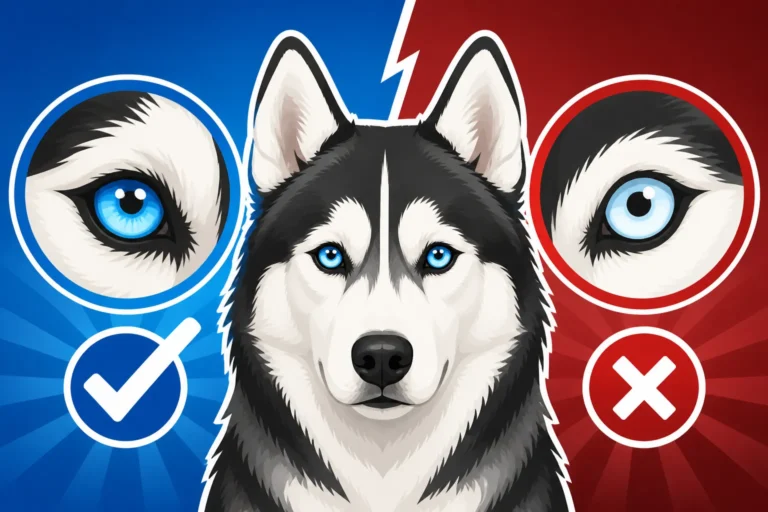
That piercing gaze of a Siberian Husky, often a vibrant blue, is truly captivating and it’s no wonder so many prospective owners wonder just how common this striking trait actually is. It's easy to assume such a unique eye color must be rare, but in the world of Siberian Huskies, blue eyes tell a fascinating story about their unique genetics and breed history. This guide will dive deep into the prevalence of blue eyes, explore the genetic reasons behind them, and clear up some common myths, helping you understand this beloved characteristic fully.
The Genetic Blueprint Behind Blue Eyes in Siberian Huskies
When you first encounter a Siberian Husky with those stunning blue eyes, you might think you're looking at a rare gem. However, the truth is that blue eyes are remarkably common in Siberian Huskies, much more so than in almost any other dog breed. This isn't just a random occurrence; it's deeply rooted in their unique genetic makeup. Unlike many other breeds where blue eyes might be a recessive trait or linked to other genetic conditions like merle patterning or deafness, Huskies have a distinct genetic pathway that allows for this eye color.
The primary genetic factor for blue eyes in Siberian Huskies is believed to be a specific duplication on chromosome 18. This particular duplication is quite unique to the breed, setting them apart from other blue-eyed dogs. What this means is that a Husky can have blue eyes without needing to carry a merle gene, which in other breeds can be associated with various health issues. This is a crucial distinction and often a source of confusion for those unfamiliar with Husky genetics. You won't find the same health warnings about blue eyes in Huskies that you might hear for a blue-eyed Australian Shepherd, for instance, which often gets its blue eyes from the merle gene.
So, how common are they really? It's tough to give an exact percentage because it varies so much by bloodline and individual breeding pairs. However, it's safe to say that blue eyes are a well-established and accepted trait within the Siberian Husky breed standard. Many Huskies are born with two blue eyes, a condition known as genetically simple blue eyes. This prevalence is part of what makes the breed so distinctive and often the first thing people notice.
When considering a puppy, you might see an entire litter with various eye colors. Some might have two brown eyes, some two blue, and others a combination. This diversity is perfectly normal and acceptable within the breed. It speaks to the richness of the Husky gene pool and the fascinating ways their traits express themselves. Don't fall into the trap of thinking a blue-eyed Husky is somehow "superior" or more valuable than a brown-eyed one. They are simply different expressions of the breed's genetic potential.
Beyond Just Blue: Exploring Heterochromia and Parti-Eyes
While a pair of striking blue eyes is common, the Siberian Husky breed also presents an incredible spectrum of eye color combinations, often referred to collectively as heterochromia. This isn't just about one eye being blue and the other brown; it encompasses a variety of fascinating expressions. These unique eye colors are not considered faults in the breed standard and are actually highly prized by many enthusiasts.
Bi-Eyed Siberian Huskies
Perhaps the most recognized form of heterochromia in Huskies is being "bi-eyed." This is where a dog has one eye that is distinctly blue and the other eye a different color, most commonly brown or amber. It creates an incredibly striking and often mischievous look that instantly grabs attention. This trait is a direct result of the same genetic factors that give some Huskies two blue eyes. The expression simply manifests differently, leading to a split color presentation. Bi-Eyed Siberian Huskies are quite common and just as healthy as their two-blue-eyed or two-brown-eyed counterparts.
It’s not unusual to see a litter of Husky puppies where one might have two blue eyes, another two brown, and a third with one blue and one brown. This variety is perfectly acceptable and celebrated. From a genetic standpoint, it means that the genes responsible for eye pigment distribution are expressing themselves uniquely in each individual. There's no special 'rarity' associated with bi-eyes in a Husky; it's simply another beautiful variation.
Parti-Eyed and Split-Eyed Huskies
Even more intricate than bi-eyes are what we call "parti-eyes" or "split-eyes." This is a phenomenon where a single eye contains two distinct colors. For example, a Husky might have one eye that is half blue and half brown, or a quarter blue and three-quarters brown, or even a blue iris with a brown speck or vice versa. This is caused by an incomplete distribution of pigment within the iris of that one eye. Parti-Eyed Siberian Huskies are certainly less common than solid blue or bi-colored eyes, but they are by no means an anomaly in the breed.
Imagine looking closely at your Husky's eye and seeing a mosaic of colors! It’s truly a marvel. This can range from a clear split down the middle of the iris to smaller segments or even just a few flecks of a different color. Just like bi-eyes, parti-eyes are not linked to any health problems specific to the eye color itself. They are simply another testament to the breed's diverse and captivating genetic heritage.
When you're searching for a Husky, particularly from a breeder who adheres to the breed standard, you'll find that all these variations are considered equally beautiful and correct. What matters far more is the overall health, temperament, and structure of the dog, rather than the specific shade or combination of its eye color.
Here's a quick overview of common Siberian Husky eye colors:
| Eye Color Type | Description | Commonality in Huskies | Genetic Basis (Simplified) | Health Concerns |
|---|---|---|---|---|
| Brown | Most common eye color, ranging from light amber to dark brown. | Very Common | Normal pigment production and distribution. | None |
| Blue | Clear, striking blue, ranging from light to deep sapphire. | Common | Specific gene duplication on chromosome 18. | None |
| Bi-Eyed | One eye blue, the other typically brown or amber. | Common | Variable expression of the blue eye gene. | None |
| Parti-Eyed | A single eye containing two distinct colors (e.g., half blue, half brown). | Less Common | Incomplete pigment distribution within one iris. | None |
| Green | Rare, usually a stage in puppies or adult eyes with low pigment. | Rare | Often a transitional color or low pigment brown/amber. | None |
Siberian Husky Eye Color: Myths, Health, and Misconceptions
The allure of those piercing blue eyes in a Siberian Husky has unfortunately led to a fair share of myths and misconceptions. Many people outside the breed world mistakenly associate blue eyes with health problems or even wolf ancestry, which can lead to unnecessary worry or, conversely, to people seeking out blue-eyed Huskies for the wrong reasons. Let's clear up some of these common misunderstandings.
Debunking the Health Myth
One of the most persistent myths is that blue eyes in a Siberian Husky are indicative of poor health or will lead to vision problems. This simply isn't true. As we discussed, the genetic mechanism for blue eyes in Huskies is different from the merle gene in other breeds that can sometimes be linked to deafness or other ocular issues. For a Siberian Husky, blue eyes are a perfectly normal and healthy trait. Whether Blue Eyes Mean Vision Problems in a Husky is a concern many new owners have, but rest assured, your blue-eyed Husky sees just as well as their brown-eyed littermate.
You might hear whispers about blue-eyed dogs being more susceptible to certain conditions, but in the case of the Siberian Husky, their blue eyes are not associated with any increased risk of blindness, cataracts, or other eye diseases. Huskies can suffer from various eye conditions, just like any breed, but these are independent of eye color. Siberian Husky Eye Disease and the Annual Exam is important for all Huskies, regardless of eye color, to catch any potential issues early.
So, if you're worried about potential health costs down the line because of blue eyes, you can put that concern to rest. Focus instead on finding a reputable breeder who performs Health Testing Before You Buy a Siberian Husky and can provide you with records for the parents, or adopting from a rescue that prioritizes the health and well-being of their dogs. You can find a lot of great resources and products for general eye health, like gentle eye wipes or supplements, on sites like Chewy.
Blue Eyes and "Wolf Content"
Another common misconception, likely fueled by the Husky's wolf-like appearance, is that blue eyes signify recent wolf ancestry or "wolf content." This is absolutely false. Siberian Huskies are a domesticated breed with a long history of working alongside humans, specifically the Chukchi people, as sled dogs. Their appearance, including their eye color, is a result of selective breeding for performance and specific traits over centuries, not recent interbreeding with wolves.
Wild wolves typically have amber or brown eyes. Blue eyes are not a characteristic trait of wolves. So, if someone tries to tell you a blue-eyed Husky is "more wolf" or has a higher percentage of wolf blood, they are misinformed, or worse, trying to mislead you. It's important to remember that true wolfdogs are complex animals with very specific needs and are generally not suitable as typical household pets.
Does Eye Color Affect Price?
Some breeders or sellers, particularly those operating outside ethical breeding practices, might try to command a higher price for blue-eyed or bi-eyed Siberian Huskies, marketing them as "rare" or "special." While their unique appearance certainly makes them stand out, blue eyes are not truly rare in the breed, nor do they inherently make a Husky more valuable. Whether Eye Color Affects a Siberian Husky's Price is often a question driven by market perceptions rather than breed standard.
A reputable breeder focuses on health, temperament, and adherence to the What the AKC Standard Asks of a Siberian Husky, not just eye color. They will often price puppies based on pedigree, health clearances, and overall quality, not on a specific cosmetic trait like blue eyes. Be wary of anyone who significantly inflates prices purely based on eye color. This can be a red flag, signaling a Spotting a Backyard Siberian Husky Breeder who might not be prioritizing the health and well-being of their dogs. When reviewing Reading a Siberian Husky Puppy's Health Paperwork, eye health clearances will always be more important than the specific color of the iris.
Ultimately, whether your Husky has dazzling blue eyes, soulful brown eyes, or a captivating mix, their eye color is a beautiful, healthy, and perfectly normal characteristic of the breed. It's part of what makes each Siberian Husky an individual delight!
The Development of Siberian Husky Eye Color
Understanding how a Siberian Husky's eye color develops can shed even more light on the commonality and variety we see in the breed. It's a journey that starts even before a puppy opens its eyes and continues for several weeks after birth. This developmental process is fascinating and often surprises new owners who might expect a fixed eye color from day one.
Puppy Eyes: The Transitional Hues
When Siberian Husky puppies are first born, their eyelids are closed. Upon opening, usually around 10-14 days of age, their eyes often appear cloudy or a bluish-gray. This is very common in many dog breeds and is not necessarily an indicator of what their permanent adult eye color will be. It's simply part of the normal developmental process as their eyes adjust to light and pigment production begins.
For Siberian Huskies, these initial bluish or grayish eyes can sometimes hint at their future blue eyes, but it's not a guarantee. Some puppies who will ultimately have brown eyes might also pass through this grayish stage. It's a bit like human babies often having blue eyes at birth that later change. Why Siberian Husky Puppy Eyes Change Color is a common question, and it's largely due to melanin production ramping up. Melanin is the pigment responsible for eye color; more melanin results in brown eyes, while less or an absence of melanin in the front layers of the iris results in blue eyes.
When Eye Color Settles
The true, permanent eye color of a Siberian Husky puppy usually starts to become apparent between six to eight weeks of age, though for some, it might not fully settle until they are closer to 12-16 weeks. This is why a reputable breeder will often wait until puppies are at least eight weeks old, if not a bit older, before allowing them to go to new homes. By this time, their eye color has typically set, and you can see whether they will have two blue eyes, two brown eyes, bi-eyes, or even parti-eyes.
If you're picking out a puppy around the 8-week mark, you'll likely have a good idea of their eye color. However, don't be alarmed if there's still a slight shift or deepening of color in the weeks that follow. For example, a light blue might become a more vibrant sapphire, or a hint of amber might emerge in a parti-eye. What's most important is that the eyes are clear, bright, and show no signs of discharge or irritation. Any concerns about a puppy's eye development should always be discussed with a veterinarian. You can also consult resources like Chewy's informational articles on puppy development for general milestones.
The Rarity of Green Eyes
While blue, brown, and variations of heterochromia are common, truly Green Eyes in a Siberian Husky are considered quite rare. Often, what appears to be green in a young puppy is a transitional stage that will eventually settle into amber or brown. In adult Huskies, sometimes a very light brown or amber eye can have a greenish cast in certain lighting conditions, but a genuine emerald green is not a recognized or common color within the breed. If you believe your Husky has green eyes, it’s most likely a unique shade of amber or a combination of pigments giving that impression. This rarity also means that green eyes, like blue eyes, do not carry any inherent health risks for the breed.
The diverse and stunning range of eye colors in Siberian Huskies is a hallmark of the breed's beauty. Whether you admire the deep brown, the icy blue, or the unique heterochromia, each pair of eyes tells a story of their incredible genetic heritage.
Disclaimer
This article is for general informational purposes only and does not constitute professional advice. Laws, prices and regulations vary by location and change over time. Consult a qualified professional for guidance on your specific situation.