Bi-Eyed Siberian Huskies
One of the most captivating features of a Siberian Husky is often their eyes, and finding a pup with two different colored eyes can certainly turn heads. Many potential owners wonder if these striking "bi-eyed" Huskies are healthy, if this trait is a defect, or if it means anything special. This guide will delve into what it means to have a bi-eyed Siberian Husky, addressing common questions and helping you understand this beautiful and often misunderstood characteristic.
What Exactly is a Bi-Eyed Siberian Husky?
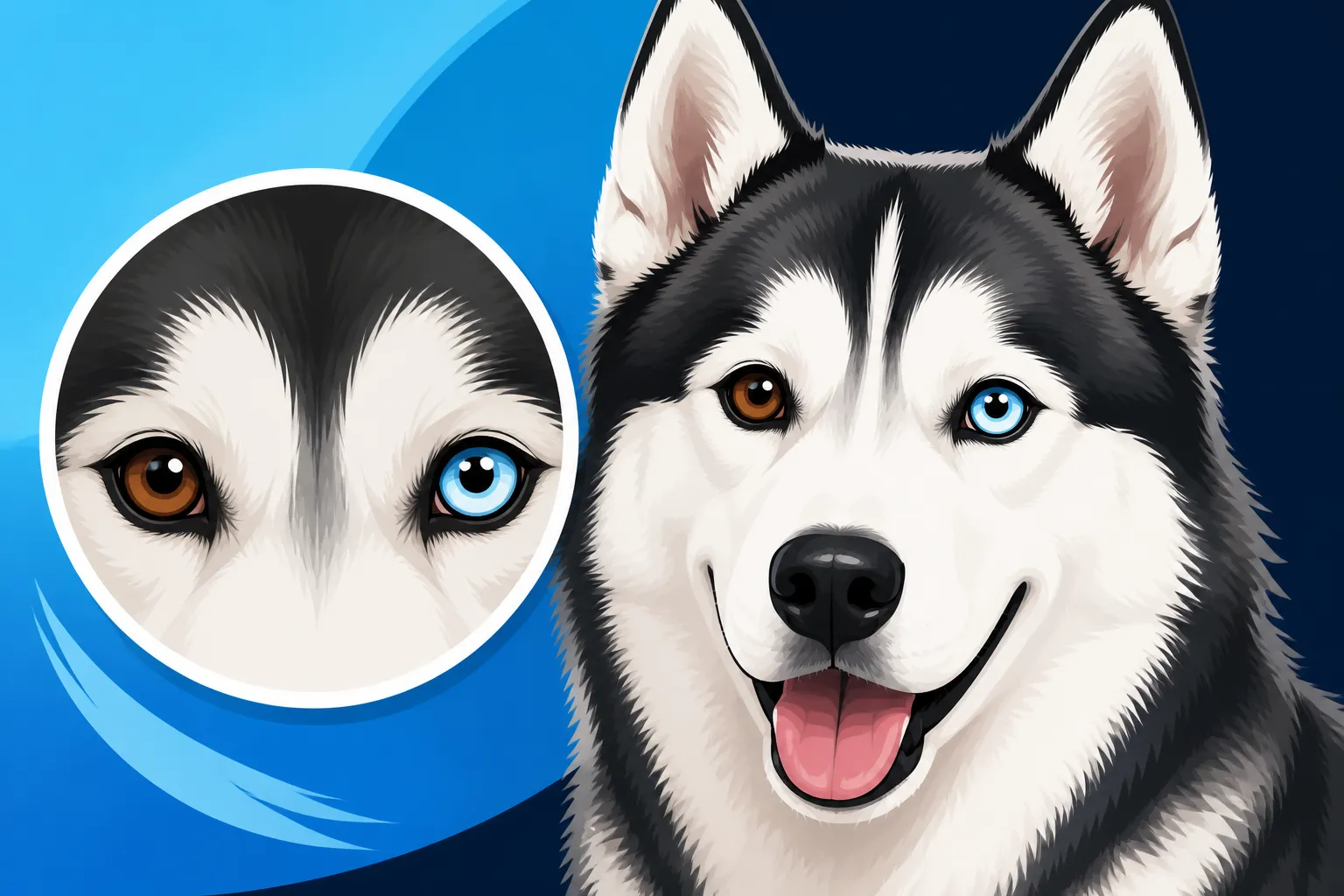
When we talk about a "bi-eyed" Siberian Husky, we're referring to a dog that has eyes of two distinctly different colors. This isn't just about a slight shade variation; it's often a profound difference, such as one brilliant blue eye and one deep brown eye, or sometimes one eye might even contain multiple colors within the iris. It’s a trait that adds immense character and uniqueness to each individual dog, making them instantly recognizable and often a topic of conversation.
Defining Heterochromia in Huskies
The scientific term for having two different colored eyes is heterochromia. Specifically, in Huskies, you’ll most commonly see complete heterochromia, which means each eye is a solid, different color (e.g., one blue, one brown). Less commonly, you might encounter sectoral heterochromia, where part of one iris is a different color from the rest, or even central heterochromia, where the inner ring of the iris is a different color from the outer area. While all these variations are possible, the classic "bi-eyed" look usually implies complete heterochromia. It's truly a genetic lottery that creates these stunning patterns, and it's something that has been present in the breed for generations, long before they became popular household pets.
There’s often a misconception that heterochromia is rare or a mutation, but for Siberian Huskies, it's actually a fairly common and accepted variation within the breed. It's part of what makes them so visually diverse and appealing to many. You might hear people marvel at a Husky with one blue and one brown eye, often thinking it's something extraordinary, and while it is extraordinary in its beauty, it's well within the normal genetic expression for this particular breed. This vibrant trait is part of the breed's standard and is not penalized in the show ring, demonstrating its acceptance and integration into the Siberian Husky's identity. If you've ever seen a Husky with one eye that looks like a clear, icy pool and the other a warm, earthy tone, you've witnessed heterochromia in all its glory. It's a hallmark of their distinctive appearance.
Common Color Combinations and Their Appearance
The most iconic bi-eyed combination in Siberian Huskies is undoubtedly one blue eye and one brown eye. The blue can range from a pale, almost silvery shade to a deep, sapphire hue, while the brown can vary from a light amber to a rich, dark chocolate. But these aren't the only pairings you might encounter. Some Huskies can have one blue eye and one amber eye, or even a green eye paired with a brown or blue. The possibilities are surprisingly diverse, even if the blue and brown pairing is the most frequently observed. Each combination lends a unique expression to the dog, often making their face incredibly striking and memorable.
What's fascinating is how these eye colors play off the Husky's coat color and markings. A bi-eyed Husky with a black and white coat might have their contrasting eyes stand out even more dramatically, while a red and white Husky might have eyes that blend more harmoniously with their warmer tones. The face mask, a common feature in Siberian Huskies, can also frame the eyes in a way that further accentuates their different colors. It's all part of the intricate tapestry of the Siberian Husky's appearance. Breeders and enthusiasts appreciate these unique presentations, understanding that they contribute to the breed's allure. When considering Siberian Husky Eye Colors and Heterochromia, it's clear that the genetics are quite varied and robust, allowing for such wonderful diversity. You might see a black-masked gray Husky with one deep blue and one vibrant brown eye, and it creates a truly unforgettable gaze that tells a story all its own.
Is Bi-Eyed a Health Concern for Siberian Huskies?
This is perhaps the most common question I hear from people admiring a bi-eyed Husky, and it's a completely understandable one. Many people associate unusual physical traits with potential health problems, and it's wise to be cautious. However, when it comes to heterochromia in Siberian Huskies, I can confidently tell you that it's almost universally benign. The different eye colors are simply a cosmetic variation, and they do not inherently indicate any underlying health issues.
Genetics Behind Bi-Colored Eyes
The variation in eye color, or heterochromia, in Siberian Huskies is primarily due to genetics, specifically the distribution of melanin (pigment) within the iris. It’s not a defect or a result of injury; it’s simply how the genes have expressed themselves during the dog's development. This trait is polygenic, meaning multiple genes contribute to its expression, and it's considered a perfectly natural variation within the breed. The genes responsible for eye color in Huskies are quite interesting, allowing for blue, brown, amber, and even multi-colored eyes. This genetic predisposition means that a bi-eyed Husky is just as healthy as a brown-eyed or blue-eyed Husky. It's just a different roll of the genetic dice that happens to produce a visually stunning outcome.
It’s not uncommon for puppies in the same litter to have different eye colors, including some that are bi-eyed, even if both parents have standard brown or blue eyes. This is a testament to the complex genetics at play. Why Siberian Husky Puppy Eyes Change Color can be another fascinating topic, as some puppies are born with blue eyes that later darken to brown, but bi-eyed pups typically show their distinct colors from a relatively young age and those colors remain. You don't have to worry that your bi-eyed Husky will suddenly develop vision problems because of their unique eyes. The genetic pathways for eye color are separate from those that govern vision quality and eye health. It’s important to distinguish between cosmetic variations and genuine health concerns, and heterochromia falls firmly into the cosmetic category for this breed.
Debunking Myths: Vision, Hearing, and Health
One of the most persistent myths about bi-eyed animals is that they have impaired vision or hearing. Let's clear this up: for Siberian Huskies with heterochromia, there is absolutely no scientific evidence to suggest they have poorer eyesight or are more prone to deafness compared to their single-eyed counterparts. Their vision is typically just as sharp, and their hearing just as keen. The different pigment distribution in their irises doesn't affect the function of the retina, optic nerve, or auditory system. It's purely an aesthetic difference.
I’ve met countless bi-eyed Huskies over the years, from sled dogs pulling with incredible focus to beloved family pets navigating their homes with ease, and none have shown any visual or auditory deficiencies directly attributable to their eye color. This isn't like some breeds where specific coat colors (like merle) can be linked to sensory deficits; for Huskies, it’s entirely benign. So, if you're worried about Whether Blue Eyes Mean Vision Problems in a Husky, rest assured that heterochromia itself is not a red flag. Of course, all Huskies, regardless of eye color, can develop other eye conditions like cataracts or progressive retinal atrophy, but these are general breed concerns and not tied to heterochromia. Regular vet check-ups, including eye exams, are always a good idea for any dog, but you don't need to be extra concerned just because your Husky has two different colored eyes. Their beautiful eyes are simply a unique feature to celebrate.
Living With and Loving Your Bi-Eyed Siberian Husky
Embracing a bi-eyed Siberian Husky means welcoming a dog with a truly distinctive appearance into your life. Beyond their looks, they are still a Husky through and through, meaning they come with all the breed's typical traits: intelligence, independence, a love for running, and a penchant for "talking." Their unique eyes are just one more layer of their charm, and they often become a conversation starter wherever you go.
Celebrating the Unique Look
Having a bi-eyed Husky means you'll often hear compliments and questions from strangers. People are naturally drawn to their unusual gaze, and it's a wonderful opportunity to educate others about the breed and debunk those common myths about health. You get to be an ambassador for this fascinating trait! Many owners feel that the bi-eyed look adds a special spark to their dog's personality, making them even more memorable. It’s a part of what makes them uniquely them. You might even find yourself looking for collars or accessories that complement their eye colors, turning their natural beauty into an even more striking feature.
Think about how their eyes truly set them apart. If you're looking for unique pet supplies, or just browsing for sturdy toys and enrichment puzzles, retailers like Chewy offer a vast selection that can cater to even the most discerning Husky's needs, whether they have two blue eyes, two brown eyes, or one of each. Their incredible coats, their powerful build, and then those eyes – it all combines to create a magnificent animal. It's a trait that breeders consider part of the acceptable genetic diversity, aligning perfectly with What the AKC Standard Asks of a Siberian Husky, which allows for various eye colors and combinations. So, rather than seeing it as an anomaly, celebrate it as a beautiful, natural expression of the breed's genetic heritage.
Finding a Reputable Breeder or Rescue for a Bi-Eyed Husky
If you're specifically hoping to find a bi-eyed Siberian Husky, your approach to finding a dog shouldn't change from how you'd seek any other Husky. The most important thing is to prioritize health, temperament, and ethical breeding practices over a specific aesthetic trait. A reputable breeder will health test their breeding stock for common Husky ailments like hip and eye issues, regardless of eye color. They will be transparent about the parents' health history and allow you to visit their facility to see how the puppies are raised. Asking about Health Testing Before You Buy a Siberian Husky is crucial for any puppy, bi-eyed or not.
When contacting breeders, simply express your interest in the breed and its characteristics, including the various eye colors you find appealing. Don't make eye color your sole criterion, as that can unfortunately lead you to less ethical breeders who prioritize appearance over health. Similarly, if you're considering a rescue, many wonderful bi-eyed Huskies find themselves in shelters or breed-specific rescues through no fault of their own. Rescues like those specializing in Siberian Huskies often have dogs of all ages and appearances, and they perform thorough health checks and temperament assessments. Adopting a bi-eyed Husky from a rescue can be an incredibly rewarding experience, offering a deserving dog a second chance. Always remember that the unique eyes are a bonus, but the dog's overall well-being and suitability for your lifestyle should always come first. Understanding Siberian Husky Temperament and What the Standard Says will help you choose the right companion, regardless of their striking gaze.
| Eye Color Trait | Description | Commonality in Huskies | Health Implications |
|---|---|---|---|
| Bi-Eyed (Complete Heterochromia) | One eye is a distinctly different color from the other (e.g., one blue, one brown). | Fairly Common | None (cosmetic only) |
| Parti-Eyed (Sectoral Heterochromia) | One eye contains patches of two different colors within the same iris. | Less Common | None (cosmetic only) |
| Blue Eyes | Both eyes are blue. | Common | None (cosmetic only) |
| Brown Eyes | Both eyes are brown (ranging from amber to dark brown). | Common | None (cosmetic only) |
The history of the breed, rooted in The Chukchi Origins of the Siberian Husky, shows a focus on function, endurance, and robust health, with natural variations in appearance being part of their charm, including their eye colors.
Disclaimer
This article is for general informational purposes only and does not constitute professional advice. Laws, prices and regulations vary by location and change over time. Consult a qualified professional for guidance on your specific situation.