Siberian Husky Eye Colors and Heterochromia
One of the first things that often captivates people about Siberian Huskies is their mesmerizing eyes. From piercing blues to deep browns, and even those striking combinations where each eye tells a different story, it's easy to get lost in their gaze. But this fascination also leads to a lot of questions and sometimes, outright misinformation. Many wonder if blue eyes mean a Husky is special, if heterochromia is a health concern, or if these unique colors come with specific care requirements. This guide is here to unravel the enchanting world of Siberian Husky eye colors and heterochromia, diving deep into the genetics, the breed standard, and the everyday reality of living with these beautiful, diverse eyes.
The Spectrum of Siberian Husky Eye Colors
When you first encounter a Siberian Husky, their eyes are often the feature that truly stops you in your tracks. While many breeds have a fairly uniform eye color, Huskies showcase a kaleidoscope of hues that are both beautiful and, at times, perplexing. It's not just about blue or brown; there's a richness and variety that makes each Husky's gaze truly unique.
Blue Eyes: A Husky Hallmark
Ah, the iconic blue eyes! For many, this is the quintessential Siberian Husky look, instantly recognizable and deeply admired. Unlike many other breeds where blue eyes might be associated with certain merle patterns or white coats that also carry health risks like deafness, the blue eyes in a Husky are usually a standalone genetic trait. This means that a blue-eyed Husky is typically just as healthy and robust as its brown-eyed counterpart, with no inherent link to hearing or vision problems. It's simply a lack of pigment in the iris, allowing the blue spectrum of light to be reflected.
This prevalence of blue eyes is one of the most distinctive characteristics of the breed. You’ll find Huskies with coats of black, red, gray, sable, or pure white, all sporting those stunning icy blue peepers. The intensity of the blue can vary, too, from a pale, almost silvery shade to a deep, vibrant sapphire. It's truly a testament to the unique genetics of the Siberian Husky that this eye color is so common and so consistently beautiful across the breed.
Brown Eyes: The Classic Look
While blue eyes often steal the spotlight, let's not forget the classic, soulful brown eyes that are equally prevalent and, dare I say, just as captivating in a Siberian Husky. In fact, brown is a dominant gene for eye color in many dog breeds, and Huskies are no exception. These eyes can range from a light, warm amber, almost like melted caramel, to a deep, dark chocolate that seems to hold endless wisdom.
Sometimes, owners of brown-eyed Huskies feel a little left out of the "blue-eyed club," but there’s absolutely no reason for it. Brown eyes give a Husky a classic, earthy look, and their expressions can be incredibly profound and affectionate. A rich, dark brown can make a Husky's gaze incredibly intense, reflecting their intelligence and loyalty. Just like blue eyes, brown eyes come in countless shades and complement any coat color, often creating a beautiful, harmonious appearance. Don't underestimate the power of a pair of deep, knowing brown Husky eyes!
Amber/Green Eyes: The Rarer Shades
Beyond the blues and browns, there are also those delightful, less common eye colors: amber and, even more rarely, green. These shades often pop up in Huskies with lighter coat colors, such as reds, coppers, or lighter grays, but they can truly appear in any Husky. Amber eyes are a variation of brown, typically lighter and warmer, sometimes with a golden hue that glows in certain light. They can give a Husky a very wild, almost wolf-like appearance, which is quite striking.
Green eyes are truly a rarity in the Siberian Husky and are often a result of unique pigment distribution that might appear blue in some lights and greenish in others. They are not as intensely emerald as you might see in some human eyes, but rather a subtle, often hazel-like green that is quite distinctive. These rarer eye colors are no less healthy than blue or brown eyes; they are simply less common expressions of the Husky's genetic tapestry. If you've got a Husky with amber or green eyes, you definitely have a unique gem!
Understanding Heterochromia in Siberian Huskies
Beyond single-colored eyes, Siberian Huskies are famous for another eye-catching phenomenon: heterochromia. This isn't just a fancy word; it describes those incredible instances where a Husky's eyes are not the same color, adding another layer of mystique to their already captivating gaze. It's not a flaw, but rather a celebrated genetic variation that makes each individual dog truly one-of-a-kind.
What is Heterochromia?
At its core, heterochromia simply means "different colors." In dogs, and specifically in Siberian Huskies, it refers to the condition where an individual has irises of two different colors. This is known as complete heterochromia, or sometimes just "bi-eyed." It's incredibly common in the breed and is a perfectly normal, healthy trait. It occurs due to variations in the concentration and distribution of melanin (pigment) within the irises during development. It’s not a sign of any underlying health issue, nor does it affect their vision.
Sometimes, people confuse heterochromia with conditions that might affect vision or have associated health risks in other breeds, but with Huskies, it's almost always purely aesthetic. The genes responsible for heterochromia in Huskies are well-understood and aren't linked to the problematic genetic markers found in some other breeds (like the merle gene which can sometimes lead to eye defects or deafness). So, when you see a Husky with two different colored eyes, you're looking at a healthy, perfectly normal, and uniquely beautiful dog.
Bi-Eyed Huskies: Two Distinct Colors
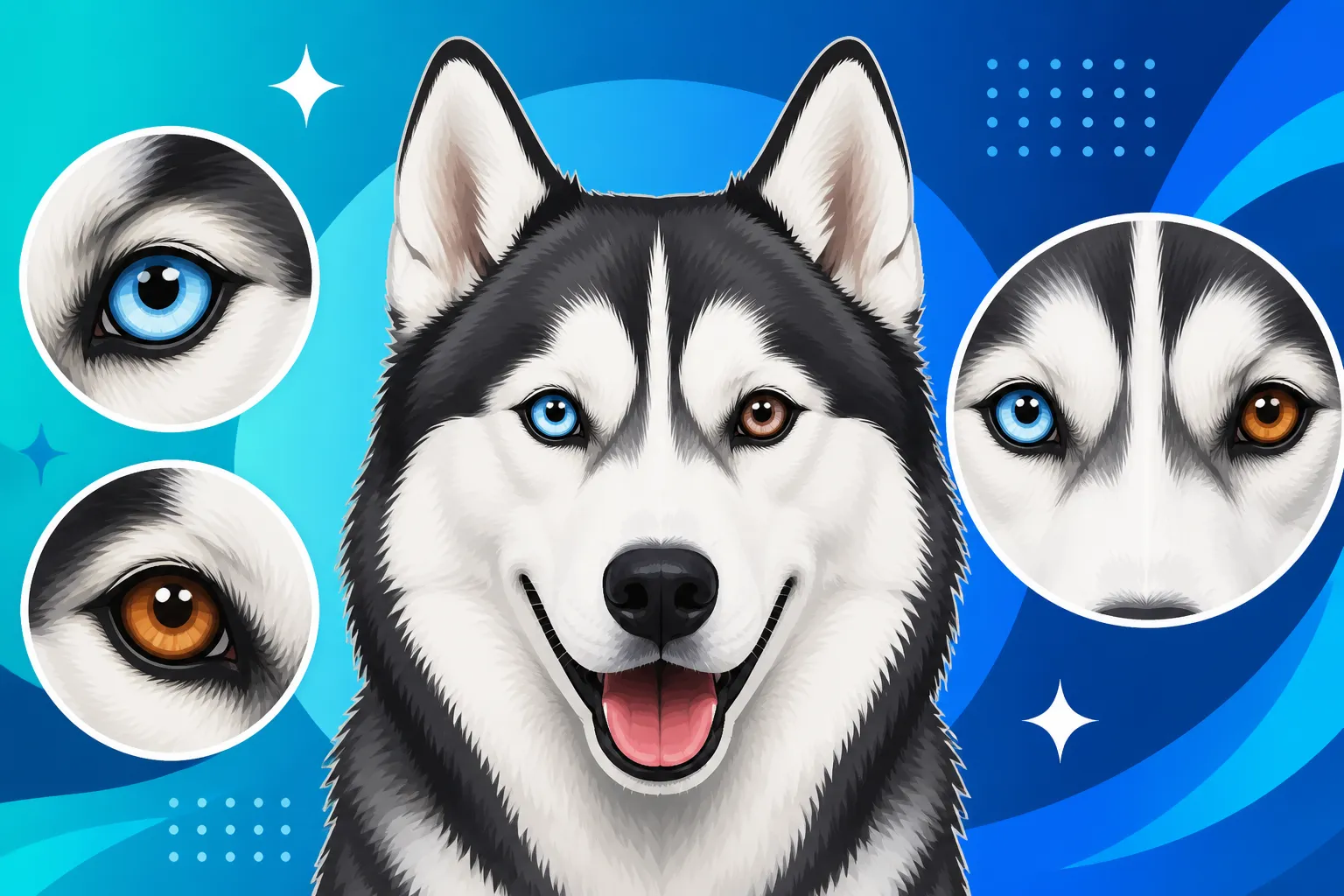
The most recognized form of heterochromia in Siberian Huskies is the "bi-eyed" presentation, where one eye is entirely one color and the other eye is an entirely different color. The classic combination is one piercing blue eye and one rich brown eye, a look that has become iconic for the breed. However, other combinations are possible too, such as one blue eye and one amber eye, or even a brown and an amber. The striking contrast between the two colors is what makes bi-eyed Huskies so memorable and often sought after.
Imagine a Husky with one eye like a winter sky and the other like a warm autumn leaf – it creates an almost mystical quality. This distinct difference usually develops early in puppyhood, and once the colors are set, they typically remain stable throughout the dog's life. Owners of bi-eyed Huskies often find that their dog's unique eyes become a fantastic conversation starter and a source of endless admiration. It’s a natural masterpiece, highlighting the genetic diversity and beauty inherent in the Siberian Husky.
Parti-Eyes: A Splash of Color
While bi-eyed Huskies have two entirely different colored eyes, "parti-eyes" (sometimes called "split eyes" or "marbled eyes") offer an even more intricate display of color. This form of heterochromia occurs when a single iris contains two or more distinct colors. For example, one eye might be half blue and half brown, or have streaks of blue, brown, or amber all within the same iris. It's like an artist painted directly onto the eye, creating a truly unique pattern that changes with the light.
Parti-eyes are fascinating because they demonstrate a more localized and uneven distribution of pigment within the eye. You might see a predominantly brown eye with a distinct wedge of blue, or a mostly blue eye with flecks or segments of amber. This variation is also genetically determined and completely harmless to the dog's vision or overall health. Parti-eyes are perhaps even rarer than bi-eyes and are a stunning testament to the genetic variability within the Siberian Husky breed. Each parti-eyed Husky holds a small, swirling galaxy of color in their gaze, making them truly unforgettable.
Genetics Behind Husky Eye Color
The captivating array of eye colors in Siberian Huskies isn't just random chance; it's a fascinating interplay of genetics. While we might not need to delve into every single allele, understanding the general principles behind these traits can help demystify why Huskies look the way they do and why their eyes are so diverse. It’s a testament to their unique lineage that they express these traits so differently from many other breeds.
The Mystery of Blue Eyes in Huskies
For a long time, the exact genetic mechanism behind the common occurrence of blue eyes in Siberian Huskies was a bit of a mystery, especially because it didn't align with the causes of blue eyes in most other breeds. In many dog breeds, blue eyes are often linked to the merle gene (which can also affect coat color and sometimes cause health issues like deafness or vision problems) or to genes for extreme white spotting. However, Huskies don't typically carry the merle gene, and their blue eyes appear across all coat colors, even solid black.
Recent scientific research has shed more light on this. Studies have identified a specific genetic mutation on chromosome 18, near the ALX4 gene, that is strongly associated with blue eyes and heterochromia in Siberian Huskies. This mutation essentially affects how pigment is deposited in the iris, leading to the blue appearance. What’s particularly important to note is that this specific genetic pathway in Huskies does not carry the same health risks (like deafness) that blue eyes might indicate in breeds like Dalmatians or merle-patterned Australian Shepherds. So, a blue-eyed Husky is generally just as healthy as any other, a truly special genetic gift.
Dominant vs. Recessive Traits
Understanding dominant and recessive traits helps explain why eye color inheritance can sometimes seem unpredictable. Generally, brown eye color tends to be a dominant trait, meaning if a dog inherits a gene for brown eyes from one parent and a gene for blue eyes from another, it's more likely to express brown eyes. However, the situation in Huskies is a bit more complex due to the unique blue-eye gene. It’s not a simple one-gene, two-allele situation.
For instance, two brown-eyed Huskies can absolutely produce blue-eyed or bi-eyed puppies if they both carry the genetic predisposition for blue eyes. Conversely, two blue-eyed Huskies will almost certainly produce blue-eyed puppies. The manifestation of bi-eyes or parti-eyes further complicates this, as it involves an uneven expression or distribution of pigment. This polygenic inheritance – meaning multiple genes influencing the trait – is what leads to such a rich variety of eye colors in a single litter, making it a delightful surprise for responsible breeders and new owners alike.
Eye Color and Coat Color Connection (or lack thereof)
One of the most common misconceptions about Siberian Husky eye color is that it's directly tied to coat color. People often assume that only white Huskies can have blue eyes, or that a red Husky must have amber eyes. While there can be some correlations (for instance, the lighter pigment in a red Husky might sometimes lead to lighter brown or amber eyes), the beauty of Husky genetics is that their eye colors are largely independent of their coat colors.
You can find a pure white Husky with deep brown eyes, a striking black and white Husky with two electric blue eyes, a classic gray and white Husky with one blue and one brown eye, or a rare red Husky with clear blue eyes. The genetic mechanisms for coat color and the specific blue eye mutation are separate. This means that if you're looking for a Husky with a particular eye color, you don't have to restrict yourself to a specific coat color. This independence of traits truly highlights the genetic robustness and diversity that the Siberian Husky was Bred to Do. It means every Husky is a unique canvas, where coat and eye color combine in countless stunning ways, all within the accepted What the AKC Standard Asks of a Siberian Husky.
Common Misconceptions and Health Considerations
With such unique and striking features, it's inevitable that Siberian Husky eye colors become subjects of myth and misunderstanding. It's crucial for any Husky owner or enthusiast to separate fact from fiction, especially when it comes to potential health implications. Huskies are generally a healthy breed, but being informed helps ensure their well-being.
Blue Eyes and Deafness/Blindness Myths
This is perhaps the biggest and most persistent myth surrounding blue-eyed dogs, and it causes a lot of unnecessary concern for prospective Siberian Husky owners. In some dog breeds, particularly those carrying the merle gene (like Australian Shepherds, Border Collies, or some Dachshunds) or certain extreme white spotting genes (like Dalmatians), blue eyes can indeed be associated with an increased risk of deafness or even vision impairments. This is because the same genetic factors affecting pigment in the iris can also affect pigment in the inner ear or the development of the retina.
However, and this is a big however, the blue eyes in Siberian Huskies are caused by a completely different genetic mechanism. As we discussed, it's a specific mutation near the ALX4 gene that solely affects eye pigment. There is no scientific evidence linking blue eyes, bi-eyes, or parti-eyes in Siberian Huskies to an increased risk of deafness, blindness, or any other health problems. A blue-eyed Husky hears and sees just as well as a brown-eyed one. This is a vital piece of information that helps clarify why Huskies are unique in their blue-eyed prevalence and why these beautiful eyes are not a cause for alarm. Regular veterinary check-ups and paying attention to their overall health, including an Siberian Husky Eye Disease and the Annual Exam, are what truly matter.
Eye Color Changes in Puppies
If you've ever watched a litter of Siberian Husky puppies grow, you might have noticed something fascinating about their eyes: many of them are born with blue eyes, which then sometimes change color as they mature. This is a completely normal developmental process and often causes a lot of excitement, and sometimes confusion, among new puppy owners. Why Siberian Husky Puppy Eyes Change Color is a topic that comes up frequently.
Puppies, regardless of breed, are often born with eyes that appear blue or grayish-blue. This is because the melanin-producing cells (melanocytes) in their irises haven't fully matured or started producing pigment yet. Over the first few weeks and months of life, these cells become active. If the puppy is genetically predisposed to brown or amber eyes, those cells will start producing melanin, and the eye color will gradually darken. Blue-eyed puppies, on the other hand, simply have very few or inactive melanocytes in their irises, so the color remains blue. This change typically stabilizes between 8 to 16 weeks of age, although sometimes slight shifts can occur up to six months. So, if your Husky puppy's eyes start as blue and turn brown, it's just nature taking its course!
Eye Color and Vision Quality
Another common assumption is that eye color might somehow affect a dog's vision quality. For example, some might wonder if blue eyes are more sensitive to light or if a brown eye has "better" vision. Let's put this one to bed: there is absolutely no scientific basis to suggest that the color of a Siberian Husky's eyes has any bearing on their visual acuity, depth perception, or sensitivity to light.
A Husky with brilliant blue eyes has the same quality of vision as a Husky with deep brown eyes, or a Husky with one of each. Vision quality is determined by the health and structure of the entire eye, including the retina, lens, and optic nerve, not by the pigment in the iris. What's far more important for a Husky's vision are genetic health clearances from reputable breeders and regular veterinary care. Conditions like Juvenile Cataracts in the Siberian Husky or Progressive Retinal Atrophy in Siberian Huskies are actual concerns that can affect vision, and these are unrelated to eye color. The color of your Husky's eyes is a matter of beauty, not functionality.
The Aesthetic Appeal and Breed Standard
The striking eyes of a Siberian Husky are undoubtedly a major part of their appeal. From a breed standard perspective, however, it's interesting to see how these diverse eye colors fit into the overall picture of what makes a Husky a Husky. While popular opinion might gravitate towards certain colors, the official breed standards embrace the full spectrum, reinforcing the natural beauty of the breed.
Do Blue Eyes "Add Value" to a Husky?
This is a tricky question that often comes up, especially for those new to the breed or considering purchasing a puppy. In the pet market, blue-eyed or bi-eyed Siberian Huskies can sometimes command a higher price from less reputable breeders or in situations where demand for the "cool" factor is high. People are drawn to the exotic and striking appearance. However, from the perspective of a responsible, ethical breeder, eye color is purely an aesthetic trait and does not "add value" in terms of health, temperament, or overall quality of the dog.
A reputable breeder prioritizes health clearances, proper conformation, and a sound temperament above all else. They will not charge significantly more for a blue-eyed puppy over a brown-eyed one from the same healthy, well-bred litter. If you encounter a breeder who does, it should raise a red flag. While blue eyes are beautiful, they are not rarer or inherently superior. The true value of a Siberian Husky comes from its overall health, good genetics, and adherence to the breed standard, not merely the color of its eyes. We've discussed Whether Eye Color Affects a Siberian Husky's Price in more detail before, and the consensus is clear: prioritize health over specific color traits.
What the AKC Standard Asks of a Siberian Husky Regarding Eyes
The American Kennel Club (AKC) breed standard for the Siberian Husky is quite clear and refreshingly inclusive when it comes to eye color. Unlike some breeds where specific eye colors might be faulted or even disqualified, the Siberian Husky standard explicitly permits a wide range. It states: "Eyes almond shaped, moderately spaced and set a trifle obliquely. Expression keen but friendly, interested and even mischievous. Eye color brown or blue; one of each or parti-colored are acceptable. "
This means that whether your Husky has two brown eyes, two blue eyes, one blue and one brown (bi-eyed), or even multiple colors within a single iris (parti-colored), all are perfectly acceptable and within the breed standard. There is no preference given to one color over another in the show ring, as long as the eyes have the correct shape, set, and expression. So, the question of Whether Blue Eyes Are Faulted in a Siberian Husky can be definitively answered with a resounding "no." This inclusiveness is a beautiful reflection of the breed's natural diversity and ensures that all healthy Huskies, regardless of their captivating eye colors, can be celebrated.
Beyond Color: The Husky's Expressive Gaze
While eye color is undeniably striking, it's just one component of the Siberian Husky's overall expressive gaze. The AKC standard emphasizes the "almond shape" of the eyes, their "moderately spaced" and "a trifle obliquely set" placement, and an "expression keen but friendly, interested and even mischievous." These characteristics, irrespective of color, contribute significantly to the iconic Husky look.
The almond shape gives the eyes a slightly slanted, intelligent appearance, enhancing their wolf-like aesthetic. The moderate spacing and oblique set prevent them from looking too wide-set or too close-set, maintaining balance with the head. And that "keen but friendly, interested and even mischievous" expression? That's pure Husky personality shining through! It's the combination of these factors – the shape, the set, the expression, and then the color – that creates the truly mesmerizing and unforgettable gaze that Siberian Husky lovers adore. Whether your Husky has blue, brown, or bi-colored eyes, it's their spirit shining through that makes their gaze truly special.
Living with a Uniquely Eyed Husky
Embracing a Siberian Husky with unique eye colors is a joyful experience, but it also comes with a few fun considerations. From capturing their beauty in photographs to ensuring their continued eye health, there's a lot to appreciate about these visually striking companions. It’s all part of the adventure of having a Husky in your life!
Photography Tips for Unique Eyes
If you have a Husky with blue, bi-colored, or parti-eyes, you know how hard it can be to truly capture their beauty in a photograph. The way light hits those eyes can dramatically change their appearance, and getting a good shot requires a little thought. To make those unique eyes pop, consider natural, diffused light. Harsh direct sunlight can wash out the colors or create unflattering shadows. An overcast day or a shaded outdoor area often works wonders, making blue eyes appear more vibrant and highlighting the distinct segments of parti-eyes.
Focus is key, so make sure your camera (or phone) is locked onto their eyes. Try to get down to their level for a more intimate and expressive shot. For bi-eyed Huskies, experimenting with different angles can emphasize the contrast between the two colors. Sometimes a profile shot might highlight one eye, while a head-on shot will showcase both. And remember, patience is a virtue with Huskies! A Siberian Husky That Comes Only When It Suits might not pose for long, so have your camera ready to snap those candid, expressive moments when their unique eyes are at their most captivating.
Appreciating the Individuality
The diverse eye colors of Siberian Huskies serve as a beautiful reminder of the individuality of each dog. No two Huskies are exactly alike, and their eye colors are just one of many wonderful traits that make them special. Whether your Husky has classic brown eyes, striking blue eyes, or a fascinating combination, it's essential to appreciate this feature as part of their unique identity, not as a marker of superiority or inferiority.
Focusing too much on eye color can sometimes detract from seeing the whole dog – their personality, their silly antics, their loyalty, and their boundless energy. The truth is, a Husky's eye color doesn't change their incredible temperament, their love for adventure, or their tendency to "talk back." It's just one more charming detail in a breed full of them. Every Husky, regardless of eye color, deserves all the love, care, and adventure you can give them.
Supporting Healthy Eyes Through Life
Regardless of what color your Siberian Husky’s eyes are, maintaining their overall eye health is paramount. While their unique eye colors typically pose no inherent health risks, Huskies, like all breeds, can be susceptible to various eye conditions. Regular veterinary check-ups are essential, and your vet will always include a basic eye examination as part of your Husky's annual wellness visit. Beyond the general vet, an annual visit to a veterinary ophthalmologist is highly recommended for all Siberian Huskies, as they can screen for breed-specific conditions. This is vital for early detection and management of potential issues, as Why a Siberian Husky Needs an Eye Exam Every Year is something all owners should understand.
Good nutrition also plays a role in supporting overall health, including eye health. A balanced, high-quality dog food, like those available on Chewy, ensures your Husky gets all the essential vitamins and nutrients. Regular observation at home is also important. Keep an eye out for any changes in their eyes, such as redness, discharge, cloudiness, squinting, or a change in behavior (like bumping into things). These could be signs of underlying issues that need immediate veterinary attention. By being proactive and attentive, you can help ensure your beautiful Husky's eyes remain bright, clear, and healthy for a lifetime of adventures.
Here's a quick comparison of the common Siberian Husky eye colors:
| Eye Color | Description | Prevalence (Approximate) | Associated Health Concerns |
|---|---|---|---|
| Blue | Clear, light to deep blue, lacking pigment. | Common | None (in Huskies) |
| Brown | Warm amber to deep chocolate, full pigment. | Common | None |
| Amber/Green | Yellowish-brown (amber) or greenish-hazel (green). | Less Common | None |
| Bi-Eyed | One eye blue, one eye brown/amber. | Common | None |
| Parti-Eyed | Multiple colors within a single iris (e.g., half blue, half brown). | Less Common | None |
Disclaimer
This article is for general informational purposes only and does not constitute professional advice. Laws, prices and regulations vary by location and change over time. Consult a qualified professional for guidance on your specific situation.