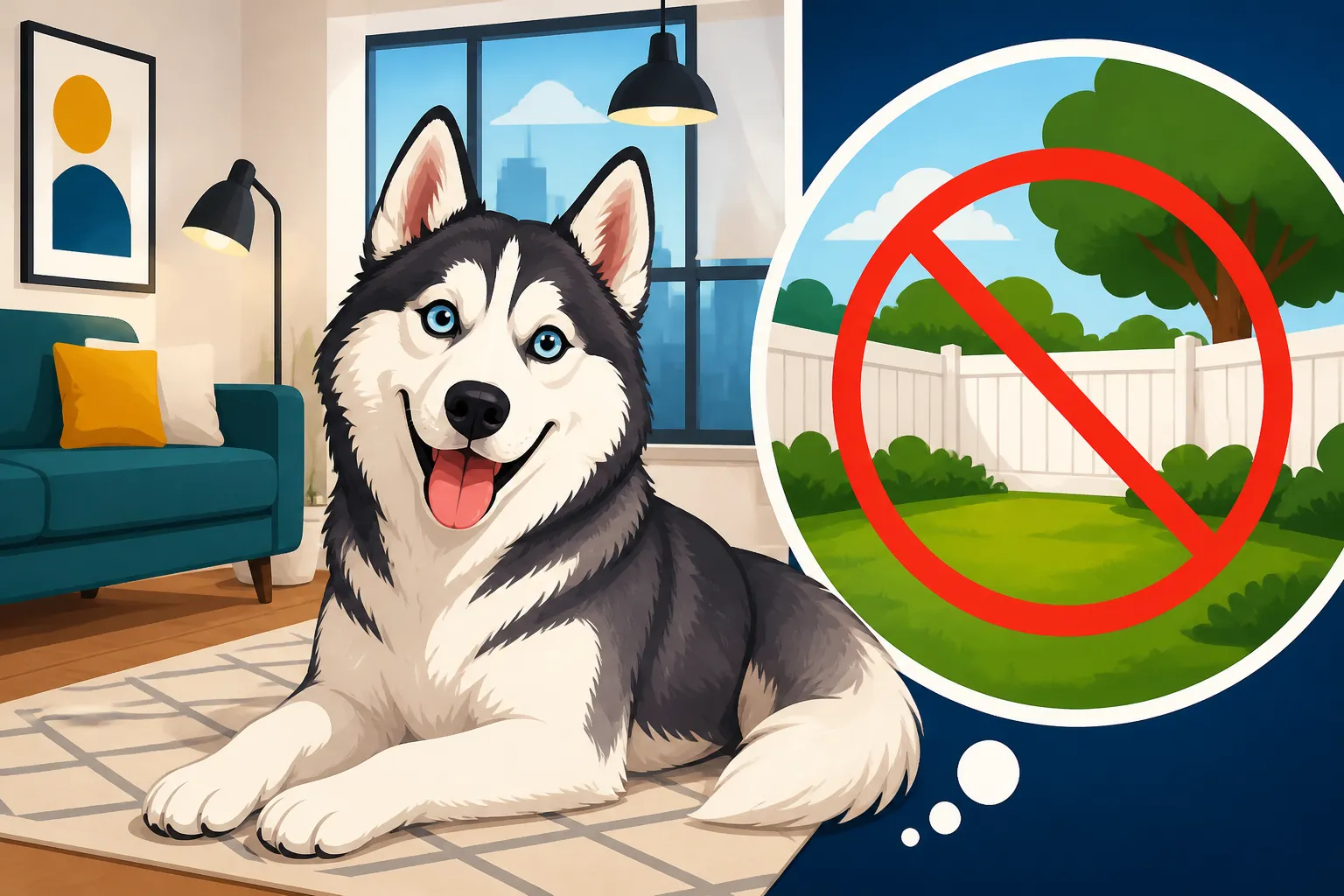
Siberian Huskies in Homes Without a Yard
A Siberian Husky can live in a home without a yard, but the lack of outdoor space changes the daily routine: every bathroom break, sniffing session, and burst of exercise needs planning. This guide explains how to decide whether the arrangement is workable, set up a safe routine, and meet a Husky’s needs without relying on a private backyard.
Can a Siberian Husky Live Without a Yard
Yes. A fenced yard can be convenient, but it does not replace walks, training, company, or purposeful activity. A Husky in an apartment or townhouse may do well when the household can reliably provide those things. The more useful question is not “How big is the home?” but “Can we meet this dog’s needs every day, including when the weather is unpleasant or life gets busy?”
What a yard does and does not provide
A yard gives a dog somewhere to step outside quickly, explore familiar scents, or play under supervision. It can make a bathroom break easier, especially during a packed workday. But it does not automatically give a dog enough exercise or stimulation. Some dogs spend much of their yard time watching the fence, digging, or waiting by the door.
For a Husky, a yard is not a substitute for time with people and structured activity. This is a breed developed for endurance and cooperation in motion, and many individuals have a strong instinct to roam. Leaving one alone outside for long stretches can create new problems, including digging, fence testing, howling, and escape attempts. A secure yard can be helpful, but it still needs supervision and a plan. Stopping a Siberian Husky From Escaping the Yard
Without a yard, you’ll need to take your dog outside on a leash for bathroom trips and exercise. That can be entirely manageable, but it means there is no quick “let the dog out” option when you’re tired, running late, or in the middle of a storm. If you live on an upper floor or far from a safe outdoor area, think through those trips before bringing a dog home.
Signs the arrangement may suit your household
A yard-free home is more likely to work if you enjoy walking and can build dependable outdoor breaks into your day. You do not need to be an athlete, but your routine should include more than a short trip around the block. Many Huskies also need mental activity, calm companionship, and practice settling indoors after excitement.
Your work schedule matters just as much as your floor plan. A Husky left alone for long periods without a break or enrichment may become distressed or destructive. Consider whether someone can visit during the day, whether your schedule has enough flexibility, and how you would manage an unusually long workday. Siberian Huskies for People Who Work Full Time
Temperament and age matter, too. An adult dog with a known history of relaxing indoors may be a more predictable fit than a lively puppy whose needs change quickly as it grows. A rescue or breeder should be able to discuss the individual dog’s energy, ability to settle, reactions to city sounds, and history of being left alone. Breed tendencies are useful context, not a guarantee of how one particular dog will behave. Choosing Between a Siberian Husky Breeder and a Rescue
Build a Routine Around Outdoor Access
When you do not have a yard, outdoor time needs to be part of the household schedule rather than an occasional bonus. Think in terms of reliable bathroom opportunities, exercise suited to the dog’s age and fitness, and unhurried chances to sniff and explore. A rushed walk that is all marching and no sniffing may not leave a dog as settled as you expect.
Plan bathroom breaks before the dog comes home
Map out the route from your front door to a suitable toileting spot. Consider stairs, elevators, secure entry doors, busy streets, and the distance to a patch of grass or another dog-friendly area. In a city neighborhood, the closest patch may be beside a busy road or shared by many dogs; a calmer option a few minutes farther away might make the routine easier.
Puppies generally need more frequent trips than healthy adults, particularly after waking, eating, drinking, and playing. Senior dogs or dogs with medical needs may also need more frequent access. If you’re gone for a full workday, be realistic about how breaks will happen. A dog walker, trusted neighbor, or other reliable arrangement may be part of the plan, not a backup you decide on after the first accident.
Apartment living also calls for patient house-training. Take the dog to the same appropriate spot when possible, reward toileting outdoors, and keep track of patterns. If an accident happens, clean it thoroughly and adjust the schedule rather than treating it as defiance. For a new puppy, it can help to prepare a simple log of meals, naps, and bathroom trips so everyone in the household follows the same routine.
Make exercise regular, safe, and age-appropriate
Daily activity should be built around the dog in front of you. A young puppy needs exercise that respects growing joints, while a fit adult may enjoy longer walks, hikes, or carefully introduced running. Older dogs may benefit from shorter, more frequent outings. A veterinarian can help tailor activity when a dog has a health issue or is returning to exercise after a break.
A useful routine usually mixes movement with variety. One walk might focus on relaxed neighborhood exploration, while another includes training, a new route, or play in a secure area. If you have access to a fenced dog field, check the rules and inspect the boundary before unclipping the leash. In an open public space, a long line can provide room to explore while preserving control, but it requires attentive handling and a safe setting.
Do not assume that a Husky will safely run off leash just because the dog seems responsive in a quiet hallway. Wildlife, squirrels, bicycles, or another dog can quickly change the picture. Practice leash skills and recall in controlled environments, and keep the dog physically secured where the surroundings are unpredictable. Siberian Husky Leash Work Against a Pulling Instinct and How Much Exercise a Siberian Husky Really Needs
| Daily need | What to plan without a yard | Practical check |
|---|---|---|
| Bathroom breaks | Leashed trips at predictable times, with extra trips for puppies or dogs who need them | Is a suitable outdoor spot reachable in every kind of weather? |
| Exercise | Walks and age-appropriate activity, not just brief toileting trips | Can your household keep the routine on busy days too? |
| Exploration | Sniffing time on walks and safe changes of scenery | Does the dog get opportunities to investigate without pulling you into danger? |
| Mental activity | Short training sessions, food puzzles, and scent games | Can you offer these before boredom turns into mischief? |
| Time alone | Gradual practice, enrichment, and a plan for long absences | Who can check in if your schedule changes? |
| Safety | Leash, secure harness, ID, and careful entry and exit habits | Could the dog slip out through a lobby, door, or gate? |
Make the Home Work for a Husky
A home without a yard can still be a comfortable place for a Husky to rest. The key is to make indoor life predictable and engaging without expecting toys or square footage to replace outdoor activity. A dog who has been exercised and taught how to settle is more likely to nap while you work or relax.
Create an indoor routine that prevents boredom
Offer short, regular activities rather than waiting until the dog is already restless. A few minutes of practicing cues, searching for kibble, or working on a food puzzle can give the dog something constructive to do. You can rotate toys and games so they stay interesting, while keeping an eye on items that might be chewed apart or swallowed.
Food enrichment can fit into ordinary routines. For example, you might use part of the dog’s regular meal in a puzzle feeder, scatter kibble in a safe snuffle mat, or ask for a simple cue before setting down the bowl. If you’re choosing supplies, Chewy may be one place to compare puzzle feeders or basic enrichment items, but match the item to your dog’s chewing style and supervise anything new. A clever, determined dog may make quick work of a toy that is not sturdy enough.
Teach an indoor settle as deliberately as you teach a walk cue. Reward the dog for lying on a mat or resting quietly while household activity happens nearby. Start with brief, calm practice, and gradually make it more challenging. This is especially useful in a compact home, where the dog may be close to the kitchen, hallway, or front door all day. A quiet rest space away from constant foot traffic can help.
A busy day outdoors does not automatically teach a dog how to be alone. Build alone time gradually, provide safe activities, and watch for signs of distress such as persistent vocalizing, frantic pacing, or damage around exits. If the dog is struggling, reduce the difficulty and seek help from a qualified trainer or veterinary professional instead of simply increasing exercise. Siberian Husky Destruction When Left Alone and Wearing Out a Siberian Husky Without Leaving the House
Set up the entryway and shared spaces for safety
Doors and shared building entrances deserve special attention. A Husky may be ready to dash when a door opens, especially if the hallway leads to a world of interesting smells. Teach the dog to wait behind a barrier or on a mat while you handle deliveries, visitors, and groceries. Use a leash before opening the front door, and have a plan for elevators, lobbies, and apartment gates.
Check the fit of the dog’s collar or harness regularly, especially during growth or after a coat change. A secure harness can help with control on walks, but it should not be treated as a substitute for leash handling and training. Keep identification current, and consider a backup safety step, such as a second attachment, when moving through a busy lobby. Put leash, waste bags, keys, and treats near the exit so a quick bathroom trip is less chaotic.
Give the dog a comfortable resting area that is away from drafts, direct heat, and the busiest household traffic. Husky fur can make a dog look as if it is always warm and comfortable, but individual dogs still need a suitable resting spot and access to fresh water. Regular brushing also matters indoors: loose undercoat can collect on rugs, clothing, and furniture, even if the dog is not spending time in a yard. Siberian Husky Weekly Grooming Between Blows
Check the Practical Details Before Committing
A yard-free setup can work beautifully when the people in the home are prepared for its daily demands. It can also become exhausting if the plan depends on ideal weather, unlimited free time, or the dog magically learning to entertain itself. A little honest planning now can prevent frustration for both you and the dog later.
Match the dog to your real schedule and surroundings
Look at an ordinary week, not your best week. Who takes the morning walk if the weather is poor? What happens if you work late? Is there a safe route for a final bathroom trip at night? If you live in a busy area, can you avoid the loudest streets when the dog needs a calm walk? These details often matter more than whether your home has an extra room.
Also consider how the dog handles noise and close neighbors. Hallway footsteps, sirens, other dogs, and shared walls can be a lot for a dog still learning to relax. If the dog vocalizes when excited or left alone, neighbors may hear it. Practice calm behaviors early, and address persistent noise or anxiety rather than assuming it is an unavoidable breed trait. For broader context on city routines and access to outdoor space, see Living With a Siberian Husky in a City and Whether a Siberian Husky Fits an Apartment.
If you are comparing individual dogs, ask direct questions about house-training, time alone, leash behavior, prey interest, and reactions to traffic. A calm meeting in a quiet room will not tell you everything about how a dog behaves in a crowded lobby or on a busy sidewalk. Whenever possible, learn about the dog’s typical routine and whether that routine resembles the one you can provide.
Use a simple decision check
Before making a commitment, answer these questions honestly:
- Can someone provide reliable bathroom breaks every day, including during work or school hours?
- Is there a safe, accessible outdoor route that works in bad weather and after dark?
- Can the household meet the dog’s exercise and enrichment needs without relying on off-leash freedom?
- Is there a plan for training, gradual alone-time practice, and help if the dog struggles?
- Can you manage the practical costs of walkers, training, supplies, and routine care if needed?
- Does the specific dog seem comfortable with the noise, stairs, elevators, and close neighbors in your home?
If several answers are uncertain, pause and work out the missing pieces before bringing a dog home. That might mean arranging a midday walker, testing your daily walking route, or speaking with a rescue about an adult dog whose indoor habits are already known. If the answers are solid, a lack of yard space alone does not rule out Husky ownership.
Living without a yard asks for consistency. The dog will depend on you for every trip outside, so the real measure of success is whether you can make those trips and the rest of the daily routine dependable. A secure leash, thoughtful training, suitable exercise, and a calm indoor setup can go a long way toward making a yard-free home feel like home to a Husky.
Disclaimer
This article is for general informational purposes only and does not constitute professional advice. Laws, prices and regulations vary by location and change over time. Consult a qualified professional for guidance on your specific situation.