Whether Siberian Husky Popularity Is Falling
A Siberian Husky may seem less visible than it was during its biggest pop-culture moments, but that does not automatically mean fewer people want one. Breed popularity depends on what is being measured: registration rankings, puppy demand, online attention, or shelter numbers. This guide explains how to read those signals—and why they matter if you’re considering a Husky.
Is Siberian Husky popularity actually falling
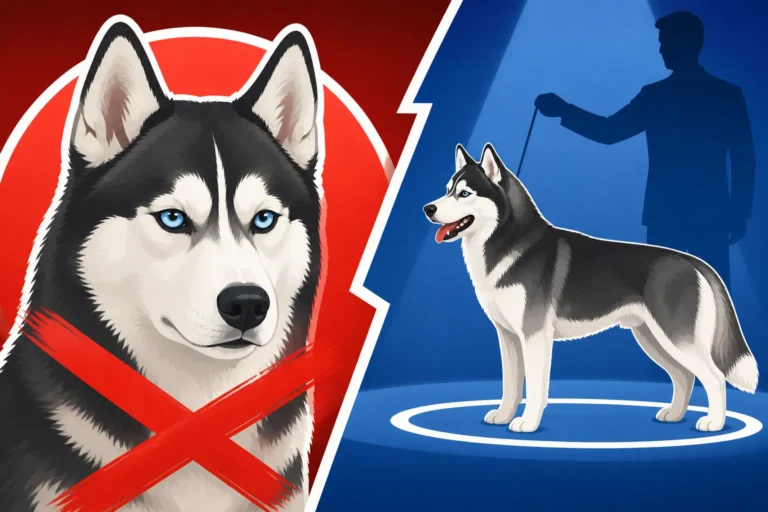
There isn’t one single scoreboard for breed popularity. Registration rankings are often treated as the answer, but they only describe a particular slice of dog ownership. A breed can slip in relative rank without disappearing from homes, and increased shelter visibility doesn’t necessarily mean fewer people are choosing puppies.
What breed rankings measure
A ranking based on registrations typically counts dogs recorded with a particular kennel club. That can help show how popular registered purebreds are within that registry, but it does not count every Husky or Husky mix. Dogs adopted from shelters, obtained through other channels, or never registered may not appear in that data.
Rankings are also relative. Imagine that Husky registrations stay steady while other breeds become more popular: the Husky could move down the list even though the number of Huskies being registered has not fallen. Conversely, a breed might rise in rank because registrations for other breeds declined. A position on a list is not the same thing as a full count of dogs living in the country.
It’s also useful to distinguish a long-running interest in the breed from a sudden burst of attention. Siberian Huskies have appeared among well-known and popular breeds in U.S. registration rankings. Still, a past high point does not tell us exactly how many people are choosing Huskies now, or whether local demand in a particular city is rising or falling.
Why shelter numbers can tell a different story
Shelter and rescue data measure a different part of the picture. A community may see many Huskies needing homes even if the breed’s overall popularity is not declining. That can happen when owners underestimate the time, exercise, supervision, and containment a Husky needs, or when a local rescue network serves a large area.
An intake number also needs context. Is it counting one municipal shelter, a group of rescues, or a whole region? Are the dogs purebred, mixed, or simply described as Husky-type? Does the count include owner surrenders, strays, transfers, or only dogs available for adoption? Without those details, comparing figures from different places can give a misleading impression.
For a deeper look at why dogs of the breed may need new homes, see Why So Many Siberian Huskies End Up in Rescue. The key point is that adoption visibility and popularity are related, but they are not interchangeable measures.
Online attention is not the same as ownership
Social media, films, and viral posts can make a breed feel suddenly everywhere. That visibility may encourage people to look up puppies or follow Husky accounts, but attention does not prove that people are prepared to live with the breed—or that they ultimately bring one home.
The reverse is true, too: a quieter online moment does not mean interest has vanished. Many people choose dogs through family recommendations, local breeders, rescues, or word of mouth rather than public trends. Search interest can offer clues about what people are curious about, but it does not reveal how many owners will still be caring for a dog five or ten years later.
A high-profile wave of attention can have a real effect on interest, though. The Game of Thrones Wave of Siberian Huskies explores how a pop-culture association can draw people toward the breed—and why a rush of attention can be complicated for dogs whose needs are more demanding than their appearance suggests.
Why Siberian Huskies attract attention
The Husky’s looks are an obvious part of its appeal: upright ears, a thick coat, and often striking eyes. But appearance is only one piece. People are also drawn to the breed’s athleticism, expressiveness, and lively personality. Those traits can be delightful in a well-matched home and challenging when expectations are based mainly on photos or movie scenes.
Appearance and public visibility
A Husky is recognizable. Even people who know little about dog breeds may identify one by its coat, mask-like facial markings, and distinctive eyes. That makes the breed memorable in advertising and entertainment, and it can lead prospective owners to picture an adventurous companion before they have learned what day-to-day ownership involves.
Eye color can add to the fascination, but it should not be treated as a reliable measure of health, temperament, or suitability. Siberian Husky Eye Colors and Heterochromia explains the range of eye appearances. What a dog looks like in a photograph tells you very little about how comfortably it will fit your daily routine.
A viral image also leaves out the ordinary parts of dog care: shedding, training, exercise, secure fencing, and arranging supervision when the owner is away. If you’re drawn to the look, it’s worth learning about the breed’s needs before deciding that the look is a good match for your household.
Personality and working-dog heritage
Siberian Huskies were developed as sled dogs, and many retain strong energy, stamina, curiosity, and an inclination to move. Those qualities help explain their appeal to active people. A Husky can be a joyful partner for someone who genuinely enjoys planning exercise and enrichment as part of the day—not just taking a short walk when there happens to be time.
But a working background does not mean every pet Husky wants the same activities, or that exercise alone solves every behavior problem. Huskies can be independent, vocal, and intensely interested in whatever is moving nearby. A fenced yard is not automatically enough to keep one engaged, and a beautiful recall in a quiet living room may not hold up when a squirrel darts across a trail.
New owners often find this gap between image and routine surprising. What New Siberian Husky Owners Underestimate covers some of the responsibilities that are easy to miss when a person is focused on the breed’s appearance or reputation.
Popularity can rise locally even if a national ranking shifts
National lists can hide local patterns. In one area, a rescue may have several Huskies needing homes; elsewhere, prospective adopters may wait for an available dog. Local housing rules, climate, transport networks, and the number of breed-focused rescues all influence what people see.
A city with many renters may also have fewer homes that allow a medium-to-large, energetic dog. That can make it seem as though Husky ownership is uncommon there, even while interest is high. Before assuming the breed is a practical fit, check your lease and building rules. Whether a Siberian Husky Fits an Apartment looks at the lifestyle questions that matter more than square footage alone.
Why a popular breed can still end up in rescue
Popularity has a complicated side. When demand grows quickly, some people may choose a dog before they understand the commitment, or seek a puppy from a source that places little emphasis on responsible breeding and matching. Later, the mismatch can become a problem for the owner and the dog.
Mismatched expectations
A common mismatch begins with exercise. Someone may imagine that a few casual neighborhood walks will satisfy a Husky, then discover that their dog needs more structured activity and mental engagement. Another owner may assume that a large yard will provide enough stimulation on its own. In reality, a yard does not replace interaction, training, and supervised activity.
Containment can be another surprise. Huskies are known for exploring, digging, and testing boundaries. A gate left ajar or a weak fence can become a serious safety issue, not merely an inconvenience. People who are used to dogs that stay close without much management may not anticipate how carefully they need to plan exits, walks, and outdoor time.
Work schedules matter, too. A dog left alone for long stretches without a realistic plan for exercise and company may become distressed or destructive. Siberian Huskies for People Who Work Full Time considers how schedule, support, and the individual dog’s needs fit together. The goal isn’t to label a type of owner as automatically unsuitable; it’s to make sure the arrangement is workable for the dog.
Popularity creates a need for careful sourcing
When a breed is recognizable and in demand, prospective owners may encounter sellers who emphasize appearance or availability while offering little information about health, temperament, or the parents. A fast decision can feel tempting, especially after waiting for a puppy, but it is reasonable to ask questions and take time to assess the answers.
If you are looking for a puppy, ask what health screening is performed, how the breeder raises and socializes the litter, and what support is provided after the dog goes home. Be cautious if you are pressured to pay quickly or discouraged from meeting the dogs and asking detailed questions. Choosing Between a Siberian Husky Breeder and a Rescue can help you think through the options without treating one path as right for everyone.
Whether adopting or buying, plan for recurring needs before bringing a dog home. A practical checklist might include food, grooming tools, secure walking equipment, training support, veterinary care, and a safe containment plan. Retailers such as Chewy can help you review categories of everyday supplies, but a shopping list should not substitute for budgeting time, training, and care.
Rescue trends deserve a careful reading
A large number of Huskies listed for adoption can be a sign that local organizations need help, but it is not proof on its own that the breed’s popularity is collapsing. Rescue listings change as dogs are adopted, transferred, or newly admitted. Some groups serve more than one state, while others focus on a small local area.
It also matters why a dog entered rescue. A stray dog with no known history is different from an owner surrender with detailed notes about behavior and health. Neither situation tells the whole story of the breed, but the information can help a prospective adopter prepare for the individual dog in front of them.
If you are considering adoption, ask about the dog’s known history, comfort around other animals, experience being alone, health care, and behavior in everyday settings. Breed-specific organizations may be able to share relevant experience, but every dog is an individual. Breed-Specific Siberian Husky Rescues is a useful next step for understanding that route.
How to decide whether a Husky is right for you
Whether Husky popularity is rising or easing matters less to your future dog than whether your home and routine fit its needs. Popularity can shape availability and public awareness, but it cannot predict the temperament of an individual dog or the amount of work you will find manageable.
Use a practical ownership check
Before committing, picture an ordinary Tuesday—not a perfect day off. Who provides exercise before work? What happens if the weather is unpleasant, your schedule changes, or the dog has a difficult day? Where will the dog stay when you are out, and how will you prevent escapes from doors or yard gates?
Also consider whether everyone in the household agrees about training and supervision. A Husky may be friendly and affectionate, but friendliness does not remove the need for boundaries. Children, visitors, cats, and small animals all require thoughtful introductions and management based on the actual dog, not assumptions about the breed.
A rough comparison can help you separate popularity signals from the questions that affect your decision:
| Signal | What it can tell you | What it cannot tell you |
|---|---|---|
| Kennel club ranking | Relative registrations within that registry | The total number of Huskies in homes |
| Shelter and rescue listings | Dogs currently seeking homes in a specific area or network | National demand or the reason each dog needs a home |
| Search and social media attention | What people are discussing or looking up | How many people will become prepared owners |
| Local breeder or rescue availability | What options exist nearby | Whether a dog is a good fit for your household |
For costs, avoid relying on a single headline figure. Food needs, veterinary care, grooming supplies, training, and secure fencing can vary with the dog and where you live. You can use Chewy to review the kinds of supplies you may need and then check current figures directly with retailers and local service providers. Remember to account for the less visible commitment as well: daily time, supervision, and planning.
Choose for fit, not for a trend
If the breed is popular in your area, you may have several sources to compare. If it is less common, you might need to widen your search or be patient. Neither situation should push you into a rushed choice. Ask whether the individual dog’s needs align with your home, experience, activity level, and capacity to manage an energetic, curious animal.
A responsible decision also leaves room for the possibility that a Husky is not the right dog for you. That can be disappointing when you have pictured one for years, but recognizing a mismatch before bringing a dog home is kinder than discovering it after the novelty fades. If the breed does fit your life, go in with a realistic plan for exercise, training, secure handling, and long-term care.
Popularity can shift, and different measures can point in different directions. The more useful question is not simply whether Siberian Huskies are falling in the rankings. It is whether you understand what living with one involves—and whether you can offer the individual dog a safe, steady home. If you’re still weighing the everyday commitment, What New Siberian Husky Owners Underestimate is worth revisiting before you make a decision.
Disclaimer
This article is for general informational purposes only and does not constitute professional advice. Laws, prices and regulations vary by location and change over time. Consult a qualified professional for guidance on your specific situation.