Whether a Siberian Husky Male Tops Twenty-Three Inches
It’s a common moment for new Siberian Husky owners: you're looking at your adorable, fluffy puppy, and you start to wonder just how big he'll get. You might have heard the breed standard talks about male Huskies reaching around twenty-three inches, but then you see pictures online of what look like absolute giants, and the questions begin to bubble up. Will your boy top that twenty-three-inch mark? Does it even matter? This guide will dive deep into the official breed standard for male Siberian Husky height, explore the many factors that can influence a Husky’s mature size, and discuss what it means for you and your beloved companion if he ends up a little taller than the books suggest.
The Official Word on Male Siberian Husky Height
When we talk about purebred dogs, the phrase "breed standard" comes up a lot. It’s essentially a detailed blueprint, created by the parent club of the breed and adopted by organizations like the American Kennel Club (AKC), that describes the ideal characteristics of a Siberian Husky. This isn't just about looks; it's about preserving the original purpose and functionality of the breed. For Siberian Huskies, that purpose was fast, efficient sled pulling in harsh conditions, and their size is a crucial part of that equation.
Understanding the AKC Breed Standard for Males
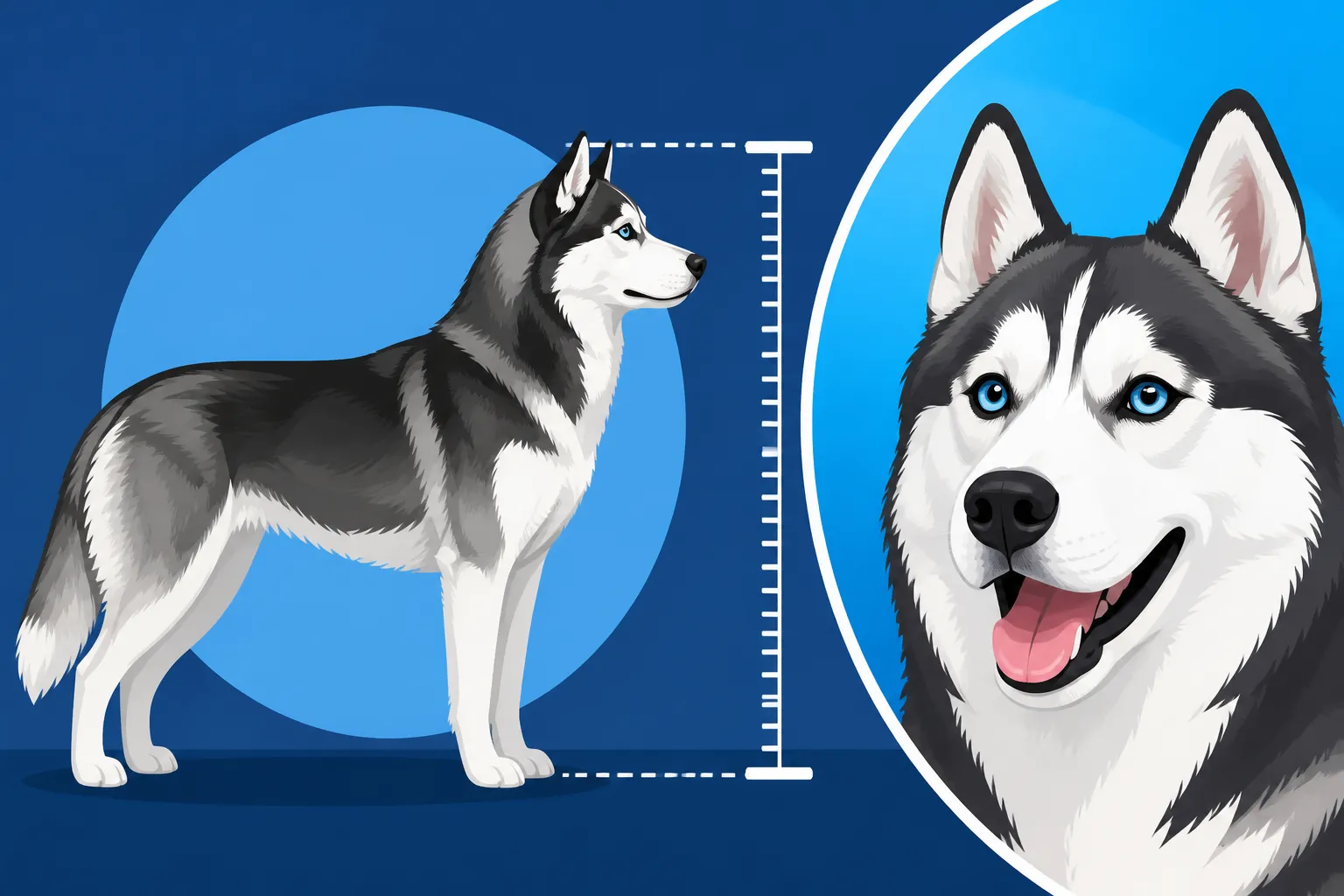
The AKC breed standard for male Siberian Huskies specifies a height range from 21 to 23.5 inches at the withers. The "withers" is the highest point on your dog's shoulder blades, and it's where you measure their height. It's not to the top of their head, or the tip of their ears when they're alert, but specifically that point between their shoulder blades where the neck meets the back. This measurement is taken with the dog standing squarely on a level surface.
This isn't just an arbitrary number; it's deeply rooted in the breed's history and function. The Chukchi people, who originally developed these dogs, needed canines that were powerful enough to pull a sled but light enough to be agile and conserve energy over long distances. A Husky that's too tall or too heavy would expend more energy to move, potentially impacting their endurance and speed. The standard aims to maintain this perfect balance, ensuring the Siberian Husky remains true to its heritage as an efficient, medium-sized working dog. You can learn more about the overall expectations for the breed in What the AKC Standard Asks of a Siberian Husky.
The Ideal Balance of Height and Weight
It’s important to remember that height doesn’t exist in a vacuum; it’s intrinsically linked to weight and overall proportion. The AKC standard for male Siberian Huskies typically pairs that 21 to 23.5-inch height with a weight range of 45 to 60 pounds. This balance is key. A dog could technically be 23 inches tall but be much heavier than 60 pounds, making them bulky and less efficient. Conversely, a tall but extremely light Husky might lack the necessary substance for sustained work.
The standard describes the Siberian Husky as well-boned and well-muscled, but never coarse or heavy. This means they should have good bone structure that supports their frame, with athletic musculature that hints at their power and endurance, all without appearing thick or clunky. When a Husky breeder looks at a dog, they’re not just looking at the number on the tape measure; they’re assessing the whole package—the elegance of the stride, the depth of chest, the length of leg, and how all these elements contribute to the dog's ability to do the job they were bred for. This proportionality is what makes a well-bred Husky so distinctive and functional.
Factors Influencing a Male Husky's Size Beyond the Standard
While the breed standard sets an ideal, it's not uncommon to see individual Huskies fall slightly outside these parameters. Several factors can play a role in whether your male Siberian Husky reaches, or even slightly exceeds, the 23-inch mark. Sometimes it's perfectly normal variation, and other times it points to influences during their growth.
Genetic Lineage and Parental Size
Hands down, genetics are the biggest predictor of your Husky's adult size. Just like in people, tall parents tend to have tall offspring. If both of your Husky's parents are on the taller end of the standard—say, 23 inches or slightly above—it's highly likely their puppies will follow suit. Responsible breeders, especially those focused on conformation (show) lines, will be very particular about maintaining size within the standard, often health testing their breeding stock and showing them to ensure they meet the ideal. You can often see the health paperwork and parental information when getting a puppy, which can offer clues about future size and health. Reading a Siberian Husky Puppy's Health Paperwork is a great resource for understanding these documents.
However, some working or racing lines, while still recognizably Huskies, might have a slightly wider range of sizes. Their primary focus is on athletic performance and endurance, and if a dog excels at pulling despite being an inch or two outside the standard, a musher might not be as concerned with strict adherence to show ring aesthetics. It's a subtle distinction, and most working Huskies still fall well within the general size expectations for the breed, but there can be a bit more leeway.
Nutrition and Growth Rate in Puppyhood
Another significant factor, especially during the critical puppy growth stages, is nutrition. While it might seem counterintuitive, overfeeding a puppy doesn't necessarily make them "better" or stronger; it can actually lead to accelerated growth, which puts undue stress on their developing joints and bones. This rapid growth can sometimes result in a slightly larger adult size, but it can also predispose them to orthopedic issues later in life, such as hip or elbow dysplasia, even in a breed known for its healthy hips like the Siberian Husky.
It's vital to feed a high-quality, balanced puppy food appropriate for medium to large breeds, following the feeding guidelines carefully, or even adjusting down slightly based on your puppy's body condition. Don't worry about trying to "bulk up" your Husky puppy. A lean, steady growth rate is always preferable for long-term health. Products available from retailers like Chewy often provide detailed feeding charts and offer a wide selection of reputable brands formulated for different life stages, making it easier to ensure your puppy gets the right nutrients without overdoing it. For more on this, check out Feeding a Siberian Husky Puppy Month by Month. Always aim for a healthy weight and condition, where you can easily feel but not see their ribs, and they have a visible waist tuck.
The "Wooly" Coat and Perceived Size
Sometimes, what appears to be an oversized Husky is simply an optical illusion caused by an unusually thick or "wooly" coat. The Siberian Husky breed standard calls for a double coat of medium length, designed for insulation and protection in cold climates. A "wooly" coat is one that is significantly longer and softer than the standard, giving the dog a much larger, fluffier appearance.
Imagine seeing a wooly Husky next to a standard-coated one. The wooly coat can add inches to the dog's apparent girth and even make them seem taller, when in reality, their underlying bone structure and true height at the withers might be perfectly within the standard range. While beautiful, wooly coats are considered a serious fault in the show ring because they collect snow and ice more easily, making them less functional for traditional sled work. So, before you declare your male Husky a giant, consider if a voluminous coat might be playing tricks on your eyes!
Implications of an Oversized Siberian Husky
So, your male Husky ended up being 24 inches at the withers, or perhaps even a bit more. What does this actually mean for you and your dog? For most pet owners, a slight variation outside the breed standard is largely inconsequential. However, for those with specific aspirations for their Husky, or even just general health concerns, it’s worth understanding the potential implications.
Show Ring Disqualifications
If your dream is to compete in AKC conformation shows, an oversized male Siberian Husky will unfortunately face disqualification. The breed standard is quite strict on height, and exceeding the upper limit of 23.5 inches is considered a serious fault that prevents a dog from being awarded points or titles in the show ring. This isn't about the dog being any less wonderful; it's purely about maintaining the specific physical characteristics deemed essential for the breed's ideal.
For a breeder, consistent production of oversized dogs can indicate a deviation from careful breeding practices. It impacts their ability to contribute to the breed standard and produce show-quality offspring. However, for the vast majority of Siberian Huskies who live happy lives as beloved family pets, whether they can win a ribbon at a dog show is likely low on the list of priorities.
Functional and Health Considerations
For working Huskies, particularly those involved in serious sledding or pulling competitions, being significantly oversized can sometimes be a disadvantage. As mentioned, the standard height and weight contribute to efficiency and endurance. A much larger, heavier Husky might be powerful, but could potentially tire faster or struggle with agility compared to a dog perfectly within the standard. However, many working dogs are bred for specific tasks, and some may thrive even if they're a tad larger, depending on the demands of their job.
More importantly for pet owners, there's a potential increased risk of joint issues if a Husky is considerably larger and heavier than the standard, especially if their growth was rapid. Larger dogs, in general, tend to be more prone to conditions like hip dysplasia, though Siberian Husky Hips and Why the Rate Is Low shows they are generally quite healthy in this regard compared to many other breeds. An oversized Husky carrying extra weight could put more strain on their joints over their lifetime. This underscores the importance of maintaining a healthy weight throughout their life, regardless of their actual height. Being overweight, regardless of height, is a major contributor to joint problems. Regular exercise and a carefully portioned diet, including options from Chewy that support joint health, are crucial. Siberian Husky Weight and Joint Health offers more insight into this delicate balance.
Managing an Extra-Large Husky in the Home
Practically speaking, an oversized Husky just means more Husky to love! However, it also means potentially stronger pulling on the leash, requiring more robust gear and consistent training for polite leash manners. You might also need larger crates or dog beds to accommodate their size. Everything from fitting them into your car to finding appropriate harnesses (many brands found on Chewy cater to larger breeds) might require a slight adjustment compared to a perfectly standard-sized Husky.
Ultimately, an oversized Husky generally has the same incredible Siberian Husky Temperament and What the Standard Says—full of intelligence, independence, and energy. Their personality isn't dictated by an extra inch or two. You'll still need to provide plenty of exercise, mental stimulation, and consistent training to ensure they are a well-adjusted and happy member of your family. If your Husky has grown past the standard height, you're not alone, and it's a common variation. Siberian Huskies That Grow Past the Standard delves deeper into this topic.
Measuring Your Siberian Husky Accurately
It’s one thing to eyeball your dog and guess their height, and quite another to get an accurate measurement. If you're genuinely curious about your male Siberian Husky's height, or if you're considering conformation events, knowing how to measure correctly is important. It's not as simple as holding a tape measure next to them while they wiggle around!
Tools and Technique for Measuring Withers Height
To get an accurate measurement of your Husky's height at the withers, you'll need a few simple tools and a calm dog. The best tools are a dog measuring stick (often called a wicket) or, if you don't have one, a sturdy yardstick or a long, rigid ruler, along with a spirit level or a straight edge.
Here’s a step-by-step approach:
- Find a flat, level surface: This is crucial. Your dog needs to stand on solid ground, not a thick carpet, and certainly not an uneven surface. Concrete or hardwood floors are ideal.
- Position your dog: Have your Husky stand squarely, with all four feet directly under them, not stretched out or hunched. Their head should be in a natural, relaxed position, looking straight ahead, not craning up or down. You might need a helper to hold a treat or engage them to keep them still.
- Locate the withers: Feel for the highest point of their shoulder blades. This is typically just behind the base of their neck.
- Measure:
- With a measuring stick/wicket: Place the stick directly behind your dog’s front legs, ensuring the horizontal bar rests gently on the highest point of their withers. Read the measurement indicated.
- With a yardstick/ruler and level: Place the yardstick vertically next to your dog, ensuring it touches the ground. Then, place the spirit level or straight edge horizontally across your dog's withers, extending it to meet the vertical yardstick. Read the measurement where the horizontal level intersects the vertical stick. Make sure the level is truly horizontal – use the bubbles on the spirit level if you have one.
- Take multiple measurements: Dogs can shift slightly. Take the measurement a few times and average them, or use the most consistent reading.
| Measurement Point | Description | Common Issues |
|---|---|---|
| Withers | Highest point of the shoulder blades | Often confused with the top of the head/skull |
| Standing Square | All four feet directly under body, natural stance | Slouching, leaning, stretching legs |
| Level Surface | Firm, flat ground | Soft carpet, uneven terrain |
| Head Position | Neutral, looking forward | Head held high or low, affecting body posture |
When to Consult a Professional
If you're unsure about your own measurement, or if you simply want a professional opinion, don't hesitate to ask your veterinarian or a reputable Siberian Husky breeder. Vets are skilled at accurately assessing a dog's physical characteristics, and breeders have extensive experience with the nuances of the breed standard. They can quickly and accurately measure your Husky and give you peace of mind.
Remember, a slight variation in height doesn't diminish your Husky's value or health, unless it's extreme and impacting their quality of life. The focus should always be on providing them with a healthy, active, and loving environment, allowing them to thrive regardless of whether they are 22 inches or 24 inches at the withers. A long and healthy Siberian Husky Lifespan and What Shortens It is much more important than hitting a precise number on the measuring stick. What's crucial is their overall well-being, which is often tied to good Health Testing Before You Buy a Siberian Husky and diligent care throughout their lives. The overall annual costs of owning a Husky can be quite high, with The First-Year Total for a Siberian Husky often being the most expensive.
Disclaimer
This article is for general informational purposes only and does not constitute professional advice. Laws, prices and regulations vary by location and change over time. Consult a qualified professional for guidance on your specific situation.