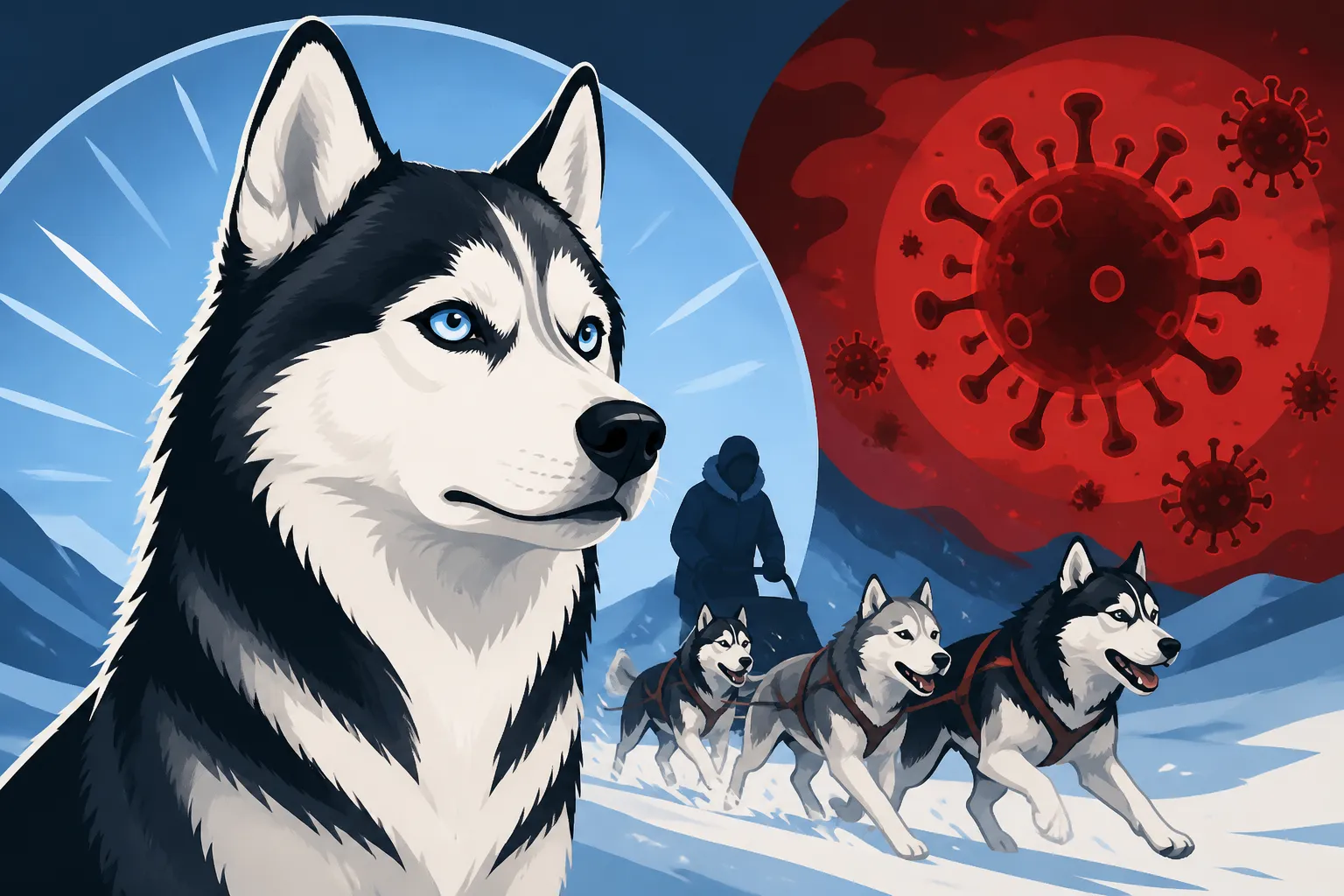
The Diphtheria Outbreak That Called Out the Huskies
Imagine living in a remote Alaskan town, cut off by severe winter storms, when a deadly disease begins to spread among your children. The local doctor is helpless, the life-saving medicine is hundreds of miles away, and the only hope rests on a desperate relay of dog sled teams facing unimaginably harsh conditions. This guide delves into the harrowing true story of the 1925 Diphtheria outbreak in Nome and the incredible journey undertaken by Siberian Huskies and their mushers to save a town teetering on the brink of disaster.
The Icy Grip of Diphtheria on Nome
The year 1925 brought a chilling threat to the isolated community of Nome, Alaska, far beyond the usual hardships of a subarctic winter. A diphtheria epidemic began to take hold, threatening to wipe out the town's children and beyond. This wasn't just a cold or a flu; diphtheria was a bacterial infection that attacked the throat, often leading to suffocation or heart failure, and it was highly contagious.
The sheer terror of the situation cannot be overstated. Parents watched their children sicken, knowing there was an antitoxin that could save them, but it was agonizingly out of reach. The town's single doctor, Curtis Welch, had only a meager supply of expired antitoxin, completely inadequate for the scale of the emerging crisis. He knew the medicine was vital, but also that using expired serum carried its own risks, though far less than doing nothing at all. The population, particularly the young, faced a deadly countdown.
A Remote Alaskan Town's Desperate Plea
Nome was, and still is, incredibly isolated. In the 1920s, it was practically an island during winter. Nestled on the Bering Sea coast, it had no road connections to the rest of Alaska, let alone the continental United States. The nearest major railhead was Nenana, over 674 miles away. During the summer, ships could reach Nome, but in January, the harbors were frozen solid, and the thick pack ice made sea travel impossible. Air travel was in its infancy, and while a few planes existed, they were open-cockpit biplanes, completely unsuited for the brutal Alaskan winter conditions, which often included whiteout blizzards, extreme cold, and engine-freezing temperatures.
The only reliable link during these unforgiving months was the Alaska Railroad, which terminated in Nenana, and beyond that, a network of trails typically traversed by dog sleds. These trails, however, were not smooth, well-maintained paths. They were often winding, treacherous routes, sometimes crossing frozen rivers and vast, open tundra where blizzards could descend with little warning, erasing any visible path. For the residents of Nome, their geographic isolation was now a death sentence, amplifying the urgency of their plea for help.
The Looming Crisis and the Race Against Time
The first confirmed case of diphtheria in Nome was in mid-January, quickly followed by more. Dr. Welch confirmed the diagnosis, and the local board of health immediately imposed a quarantine, though with limited effect. The small hospital in Nome, already understaffed and undersupplied, was quickly overwhelmed. The horrifying reality was that without a fresh supply of antitoxin, the disease would sweep through the community, likely killing most of the children and potentially spreading to the surrounding Native Alaskan villages, where medical resources were even scarcer. The death toll could easily reach into the hundreds, if not thousands.
The stakes were literally life and death, and the clock was ticking. Diphtheria spreads fast, and the longer the delay, the more people would become infected, and the more children would die. The existing, expired antitoxin offered only a sliver of hope, and Dr. Welch knew it wouldn't be enough. The urgency was palpable, and telegrams detailing Nome's desperate situation were sent out, reaching Alaska's territorial governor and eventually, the President of the United States. A plan had to be devised, and quickly, to transport the antitoxin from Anchorage to Nome, through some of the most unforgiving terrain on Earth.
The Heroic Call to the Sled Dogs
With all conventional methods of transport rendered useless by the brutal Alaskan winter, the spotlight inevitably turned to the one reliable mode of transportation in the deep snows of the Last Frontier: the dog sled. These magnificent animals, especially the hardy Siberian Huskies, were perfectly adapted to the cold and renowned for their endurance, strength, and an almost supernatural ability to navigate through blizzards.
The decision to use a dog sled relay was not made lightly, but out of absolute necessity. It was a testament to the respect and reliance the people of Alaska placed on their canine companions. This wasn't just about moving cargo; it was about moving hope itself, carried by the paws of dedicated dogs and the unwavering resolve of their mushers. The scale of the operation, covering hundreds of miles of unforgiving wilderness, was unprecedented, but the alternative was unthinkable.
Why Planes and Trains Weren't an Option
In the 1920s, technology simply wasn't ready for a challenge of this magnitude in such extreme conditions. While nascent aviation technology existed, the airplanes of the era were open-cockpit biplanes, often with unreliable engines that would freeze solid in the intense cold. They lacked the instrumentation for blind flying, making travel through blizzards or fog impossible, and there were no lighted airfields or extensive weather reporting systems along the proposed route. Landing fields were non-existent in the wilderness between Nenana and Nome, and engine failures would have meant a certain death for the pilot, and the loss of the precious serum.
The only "modern" infrastructure was the Alaska Railroad, which could carry the antitoxin from Anchorage to Nenana. Beyond that, no roads existed. Trucks would have been useless, bogged down in feet of snow. Even if a road existed, the bitter cold and lack of maintenance infrastructure would have rendered gasoline-powered vehicles useless. This left the dog sled as the singular, viable option, a stark reminder of humanity's dependence on animal power in the face of nature's formidable power. It also highlights how truly remote and isolated communities like Nome were, underscoring the vital role these animals played in everyday life, not just in emergencies.
Forging the Relay: A Human and Canine Endeavor
Once the decision was made, the plan coalesced with remarkable speed. The antitoxin, a precious 300,000 units weighing about 20 pounds, was carefully packaged in a metal cylinder wrapped in protective quilting to prevent freezing. It was then put on a train from Anchorage to Nenana. From there, a relay of twenty different dog sled teams and their mushers would transport it the remaining 674 miles (about 1,085 kilometers) to Nome. Each team would cover a portion of the trail, handing off the package to the next musher, much like a modern relay race. The average distance for each leg was about 31 miles, though some were much longer and more dangerous than others.
The relay itself was a monumental logistical challenge. Mushers and their teams were positioned at various roadhouses and villages along the Iditarod Trail, awaiting their turn. These were experienced men and women, accustomed to the brutal Alaskan winters, but even they knew this was different. The temperatures were extreme, often dropping to -50°F (-46°C) or colder, with fierce winds creating blinding whiteouts and wind chills that could plummet to -100°F (-73°C). The trail itself was a constant adversary, with treacherous ice, deep snow, and the ever-present risk of falling through frozen rivers or getting lost in the vast, featureless landscape. Every musher and every dog was about to become part of history, pushing their limits for the sake of a distant, dying town. The Diphtheria Outbreak That Called Out the Huskies truly pushed the boundaries of what was thought possible.
The Siberian Huskies' Unforgettable Journey
The story of the 1925 Serum Run, or "Great Race of Mercy," is etched into the annals of history, a testament to the incredible resilience of both humans and animals. While many different breeds of sled dogs participated, including Alaskan Malamutes and various mixed breeds often referred to as "Alaskan Huskies," it was the Siberian Huskies who captured the world's imagination, particularly the teams led by Leonhard Seppala and Gunnar Kaasen. Their courage and endurance under unimaginable duress ensured the serum reached Nome, saving countless lives.
The sheer difficulty of the endeavor cannot be overstated. Mushers faced frostbite, exhaustion, and the constant threat of getting lost or succumbing to the elements. The dogs, too, pushed past their physical limits, often running on sheer willpower and the bond they shared with their mushers. It was a saga of grit, determination, and the deep, unspoken understanding between humans and their canine partners against the relentless fury of nature.
Leonhard Seppala and Togo's Epic Trek
One of the most legendary figures of the Serum Run was Leonhard Seppala, a Norwegian-born musher who had dedicated his life to sled dog racing. His lead dog, Togo, a 12-year-old Siberian Husky, was renowned for his intelligence, leadership, and incredible stamina. Seppala and Togo were tasked with the most perilous leg of the journey, a staggering 264-mile (425 km) round trip through the treacherous ice of Norton Sound, a route that cut hundreds of miles off the inland trail but was fraught with mortal danger.
Seppala and Togo's journey was a battle against nature's fury. They faced a raging blizzard with winds up to 80 mph, blinding snow, and temperatures plunging below -60°F (-51°C). At one point, they were stranded on a drifting ice floe for hours, narrowly escaping after Togo bravely leaped across cracks in the ice to pull the floe back to shore. Togo's heroic effort, guiding his team through whiteouts and navigating the ever-shifting ice, saved Seppala and the serum. Their return leg alone covered 91 miles, an unheard-of distance for a single team in such conditions. Togo, the Siberian Husky Who Ran 264 Miles became an icon of canine bravery.
Their leg was the longest and most dangerous, demonstrating the peak of sled dog capability. The bond between Seppala and Togo was profound, built over years of training and racing. Togo, despite his age, showed remarkable courage and an uncanny ability to find the trail even when human sight was useless. This leg of the journey is often considered the true marvel of the Serum Run, a testament to the unparalleled skill of the musher and the extraordinary heart of his lead dog. Leonhard Seppala and His Siberian Huskies truly set the stage for this breed's fame.
Gunnar Kaasen and Balto's Final Push
While Togo and Seppala covered the longest and most dangerous stretch, it was musher Gunnar Kaasen and his lead dog, Balto, who completed the final leg into Nome. This team took over the serum from Charlie Olson in Bluff, just 53 miles from Nome. The final stretch was no less harrowing, as a ferocious blizzard descended, making visibility almost zero. Kaasen himself couldn't see his hand in front of his face, relying entirely on Balto's instincts to stay on the trail.
Balto, a black and white Siberian Husky, famously led his team through the raging blizzard, navigating treacherous drifts and finding the path even when Kaasen was completely disoriented. They arrived in Nome at 5:30 AM on February 2nd, 1925, delivering the life-saving antitoxin to a jubilant and relieved town. News of their arrival spread like wildfire, and Balto, along with Kaasen, became the face of the heroic effort. His statue still stands in Central Park, New York City, commemorating the "indomitable spirit" of these dogs. Balto, the Siberian Husky Who Reached Nome captured the world's imagination.
The immense relief felt by the people of Nome upon Balto's arrival was immeasurable. The immediate threat of the diphtheria epidemic was averted, and countless lives were saved. While Balto received much of the public glory, it's crucial to remember that he was one of many heroes, both human and canine, in this remarkable relay. The media, eager for a simple, inspiring narrative, largely focused on Balto's dramatic final leg, making him an instant celebrity.
The True Impact and Legacy of the Serum Run
The 1925 Serum Run was more than just a successful delivery of medicine; it was a demonstration of extraordinary courage, endurance, and the invaluable partnership between humans and their sled dogs. The epidemic was quickly brought under control, with the death toll contained to just five children in Nome, a tragically low number compared to what could have been. The immediate impact was the saving of hundreds, if not thousands, of lives in Nome and the surrounding settlements.
Beyond the immediate crisis, the Serum Run had a profound cultural and historical impact. It cemented the Siberian Husky's reputation as an unparalleled working dog, capable of incredible feats of stamina and resilience in the harshest conditions. This event, alongside the earlier The All-Alaska Sweepstakes and the Siberian Husky, brought the breed international recognition. Suddenly, the world understood the incredible capabilities of these dogs, leading to increased interest in the breed outside of Alaska. The recognition contributed to the AKC Recognition of the Siberian Husky in 1930, solidifying their place in the dog world.
The legacy also includes the enduring legend of the Iditarod Trail Sled Dog Race, which largely follows the path of the 1925 Serum Run. This annual race commemorates the historical journey and continues to celebrate the unique bond between mushers and their dogs, keeping the spirit of the "Great Race of Mercy" alive. It serves as a powerful reminder of the deep history of these working dogs and their critical role in the development and survival of Alaska's remote communities. It also highlights the What a Siberian Husky Was Bred to Do – to cover vast distances reliably in extreme cold.
To summarize the key figures and their contributions in this legendary event:
| Musher | Lead Dog (Breed) | Key Role / Route Segment | Notable Achievements |
|---|---|---|---|
| Leonhard Seppala | Togo (Siberian) | Longest, most dangerous leg (264 miles round trip) | Navigated treacherous Norton Sound ice, saved team from floe |
| Gunnar Kaasen | Balto (Siberian) | Final leg into Nome (53 miles) | Delivered serum in blinding whiteout, became public icon |
| Wild Bill Shannon | N/A (Various) | First musher from Nenana | Carried serum from railroad terminus into the relay |
| "Iron Man" Charlie Olson | N/A (Various) | Penultimate leg, handed off to Kaasen in Bluff | Battled extreme cold and wind, critical handoff |
| Total Teams | N/A | Covered 674 miles from Nenana to Nome | Saved Nome from diphtheria epidemic |
The Serum Run serves as a powerful narrative about human ingenuity, animal endurance, and the triumph of collaboration in the face of overwhelming odds. It's a story that continues to inspire, reminding us of the extraordinary capabilities that emerge when determination meets a desperate cause, deeply embedded in the history of The Chukchi Origins of the Siberian Husky and their journey to America.
Disclaimer
This article is for general informational purposes only and does not constitute professional advice. Laws, prices and regulations vary by location and change over time. Consult a qualified professional for guidance on your specific situation.