Whether Blue Eyes Are Faulted in a Siberian Husky
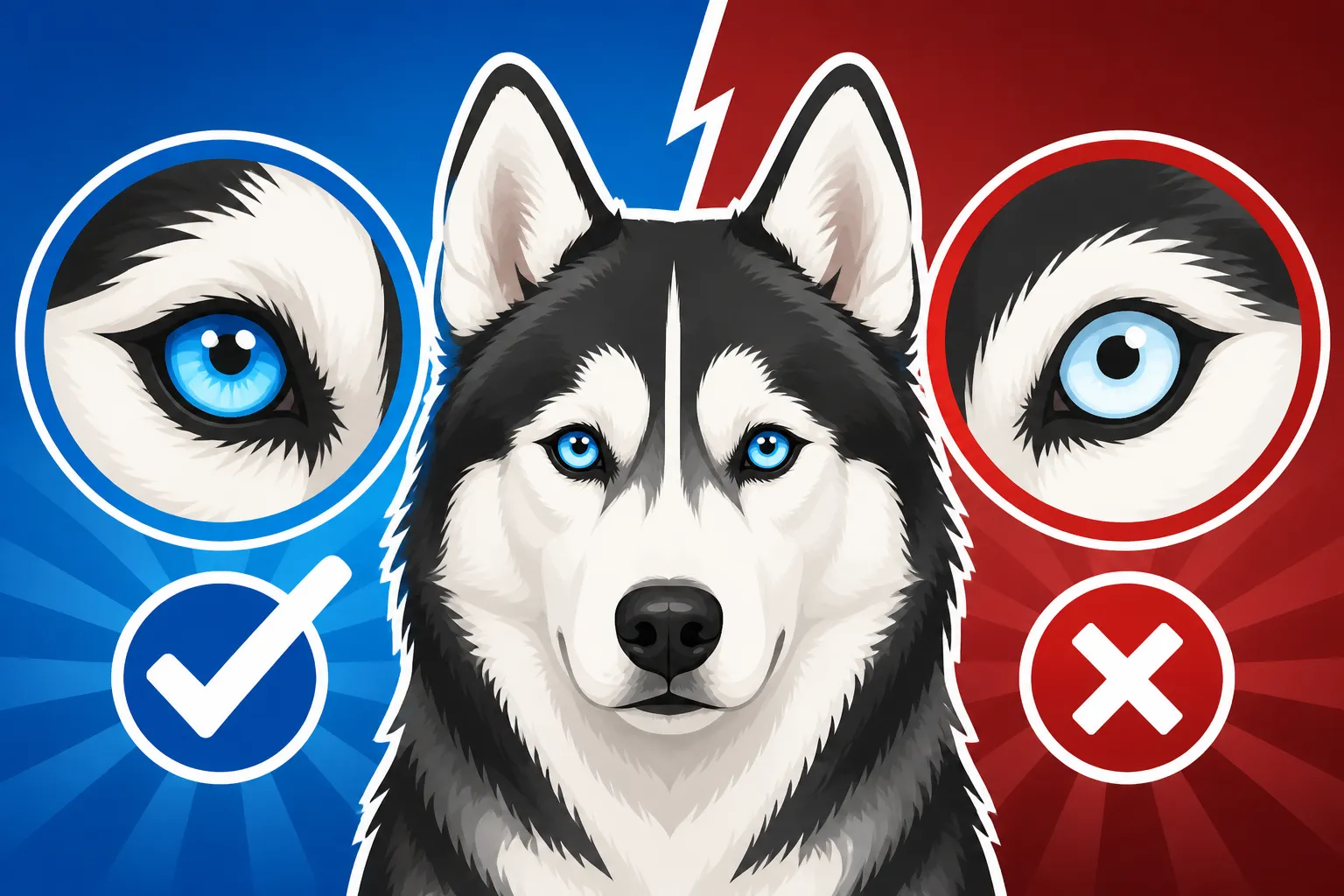
It's a common sight to see a majestic Siberian Husky with piercing blue eyes, and it's something that often draws people to the breed. However, there's a persistent whisper among some dog enthusiasts, and even some new owners, that blue eyes are somehow a "fault" or undesirable trait in the breed standard. This article aims to settle that long-standing confusion, diving deep into what the official breed standard actually says about this beautiful and iconic feature.
The Allure of Blue Eyes in Siberian Huskies and the Misconception
When you picture a Siberian Husky, what immediately comes to mind for many people is that striking gaze – often, those eyes are a brilliant blue. It's an unforgettable feature that really sets them apart in the canine world. This distinct look contributes heavily to their mystique and their popularity, making them one of the most visually recognizable breeds out there.
Why Blue Eyes are So Iconic for Huskies
The vivid, often electric blue eyes of a Siberian Husky are truly captivating. They stand out against the backdrop of their diverse coat colors and markings, giving them an almost wolf-like, ancient appearance that harks back to their sled dog heritage. Unlike many other dog breeds where blue eyes might be considered unusual or even a disqualifying trait, in the Siberian Husky, it's just a part of their natural genetic tapestry. This unique trait is what makes them so visually distinct, and frankly, it's what many prospective owners fall in love with at first sight.
It’s no wonder then that when people think "Husky," they often envision those clear, sky-blue or ice-blue eyes. This iconic imagery has been popularized in media and general perception, cementing blue eyes as a hallmark of the breed's beauty. There's something undeniably compelling about a dog with eyes the color of a winter sky, and for the Siberian Husky, it's simply part of their charm, a result of a specific genetic expression that doesn't carry the same implications as blue eyes in some other breeds where it's linked to dilute genes or health issues.
The "Fault" Myth: Where Does It Come From?
So, if blue eyes are so characteristic and beautiful, why does this myth of them being a "fault" even exist? This misconception often arises from a lack of understanding of breed-specific standards and a tendency to generalize across dog breeds. In many breeds, particularly those where blue eyes are rare and linked to merle patterns or other dilute genes, blue eyes can indeed be considered a fault or even a disqualification in the show ring, often due to associated health concerns like deafness or vision impairment in those specific breeds.
However, applying this general rule to the Siberian Husky is simply incorrect. Their blue eyes are not tied to the same genetic mechanisms or health risks as they might be in a Great Dane with a merle coat or a border collie. The blue eye color in Huskies is a distinct and normal variation that doesn't carry the same baggage. It's vital to remember that each breed has its own unique standard, and what might be a fault in one breed is perfectly acceptable, or even celebrated, in another.
Deciphering the AKC Siberian Husky Breed Standard on Eye Color
To truly understand the status of blue eyes in Siberian Huskies, we need to go straight to the source: the official breed standard, specifically the one recognized by the American Kennel Club (AKC). The AKC breed standard is the blueprint that describes the ideal characteristics, temperament, and appearance of a breed. It's what breeders strive for and what judges use in the conformation ring.
What the Standard Explicitly States
The AKC breed standard for the Siberian Husky is quite clear and inclusive when it comes to eye color. It states that "Eyes may be brown or blue in color; one of each or parti-colored are acceptable." This is a crucial statement that directly addresses the "fault" myth. There is absolutely no mention of blue eyes being a fault, a disadvantage, or any less desirable than brown eyes. In fact, they are listed as an equally acceptable option.
This means that a Siberian Husky with two brilliant blue eyes, like the kind you might find for purchase on a reputable pet supply site like Chewy (though you wouldn't buy a dog there, you might buy all its gear!), is just as correct and conforms to the breed standard as a Husky with two warm brown eyes. The beauty of the Siberian Husky standard is its acceptance of a wide range of eye colors, celebrating the breed's natural diversity. It's not about favoring one color over another, but appreciating the breed's inherent traits. This also applies to dogs with heterochromia, or what's known as bi-eyed or parti-eyed, which we'll discuss further. For more on the specifics, check out The AKC Standard Asks of a Siberian Husky.
Understanding "Faults" in Breed Standards
To fully grasp why blue eyes are not a fault in Siberian Huskies, it's helpful to understand what "faults" and "disqualifications" actually mean in the context of dog showing and breeding. A "fault" is a characteristic that deviates from the ideal breed standard but does not prevent the dog from being shown or bred. It might reduce a dog's chances of winning in the conformation ring, but it's not a deal-breaker. Examples might include a coat that's slightly too long or ears that aren't quite set perfectly.
A "disqualification," on the other hand, is a severe deviation that renders a dog ineligible for conformation showing and, typically, for breeding purposes within the standard. This could be something like a male dog lacking two descended testicles, or a breed with prick ears having floppy ears. The key takeaway here is that blue eyes, in a Siberian Husky, fall into neither category. They are simply an accepted and beautiful expression of the breed's genetic makeup, no different in terms of correctness than brown eyes. It's also worth understanding What Siberian Husky CHIC Certification Requires to see the true health priorities.
Beyond Blue: Exploring Other Siberian Husky Eye Colors
While blue eyes get a lot of attention, the Siberian Husky is celebrated for a spectrum of eye colors, all of which are beautiful and equally correct according to the breed standard. It's important to appreciate this diversity and not get fixated on just one color, especially when choosing a companion or a show dog.
Brown and Amber Eyes: The Equally Beautiful Norm
For every blue-eyed Husky you see, there are just as many, if not more, with rich brown or warm amber eyes. These eye colors are incredibly common and are, without a doubt, perfectly acceptable within the breed standard. A Husky with deep brown eyes has a gaze that can be just as expressive and captivating as one with blue eyes, often conveying a soulful intelligence.
It’s vital for prospective owners and enthusiasts to understand that brown or amber eyes are not "lesser" in any way. They are simply another natural variation and are just as true to the breed's heritage and appearance as blue eyes. When assessing a Husky, whether for show or companionship, the overall health, structure, and temperament should always take precedence over a specific eye color. A healthy, well-adjusted Husky with brown eyes is every bit as wonderful as one with blue. For those curious, Green Eyes in a Siberian Husky are also a variation, though less common than brown or blue.
The Fascinating World of Bi-Eyed and Parti-Eyed Huskies
One of the most unique and striking aspects of Siberian Husky eye color is the phenomenon of bi-eyed and parti-eyed individuals. These variations are not only accepted but are often considered quite exotic and beautiful.
- Bi-Eyed Huskies: A bi-eyed Husky has two different colored eyes – typically one blue and one brown or amber. This creates an incredibly distinctive and often mesmerizing look, giving each side of their face a unique expression. The contrast is usually quite stark and draws a lot of attention. You can learn more about this specific trait in Bi-Eyed Siberian Huskies.
- Parti-Eyed Huskies: A parti-eyed Husky, sometimes called a "split eye," has multiple colors within a single eye. This could manifest as a blue eye with a segment of brown, or vice versa, creating a marbled or speckled effect. It’s less common than being bi-eyed but is equally fascinating and fully compliant with the breed standard. Check out Parti-Eyed Siberian Huskies for more detail on this specific variation.
These variations are a testament to the rich genetic diversity within the Siberian Husky breed and are explicitly mentioned as acceptable in the AKC standard. They are not faults or indications of any underlying issues, merely a beautiful expression of their genetics.
| Eye Color Description | AKC Standard Status | Commonality | Notes |
|---|---|---|---|
| Two Blue Eyes | Acceptable | Common | Highly iconic for the breed, not a fault. |
| Two Brown Eyes | Acceptable | Common | Equally correct and beautiful as blue eyes. |
| Two Amber Eyes | Acceptable | Less Common | A beautiful variant of brown, fully accepted. |
| Bi-Eyed (one blue, one brown/amber) | Acceptable | Fairly Common | Creates a striking, unique appearance. |
| Parti-Eyed (multi-colored in one eye) | Acceptable | Less Common | Distinctive and fully within standard. |
| Green Eyes | Acceptable (often seen as a shade of amber) | Rare | Sometimes an intermediate color in puppies. |
Eye Color and Health in Siberian Huskies
Beyond aesthetics, a common concern among new owners is whether eye color has any bearing on a dog's health. For Siberian Huskies, this is an important area to clarify, as some breeds do have health considerations linked to certain eye colors.
Dispelling Myths About Blue Eyes and Vision
Let's put this myth to bed right away: in Siberian Huskies, blue eyes are not an indicator of poor eyesight, deafness, or any increased predisposition to vision problems. Their blue eye color is a normal and healthy genetic variation, distinct from the blue eyes seen in some other breeds that are linked to dilution genes (like merle) which can, in certain cases, be associated with health issues. A blue-eyed Husky sees just as well as a brown-eyed one, and there's no inherent optical disadvantage.
What does matter for a Husky's eye health are specific genetic conditions that can affect their vision, regardless of eye color. Conditions like Juvenile Cataracts in the Siberian Husky or Progressive Retinal Atrophy in Siberian Huskies are genuine health concerns that responsible breeders screen for. These conditions are not tied to the color of the iris but to specific genetic mutations that affect the eye's structure and function. This is why regular veterinary check-ups and specialized eye exams are so crucial, irrespective of whether your Husky has blue, brown, or parti-colored eyes. For a comprehensive overview, read Siberian Husky Eye Disease and the Annual Exam.
Responsible Breeding Focuses on Health, Not Just Color
When you're looking for a Siberian Husky puppy, especially from a reputable breeder, their focus will always be on health, temperament, and adherence to the entire breed standard, not just on an appealing eye color. A breeder who advertises "rare blue-eyed Huskies" at an inflated price might be a red flag, as it often indicates a lack of focus on more critical aspects of breeding. Blue eyes are not rare in Huskies; they are a recognized and common trait. For more on what to look for, check out Why a Cheap Siberian Husky Puppy Is a Warning.
Reputable breeders will prioritize health testing for genetic conditions relevant to the breed, such as hip evaluations and, crucially, annual eye certifications by a board-certified veterinary ophthalmologist. These certifications, often through organizations like the Orthopedic Foundation for Animals (OFA), confirm that the breeding dogs are free from inheritable eye diseases. This practice ensures that puppies are born with the best possible genetic foundation, regardless of their eventual eye color. You can typically find quality health and wellness products for your Husky, from food to supplements, on platforms like Chewy, which supports responsible pet ownership. Understanding Reading a Siberian Husky OFA Eye Certificate is an important step for any prospective owner. These health clearances, rather than eye color, are what truly indicate a breeder's commitment to the well-being of their dogs and the future of the breed. Ultimately, prioritizing Health Testing Before You Buy a Siberian Husky is far more important than any specific aesthetic trait.
Disclaimer
This article is for general informational purposes only and does not constitute professional advice. Laws, prices and regulations vary by location and change over time. Consult a qualified professional for guidance on your specific situation.