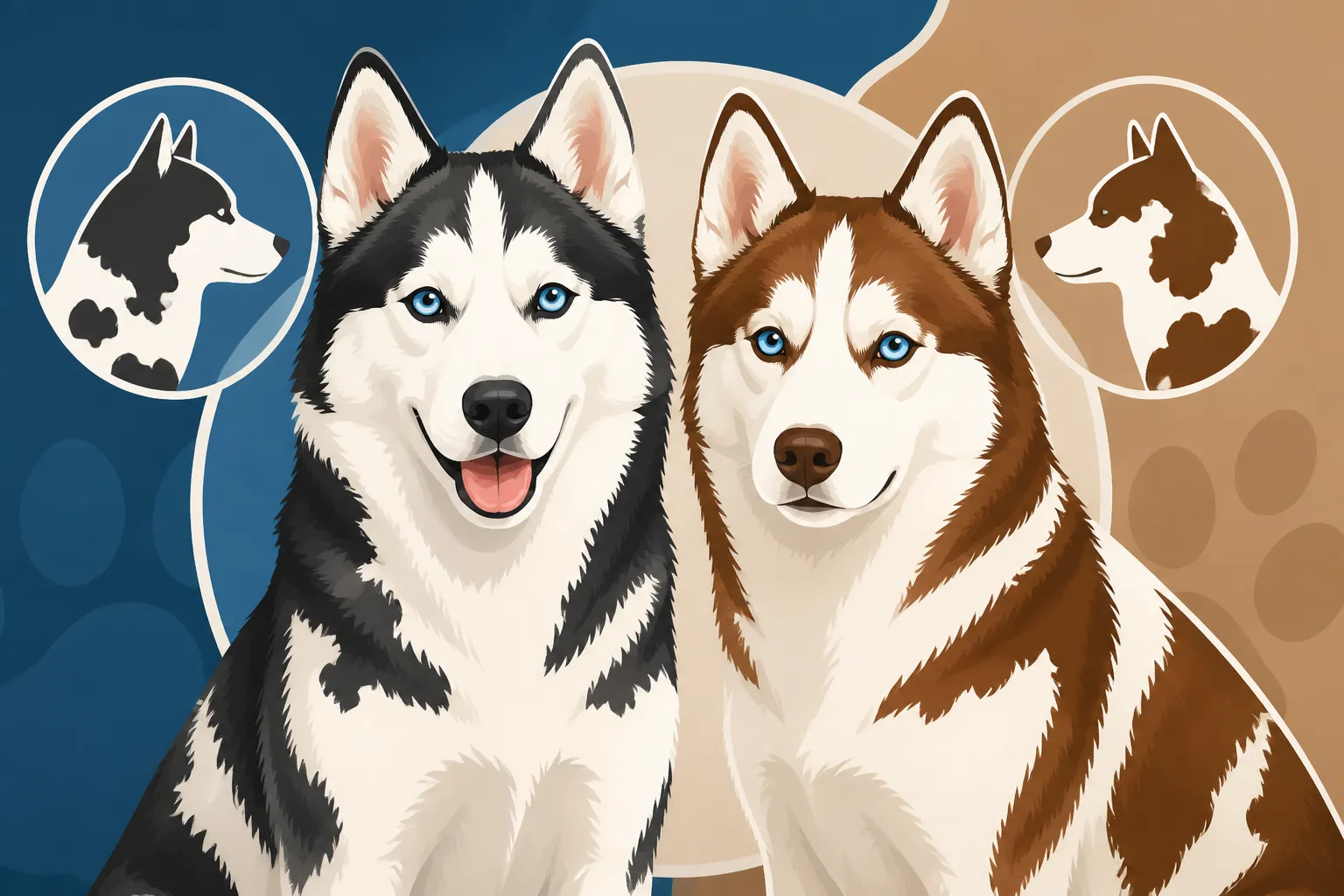
Piebald and Pinto Siberian Husky Markings
Finding a Siberian Husky with truly unique markings can be incredibly exciting, but the terms "piebald" and "pinto" sometimes get thrown around interchangeably, leading to confusion about what these patterns actually mean for your furry friend. This guide is here to unravel the mystery behind piebald and pinto Siberian Husky markings, clarifying their appearance, genetic background, and what they signify for your dog's health and breed standards, helping you appreciate the stunning diversity of this incredible breed.
Understanding the Genetics Behind Husky Markings
When we talk about a Siberian Husky's coat, most people picture the classic black and white, or perhaps a striking red and white. But the genetic tapestry that creates a husky's fur can produce a much wider array of colors and patterns, some of which are less common and often misunderstood. Understanding a bit about the underlying genetics helps clear up why some huskies sport these distinct looks. It's not just random; specific genes control where pigment is expressed or suppressed across the dog's body.
Imagine the husky's coat as a canvas. The base colors like black, red, or agouti are painted first, and then modifier genes come into play, dictating how much of that color shows through and where. For piebald and pinto patterns, we're looking at genes that cause areas of unpigmented, white fur. This isn't just lighter shading; it's a complete absence of color in specific patches, creating a striking contrast with the pigmented areas. It's quite different from a dog with just a lot of white on its chest or feet, which is usually part of a standard pattern. These are broader, more significant white patches that break up the main coat color in a distinct way.
The Role of the S Locus Gene
The primary player in creating piebald and pinto patterns in dogs, including Siberian Huskies, is often the S (Spotting) locus gene. This gene is responsible for determining the extent of white spotting on a dog's coat. A dog can have various alleles (versions) at this locus, leading to different degrees of white. For instance, some alleles result in minimal white, like a white chest blaze or white paws, which are very common in huskies and perfectly within the breed standard. Other alleles, however, can lead to much more extensive white areas.
When a husky inherits certain combinations of these S locus alleles, it can result in what we recognize as piebald or pinto patterns. These patterns are essentially manifestations of varying degrees of white spotting. It's not about adding a new color, but rather removing the existing color in specific regions. This genetic mechanism is why you might see a husky that's predominantly white with just a few patches of color, or one with a more balanced mix. It's a fascinating display of how genetics can literally paint a dog's appearance, often with beautiful and unexpected results. You might be interested in reading about Siberian Husky Coat Colors and Markings for a broader view of the breed's color palette.
Distinguishing Piebald from Pinto
While the terms piebald and pinto are often used interchangeably, especially by those less familiar with canine genetics or specific breed standards, there can be subtle distinctions, though they often refer to the same genetic expression of white spotting. Generally, both terms describe a coat pattern of unpigmented (white) areas alongside patches of any other color. The difference, if one is made, usually comes down to the proportion of white to color.
A piebald pattern typically refers to a dog that has large, irregular patches of white, combined with patches of colored fur. Often, the white covers more than 50% of the dog's body, sometimes significantly more, leaving just a few distinct patches of color, often on the head, ears, and base of the tail, or scattered across the body. Think of it as a white dog with colored spots.
A pinto pattern, on the other hand, is often used to describe a dog with a colored coat that has large, irregular patches of white, where the colored areas might be more dominant or at least equally distributed with the white. It's less about a white dog with spots, and more about a colored dog with large white splashes. The horse world uses 'pinto' quite a bit for its distinct patterns, and the term has crossed over into canine descriptions. For many, especially within the Siberian Husky community, these terms are largely synonymous, both referring to extensive white spotting that goes beyond typical breed-standard markings.
How Piebald and Pinto Markings Appear on a Siberian Husky's Coat
Siberian Huskies are known for their striking appearances, and piebald or pinto markings only add to their visual appeal. These patterns don't just appear as random blotches; they follow certain genetic rules that dictate where the white patches are most likely to show up. It's a beautiful expression of genetic diversity, making each dog truly unique.
When you encounter a piebald or pinto husky, you'll immediately notice the clear distinction between the pigmented and unpigmented areas. The edges of these patches are usually sharp and well-defined, not faded or blended. This stark contrast is what gives these huskies such a captivating look. While the exact size and placement of the white patches vary greatly from one dog to another, there are some common tendencies in how these patterns manifest.
Common Locations of White Patches
For Siberian Huskies displaying piebald or pinto patterns, the white patches typically appear in certain areas due to the way pigment cells migrate during embryonic development. It's fascinating how genetics guides the "painting" of a puppy before it's even born!
You'll often see significant white patches on the following parts of a piebald or pinto husky:
- Underbelly and Chest: This is one of the most common areas for extensive white. It can stretch from the chin all the way down the chest, under the belly, and between the legs, often connecting into a wide band.
- Legs and Paws: Many piebald or pinto huskies will have completely white legs and paws, sometimes extending up onto the shoulders or thighs.
- Neck and Collar Area: A broad white "collar" is a frequent feature, wrapping around the neck.
- Face: While often retaining some color, especially around the eyes and ears, the muzzle, forehead, or cheeks can have large white blazes or patches, creating unique facial expressions.
- Tail Tip: The tip of the tail can often be white, even if the rest of the tail is colored.
- Back and Sides: The most dramatic variations occur on the back and sides, where large, irregular white patches break up the primary coat color. This is where you really see the "splashed paint" effect, with patches of black, grey, red, or sable appearing against a white canvas.
It's important to note that a husky with a lot of white, but with symmetrical markings (like a full white collar, white legs, and a face blaze) might simply be a 'mostly white' husky rather than a true piebald or pinto if the white is not truly unpigmented in irregular, disruptive patches. The irregularity and often asymmetrical nature of the white patches are key identifiers for piebald and pinto.
Variation in Pattern Expression
The beauty of piebald and pinto markings lies in their incredible variation. No two piebald or pinto Siberian Huskies are exactly alike, even from the same litter. This is due to the complex interaction of genes and possibly other environmental factors during development. Some huskies might have only a few large colored patches on an otherwise mostly white body, sometimes referred to as "extreme white" or "Irish spotting" if the white covers vast areas but leaves color on the head and base of the tail. Others might have a more balanced distribution, with significant colored areas broken up by large white splashes.
For example, you might see a husky that's predominantly white with just a black mask and ears, and a few black spots on its back. Another might be a stunning red and white, with the red covering its top line but breaking into large white sections on its flanks and chest. The base coat color (black, grey, red, sable, etc.) also influences the overall look, as the white contrasts with whatever pigment is present. This variation makes each piebald or pinto husky a truly unique work of art. When you're looking for grooming tools for these unique coats, remember that a good quality deshedding brush is essential regardless of color. You can find excellent options on sites like Chewy that cater to the thick double coat of a Siberian Husky. What a Siberian Husky Coat Blow Runs will give you an idea of the shedding you'll face!
Do Piebald or Pinto Markings Affect a Siberian Husky's Health or Temperament?
This is a really common and important question, especially when unique coat patterns are involved. It's natural to wonder if something that looks so different might also come with underlying health considerations. For many breeds, certain coat colors or patterns are genetically linked to specific health issues, most notably deafness or vision problems in merle or extensively white dogs. However, with piebald and pinto Siberian Huskies, the situation is generally quite reassuring.
Unlike some other breeds where extensive white or specific patterns (like merle) are associated with genetically linked health problems such as deafness or eye anomalies, piebald and pinto markings in Siberian Huskies are not typically linked to adverse health effects. The gene responsible for these white markings (the S locus) is generally not associated with other genetic disorders in the breed. This means a piebald or pinto husky is, from a health perspective, just as likely to be robust and healthy as a husky with more traditional markings.
Their temperament is also not influenced by their coat pattern. A piebald husky will have the same independent, intelligent, and sometimes mischievous personality that is characteristic of the breed, just like a standard black and white husky. Their unique appearance is purely aesthetic and doesn't dictate their disposition or well-being. This is a huge relief for potential owners who are drawn to these striking patterns but worry about hidden problems. Always look at the health of the parents and the reputation of the breeder or rescue, not just the coat color, when considering a puppy or adult dog. You'll want to review Health Testing Before You Buy a Siberian Husky to know what to ask.
Debunking Myths About White Coats and Deafness
The concern about deafness in white dogs is legitimate for some breeds, but it's often misapplied universally. Breeds like Dalmatians, English Setters, and some Boxers with extensive white can indeed have a higher incidence of congenital deafness. This is because the gene responsible for their specific type of white patterning (often involving the absence of pigment in the inner ear) is sometimes linked to auditory nerve development issues.
However, the genetic mechanism for white spotting in Siberian Huskies that results in piebald or pinto patterns is different from the genes causing deafness in those other breeds. While an all-white Siberian Husky might sometimes be mistakenly linked to these concerns, a truly white husky (often referred to as Pure White Siberian Huskies) is just an extreme expression of the dilution genes, not the S locus gene that creates the deafness link in other breeds. So, while it's always wise to perform a hearing check on any puppy, especially one with a lot of white, the prevalence of deafness in piebald or pinto Siberian Huskies is not inherently higher than in any other color variation of the breed.
The most important takeaway is that if you're interested in a piebald or pinto husky, you shouldn't let unfounded fears about health issues deter you. Focus on finding a responsible breeder who prioritizes health clearances, or a reputable rescue that provides thorough health evaluations. A healthy, well-socialized husky will be a joy, regardless of its stunning coat pattern.
Are Piebald and Pinto Siberian Huskies Accepted by Breed Standards?
This is where the distinction often becomes most relevant, particularly for those interested in showing their Siberian Husky or breeding within established lines. Breed standards, set by kennel clubs like the American Kennel Club (AKC), define the ideal characteristics of a breed, including coat color and markings. While Siberian Huskies boast a wide variety of acceptable colors, the presence and extent of white markings can sometimes fall outside what's considered "standard."
The AKC standard for the Siberian Husky states, "All colors from black to pure white are allowed. A variety of markings on the head is common, including many patterns not found in other breeds." This is a pretty broad statement, and it means that many patterns of white are perfectly acceptable. However, while "all colors" are allowed, including pure white, patterns like extreme piebaldism (where very little color remains) can sometimes be considered deviations from the typical husky appearance.
While a husky with extensive white spotting might not be disqualified solely on that basis, very non-standard patterns might not be favored in the show ring, where judges look for a classic representation of the breed. It's less about disqualification and more about how closely the dog conforms to the overall "look" described in the standard, which generally emphasizes a well-defined pattern rather than large, irregular patches. You might want to explore What the AKC Standard Asks of a Siberian Husky for more details.
How Different Kennel Clubs View Extensive White Spotting
Different kennel clubs and organizations might interpret their breed standards slightly differently, but generally, the sentiment regarding piebald and pinto markings in Siberian Huskies is similar to the AKC's. The Siberian Husky Club of America, which works closely with the AKC, also supports the standard that allows a wide range of colors and markings.
The key is often the amount and placement of the white. A husky with a traditional "Irish spotting" pattern – a white blaze, white collar, white legs, and a white belly – is well within the acceptable range, even if it has a lot of white. However, a husky that is overwhelmingly white with only a few small, scattered patches of color might be considered atypical. This doesn't make the dog any less of a Siberian Husky, nor does it affect its health or ability to be a wonderful companion; it simply means it might not fit the specific aesthetic ideal sought in conformation shows. For example, a dog with markings that create a "diluted" look or an overall impression that deviates too much from the powerful, arctic sled dog image might be less competitive. Faults and Disqualifications in a Siberian Husky can offer more context on show ring criteria.
The Appeal of Unique Markings for Pet Owners
For the vast majority of Siberian Husky owners who are looking for a beloved family pet rather than a show champion, whether a dog's markings are "standard" or not is completely irrelevant. In fact, many pet owners actively seek out huskies with unique and striking appearances, finding the piebald and pinto patterns particularly beautiful and distinctive.
These dogs are often adored for their individuality and stand out from the crowd. The beauty of these markings is subjective, and what one person might consider non-standard, another might consider exquisitely beautiful. As long as the dog is healthy, well-socialized, and comes from a responsible background, its coat pattern should be a source of joy, not concern. If you're looking for dog supplies that cater to unique breeds and their grooming needs, remember that online retailers like Chewy often have comprehensive sections for various coat types, ensuring you can find everything from high-quality food to grooming tools that help maintain the integrity of even the most distinctive husky coat. Whether it's a dog with standard markings or a stunning piebald, the love and care you give your husky will always be the most important thing.
Here's a quick comparison of common husky white markings vs. piebald/pinto patterns:
| Feature | Common Husky White Markings | Piebald/Pinto Markings in Huskies |
|---|---|---|
| White Coverage | Minimal to moderate (chest, blaze, socks) | Extensive, often >50% of the body |
| Pattern | Symmetrical, often clearly defined "trim" | Irregular, asymmetrical, "splashed" patches |
| Location | Confined to specific areas (chest, feet, face) | Spreads widely across back, sides, head |
| Appearance | White as an accent or secondary color | White as the dominant base, with color patches |
| Breed Standard | Generally accepted and common | Accepted in terms of "all colors," but can be less favored in show ring due to atypical appearance |
| Health Links | No known health links | No known health links in Siberian Huskies |
This comparison highlights that while some white is standard and expected, piebald and pinto patterns take the expression of white spotting to a more extreme and irregular level, creating a truly eye-catching and individual look. Your husky's unique markings are a part of their charm!
Disclaimer
This article is for general informational purposes only and does not constitute professional advice. Laws, prices and regulations vary by location and change over time. Consult a qualified professional for guidance on your specific situation.