Crates a Siberian Husky Cannot Break Out Of
Oh, the Siberian Husky escape artist! If you're reading this, you've probably experienced that heart-stopping moment when you realize your clever, determined Husky has once again outsmarted their crate, leaving you with a bent cage, damaged belongings, and a massive headache. It's a frustration many Husky owners know all too well, feeling like you're locked in an endless battle of wits with a furry Houdini. This guide is here to help you understand why traditional crates often fail and how to find a truly secure crate that can withstand your Husky's ingenuity and strength, keeping them safe and your home intact.
The Husky Escape Artist: Understanding Their Motivation
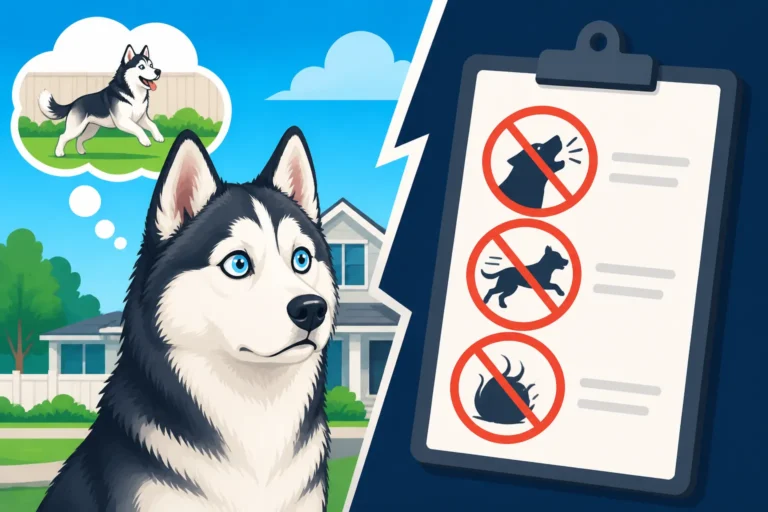
Let's be real, Siberian Huskies weren't bred to sit quietly in a box. Their entire genetic makeup screams "go, explore, run!" When you put a dog with that kind of drive and intelligence into a standard crate, it's not just a containment device; it's a puzzle to be solved, a challenge to be conquered. This isn't about naughtiness; it's about instinct.
Why Traditional Crates Fail Against a Husky's Determination
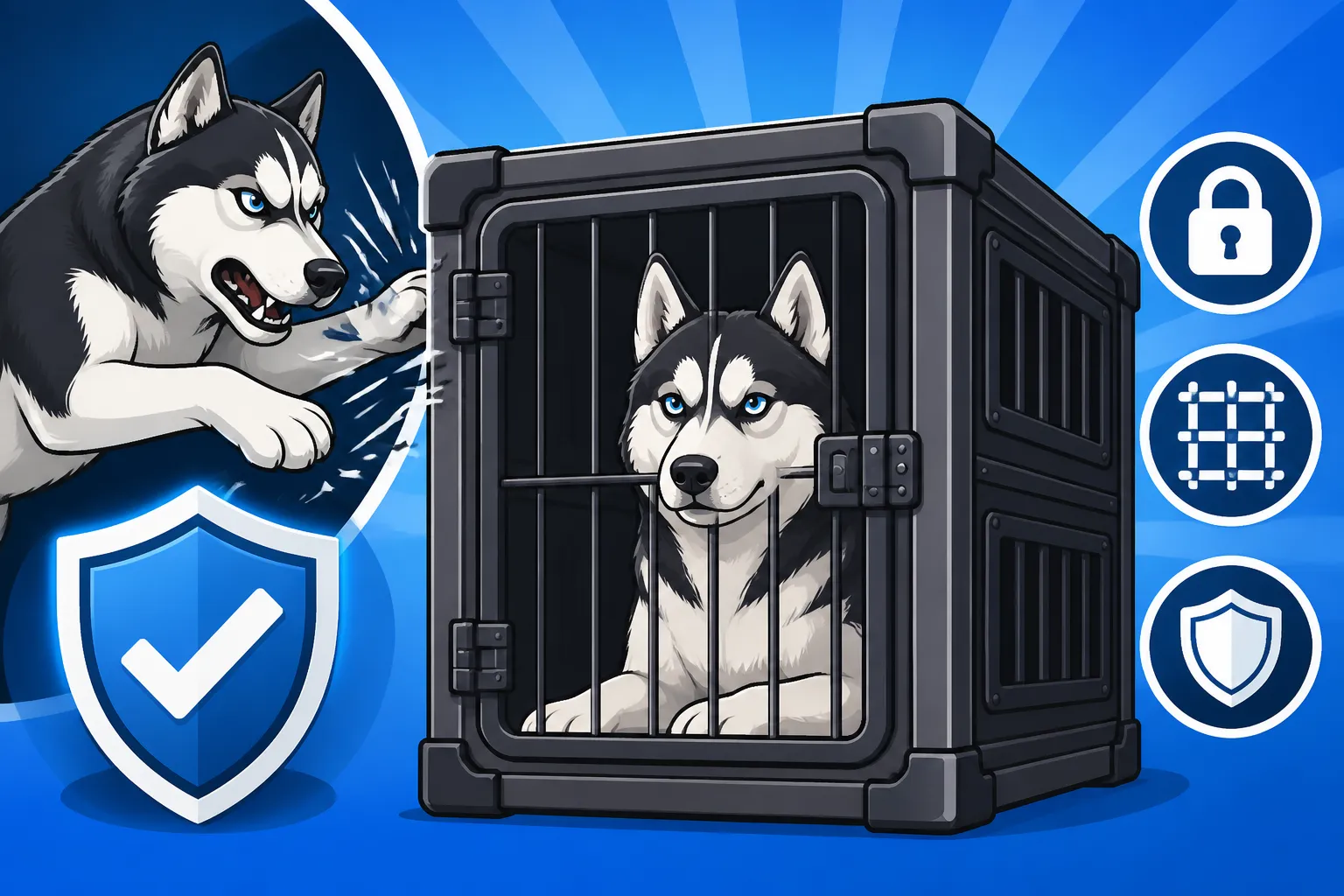
Most wire crates you pick up at a big box store are designed for more docile breeds, or at least dogs that haven't inherited the legendary problem-solving skills of a Siberian Husky. Huskies are incredibly strong for their size, and their lean, athletic build allows them to twist, contort, and push against boundaries with remarkable force. They'll use their paws to pry, their teeth to chew, and their entire body weight to bend and warp flimsy metal. A standard thin-gauge wire crate often has weak points at the corners, the door hinges, and the latch itself – all prime targets for a determined Husky.
It's not uncommon for owners to come home to find a crate that looks like it's been in a wrestling match, with bars twisted, welds broken, and doors completely off their hinges. This isn't just a matter of inconvenience; it can be incredibly dangerous for your dog. A bent bar can become a sharp spear, a broken latch can cut them, and they can get trapped or injured trying to squeeze through an opening that was too small. The initial financial investment in a cheap crate can quickly escalate if your dog needs an emergency vet visit, not to mention the cost of repairing damage to your home. Many a Husky owner has learned this lesson the hard way.
The Dangers of an Escaped Husky
Beyond the immediate damage to your crate or home, an escaped Siberian Husky poses significant risks. Huskies have a powerful prey drive and an innate roaming instinct. Once they're out, they're often off to the races, following a scent or simply enjoying the freedom. This is why you often hear stories about Siberian Husky deaths from trauma and escape. They are incredibly fast and can cover vast distances in a short amount of time, making them difficult to catch. This puts them in direct danger from traffic, other aggressive animals, or even getting lost in unfamiliar territory.
An escaped Husky might also act on its prey drive, potentially harming smaller pets, livestock, or wildlife in your neighborhood, leading to legal and financial repercussions. It’s a terrifying scenario to imagine your beloved companion wandering into danger, and it’s a strong motivator to ensure their containment is absolutely secure. This is why the conversation around Why a Siberian Husky Cannot Be Trusted Off Leash is so prevalent – their desire to explore is simply too strong to ignore. A secure crate is a vital part of responsible Husky ownership, especially when you can't supervise them directly.
Identifying "Husky-Proof" Crate Features
When you're searching for a crate that can truly stand up to your Siberian Husky, you need to think beyond the aesthetics and focus squarely on brute strength, intelligent design, and superior locking mechanisms. This isn't just any dog; this is a Husky.
Materials That Stand Up to a Siberian Husky
Forget plastic crates for anything but temporary transport, and thin wire crates for permanent containment. For a Siberian Husky, you need industrial-grade materials. The gold standard here is heavy-duty steel, often 20-gauge or thicker, with robust welding at all connection points. We're talking about crates that feel incredibly solid and heavy, not something you can easily lift with one hand. Some high-quality crates might use aircraft-grade aluminum, which offers a good strength-to-weight ratio, but it still needs to be thick and reinforced.
The bars themselves should be thick and strong, spaced closely enough that your Husky can't get their head or paws stuck, but far enough apart for good ventilation. Examine the doors and seams especially carefully. Any point where two pieces of metal connect, or where the door meets the frame, is a potential weak spot. Look for continuous welds or heavy-duty bolts rather than flimsy clasps or small, spot-welded connections. Think of it less as a pet accessory and more like a high-security enclosure for a determined athlete.
Locking Mechanisms That Outsmart a Clever Husky
Your average slide-bolt latch on a standard crate is child's play for a Husky. They'll often learn to manipulate these with their nose or paws surprisingly quickly. What you need are multi-point locking mechanisms or heavy-duty, reinforced latches that require a complex action to open. Look for spring-loaded locks, robust cam latches, or multiple slide bolts that engage at different points on the door frame. Many effective husky-proof crates will have two or more locking points, often on different sides of the door.
Some crates incorporate a "deadbolt" style system, where a pin or bolt extends deep into the frame, making it impossible to jimmy open. Others might use a combination of a traditional latch with an additional safety clip or padlock attachment point. Even with these, it's a good idea to reinforce them if you have a particularly clever escape artist. Some owners even use carabiners or padlocks on top of the built-in latches for extra peace of mind. The goal is to make it impossible for them to jiggle, slide, or twist their way to freedom.
Design Elements to Prevent Bending and Breaking
A true husky-proof crate isn't just about strong materials; it's about smart engineering. Look for crates with reinforced corners, often with thicker gauge steel or additional bracing. The entire frame should be rigid, preventing any flexing or warping when your Husky throws their weight against it. Some designs incorporate a solid bottom pan that's integrated into the frame, preventing your dog from digging or pushing through the bottom.
Door design is critical. Instead of a single, large door, some heavy-duty crates have smaller access points or doors that are flush with the frame, leaving no gaps to exploit. Grate-style tops and bottoms, rather than wide bars, can also prevent a Husky from getting a purchase with their teeth or claws to start prying. Think about how a dog might attack the crate – they'll push, chew, pry, and twist. The best crates are designed to thwart all of these behaviors, anticipating the ingenuity of breeds like the Siberian Husky who are known for their ability to escape. This commitment to robust construction is often what distinguishes a run-of-the-mill crate from one capable of containing a dog prone to Crating a Siberian Husky That Bends the Bars.
Types of Crates That Can Contain a Siberian Husky
Given their strength and intelligence, only a few types of crates truly stand a chance against a determined Siberian Husky. These options often come with a higher price tag, but the peace of mind and prevention of costly damages or injuries are invaluable.
Heavy-Duty Steel Crates
These are often the go-to solution for Husky owners who have exhausted all other options. Made from thick, industrial-grade steel, these crates are designed to withstand significant force. They typically feature strong, secure latches, often with multiple locking points, and solid bar construction that is difficult to bend or break. Brands specializing in these types of crates often boast about their "chew-proof" or "escape-proof" guarantees, and for good reason – they're built like tanks.
The pros of heavy-duty steel crates are obvious: superior security, durability, and a much lower chance of escape or injury. They are an excellent investment if you have a serial escape artist or a particularly destructive chewer. However, they are also significantly heavier and bulkier than standard crates, making them less portable. They can also be quite expensive upfront, so it's a factor to consider in The First Month of Siberian Husky Costs. But for many, the safety of their dog and the integrity of their home make it a necessary expense. These crates provide the peace of mind that your Husky is securely contained while you're away, preventing them from wandering off and potentially ending up in a situation that could shorten their Siberian Husky Lifespan and What Shortens It.
High-Strength Aluminum Crates
While not as universally robust as the heaviest steel options, high-strength aluminum crates offer a good balance of durability and lighter weight. Often seen in airline-approved travel crates or those designed for hunting dogs, these crates use thick aluminum plating or tubing that resists bending and corrosion. They are generally more expensive than heavy-duty steel but are considerably lighter, which can be a huge advantage if you need to move the crate frequently or transport your Husky in your vehicle.
When choosing an aluminum crate, pay close attention to the gauge of the aluminum and the quality of the construction, especially the welds and hinges. Not all aluminum crates are created equal, and some lighter-gauge models might still be susceptible to a truly determined Husky. Look for reinforced corners and solid, secure door latches, similar to what you'd seek in a steel crate. While they might be more suited for a Husky who is primarily an escape artist rather than a destructive chewer, some of the higher-end models are incredibly tough.
Custom-Built or Welded Crates
For those with a truly exceptional escape artist, or perhaps a Husky that is larger than average, a custom-built or professionally welded crate might be the ultimate solution. This involves commissioning a fabricator to create a crate specifically tailored to your Husky's size and your security needs. These are often made from thick steel tubing or plate, with reinforced doors, heavy-duty hinges, and industrial-grade locking mechanisms.
The primary benefit here is that you can design out any specific weak points your Husky has exploited in the past. You can specify materials, bar spacing, and locking systems to your exact requirements. Of course, this is generally the most expensive option, but it offers unparalleled security and peace of mind. For a Husky owner who has tried everything else and is desperate to keep their dog safe and prevent Siberian Husky Destruction When Left Alone, it can be a worthwhile investment. Such a crate becomes more of a semi-permanent fixture, a fortress designed to withstand even the cleverest canine escape artist.
| Crate Type | Material Strength | Escape Resistance | Portability | Typical Cost | Best For |
|---|---|---|---|---|---|
| Standard Wire Crate | Low (thin gauge wire) | Very Low (easy to bend/pry) | High | Low | Calm, non-destructive dogs (NOT Huskies!) |
| Plastic Travel Crate | Medium (plastic shell) | Low (chewable, weak latches) | High | Low-Medium | Temporary transport, small, calm dogs |
| Heavy-Duty Wire Crate | Medium (thicker wire) | Medium (stronger welds, latches) | Medium | Medium-High | Moderate chewers, less determined escape artists |
| Heavy-Duty Steel Crate | High (thick steel bars) | High (robust latches, rigid frame) | Low (very heavy) | High | Serial escape artists, strong chewers, high anxiety |
| High-Strength Aluminum | High (aircraft-grade) | High (secure latches, durable) | Medium (lighter than steel) | High | Frequent travelers, strong but less destructive dogs |
| Custom-Built Crate | Very High (owner specified) | Very High (customized security) | Low (often fixed) | Very High | Extreme escape artists, unique size/behavior needs |
Beyond the Crate: Creating a Secure and Enriched Environment
While finding the right crate is paramount, it's only one piece of the puzzle. A truly secure and happy Husky relies on a holistic approach that combines proper containment with training, exercise, and mental stimulation. Remember, a crate is a tool, not a solution for an under-exercised or bored dog.
Proper Crate Training for a Siberian Husky
Even the most indestructible crate will be a source of stress and potential destruction if your Husky views it as a punishment. Crate training should always be a positive experience. Introduce the crate slowly, making it a comfortable, inviting den rather than a jail cell. Use high-value treats and toys to encourage them to go in willingly. Feed meals inside the crate with the door open, gradually closing it for short periods. Never use the crate as a place for punishment, as this will only build negative associations and increase their desire to escape.
A properly crate-trained Husky will often see their crate as a safe haven, a place where they can relax and feel secure. This positive association can significantly reduce anxiety-driven escape attempts. Start with short periods and gradually increase the time, always ensuring your Husky is comfortable. For more guidance on this, consider exploring resources on Training an Independent Siberian Husky to adapt techniques to their unique personality.
Ensuring Adequate Exercise and Mental Stimulation
Let's be honest, a tired Husky is a good Husky. These dogs were bred to run for miles, pulling sleds across vast landscapes. Expecting them to be content with a short walk around the block before being crated for hours is setting them up for failure and destructive behavior. They need vigorous physical exercise daily – think long runs, bikejoring, or demanding hikes. Beyond physical exertion, they also need mental stimulation. Their intelligence needs an outlet.
Puzzle toys, obedience training, scent work, or even just engaging playtime can help tire out their minds. A Husky left alone without enough mental and physical stimulation will become bored, anxious, and destructive, leading to attempts to escape any containment. This is why it's crucial to understand How Much Exercise a Siberian Husky Really Needs. A well-exercised and mentally engaged Husky is far less likely to challenge the integrity of their crate, even if it's not absolutely impenetrable. When looking for ways to engage their minds, check out options like Puzzle Feeders a Siberian Husky Cannot Beat to keep them busy and happy.
Incorporating Durable Chew Toys and Puzzle Feeders
When your Husky is in their crate, especially if you're leaving them for a few hours, providing appropriate enrichment is key. Durable chew toys can help satisfy their natural urge to chew, redirecting it away from the crate itself. Look for toys made from tough rubber or nylon that can withstand powerful jaws. Avoid anything with small parts that can be chewed off and swallowed. Many pet supply stores, like Chewy, offer a wide selection of robust, "power chewer" approved toys specifically designed for strong breeds.
Puzzle feeders are another fantastic option. These toys dispense treats or kibble as your dog manipulates them, providing mental engagement and a tasty reward. This can keep them occupied and mentally stimulated for an extended period, reducing boredom and anxiety. Just ensure they are durable enough not to be destroyed in minutes. A satisfied, mentally engaged Husky is a much happier, and safer, crate occupant. It's also worth noting that proper nutrition, perhaps even from services like Ollie that provide fresh, healthy food, can contribute to a dog's overall well-being, potentially reducing anxiety and destructive tendencies. And of course, always consider pet insurance from providers like Healthy Paws to cover any unexpected vet bills should an escape attempt or any other health issue arise.
Disclaimer
This article is for general informational purposes only and does not constitute professional advice. Laws, prices and regulations vary by location and change over time. Consult a qualified professional for guidance on your specific situation.