Puzzle Feeders a Siberian Husky Cannot Beat
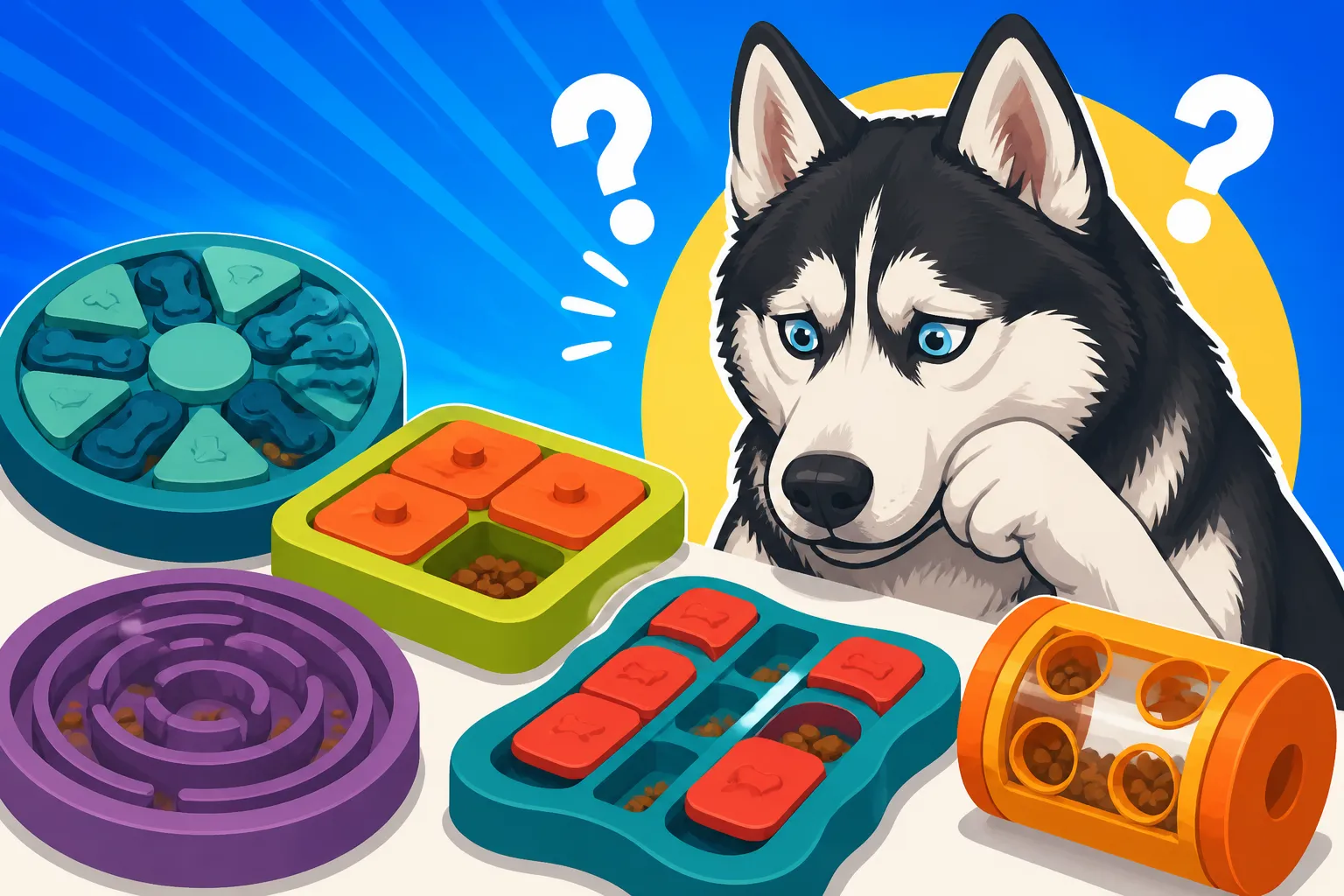
You bought that cute little puzzle feeder, the one that looked so clever on the package, only to find your Siberian Husky had "solved" it in about 37 seconds, probably while giving you a look that said, "Is that all you've got?" It’s a common frustration for Husky owners: these dogs are famously intelligent and incredibly driven, especially when food is involved. This guide is here to help you navigate the world of enrichment toys and puzzle feeders, identifying the truly challenging options that might just keep your clever canine thinking, instead of just flipping, chewing, or ignoring.
Why Standard Puzzle Feeders Fail the Siberian Husky Challenge
It's easy to walk into any pet store or browse online and pick up a brightly colored puzzle toy, thinking you've found the perfect mental exercise for your Siberian Husky. The reality, however, often hits harder and faster than anticipated. Huskies are not your average dog when it comes to problem-solving and perseverance. They were bred for endurance and independent thought, qualities that translate directly into an uncanny ability to outwit, or simply overpower, most standard enrichment toys.
The Husky Intellect: A Double-Edged Sword
Siberian Huskies are undeniably smart. Their intelligence isn't always about eager-to-please obedience, but rather a keen understanding of cause and effect, and an impressive capacity for independent problem-solving. This means they often figure out the "trick" to a puzzle feeder faster than many other breeds. What might keep a less driven dog occupied for twenty minutes, a Husky can often decipher in under two. Once they've solved it, the novelty wears off, and the toy loses its appeal, becoming just another object in the toy box. This isn't stubbornness, though it can feel like it; it's just a quick intellect moving on to the next challenge. For more on their unique mental makeup, you might find Siberian Husky Intelligence and Independence insightful.
Consider a scenario: you bring home a new feeder that requires your Husky to nudge a small lid aside to get a treat. An average dog might take a few tries, enjoying the process. Your Husky, however, might watch you demonstrate once, then, with a swift paw, not just nudge the lid but flip the entire feeder over to scatter the contents. Problem solved, but not in the way the toy designer intended!
Durability and the Mighty Husky Jaw
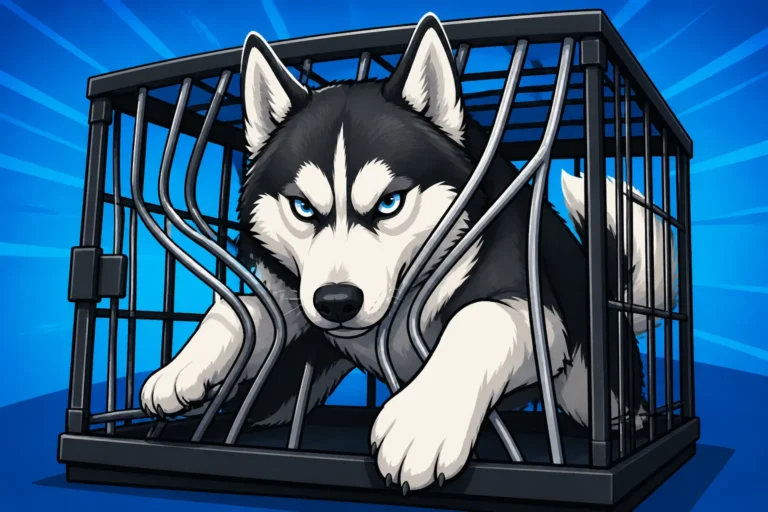
Beyond their intellect, Huskies possess significant physical strength and a notorious tendency to chew, especially when bored or frustrated. Many puzzle feeders are made from lightweight plastic, designed for dogs with a gentler approach. A Siberian Husky, faced with a puzzle that's too difficult or merely an obstacle to their delicious reward, might quickly resort to brute force.
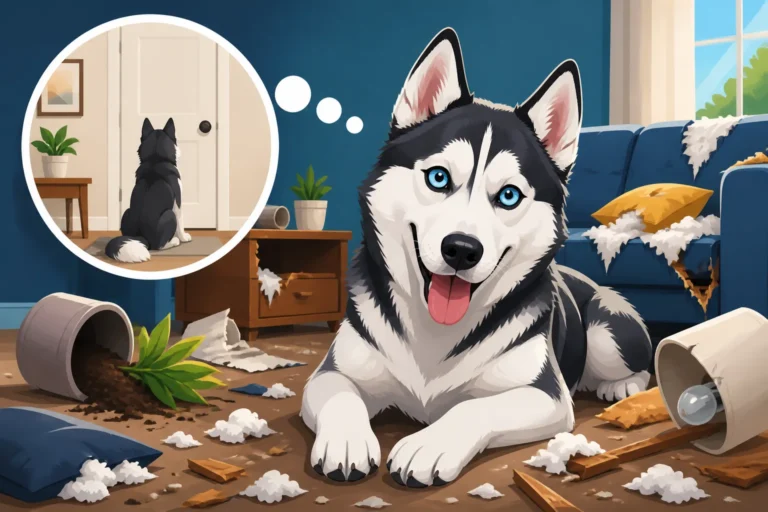
Imagine a puzzle feeder with little plastic doors or compartments. A Husky might not bother to slide the door open; instead, they might simply try to bite through the plastic or pry the component off entirely. This leads to broken toys, potential ingestion of plastic pieces, and a general waste of your money. It's not just about getting the food out; it's about the sheer determination to overcome any barrier. This destructive tendency, especially when left unsupervised or under-stimulated, is a common refrain among owners. To learn more about this, read Siberian Husky Destruction When Left Alone.
What Makes a Puzzle Feeder "Husky-Proof"?
So, if standard options fall short, what characteristics should you look for in a puzzle feeder that actually stands a chance against your clever, determined Siberian Husky? It comes down to a combination of thoughtful design, robust construction, and a clear understanding of the Husky's innate drives.
Beyond Basic Durability: Materials and Construction
A truly Husky-proof puzzle feeder isn't just "tough plastic." It needs to be made from materials that can withstand gnawing, prying, and general abuse. Think hard, dense plastics, often with rubberized bases for stability, or even metal components where appropriate. Avoid anything with flimsy parts that can be easily snapped off or chewed through.
When you're shopping, especially on platforms like Amazon where you can read reviews, look for keywords such as "heavy-duty," "chew-resistant," or "for aggressive chewers." The weight of the feeder itself can be a good indicator; lighter feeders are often easier for a Husky to flip, carry, or simply toss around. A heavy, stable base prevents your Husky from simply tipping the whole thing over to spill the food, forcing them to engage with the actual puzzle mechanism. The best designs might even integrate non-slip feet or suction cups to really anchor the toy during play.
Complexity That Keeps Them Engaged
The "puzzle" aspect needs to be genuinely challenging and ideally, multi-layered. A simple slide or lift mechanism might work once or twice, but a Husky will master it quickly. Look for feeders that require multiple steps, different types of manipulation, or varying levels of force.
For example, a great Husky puzzle might involve:
- Sequential Steps: They have to push one lever, which unlocks another door, revealing a hidden compartment that then needs to be slid open.
- Variable Difficulty: Some puzzles come with adjustable difficulty settings. Start easy, and as your Husky gains confidence, increase the complexity.
- Sensory Engagement: Puzzles that also engage their sense of smell, or make a slight noise when solved, can add to the interest.
The goal isn't to frustrate them, but to provide a sustained mental workout. A puzzle that takes a few minutes of genuine thought and effort, rather than a quick smash-and-grab, is what you're aiming for. Remember, Huskies thrive on jobs and activities that engage their minds. For ideas on keeping them mentally stimulated, consider Wearing Out a Siberian Husky Without Leaving the House.
Longevity of Interest and Rotation
Even the most complex puzzle feeder will eventually be "solved" and lose some of its novelty for a Siberian Husky. The key to long-term engagement is variety and rotation. You don't need dozens of feeders, but having a few different types that you can cycle through will keep your Husky guessing and maintain their interest.
Think about it like this: if you read the same book every day, you'd quickly get bored. The same applies to your Husky's mental challenges. Introduce a new puzzle, let them master it, then put it away for a few weeks before bringing it back out. When they see it again, it might feel fresh enough to spark their curiosity anew. This strategy can be critical in managing their inherent drive for novelty, especially when trying to curb behaviors like A Siberian Husky That Destroys Furniture out of boredom.
Types of Puzzle Feeders That Can Stand Up to a Siberian Husky
Alright, let's talk specifics. What kinds of puzzle feeders actually have a fighting chance against a Siberian Husky's intellect and determination? We're looking for things that are tough, engaging, and ideally, offer adjustable levels of difficulty.
Heavy-Duty Treat Dispensing Toys
Forget the flimsy plastic balls. For a Siberian Husky, you need treat-dispensing toys made from super-durable rubber or hard plastic composites. These toys are designed to be chewed on, bounced, and rolled, slowly releasing kibble or treats as your dog interacts with them.
- Classic KONGs (Extreme Series): The black KONG Extreme is a gold standard for a reason. Its super-tough rubber can withstand serious chewing, and you can stuff it with a variety of goodies – kibble, peanut butter, even frozen mixtures – to extend the challenge. The irregular bounce also adds an element of unpredictability during play.
- Planet Dog Orbee-Tuff Toys: These are another fantastic option for chew resistance. Many of their designs, like the Snoop or the Nook, are made from tough, buoyant, and mint-scented material, offering various ways to hide and dispense treats. They're robust enough to handle the general roughhousing of a Husky.
- Specific Designs for Durability: Look for brands that explicitly market their products for "power chewers." These often feature thicker walls, fewer small, breakable parts, and a weight that feels substantial in your hand. Many options can be found easily on Amazon, often with user reviews highlighting their endurance against strong breeds.
These types of toys are great because they encourage natural chewing behavior in a positive way, while also requiring your Husky to figure out how to manipulate the toy to get the reward.
Advanced Interactive Puzzle Boards
These are the multi-step, brain-teasing wonders that truly engage a Husky's problem-solving skills. They often feature various compartments, sliders, levers, and drawers that need to be manipulated in a specific sequence or with different actions to reveal the hidden treats.
- Nina Ottosson by Outward Hound: This line of puzzles is highly regarded for its increasing levels of difficulty and sturdy construction. They offer puzzles ranging from beginner slides to advanced multi-step games involving lifting blocks, pushing sliders, and rotating elements. Many are made from durable composite wood or heavy plastic that can stand up to a Husky's paws and nose.
- Snuffle Mats (Robust Versions): While not a "puzzle" in the traditional sense, a good quality snuffle mat can provide excellent mental stimulation by engaging your Husky's superior sense of smell. Instead of just devouring food, they have to use their nose to sniff out kibble hidden deep within fabric folds. For a Husky, ensure the snuffle mat is made from tough, densely sewn fabric that won't fall apart after a few enthusiastic digging sessions. Some even have anti-slip backings to prevent your Husky from simply shaking all the food out.
- Hidden Compartment Toys: These can vary from simpler options where treats are hidden under plastic cups to more elaborate designs where parts need to be removed or flipped. The key is that the components should be heavy enough that they can't just be swatted away, and securely fitted to avoid easy dislodging.
When selecting these, think about what your Husky finds most engaging. Do they prefer using their nose, their paws, or their mouth? Choose a puzzle that plays to their strengths while still offering a challenge.
DIY and "Husky-Hacked" Solutions
Sometimes, the best solution isn't something you buy, but something you create or adapt. Huskies are known for being clever, and a little creativity on your part can go a long way.
- Muffin Tin with Tennis Balls: A simple muffin tin, with a piece of kibble or small treat placed in each cup, then covered with a tennis ball. Your Husky has to figure out how to remove each ball to get the reward. It's surprisingly effective, cheap, and easy to adjust the difficulty by how tightly the balls fit.
- Towel Roll-Up: Spread kibble across a large towel, then roll it up tightly and tie it in a loose knot. Your Husky then has to unroll, untie, and unfold the towel to get the food. This engages their nose, paws, and problem-solving skills. Just make sure they don't decide to eat the towel!
- Cardboard Box Fun: Fill a sturdy cardboard box with crumpled paper, toilet paper rolls, and a scattering of kibble. Your Husky will love tearing into it, digging through the layers to find their treats. This offers a safe and satisfying outlet for their natural shredding instincts. Just supervise to ensure they don't ingest large pieces of cardboard.
These DIY options are excellent for Keeping a Siberian Husky Interested in Training as they can be constantly varied and cost very little.
Here's a quick comparison of some common puzzle feeder types for Huskies:
| Puzzle Feeder Type | Durability for Huskies | Complexity Level | Primary Engagement | Pros | Cons |
|---|---|---|---|---|---|
| KONG Extreme | Excellent | Low to Medium | Chewing, Licking | Nearly indestructible, long-lasting, versatile stuffing | Can be too easy if only kibble is used |
| Nina Ottosson Puzzles | Good (plastic/wood) | Medium to High | Paws, Nose, Mind | Progressive difficulty, varied mechanisms | Can be damaged if husky uses extreme force |
| Robust Snuffle Mats | Good (fabric) | Low to Medium | Nose, Digging | Great for scent work, mental fatigue | Some Huskies might try to deconstruct |
| Muffin Tin & Tennis Balls | Variable (tin) | Low | Paws, Mind | Cheap, easy, variable difficulty | Tennis balls can be chewed; supervision required |
| Towel Roll-Ups | Low (fabric) | Low | Paws, Nose | Very cheap, easy to make, engaging | Towel can be chewed or ingested |
Introducing and Maintaining the Challenge for Your Siberian Husky
Getting the right puzzle feeder is only half the battle. The other half is knowing how to introduce it, manage its use, and keep your Siberian Husky engaged over time. Remember, the goal is enrichment, not frustration.
Start Easy, Build Up Difficulty
When you introduce a new puzzle feeder, especially a complex one, start with the easiest possible setting or method. This is crucial for building your Husky's confidence and preventing them from getting frustrated and giving up (or deciding to just destroy the toy).
For example:
- KONG: Don't stuff it solid with frozen peanut butter on the first try. Start with loose kibble that falls out easily. Once they understand the concept, you can progress to slightly more challenging fillings, like kibble mixed with a little wet food, or even frozen options.
- Interactive Boards: Begin by leaving some treats in plain sight, or only partially covering them. Show your Husky how to move the first piece a few times. Praise and reward heavily for any correct interaction, even if it's clumsy. The goal is to make them feel successful and eager to try again.
Think of it like teaching a new skill in a training class. You wouldn't throw your Husky into advanced agility on day one. Similarly, with puzzle feeders, incremental steps are key. This approach is similar to the positive reinforcement methods advocated by trainers like BAXTER & Bella, focusing on success and building on it.
Supervise and Correct
Especially in the beginning, always supervise your Siberian Husky when they're using a new puzzle feeder. This allows you to:
- Prevent Frustration: If your Husky is struggling too much, you can offer a little guidance or simplify the puzzle temporarily.
- Ensure Safety: Huskies are strong chewers. If they start trying to dismantle the toy rather than solve it, you can redirect their attention, or remove the toy if it's becoming a safety hazard.
- Reinforce Proper Use: Praise them when they use the toy as intended. If they're trying to flip it or chew off a part, a firm "no" and redirection can help them understand.
Puzzle feeders are fantastic tools for independent play, but they're not always a substitute for direct engagement. For times when you need them occupied, but can't be actively playing, they're excellent, but initial supervision is vital. This can help manage behaviors when your Husky needs to be left alone, as discussed in Hours a Siberian Husky Copes With Alone.
Rotate and Reinvent
As we touched on earlier, even the best puzzle feeder will eventually lose its sparkle once a Husky has mastered it. The solution is variety and rotation. Don't leave the same two puzzle feeders out all the time. Instead, have a small collection and cycle through them.
You can also "reinvent" existing puzzles:
- Change the Rewards: Use different kinds of treats. Sometimes a high-value treat makes an old puzzle feel new again. Consider Food Rewards a Siberian Husky Will Work For for ideas.
- Change the Location: Sometimes simply moving a puzzle feeder to a different room or a new spot in the yard can make it feel fresh.
- Combine Puzzles: Can you use two simpler puzzles together to create a more complex scenario? For instance, maybe they need to solve one puzzle to get the treats that then go into another puzzle.
The aim is to keep them guessing and to make sure that the mental challenge remains stimulating. Regular variation ensures that these valuable tools remain effective for providing mental enrichment, a critical component for a well-adjusted Siberian Husky.
Integrating Puzzle Feeders into Daily Routine
Puzzle feeders shouldn't just be an occasional novelty; they can be a fantastic part of your Husky's daily routine.
- Meal Times: Instead of just putting a bowl down, use a puzzle feeder for one or more of their meals. This slows down their eating, aids digestion, and turns mealtime into a productive mental exercise. Many Huskies have a surprisingly efficient metabolism, so turning mealtime into a scavenger hunt can be a great way to engage them. You may find Why Siberian Huskies Eat Less Than a Labrador interesting in this context.
- When You Need a Break: If you have an important phone call, or just need 15 minutes of peace, a well-chosen puzzle feeder can be a lifesaver.
- Energy Release: For a breed like the Siberian Husky, physical exercise is paramount, but mental exercise is just as important. A good puzzle can help use up some of that mental energy, reducing the likelihood of boredom-driven behaviors.
By making puzzle feeders a consistent, varied, and challenging part of your Siberian Husky's life, you're investing in their mental well-being and providing a healthy outlet for their incredible intelligence and drive. Don't be discouraged if they "beat" a puzzle quickly – just consider it a testament to their cleverness and an invitation to find an even better challenge!
Disclaimer
This article is for general informational purposes only and does not constitute professional advice. Laws, prices and regulations vary by location and change over time. Consult a qualified professional for guidance on your specific situation.