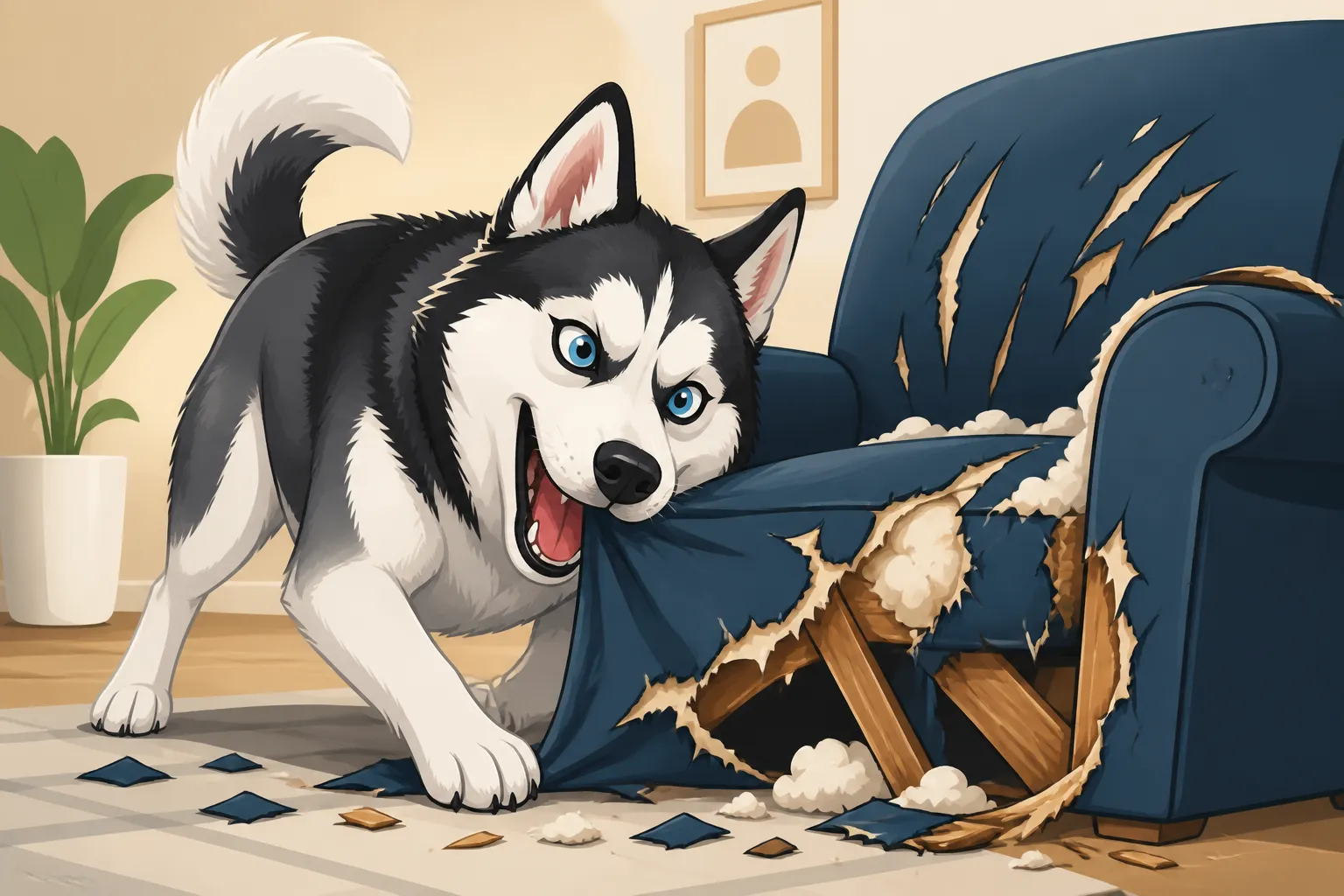
A Siberian Husky That Destroys Furniture
It's a familiar and deeply frustrating sight for many Siberian Husky owners: you walk into a room only to find a chewed table leg, a shredded cushion, or even a gaping hole in your drywall. These intelligent, high-energy dogs, bless their hearts, can turn your beloved furniture into kindling if their needs aren't met. This guide is all about understanding why your Siberian Husky might be turning your home into their personal chew toy and, more importantly, what actionable steps you can take to stop the destruction and restore peace to your living space.
Understanding the Root Causes of Destructive Chewing in Huskies
When a Siberian Husky starts destroying furniture, it's rarely out of spite or malice. Instead, it's almost always a symptom of an unmet need or an underlying issue. These dogs were bred for endurance and problem-solving, and if they don't have appropriate outlets for their innate drives, they will find their own "jobs" – which often involve your sofa.
Boredom and Lack of Mental Stimulation
Siberian Huskies are incredibly smart. They need more than just physical exercise; their minds crave engagement. Picture a Husky ancestor, bred by the Chukchi people, working tirelessly day in and day out, making decisions on the trail, navigating complex terrains, and responding to intricate commands. Now imagine that same dog lying around a suburban home for eight hours a day with nothing to do. The mental energy that once went into pulling a sled across miles of ice now needs an outlet, and if a puzzle feeder isn't available, your coffee table might just become the next great brain game.
When a Husky is bored, they don't just sigh dramatically and nap. They invent activities. Chewing is a natural canine behavior, and for a bored Husky, an interesting texture like wood, fabric, or even drywall can provide hours of self-entertainment. It's not about being "bad"; it's about being a Husky who hasn't been given enough to think about. They might systematically dismantle a couch cushion because the challenge of pulling out all the stuffing is a satisfying mental task.
Insufficient Exercise and Pent-Up Energy
This is probably one of the most common culprits behind destructive behavior in Siberian Huskies. These dogs were literally bred to run for miles and miles, pulling sleds through harsh conditions. Their metabolism is incredibly efficient, meaning they need a surprising amount of physical activity to truly tire them out. A simple walk around the block twice a day isn't enough for most adult Huskies. If they're not getting adequate physical exercise, that boundless energy has to go somewhere.
Imagine yourself cooped up inside with endless energy and no way to release it. You'd likely start pacing, fidgeting, maybe even bouncing off the walls. For a Husky, that pent-up energy often manifests as destructive chewing or digging. They might tear apart cushions because it's a way to burn physical energy through a vigorous activity, or dig at the carpet because it simulates the rewarding action of digging for prey or a cool spot to rest outside. Without proper exercise, your Husky isn't just energetic; they're stressed, and that stress can be taken out on your home. How Much Exercise a Siberian Husky Really Needs is probably more than you think.
Separation Anxiety or Stress
While less common than boredom or lack of exercise, separation anxiety can certainly lead to furniture destruction. A Husky with separation anxiety isn't just being destructive; they're panicking because they've been left alone. The chewing can be a self-soothing mechanism, a desperate attempt to escape, or simply a manifestation of extreme stress. You might notice other signs, too, like excessive howling or barking, house-soiling, or intense pacing when you're getting ready to leave.
The destruction related to separation anxiety often happens right after you leave and might be focused on exit points like doors or windows, or items that smell strongly of you, such as your couch. It's a heartbreaking situation because your Husky isn't trying to be "naughty"; they're genuinely suffering. It requires a different approach than simple boredom, often involving slow desensitization, counter-conditioning, and sometimes even veterinary intervention.
Puppy Teething and Exploration
Let's not forget the basics: puppies chew. A lot. Just like human babies explore the world with their mouths, so do Husky puppies. And when those sharp puppy teeth start falling out and adult teeth are pushing through, the urge to chew can be incredibly intense. During this phase, it's not unusual for a puppy to try to chew anything and everything in their path, including your favorite chair leg or the corner of your rug.
This phase is usually temporary, lasting until they have all their adult teeth, typically around six to eight months of age. The key here is proper management and redirection, providing plenty of appropriate chew toys so they learn what is okay to chew and what isn't. Without good guidance during this critical developmental period, a puppy's habit of chewing on furniture can easily carry over into adulthood, making it much harder to break later on.
Preventing Furniture Destruction: Proactive Strategies
The best offense is a good defense, and when it comes to a Siberian Husky and your furniture, proactive measures are absolutely crucial. You need to get ahead of the problem, anticipating your Husky's needs and providing appropriate outlets before they decide your antique cabinet is the perfect teething ring.
Providing Appropriate Chewing Outlets
This might seem obvious, but it's often overlooked or underestimated. Huskies need durable chew toys, and they need a variety of them to keep things interesting. A single squeaky toy isn't going to cut it. Think about different textures, challenges, and purposes. Hard rubber toys, dental chews, nylon bones, and puzzle toys that dispense treats are all excellent choices.
For a Husky, the harder and more challenging the chew, the better. Consider options like Nylabone power chews, extreme Kong toys that you can stuff with peanut butter or yogurt and freeze, or even elk antlers. Rotating toys regularly can also help keep them novel and exciting. If you find your Husky gravitating towards a specific type of furniture, try to find a chew toy that mimics that texture or shape. Many great options for super durable chew toys can be found on Amazon, allowing you to read reviews from other owners of power chewers. Ensure any chew toy you buy is appropriately sized for your Husky to prevent choking hazards.
Increasing Exercise and Mental Engagement
This is the non-negotiable cornerstone of preventing destructive behavior in a Husky. You need to provide plenty of both physical and mental stimulation every single day.
- Physical Exercise: Aim for at least 1-2 hours of vigorous exercise daily. This could mean long, brisk walks, runs, bikejoring (pulling a bike), canicross (running with your dog harnessed to you), or even just extended, high-intensity play sessions in a secure yard. Remember, a tired Husky is a good Husky. Canicross and Bikejoring With a Siberian Husky can be fantastic ways to burn off that energy. If you're short on time, consider doggy daycare a few days a week if it's a good fit for your dog's temperament.
- Mental Stimulation: Don't forget the brain! Puzzle feeders, KONG toys, snufflemats, and training sessions are excellent for mental enrichment. Teach your Husky new tricks, practice obedience commands, or even enroll in a dog sport like agility or obedience. Even 15-20 minutes of focused training can be incredibly tiring for their minds. Resources from places like BAXTER & Bella can be incredibly helpful for structured online training programs and ideas to keep your Husky mentally engaged. Think about scatter feeding their kibble in the yard, making them "hunt" for it, rather than just putting it in a bowl.
Creating a Safe and Stimulating Environment
Your Husky's environment plays a huge role in preventing destruction. This means managing their access to tempting items and providing designated safe spaces.
- Crate Training: A properly introduced and positively reinforced crate can be a Husky's den and a lifesaver for your furniture, especially when you can't directly supervise them. The key is to make the crate a comfortable, positive place, never a punishment. It should be large enough for them to stand, turn around, and lie down comfortably. Fill it with comfy bedding and a high-value chew toy. This keeps your Husky contained and prevents them from practicing destructive behaviors when you're not around. Remember, Choosing a Crate a Siberian Husky Cannot Bend is important, as they are escape artists.
- Husky-Proofing Your Home: Before leaving your Husky alone, do a quick sweep of the area they'll have access to. Put away shoes, remote controls, books, and anything else that might be tempting to chew. If possible, restrict them to a "safe room" or a securely fenced area where there's nothing valuable to destroy and plenty of appropriate toys. This might mean moving lamps, securing electrical cords, or putting covers on furniture that's particularly attractive to your chewer.
Managing Existing Destructive Behavior
Once a Husky has developed a habit of destroying furniture, it takes consistent effort and a bit of detective work to change that behavior. It's about interrupting the undesirable action and immediately redirecting their focus to something appropriate.
Interrupting and Redirecting
The moment you catch your Husky chewing on something inappropriate, don't yell or scold. A loud, sharp noise (like a clap or a firm "Ah-ah!") is often enough to interrupt them. The goal isn't to scare them, but to get their attention. The instant they stop, calmly approach them and offer them an appropriate chew toy. As soon as they take it and start chewing, praise them calmly and enthusiastically, and maybe even offer a small treat.
The timing here is critical. If you scold them minutes after the act, they won't associate the punishment with the chewing. They'll just think you're mad at them for no reason. The redirection needs to happen in the moment. Consistency from every member of the household is also vital. Everyone needs to be on the same page about what is and isn't allowed, and how to respond.
Addressing Underlying Issues
If the destructive chewing persists despite increased exercise, mental stimulation, and plenty of appropriate chew toys, it's time to dig a little deeper.
- Vet Check-up: Rule out any medical reasons for excessive chewing. Sometimes dental pain or gastrointestinal issues can cause unusual chewing behaviors.
- Behavioral Consultation: If you suspect separation anxiety or other stress-related issues, consult a professional certified dog trainer or a veterinary behaviorist. These experts can help diagnose the specific problem and develop a tailored behavior modification plan. Online platforms like BAXTER & Bella can offer guidance and support from experienced trainers, providing strategies for managing complex behavioral challenges like true separation anxiety. They can help you understand the nuances of Siberian Husky Separation Behavior and how to address it.
- Routine and Predictability: Huskies thrive on routine. A predictable schedule for feeding, exercise, and potty breaks can reduce anxiety and make them feel more secure, which in turn can reduce stress-related destructive behaviors.
The Role of Bitter Sprays and Deterrents
Bitter apple sprays or other taste deterrents can be useful as temporary aids, but they are rarely a standalone solution. These products typically have a foul taste that makes the treated item unappealing to chew. You spray them on furniture legs, cords, or other items your Husky is targeting.
While they can certainly deter your dog in the short term, they don't address why your Husky is chewing in the first place. If your dog is bored or anxious, they'll likely just find something else to chew on that isn't sprayed, or they might even learn to tolerate the taste over time. Use these in conjunction with the proactive strategies discussed above. Think of them as a "stop-gap" measure while you implement the long-term solutions of increased exercise, mental stimulation, and appropriate chew outlets.
Long-Term Solutions and Commitment
Living with a Siberian Husky requires a commitment to understanding and meeting their unique needs. There's no magic bullet for stopping furniture destruction; it's a marathon, not a sprint, built on consistency and empathy.
Consistency is Key
Dogs are creatures of habit, and Huskies are no exception. What you allow one day, you cannot punish the next. Every family member needs to be consistent in applying rules, providing exercise, and redirecting unwanted chewing. If one person allows chewing on a slipper and another punishes it, your Husky will become confused and more likely to test boundaries.
Establish clear boundaries and routines from day one. If the couch is off-limits for chewing, it's always off-limits. If they are allowed on a specific dog bed with a chew toy, ensure that is consistently available. The more consistent you are, the faster your Husky will learn what is expected of them and what their acceptable outlets are.
The Importance of a Husky-Proof Home
As long as you own a Siberian Husky, some level of "Husky-proofing" will be a part of your life. This isn't about blaming the dog; it's about understanding the breed and setting them up for success.
- Secure Valuables: Keep anything you don't want chewed put away or out of reach. This includes shoes, books, remote controls, electronics, and especially anything that could be a choking hazard.
- Furniture Covers: If a particular piece of furniture is a target, consider temporary covers or blankets that can be removed when you're home and put back when you leave. Some owners use bitter spray on these covers.
- Durable Materials: When replacing furniture, consider materials that are less appealing or more resistant to dog chewing. Solid wood, metal, or certain types of durable fabrics might fare better than soft, easily shredded materials. You might want to invest in Flooring That Survives Siberian Husky Nails too!
Embracing the Husky Nature
Ultimately, owning a Siberian Husky means accepting their unique traits, including their intelligence, their energy, and their instinctual drives. These aren't dogs that are content to be couch potatoes without significant training and alternative engagement. They need jobs, challenges, and plenty of opportunities to express their natural behaviors in appropriate ways.
By understanding why your Husky destroys furniture and committing to meeting their physical and mental needs, you can transform a destructive dog into a well-behaved companion. It takes effort, patience, and a deep appreciation for the magnificent, spirited breed that is the Siberian Husky. When you invest in their well-being, the destruction often fades, replaced by a content and happy dog.
| Type of Chew Toy | Benefit | Durability | Considerations |
|---|---|---|---|
| KONG Extreme | Mental stimulation, boredom relief, long-lasting | High (rubber) | Can be stuffed with food and frozen for extended use. |
| Nylabone Power Chew | Dental health, satisfies chewing urge | High (nylon) | Choose appropriate size, monitor for wear and tear. |
| Elk/Deer Antlers | Natural, very long-lasting, dental benefits | Very High (bone) | Can be expensive, check for splintering. |
| Puzzle Toys | Mental stimulation, slows down eating | Medium to High (plastic/rubber) | Varies by design, watch for small parts. |
| Rope Toys | Interactive play, helps clean teeth | Medium (fabric) | Can be shredded, ingestible fibers can be an issue. |
| Dental Chews | Oral hygiene, mild chewing outlet | Low to Medium (edible) | Consumed quickly, choose reputable brands. |
Disclaimer
This article is for general informational purposes only and does not constitute professional advice. Laws, prices and regulations vary by location and change over time. Consult a qualified professional for guidance on your specific situation.