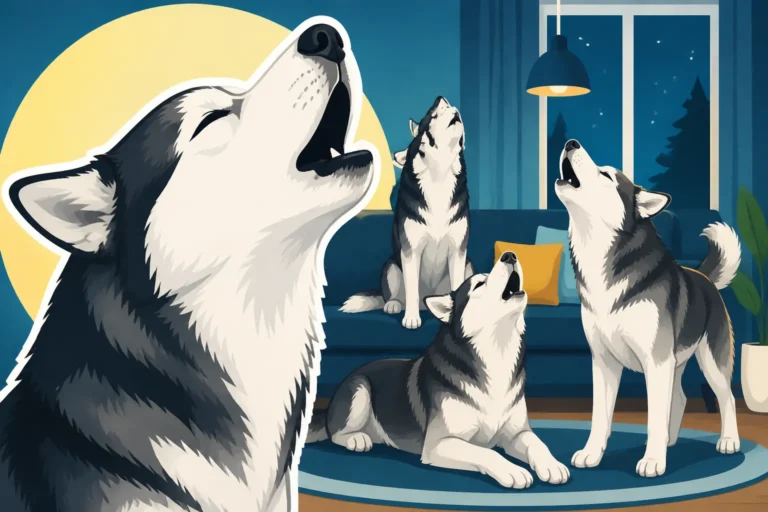
Whether a Siberian Husky Barks Much
One of the biggest misconceptions about Siberian Huskies is that they're a quiet breed, that they don't bark, and that their presence won't disturb the peace and quiet of your home or neighborhood. This is a myth that often leads to frustration for new owners who quickly discover their beautiful, wolf-like companion has a whole repertoire of sounds far beyond a simple "woof." This guide will unravel the truth about Siberian Husky vocalizations, helping you understand their unique communication style and how to live harmoniously with their expressive nature.
The Myth vs. Reality of Siberian Husky Vocalizations
It's easy to assume that a dog bred for endurance and pulling would be stoic and silent, focused on their task. And while Siberian Huskies aren't typically excessive barkers in the traditional sense, they are far from silent. The difference lies in the type of vocalization they prefer, which can be a huge surprise to the uninitiated. Many people get a Husky expecting a quiet companion, only to find themselves with a dog that has a lot to say, just not in the way they anticipated.
Why People Think Huskies Bark Less
The idea that Siberian Huskies don't bark much often comes from anecdotal evidence or comparisons to breeds known for incessant barking, like some terriers or smaller alarm-barkers. Huskies were bred for a specific job: pulling sleds over vast distances. In a team environment, constant barking would be inefficient, distracting, and a waste of energy. Instead, they developed other ways to communicate with their handlers and each other that were more suited to long hauls and silent landscapes. This history has led many to believe they are a "non-barking" breed, and while it's true they often don't bark at every leaf that blows by, their unique vocalizations are just as attention-grabbing, if not more so.
Another reason for this misconception might be comparing them to traditional guard dogs. A German Shepherd or Doberman might bark ferociously at an intruder, signaling a threat with loud, repetitive barks. Huskies, on the other hand, are generally friendly towards strangers and lack the strong territorial instinct that drives much of a typical dog's alarm barking. So, if your expectation of a dog's vocalization is solely based on guarding, a Husky will indeed seem quiet by comparison. However, this doesn't mean they aren't vocal; they just have a different set of sounds they prefer to make.
The Truth About Their Vocal Repertoire
The reality is that Siberian Huskies are incredibly vocal dogs, they just tend to howl, whine, grumble, and talk more than they bark. Think of them as opera singers rather than sharp, staccato drummers. Their sounds are often more drawn-out, melodious, and can carry just as much, if not more, emotional weight than a bark. They're expressive communicators, and their sounds are as much a part of their charm as their stunning looks and energetic personalities.
They will use a diverse range of sounds to express joy, frustration, boredom, excitement, and even to simply engage in a "conversation" with their humans. This rich soundscape is part of what makes living with a Husky such a unique experience. If you're expecting silence, you're in for a delightful, albeit sometimes loud, surprise. Understanding this nuanced vocal range is key to truly appreciating and managing a Siberian Husky. Don't fall into the trap of thinking "no bark" means "no noise," because you'd be sorely mistaken!
Understanding the Siberian Husky's Unique Vocalizations
When you bring a Siberian Husky into your home, you're not just getting a dog; you're adopting a seasoned conversationalist with a diverse range of sounds. Their vocalizations are deeply rooted in their history and breed characteristics, and understanding these can help you better interpret what your Husky is trying to tell you. It's a language all its own, full of nuances that dedicated Husky owners quickly learn to decipher.
The Signature Husky Howl
Ah, the howl. This is perhaps the most iconic sound a Siberian Husky makes, and it's something that often catches new owners off guard. Unlike a bark, which is typically short and sharp, a howl is a sustained vocalization that can be incredibly melodic and hauntingly beautiful. It's a direct link to their wolf ancestors, a primal form of communication used to signal location, rally the pack, or express emotion. When a Husky howls, it’s rarely a casual sound; it's often a deep-seated expression of instinct or strong feeling. Why Your Siberian Husky Howls and Talks delves further into this fascinating aspect of their communication.
Huskies will howl for many reasons. They might howl in response to sirens, other dogs howling in the distance, or even certain types of music. It can be a call to attention, a sign of loneliness, or a declaration of their presence. I remember one of my Huskies, Nanook, would launch into a full-blown opera whenever the ice cream truck came down the street, almost as if he was declaring his profound desire for a vanilla cone. It wasn't a demanding bark, but a mournful, drawn-out plea that echoed through the neighborhood. This kind of expressive howling is a fundamental part of their identity.
The Famous Husky "Talk" and Grumbles
Beyond the majestic howl, Huskies are masters of "talking." This isn't barking, but a complex series of grunts, growls, mumbles, and throaty vocalizations that often sound like they're trying to form words. It’s incredibly endearing and often leads to hilarious back-and-forth "conversations" with their owners. My current Husky, Koda, has distinct "opinions" he expresses with a guttural rumble and a slight head tilt, especially when I'm asking him to do something he's not entirely keen on. It's not aggressive; it's just pure Husky sass.
This talking can range from soft, contented grumbles when they're getting belly rubs to more insistent, almost conversational sounds when they want something – food, a walk, or simply your undivided attention. They might use these sounds to express displeasure, like a dramatic sigh followed by a low grumble if you stop petting them too soon. It’s their way of engaging with you, expressing their inner thoughts and feelings in a way that feels very personal and unique to the breed. The Siberian Husky Noise Nobody Warns You About explores even more of these delightful sounds that often surprise new owners.
Whining and Other Attention-Seeking Sounds
While not as dramatic as a howl or as conversational as their "talk," whining is another common vocalization for Siberian Huskies. Whining is usually a direct plea for something: attention, food, or to be let outside. It can escalate quickly if ignored, moving from a soft murmur to a more persistent, high-pitched plea. This is where the line between communication and demanding behavior can blur, and it's important for owners to learn to differentiate.
Many Huskies also employ a variety of other, less common sounds, such as yips, yelps, and even a unique "scream" when they're highly frustrated or excited. The Siberian Husky Scream and What Sets It Off can provide more context on these more intense vocalizations. For example, a sharp yip might be heard during intense play, while a sustained, piercing scream can erupt if they're particularly annoyed about being left alone or if they're protesting a nail trim. These sounds, while less frequent than howls or talking, are still very much part of their vocal arsenal and contribute to the rich soundscape of a Husky home.
When a Siberian Husky Does Bark
Despite their preference for howling and talking, it's not true that Siberian Huskies never bark. They absolutely do, but often for very specific reasons and usually not with the repetitive, "guard dog" intensity that might be expected from other breeds. Understanding why they bark can help you distinguish between normal communication and potential behavioral issues.
Alarm Barking and Alerting
While a Siberian Husky isn't generally a natural guard dog, they will use barks to alert you to something unusual. This isn't typically the deep, threatening bark of a Rottweiler or a German Shepherd, but more of a sharper, more staccato series of barks designed to say, "Hey! Something's happening!" It might be directed at a stranger walking by the window, a squirrel scampering across the fence line, or the mail carrier approaching the door. This type of barking is usually short-lived and serves a practical purpose: to inform you of a perceived change in their environment.
For example, my first Husky, Ghost, would bark exactly three times when someone pulled into the driveway. Not once, not five, but three distinct barks. It was his way of saying, "Heads up, human, company's here!" It wasn't aggressive, nor did it last for minutes on end. It was simply an alert. This type of barking is a natural canine behavior, and for Huskies, it’s usually limited to these specific "alert" scenarios rather than a constant, generalized barking at everything.
Frustration and Demand Barking
This is often where barking can become problematic for Husky owners. Huskies are intelligent and incredibly social creatures who thrive on attention and activity. If they are bored, under-exercised, or feel ignored, they can resort to demand barking. This type of bark is typically repetitive, insistent, and accompanied by other body language like nudging, pawing, or bringing you a toy. It's their way of saying, "Hey, pay attention to me! I'm bored! Let's do something!"
I've seen many Huskies learn that barking at their owner while they're on the couch is a highly effective way to get a reaction, even if that reaction is just a frustrated "Quiet!" Any attention, even negative, can reinforce the behavior. A Husky who barks for food, to go outside, or to initiate play has learned that barking works. Addressing this often requires a re-evaluation of their daily routine, ensuring they get enough physical and mental stimulation. Sometimes, a Husky might also bark out of frustration if they can see something they want but cannot reach, such as another dog outside the window or a toy that's out of bounds. This is often accompanied by intense focus and body tension.
Play Barking and Excitement
Huskies, like many dogs, will often bark during play. This is a joyful, excited bark, usually accompanied by bouncy body language, tail wags, and a playful demeanor. Whether they're wrestling with another dog at the park or playing tug-of-war with you in the living room, these barks are an expression of their exuberance and engagement in the activity. It's often a higher-pitched, enthusiastic bark that communicates, "This is fun! Let's keep going!"
This type of barking is generally not a concern unless it becomes excessive or disruptive in situations where quiet is required, like in public spaces. It's a natural part of their playful nature and indicates a happy, engaged dog. It's crucial to differentiate this from anxious or frustrated barking. A play bark is usually part of a larger, joyful interaction, whereas a frustration bark is often a solo performance aimed at eliciting a response from you or their environment.
Managing Excessive Vocalization in Your Siberian Husky
Living with a highly vocal Siberian Husky can be a lot of fun, but when their communication crosses the line into excessive noise, it can become a real challenge. Whether it's constant howling, relentless demand barking, or an endless stream of "talking" when you need quiet, managing these behaviors is key to a harmonious household. It's not about silencing your Husky entirely – that's impossible and would strip them of their unique charm – but about teaching them when and where certain vocalizations are appropriate.
Identifying the Root Cause of Vocalization
The first step in managing any excessive vocalization is to play detective and figure out why your Husky is being so loud. Is it boredom? Loneliness? Anxiety? Or are they simply trying to tell you something very important, like they need to go out? Huskies are intelligent, and their vocalizations are often purposeful.
Here are some common reasons:
- Boredom/Under-stimulation: A Husky that isn't getting enough physical exercise or mental enrichment will often become destructive and vocal. They might howl out of sheer boredom or bark incessantly to try and instigate some action. They have boundless energy and a clever mind that needs to be engaged.
- Separation Anxiety/Loneliness: Huskies are incredibly social dogs. If left alone for long periods without proper training, they can experience separation anxiety, leading to sustained howling or whining. They are pack animals, and being alone can be very stressful for them.
- Attention-Seeking: Many Huskies quickly learn that making noise gets them noticed. If you consistently respond to their barks or whines, even with a frustrated "stop," you're still giving them attention, which reinforces the behavior.
- Alarm/Territorial Alert: While not traditional guard dogs, they will bark to alert you to perceived threats or novelties, like the mailman, a squirrel, or a person walking by your window.
- Environmental Triggers: Sirens, other dogs barking, or even specific sounds (like the doorbell on TV) can trigger a howling or barking response.
- Physical Needs: A whine or bark might be your Husky's way of telling you they need to go outside, are hungry, or are in pain. Always rule out physical discomfort first.
Without understanding the underlying cause, any training efforts will likely be ineffective. Take notes: when does the vocalization happen? Who is present? What usually precedes it? This information is gold.
Training Strategies for Quieter Huskies
Once you've identified the root cause, you can implement targeted training strategies. Consistency is absolutely crucial with a Siberian Husky; they are notoriously independent thinkers, and if you're not consistent, they will test your boundaries relentlessly.
- Reward Silence: This is paramount. Instead of reacting to the noise, wait for a brief moment of quiet, then immediately praise and reward your Husky. You're teaching them that being quiet gets them what they want (your attention, a treat, a walk), not making noise.
- Teach a "Quiet" Cue: Once your Husky understands that silence gets rewards, you can start pairing it with a verbal cue like "Quiet." Trigger a bark (e.g., by knocking on the door), let them bark once or twice, then put a treat to their nose, say "Quiet," and when they stop to sniff the treat, reward them. Over time, they'll learn the cue.
- Manage Environmental Triggers: If your Husky barks at everything outside the window, limit their access to the window. Use frosted film, curtains, or strategically placed furniture. If sirens trigger howling, try to distract them with a high-value treat or toy before they start howling, redirecting their attention.
- Ignore Attention-Seeking Noises: This is tough, but vital. If your Husky barks or whines for attention, turn your back, cross your arms, and completely ignore them. The instant they are quiet, even for a second, turn back, praise them softly, and give them attention. This teaches them that quiet behavior earns rewards. This principle is key for A Siberian Husky That Whines for Attention.
- Use Enrichment Toys: For Huskies prone to boredom-induced vocalization, puzzle toys filled with treats or durable chew toys can be lifesavers. They provide mental stimulation and keep their mouths busy. Brands like Kong or West Paw offer excellent options. You can find a vast selection on Amazon, which can be a great resource for keeping a busy Husky occupied.
Remember, positive reinforcement works best with Huskies. Force or punishment often leads to them shutting down or becoming more resistant. Their independent nature means they respond much better to being convinced that your way is the more rewarding path.
Enrichment and Exercise as Solutions
Many vocalization issues in Siberian Huskies stem from a lack of appropriate outlets for their energy and intelligence. These dogs were bred to run, work, and think. If they don't get sufficient physical and mental stimulation, that pent-up energy and boredom will manifest in undesirable behaviors, including excessive noise.
- Daily High-Intensity Exercise: A quick walk around the block is often not enough for a Husky. They need sustained, vigorous exercise. This could be long runs, hikes, bikejoring, canicross, or even just intense fetch sessions in a secure area. A tired Husky is a much quieter Husky. Aim for at least 1-2 hours of vigorous activity daily. How Much Exercise a Siberian Husky Really Needs provides more detail on this critical aspect of their care.
- Mental Stimulation: Don't forget their brains! Huskies are smart, and they get bored easily. Incorporate daily training sessions, even short ones, to teach new tricks or reinforce commands. Use puzzle feeders for their meals instead of just putting food in a bowl. Snuffle mats and hide-and-seek games are also fantastic for mental enrichment. Puzzle Feeders a Siberian Husky Cannot Beat offers some great ideas.
- Socialization: As pack animals, Huskies benefit greatly from positive social interactions with other dogs. Regular, supervised playdates or visits to a dog park can help burn off energy and satisfy their social needs. However, remember to ensure any dog park is secure, as Whether a Siberian Husky Clears a Dog Park Fence is a valid concern.
- Structured Play: Engage your Husky in games that encourage calm behavior alongside excitement. For example, during a game of tug, incorporate "drop it" and "sit" commands, rewarding quiet compliance before restarting the game. This teaches them impulse control amidst their natural exuberance.
Consider enrolling in online training programs, especially if you're a new Husky owner. The BAXTER & Bella Online Puppy School, for instance, offers comprehensive resources and guidance that can be incredibly helpful for managing Husky behavior from puppyhood, including their vocal tendencies. It provides a structured approach to training that emphasizes positive reinforcement and building a strong relationship with your dog. By channeling their energy and intelligence productively, you'll find that many of their vocal outbursts naturally decrease.
| Vocalization Type | Common Cause | Management Strategy |
|---|---|---|
| Howling | Response to sirens, other dogs, loneliness, excitement | Desensitize to triggers, provide companionship, ensure adequate exercise |
| "Talking" / Grumbles | Communication, contentment, sass, attention-seeking | Embrace as part of their personality; ignore if demanding |
| Whining | Attention-seeking, need to go out, hunger, mild discomfort | Ignore if attention-seeking; check needs if otherwise |
| Alarm Barking | Alerting to novelties (mailman, stranger) | Manage access to windows, reward silence after 1-2 barks |
| Demand Barking | Boredom, lack of attention, frustration | Increase exercise/enrichment, ignore, reward quiet |
| Play Barking | Excitement during play | Generally acceptable; manage if excessive or disruptive in context |
Living with a Vocal Siberian Husky
Embracing the unique vocal nature of a Siberian Husky is a big part of what it means to truly understand and love this breed. They are not quiet lapdogs, and trying to force them into that mold will only lead to frustration for both you and your Husky. Instead, learning to live with, and even appreciate, their diverse soundscape can make your bond with them even stronger.
Neighbor Relations and Soundproofing
One of the most practical concerns for owners of vocal Huskies, especially those in apartments or close-knit neighborhoods, is managing noise for the sake of neighborly peace. A Husky's howl can carry, and a persistent demand bark can quickly become a nuisance. It's an issue that often puts new owners in a tough spot.
- Proactive Communication: If you know your Husky is vocal, talk to your neighbors. Let them know you're working on it, and ask them to inform you if the noise becomes an issue. Often, simply knowing you're aware and trying can go a long way in fostering good relations.
- Soundproofing Strategies: While you can't completely soundproof a home, you can certainly mitigate noise. Heavy curtains or blinds can help absorb sound and block visual triggers. Rugs and carpets also reduce echoes. If your Husky howls when you leave, a white noise machine or soft music can help mask outside sounds and create a calmer environment. Soundproofing an Apartment for a Siberian Husky offers more detailed advice on this. Crating your Husky in a designated, comfortable, and semi-soundproofed space when you're out can also help contain noise and reduce anxiety.
- Training for Alone Time: Teach your Husky to be comfortable alone gradually. Start with short absences and slowly increase the time. Ensure they have plenty of exercise and mental stimulation before you leave, and provide high-value, long-lasting chews or puzzle toys to keep them occupied.
Ultimately, preventing excessive noise is easier than stopping it once it's started. A well-exercised, mentally stimulated, and well-trained Husky is far less likely to become a neighborhood nuisance.
Embracing the Husky's Expressive Nature
Once you understand that vocalization is an intrinsic part of being a Siberian Husky, you can start to embrace it rather than fight it. Their "talking" can be incredibly endearing and a source of endless amusement. It's a key characteristic that sets them apart and makes them such memorable companions.
Think of their howls as a connection to their ancient past, their talking as their unique way of communicating their personality, and their barks as specific alerts. Learning to interpret these sounds allows for a deeper understanding of your dog's moods and needs. My Husky's dramatic grumbles when it's time to get off the comfy couch have become a running joke in our family, a clear sign of his strong opinions and independent spirit.
By providing plenty of exercise, consistent positive reinforcement training, and a deep understanding of their breed traits, you can manage their vocal tendencies so that they enhance, rather than detract from, your life together. It’s about building a partnership where you respect their nature while guiding them to be well-mannered companions. The goal isn't a silent Husky, but a Husky whose vocalizations are appropriate, understood, and cherished.
Disclaimer
This article is for general informational purposes only and does not constitute professional advice. Laws, prices and regulations vary by location and change over time. Consult a qualified professional for guidance on your specific situation.