Siberian Huskies That Scale Chain Link
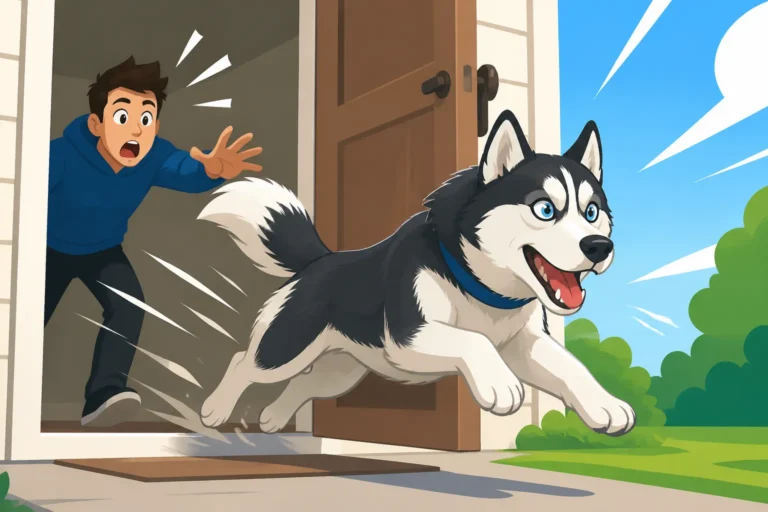
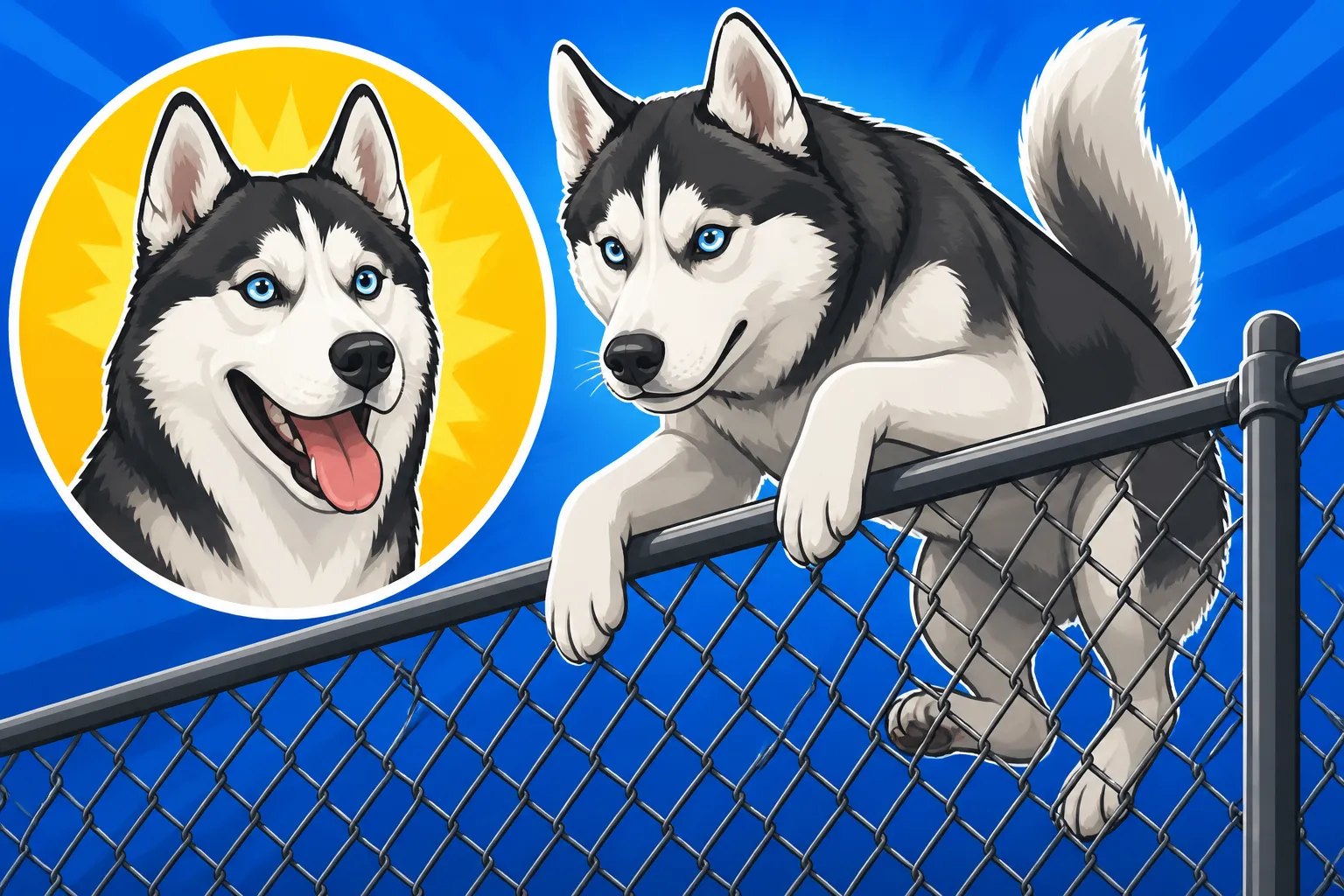
You've probably stood there, jaw dropped, watching your beautiful Siberian Husky transform into an Olympic gymnast, effortlessly scaling your seemingly secure chain-link fence. It’s an incredibly frustrating experience, leaving you wondering if any barrier can truly hold these escape artists. This guide will dive deep into why Huskies are so adept at climbing chain link and, more importantly, equip you with practical strategies to modify your fence and manage your Husky's determined escape attempts.
Understanding the Climber's Mindset
Siberian Huskies are not like most dogs. Their ancestors were bred for endurance and independent travel across vast, open tundras. This isn't just a quirky habit; it's a deeply ingrained instinct to explore, to roam, and to cover ground. When faced with a barrier, especially one that presents a clear path upward, many Huskies see it as a challenge rather than an insurmountable obstacle. They are problem-solvers, and a chain-link fence can look less like a wall and more like a ladder.
The Instinct to Roam and Explore
Imagine a dog bred for hundreds of years to pull sleds over miles of varied terrain, often without direct guidance, relying on their own wits and stamina. That's your Husky. This heritage means they have an incredible drive to move, to see what's beyond the horizon, and to follow interesting scents. This isn't a sign of disloyalty; it's simply their nature. When they are not adequately exercised or mentally stimulated, this intrinsic drive can manifest as an overwhelming desire to escape confinement, leading them to test the limits of any enclosure. A simple walk around the block often isn't enough to satisfy this innate need, which is why we often talk about How Much Exercise a Siberian Husky Really Needs.
What looks like a sturdy fence to us might look like an interesting puzzle to a Siberian Husky. Their intelligence, combined with that powerful urge to explore, means they're constantly evaluating their surroundings for potential escape routes. They're not being malicious or defiant; they're simply being Huskies. Understanding this fundamental aspect of their temperament is the first step toward effective containment.
Why Chain Link Is an "Open Invitation"
For a Siberian Husky, a chain-link fence isn't a solid, discouraging wall. Instead, the interwoven wire mesh provides a perfect series of toe-holds and hand-grips, essentially creating a vertical ladder. Their strong, agile paws are perfectly adapted to grip these openings, and their lean, muscular bodies make them incredibly adept at climbing. Many owners have been shocked to see their Husky scamper up a fence with the agility of a cat, pushing off with their powerful hind legs to gain elevation.
The transparency of chain link also plays a role. Unlike a solid wood or privacy fence, a chain-link fence offers tantalizing glimpses of the "outside world"—squirrels chasing each other, a passing jogger, or another dog. This visual stimulation can significantly heighten their motivation to escape, as they can clearly see what they're trying to reach. It’s an immediate reward for their efforts: the promise of an adventure just on the other side. This is why some Huskies who are perfectly content behind a solid fence might become expert climbers when presented with chain link.
Immediate Fixes and Barriers
When you realize your Husky views your chain-link fence as a personal climbing gym, it's time to act quickly. These dogs are persistent, and every successful escape reinforces the behavior. The good news is there are several modifications you can make to your existing fence to make climbing much more difficult, if not impossible. Think of it as turning that ladder into a slippery, frustrating wall.
Adding Height and Angled Extensions
One of the most effective ways to deter climbing is to increase the height of your fence. If your current chain link is only four or five feet tall, a determined Husky will view that as a minor inconvenience. Aim for at least a six-foot fence, and ideally, consider adding extensions that angle inwards. These angled extensions, often called "coyote rollers" or "lean-ins," make it impossible for a dog to get a solid grip over the top and pull themselves up. They essentially create an overhang that prevents the final upward thrust needed for escape.
You can construct these extensions using various materials, such as additional sections of chain link, sturdy wire mesh, or even smooth PVC pipes mounted along the top. The key is that the extension should angle inward at a significant degree, making it difficult for the dog to gain purchase on the very top edge. Many owners have found success with commercially available "coyote rollers" which are essentially spinning bars attached to the top of the fence, denying any firm grip. You can find these kinds of products readily on Amazon, along with materials for DIY solutions. Just remember, the goal is to make that final leap or pull-up feel unstable and impossible. Coyote Rollers on a Siberian Husky Fence are a common topic among Husky owners for good reason!
Securing the Top Edge
Beyond just adding height and angles, making the top edge of the fence unstable or uncomfortable to grab can be a strong deterrent. Huskies often use their front paws to hook over the top and then hoist themselves up. If that top edge is difficult to grip, their climbing strategy is foiled. One simple, yet surprisingly effective, method is to run a strand or two of smooth, heavy-gauge wire along the very top of the fence, slightly above the main mesh. This makes the top less stable for a paw to grip firmly.
Another approach, especially for a temporary fix while you plan more permanent solutions, might involve attaching something like plastic lattice or even bird netting to the inside of the fence, extending upwards and slightly inwards. The flimsiness of these materials makes them unsuitable for climbing, and the Husky won't be able to get a solid purchase. While not a permanent solution for a true escape artist, it can buy you time and interrupt the pattern of successful escapes. Regularly inspecting the top of your fence for any bent wires or loose connections is also crucial, as Huskies are masters at exploiting even the smallest weakness.
Long-Term Strategies for a Secure Yard
While immediate fence modifications are vital, a truly secure yard for a climbing Siberian Husky involves more than just physical barriers. You need to address both the physical vulnerabilities of your containment and the underlying motivations that drive your Husky to escape. This means a multi-faceted approach combining structural reinforcement with strategic enrichment.
Reinforcing the Base Against Digging
It's common for a Husky to combine climbing with digging. They might try to dig under one section, fail, and then immediately try to scale the fence elsewhere. So, while we're focusing on climbing, it's impossible to ignore the ground game. A secure fence perimeter for a Husky means securing all sides—top, bottom, and vertical. To deter digging, an "L-footer" or buried wire mesh along the bottom of the fence is highly recommended. This involves burying a section of wire horizontally, extending inward from the fence line by at least 18-24 inches. When the Husky tries to dig down, they hit this buried barrier, which discourages them from continuing their excavation.
Alternatively, you can pour a concrete footer along the fence line, effectively creating an impenetrable barrier underground. This is a more costly and labor-intensive solution but offers maximum security against digging. Even if your Husky hasn't shown a strong inclination to dig yet, assuming they will eventually try is a safe bet. Addressing both digging and climbing simultaneously gives you the best chance of keeping your adventurous canine safely contained. For more detail, you might find our article on Burying Fence Wire Against a Digging Siberian Husky helpful.
Enrichment and Exercise to Reduce Motivation
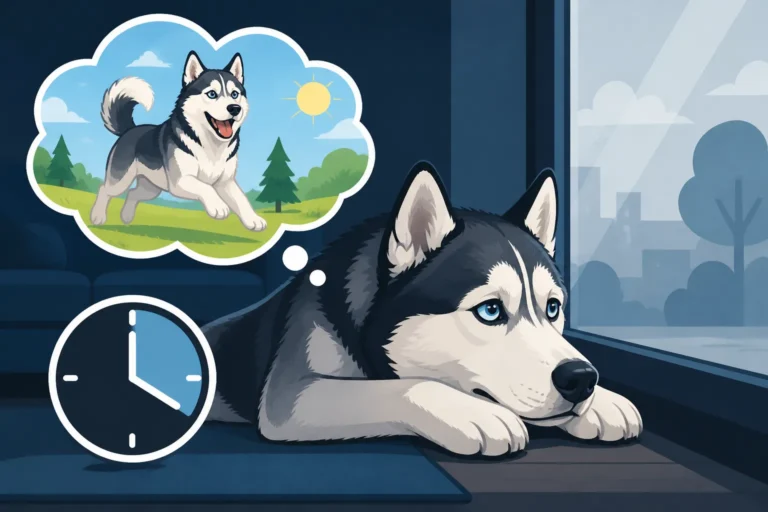
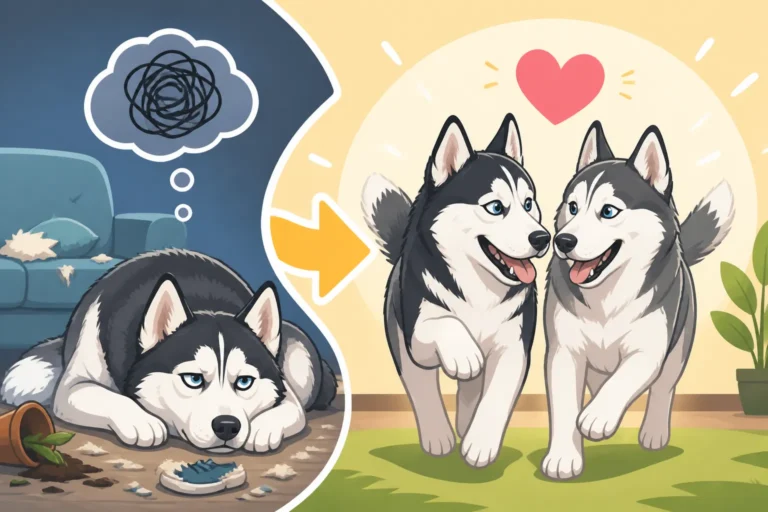
A bored or under-exercised Siberian Husky is a truly motivated escape artist. They don't just climb for the sake of it; they climb because they have a profound need for activity and mental stimulation. If their environment inside the yard isn't engaging enough, the world outside becomes irresistibly appealing. Providing ample physical exercise is paramount. This breed needs more than just a leisurely stroll; they thrive on long runs, hikes, or even structured harness work like canicross or bikejoring. A tired Husky is a well-behaved Husky, and a well-behaved Husky is less likely to have the energy or inclination to plot an escape.
Beyond physical exertion, mental enrichment is just as crucial. Puzzle toys, interactive feeders, and regular training sessions can satisfy their intelligent, problem-solving minds. Something as simple as scattering their kibble in the yard for them to "hunt" can provide mental stimulation. Consider investing in durable puzzle toys available on Amazon that require them to think to get a treat. Online training platforms, such as those offered by BAXTER & Bella, can also provide structured activities and help you teach your Husky new skills, keeping their minds sharp and engaged. The more fulfilling their life is inside the yard, the less appealing the great unknown outside becomes.
Training and Management for the "Escape Artist"
Even with the most fortified fence, your management and training efforts are the final, critical layer of security for a climbing Siberian Husky. Remember, a fence is only as good as the weakest link, and sometimes that link can be human error or a lapse in supervision. Huskies are intelligent and persistent, so you need to be even more so.
Teaching "Leave It" and "Stay" Near the Fence
While preventing physical access to the climb is primary, training can also play a supporting role. Teaching strong "leave it" and "stay" cues can be beneficial, particularly when you are supervising your Husky in the yard. If you see them approaching the fence with a mischievous glint in their eye, a sharp "leave it" command can interrupt their thought process. Practice these commands diligently, starting away from the fence and gradually moving closer. Use high-value rewards to make it incredibly worthwhile for them to choose to ignore the fence.
This isn't about teaching them not to climb the fence in your absence, which is unrealistic given their strong instincts. Instead, it's about giving you a tool to manage their behavior when you are present. If you have a particularly persistent climber, you might also consider introducing a "boundary" cue, where they learn to stay a certain distance from the fence line. This takes consistent, positive reinforcement training and careful supervision, especially in the early stages.
Supervision and Containment Alternatives
Let's be realistic: no fence is truly 100% Husky-proof, especially if they are left unsupervised for extended periods. Your presence is often the best deterrent. Whenever your Husky is in the yard, be out there with them, actively supervising. This allows you to interrupt any climbing attempts immediately and redirect their energy. If you cannot actively supervise, it's often safer to bring your Husky inside or place them in a more secure, secondary containment area.
For times when you need to leave your Husky outside but can't be with them, a securely constructed kennel run can be a lifesaver. These are often made of heavy-gauge welded wire or reinforced chain link, with solid tops to prevent climbing out and concrete or buried wire footers to prevent digging out. A good kennel run can provide a safe, contained space where they can get fresh air without the risk of escape. For more information on what makes a good secure space, read up on Kennel Runs Built for a Siberian Husky. Just remember, even in a kennel, they still need plenty of enrichment and interaction.
Building a Stronger Bond and Recall
Ultimately, the most secure "fence" is a strong bond and a reliable recall. While Huskies are notoriously independent and often cannot be trusted off-leash in unfenced areas—as discussed in Why a Siberian Husky Cannot Be Trusted Off Leash—working on recall within a secure environment is still incredibly valuable. A Husky who chooses to engage with you, who looks to you for direction and reward, is less likely to focus solely on escaping. This isn't about training out their natural instincts, but rather about channeling them.
Invest time in positive reinforcement training, focusing on making yourself more interesting and rewarding than anything outside the fence. Play interactive games, teach new tricks, and always make coming back to you the most exciting option. Use a long line in a secure, large, fenced area (like a rented Sniffspot field) to practice recall in a more distracting environment. This builds a foundation of responsiveness. While you may never achieve perfect recall in a truly open space, a strong bond and a well-practiced recall will make your Husky more manageable and far less likely to bolt if an escape does happen. For practical tips, check out Teaching a Siberian Husky to Come Back. Remember, training is an ongoing conversation, not a one-time fix.
Comparing Fence Modification Options
Here's a quick look at common modifications to chain link fences, and what to consider for your climbing Husky:
| Modification Feature | Description | Pros | Cons |
|---|---|---|---|
| Increased Height | Raising the fence to 6 feet or more. | Directly addresses vertical climbing; deters jumpers. | Can be costly; may require professional installation; visual impact. |
| Angled Extensions/Lean-ins | Adding an inward-sloping section (e.g., more chain link, wire, coyote rollers) to the top. | Prevents reaching over and pulling up; very effective against climbers. | Can look imposing; installation complexity varies; initial cost. |
| Coyote Rollers | PVC pipes mounted on a wire that spin freely at the top of the fence. | Highly effective at denying grip; can be DIY or bought as kits. | Spinners can seize up if not maintained; aesthetic might not suit all. |
| Buried L-Footer/Wire Mesh | Digging a trench and burying wire mesh horizontally inward from the fence base. | Prevents digging under the fence, a common Husky escape method. | Labor-intensive to install; not a climbing deterrent directly. |
| Solid Privacy Strips | Weaving plastic strips into chain link to reduce visibility. | Reduces visual stimulation of "outside world." | Doesn't prevent climbing; can be costly; may degrade over time. |
Disclaimer
This article is for general informational purposes only and does not constitute professional advice. Laws, prices and regulations vary by location and change over time. Consult a qualified professional for guidance on your specific situation.