Kennel Runs Built for a Siberian Husky
If you've ever owned a Siberian Husky, you know the struggle is real when it comes to keeping them safely contained. These incredible dogs are master escape artists, driven by an insatiable wanderlust and an uncanny ability to outsmart even the most robust barriers. Trying to find a kennel run that can truly hold a Husky can feel like an impossible task, leading to endless anxiety and repairs. This guide will walk you through exactly what it takes to build a secure, stimulating, and durable kennel run designed specifically to foil your clever Siberian Husky.
The Unique Challenges of Containing a Siberian Husky
Before we even talk about building, let's acknowledge the elephant in the yard: your Siberian Husky isn't just any dog. They are a breed genetically wired for endurance, independence, and exploration. What works for a Labrador or a Golden Retriever simply won't cut it for a Husky, and failing to understand this unique drive is where many owners go wrong, often leading to a Siberian Husky That Escapes a Kennel Run.
First off, Huskies are incredible jumpers and climbers. That six-foot fence you thought was secure? Many Huskies will consider it a mere suggestion, or a fun challenge to scale. They're agile, strong, and can use their powerful hind legs to launch themselves over barriers or their sharp claws to grip and climb chain link like a ladder. They often don't just clear obstacles; they actively work to find purchase and haul themselves up and over, making a standard height kennel a futile attempt at containment.
Then there's the digging. Oh, the digging! It’s not just a pastime for a bored Husky; it's an instinctual behavior that allowed their ancestors to find shelter, uncover prey, and generally modify their environment. Your perfectly manicured lawn becomes a thrilling archaeological dig site, and a standard fence line is merely a suggestion of where the boundary might be. They'll excavate under fences with remarkable speed and determination, often disappearing before you even realize what's happening. A Husky might spend hours working on a weak spot, tirelessly digging until they've created a tunnel to freedom.
And let's not forget their intelligence and problem-solving skills. A simple latch might be child's play for a Husky. They observe, they learn, and they experiment. Many a Husky owner has watched in disbelief as their dog manipulates a gate latch with its nose or paws, or even uses its body weight to dislodge panels. They are not content to stay put if there’s an adventure to be had, and they often possess the mental acuity to figure out how to get to it. This combination of physical prowess and mental cunning makes traditional containment methods completely inadequate. It's truly a test of wills, and your Husky probably has a few wins under their belt already.
Building an Escape-Proof Kennel Run for Your Siberian Husky
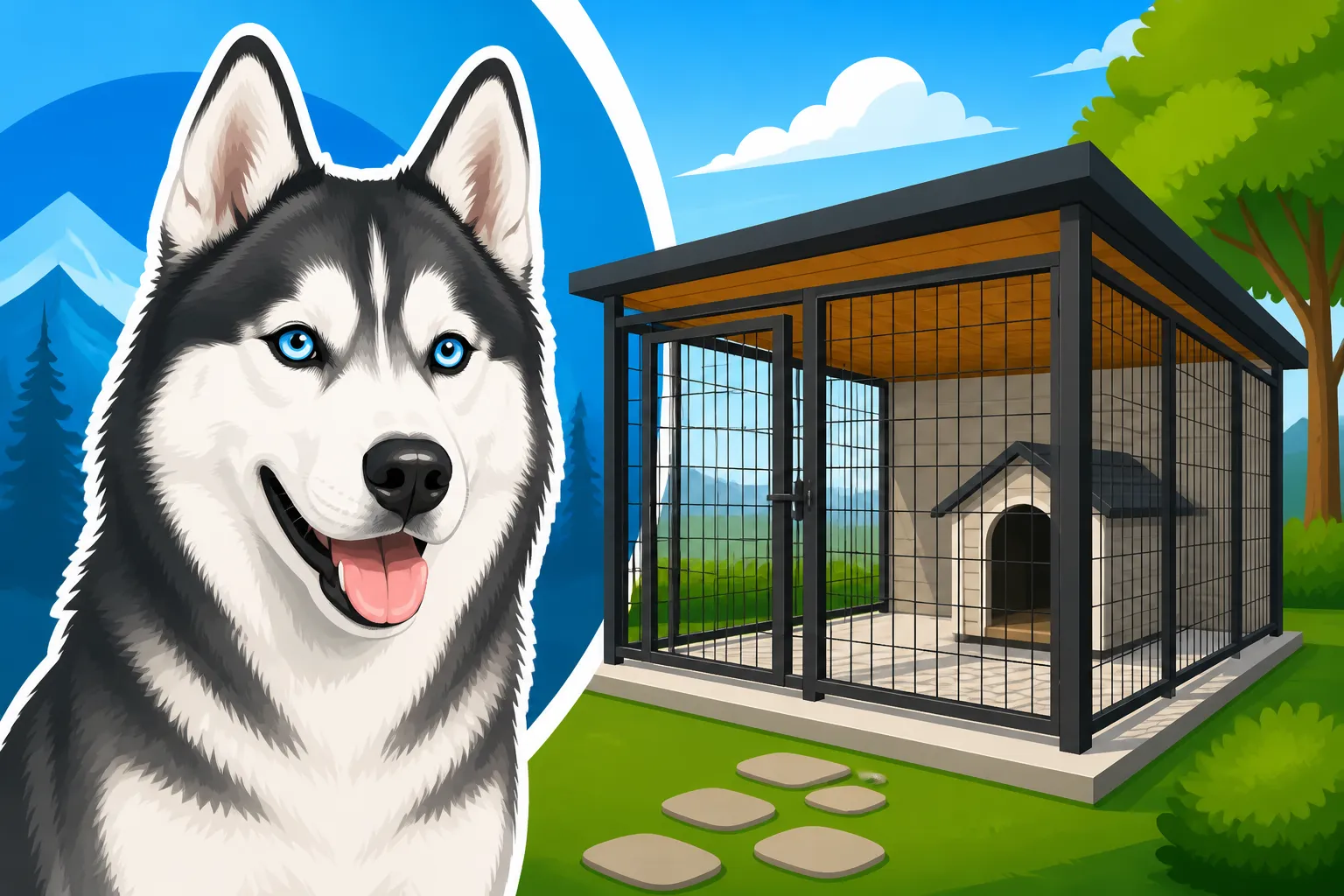
Creating a kennel run that can truly hold a Siberian Husky requires forethought, robust materials, and an understanding of their specific escape strategies. You can’t just buy the cheapest chain-link kit and expect it to hold. You need a fortress, a "Huskytraz" if you will.
Choosing the Right Materials and Dimensions
When it comes to materials, think heavy-duty. Lightweight chain link is easily bent, climbed, and even chewed through by a determined Husky. Opt for heavy-gauge, welded wire panels or high-quality chain link that is at least 9-gauge, preferably 6-gauge. These materials are much harder to bend, break, or climb. The mesh size also matters; smaller mesh prevents them from getting a toe-hold for climbing. Many owners find success with solid panel fencing or even cinder block walls for part of the enclosure, though this can be more costly.
The height is non-negotiable: a minimum of eight feet. Seriously. While The Six-Foot Fence a Siberian Husky Needs is a good baseline for a yard, a dedicated kennel run for unsupervised time needs to be taller. Huskies can clear impressive heights, and giving them less leverage to climb will be your best defense. If you're using chain link, consider adding a "coyote roller" or a lean-in top extension that angles inward, making it impossible for them to get a grip to pull themselves over. You can often find heavy-duty panels and other specialized containment solutions on sites like Chewy, which can save you a lot of running around.
Securing the Top and Bottom
A roof is not optional for a Husky kennel. I repeat, a roof is not optional. Without one, that eight-foot wall just becomes a launchpad. Huskies will climb anything, and that includes walls leading to the great wide open. A sturdy roof made of welded wire mesh or even corrugated steel panels, securely attached to the side walls, will prevent climbing out and offer vital shade and protection from the elements.
To combat the relentless digging instinct, you must secure the bottom of the kennel. Simply burying the fence a few inches isn't enough; they'll just dig deeper. A common and effective strategy is to install what's called an L-footer. This involves extending the fence material horizontally inward along the ground, effectively creating an underground barrier that your Husky will hit if they try to dig down. You can learn more about this by checking out Adding an L-Footer Against Siberian Husky Digging. Alternatively, pouring a concrete slab for the entire kennel run floor, with the fence embedded in the concrete, is the ultimate anti-digging solution, though it’s a bigger project. If concrete isn't feasible, burying heavy-gauge wire mesh or hardware cloth horizontally along the perimeter, extending about two feet inwards, also works well.
Finally, latches. Forget the standard spring-loaded gate latches. Huskies can figure those out. You need double-locking mechanisms, ideally with a carabiner or padlock that requires multiple steps to open. Better yet, use two different types of latches on the same gate. Remember, your Husky is smart, and if they can see you open it, they might just learn how.
Here's a quick overview of essential features:
| Feature | Minimum Requirement for Siberian Husky Kennel Run | Why It's Crucial |
|---|---|---|
| Height | 8 feet | Prevents jumping/climbing over |
| Roof | Welded wire or sturdy panels | Prevents climbing out |
| Wall Material | Heavy-gauge welded wire (6-9 gauge) or solid | Resists bending, chewing, and climbing |
| Digging Barrier | L-footer (buried fence/mesh) or concrete slab | Prevents tunneling under the fence |
| Gate Latches | Double-locking, padlock/carabiner | Prevents opening with paws/nose |
| Panel Attachments | Heavy-duty clamps, bolts, zip ties | Prevents panels from being pushed apart |
Making Your Husky's Kennel Run a Safe and Stimulating Space
A kennel run isn't just about containment; it's about providing a safe and enriching environment when you can't supervise your Husky directly. A bored Husky is a destructive Husky, and they can cause The Damage a Siberian Husky Does in Four Hours if left to their own devices.
Environmental Comforts
First and foremost, your Husky needs protection from the elements. Even though they are cold-weather dogs, they can easily overheat in warmer climates or direct sun. A significant portion of the kennel run must be shaded at all times of the day. This could be a solid roof, shade cloths, or even a strategically planted tree outside the enclosure (so they can't climb it to escape). Providing fresh, cool water is absolutely critical. Use a heavy, tip-proof bowl or a water dispenser that attaches securely to the side of the kennel to prevent spills and ensure they always have access to hydration. During hotter months, consider adding a kiddie pool, or cooling mats and fans to help them manage the heat, especially if you can't be there to monitor them. It's vital to protect them from Heat Stroke Risk in a Siberian Husky.
A raised dog bed or cot can provide a comfortable, dry spot to rest, keeping them off hot or cold ground. Some Huskies even appreciate a secure, insulated dog house within the run, offering a den-like retreat and extra protection from wind or rain.
Mental and Physical Enrichment
Simply putting a Husky in an empty box, no matter how secure, is a recipe for boredom and potential escape attempts. Enrichment is paramount. Provide a variety of durable chew toys and puzzle feeders that can withstand a Husky's powerful jaws and intelligent mind. Kongs filled with frozen peanut butter or special "snuffle mats" can keep them engaged for extended periods. Rotating toys helps keep things novel and interesting. Chewy is a great resource for finding high-quality, durable toys that can stand up to Husky teeth.
Consider natural elements if safe and secure. A sturdy, natural log for chewing or even a designated digging pit filled with sand can provide outlets for their instincts. Interactive elements, like treat-dispensing toys or even a hidden scent trail, can keep their minds working. If your Husky has specific dietary needs or you prefer fresh options, consider how meals from providers like Ollie could be incorporated into puzzle feeders to make feeding time a longer, more engaging activity. The goal is to make their time in the kennel run as stimulating as possible, so they are less inclined to focus on escaping. Leaving them alone in a yard or kennel without mental stimulation often exacerbates their natural desire to roam and explore.
Long-Term Care and Security for Your Siberian Husky's Outdoor Enclosure
Building the perfect Husky kennel run is a significant investment in time and money, but it's not a "set it and forget it" situation. Ongoing vigilance and maintenance are crucial to ensure its long-term integrity and your Husky's safety.
Regular Inspections and Repairs
Huskies are relentless. Even the best-built kennel can develop weaknesses over time due to weather, wear and tear, or your dog's persistent efforts. Make it a habit to regularly inspect every inch of the kennel run. Look for bent bars, loose latches, signs of digging near the perimeter, or any gaps that might appear. Check welds on panels, fasteners connecting the roof, and the integrity of any digging barriers. A small crack or loose connection can quickly become an escape route for a determined Husky.
Pay particular attention to the gate and its latches. Are they still functioning smoothly and securely? Are there any signs your Husky has been working on them? If you notice any wear or damage, address it immediately. Don't procrastinate; a Husky will exploit any weakness they discover. Small repairs, like tightening a bolt or adding a new zip tie to a panel, are far easier than searching for a lost dog or dealing with a damaged kennel. And speaking of safety, a well-built kennel run can prevent escapes that might lead to costly vet visits for injuries or accidental ingestion – a good reminder why pet insurance from providers like Healthy Paws is so important for these adventurous pups.
Adapting to Your Husky's Behavior and Age
Your Husky's needs and behaviors might change over time. A younger, more energetic Husky might be more prone to climbing and digging, requiring maximum security measures. As they age, their energy levels might decrease, but their cleverness certainly won't! An older Husky might find new ways to test the boundaries, or perhaps develop arthritis that makes climbing difficult but still has a keen eye for a loose latch. Caring for a Siberian Husky Past Ten brings its own set of considerations, and security should always be top of mind.
If you observe your Husky repeatedly focusing on a particular spot, trying to dig or chew, reinforce that area immediately. Sometimes, adding an extra layer of mesh, burying a small concrete block, or installing an additional security camera can give you peace of mind. Remember, the goal isn't just to keep them in, but to keep them safe. A well-maintained and adapted kennel run will ensure your Siberian Husky can enjoy their outdoor time without you constantly worrying about their next great escape.
Disclaimer
This article is for general informational purposes only and does not constitute professional advice. Laws, prices and regulations vary by location and change over time. Consult a qualified professional for guidance on your specific situation.