Teaching a Siberian Husky to Come Back
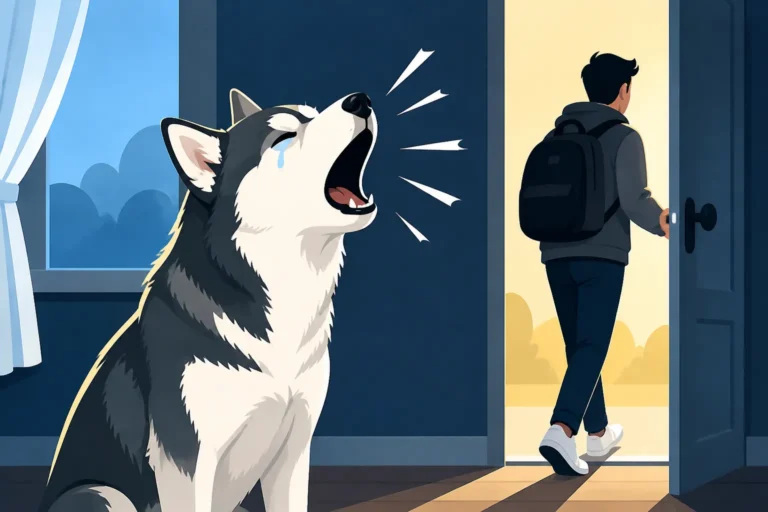
One of the biggest heartaches and frustrations for any Siberian Husky owner is the sheer terror of watching your beloved dog bolt, deaf to your frantic calls, convinced that the adventure just over that hill is far more compelling than anything you have to offer. It's a primal fear rooted in their independent nature and powerful prey drive, leaving you feeling helpless and ignored. This comprehensive guide is here to walk you through understanding why your Husky might ignore your recall, how to set up robust safety nets, and, most importantly, how to build a rock-solid "come" command that truly sticks, giving you peace of mind and your Husky the safe freedom they crave.
Understanding the Siberian Husky's Recall Challenge
Let's be honest, asking a Siberian Husky to come when called, especially when there's something more exciting afoot, feels like asking a teenager to choose chores over TikTok. It's not that they're stupid; it's that their priorities are wildly different from ours, deeply rooted in their history and instincts. For most other breeds, "come" is a fairly straightforward command. For a Husky, it's a profound negotiation, a philosophical debate on the merits of cooperation versus self-determination.
The Call of the Wild: Hardwired Instincts
Siberian Huskies were bred for endurance, for covering vast distances with incredible efficiency, and for making their own decisions in harsh, unforgiving environments. Their ancestors were partners to the Chukchi people, pulling sleds over miles of tundra, often ahead of their human companions, relying on their keen senses and independent judgment. This isn't a dog designed to stick close to your heels in a suburban park. This is a dog whose very DNA whispers of open spaces, of tracks to follow, and of the thrill of the chase.
When your Husky catches a scent, spots a squirrel, or simply sees an open field, that ancient instinct kicks in. It's not a conscious defiance; it's a deep-seated programming that prioritizes exploration and pursuit. You might be standing there, yelling their name, but in their mind, they're channeling generations of ancestors who ran free. Understanding this deep-seated drive is the first step toward managing it, rather than constantly fighting against it. It's why phrases like Why a Siberian Husky Cannot Be Trusted Off Leash ring so true for so many.
For example, imagine you're at a dog park, and your Husky, we'll call her Luna, spots a rabbit darting into the bushes. Her head snaps up, ears swivel, and within a blink, she's off, a blur of fur chasing a phantom. Your calls become lost in the wind as her primal programming takes over. This isn't Luna being naughty; this is Luna being a Husky, answering the ancient call to hunt and explore.
The Independent Thinker: Why "Come" is Optional
Unlike many breeds eager to please their human, Huskies often possess a strong streak of independence. They are intelligent, yes, but they use that intelligence to evaluate situations and decide what benefits them most. If coming to you means the end of a fun sniffari, or a potentially boring leash re-attachment, they might just weigh the pros and cons and decide to continue their current, more exciting activity. They're not being malicious; they're being incredibly practical from their perspective.
This independence is part of their charm, but it's also why recall can feel like a constant battle. They're thinking, "What's in it for me?" more than "How can I make my human happy?" This requires a different training approach, one that emphasizes making "come" the most rewarding, exciting, and consistently positive experience in their world. You have to convince them that returning to you is always the best choice, even when a flock of pigeons is tempting them.
Think of it this way: if your Husky, Blaze, is happily exploring a new trail, sniffing every intriguing bush and tree, and you call him, what's his immediate thought? Is it "Oh good, my human needs me!" or "Ugh, fun time is over"? If it's often the latter, he's learned that "come" equals the end of freedom. We need to flip that script entirely. This strong will is a hallmark of the breed, a topic explored in The Roaming Instinct Bred Into Every Siberian Husky.
Prey Drive: The Ultimate Distraction
The Siberian Husky's prey drive is legendary, and it’s a significant factor in their unreliable recall. Whether it's a squirrel, a bird, a rabbit, or even a blowing leaf, the instinct to chase can override all prior training and connection to you. This isn't something that can be trained out of a Husky; it's a fundamental part of who they are. Instead, it must be managed and redirected.
For a Husky, the sight of a small, fast-moving creature isn't just a distraction; it's a biological imperative. The rush of adrenaline, the thrill of the chase, the potential for a "catch"—these are incredibly powerful motivators that far outweigh a simple verbal command from a distance. A well-trained "come" must be so deeply ingrained and so highly reinforced that it can compete with this potent drive, which is a monumental task.
Imagine your Husky, Koda, on what seems like a peaceful walk in a quiet field. Suddenly, a wild turkey takes flight just meters away. Koda transforms from your calm companion into a primal hunter in an instant. No amount of yelling "KODA, COME!" will likely penetrate that intense focus. He's operating on instinct, and that instinct is telling him to run. It's these moments that reveal the true challenge of Why Siberian Huskies Run Rather Than Return and underscore the need for meticulous training and management.
Laying the Foundation: Safety First, Then Training
Before you even dream of an off-leash Husky, you absolutely must prioritize safety. This breed's unique blend of independence and wanderlust means that a secure environment and the right equipment are non-negotiable. Training for recall happens within these safe boundaries, never hoping that training alone will overcome their powerful urges.
Containment: Securing Your Home and Yard
This is the absolute first line of defense. A Siberian Husky is an escape artist extraordinaire. They can clear fences, dig under them, and even figure out latches. You cannot rely on a standard picket fence or an open door. Your home and yard must be Husky-proofed to the highest degree, because if they get out, their recall will be tested under the most difficult and dangerous circumstances. Many Husky owners have been horrified to learn their dog can clear a six-foot fence without breaking a sweat, a testament to their athletic ability.
This means a fence that is at least six feet high, ideally with an L-footer or buried wire to prevent digging under. Gates need to be securely latched, ideally with secondary locking mechanisms that a clever paw can't manipulate. Even inside the house, you need to be mindful of open doors and windows. A bored or curious Husky will spot an opportunity and take it. This intense need for security is why topics like Stopping a Siberian Husky From Escaping the Yard are so critical for new owners.
Consider a scenario: you've just moved into a new home with a seemingly secure four-foot fence. Your Husky, Arctic, is enjoying the yard, and you feel confident. One afternoon, you're inside, and Arctic sees a cat on the other side of the fence. With a surprising leap, he's over it and gone. This isn't an uncommon story; it’s a stark reminder that what works for other breeds often isn’t enough for a Husky. Investing in proper containment from day one can save you immeasurable stress and potential tragedy.
Essential Gear: The Right Tools for Success
When training recall, especially in open areas, the leash and harness are your best friends. And for a Husky, not just any leash or harness will do. Their ability to slip collars or snap leashes means you need robust, secure equipment.
- Long Lines: These are invaluable. A long line (think 20-50 feet) allows your Husky to have the sensation of freedom and distance from you, while you still maintain physical control. It’s perfect for practicing recall in a controlled environment, like a large field, without the risk of them truly bolting. Always attach it to a secure harness, never just a collar, to prevent neck injury if they hit the end of the line. You can find durable long lines made from biothane or nylon on platforms like Amazon.
- Secure Harnesses: A regular neck collar is easily slipped by a determined Husky, especially if they back out of it. A well-fitting, secure harness that they cannot back out of is crucial. Front-clip harnesses can also offer better control for walking on leash by discouraging pulling, but for recall practice, a standard Y-front or H-back harness is excellent when paired with a long line.
- High-Value Rewards: These are not just "treats"; they are their absolute favorite, most irresistible motivators. Think small pieces of cooked chicken, cheese, hot dogs, or store-bought training treats like freeze-dried liver. Whatever your Husky goes absolutely bonkers for, that's what you use for recall training.
Here's a table to illustrate the importance of gear:
| Gear Type | Purpose | Key Features for Huskies | Why it Matters for Recall |
|---|---|---|---|
| Long Line | Safe distance practice, controlled freedom | 20-50 feet, durable material (biothane, nylon) | Allows practice of "come" without escape risk |
| Harness | Secure attachment point, distributes pressure | Snug fit, escape-proof design (Y-front, H-back) | Prevents slipping out and neck injury |
| High-Value Treats | Motivation, positive reinforcement | Soft, smelly, easily chewed (meat, cheese) | Makes returning to you the most rewarding option |
| Secure Crate | Safe confinement when unsupervised | Heavy-duty, chew-proof, escape-proof | Prevents destructive behavior and escapes indoors |
Without this essential gear, you're essentially setting yourself up for failure. A regular leash walk isn't recall training. It's managing a walk. Real recall practice needs the long line, as detailed in Starting Long Line Work With a Siberian Husky.
Management Over Trust: The Golden Rule for Huskies
This might sound harsh, but for a Siberian Husky, particularly in an uncontrolled environment, management always trumps blind trust. This means understanding that no matter how well you train, their instincts are powerful. It means accepting that for many Huskies, true off-leash reliability in an unfenced, distracting area might never be a safe reality. And that’s okay. Your goal is to keep them safe and happy, not to force them into a mold they weren't designed for.
Management means always using a leash in unsecured areas, even if you're "just running to the car." It means never taking your eyes off them in a dog park. It means secure fencing, strong leashes, and careful supervision. It means understanding that one slip-up can have devastating consequences. This isn't pessimism; it's realism born from experience with a breed whose wanderlust is deeply ingrained.
For instance, consider two scenarios: In the first, you take your Husky, Nova, to an open field, convinced her recall is "good enough." She spots a deer, bolts, and you spend the next three hours frantically searching. In the second, you take Nova to the same field, but she's on a 50-foot long line. She spots the deer, bolts, but reaches the end of the line. You reel her in, calmly practice recall, and reinforce it with a handful of chicken. Which scenario promotes safety and successful training? The latter, every single time. This approach respects their nature while prioritizing their well-being.
Building a Bomb-Proof Recall: The Training Process
Now that we've covered the crucial safety foundations, let's dive into the actual training. Remember, consistency, patience, and making "come" the best thing ever are your guiding principles. Force, anger, or punishment will only teach your Husky to avoid you when called.
Choosing Your Recall Word and High-Value Rewards
The very first step is to pick a recall word and stick to it. This shouldn't be a word you use frequently in casual conversation. "Come," "here," "front," "touch"—whatever you choose, it needs to be unique and used only for recall. This prevents it from becoming diluted or associated with negative experiences.
Equally important, perhaps even more so for a Husky, is identifying your high-value rewards. These aren't just kibble; they're the absolute crème de la crème of treats your Husky adores. Think tiny pieces of hot dogs, cooked chicken, cheese, or specialized high-value training treats. The smellier and tastier, the better! When you start training, these rewards are the bedrock of creating a positive association with your recall word.
For example, let's say you choose "Rocket!" as your recall word for your Husky, Zeus. Every single time you say "Rocket!", Zeus gets a piece of grilled chicken. Not sometimes, not most of the time, but every single time in the initial stages. You are building an unbreakable association: "Rocket!" = Amazing Treat. This initial phase is all about making the recall word a predictor of something incredibly fantastic, as we discuss in Building a Siberian Husky Recall Word From Scratch. Don't dilute this magic with low-value rewards or inconsistent delivery.
Starting Indoors: The Early Stages of Recall
Begin your recall training in a low-distraction environment: your home. With no squirrels, cars, or other dogs, your Husky can focus entirely on you.
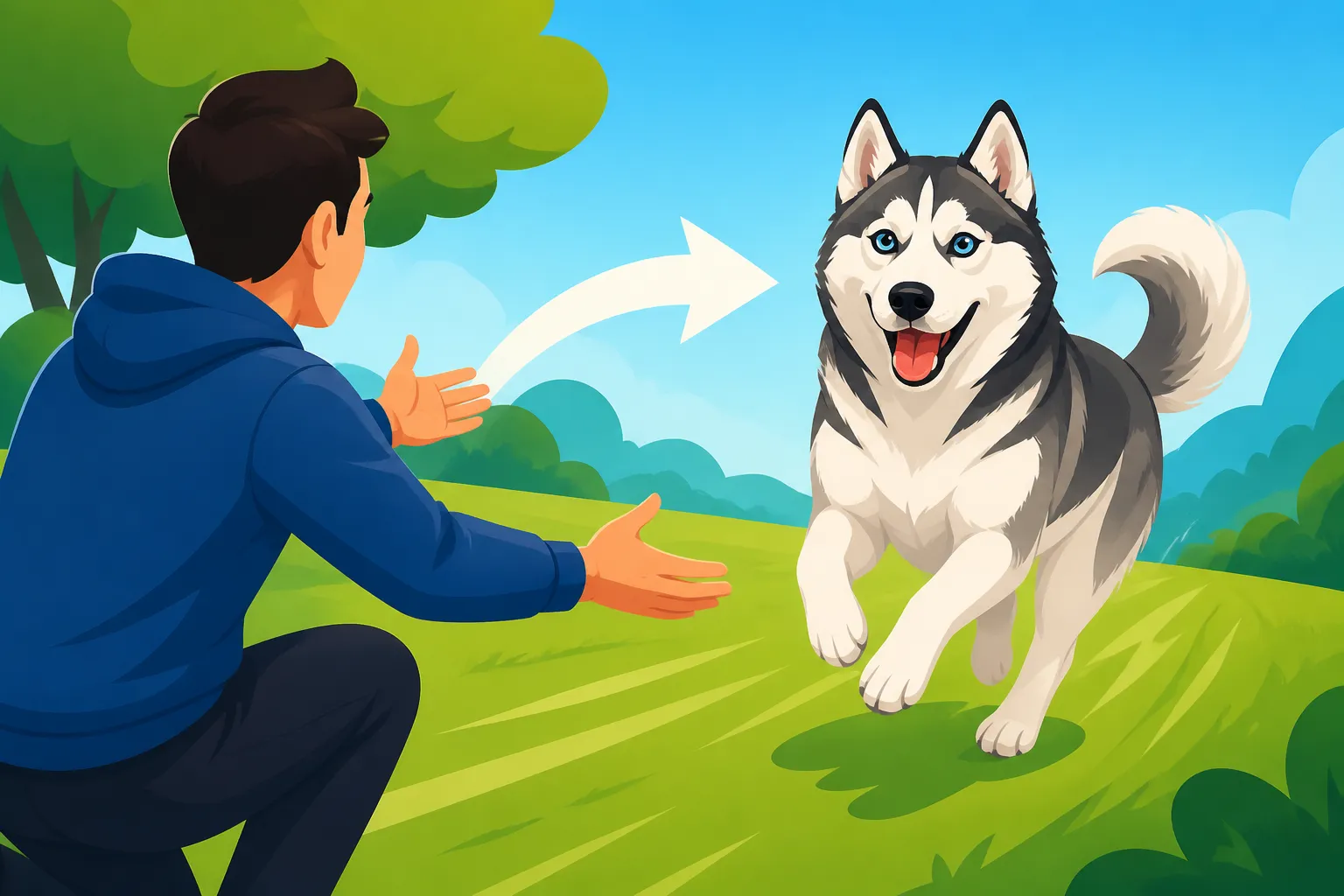
- The "Party Here" Game: Start in a small room. Get down to your Husky's level, hold a high-value treat, and excitedly say your recall word. As they come to you, praise lavishly ("YES! GOOD ROCKET!") and immediately deliver the treat. Repeat this many, many times, moving around the room. Make it fun! Run a few steps away, hide behind a door, pop out and call them.
- Gradually Increase Distance: Once they're consistently zipping to you in a small room, move to a larger room, then down a hallway, and eventually from one room to another. The goal is to build a positive history of success with the recall word.
- Family Fun: Get other family members involved. Have one person hold the Husky while another calls them from a short distance with the recall word and reward. Then switch places. This teaches your Husky that "Rocket!" means "come to whoever says it," not just one person.
During these indoor sessions, keep the energy high and positive. Never use your recall word to call your Husky for something unpleasant, like nail trims, medicating, or going into their crate (unless the crate is a happy place where they get a treat!). You want "Rocket!" to always mean good things. For effective, positive reinforcement-based training, resources like BAXTER & Bella can offer structured programs that fit this approach, emphasizing fun and engagement over force.
Moving to the Long Line: Controlled Outdoor Practice
Once your Husky has a reliable recall indoors, it's time to take it outside, but with a critical safety net: the long line. This is where the real work begins, bridging the gap between indoor perfection and outdoor reality.
- Choose a Safe, Low-Distraction Area: Find a quiet park, an empty field, or a large, securely fenced area (like a rented Sniffspot field) for your first long-line sessions. The less going on around you, the better.
- Attach to a Harness: Always attach the long line to a well-fitting harness, never just a collar. This protects your Husky's neck if they hit the end of the line.
- Let Them Explore: Allow your Husky to wander to the end of the long line. Let them sniff, explore, and feel that sense of "freedom." This makes the recall command feel less like an interruption and more like a happy surprise.
- The Call and Reward: When they're distracted but not completely fixated on something, enthusiastically say your recall word. As they turn toward you, reel them in gently if needed (without pulling them off their feet), praise them, and deliver that high-value treat. Make it a celebration!
- Vary the Practice: Don't just call them when they're at the farthest point. Call them when they're close, when they're halfway, when they're distracted, and when they're looking at you. This makes the recall unpredictable and exciting. You're building a history of success in varied situations.
Remember, the long line is a training tool, not a crutch. The goal is for your Husky to choose to come back, not to be physically forced. The gentle reel-in is just a prompt. Always ensure you have a firm grip on the long line, as a bolting Husky can easily yank it from your hands. Consistent practice on the long line is essential for teaching Practicing Siberian Husky Recall in a Fenced Field safely.
Proofing Your Recall: Distractions and Generalization
A recall that works in a quiet field is great, but a truly "bomb-proof" recall works when there are other dogs, people, squirrels, and tantalizing smells. This is called proofing, and it's a gradual, systematic process.
Gradually Introducing Mild Distractions
Once your Husky is consistently coming on the long line in a low-distraction environment, it's time to slowly dial up the challenge. The key word here is gradually. Don't go from an empty field to a busy dog park overnight.
- Distant Distractions: Start with distractions that are far away and not too interesting. Maybe another dog walking far across the park, or a person sitting on a bench. Practice your long-line recall, rewarding heavily for success. If your Husky gets too focused on the distraction, move further away until they can succeed.
- Controlled Distractions: Recruit a friend with a calm, known dog to walk past at a distance. Or have a friend lightly toss a ball away from your Husky while you practice recall. The goal is to build resilience to common distractions.
- Varying the Environment: Don't always train in the same spot. A Husky might learn to come in "the big field by the oak tree" but not generalize that to other places. Practice in different parks, different trails, and even different times of day to expose them to new sights and sounds.
If your Husky fails to come, it means the distraction was too high, or you asked for too much too soon. Don't punish them. Simply go back to an easier level, build confidence, and try again. Each successful recall in the face of a distraction strengthens the behavior. Think of it like a game where you're always setting your Husky up to win. Rewards That Beat the Siberian Husky Chase Instinct are crucial here; your treat needs to be more compelling than the distraction.
Practicing in New Environments
This is all about generalization. Your Husky needs to understand that "come" applies everywhere, not just in specific training spots.
- Explore New Parks and Trails: On leash first, explore a variety of new locations. This exposes your Husky to different smells, sights, and sounds, helping them habituate to novel stimuli.
- Short Long-Line Sessions: In these new environments, start with very short, successful long-line recall sessions. Keep the initial expectations low. A few perfect recalls are better than one failed one.
- Vary the Surfaces and Terrain: Practice in grassy fields, on dirt trails, even in light snow if you live in an area that gets it. The more varied the experiences, the more robust the recall becomes.
The key is to always be prepared. Never assume that just because they came in the last park, they'll come in a brand new one. Every new environment is a new test, and your Husky needs your guidance and high-value rewards to succeed. A great way to prepare for new environments is ensuring your Husky is comfortable with their gear and that you have a supply of high-value treats, readily available from sources like Amazon, to make every new "come" a success story.
The Emergency Stop Cue: A Lifesaver for Huskies
Sometimes, despite all your training, a Husky's prey drive kicks in with such intensity that your regular recall word might not cut through. This is where an "emergency stop" cue comes in. This is a separate, distinct, and extremely high-value cue that you use only in dire situations to interrupt a chase or prevent a dangerous situation. It's a "stop what you're doing and come NOW" command.
- Choose a Unique Word/Sound: This could be a distinct whistle, a sharp "HALT!", or "STOP!" It must be something you never use otherwise.
- High-Frequency, High-Value Training: For a few weeks, practice this cue intensely, 5-10 times a day, but only in a very low-distraction environment (like your living room). Say the word, immediately follow it with a jackpot of treats (a whole handful of chicken!), and exuberant praise. The goal is to create an incredibly powerful, almost reflexive, positive association.
- Reserve for Emergencies: Crucially, do not overuse this cue. If you use it every time your Husky is slightly distracted, it loses its special power. It's for true emergencies: when they're about to run into traffic, chase a deer onto private property, or encounter a dangerous animal. If it works, reward them with the biggest jackpot they've ever received.
This emergency stop cue is designed to be a last resort. It's a tool in your recall arsenal for those heart-stopping moments when instinct threatens to override everything else. Having a dedicated cue for this purpose, as highlighted in An Emergency Stop Cue for a Siberian Husky, can truly be a lifesaver for this breed.
Common Pitfalls and How to Avoid Them
Training a Husky for recall is a journey, and like any journey, there are bumps in the road. Understanding common mistakes can help you steer clear of them and maintain progress.
Over-Relying on "Come" for Negative Experiences
One of the quickest ways to ruin your recall is to associate the command with negative or undesirable outcomes from your Husky's perspective. If "come" always means the end of fun, being put away, a trip to the vet, or getting a bath, your Husky will quickly learn to avoid you when you call. They're smart enough to make that connection.
Imagine this scenario: your Husky, Yukon, is having a blast digging a new hole in the yard. You call "Yukon, COME!" and when he reluctantly approaches, you grab him by the collar, march him inside, and he's confined. What has Yukon learned? "Come" means the end of fun and loss of freedom. Next time, he'll think twice, or simply run the other way.
To avoid this, make "come" a predictor of good things, even when you need to end an activity. If you need to put them away, call them, reward them, then take them in. If it's time for a vet visit, go get them, put them on a leash, and then go to the car, rather than using your recall word. Only use your recall word when you can follow through with a positive interaction and a high-value reward. This builds trust and positive association, making your Husky want to come back to you.
Frustration Leading to Harsh Methods
It's incredibly frustrating when your Husky ignores you, especially when you feel like you've put in so much work. The temptation to resort to harsh corrections, yelling, or even aversive tools like shock collars can be strong. However, for a Husky, these methods are almost always counterproductive to recall training.
Huskies are sensitive and independent. If you punish them for not coming, or use a shock collar when they're distracted, they won't associate the correction with the distraction. Instead, they'll associate it with you and the recall word. They'll learn that coming to you can sometimes lead to unpleasantness, making them even less likely to return in the future. They might even become hand-shy or fearful. This is why discussions around Whether a Shock Collar Belongs on a Siberian Husky consistently lean towards no.
Instead of getting frustrated, take a deep breath. If your Husky isn't coming, it means you've asked for too much, too soon, or the distraction is too high. Go back to basics. Make the environment easier. Increase the value of your reward. Remind yourself that patience and positive reinforcement are the only ways to build a willing, reliable recall with this breed. Your relationship with your Husky is far more valuable than a quick fix that breaks trust.
Giving Up Too Soon or Not Being Consistent
Recall training with a Husky is not a weekend project. It requires ongoing commitment, consistency, and patience, sometimes for the entire life of your dog. Many owners get discouraged when progress isn't linear or when their Husky has a "teenager phase" where they suddenly seem to forget everything they've learned.
The "extinction burst" is a real phenomenon in training: sometimes, when you're about to make a breakthrough, the dog tries even harder to do the old behavior. You might feel like you're going backward, but it's often a sign that you're close to solidifying the new behavior. This is not the time to give up!
Consistency means everyone in the household uses the same recall word, the same rewards, and the same positive methods. It means practicing in short, fun bursts every single day, not just once a week. It means being prepared with high-value treats on every outing. Without this consistent effort, the recall will remain shaky at best. Remember, every successful recall is a deposit in your "trust and reliability" bank account with your Husky. Keep making those deposits, and you'll see the dividends.
Advanced Recall: When to Consider Off-Leash (If Ever)
The dream of many Husky owners is to have their dog frolicking freely off-leash, returning happily when called. While some Huskies can achieve a remarkably reliable recall, it's crucial to approach this with extreme caution and realistic expectations. For many, true off-leash freedom in an unfenced area may never be truly safe.
Assessing Your Husky's Individual Temperament
Not all Huskies are created equal. While the breed generally shares instincts for independence and roaming, individual temperaments vary. Some Huskies have a lower prey drive, are less prone to bolting, and are more handler-focused. Others are pure adrenaline junkies, wired to chase everything that moves.
Before even contemplating off-leash work, you need to honestly assess your own Husky's specific personality.
- Prey Drive Intensity: Does your Husky fixate on squirrels with laser-like intensity, or are they more casually interested? Do they immediately take off when something moves, or can you get their attention?
- Response to Distractions: How do they behave around other dogs, people, or strange smells? Can you break their focus with your recall word and a high-value treat even when moderately distracted?
- Bond with You: Do they genuinely enjoy interacting with you, or are they often more interested in their environment? A strong, positive bond where you are the source of all good things is critical.
If your Husky has an exceptionally high prey drive and consistently struggles to break focus even on a long line, the reality might be that full off-leash freedom is simply too risky for their safety. And that's okay. Your job is to protect them. This realistic perspective is essential, as highlighted in Whether Any Siberian Husky Is Reliable Off Leash.
Utilizing Secure, Fenced Dog Parks (With Caution)
Fenced dog parks can be a good way to give your Husky a safe off-leash experience, but even these require caution. They are not a free-for-all.
- Check the Fencing: Before entering, inspect the fence. Is it truly secure? Six feet high? No gaps, holes, or easy-to-climb sections? Remember, Huskies are expert escape artists.
- Assess the Other Dogs: Observe the park dynamics from outside. Are the dogs playing safely? Are there any overly aggressive or possessive dogs? Is there a good mix of temperaments? Avoid overcrowded parks or those with a high number of untrained dogs.
- Supervise Closely: Even in a fenced park, never take your eyes off your Husky. Practice short, sharp recalls frequently, even if it's just to check in and get a treat. This reinforces the recall in a distracting environment.
- Know When to Leave: If the energy gets too high, if another dog is being problematic, or if your Husky is getting overstimulated, it's better to leave than risk an incident.
Even with the best intentions, dog parks can be unpredictable. Always be your Husky's advocate and be ready to step in or remove them if needed. This type of controlled, observed freedom can be a fantastic outlet for their energy, but it's not a substitute for trained recall in all situations.
The "Never Off-Leash" Reality for Many Huskies
It’s important to be completely realistic. For a significant number of Siberian Huskies, true off-leash reliability in an unfenced, uncontrolled environment is simply not achievable to a safe degree. Their instincts are too strong, their wanderlust too profound. And that's not a failure on your part or theirs; it's just the reality of the breed.
Embracing this reality means understanding that your Husky can still lead a wonderfully fulfilling life with long lines, securely fenced yards, and appropriate leash management. There are many ways to provide mental and physical stimulation that don't involve risking their safety in off-leash situations. This might mean:
- Canicross or Bikejoring: Activities where your Husky is safely harnessed and pulling, fulfilling their natural drive.
- Long-Line Hikes: Exploring trails on a 30-50 foot line, giving them a sense of freedom while you maintain control.
- Secure Dog Sport Facilities: Engaging in agility, scent work, or obedience in a fully enclosed and safe environment.
- Renting Sniffspot Fields: These provide private, securely fenced spaces where your Husky can run and explore without interruption.
Accepting the limitations of the breed, while celebrating their unique qualities, is part of being a responsible Siberian Husky owner. Your dog would rather be safe and engaged with you on a long line than lost or injured trying to chase a phantom squirrel off-leash.
Maintaining Recall Throughout Your Husky's Life
Recall isn't a "set it and forget it" command, especially with a Siberian Husky. It's a skill that requires ongoing maintenance, just like any other aspect of their training and well-being.
Regular Practice and Refreshers
Even after your Husky seems to have a stellar recall, you must continue to practice it regularly. Life changes, environments change, and your Husky's focus might waver over time.
- Daily Micro-Sessions: Incorporate short, fun recall sessions into your daily routine. Call them from another room, call them in the yard, call them during a walk (even on leash, just to get their attention and reward). These don't need to be long, intense training sessions; just quick, positive check-ins.
- Vary the Rewards: While high-value treats are critical, don't forget other forms of reinforcement. Sometimes the reward can be a favorite toy, a quick game of tug, or enthusiastic praise and a belly rub. Keeping the rewards varied makes the "come" game unpredictable and exciting.
- Practice in Different Scenarios: Don't just practice when it's easy. Occasionally, set up slightly more challenging scenarios (on a long line!) to keep their skills sharp. The more varied the situations where they successfully come, the stronger the behavior becomes.
Think of it like muscle memory. If you stop exercising a muscle, it weakens. The same goes for recall. Regular, positive reinforcement keeps the recall muscle strong and responsive. For those seeking structured refreshers or new training ideas, a platform like BAXTER & Bella offers ongoing support and creative approaches to keep training fresh and engaging for both you and your Husky.
Adapting to Age and New Environments
A Husky's recall needs can change as they age, and certainly when they encounter new living situations.
- Puppyhood to Adulthood: Puppy recall is often easier because they haven't developed full independence or strong prey drive. The "teenage" phase (around 6-18 months) can be notoriously difficult, as they test boundaries and their instincts mature. This is where consistency is paramount, as discussed in The Month a Siberian Husky Starts Testing You.
- Senior Years: As Huskies age, their hearing or vision might decline, affecting their ability to perceive your cues. You might need to adjust your approach, using louder calls, hand signals, or moving closer before giving the command. Their physical capabilities also change, so what was a quick sprint might become a slower amble. Be patient and understanding.
- Moving or Major Life Changes: A new home, a new routine, or even a new family member can temporarily disrupt a Husky's recall. New smells and sights are incredibly distracting. Go back to basics in the new environment, practicing in low-distraction areas and gradually building back up. Don't assume their recall will be the same in a completely different setting.
Being adaptable and understanding that recall is a dynamic skill, not a static one, will serve you and your Husky well through all stages of their life. Your relationship with them is always evolving, and your training methods should, too.
Building a Strong Bond: The Ultimate Motivator
Ultimately, the most powerful tool for recall, and for all aspects of training, is a strong, trusting, and positive bond between you and your Siberian Husky. If your Husky sees you as the source of all good things—food, fun, comfort, and safety—they will be much more inclined to return to you.
Spend quality time together that isn't just about training. Engage in activities they love, whether it's long hikes, play sessions, cuddles, or just hanging out. Be fair, consistent, and always kind. A Husky who trusts and enjoys being with their human is far more likely to choose to come back, even when the world outside is calling.
Your Husky's choice to return to you, especially in the face of strong distractions, is a testament to the relationship you've built. It's a sign of their trust and affection, and that's the greatest reward of all. Keep investing in that bond, and your recall will be stronger for it.
Disclaimer
This article is for general informational purposes only and does not constitute professional advice. Laws, prices and regulations vary by location and change over time. Consult a qualified professional for guidance on your specific situation.