Whether Prey Drive Can Be Trained Out of a Husky
It’s a common, utterly disheartening moment for many Siberian Husky owners: you're out walking your beloved floof, and suddenly, a squirrel zips across the path. In a flash, your Husky transforms from a calm companion into a powerful, single-minded hunting machine, dragging you along with a force that defies their seemingly serene nature. This raw, untamed instinct often leaves owners wondering if this intense prey drive can ever truly be trained out of their Siberian Husky. This guide will delve into the realities of managing this deeply ingrained behavior, offering practical strategies and realistic expectations for a safer, more harmonious life with your adventurous canine.
Understanding the Inherent Nature of Siberian Husky Prey Drive
Let's face it, your Siberian Husky isn't just a fluffy house pet; they are a breed steeped in history, bred for centuries to survive and thrive in harsh, unforgiving environments. Part of that survival mechanism, a crucial one, is an incredibly strong prey drive. It’s not a flaw in their personality or a sign of poor training; it's a fundamental part of who they are, woven into their very DNA. Ignoring this is like trying to convince a fish not to swim.
The Hunter's Instinct: More Than Just a Game
For the ancestral Siberian Husky, catching small game like rabbits, rodents, or even birds wasn't a sport; it was sustenance. Their keen eyesight, incredible speed, and relentless pursuit were essential for survival, both for themselves and for the Chukchi people who relied on them. This isn't just about a playful chase; it’s about the entire sequence of predatory behavior: searching, stalking, chasing, catching, and even killing. While your modern Husky might not need to hunt for its dinner, that hardwired sequence of actions is still very much alive within them, waiting for the right trigger.
This deep-seated instinct often manifests as an intense focus on anything that moves quickly or makes a high-pitched sound. A rustling bush, a flapping bird, a darting cat – these aren't just minor distractions; they are incredibly compelling stimuli that tap directly into their evolutionary purpose. It's a powerful force that can be incredibly challenging to redirect or interrupt, especially once your Husky is "in the zone." This is why discussions about Siberian Husky Prey Drive Around Small Animals are so common among owners.
What Triggers a Husky's Prey Drive?
Triggers for prey drive are incredibly varied, and what one Husky finds irresistible, another might ignore. However, some common culprits often set off that switch. Fast, erratic movement is a huge one – think squirrels scrambling up trees, rabbits hopping across a field, or even another dog suddenly taking off at a sprint. Squeaking toys often mimic the distress calls of small prey, which is why many Huskies go absolutely wild for them.
Sight hounds, which Huskies definitely have some traits of, are particularly stimulated by visual cues. A quick flash of movement in their peripheral vision can be enough to send them off like a shot. Smell also plays a significant role. A Husky’s nose can pick up the scent of small animals even when they’re completely out of sight, leading to intense tracking behavior. For many owners, the struggle isn't just when they see the prey, but when they sense it, making management a 24/7 job.
Realistic Expectations: Managing vs. Eliminating Prey Drive
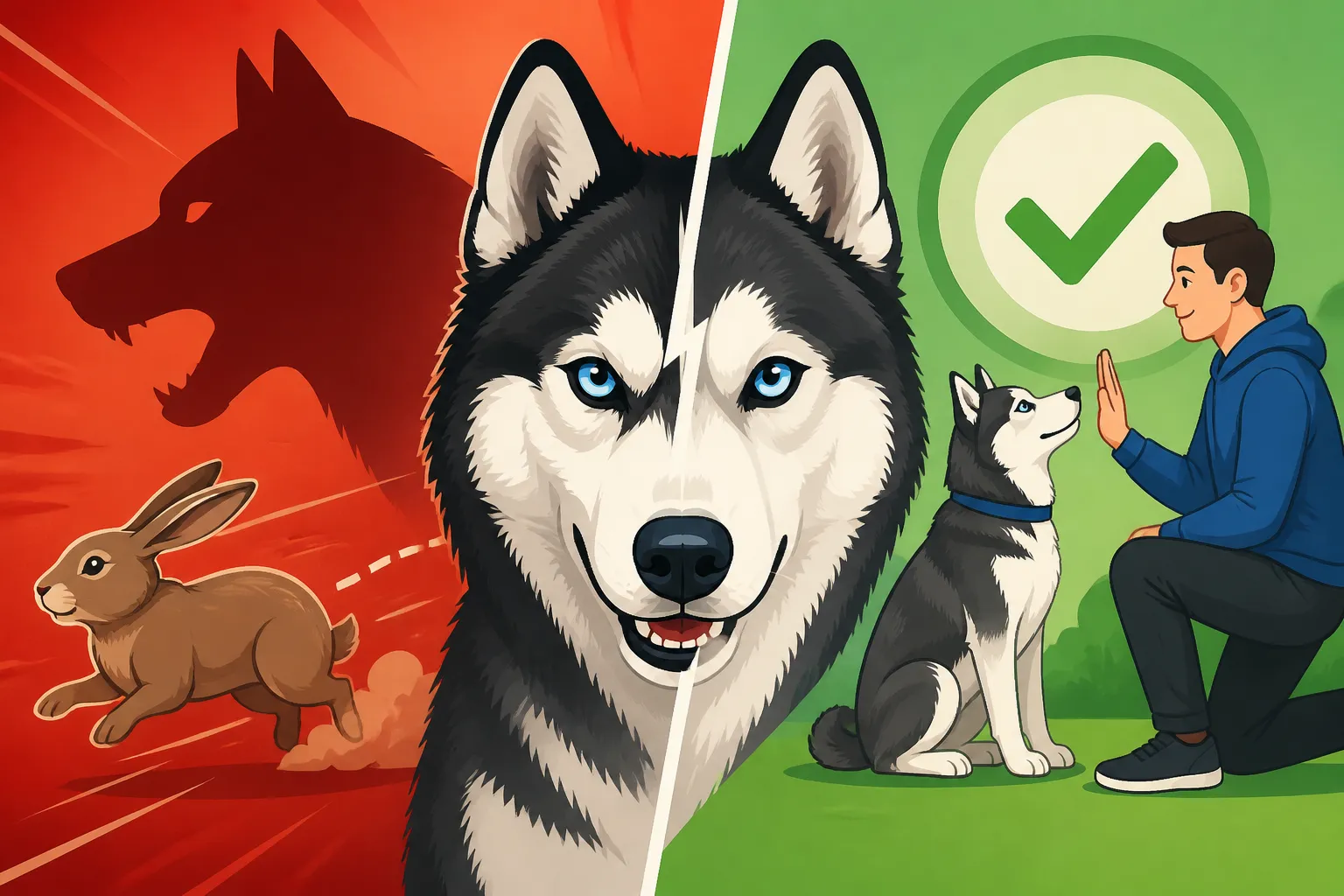
Let's get real about this: you cannot truly "train out" prey drive from a Siberian Husky. It's not a learned behavior that can be unlearned through obedience commands alone. It's an instinct, as fundamental as their need to breathe or eat. The goal isn't to eliminate it, but rather to manage it responsibly, consistently, and with the utmost dedication to safety for your Husky and other creatures.
Why You Can't Erase Millions of Years of Instinct
Imagine trying to train a border collie not to herd, or a retriever not to retrieve. While you can modify these behaviors and channel them, the underlying instinct remains. With Huskies, their prey drive has been honed over generations for survival. It's a genetic blueprint, not a simple behavioral quirk. Any training approach that aims to completely extinguish this drive is setting both you and your Husky up for frustration and potential failure.
Instead, think of it as building a robust set of safety nets and strong communication channels with your dog. You're teaching them alternative behaviors, reinforcing the value of listening to you even when their primal instincts are screaming. It's about impulse control, redirection, and creating an environment where their prey drive can't lead to dangerous outcomes. Understanding Why a Siberian Husky Cannot Be Trusted Off Leash is a crucial part of this realistic approach.
Creating a Safe Environment for All
Because prey drive can't be eliminated, the onus falls on the owner to create an environment where the Husky’s instincts can be managed safely. This means diligent supervision, secure containment, and proactive prevention. For instance, leaving a Husky unattended in a yard where rabbits or squirrels frequently roam is an invitation for trouble. It's not fair to expect them to ignore what their instincts tell them to chase.
This extends beyond your own property too. When out on walks, being acutely aware of your surroundings and anticipating potential triggers is paramount. If you see a cat lounging in a yard ahead, it's your responsibility to be prepared to manage your Husky's reaction, even if it means crossing the street or working on a strong "leave it" command well in advance. Remember, a lapse in judgment on your part can have serious consequences for small animals, and for your Husky's safety if they escape.
Practical Strategies for Managing Prey Drive
While you can't erase the instinct, you can certainly equip yourself with tools, training, and strategies to manage your Siberian Husky's prey drive effectively. This involves a multi-faceted approach, combining obedience, environmental management, and a deep understanding of your dog.
Foundation Training and Emergency Recalls
Strong, reliable obedience is your first line of defense. This isn't just about teaching "sit" and "stay," but building a robust communication system with your Husky, particularly focusing on impulse control.
- "Leave It" and "Drop It": These commands are invaluable. Start practicing in low-distraction environments, using increasingly tempting items. Reward heavily for success. You want your Husky to understand that ignoring something exciting when you ask brings an even better reward from you.
- Emergency Recall: This is perhaps the most critical command for a Husky with prey drive. Your standard "come" might work in the park, but when a deer bounds past, you need something more powerful. Choose a unique, high-value word (e.g., "NOW!" or "HUSTLE!"), and only use it for true emergencies. Practice it regularly in a safe, fenced area, always rewarding with the absolute highest value treats imaginable (think cooked chicken, cheese, or hot dogs). Teaching a Siberian Husky to Come Back needs to be a primary focus.
- Impulse Control Games: Incorporate games that teach patience and self-control. "Wait" before eating their meal, "stay" while you walk away, or even simple "find it" games where they have to wait for your release cue before sniffing out treats. Many online training platforms, such as BAXTER & Bella, offer modules specifically on impulse control and strengthening your bond, which can be immensely helpful for working through these challenges from the comfort of your home.
Specialized Gear and Containment Solutions
Beyond training, the right gear and secure containment are non-negotiable for a Husky. Their knack for escape and pursuit is legendary.
- Secure Fencing: A six-foot fence is often the minimum recommended height, and even that can be challenged by an athletic Husky. Many owners find success with L-footers buried along the fence line to prevent digging out, or even coyote rollers along the top to deter climbing. Invisible fences, no matter how appealing, are almost universally ineffective for a determined Siberian Husky driven by prey. They will blow right through the static correction if a squirrel is on the other side. You can learn more about this by reading Why Invisible Fencing Does Not Hold a Siberian Husky.
- Leashes and Harnesses: A standard flat collar is simply not enough. Huskies are masters of slipping collars. A well-fitted martingale collar or a secure, escape-proof harness is essential. Front-clip harnesses can offer more control on walks by redirecting their pulling power. Always ensure your leash is sturdy and in good condition. Consider a long line (15-30 feet) from a reputable brand found on Amazon, for supervised practice of recall in very safe, open areas, allowing them a sense of freedom without the risk of escape.
- Crates and Kennels: A strong, durable crate designed for powerful chewers and escape artists is a must for indoor containment when you can't actively supervise. For outdoor containment, a secure kennel run with a solid roof and buried mesh flooring can provide a safe space. Researching Crates a Siberian Husky Cannot Break Out Of is a wise investment.
Living Alongside Small Animals
Introducing a Husky to a household with smaller pets like cats, rabbits, or even small dogs requires extreme caution and a slow, structured approach. Often, direct unsupervised interaction is never truly safe.
- Prevention First: Always ensure physical barriers are in place. Gates, separate rooms, and secure enclosures for smaller pets are your best friends. Never leave a Husky alone with a smaller animal, even for a moment, regardless of how "good" they seem.
- Supervised, Controlled Introductions: If you decide to attempt introductions (and this isn't always advisable), do so slowly, on leash, with both animals calm and in controlled settings. Focus on rewarding your Husky for ignoring the small animal, not for interacting. The goal is neutrality, not necessarily friendship. Understanding Why a Siberian Husky Should Not Meet a Cat Loose is vital.
- Manage Outdoor Interactions: If you have a yard with local wildlife, accept that your Husky will likely chase. Ensure your yard is secure, and supervise them closely. If your Husky has already caught or harmed a small animal, you must assume they will do so again and take all necessary precautions to prevent future incidents. For those in rural settings, Managing a Siberian Husky in a Rural Yard with livestock or abundant wildlife presents even greater challenges.
The Lifelong Commitment
Managing a Siberian Husky's prey drive isn't a one-time training course; it's a lifelong commitment. Their instincts are deeply ingrained, and even the most well-trained Husky can revert to their primal urges under the right (or wrong) circumstances.
Consistency is Key
Every interaction, every walk, every moment spent in the yard is an opportunity to reinforce desired behaviors or accidentally reinforce undesirable ones. If you allow your Husky to chase squirrels on a long line "just this once," you've just told them that chasing is sometimes okay, making it harder for them to control themselves when you truly need them to listen. Consistency in rules, commands, and management strategies across all family members is crucial.
This means regularly practicing recall in varied environments, reinforcing "leave it" when distractions arise, and never becoming complacent about their containment. Your Husky relies on your vigilance to keep themselves and others safe. It's an ongoing dialogue and a constant reinforcement of the boundaries you've established. Keeping a Siberian Husky Recall Alive Into Adulthood is an active, continuous process.
When to Seek Professional Help
If you're struggling to manage your Siberian Husky's prey drive, feeling overwhelmed, or if their behavior is becoming dangerous, don't hesitate to seek professional help. A certified professional dog trainer or a veterinary behaviorist who has specific experience with primitive breeds like Huskies can provide invaluable guidance. They can assess your specific situation, help you develop a tailored training plan, and teach you advanced techniques for impulse control and redirection.
Sometimes, an outside perspective and expert eye can identify triggers or patterns you might have missed. They can also guide you on the most humane and effective training methods, ensuring you build a strong, positive relationship with your Husky while managing their powerful instincts safely. Remember, there's no shame in asking for help – it’s a sign of a responsible and dedicated owner.
Disclaimer
This article is for general informational purposes only and does not constitute professional advice. Laws, prices and regulations vary by location and change over time. Consult a qualified professional for guidance on your specific situation.