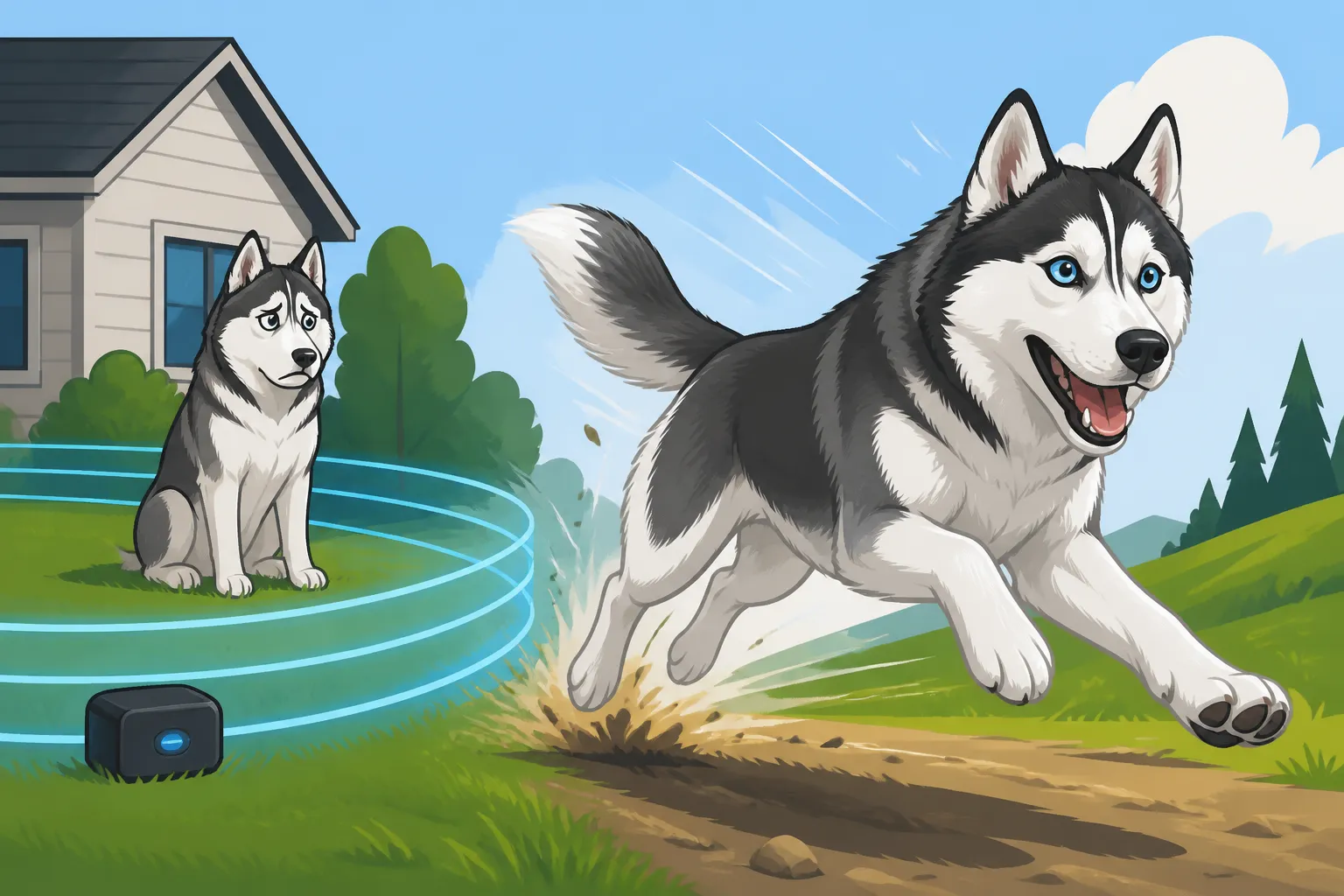
Why Invisible Fencing Does Not Hold a Siberian Husky
Oh, the invisible fence. It sounds so appealing, doesn't it? The freedom, the lack of a physical barrier, the idea that a simple "zap" will keep your adventurous Siberian Husky safely contained. If you've tried one and found your Husky sailing right through it with a look that says "What zap?", you're not alone. This guide is here to unravel why these systems, while effective for some breeds, simply don't stand a chance against the unique instincts and physical prowess of a Siberian Husky, validating all your frustrations and helping you find real solutions.
Understanding the Siberian Husky Mindset Around Boundaries
When you bring a Siberian Husky into your life, you're not just getting a dog; you're adopting a piece of living history, a creature whose very essence is tied to vast, open spaces and the call of the wild. Their ancestors ran for miles across the frozen tundra, pulling sleds and exploring endless landscapes. This deep-seated programming doesn't just disappear because we draw an arbitrary line in our suburban yard.
The Inherent Drive to Roam
Siberian Huskies were bred for endurance and independence, not for staying put. Their original purpose with the Chukchi people involved wide-ranging activities, often far from a human's direct supervision. This has left them with an incredibly strong instinct to roam and explore. A fixed, invisible boundary simply doesn't compute for a dog whose genetic makeup is screaming "go further, see what's over that hill!" They don't typically have the same strong territorial instincts that might keep other breeds within a perceived property line. For a Husky, a "yard" is merely a temporary staging area before the next adventure. They are naturally curious and driven by what lies beyond, viewing any open space as an invitation to investigate. This isn't stubbornness; it's instinct. It’s a core part of The Chukchi Origins of the Siberian Husky.
High Pain Tolerance and Motivation
Let's be blunt: Siberian Huskies are tough cookies. They're built to withstand extreme cold, long journeys, and demanding physical activity. This natural resilience extends to their pain threshold. What might be a sharp, deterring shock for a more sensitive breed can be little more than a fleeting annoyance for a highly motivated Husky. Think about it: they'll run themselves ragged in a harness for miles and miles, often through brutal conditions, because the work itself is intrinsically rewarding.
Now, imagine a squirrel darting across the street, or another dog walking by, or even just the sudden urge to explore that grassy field down the block. For a Husky, the reward of chasing that squirrel, greeting that dog, or discovering that field often far outweighs the temporary discomfort of a static correction. They'll often "take the hit" – absorbing the zap – to get to whatever captivating stimulus is on the other side. This isn't a sign they don't understand the fence; it's a sign that their desire to go is stronger than the unpleasant sensation designed to stop them. They quickly learn that the fleeting pain is worth the payoff of freedom and adventure.
How Invisible Fencing Works (and Fails for Huskies)
Invisible fences, often called electronic or "e-fences," are a popular concept. They promise containment without altering the aesthetic of your property. But for a Siberian Husky, what sounds like a dream often turns into a nightmare for both dog and owner.
The Concept of Electronic Boundaries
Typically, an invisible fence system involves burying a wire around the perimeter of your desired containment area. Your dog wears a special collar that communicates with this wire. As the dog approaches the boundary, the collar usually emits an audible warning beep. If the dog continues past the beep, the collar delivers a static electrical correction – a "zap" – to discourage them from crossing the line. The idea is that the dog learns to associate the beep (and the subsequent zap) with the boundary, eventually staying within the designated area after only hearing the warning tone. It relies heavily on the dog understanding cause and effect, and having sufficient motivation to avoid the negative consequence. The effectiveness largely depends on the individual dog's temperament, sensitivity, and motivation to adhere to an unseen barrier.
Why the System Breaks Down for Huskies
This system, while potentially effective for some, is fundamentally at odds with the Siberian Husky's nature. The biggest flaw for a Husky is the "one-time dash" scenario. A typical Husky will, at some point, decide that whatever is on the other side of that invisible line is more interesting than the momentary discomfort of the zap. Once they make that initial dash and realize they can get through, the illusion of the boundary is shattered. They learn that the consequence is temporary and manageable, and the freedom on the other side is worth it.
Furthermore, invisible fences are a one-way street. They only prevent the dog from leaving the yard. They do absolutely nothing to stop another animal, a person, or even a tempting distraction from entering your yard. This creates a huge contradiction for a Husky. If a cat walks right into their perceived "safe zone," they don't understand why they can't chase it out. This inconsistency is incredibly confusing and frustrating for them, making the boundary seem illogical and unreliable. Why should they respect a boundary that doesn't respect them back by keeping intruders out? You might be tearing your hair out asking Why Invisible Fencing Does Not Hold a Siberian Husky, and this fundamental inconsistency is a huge part of the answer. They view it as a permeable barrier, not a definitive wall.
Real-World Scenarios and Consequences
The theory of invisible fencing rarely aligns with the reality of owning a Siberian Husky. The consequences of relying on such a system can range from merely annoying to genuinely dangerous, putting your beloved companion at serious risk.
The Allure of the Chase Outweighs the Zap
Imagine this scenario: your Husky is peacefully lounging in the yard, seemingly respecting the invisible boundary. Then, a rabbit darts from under a bush, freezes for a second, and sprints across your lawn, disappearing into the neighbor's shrubbery. For most dogs, this might be a momentary excitement. For a Siberian Husky with their incredible prey drive, it's an irresistible primal urge. Their body language shifts instantly: ears forward, eyes locked, tail up. The chase instinct takes over, overriding everything else.
As they surge forward, the collar beeps. They might flinch, but the image of that rabbit is burned into their mind. The static correction hits, perhaps a sharp sting. But the rabbit is right there, and the instinct to pursue is overwhelmingly powerful. They will often blow right through the boundary, taking the zap as a minor inconvenience in the pursuit of their quarry. Once they're past the boundary, the thrill of the chase completely consumes them, and the memory of the zap quickly fades, replaced by the sheer joy of the hunt. This scenario is incredibly common and highlights why Siberian Husky Prey Drive Around Small Animals is such a critical consideration for containment. It's not just rabbits; it could be a stray cat, a curious deer, or even a remote-control car that triggers this powerful response.
The Dangerous "Outside, But Not Back In" Dilemma
This is perhaps the most terrifying real-world consequence of invisible fences for Huskies. Let's say your Husky does get out, perhaps because a delivery driver left the gate open or they simply decided to blow through the invisible boundary for the thrill of it. Now, they're free, exploring the neighborhood. Maybe they're having a grand old time, or maybe they're getting into trouble, sniffing out garbage cans or running into other dogs.
Eventually, they decide to head home. They see their familiar yard, the house, maybe even you calling them. They approach the boundary, expecting to return to safety. But as they step on the invisible line, zap! They get corrected for trying to come back in. This is incredibly confusing and distressing for a dog. The system is designed to keep them in, but it also prevents them from returning to safety once they've crossed. They don't understand the nuance. This can lead to a Husky being stuck outside the boundary, often distressed, scared, and even injured, unwilling to brave the painful correction to get back to their perceived sanctuary. This situation is not just stressful; it's genuinely dangerous, exposing your dog to traffic, fights with other animals, or the risk of getting truly lost. This is a primary reason why Why an Escaped Siberian Husky Is a Health Risk is such a serious concern for this breed.
Behavioral Fallout and Stress
Beyond the immediate safety concerns, relying on invisible fencing can lead to significant behavioral and emotional issues for your Siberian Husky. Because the boundary is unseen and inconsistent (it corrects them but doesn't keep other things out), it can cause immense confusion and anxiety. Your Husky might start to associate random parts of the yard with pain, even if they're nowhere near the actual wire, simply because they don't understand the invisible line. This can make them fearful or hesitant to enjoy their own yard, transforming a space that should be safe and enriching into a source of stress.
You might observe displacement behaviors like excessive licking, pacing, or even aggression toward perceived threats that come into the yard, because they know they can't escape them and the invisible fence offers no protection. Instead of promoting good behavior, it often creates a fearful, anxious, or perpetually frustrated dog. The constant low-level stress of an unpredictable environment can impact their overall well-being and their relationship with you, as they may become more withdrawn or, conversely, more frantic in their escape attempts.
What Actually Works for Containing a Siberian Husky
Given their powerful instincts and physical capabilities, relying on invisible boundaries for a Siberian Husky is, frankly, setting yourself up for heartache and potential disaster. True containment requires understanding their nature and providing physical, tangible solutions.
Physical, Secure Fencing
When it comes to containing a Siberian Husky, a physical fence is not just recommended; it's practically non-negotiable. And we're not talking about just any fence. This breed requires specific considerations to ensure their safety and your peace of mind.
First and foremost, height is crucial. A Siberian Husky can easily clear a standard four-foot fence with a running start, and many can scale five feet with determination. Therefore, a fence of at least six feet in height is the absolute minimum you should consider. Some dedicated escape artists may even warrant an eight-foot fence or the addition of "coyote rollers" along the top to prevent climbing. Six-Foot Fences and the Siberian Husky That Climbs is a topic often discussed for a good reason.
Next, you must address their propensity for digging. Huskies are natural diggers, and a six-foot fence means nothing if they can tunnel underneath it in minutes. To combat this, you need to implement L-footers or bury wire along the base of the fence, extending inwards at least 1-2 feet. This creates a horizontal barrier underground that discourages digging out. Burying Fence Wire Against a Digging Siberian Husky is essential advice. The bottom of your fence should either be flush with the ground or have a buried mesh or concrete footer to prevent them from creating an escape tunnel.
Finally, don't overlook the gates! A clever Husky can figure out many standard latches. Ensure all gates have secure, Husky-proof latches that they cannot manipulate with their nose or paws. Double-latching mechanisms or padlocks are often a wise investment. For some owners, especially those with multiple Huskies or very high-drive dogs, a dedicated, fully enclosed kennel run with a secure top might be necessary, providing an extremely robust containment solution for specific periods.
Active Supervision and Long-Line Training
Even with the most secure physical fence, active supervision remains your best friend when owning a Siberian Husky. No fence is truly 100% foolproof against a determined Husky, especially if left unattended for extended periods. When your Husky is in the yard, be out there with them, engaging them, or at least keeping a watchful eye. This not only prevents escape attempts but also provides valuable bonding time and mental stimulation.
For those times when you want to give your Husky a bit more "freedom" in an open space (like a large, securely fenced field or a private sniffspot rental), long-line training is invaluable. A long line, typically 20 to 50 feet in length, allows your Husky to explore and run while remaining physically connected to you. This is not a substitute for a fence, but a tool for safe exercise in appropriate environments. It's an excellent way to practice recall in a controlled setting, though it's important to remember that Why Siberian Husky Recall Fails at the Worst Moment is a common reality, and no Husky should ever be fully trusted off-leash in an unfenced, unsecured area. You can find durable long lines on platforms like Amazon, but always ensure they are robust enough for your Husky's strength and secured to a well-fitting, escape-proof harness.
Investing in Breed-Appropriate Training and Management
Owning a Siberian Husky is a commitment to understanding and working with their unique traits, not against them. Instead of trying to force them into a mold that doesn't fit, invest in training and management strategies that align with their intelligence and independence. This means:
- Positive Reinforcement: Huskies respond best to positive, reward-based training. Force or punishment can easily lead to a shut-down, distrustful, or even more rebellious dog. Keep training sessions short, fun, and highly rewarding with treats they truly value.
- Mental Stimulation: A bored Husky is a destructive or escape-prone Husky. Provide plenty of puzzle toys, training games, and opportunities for mental work to keep their clever minds engaged.
- Physical Exercise: Their energy levels are legendary. Ensure they get ample, appropriate exercise daily. This might include long runs, bikejoring, canicross, or even just extended walks. A tired Husky is less likely to have the energy or inclination to test boundaries.
- Experienced Trainers: Seek out trainers who have specific experience with northern breeds like Huskies. They understand the nuances of their independent nature and can offer tailored strategies. Online programs, such as those offered by BAXTER & Bella, can also provide structured guidance and support, emphasizing positive methods that resonate well with a Husky's temperament.
- Realistic Expectations: Accept that your Siberian Husky will likely never be a "reliable off-leash" dog in an unfenced area. Embrace their need for secure containment and focus your efforts on providing a safe, enriching environment within those boundaries.
By providing strong physical barriers, consistent supervision, and training that respects their breed-specific needs, you can create a safe and happy home for your adventurous Siberian Husky.
Invisible Fence vs. Physical Fence for Siberian Huskies
Here's a quick comparison to help solidify why a physical barrier is almost always the superior choice for a Siberian Husky:
| Feature | Invisible Fence (Electronic) | Physical Fence (Traditional) |
|---|---|---|
| Visibility | Invisible; no aesthetic impact | Visible; impacts yard aesthetics |
| Containment Method | Static correction/audible warning | Physical barrier (wood, chain link, vinyl, etc.) |
| Effectiveness for Huskies | Generally ineffective; high failure rate due to breed traits | Generally effective when properly built (height, dig-proof) |
| Huskies' Response | Often "takes the zap" for high-value distractions; confusion | Clear, tangible barrier that is difficult to breach |
| Safety for Huskies | High risk of escape, getting stuck outside, injury, stress | High safety when secure; protects from external threats |
| External Threats | Does not prevent animals/people from entering your yard | Prevents most external animals/people from entering |
| Cost | Lower initial cost | Higher initial cost, but long-term reliability |
| Behavioral Impact | Can cause anxiety, fear, confusion, increased escape attempts | Promotes clear boundaries, reduces stress if secure |
| Digging/Climbing | No defense against digging or climbing over the wire | Must be explicitly designed with dig-proof and climb-proof features |
Disclaimer
This article is for general informational purposes only and does not constitute professional advice. Laws, prices and regulations vary by location and change over time. Consult a qualified professional for guidance on your specific situation.